THE CRITICAL NEED FOR AN ACCOUNTING FIRM TO MANAGE DONATED FUNDS IN MUDUGH

“If money meant for the people is wasted, the people will waste away.”
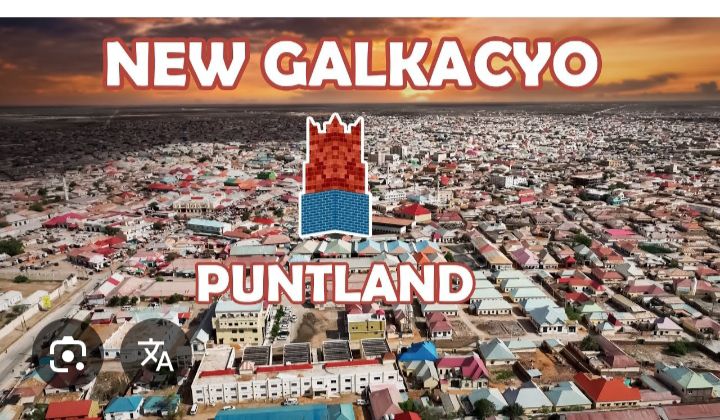
A Call for Transparency and Accountability in Mudugh’s Mega Construction Projects

Mudugh, a region with immense potential yet burdened by decades of marginalization, insecurity, and crumbling infrastructure, now finds itself at a turning point. For the first time in years, there is renewed energy around development—fueled by the community’s resolve and increasing attention from the diaspora and international donors. Schools need rebuilding, roads remain unpaved, hospitals operate under candlelight, and cities like Gaalkacayo struggle to survive even moderate rainfalls.

Yet in a poverty-stricken region like Mudugh, where every dollar matters, the question is no longer if funds will be donated, but how they will be managed.

The Risk: Mismanagement, Erosion of Trust, and Donor Fatigue

The single greatest threat to sustainable development in Mudugh is not war or drought—it is mismanagement. In many regions of Somalia, too often we have seen donated funds disappear into black holes of corruption, nepotism, and bureaucratic inefficiency. The result? Donor fatigue. Projects stall. Trust evaporates. Communities are left betrayed and in worse conditions than before.

We cannot afford to let Mudugh go down this path.

Every penny donated must be tracked, managed, and distributed with laser-focused accountability. To do that, Mudugh needs more than good intentions; it needs systems.

The Solution: Establishing an Independent Accounting Firm

It is imperative that Mudugh immediately establishes an independent accounting firm—a transparent, apolitical, and professional institution dedicated solely to the safe-keeping and management of funds designated for mega construction projects and humanitarian development.

This firm must:

Be staffed by qualified professionals: Only experienced accountants, auditors, and financial controllers with proven integrity should be considered. Community connections alone are not qualifications.

Operate independently: It must not be beholden to political actors, clans, or government offices. Independence is the foundation of trust.

Be compensated fairly: We must abandon the outdated notion that “volunteers” will do serious work for free. If we want results, we must pay professionals what they’re worth.

Work hand-in-hand with the Mudugh Development Committee: Coordination is essential. The accounting firm must be in constant consultation with a representative community committee to ensure funds align with development priorities and reflect the actual needs on the ground.

Adopt international standards of financial reporting: Let audits be public. Let budgets be transparent. Let there be no mystery where the money went.

Use digital tools: In today’s world, there is no excuse for opaque ledgers. Every transaction, every disbursement, every contract should be digitized and accessible to stakeholders.

A Preventative Strategy, Not a Reactionary One

Critics may ask, “Isn’t this premature? We haven’t even received the funds yet.” That’s exactly the point. You don’t install a smoke detector after the fire. The accounting structure must be in place before a single dollar is received. Waiting until money arrives before putting safeguards in place is like building a dam after the flood.

A Message to the Diaspora and Donors

To the generous Mudugh diaspora who tirelessly raise funds for roads, hospitals, schools, and water wells: your efforts are not in vain—but your donations need protection.

To international partners and development organizations watching from afar: Mudugh’s people are ready to work. What they need is a system that ensures your contributions create change, not chaos.

Don’t just send the funds—demand the structure.

Building Trust: The First Brick in Any Project

Before cement is poured, before a road is leveled, before a school is rebuilt—the first and most important structure we must construct is trust. And that trust is built with accountability, transparency, and proper financial governance.

Let us not waste this critical moment. Mudugh has been waiting too long for progress. But progress without systems is failure in disguise.

Let us choose wisely. Let us build responsibly. Let us be the region that not only receives funds but honors them with results.

#MudughRising
#AccountabilityFirst
#TransparentDevelopment
#FromDonationsToDevelopment

Authored by Warsame Digital Media (WDM)
August 2, 2025
DISTRESSING REPORT FROM GALKAYO: A CITY BETRAYED, A PEOPLE BROKEN AND FORGOTTEN

A Grim Discovery After the Conclusion of the Galkayo Community Conference

The much-anticipated Galkayo Community Conference has come to a close. What should have been a launchpad for meaningful change, recovery, and governance reawakening has instead revealed an ugly, unbearable truth: Galkayo is a broken, bleeding city—betrayed by the very institutions and leaders who claim to represent it.

The façade of progress and development carefully erected by government mouthpieces has collapsed under the weight of undeniable reality. Conference deliberations and post-event assessments have unearthed a deeply distressing picture of Galkayo—a city drowning, literally and metaphorically, in abandonment, dysfunction, and despair.

1. A City Sinking Under the Sky

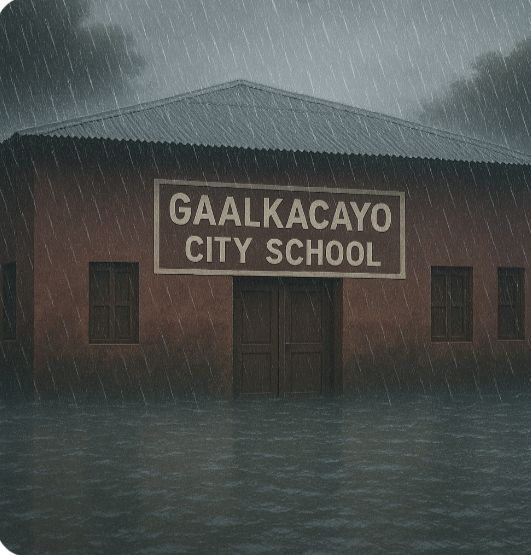
Every rainfall now brings catastrophe. The city’s drainage systems are either nonexistent or choked with years of neglect. School buildings—once iconic centers of learning like Bardacad School, now stand shuttered, flooded, and crumbling. The collapse of landmark educational institutions after repeated submersion in rainwater is more than a failure of infrastructure; it is a direct assault on the future of the next generation.

The government’s excuse? “This is no different from the rest of the country.”
Let that sink in.

This dismissive, lazy, and grossly irresponsible statement encapsulates the rot that has infected governance. Galkayo is not a victim of nature—it is a victim of state and community negligence.

2. Lawlessness Reigns as the Police Stand Powerless

The city’s police force is a shell of its former self—under-equipped, underpaid, and overwhelmed. Banditry, inter-clan killings, and revenge crimes go unpunished. Police morale is nonexistent. There is no civilian trust. Galkayo’s law enforcement institutions have been systematically weakened to the point of irrelevance.

Security is now in the hands of whoever holds a gun. Justice is bought or executed on the streets.
Is this what the state calls governance?

3. Financial Drain: Galkayo’s Wealth Transferred, Not Invested

It is no secret anymore: Galkayo’s monthly revenue is siphoned off to Garowe under the pretext of state revenue. This is outright theft disguised as administrative routine. What the people of Galkayo pay in taxes never comes back to them in services, investment, or development. Instead, their money builds office towers, guest houses, and highways in far-off cities—while Galkayo remains a mud pit of broken streets and shattered hopes.

This is not federalism.
This is exploitation.

4. Infrastructure in Ruins—No Road, No Airport, No Dignity

What remains of Galkayo’s roads are barely passable trails. Its airport is a decaying relic. Economic infrastructure that once connected the city to the rest of the Horn of Africa has deteriorated beyond repair. In other cities, the government builds. In Galkayo, it demolishes by omission. The private sector has fled. Investors avoid it. The youth emigrate en masse.

There is no mobility, no trade, no future.

5. A Social Fabric Torn by Tribal Hatred and State Failure

Tribal hatred and mistrust have taken deep root in Galkayo. Traditional elders once respected for wisdom and reconciliation now openly hate one another—fuelled by manipulation, power struggles, and the absence of a neutral state apparatus to mediate. The government has not only failed to address social fragmentation—it has profited from it, turning clans into tools of political control.

Today, Galkayo’s strongest export is its people—fleeing poverty, insecurity, and hopelessness. Its most educated sons and daughters are now in Nairobi, Addis Ababa, or Istanbul. Its youth fight wars that aren’t theirs. Its women endure famine, fear, and silence.

6. The Government’s Excuses Are an Insult

The claim that Galkayo’s disaster is “just like the rest of the country” is not only untrue—it is cruel. Galkayo has borne the brunt of every conflict, every betrayal, and every failed promise. The deliberate underdevelopment, marginalization, and mistreatment of the city cannot be glossed over by lazy comparisons.

This is not normal.
This is not acceptable.
This is deliberate destruction through neglect.

Call to Action: Enough is Enough

The Galkayo Community Conference was supposed to ignite a movement. Now it must fuel a revolution of civic resistance and demand for justice. The people of Galkayo cannot afford to wait for Garowe, or Mogadishu, or foreign donors to rescue them.

We demand:

1. Immediate restoration of basic infrastructure—roads, schools, drainage, and healthcare.

2. Autonomous control over local revenue, with transparent budgeting and public oversight.

3. Reconstruction and reequipping of the Galkayo Police Force, free from political interference.

4. An independent inter-clan reconciliation initiative, protected from state co-optation.

5. Accountability mechanisms for the state institutions that have siphoned public funds from Galkayo for over a decade.

Conclusion: Galkayo Will Not Be Silent

This post-conference report is not a lament—it is a warning. The people of Galkayo will not accept second-class citizenship in their own homeland. Those who have allowed this crisis to fester must know: silence has ended.

The rain may drown the streets, but it will not drown our voices.

Galkayo lives. Galkayo resists. Galkayo will rise again—with or without you.

By WDM Editorial Team
August 2, 2025