BREAKING: From SSC to Khatumo to SSC-Khatumo to Northeast — A Transition Wrapped in Ambiguity or a New State in the Making?

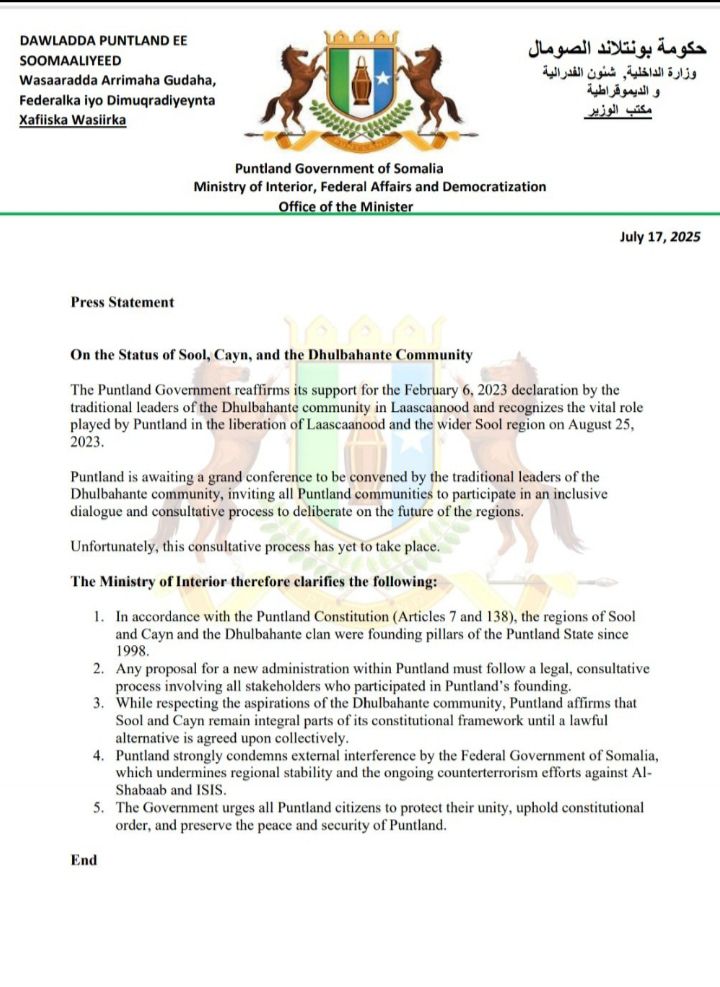
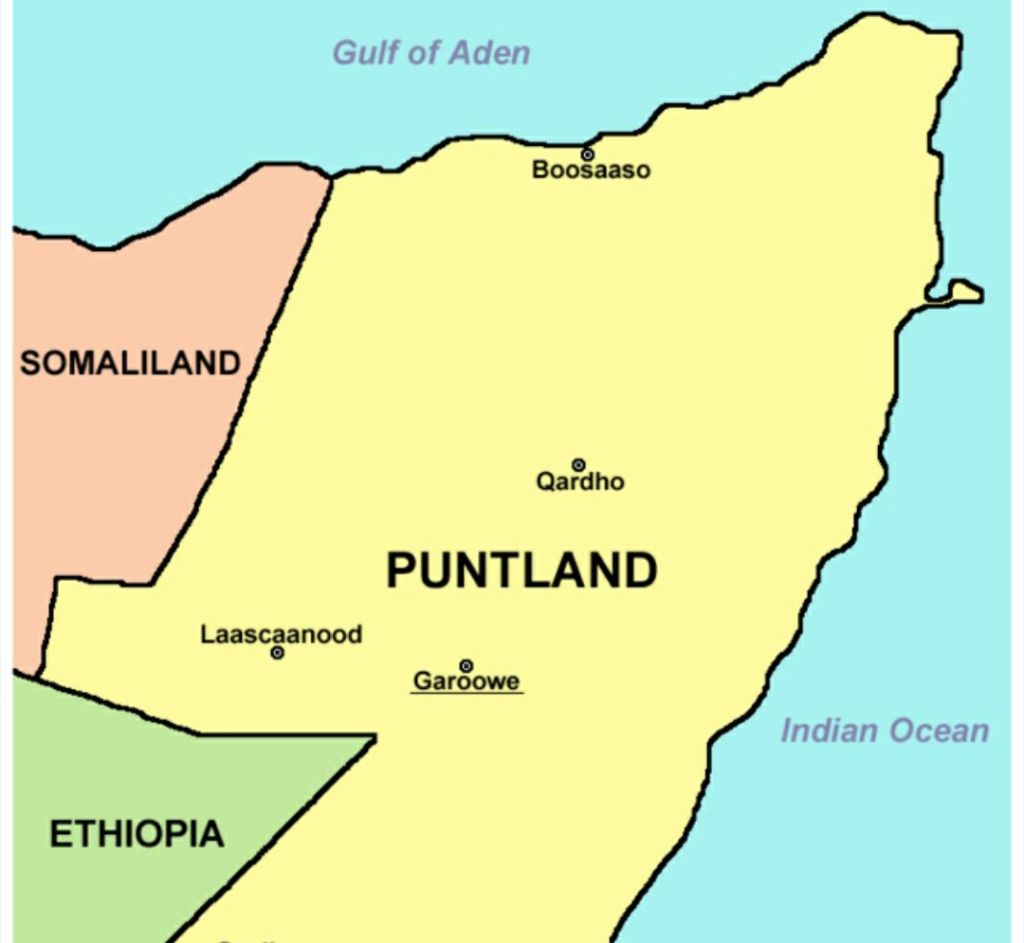
SSC-KHAATUMO has unintentionally opted out of the Somali Federation by renaming itself Northeast State as a New Federal Member State. Northeast State is Puntland State. Would SSC-KHAATUMO rejoin Puntland State proper?

In the ever-shifting political terrain of Somalia, names are never just names. They are loaded with history, claims, identity, and territorial ambition. The recent emergence of a new term — “Northeast State” — associated with the territories formerly grouped under SSC, Khatumo, and now SSC-Khatumo raises serious political and constitutional questions. Is Somalia witnessing the rebirth of Puntland under a different name, or is this a veiled attempt to clone a new state using the old political skeleton?

Let’s unpack the progression and implications.

From SSC to Khatumo: The Roots of Resistance

The SSC (Sool, Sanaag, and Cayn) regions historically resisted incorporation into Somaliland, and the Khatumo movement emerged as a response to both Somaliland’s territorial ambitions and what was seen as neglect by Puntland. Khatumo was originally envisioned as a decentralized state structure loyal to the Somali Federal Government, but independent from both Puntland and Somaliland.

However, factionalism, lack of resources, and regional rivalries weakened the original Khatumo project. Its revival came only through armed struggle and public resistance that culminated in the Laas Caanood uprising, leading to the rebranding of the movement into SSC-Khatumo.

SSC-Khatumo: Between Autonomy and Uncertainty

SSC-Khatumo has gained both sympathy and suspicion. On one hand, it’s hailed for resisting Somaliland’s occupation of the Laas Caanood area. On the other hand, its ambiguous federal status, secretive dealings, and potential alignment with Mogadishu’s Damul Jadiid clique have caused alarm — especially in Puntland, which historically claimed and defended the same regions.

The SSC-Khatumo movement’s embrace of the name “Northeast” introduces a new layer of confusion. For many Somalis, “Northeast” was the original label for Puntland before it formally declared itself a federal member state in 1998. The term has strong historical, territorial, and emotional ties to Puntland identity. Using that term now raises legitimate questions:

Is SSC-Khatumo transforming into a parallel Puntland?

Or is this a deliberate political maneuver to either provoke or preempt Puntland from reclaiming the regions?

Puntland and the Trademark Dilemma

There’s currently no formal trademarking system for Somali state names — no legal mechanism to stop any federal or aspiring state from naming itself as it wishes. However, in practice, names like “Jubaland”, “Puntland”, or “Southwest” are deeply embedded in public memory and political geography.

To reuse a name like “Northeast” — which has long been associated with Puntland — could be interpreted as:

1. A symbolic challenge to Puntland’s political heritage.

2. A claim of legitimacy as the real or original Puntland, rising again after being sidelined.

3. A bid for statehood, packaged in familiar language to ease public acceptance.

Regardless, this will likely ignite controversy and even territorial competition between Garowe and Laas Caanood.

Is This Another Puntland in the Making?

If SSC-Khatumo rebrands as Northeast State, and seeks federal recognition as a member state, the implications are massive:

Territorial Overlap: It could mean two federal member states (Puntland and Northeast) claiming the same lands.

Political War: It could trigger internal Somali political infighting and realignment of alliances.

Identity Crisis: Residents in Sool, Sanaag, and Cayn could be forced to choose between allegiances — weakening collective Somali federalism.

Foreign Interference: Neighboring countries and factions within Mogadishu could exploit this ambiguity to weaken Puntland, one of the most functional Somali states.

Final Thoughts: A Need for Clarity and Unity

While political creativity is necessary in Somalia’s complex reality, the current shift from SSC to SSC-Khatumo to Northeast must not be used to sow confusion or undermine existing federal states. If the goal is federal statehood, then the actors must come clean: Is this a new state or a return to Puntland?

Federalism should unite regions under agreed frameworks, not fracture them through semantic games. Somalia doesn’t need more names — it needs more unity, shared security, and governance based on clarity, consent, and law.

If Northeast is just a euphemism for “Anti-Puntland Khatumo”, then it is a strategic misstep with dangerous implications. But if it’s an honest rebirth of Puntlandian ideals, then let that be declared openly and with a call for regional reconciliation.

Recommendations:

Clarify Intention: SSC-Khatumo leaders must explain the meaning and purpose of “Northeast State.”

Avoid Parallelism: Federalism cannot function with overlapping states. Puntland and SSC-Khatumo must engage in dialogue.

Preserve Identity: If the Northeast identity is merely a nostalgic reference, it must not be used to undermine Puntland.

Federal Oversight: The FGS must not exploit or manipulate these transitions to weaken federalism further.

Somalia cannot afford political name games at the cost of regional unity. The time to choose clarity over confusion is now.

But, now it looks like that, legally, SSC-KHAATUMO has unintentionally opted out of the Somali Federation by renaming itself Northeast State as New Federal Member State. Northeast State is Puntland State. It looks like they didn’t consult with legal minds when they were renaming themselves.

Would SSC-KHAATUMO rejoin Puntland State proper?

#NortheastState #SSC-Khatumo #Puntland #SomaliaFederalism #StateFormationCrisis
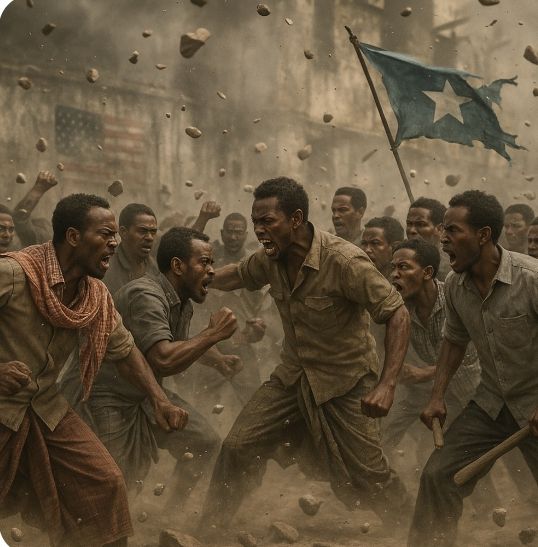
The Damul Jadiid Agenda: A Calculated Destruction of Somalia from Within

WDM COPYRIGHT

What is Wrong with Damul Jadiid? Why Are They Hellbent on Burning Somalia to the Ground?

Everywhere you turn in Somalia today, there is a trail of destruction, division, and disorder—and one ideological cabal sits at the center of it all: Damul Jadiid, the radical political faction operating from Mogadishu, once disguised as religious reformers and now fully exposed as power-hungry saboteurs of national unity.

From Gedo to Sool, from Beledweyne to Beled Xaawo violence and political strife seem to follow them like a curse. This is no coincidence—it’s a blueprint. A deliberate attempt to break the back of Somalia’s fragile federation and to install a centralized theocratic elite that answers to foreign funders rather than the Somali people.

A Movement That Thrives on Chaos

Damul Jadiid’s tactics are dangerously clear:

Fuel clan rivalries to weaken unity.

Undermine federal states by bribing local actors or sponsoring armed militias.

Create friction with any region that dares to assert autonomy, especially Puntland and Jubaland.

Weaponize religion to silence dissent and intellectual opposition.

They do not govern—they manipulate. They do not build—they burn bridges. They have infiltrated every corner of the Federal Government of Somalia (FGS), using state resources to fan the flames of civil strife.

Who the Hell is Funding This Madness?

Let’s ask the hard questions:

Who benefits from a Somalia in flames?

Who keeps Damul Jadiid afloat with finances, platforms, and propaganda?

Why do their leaders always survive the chaos they unleash, comfortably nestled in Mogadishu villas while innocent Somalis die in the crossfire?

Many fingers point toward external religious networks, foreign intelligence agencies, and regional actors who prefer a divided Somalia over a strong and united one.

Where Will Damul Jadiid Run When Somalia Burns?

They must be asked: Where the hell will you go when this country collapses under the weight of your reckless ambitions?

To Qatar? Turkey? Or the United Arab Emirates? Or will you hide behind your mosques while Somalia turns into another failed theocracy?

History is ruthless. Those who tear nations apart in pursuit of short-term power eventually become victims of the very fire they light.

Somalis Must Wake Up Now

We cannot allow this rogue faction to destroy what little progress we’ve made as a nation. The Somali people—north, south, central, and in the diaspora—must rise above sectarian politics, reject this cancerous ideology, and defend the constitutional federalism that offers all Somalis a place in the future.

Enough is enough.

Damul Jadiid must be exposed, rejected, and held accountable. Not tomorrow—now.

Mudugh at a Crossroads: This Conference Must Be a Turning Point, Not Another Empty Talk Show

WDM COPYRIGHT

The upcoming Mudugh Community Conference should not, must not, be another ceremonial gathering of speeches, selfies, and fruitless resolutions that die in their own echo chambers. This is not the time for hollow patriotism, nor for repeating tired mantras of “unity” while continuing the same self-defeating behaviors that have left Mudugh Region a cautionary tale in recent Puntland politics. This conference must dig deep, face the hard truths, and most importantly—it must chart a course forward rooted in accountability, collective will, and radical honesty.

Stop Pretending the Problem Is Only Governmental

Let’s be absolutely clear: you can’t solve the problems of Mudugh by pointing fingers at Garowe or waiting for handouts. Governance failure is real—but so is community failure. Roads don’t build themselves, but neither do they get built by communities who are fragmented, distrustful, and sabotaging each other behind tribal curtains.

Is the backwardness societal or governmental? The answer is both. And until we accept this, nothing changes. Mudugh’s stagnation is not a coincidence; it is a direct result of:

Lack of a common purpose

Chronic disunity among residents

Toxic local rivalries

A short-sighted elite class more interested in positioning than progress

The Two Sides of the Same Coin: Society & State

You can’t expect the Puntland Government to invest in infrastructure, security, and services in a region whose people are perpetually divided. Imagine trying to install electricity in a house where the family keeps tearing out the wires to blame each other. That’s Mudugh today.

Likewise, blaming the government alone ignores the community’s own paralysis, internal bickering, and refusal to self-organize around a unified agenda. The only way the government can be effective is if the society acts like it deserves governance.

Three Pillars That Must Be Addressed at the Conference

1. Stalled Infrastructure Projects

The road network between Galkayo and other districts has become a symbol of betrayal, mismanagement, and apathy. This conference must demand timelines and accountability, not just pledges and wishful thinking.

Galkayo, once a hopeful urban center, is now choking under urban decay. There is no cohesive plan for drainage, urban roads, or even traffic regulation. If a city reflects its people, then Galkayo is the mirror that doesn’t lie.

2. Environmental Degradation

Galkayo’s environment is in total collapse. The conference must not ignore the horrendous stinging water ponds after each rainfall, severe deforestation, garbage-laden neighborhoods, and disappearing greenery. Local leadership has utterly failed in this area, and silence on it equals complicity.

3. Security & Public Order

Peace is the foundation of everything. The fact that Galkayo remains vulnerable to violence, gang activity, and militia-based influence shows that the rule of law remains fragile. The conference must make security and local policing a community-wide responsibility, not just the business of overstretched Puntland police.


The Elephant in the Room: Disunity

Let’s be brutally honest: Mudugh suffers not from a lack of resources or potential, but from a disease of disunity. Every sub-clan pulling in its own direction. Every “leader” playing chess with community interests. Every elder more concerned about his own standing than the collective good.

This conference must be a reckoning. A funeral for the old mentality that made unity conditional on who gets the mic, who gets the contract, who gets the praise.

Without unity, there will be no progress. Without progress, there will be no future.

The Role of Puntland Government: Not a Savior, But a Partner

Puntland cannot—and will not—solve Mudugh’s problems while the community stays dysfunctional. It is time to stop waiting for miracles from Garowe, and instead force a new relationship where Mudugh speaks with one voice, negotiates with clarity, and holds both itself and its government accountable.

The government’s role must be redefined:

Not as a parent to spoiled children, but as a partner to a mature community ready to move forward.

Demanding concrete plans for roads, airport, schools, and hospitals—yes.

But also ensuring that the local leadership doesn’t waste, steal, or politicize every opportunity.

What Must Be Done: A Call to Action

This conference must end with actions, not just resolutions. Here’s what must be demanded and immediately implemented:

1. A Unified Community Committee

With representatives from every sub-clan and urban neighborhood, tasked with tracking development promises and pressing Garowe with one voice.

2. A Public Infrastructure Watchdog

An independent, locally formed body to monitor project implementation and call out delay tactics, corruption, or sabotage.

3. Environmental Cleanup Campaign

Launch city-wide campaigns to clean, plant, and regulate the urban and rural environment. Partner with Puntland Ministry of Environment—but initiate it from the bottom up.

4. Youth & Security Forum

Involve youth in securing the city. Not just as police assistants but as proactive members of a civic guard or neighborhood councils to reduce radicalization and violence.


Final Words: This Is Mudugh’s Last Chance

If this conference becomes yet another staged event, then Mudugh deserves the neglect it suffers.

But if this becomes a moment of self-reflection, unity, and decisive action, then it could be the beginning of a real transformation. No outsider will rescue Mudugh. Puntland can only help those who help themselves. It’s time for this community to grow up, stand up, and rise up.

The world owes us nothing. Puntland owes us nothing.
We owe ourselves everything.

#Mudugh2025
#GalkayoUnited
#FixOurselvesFirst
#PuntlandAccountability

Let the conference be the rebirth. Or let it be a final tombstone.
The choice is ours

Further reading:

GALKAYO: THE DYSTOPIAN CITY OF SOMALIA

The Fight Against ISIS in Puntland: A Significant Blow Delivered by U.S. Special Forces

July 26, 2025 — Puntland, Somalia

The fight against Daesh (ISIS) in Somalia’s northeastern Puntland State has entered a new and decisive phase, marked by a recent major blow against the group’s internal operations. In a meticulously executed special operation, U.S. Special Forces, working in close coordination with Puntland security services, captured one of the most important financial architects of the terrorist group’s operations in the Horn of Africa — Abdiweli Mohamed Aw-Yusuf, also known as Walalac.

This man was no ordinary foot soldier. As the head of Daesh’s Finance Department, Walalac was responsible for orchestrating the movement of money, laundering funds through illicit networks, and managing the budget for terror cells under the infamous al-Karrar office — Daesh’s administrative hub in Somalia. His arrest, alongside two other senior militants, is not just symbolic; it represents a crippling blow to ISIS’s operational and financial infrastructure in the region.

The Operation: Precision and Secrecy

The raid was reportedly carried out in a rural mountainous hideout in Puntland’s Bari region, an area known for being a sanctuary for extremist groups due to its treacherous terrain and sparse security presence. U.S. Special Forces, utilizing intelligence gathered over weeks — if not months — moved with surgical precision, apprehending the trio without significant resistance or collateral damage.

Puntland security sources confirmed that local forces provided critical logistical and intelligence support, once again highlighting the growing capacity of Puntland’s anti-terrorism apparatus when paired with competent international allies.

The Significance of Walalac’s Capture

Walalac’s arrest is being seen by security analysts as one of the most important counter-terrorism victories in Somalia since the disappearance or possible death of Daesh’s previous leader, Abdulqadir Mumin. Here’s why it matters:

Financial Disruption: As the chief financier, Walalac was the gatekeeper to the group’s lifeline — money. His arrest will likely lead to the freezing and tracking of several funding channels and safe houses.

Network Exposure: Walalac’s capture could lead to the exposure of broader networks — both local and international — that have been silently feeding Daesh’s coffers.

Operational Paralysis: With their funds in limbo and senior leaders apprehended, local Daesh cells will likely go dormant or fragment, buying Puntland and its partners precious time to hunt down remnants.


Al-Karrar Office Under Siege

The al-Karrar office, an administrative and logistical wing of ISIS-Somalia, has been under intense scrutiny for years. Its connections span from illegal charcoal exports to arms smuggling and human trafficking. The capture of Walalac represents the first time that a major figure tied directly to al-Karrar has been detained alive — providing hope that interrogation may yield intelligence on Daesh’s remaining cells, routes, and safe havens.

Puntland: Frontline of the War on Terror

Puntland has long stood as the frontline in Somalia’s multi-front war against violent extremism. While the southern part of the country continues to battle al-Shabaab, Puntland’s remote mountains have become the primary theater in the war against Daesh. The local government’s ability to work with international partners like the United States, while maintaining internal political coherence, has played a key role in holding the line.

But this war is far from over.

A Call for Vigilance and Unity

Despite this success, security analysts caution that Daesh — like a snake — may regrow its head if the region lets its guard down. The arrest of Walalac offers a temporary strategic advantage, but Puntland authorities must now:

Accelerate intelligence sharing with local communities.

Clamp down on financial and recruitment networks in coastal and urban centers.

Prevent the re-emergence of sleeper cells by investing in civic programs and counter-extremism education.

The international community must also recognize that Puntland’s stability is integral to regional and even global security. More investment, more collaboration, and sustained attention are needed to ensure that groups like Daesh do not find new oxygen to breathe.

Conclusion

The fight against Daesh in Puntland has reached a turning point with the capture of Abdiweli Mohamed Aw-Yusuf (Walalac). His arrest is not just a counter-terrorism victory — it’s a testament to what is possible when local governance, global cooperation, and relentless vigilance converge. The people of Puntland, and indeed Somalia as a whole, can take pride in this milestone — but they must also stay wary, stay united, and prepare for the long road ahead.

Terrorism may adapt, but so too must the defenders of peace.

Stay informed. Stay vigilant. Puntland is not just a state — it is a shield against extremism in the Horn of Africa.

External Hands Off! Laas Caanood and Gaalkacayo Must Guard Against the Infiltration of External Agendas

External Hands Off! Laas Caanood and Gaalkacayo Must Guard Against the Infiltration of External Agendas

By Warsame Digital Media (WDM)
July 25, 2025

Somalia is no stranger to outside manipulation, proxy politics, and shameless exploitation—whether by foreign powers, religious factions masquerading as saviors, or so-called “federal” agents pushing divisive agendas. But what is happening today in Laas Caanood under the banner of the SSC-Khaatumo Congress is nothing short of a political hijacking engineered by the very enemies of Puntland’s vision, unity, and hard-won stability.

Make no mistake: the ongoing congress in Laas Caanood is not just a community gathering, nor a neutral civil affair. It is being contaminated by the fingerprints of Mogadishu-backed operatives, religious extremists in sheep’s clothing, and foreign-funded agendas aiming to undermine Puntland’s autonomy, fragment its influence, and bleed its border regions into another experiment in clan politics.

The Laas Caanood Congress: From Hope to Hostage

SSC was once a project with merit—a grassroots movement meant to assert identity, recover land from Somaliland occupation, and reclaim dignity. But today, its congress is being commandeered by Mogadishu regime functionaries and shadowy factions from Damul Jadiid and beyond, who care more about turning Sool into a satellite of Villa Somalia than uplifting the suffering people of the region.

Where is the accountability? Where are the discussions on development, reconciliation with Puntland, or service delivery? Instead, we hear whispers of new flags, new borders, and illusory “federal” dreams sponsored by those who never defended a single inch of Sool during its darkest days.

This is betrayal. Plain and simple.

Warning to Mudugh: Keep the Devil Out of the Room

Now, as activists and elders in Mudugh prepare for a long-overdue conference on infrastructure, roads, airports, environmental concerns, and social service delivery, let this article serve as a clear warning:
DO NOT ALLOW your legitimate grievances to be hijacked by the same poisonous outsiders that are currently corrupting the SSC  platform.

The people of Mudugh—noble, resilient, and independent—have every right to question the government’s failures. The delayed road network, the stalled Galkayo airport upgrades, the unaddressed environmental degradation, and the woeful state of health and education services must be confronted head-on, in the open, and with government officials present to be held to account.

But beware: already, certain actors are whispering in the dark, attempting to twist this noble initiative into a political insurrection. They will come with suitcases of money, sweet words of “federal rights,” or pious slogans. They will try to turn civil activism into a weapon against Puntland unity.

Reject them all. This conference must be by Mudugh, for Mudugh, and about Mudugh. Period.

To the People of Laas Caanood: You Have Been Deceived

Your sacrifices were never meant to bring you back into the grip of Villa Somalia’s opportunists.
You didn’t expel Somaliland just to fall prey to the next puppet master.
Wake up!

There can be no sustainable peace or development if your political process is infested by external strategists, manipulating you as pawns in a broader anti-Puntland, anti-regional autonomy campaign.

Do not let Mogadishu’s agents turn you into another failed statelet.

To Civil Society and Elders: Reclaim Control

Civil society, youth, women, and elders—this is your moment. Not the moment for power-hungry charlatans or political middlemen who trade loyalties for contracts.
Speak loudly. Stand firm. Demand clarity from anyone who wants a seat at the table. Ask: who sent you? Who funds you? What is your endgame?

Ask every delegate in Mudugh and Laas Caanood: Are you here for your people, or are you here for another master’s mission?

To Puntland Authorities: Stop Playing Dead

The silence from Puntland’s leadership is unacceptable and dangerous. While external forces are busily redrawing the map of your territories, you issue toothless press releases or retreat into administrative isolation

Send your ministers. Face the public. Explain the delays. Be accountable. Be present. Or else forfeit your moral authority.

Puntland must reassert its role as the legitimate political parent of Sool, Sanaag, Cayn, and Mudugh—not with slogans, but with visibility, action, and bold counter-narratives.

Final Word: Somali Unity Starts with Regional Dignity

What is happening now is not just about SSC or Mudugh.
It is about whether Somali regions can self-organize without being turned into ideological experiments.
It is about whether Puntland can survive not just militarily, but politically.
It is about whether we allow Mogadishu to continue acting like a colonizer disguised as a unifier.

The people of SSC and Mudugh deserve answers, service, dignity—not sabotage and deception.

Let the people rise with clarity. Let the conferences be platforms of progress, not betrayal.
And let every whisper of external interference be met with thunderous rejection.

Down with external manipulation! Long live Puntland’s dignity! And may the people finally speak louder than the plotters ever could.

#SomaliUnity #PuntlandFirst #MudughForMudugh #HandsOffSSC

Will President Deni stand firm on the Sea World seizure amid pressure from Turkey, Egypt, and Mogadishu?

Said Deni

Context: What exactly happened with Sea World?

On July, 2025, Puntland’s Maritime Police Force (PMPF), under President Said Abdullahi Deni’s administration, intercepted the MV Sea World, a Comoros‑flagged vessel, off Bareeda’s coast   of Puntland State.

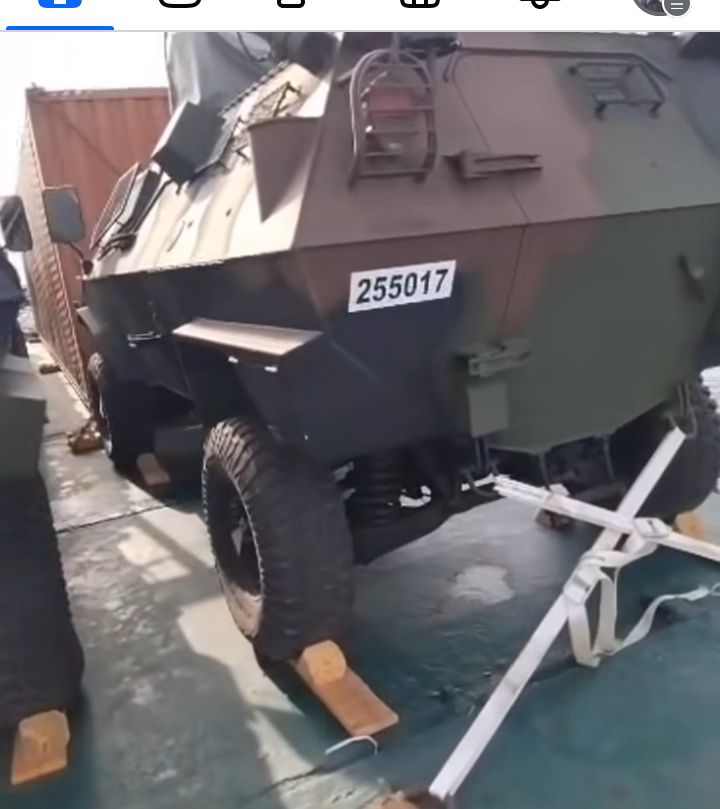
The ship was reportedly laden with Turkish-marked armored vehicles, anti‑aircraft guns, ammunition, and MRAPs—apparently en route to Mogadishu for non-state actors.

Puntland claims the ship entered territorial waters without distress signals, violating UNCLOS and posing regional security threats.

Parts of the cargo were off‑loaded, with some weapons reportedly found in civilian hands outside Bosaso Port, prompting an internal probe.

Diverse reactions: Federal Government and external actors respond

The Federal Government of Somalia has condemned Puntland’s actions as “hijacking,” invoking the provisional constitution and UNCLOS to demand immediate release.

Somalia’s defense ministry asserts cargo was legal military equipment under bilateral agreements with Turkey.

Regional analysts have voiced concerns:

A Turkish analyst accused Deni of acting as a proxy for the UAE, claiming the PMPF was UAE-funded and that UAE backed the seizure.

Turkey has a growing defense footprint in Somalia, highlighted by delivery of helicopters and advisory missions.

Egypt too has increased arms shipments to Mogadishu under defense pacts—adding further complexity.

Will President Deni relent under pressure?

Political and Strategic Stakes at Play

1. Puntland’s Legal and Sovereign Position

The administration emphasizes strict adherence to Somalia’s constitution and maritime law sovereignty.

Releasing the ship under federal pressure may be seen as undermining Puntland’s autonomy and authority.

2. Federal Pressure via Diplomatic Channels

Mogadishu is expected to escalate through federal legal routes and international maritime norms to force a release.

Political pressure may ensue via intergovernmental forums and possible UN monitoring teams already engaged in arms embargo enforcement.

3. Regional Backing and Strategic Alliances

UAE support for PMPF and Puntland’s regional security capabilities—possibly emboldening Deni.

Turkey and Egypt may lobby via diplomatic means but face the risk of confrontation with Puntland’s stance.

4. Domestic Pressure from Puntland Citizens

The public in Puntland demands accountability on illegal weapons flows and expects their leadership to act firmly.

Any sign of backing down risks political fallout at home.


Analysis: Likely outcomes for President Deni

Scenario Likelihood Implications

1.Stand firm, keep the ship detained.  Reinforces regional autonomy, asserts Puntland’s maritime sovereignty, but sharpens tensions with Mogadishu and external actors.
2. Negotiate conditional release. Release only after transparent joint federal-regional investigation, potentially preserving unity but risking domestic backlash.
3. Immediate release. Politically costly locally; may ease federal relations but embolden Mogadishu to challenge regional autonomy again.

Conclusion: What’s next?

The Sea World standoff highlights the complex tug‑of‑war between Puntland’s self-governance and Somalia’s federal authority—complicated further by Turkey’s defense involvement, Egypt’s arms deliveries, and UAE’s backing of regional security forces.

President Deni is expected to proceed cautiously, prioritizing Puntland’s constitutional rights and public sentiment. A forced release seems unlikely, but a negotiated compromise—perhaps through joint investigations or international mediation—could emerge if diplomatic costs escalate for Puntland.

What People of Puntland Are Saying

Local citizens express deep concern, saying they “need clarity and accountability—illegal arms must be stopped.”

Analysts warn: “How Deni handles this will define Puntland’s autonomy and its role in Somali federal dynamics.”

Final Thoughts

The world is watching. Whether by legal pressure, diplomatic outreach, or regional alliances, Turkey, Egypt, and Mogadishu will seek to reclaim the Sea World and its cargo. Yet Deni’s political calculus—balancing regional pride, domestic sentiment, and external actors—suggests he’s unlikely to capitulate outright. What happens next could redefine federal-state relations in Somalia and influence Horn‑region security ties.

Stay tuned as investigation results emerge, and diplomatic signals shift.

Britain’s Somaliland Policy: A Calculated Delay Rooted in Self-Interest, Not Principle

By Ismail Warsame

For over three decades, Somaliland has claimed independence from the rest of Somalia, and yet Britain—its former colonial ruler and one of its strongest foreign patrons—continues to withhold official recognition. This deliberate non-recognition has often been misread by pan-Somali unionists as a moral stance in support of Somali unity, or as Britain’s respect for African Union protocols and international law.

But nothing could be further from the truth.

Britain’s refusal to formally recognize Somaliland’s statehood is not a gesture of goodwill toward Somalia’s unity, nor is it based on any principled commitment to continental or global legal frameworks. Rather, it is a well-orchestrated policy of self-interest, anchored in a desire to preserve influence over the entire Somali geography—fragmented, unstable, and exploitable.

A Strategic Hedge: Playing Both Sides of Somali Politics

Unlike other former colonial powers, the UK has adopted a dual-track approach to Somalia. It engages both the Federal Government in Mogadishu and the administration in Hargeisa. This enables Britain to retain maximum leverage while avoiding formal legal commitments to either side.

By withholding recognition of Somaliland, Britain maintains:

Access to Mogadishu, where UN and African Union missions are based.

Soft power in Hargeisa, where UK-funded NGOs, education programs, and security firms operate freely.

Flexibility in oil and port negotiations, especially concerning Berbera, where UK-friendly interests (like DP World) operate.

This ambiguity is not accidental. It is strategic.

Not About African Unity – Just Global Hypocrisy

Britain frequently cites the African Union’s official stance on Somali territorial integrity to justify its hesitation on recognizing Somaliland. But this argument collapses under global scrutiny.

Britain supported the creation of South Sudan, recognized Kosovo’s independence, and has repeatedly intervened in state fragmentation when it aligns with its own interests. So why is Somaliland different?

Because Somalia—fragmented, weakened, and aid-dependent—is easier to manage, influence, and benefit from.

The moment Britain recognizes Somaliland, it risks:

Losing diplomatic access in Mogadishu.

Triggering regional chain reactions in Puntland and Jubaland.

Empowering nationalists who might resist UK economic and military influence.

So, the status quo—keeping Somaliland in limbo—serves British interests best.

Oil, Ports, and Quiet Power

Much of Britain’s hesitation is economic. Somaliland offers key strategic assets—especially its untapped oil reserves and the Berbera Port, a deep-water port with commercial and military potential.

British companies like Genel Energy have oil exploration interests in Somaliland. However, formal recognition might:

Trigger diplomatic or legal disputes with Mogadishu.

Invite regulatory scrutiny from a more empowered Somali federal government.

Endanger regional power balances that favor Western firms.

Moreover, maintaining soft control over strategic infrastructure without recognition allows the UK to:

Avoid responsibility.

Escape international legal constraints.

Play a long game of influence over multiple Somali actors.

As discussed in the article “The Invisible Hand: How Britain’s Shadow Governance Network Controls Modern Somalia and Seeks its Partition” (wordpress.com/ismailwarsame), the UK’s influence is exerted through a complex network of:

Development NGOs

Security contractors

Political mentorship programs

Education and aid channels

This network allows Britain to play an outsized role in Somali politics without direct intervention. A formal recognition of Somaliland would force London to take sides—thereby disrupting this delicate architecture of indirect influence.

Who Truly Loses in This Game?

The primary victim of Britain’s non-recognition policy is the Somali people—both in Somaliland and in southern Somalia. This ambiguity:

Encourages fragmentation and elite corruption.

Delays genuine reconciliation or reintegration efforts.

Undermines national institutions in favor of parallel structures.

Fuels regional tension and proxy rivalries (e.g., UAE vs. Qatar, Turkey vs. Egypt).

Britain’s calculated silence not only perpetuates division but sabotages the chance for a long-term Somali-led solution—be it reunification, federation, or legal separation.

Conclusion: This Is Not About Unity—It’s About Control

Britain’s refusal to recognize Somaliland is not a principled defense of Somali unity. It is a self-serving strategy to prolong access, leverage influence, and avoid legal entanglements in a volatile yet resource-rich region.

It is time for Somali intellectuals, youth, leaders, and regional allies to confront this duplicity. The future of Somalia—and Somaliland—should not be held hostage to outdated colonial calculations and foreign self-interest masquerading as diplomacy.

Whether one supports recognition or unity, the truth must be clear: Britain’s policy is not based on legality or loyalty—but on pure geopolitical calculus.

Further Reading

“The Invisible Hand: How Britain’s Shadow Governance Network Controls Modern Somalia and Seeks its Partition”

Read here: https://ismailwarsame.blog/2025/07/21/the-invisible-hand-how-britains-shadow-governance-network-controls-modern-somalia-and-seeks-its-partition/

The Invisible Hand: How Britain’s Shadow Governance Network Controls Modern Somalia and Seeks its Partition

July 21, 2025
NAIROBI / MOGADISHU / LONDON – A comprehensive investigation drawing on extensive evidence, confidential diplomatic assessments, and testimonies from high-level Somali government, intelligence, and international institution sources reveals a profound reality: Somalia operates under a de facto British protectorate, meticulously reconstructed under the guise of international stabilization and state- building. This modern system of control, solidified in the aftermath of the 2009 Djibouti Agreement, extends its reach across all Somali territories, explicitly including the self-declared independent region of Somaliland.
The 2009 Pivot: Sovereignty Outsourced
The resignation of President Abdullahi Yusuf in December 2008 plunged Somalia into a critical power vacuum. The internationally brokered Djibouti process culminated in January 2009 with the installation of Sheikh Sharif Sheikh Ahmed as President of the Transitional Federal Government (TFG). While hailed as a step towards stability, insiders now identify this moment as the critical inflection point where Somalia’s effective sovereignty was systematically outsourced. Britain, leveraging deep historical ties and its pivotal position as the UN Security Council’s designated “Pen Holder” for Somalia – granting it unparalleled authority to draft resolutions dictating the country’s future – seized the initiative. Somalia’s status under UN Charter Chapter VII, designating it a threat to international peace requiring external administration, provided the perfect legal scaffolding.
The “Consultancy” Complex: Shadow Governance Incarnate
The true engine of Somali governance resides not within Villa Somalia or the nominal parliament, but within an intricate, largely unaccountable network of British security and consultancy firms. Firms like Adam Smith International (ASI) and Albany Associates, staffed extensively by veterans of British intelligence (MI6/SIS), the Foreign, Commonwealth & Development Office (FCDO), and military operations in fragile states like Afghanistan and Iraq, were granted extraordinary mandates. From Villa Somalia to Federal Member state houses, British influence continues to dictate the political direction of Somalia:
· Embedded Control: “They don’t just advise; they dictate operational reality,” states a former senior TFG Minister, speaking under strict anonymity due to credible fear of reprisal. “National budgets, comprehensive security architecture plans, key ministerial appointments, core legislative priorities – all traverse desks in London or Nairobi long before Somali institutions see them. ASI and Albany personnel are physically embedded within ministries, controlling communications, financial flows, and policy drafting. They constitute the permanent administrative core. Our leaders are actors performing on a stage meticulously set and directed from London.”
· Culture of Impunity: These firms operate with minimal oversight, shielded by diplomatic protocols, complex contracting structures, and the overarching imperative of “stability” defined by their paymasters.
Unfinished Borders: Somaliland and the British Politics of Partition in Hargeisa, the British Embassy and NGOs along with the MI6 exert decisive influence over Somaliland’s security structures, constitutional development, and economic planning. This influence flows directly from the overarching Somali Pen Holder mandate and stabilization programs funded by the UK FCDO and aligned international donors.
· The Pen Holder’s Ultimate Reach: “The UN Pen Holder role grants London the de facto authority to set the terms for all Somali territory,” explains a Horn of Africa security analyst with long-standing UN experience. “Somaliland’s separate deals are functionally subsumed within this broader British-orchestrated framework. Their celebrated autonomy is an illusion tolerated only insofar as it aligns with the stability and counter-terrorism objectives ultimately dictated from London. Challenging the Pen Holder’s writ risks isolation and funding cuts.”
Chapter VII: The Legal Smokescreen for Protectorate Status
The UN Chapter VII mandate, steered decisively by Britain in its Pen Holder capacity, provides the essential legal and political cover. Framed as necessary for combating Al-Shabaab, piracy, and building institutions, this framework has been exploited to institutionalize profound foreign dominance.
· Theatre of Sovereignty: “The President, the Cabinet, Parliament – they are necessary props in a carefully managed production,” states a long-serving Western diplomat formerly based in Mogadishu. “They provide local legitimacy and absorb public accountability for decisions made
externally. Real power rests with the foreign advisors who control the budget, intelligence sharing, security sector reform blueprints, and the drafting of foundational legislation. It’s a sophisticated 21st-century neocolonialism, administered by consultants wielding contracts and laptops instead of colonial officers with pith helmets, but the outcome is identical: the systematic denial of authentic Somali self-determination.”
The “Pen Holder”: Architect of Strategic Dependence
Britain’s role as Pen Holder is the cornerstone of this system. This unique position grants the UK government unparalleled power to shape the UN Security Council’s entire Somalia agenda – defining mandates for international missions (AMISOM/ATMIS), authorizing security support, controlling sanctions regimes, and approving political roadmaps. Critics argue this role represents a fundamental conflict of interest, prioritizing British security concerns (counter-terrorism, migration control) and entrenching the influence of its chosen private sector proxies, rather than fostering genuine Somali ownership and agency.
The Silence of Complicity
The muted response from key international partners, notably the United States and the European Union– major donors themselves – is conspicuous. Their reliance on British-gathered intelligence and stabilization networks in Somalia, coupled with a shared strategic focus on containing Al-Shabaab and managing migration flows, has resulted in tacit acceptance of this arrangement. The African Union, while providing essential troop contributions for security, lacks the political leverage or mandate within the UNSC structure to challenge the underlying power dynamics dictated by the Pen Holder.
The British Embassy, MI6 and the Subversion of Puntland: A Case Study in Divide-and-Rule
Recent developments in the SSC-Khatumo region and Puntland underscore the active, destabilizing role of the British Embassy and intelligence services. Multiple well-placed sources within Puntland’s security apparatus and political circles report:

  1. Post-Liberation Propaganda Offensive: Following the liberation of Sool, Sanaag, and Cayn (SSC) from Somaliland forces, MI6 allegedly allocated significant resources to recruit online operatives of SSC origin. Their task: wage a coordinated campaign of disinformation and hostile propaganda aimed specifically at undermining Puntland State, eroding public support, and straining relations between SSC communities and Garowe.
  2. Khatumo as a British Project: The sudden resurgence and Federal Government backing of the Khatumo-Makhir state entity is viewed by these sources not as an organic Somali political development, but as the direct culmination of British intelligence operations. The objective: permanently sever SSC territories from Puntland, creating a smaller, more pliable entity and further fragmenting clan power structures.
  3. Puntland to Cede Sanaag to Somaliland: With Somaliland in full control of Ceerigaabo and thousands displaced without shelter in Badhan, Dhahar, and Qardho, pressure and cajole Puntland leadership and Sanaag elders to concede, accept peace on Somaliland’s terms, and legitimize its presence across the entire Sanaag region.
  4. Infiltration at the Highest Levels: MI6 has reportedly deepened its influence within the Puntland Presidency through the Hiraal Institute focusing on security research and policy analysis. Key figures allegedly include:
    · Hussein Mo’allim (Macalim): Former National Security Adviser to Somali President  Hassan Sheikh Mohamud (recently dismissed). Identified by multiple sources (including within Villa Somalia under both Mohamud and Farmaajo) as a long-time MI6 informant/agent.
    · Mohamud Seefta Banaanka: A colleague of Mo’allim at Hiraal, now serving as a close counter-terrorism adviser to Puntland President Said Abdullahi Deni on the CalMiskaad offensive. Sources suggest Banaanka provides a direct channel for British influence into Deni’s inner circle on critical security matters.
  5. Strategic Uncertainty: The future of SSC-Khatami, Haylaan, Sanaag, and their relationship with Puntland hangs precariously,” warns a Puntland parliamentarian with access to intelligence briefings. “British manipulation in Mogadishu, Garowe, and Hargeisa is actively fueling discord and institutional fragmentation. The CalMiskaad campaign is increasingly vulnerable to external pressures, a British-backed plan to halt all military operations gains momentum—while the Somali Stability Fund (SSF) incentivizes resettlement as a form of political reward”
    Conclusion: A Territory Under Management, not a Sovereign State in Recovery
    The accumulated evidence presents a stark and disturbing conclusion: Somalia, encompassing Somaliland, Puntland, and the nascent SSC-Khatumo entity, is not a sovereign state undergoing recovery. It functions as a territory under international administration, effectively managed as a modern British protectorate. This is achieved through the sophisticated leverage of UN mechanisms (primarily the Chapter VII mandate and the Pen Holder role), the strategic deployment of intelligence-linked private firms as parallel governance structures, the reduction of national institutions to hollow facades, and the active manipulation of inter-regional dynamics by intelligence services.
    The resignation of Abdullahi Yusuf and the rise of Sheikh Sharif did not herald the Somali renaissance. It marked the commencement of a new, opaque chapter of foreign dominance, orchestrated from London under the convenient legal cover of Chapter VII and the technocratic veneer of the “Pen Holder” and “stability consultant.” The aspiration for genuine Somali sovereignty remains captive to a complex of private contracts, covert intelligence networks, and UN resolutions authored thousands of miles away, while active interventions, as seen in Puntland and SSC-Khatumo, continue to shape the country’s fractured political landscape to external designs. The dream of self-determination endures, but it is a dream perpetually deferred by an invisible hand wielding pens, contracts, and clandestine influence. 

By collaborative effort between Warsame Digital Media (WDM) and Daljir Media

ADVICE FOR THE PUNTLAND GOVERNMENT ON THE SHIP SEIZED OFF CAPE GUARDAFUI (RAS ASAYR)

IMMEDIATE ACTIONS (Security First):
Secure the Ship & Cargo: Place armed guards around the vessel and its cargo holds 24/7. Prevent any unauthorized access. This is non-negotiable.
Isolate the Crew: Detain the crew for questioning in a secure location. Treat them humanely but restrict communication. They are potential witnesses or participants.
Freeze Documentation: Seize all ship logs, manifests, communication records, navigation data, and personal crew documents immediately.

2. Confiscation: Not Just an Option, But a NECESSITY (With Caveats):
LEGAL BASIS FOR CONFISCATION: Confiscation is absolutely an option and highly recommended under international law and Somali domestic law:
UN Arms Embargo: UNSC Resolutions (e.g., 2662) impose a strict arms embargo on Somalia for non-state actors and require all imports to have explicit Federal Government approval. An unclaimed shipment inherently violates this embargo.
Violation of Somali Law: Importing arms without proper authorization, end-user certificates, and customs declaration is illegal under Somali law. An unclaimed shipment has none of these.
National Security Threat: Unclaimed heavy weapons pose an existential threat to Puntland and Somalia’s security. Confiscation is a legitimate act of self-defense and security preservation.
Port State Authority: As the port state, Puntland has jurisdiction over vessels in its port, especially those suspected of illegal activity.
HOW TO CONFISCATE LEGALLY:
Formal Legal Order: Issue an immediate, formal seizure/confiscation order signed by the highest relevant Puntland authority (e.g., President, Security Minister, Port Authority Director), citing the UN embargo violation, violation of Somali law, and threat to national security.
Document Everything: Meticulously document the ship’s arrival, the lack of claim/paperwork, the security measures taken, the confiscation order, and the inventory process. This is crucial for legal defensibility.
Notify Federal Government: Inform the Somali Federal Government (SFG) in Mogadishu immediately of the situation and the confiscation action. While Puntland has authority, coordination with the SFG is essential for national unity and international legitimacy. The SFG must formally notify the UN Security Council’s Somalia Sanctions Committee.
Notify International Partners: Inform key international partners (UNSOM, AU, IGAD, Combined Maritime Forces, INTERPOL) of the confiscation and request urgent technical assistance.

3. CRITICAL NEXT STEPS AFTER SECURING/CONFISCATING:
Comprehensive Inventory (SAFELY): Conduct a detailed, supervised inventory of the cargo. This is EXTREMELY DANGEROUS. It must be done by trained explosives experts/EOD personnel, ideally with international support (UNODA, INTERPOL). Document types, quantities, serial numbers, markings, and origins of all weapons and ammunition. Use video/photography.
Thorough Investigation:
Crew Interviews: Interrogate the crew intensively (with legal counsel/observers present) about the voyage, origin, intended destination, and ownership. Pressure for information.
Forensic Analysis: Examine the ship, cargo packaging, and any recovered documents forensically for clues (fingerprints, DNA, hidden compartments, digital data).
Track Ship’s History: Use AIS data, port records, and intelligence to trace the ship’s route, previous ports of call, and ownership history.
Flag State Inquiry: Demand full cooperation from the ship’s flag state in identifying owners and operators.
International Assistance is PARAMOUNT:
Request Expertise: Immediately request technical assistance from the UN (UNSOM, Panel of Experts on Somalia), INTERPOL, the African Union, and relevant states (e.g., for ballistic tracing, EOD, investigative support).
Request Disposal Support: Securely storing or destroying this volume of arms/ammo is complex and dangerous. Request international support (e.g., UNMAS, donor states) for safe disposal/destruction.
Transparency (Guarded): Be transparent about the fact of confiscation and the ongoing investigation with the public and international community to build legitimacy. However, do not disclose sensitive operational details, inventory specifics, or investigative leads that could compromise the probe or security.

4. Risks & Considerations:
External Pressure/Threats: Expect pressure from shadowy actors, potential claimants (via proxies), or even states wanting the cargo suppressed or released. Maintain resolve and security.
Internal Corruption: Implement strict oversight to prevent leaks, bribery, or theft of the cargo. Use trusted units and international monitors.
Disposal Challenges: Holding the cargo long-term is risky. Plan for its secure destruction as the ultimate goal, requiring international help.
Legal Challenges: Be prepared for potential (though unlikely to succeed) legal challenges from shell companies claiming ownership. Your documentation of the embargo violation and lack of initial claim is key.

Conclusion & Recommendation for Puntland:

Confiscation is not only a legal option but a critical security imperative. Puntland must immediately seize the vessel and its cargo based on clear violations of the UN arms embargo and Somali law, citing the grave threat to regional security. Delay risks diversion or attack.

Prioritize:

  1. SECURE the ship and cargo militarily.
  2. CONFISCATE formally and legally.
  3. INVESTIGATE thoroughly with international help.
  4. INFORM the Somali Federal Government and key international partners.
  5. DESTROY the cargo safely with international support.

Failure to act decisively risks these weapons fueling catastrophic violence in Puntland, Somalia, and across the region. Confiscation is the essential first responsible step.

Ethiopia’s Strategic Triple Play: How assertive diplomacy on GERD, Somaliland MoU, BRICS membership reshapes Horn of Africa power dynamics – Addis Standard

https://addisstandard.com/ethiopias-strategic-triple-play-how-assertive-diplomacy-on-gerd-somaliland-mou-brics-membership-reshapes-horn-of-africa-power-dynamics/

Puntland Seizes the Arsenal: A Dangerous Tide of Heavy Weapons Threatens Somalia’s Fragile Peace

“All spoils in the sea belong to the King” , a saying in the ancient Bari Region of Puntland State.

Bosaso, Puntland – In a dramatic and high-stakes intervention, Puntland State Marine Forces have intercepted a vessel carrying a deadly cargo: a significant shipment of heavy armored weapons reportedly destined for non-state factions in Mogadishu, and potentially, the fledgling Federal Government itself or Turkish military base in Mogadishu. This seizure isn’t just a routine bust; it’s a stark and terrifying symptom of a dangerous new phase engulfing Somalia.

For decades, the flow of small arms into South-Central Somalia has been a tragic constant, a relentless undercurrent fueling violence even at the height of the Civil War. Mogadishu’s myriad factions are, as reports rightly state, already “armed to the teeth” with these weapons. But what we are witnessing now is fundamentally different, and far more perilous.

The New, Devastating Reality: Heavy Weapons Enter the Fray

The alarming novelty lies in the extraordinary flow of heavy weaponry– armored vehicles, sophisticated artillery, powerful anti-armor systems – now finding its way to the warring factions. This escalation coincides directly with the premature and controversial lifting of the UN Arms Embargo on Somalia. While ostensibly intended to bolster the Somali National Army in its fight against Al-Shabaab, the reality on the ground paints a far bleaker picture.

Instead of strengthening the central state, this lifting appears to have opened dubious routes exploited by clandestine parties. Powerful external actors, regional players with vested interests, and internal spoilers seem to be leveraging the loosened restrictions to flood the volatile Mogadishu landscape with tools of mass destruction. This isn’t reinforcement; it’s a deliberate act of strategic arson.

Puntland’s Dilemma: A Seized Arsenal and Weighty Choices

The seized vessel now sits in a Puntland port, its lethal contents under guard. Its interception by Puntland forces is a significant act, demonstrating both capability and a clear stance against the uncontrolled proliferation threatening the entire Horn of Africa. But the seizure is only the first act. Puntland society is now embroiled in a crucial and urgent debate: What to do with this arsenal?

The options are fraught with consequence:

1.  Destruction: The most definitive, and perhaps safest, course. Destroying the weapons removes them permanently from the equation, sending the strongest possible message against illicit arms trafficking. However, it requires significant resources and technical capability.
2.  Handover to the Federal Government (FGS): A gesture of federal unity? Or a naive gamble? Given the reported destination included factions within Mogadishu, possibly even elements linked to the FGS itself, and the FGS’s perceived fragility and lack of cohesive control over its own security apparatus, many in Puntland view this option with extreme skepticism. Would these weapons simply fuel the very fires they were meant to extinguish?
3.  Utilization by Puntland Security Forces: Argued by some as necessary for Puntland’s own defense against an increasingly unstable south and the persistent Al-Shabaab threat. However, this risks escalating regional tensions and could be portrayed as Puntland itself becoming a stockpiler, undermining the moral high ground of the seizure.
4.  International Custody/Disposal: Seeking UN or AU assistance to take custody and ensure secure, verifiable disposal. This might be the most transparent option but relies on complex international cooperation and logistics.

Beyond the Seizure: A Nation at the Precipice

The debate in Puntland is more than a local issue; it’s a microcosm of Somalia’s existential crisis. The unchecked flow of heavy weapons, facilitated by the questionable lifting of the embargo and shadowy actors, is catastrophically destabilizing. It empowers warlords, undermines any semblance of state monopoly on force, makes large-scale conventional warfare terrifyingly feasible, and ultimately, drowns out any hope for genuine political dialogue or reconciliation.

The international community must look beyond Mogadishu. Puntland’s action has exposed a critical breach. Urgent questions demand answers:

*   Who is behind these clandestine shipments?
*   How are they bypassing what should be enhanced monitoring post-embargo?
*   Why was the embargo lifted without robust, verifiable mechanisms to prevent exactly this scenario?

The seizure in Bosaso is a warning flare. Ignoring the systemic failure allowing heavy weapons to flood Somalia is not an option. The debate within Puntland is a test – not just for its own leadership, but for the conscience of Somalia and its international partners. The choices made regarding this seized arsenal will send ripples across the region. The path of peace requires not just intercepting the weapons, but decisively dismantling the deadly networks that deliver them and demanding accountability for those who enable this descent into potentially unimaginable violence. The time for decisive action, both in Bosaso and beyond, is now. Somalia cannot afford another descent into the abyss fueled by heavy metal and foreign agendas.

WDM EDITORIAL: The Tangled Web in Sanaag – Puntland, Khaatumo, and Mogadishu’s Dangerous Game

19 July 2025 

Dhahar

The escalating tensions in the Dhahar region of Sanaag represent more than a local border dispute. They are a symptom of a deepening crisis threatening the fragile foundations of Somali federalism, fueled by betrayal, overreach, and the Mogadishu regime’s cynical manipulation. The rift between Puntland and the Khaatumo Movement, once allies in liberating Laas Caanood, now risks plunging the region into renewed conflict, with President Hassan Sheikh Mohamud’s (HSM) government playing a dangerously incendiary role.

The Foundation: Liberation and the Seeds of Discord
There is little dispute over Puntland’s pivotal role in the 2023 liberation of Laas Caanood and surrounding SSC areas from Somaliland forces. Puntland Darawishta provided crucial military leadership, equipment, and fighters, sacrificing blood and treasure alongside local SSC clans. This victory, achieved through a coalition heavily reliant on Puntland’s commitment, was rightly hailed as a triumph of kinship and shared struggle against occupation. The expectation was that this shared sacrifice would forge a strong, cooperative relationship based on mutual respect for historical ties and administrative realities.

The Betrayal: Khaatumo’s Overreach in Sanaag
Instead, a starkly different reality has emerged. Emboldened, sources within Puntland and local observers in Sanaag contend, by overt political and military backing from Mogadishu, the Khaatumo Movement has pursued a policy of territorial aggrandizement. Its deployment of forces into the Dhahar district – an area consistently administered by Puntland for decades and explicitly within its constitutional boundaries – is viewed in Garowe not as an administrative error, but as a deliberate act of aggression and a profound betrayal.

The bitter irony is palpable: forces representing an entity whose very liberation was secured by Puntland’s intervention are now encroaching on territory Puntland considers its sovereign space. Puntland’s offers of dialogue, reportedly based on acknowledging historical context and existing constitutional frameworks, appear to have been rebuffed, deepening the sense of grievance in Garowe.

Mogadishu’s Malign Fingerprints: Orchestrating Instability
The HSM regime’s involvement is the most destabilizing factor. Multiple credible reports indicate Mogadishu is actively fueling this conflict:
1.  Political Legitimization: Granting Khaatumo Movement formal recognition and status far exceeding its administrative control, directly challenging Puntland’s authority in the SSC and Sanaag.
2.  Military Provocation: The reported deployment of Somali National Army (SNA) units, often under the cover of local militia to support Khaatumo operations in Dhahar is a constitutional grenade. It blatantly violates:
    1. Article 48: Federal Member State security jurisdiction within their borders.
    2. Article 49: The mandate for cooperation and mutual respect between levels of government.
    3. The core principle that the FGS cannot militarily intervene against a Federal Member State on its own territory.


Strategic Objective: Analysts widely interpret this as a deliberate HSM strategy to weaken Puntland, the most robust proponent of genuine federalism and a persistent check on Mogadishu’s centralizing ambitions. Destabilizing Puntland’s eastern flank in Sanaag serves this purpose, diverting Puntland’s resources and attention while undermining its territorial claims. The misuse of local militia forces for this internal political maneuvering also gravely risks further fragmentation of the Somali State.

Consequences: A Tinderbox Ignited
The situation is dangerously volatile:
Risk of Open Conflict: The militarization of Dhahar pits former allies against each other. A single skirmish could escalate rapidly.
Federalism Under Siege: Mogadishu’s actions demonstrate a fundamental disregard for the federal compact. If a Federal Member State’s borders can be violated by FGS-backed forces supporting a rival administration, the entire federal project collapses into chaos.
Al-Shabaab’s Opportunity: Internal Somali conflict is manna from heaven for Al-Shabaab, diverting vital resources and attention from counter-terrorism efforts.
Deepening Divisions: The sense of betrayal felt in Puntland and among its supporters in Sanaag risks hardening clan and regional fault lines for a generation.

WDM’s Call: De-escalation, Constitution, and Dialogue

1.  Immediate Withdrawal  Khaatumo militia and all SNA units must withdraw immediately from Dhahar and other disputed areas within Puntland’s historical and constitutional jurisdiction.
2.  Mogadishu Must Cease Fire: President Mohamud’s regime must halt all political, financial, and military support aimed at destabilizing Puntland and provoking conflict between Puntland and Khaatumo Movement. Respecting Federal Member State autonomy is non-negotiable.
3.  ATMIS Command must immediately investigate the deployment of SNA forces to Dhahar, publicly clarify their mandate, and ensure strict adherence to counter-terrorism objectives, avoiding entanglement in FGS political machinations against FMS.
4.  Return to Constitutional Dialogue: Meaningful dialogue between Puntland and Khaatumo representatives is essential, but must be based on:
    *   Recognition of the existing constitutional framework governing FMS boundaries.
    *   Acknowledgement of Puntland’s historical administration and sacrifices in the region.
    *   A commitment to resolving disputes peacefully within the federal structure, without Mogadishu acting as a partisan spoiler.
5.  International Vigilance: The international community must move beyond passive concern. It must publicly condemn the unconstitutional FGS incursions into Puntland territory, pressure Mogadishu to adhere to the Provisional Constitution, and actively support mediation efforts focused on de-escalation and federal principles.

Conclusion
The incident in Dhahar is not an isolated development. It is the calculated result of Khaatumo overreach, enabled and actively encouraged by a Mogadishu regime intent on crippling Puntland and dismantling meaningful federalism. The betrayal of the shared sacrifice at Laas Caanood adds a layer of bitter tragedy. If this dangerous course is not reversed, the consequences will extend far beyond Sanaag, threatening Somalia’s fragile stability and playing directly into the hands of its enemies. Cool heads, constitutional fidelity, and an end to Mogadishu’s destructive meddling are desperately needed before this tinderbox explodes.

Puntland’s Strategic Blunder in Failing to Reassert Control Over SSC After Liberation

In the ever-complex and shifting political landscape of Somalia, few events have reshaped the power dynamics between federal and regional authorities as significantly as the liberation of the Sool, Sanaag, and Cayn (SSC) regions. For Puntland State, once considered the most stable and progressive regional administration in Somalia, its failure to reassert full control over SSC after the withdrawal of Somaliland forces has proven to be a strategic miscalculation with far-reaching consequences. This negligence allowed hostile forces — notably elements aligned with President Hassan Sheikh Mohamud and the central Mogadishu regime — to infiltrate, manipulate, and ultimately redirect the political orientation of the region.

A Missed Moment of Strategic Opportunity

The battle for SSC was never just a local uprising against Somaliland’s occupation. It was a continuation of a decades-long resistance movement with deep historical ties to Puntland. The people of SSC, particularly from the Dhulbahante clan, have always maintained cultural, kinship, and political affiliations with Puntland. This was reaffirmed when Puntland sacrificed blood and treasure to support resistance movements over the years — notably during the Las Anod uprisings.

However, after the expulsion of Somaliland from Las Anod in 2023, Puntland inexplicably failed to seize the strategic moment to re-establish its authority and governance structures. This was not merely a symbolic error; it left a vacuum — one that would soon be filled by actors with ulterior motives.

Khatumo’s Rise — and Puntland’s Passive Abdication

Into this vacuum stepped the resurrected Khatumo movement, a faction historically known for political inconsistency and a revolving door of alliances, having at various points aligned with Somaliland and then later with federal actors in Mogadishu. The Puntland leadership mistakenly assumed that SSC’s liberation would naturally evolve into reintegration with the State. Instead, Puntland took a backseat, letting Khatumo activists pursue their own narrow political projects, unmonitored and unaccountable.

This passivity emboldened Khatumo leaders who quickly aligned themselves with Villa Somalia. What emerged was not a grassroots-led administration but a proxy project coordinated by Hassan Sheikh Mohamud’s presidency — a regime known for its centralist tendencies and hostility toward federalism as practiced in Puntland.

By refusing to proactively assert moral, political, and security leadership over SSC, Puntland not only lost the upper hand in one of the most geopolitically critical regions of Somalia, it also betrayed the trust of those in SSC who had sacrificed for a Puntland-oriented liberation. The void was filled by opportunists whose allegiances lay not with the region’s long-term interests, but with Mogadishu’s short-term political calculus.

Infiltration by Mogadishu: The Slow Occupation

President Hassan Sheikh Mohamud’s administration has wasted no time exploiting Puntland’s strategic silence. Through appointments, visits, and selective aid disbursement, Villa Somalia has systematically installed agents, operatives, and anti-Puntland ideologues in SSC. Under the guise of state-building, this central regime is working to dislodge Puntland’s influence from the region altogether.

In fact, the Khatumo leadership’s decision to embrace Villa Somalia has shown itself to be a strategic overreach. Many in SSC have begun to view these moves as nothing more than Mogadishu’s encroachment by proxy — using Khatumo as a convenient façade. Local frustrations are growing. The belief that Mogadishu would bring stability and investment is beginning to fade in the face of increasing central interference, clan fragmentation, and unkept promises.

Strategic Miscalculations of Khatumo Leaders

The Khatumo leadership’s alignment with Mogadishu might have appeared advantageous in the short term, but it is already backfiring. By choosing to provoke Puntland territorially — and alienate one of the few entities that supported SSC militarily and politically for years — Khatumo has committed political suicide.

Not only has this alliance undermined the local legitimacy of Khatumo among SSC residents, but it has also exposed the movement as a puppet of centralist forces that do not respect SSC’s autonomy or its federalist aspirations. The alliance with Villa Somalia has also drawn the ire of traditional elders and prominent figures who now see the movement as compromising the very essence of SSC’s struggle — self-determination without domination from either Hargeisa or Mogadishu.

The Road Ahead: Reclaiming Strategic Ground

Puntland must learn from its strategic error and reassess its posture toward SSC. The region remains central to the geopolitical and security calculus of northern Somalia. Without Puntland’s presence, the SSC region risks descending into another contested zone, fought over by distant federal authorities and political opportunists.

The way forward must include:

1. Re-engagement with SSC communities — not through imposition, but through meaningful consultation and power-sharing arrangements that recognize local aspirations within the Puntland federal framework.

2. Political containment of Khatumo’s overreach, while extending an olive branch to reasonable actors within the movement who understand the perils of Mogadishu’s overreach.

3. Mobilization of traditional elders and grassroots support, to counter the Villa Somalia narrative and reinforce Puntland’s historical support for SSC autonomy.

4. Clear communication to the federal government that Puntland will not tolerate strategic encirclement or federal manipulation through proxy movements like Khatumo.

Conclusion: Puntland Must Act — Now

What Puntland faces today is not simply a loss of territory or influence, but a threat to the very federal balance of Somalia. SSC’s struggle was born out of the aspiration for dignity, self-rule, and resistance against marginalization — ideals that closely align with Puntland’s own founding principles. For Puntland to abdicate its responsibility in SSC is not only a strategic blunder; it is a betrayal of its federalist legacy.

The time to correct this course is now. Puntland must reassert its rightful place in SSC — not with force, but with legitimacy, partnerships, and a vision that transcends narrow politics. Otherwise, it risks becoming a sidelined spectator in a game where it once held all the cards.

By Ismail Warsame
Regional Affairs Analyst and Contributor
July 18, 2025

Political and Community Leaders of Sool, Sanaag and Ayn have Committed Historic and Strategic Miscalculations: Choosing between Garowe and Mogadishu

1. Background: The Puntland–SSC‑Khaatumo schism

In October 2023, Somalia’s Federal Government recognized SSC‑Khaatumo as an interim federal member state (administration covering Sool, Sanaag, Cayn regions) with its capital in Las Anod  . That move sharply conflicted with Puntland’s constitutional claim: Puntland insists SSC regions are legally part of its territory, rejecting separation without inclusive clan consensus or referendum  .

Tensions escalated in mid‑2025, particularly over Sanaag, where SSC‑Khaatumo-affiliated leaders organized conferences backing federal recognition. Puntland responded by banning unapproved gatherings and vehicles (including those with SSC‑Khaatumo or Somaliland plates) in the region, and deploying elite forces to disrupt political activity  .

2. Puntland ends recognition of SSC‑Khaatumo

According to local reporting, Puntland no longer recognizes SSC‑Khaatumo, viewing it as a federal-provoked entity destabilizing governance in Sanaag. Officials allege coordination between Mogadishu and SSC‑Khaatumo leadership in orchestrating “security provocations” within Puntland’s territory. The move forms part of Puntland’s broader assertion of sovereignty in SSC, rejecting any federal-backed entity that bypasses Puntland’s constitutional framework.

3. ISIS threat in Cal‑Miskaad and Puntland’s counterterror response

Separately, Puntland continues intensive operations against ISIS-Somalia cells entrenched in the Cal‑Miskaad mountains:

Operation Hilaac launched in December 2024 and extended into 2025, targeting IS hideouts across the Golis/Cal‑Miskaad ranges. Security forces collaborated with US and UAE air strikes, seizing over 250 km² of territory, destroying 50+ bases, eliminating dozens of militants and eliminating senior ISIS facilitators like Ahmed Muse Said  .

As late as May–June 2025, operations continued—neutralizing logistic hubs, repelling large-scale attacks, and consolidating control over critical terrain  .

Puntland leadership insists ISIS aimed to establish Cal‑Miskaad as a global command center, a plot thwarted by “heroic forces” in parliamentary remarks by President Deni on June 15, 2025  .

4. Will Puntland impose taxes or regulatory restrictions on SSC‑Khaatumo?

While Puntland has not publicly announced new taxation plans targeting SSC‑Khaatumo, the available measures indicate a tightening of administrative controls:

The ban on unauthorized meetings and vehicle plate prohibitions in Sanaag signal an escalation in regulatory pressure  .

Puntland may enforce existing tax schemes and regulatory requirements (e.g. licensing, checkpoints) more strictly in SSC-aligned areas, especially those hosting SSC‑Khaatumo political activity.

Considering Puntland’s broader posture of rejecting SSC‑Khaatumo’s legitimacy, economic sanctions or heightened enforcement are plausible: entry checkpoints, confiscation of non‑Puntland plates, duties on trade, or restrictions on formal services to SSC‑run institutions may be imposed or intensified.

Given the institutional standoff, SSC‑Khaatumo territories may find Puntland withholding administrative approvals, business licenses, or local tax exemptions as leverage. While no explicit new tax law has been quoted publicly yet, increasing regulatory friction is clearly underway.

5. Broader implications: security, politics, and governance

Federal–regional feud: Puntland’s refusal to recognise SSC‑Khaatumo and its operational bans are part of a broader confrontation with Mogadishu, whom it accuses of unconstitutional interference  .

Security connections: Puntland faces a dual-front threat—SSC‑Khaatumo’s politicization in Sanaag and rolling operations against ISIS in Cal‑Miskaad. Each front intersects, as instability in one region can undermine counterterrorism gains elsewhere.

Clan politics and local legitimacy: Puntland cites traditional clan elders in Sanaag who reaffirm Puntland’s territorial rights and reject SSC‑Khaatumo affiliation as destabilizing  .

Issue and Current Status

Recognition: Puntland no longer recognises SSC‑Khaatumo; federal recognition viewed as unconstitutional.
Security measures Bans on meetings and non‑Puntland plate vehicles in Sanaag; deployment of Puntland security forces.
ISIS threat Ongoing. large‑scale counterterror operations across Cal‑Miskaad — major gains under Operation Hilaac.
Tax/regulatory crackdown. No formal new taxes yet, but increased enforcement of permits, licensing, and vehicle regulations in SSC‑aligned areas.
Outlook Likely more regulatory and administrative pressure, potentially economic restrictions, as Puntland asserts control over its claimed territory.

Conclusion

Puntland has taken a firm stance: ceasing recognition of SSC‑Khaatumo, banning its affiliated activities in Sanaag, and positioning itself as the sole authority in SSC regions. Parallel to escalating security operations against ISIS in Cal‑Miskaad, these moves suggest a dual strategy of political consolidation and territorial control. Although no formal new taxes have been announced explicitly targeting SSC‑Khaatumo, the existing bans on meetings, vehicle movements, and likely administrative restrictions count as de facto pressure. As federal–regional tensions deepen, look for further institutional measures—economic or regulatory—to limit SSC‑Khaatumo’s operation within Puntland’s claimed zones.

The Scramble for Somalia: A Tragedy of Proxies, Puppets, and Lost Sovereignty

Once a proud land of nomadic warriors and pastoral wisdom, Somalia today lies fractured, besieged, and preyed upon by regional and global actors who treat it as a chessboard for influence and resource extraction. The struggle for Somalia’s future is no longer an internal matter; it has become a scramble — a ruthless, self-interested competition between foreign powers, aided and abetted by opportunistic local elites who barter national sovereignty for clan leverage and personal gain.

Historical Pride, Present Humiliation

Somalia’s collapse began with internal fissures — dictatorship, warlordism, and endless transitional governments. But now the decay is fed and prolonged by a wider geopolitical contest involving countries such as Turkey, UAE, Qatar, Egypt, Ethiopia, and even Israel — each maneuvering for a slice of Somalia’s land, coast, ports, influence, and strategic location on the Red Sea, Gulf of Aden, and Indian Ocean.

This new scramble for Somalia eerily mirrors the Berlin Conference of 1884-85, where European colonial powers carved Africa into spheres of influence. Today, this is happening again — not with maps and rulers, but with military bases, corrupt deals, infrastructure projects, drone bases, arms shipments, political endorsements, and proxy leaders.

Turkey: Imperial Revivalism Draped in Islamic Brotherhood

Among the most aggressive actors is Turkey, which disguises its neo-Ottoman ambitions under the rhetoric of Islamic solidarity. Ankara has established its largest overseas military base in Mogadishu, trained thousands of Somali troops, and embedded itself in government operations under the banner of development and security. But behind this veneer lies a deeper agenda: domination through dependency.

Turkish companies now manage Mogadishu Port and Airport, while Turkish-trained soldiers form the inner circle of elite military units answerable to Villa Somalia. These are not acts of brotherhood — they are steps toward colonial-style leverage, with Somalia providing cheap loyalty and strategic access in exchange for superficial development.

Case in Point: Hassan Sheikh Mohamud.
President Hassan Sheikh, hailed as a democrat in some Western circles, is widely viewed within Somalia as a divisive figure whose loyalty lies more with Turkish interests and his own personal gain than with national unity. Hassan Sheikh has:

1. Alienated the Darood clans by strategically supporting clan fragmentation in Jubaland, Puntland.

2. Undermined federalism while falsely claiming to champion reconciliation.

3. Used Turkish support to entrench a military apparatus loyal to him, not to the Somali state.

This is not leadership — this is the weaponization of foreign alliances to crush domestic dissent and suppress rival clans.

UAE: Commercial Empire by Proxy

If Turkey brings guns wrapped in religious language, the United Arab Emirates (UAE) comes with cash, ports, and backroom deals. Using financial leverage and political manipulation, the UAE has positioned itself as a commercial hegemon in northern Somalia, particularly through its deep involvement in Berbera Port (Somaliland) and Bosaso Port (Puntland).

The UAE’s strategy is clear:

Exploit federal fragmentation by signing independent port and military agreements with regional states, bypassing the federal government.

Support leaders such as Said Deni in Puntland or figures in Somaliland who will toe the Emirati line in return for funds, equipment, or political endorsement.

Control Red Sea trade routes, undermining Somalia’s chance to ever centralize maritime revenue.

In many ways, the UAE has replicated colonial divide-and-rule tactics, using cash and contracts instead of rifles.

Qatar, Egypt, and the Broader Proxy War

Qatar, a close Turkish ally, has often been accused of financing Islamist networks in Somalia and influencing media and politics through shadow channels. Its rivalry with UAE spills onto Somali soil, turning the country into a battlefield of Gulf enmities.

Egypt, obsessed with Ethiopia’s Nile dam project, sees Somalia as a possible southern flank to pressure Addis Ababa. Egyptian intelligence involvement in Mogadishu is rising, sometimes in competition with Ethiopia and sometimes coordinated with UAE-backed figures.

Meanwhile, Israel’s low-profile involvement through security intelligence and partnerships with Ethiopia and UAE, adds another layer of complexity.

Ethiopia: Historical Hostility in Strategic Garb

Ethiopia — with dreams of sea access — has long played a destabilizing role in Somalia, from invading in 2006 to meddling in regional states. Under Prime Minister Abiy Ahmed, Ethiopia has pivoted to a port diplomacy strategy, pushing for naval access through Somalia, Djibouti, or Eritrea. This has resurrected fears of territorial ambition masked as economic need.

The Ethiopian-Somaliland Memorandum of Understanding (MoU) over sea access — supported by some UAE channels — directly threatens Somalia’s territorial integrity. Yet Villa Somalia’s response under Hassan Sheikh has been weak, reactive, and uncoordinated, showing a leadership vacuum in Mogadishu.

Internal Betrayal: Local Elites as Gatekeepers to Foreign Control

None of this foreign interference could happen without local collaborators. Somalia’s elites — especially in Mogadishu — have traded national interest for clan supremacy or financial gain. President Hassan Sheikh’s government has become emblematic of this betrayal, presiding over:

1. The politicization of the military and security forces.

2. The weakening of federalism through manipulative appointments and budgetary blackmail.

3. Tactical alliances with foreign actors who prefer a fragmented Somalia — easier to manipulate and less likely to stand up for itself.

On the other hand, regional leaders like Said Deni in Puntland have played the UAE card for their own survival, equally compromising Somalia’s cohesion in the process.

The Cost: Somalia as a Puppet Theater

The result of this multilayered scramble is clear:

1. National institutions are hollow.

2. Foreign actors pull the strings of key politicians.

3. Somalia’s future is determined in Ankara, Abu Dhabi, Doha, and Addis Ababa — not in Mogadishu or Garowe.

Rather than forging unity, Somali leaders have become intermediaries of foreign interests, deepening the crisis of statehood.

A Path Forward: Resisting the Scramble

The tragedy is not irreversible. But it requires:

1. A genuine national dialogue across clans and regions — without foreign meddling — to agree on a new political contract.

2. Reclaiming sovereignty over key institutions, including ports, airports, and the military.

3. Ending the proxy games, by banning foreign bases and mercenary training programs that answer to foreign capitals.

4. New leadership from within the Somali people, especially among the younger generation, who see beyond clanism and are weary of being pawns in foreign conflicts.

Conclusion

Somalia’s greatest danger today is not just poverty or terrorism. It is the death of national will — the loss of collective identity amid a sea of foreign agendas and internal betrayals. The scramble for Somalia is real, but it can be resisted. Pride, history, and the legacy of those who once united the Somali nation must guide the next generation.

To reclaim Somalia, Somalis must first reclaim Somalia from themselves — and from those who have sold it piece by piece.

The WDM: The Voices of the People. The Mirror of the Nation.

Essay: Somali Community in Nairobi Risks the Wrath of Robbers and Looters Amidst Widespread GenZ Protests in Kenya

Introduction

In recent months, Kenya has witnessed a growing wave of mass protests largely driven by the country’s youthful population, particularly Generation Z (GenZ). These protests, rooted in socio-economic frustrations, have sparked a national debate on governance, public finance, and political accountability. However, as with many large-scale public demonstrations, they have not been without collateral consequences. Amidst the legitimate voices of protest, anarchists, looters, and criminals have taken advantage of the unrest, using the chaos as cover to target vulnerable communities—chief among them, the Somali community in Nairobi.

The Somali community, a vibrant and entrepreneurial diaspora group that has contributed immensely to Kenya’s economic fabric, now finds itself on the frontline of collateral damage. Their businesses, properties, and safety are under threat in the very country they have invested in and helped develop. Despite remaining neutral in the ongoing protests, and despite a deeply ingrained cultural aversion to anarchy rooted in their own traumatic experiences with civil war, the Somali community in Nairobi is paying a high price for the instability.

The Somali Community: A Pillar of Enterprise in Kenya

The Somali community in Kenya, particularly in Nairobi, is a model of diaspora success. Over the years, they have transformed neighborhoods like Eastleigh into bustling commercial hubs that rival any economic center in East Africa. Dubbed “Little Mogadishu,” Eastleigh is home to one of the region’s largest shopping districts, attracting customers from across Kenya, neighboring countries, and beyond. The area boasts sprawling malls, wholesale outlets, logistics centers, and real estate developments funded by Somali entrepreneurs, many of whom are first- or second-generation immigrants.

This economic dynamism is not confined to Eastleigh alone. Somali-run businesses stretch across Nairobi, from South C to Kilimani. In Kilimani, a posh Nairobi suburb, stands a modern shopping complex fondly referred to by its community as “Garoobka Mall,” a name derived from the large number of diaspora Somali single mothers who have invested in it. These women, often returning from Europe and North America, are redefining female entrepreneurship in Nairobi—setting a new precedent for resilience, investment, and female-led economic independence.

Moreover, the community has significantly contributed to Kenya’s healthcare and hospitality industries. One notable example is a state-of-the-art three-story hospital, Ushirika Elite Hospital, headed by a young Somali woman polyglot, Amina. Amina is emblematic of a new generation of Somali leaders—multilingual, globally educated, and locally grounded—who are not only uplifting their own community but are also playing a vital role in Kenya’s broader development.

Neutrality in Protests and a Commitment to Law and Order

While GenZ protests are a legitimate response to long-standing grievances in Kenya, the Somali community has largely remained neutral. Having lived through decades of civil war, statelessness, and refugeehood, many Somali Kenyans are deeply wary of disorder. They know too well the long-term devastation that lawlessness and violent demonstrations can bring. Consequently, Somali youth, religious leaders, and elders have actively discouraged participation in the protests, urging their members to support stability, peace, and the rule of law.

This stance is not born out of fear or political cowardice but out of a conscious, experienced-based commitment to civic responsibility. Many Somali-owned businesses have remained operational, often serving as neutral grounds for all Kenyans, regardless of tribe or religion. In a country often grappling with ethnic tensions, the Somali community has shown that commerce, unity, and respect for public order can coexist.

Rising Security Concerns Amidst Looting and Vandalism

Despite their apolitical stance, the Somali community has unfortunately become an easy target for looters and robbers who exploit the chaotic nature of the protests. In the recent demonstrations, several Somali-owned businesses in Eastleigh and South C reported attempted break-ins, vandalism, and harassment. Mobs, emboldened by a lack of immediate police response and the anonymity of crowds, have singled out Somali commercial areas under the assumption that they are wealthy and underprotected.

This has prompted widespread fear within the community. Women-led businesses, small traders, and family-owned outlets—often built through hard-earned diaspora remittances—have been damaged or threatened. The Somali community, many of whom are law-abiding, tax-paying Kenyan citizens or long-term residents, are now forced to invest in private security or close early, which severely impacts their economic viability.

Government Response and Need for Continued Protection

To its credit, the Ruto administration has acknowledged the security threats faced by minority communities amidst the protests. Police and paramilitary units have been deployed in vulnerable neighborhoods, including Eastleigh and Kilimani, to deter looters and restore order. This visible presence has helped de-escalate tensions in certain areas, though much more remains to be done in terms of intelligence-led policing and swift prosecution of culprits.

The Kenyan Government fully recognizes the indispensable contribution of the Somali community to the national economy. Beyond their retail and commercial influence, Somali investors have created jobs for thousands of Kenyans, paid taxes, and contributed to community development. It is imperative that these contributions are met with equal protection under the law and that their rights as residents or citizens are respected and preserved.

Conclusion

The Somali community in Nairobi stands at a precarious crossroads—caught between the wrath of rogue elements hijacking a national protest movement and a government under pressure to maintain law and order. Their story is one of success, resilience, and deep-rooted civic responsibility. While they continue to enrich Kenya’s economy and maintain peace in their neighborhoods, they deserve reciprocal recognition, security, and inclusion in national conversations about governance and public protest.

At a time when Kenya is navigating political turbulence, the Somali community is setting an example of peaceful coexistence, economic innovation, and social contribution. It is now up to the government and the broader Kenyan society to ensure that this community is not sacrificed at the altar of political change or mob opportunism. In protecting the Somali community, Kenya protects not just an ethnic minority—but a vital part of its national soul and economic future.

By Ismail H. Warsame

A Nairobi Visitor (+254 70 444 2559)

Ismailwarsame@gmail.com

WhatsApp: +252 90 679 4548

@ismailwarsame

Puntland at a Crossroads: The High Cost of Dysfunctional Leadership and Political Isolation. A White Paper

Puntland State of Somalia, once regarded as a beacon of stability and comparative governance in an otherwise volatile region, is now facing one of the worst crises in its history—both politically and economically. The situation unfolding today is not the result of external aggression or unforeseen disaster, but rather a direct consequence of internal mismanagement, political exclusion, and a leadership style that has effectively shut down the engines of government.

The One-Man Show Presidency: A Recipe for Collapse

At the heart of Puntland’s current woes lies an increasingly isolated and opaque presidency that has refused to open itself to the voices of its people, civil institutions, and political actors. President Said Abdullahi Deni’s administration has gradually morphed into a one-man show — closed to ideas, allergic to criticism, and resistant to any form of inclusive dialogue. This autocratic style of leadership has paralyzed institutions and crippled the public administration from the inside out, behaving like absolute monarch no accountability.

Deni’s presidency is widely viewed as inactive and disengaged. Reports and insiders frequently note that the President rarely reports to his place of work, has no visible daily governing schedule, and fails to convene meaningful cabinet or security meetings. In any functional state, especially one surrounded by both domestic and regional threats, such absentee leadership is catastrophic.

Dysfunctional Governance: Ministers in Name Only

Under this administration, ministries exist more in title than in function. Ministers are often appointed not on merit or experience, but through clan favoritism, nepotism, or cronyism. As a result, Puntland’s bureaucracy has been stuffed with incompetent and untrained officials who lack the expertise or authority to implement any meaningful policy.

Government offices are routinely described as ghost institutions. Ministries are devoid of operational budgets, technical staff, and policy direction. There is rampant duplication of duties, and many departments are essentially dead weight. Civil servants are unpaid, projects are frozen, and key state infrastructure has deteriorated beyond recognition. From health and education to justice and internal security, the system is simply not functioning.

Security Meltdown and Lawlessness

The policy of political isolation has extended into Puntland’s security domain. By alienating former allies, refusing meaningful cooperation with traditional community leaders, and undermining coordination with federal or neighboring regional authorities, Puntland’s leadership has allowed security to deteriorate dramatically.

Recent months have witnessed an alarming rise of inter-clan conflicts, ISIS, and organized political groups tearing Puntland State apart. Armed groups are regaining influence in previously pacified areas, and traditional elders — once integral to local dispute resolution — have been sidelined and disrespected. Even in urban centers like Garowe, Bosaso, and Galkayo confidence in security forces has eroded, with many units underfunded, demoralized, and factionalized.

Economic Paralysis and Poverty

Puntland’s economy is in a downward spiral. Once bustling ports like Bosaso, Galkayo’s central markets, and regional trade corridors are now stagnating due to poor infrastructure investment, rampant corruption, and the absence of any economic recovery strategy.

Small businesses are suffocating under rising costs and unpredictable regulations. Foreign investment has dried up. Infrastructure projects funded by donors or multilateral partners have been either hijacked for political gain or deliberately frozen to punish political adversaries. Civil servant salaries are months in arrears. The private sector, once a reliable engine for growth, is shrinking under pressure, forcing many youth into unemployment or out-migration.

This economic collapse is not just a matter of policy failure—it is the natural result of a leadership vacuum and absence of strategic planning.

Political Isolation and Eroding Legitimacy

President Deni’s decision to isolate Puntland politically — both internally and from the broader federal framework — has severely backfired. Where Puntland once played the role of a wise and steady elder in Somali politics, today it has no clear allies. Even regions and factions that historically aligned with Puntland’s interests have now distanced themselves, criticizing its political rigidity and lack of outreach.

The attempt to extend his powers without consensus has only deepened this legitimacy crisis. Civil society, traditional elders, opposition groups, and even sections of the diaspora have turned their backs on the administration, viewing it as illegitimate and out of touch. The public now sees the government not as a custodian of the state but as a personal enterprise led by a man who views public service as private entitlement.

Crossroads: To Be or Not To Be?

What’s happening in Puntland is not merely a governance failure — it is an existential threat to the state’s future. The once-proud region, known for pioneering Somali federalism, drafting the first post-civil war constitution, and creating relatively stable institutions, now teeters on the brink of disintegration.

Puntland is at a critical crossroads — to either reclaim its founding principles of participatory governance, rule of law, and decentralized democracy, or continue down this dangerous path toward autocracy, division, and collapse.

The people of Puntland — intellectuals, elders, youth, business leaders, and women — must now choose whether to remain silent in the face of growing dysfunction or to rise in defense of their future. Puntland’s survival depends not on one man but on a collective course correction. Without accountability, inclusivity, and strategic leadership, the Puntland model will become just another tragic chapter in Somalia’s long struggle for statehood.

Conclusion:

Puntland’s future is still salvageable — but not without immediate action. The time for cosmetic changes and hollow rhetoric has passed. Reform, renewal, and responsible leadership are now the only options. The cost of inaction is clear: political irrelevance, economic collapse, and security breakdown. The people of Puntland must act — and act now — before the window of opportunity closes permanently.

The WDM: The Voices of the People. The Mirror of the Nation.

WDM EDITORIAL: Destabilization Schemes of SSC-Khatumo and Mogadishu’s Regime Against Puntland State

In recent developments, the Puntland State of Somalia is once again facing a familiar pattern of betrayal and political sabotage, orchestrated by the Mogadishu-based Federal Government and its current enablers in the SSC-Khatumo administration. As history tends to repeat itself, the people of Puntland are witnessing the reemergence of a destabilization campaign designed to fracture the state, weaken its institutions, and undermine its regional authority — all under the guise of federalism and unity.

The Historic Role of SSC in Undermining Puntland Unity

Since its inception, the SSC (Sool, Sanaag, Cayn) political project has wavered between opportunism and surrender. Over the years, successive SSC movements and leaders have promised to align with Puntland, only to defect to Somaliland under pressure or in pursuit of personal gain. This pattern has eroded public trust and has repeatedly compromised Puntland’s efforts to ensure the liberation and stability of disputed region like Sool.

Despite these betrayals, Puntland State has consistently shown restraint and political maturity. It invested blood and treasure to support the people of Laascaanood in resisting Somaliland’s military occupation. This pivotal role of Puntland helped pave the way for the emergence of the latest SSC-Khatumo administration. This new formation was expected to usher in a new era of cooperation, built on mutual respect and shared interests — particularly in securing and rebuilding the liberated territories. That cooperation, however, has been sabotaged before it even began.

SSC-Khatumo’s New Alliance with the Mogadishu Regime

Instead of honoring its historical and political connection with Puntland, the SSC-Khatumo leadership has chosen a different path: aligning itself with the Federal Government in Mogadishu, led by President Hassan Sheikh Mohamud. This regime has proven time and again to be hostile to Puntland’s autonomous status and political model. It seeks to centralize power under Mogadishu while undermining federal member states that resist domination — Puntland being the prime example.

SSC-Khatumo’s choice to bypass Puntland and instead deal directly with Mogadishu is not just a diplomatic slight; it is a dangerous political maneuver aimed at redrawing regional boundaries and upsetting the power balance. The federal regime has been emboldened by SSC-Khatumo’s support and is now actively promoting a narrative that seeks to carve Sanaag Region out of Puntland’s jurisdiction, effectively redrawing Somalia’s federal map through backdoor agreements and unconstitutional decisions.

Laascaanood: From Liberation to a Launchpad for Destabilization

Laascaanood, a town once symbolizing unity and resistance against external occupation, is now quickly becoming the center of a new political crisis. In recent weeks, the town has become a hub for destabilizing elements, flown in or funneled through Mogadishu. These include political opportunists, anti-Puntland activists, and intelligence operatives working under the cover of federal legitimacy. Their aim is clear: to transform Laascaanood into a rival political capital, capable of challenging Puntland’s governance in the regions of the north.

By hosting clandestine meetings, issuing unilateral declarations, and working with Mogadishu’s political machinery, SSC-Khatumo leaders are playing a dangerous game. They are not only undermining the sovereignty of Puntland but are also weakening the fragile trust that communities across Sool, Sanaag, and Cayn have placed in peaceful federal coexistence.

The Consequences of Political Short-Sightedness

SSC-Khatumo’s leaders must understand that the road they are on leads to disaster. By alienating Puntland and embracing Mogadishu’s power games, they risk plunging the region back into conflict, reversing hard-won gains, and exposing their own people to renewed instability. Puntland has shown remarkable patience, but its political and security institutions are fully capable of responding to threats against its territorial integrity.

If the current trajectory continues — with SSC-Khatumo acting as an extension of Hassan Sheikh Mohamud’s anti-federal regime — it will only hasten confrontation. Sanaag will not be surrendered. Puntland’s borders are not up for negotiation. Any attempt to redraw them through covert deals or misinformation campaigns will be met with firm resistance, both politically and militarily.

A Call for Accountability and Strategic Clarity

The Somali people, international partners, and regional observers must see this crisis for what it is: a federal-level conspiracy to weaken Puntland through divide-and-rule tactics. SSC-Khatumo, if it truly represents the people of Sool, Sanaag, and Cayn, must return to the table of honest dialogue with Puntland. The region’s future must be shaped by unity, not division; by cooperation, not confrontation.

Failure to heed this warning will only lead to renewed instability — and this time, Puntland will act not just in defense, but in the preservation of its legacy, borders, and the will of its people.

Conclusion: Puntland Will Stand Firm

The people and government of Puntland are alert. They are ready. They will not allow political adventurism, opportunism, or federal collusion to destroy decades of stability and unity. SSC-Khatumo’s reckless actions and Mogadishu’s sabotage campaigns will not succeed. Puntland remains the anchor of federalism, security, and institutional governance in Somalia — and no amount of scheming will change that reality.

Let this be a final call for reason. Let it also be a warning.Published by WDM Opinion Desk – Defending Puntland’s Integrity and the Truth.

Marvelous Encounter with Chinese Hospitality in Nairobi

Recently, I had the distinct pleasure of being an esteemed guest of a dear Mandarin speaking friend in Nairobi, Kenya, who generously hosted me for lunch at several fine Chinese restaurants. What began as a simple invitation quickly turned into an eye-opening cultural experience—one that left a lasting impression on my palate and spirit.

Falling in Love with Chinese Cuisine

To say I’ve fallen in love with Chinese cuisine would be an understatement. The richness, diversity, and presentation of the dishes captivated me from the very first bite. Each meal was a colorful orchestra of flavors—sweet, sour, salty, spicy—expertly balanced and served with artistry. The variety was remarkable: from steamed dumplings to sizzling, to silky soups to aromatic teas, every dish told a story of centuries-old culinary heritage.

Beyond the food itself, I was fascinated by the etiquette and tools used in Chinese dining. The graceful use of chopsticks, the traditional serving ware, and the emphasis on sharing and harmony at the table all reflected a deep-rooted culture of respect, refinement, and mindfulness. It was more than a meal—it was a ritual of community and appreciation.

Meeting the Faces Behind the Flavors

Even more enriching was the opportunity to meet my friend’s Chinese colleagues and acquaintances—professionals and workers who were both cultivated and cordial. This was my first real interaction with Chinese individuals in a social setting, and I was deeply impressed by their warmth, humility, and intellect.

Despite language and cultural differences, there was a genuine spirit of friendship and curiosity in our conversations. I learned about their work in Nairobi, their impressions of Kenya, and their personal journeys. They, in turn, were interested in my background and perspectives as far as body could convey. It was a reminder of how shared meals can bridge cultures and create meaningful human connections.

Gratitude to a Generous Friend

None of this would have been possible without the generosity of my friend, who thoughtfully extended these invitations and made sure I felt welcome in every setting. It was not just about food—it was about hospitality, sharing, and opening doors to new experiences. I am sincerely grateful for the time, effort, and kindness that went into making me feel like a valued guest.

A New Chapter of Curiosity

This experience has opened a new chapter in my appreciation for Chinese culture and hospitality. I look forward to exploring more about their traditions, cuisine, and community here in Nairobi and beyond. It is often said that food is a universal language—and now I know this to be true.

To my friend: thank you for the marvelous entertainment and for introducing me to a world I am eager to know more about.

WDM EDITORIAL: REGIONAL STATE PRESIDENT SAID ABDULLAHI DENI’S ANTI-DEVELOPMENT POLICY TOWARDS MUDUGH REGION BACKFIRES ON HIM

President Said Abdullahi Deni of Puntland is learning the hard way that calculated political neglect and coercion cannot subdue a community’s rightful aspiration for development and dignity. For years, President Deni has cynically used vital international donor-funded projects meant for Mudugh as a political bargaining chip in his disputes with the Federal Government of Somalia. In doing so, he has betrayed not only the development hopes of the region but also the trust of the people of Mudugh whose loyalty and sacrifice he has taken for granted.

Among the most glaring examples of this sabotage is the deliberate freezing of key infrastructure projects such as the Galkayo-Garowe, Galkayo-Galdogob, and Gara’ad road corridors—critical arteries for trade, mobility, and economic integration. These roads, funded by international partners and multilateral institutions, were earmarked to boost regional equity and support the long-marginalized Mudugh region. However, President Deni has weaponized these lifelines to serve his political grievances, essentially holding development hostage for personal political leverage.

Perhaps even more insulting is his blatant obstruction of local initiatives, particularly when the Mudugh diaspora and business community sought to rehabilitate Galkayo Airport using their own resources. Not only did he block their efforts, but he reportedly dismissed their need entirely, saying, “Galkayo doesn’t need an airport. Its residents can use the airports of Garowe and Bossaso instead.” This statement, if true, reflects a deep contempt for the basic rights and regional pride of the Mudugh people—people who have contributed immensely to the stability of Puntland, including sending their sons and daughters to the frontlines in the fight against ISIS in the Calmiskaad Mountains.

Meanwhile, basic services such as access to clean water and efforts to tackle environmental pollution in Galkayo have been ignored under his leadership. Galkayo, the second most populous city in Puntland and a major commercial hub, continues to suffer from dilapidated infrastructure, poor sanitation, and systemic underinvestment—all symptoms of an intentional policy of neglect.

Now, President Deni is facing the consequences of his actions. The Mudugh community is rising up. From elders to youth, from local leaders to diaspora members, the people are pushing back against his authoritarianism and demand accountability. In response, Deni has reportedly resorted to threats, intimidation, and desperate phone calls to silence this growing resistance. But the tide has already turned. His tactics, once effective in stifling dissent, are now falling flat in the face of a united community fed up with betrayal.

A Warning to the Mudugh Authorities:

The momentum of the people must not be stifled. This is a defining moment for Mudugh. Do not interfere with the community’s right to speak out, debate, and hold their leaders accountable. To silence these voices would be to repeat the mistakes of Deni’s administration. It is time for a transparent, grassroots conversation about stalled development, frozen funds, and unmet promises.

A Final Message to President Deni:

It is not too late to change course—but the window is rapidly closing. Unfreeze the donor-funded development projects in Mudugh before the international community loses patience and redirects those funds to more cooperative and deserving regions. The people of Mudugh are not begging for favors; they are demanding their share of development and dignity, long denied but never forgotten.

Said Abdullahi Deni’s legacy is at a crossroads. He can choose to be remembered as a divider who betrayed his own citizens for political gamesmanship—or he can finally rise to the occasion, correct his wrongs, and act like a leader for all regions under Puntland’s care. The choice—and the consequences—are his.

WDM Media
Voice of the People. Mirror of the Nation.