
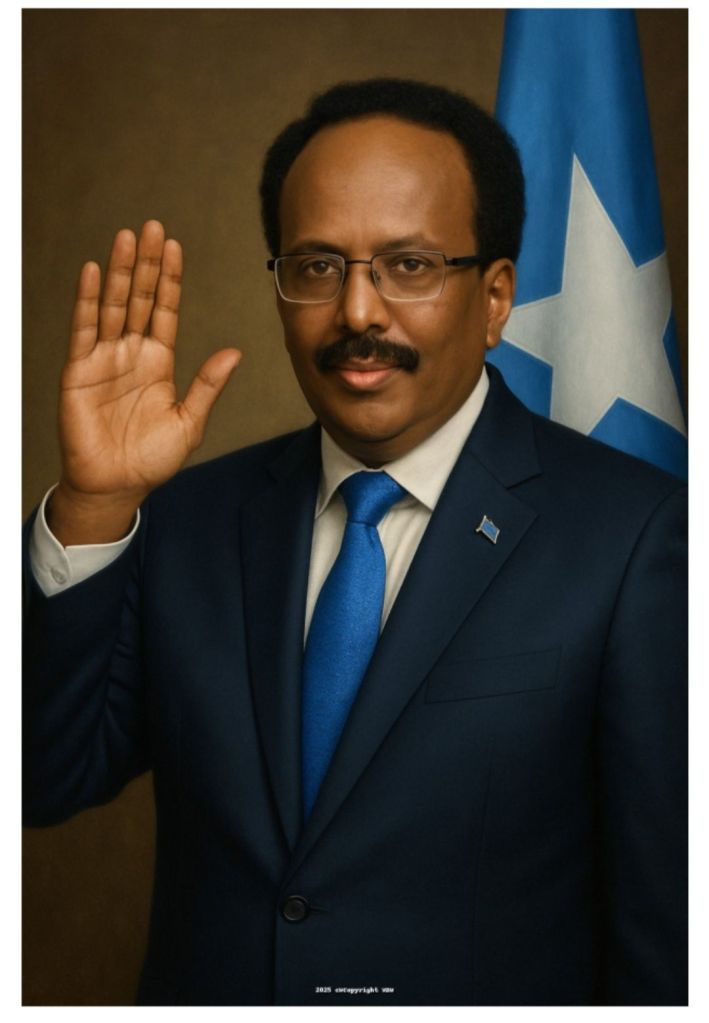
The suggestion that Mohamed Abdullahi Farmaajo could serve as a political blueprint for Hassan Sheikh Mohamud is not merely misguided—it risks erasing the lessons of Somalia’s recent history. While both leaders have occupied the presidency, their approaches to governance, constitutional integrity, and national cohesion diverge sharply. To position Farmaajo as a model for Mohamud is to endorse a legacy of authoritarianism, foreign policy recklessness, and clan-based division—a path incompatible with Somalia’s fragile democratic aspirations.
1. Authoritarian Centralization vs. Sectarian Fragmentation
Farmaajo’s tenure was defined by a systematic erosion of democratic norms. His administration weaponized state institutions to silence critics, imprison journalists, and stifle opposition through tactics like the 2018 electoral meddling in Galmudug and Jubbaland. By centralizing power in Mogadishu, he destabilized Somalia’s federal framework, undermining hard-won progress toward inclusive governance.
Hassan Sheikh Mohamud, while navigating Somalia’s complex clan dynamics, has faced accusations of favoring his Hawiye lineage, particularly in appointments and resource allocation. However, unlike Farmaajo’s overt power grabs, Mohamud’s challenges stem from the perennial tension between clan loyalty and national unity—a struggle inherent to Somalia’s political landscape. Emulating Farmaajo’s autocratic playbook would only exacerbate these divisions rather than resolve them.
2. Foreign Policy Gambles vs. Diplomatic Pragmatism
Farmaajo’s alignment with Qatar and Turkey alienated traditional partners like the UAE and Western donors, polarizing Somalia’s foreign relations during a critical period of state-building. His 2018 agreement ceding Somali airspace management to Ethiopia—crafted in secrecy without parliamentary oversight—exposed a blatant disregard for sovereignty. This deal, framed as “regional cooperation,” set a perilous precedent for external interference.
Mohamud, by contrast, has pursued a more balanced diplomatic strategy, reaffirming ties with multilateral institutions like the African Union while cautiously engaging Gulf partners. His administration’s support for the Somali National Army’s offensive against al-Shabaab, backed by international allies, reflects a pragmatic approach to security—one that avoids Farmaajo’s reliance on foreign patronage.
3. Clan Populism vs. Incremental Reconciliation
Farmaajo’s rhetoric of “Somali nationalism” often served as a veil for sub-clan favoritism, deepening societal fractures. His manipulation of clan loyalties, exemplified by the politicization of security forces and federal agencies, prioritized short-term control over long-term reconciliation.
Mohamud’s efforts, though imperfect, have leaned toward dialogue. His handling of the SSC-Khatumo crisis—a breakaway region challenging Puntland’s authority—illustrates this contrast. Where Farmaajo ignored the 2019 Las Anod protests, enabling violent crackdowns, Mohamud has cautiously supported SSC-Khatumo’s quest for representation, framing it as a constitutional rather than partisan issue. This shift, while contentious, acknowledges local agency—a marked departure from Farmaajo’s top-down coercion.
4. Constitutional Sabotage vs. Institutional Reform
Farmaajo’s most damaging legacy lies in his assault on electoral norms. His 2021 bid to illegally extend his term via a rubber-stamp parliament ignited street battles in Mogadishu, threatening a return to civil war. Such brinkmanship exposed a willingness to trade stability for personal power.
Mohamud, meanwhile, has cautiously advanced constitutional reforms, including controversial amendments to Somalia’s electoral model. While critics argue these changes centralize power, they also aim to universalize suffrage—a step toward one-person, one-vote elections absent since 1969. The difference? Farmaajo sought to bend institutions; Mohamud, however haltingly, seeks to rebuild them.
Conclusion: Charting a New Path Beyond Populism
Somalia’s next chapter demands leaders who transcend the zero-sum politics of the past. Farmaajo’s tenure—a case study in the perils of populism—offers no roadmap for progress. His foreign gambles, clan patronage, and disdain for federalism exacerbated the very crises he vowed to solve.
Hassan Sheikh Mohamud need not replicate these failures. Instead, his administration must prioritize inclusive dialogue, strengthen judicial independence, and depoliticize security forces. The SSC-Khatumo question, for instance, should be resolved through constitutional mechanisms, not backroom clan deals.
Somalia’s future hinges on rejecting the false choice between strongman rule and sectarian fragmentation. Leaders must embrace compromise over coercion, transparency over secrecy, and nationhood over clanhood. Farmaajo’s legacy is a warning, not a model—and Mohamud’s success depends on learning from it, not reviving it.
Somalia deserves leaders who build bridges, not walls. The stakes are too high for anything less
 Warsame Policy & Media Network (WAPMEN)