
By WDM
May 18, 2025
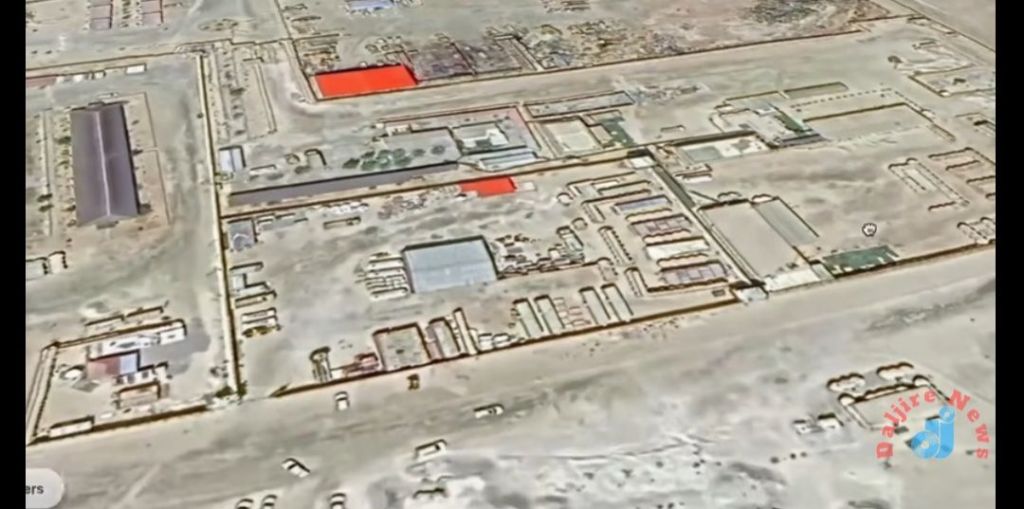
In the bustling port city of Bosaso on the Gulf of Aden, Puntland’s economic heartbeat, a quiet storm is brewing. Along its sun-scorched coastline, foreign flags fly over a sprawling military facility—a base reportedly hosting U.S. intelligence operatives, Emirati naval and military assets, and drone launchpads targeting ISIS militants in nearby Calmiskaad. While officials tout it as a critical tool for regional security, whispers of backroom deals, civilian risks, and shadowy missions beyond Puntland’s borders demand a closer look. Is this base a lifeline for stability or a ticking time bomb for Somali sovereignty? Let’s unpack the debate.
Whose Agenda Rules in Bosaso?
Foreign military bases are rarely just about “security.” In Bosaso, two global heavyweights—the U.S. and UAE—are playing very different games.
- The U.S. Counterterrorism Playbook: Washington’s focus is laser-sharp: degrade ISIS-Somalia, a faction that’s carved out hideouts in Puntland’s mountains. Drone strikes from Bosaso have reportedly pummeled insurgent positions, but as we’ve seen in Yemen and Afghanistan, such tactics can backfire. Civilian casualties breed resentment, and “surgical” strikes often leave political wounds that fester.
- The UAE’s Grand Chessboard: For the Emirates, Bosaso is a strategic jewel in its crown of Horn of Africa investments. With ports in Eritrea and Yemen already under its belt, the UAE seems intent on dominating trade routes and countering rivals like Turkey and Qatar. But at what cost? Leaked reports suggest murky agreements with Puntland’s leadership, including sweetheart deals for port access and presidential security. Critics argue this isn’t aid—it’s a transaction.
The Tightrope Walk: Security vs. Somali Sovereignty
Puntland’s government, which operates semi-independently from Mogadishu, faces a brutal calculus. Partnering with foreign powers brings cash, weapons, and intelligence to fight groups like ISIS and Al-Shabaab. But reliance on outsiders risks turning Puntland into a pawn in someone else’s war.
- The Presidential Bubble: The fact that Puntland’s president now resides in the military base speaks volumes. While his safety may be guaranteed, what about the people? Locals have little say in deals struck behind closed doors, and rumours of U.S.-led strikes spilling into neighbouring regions could spark backlash.
- Mission Creep: A Slippery Slope: Media reports hint at operations stretching beyond Puntland’s borders. If true, this risks inflaming tensions with Somalia’s federal government and neighbouring states in the sub-region. Without clear rules or oversight, the base could become a hub for proxy wars, not peace.
Risks of Foreign Presence: More Than Just Bombs?
Foreign bases often come with unintended consequences:
- Blowback: Concentrating foreign troops and drones in Bosaso makes it a prime target for insurgent attacks. Civilians, not soldiers, often pay the heaviest price.
- Proxy Wars: The UAE’s rivalry with Turkey (which backs Mogadishu) could turn Puntland into a battleground for regional power plays.
- Eroding Trust: Secrecy fuels distrust. If locals view the base as a tool of foreign exploitation—not protection—it could fuel the very extremism it aims to crush.
A Better Path Forward?
Security is vital, but it can not come at the cost of Somali sovereignty. Here’s what’s missing from the Bosaso equation:
- Transparency: Puntland’s government must disclose the terms of its foreign partnerships. Who’s funding the base? What’s the scope of operations?
- Accountability: Civilian harm from drone strikes must be investigated and compensated. No more “oops” apologies.
- Invest in People, Not Just Drones: Jobs, schools, and hospitals do more to counter extremism than any drone. Why is 90% of foreign aid still military-focused?
Final Thoughts: Who Wins, Who Loses?
The Bosaso base is a double-edged sword. For now, it may keep ISIS at bay and line the pockets of a few elites. But if history teaches us anything, it’s that foreign military interventions in Somalia rarely end well. Without transparency, equity, and local buy-in, Bosaso’s base risks becoming another chapter in Somalia’s long story of external exploitation—dressed up as a “security partnership.”
What do you think? Is foreign military presence a necessary evil in fragile states like Somalia or a recipe for disaster? Drop your thoughts in the comments.
Background information
The United Arab Emirates (UAE) has maintained a notable presence in Bosaso, the commercial hub of Somalia’s Puntland State, since 2017. This involvement encompasses both maritime security initiatives and infrastructure development.
UAE Presence in Bosaso
The UAE has been instrumental in supporting the Puntland Maritime Police Force (PMPF), a regional security entity established in 2010 to combat piracy. This support includes training, equipment provision, and operational assistance.
In addition to security collaborations, the UAE, through its subsidiary P&O Ports, secured a 30-year concession in 2017 to manage and develop the Port of Bosaso. The development plans involve constructing a 450-meter quay, dredging to a depth of 12 meters, and enhancing port infrastructure to accommodate larger vessels.
Reports of Radar Installation
In April 2025, open-source intelligence (OSINT) analysts reported the presence of a structure near Bosaso’s UAE-operated airbase that resembles an Israeli-manufactured ELM-2084 Multi-Mission Radar system. This radar is known for its capabilities in tracking drones, missiles, and aircraft over distances up to 470 kilometres. The installation, if confirmed, could enhance surveillance and air defence in the region.
Official Denials and Regional Dynamics
The Puntland government has officially denied the existence of any UAE military base or radar installations in Bosaso. Minister of Information, Mahmoud Aydid Dirir, labelled the reports as “fabricated propaganda” aimed at undermining Puntland’s stability and progress in counter-terrorism efforts.
These developments occur amid complex regional dynamics, with various international actors seeking strategic footholds in the Horn of Africa. The UAE’s activities in Bosaso reflect its broader strategy to secure maritime routes and expand its influence in East Africa.
⚠️ Conclusion
While the UAE’s involvement in Bosaso is evident through its support for the PMPF and port development projects, reports of advanced military installations like the ELM-2084 radar remain unconfirmed and are officially denied by Puntland authorities. The situation underscores the intricate interplay of local governance, foreign interests, and regional security concerns in Somalia’s northeastern corridor.
 Warsame Policy & Media Network (WAPMEN)
You must be logged in to post a comment.