
Introduction
Puntland State of Somalia, established in 1998 as a beacon of stability and decentralized governance, once prided itself on its aspiration to create a “smaller and smarter” government. Yet, recent accounts from residents like Dahir, a diaspora returnee to Garowe, paint a troubling picture of institutional decay, clan favouritism, and bureaucratic bloat under President Said Abdullahi Deni’s administration. Dahir’s stories—of a justice system held hostage by bribery, a police force paralyzed by clan loyalties, and a government expanding while services crumble—highlight systemic failures that betray Puntland’s founding principles. This essay examines the dual crises of under-resourced institutions and clan-based governance, alongside the contradictions of unchecked governmental growth, to explore why Puntland risks squandering its promise as a model of local governance.
Institutional Fragility and the Cycle of Corruption
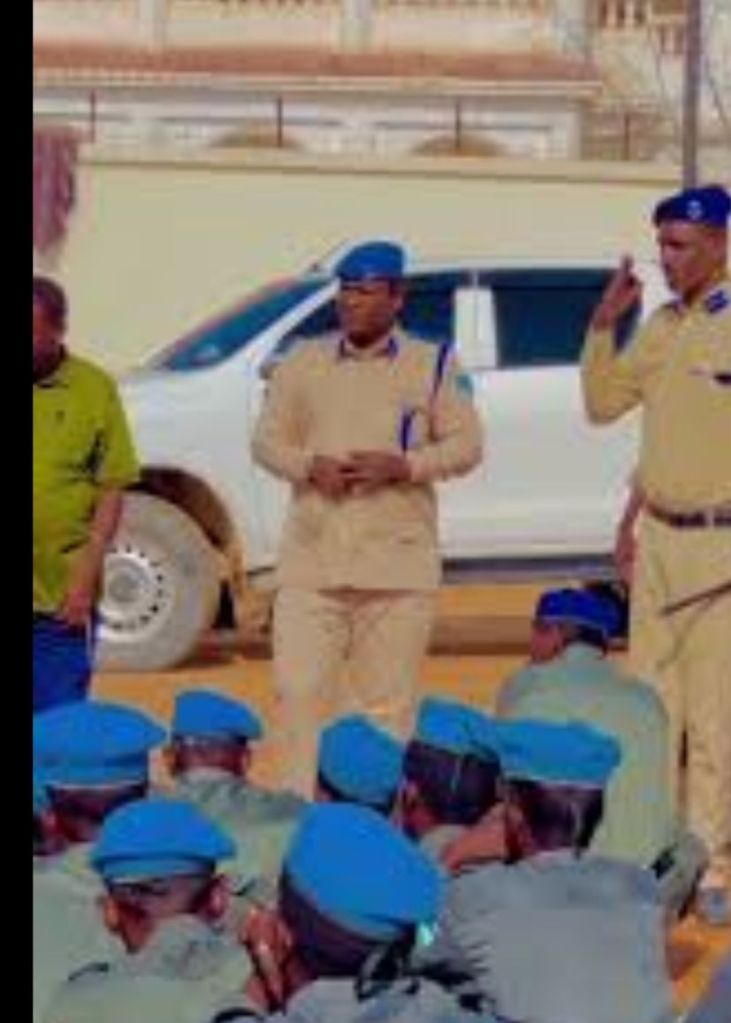
Puntland’s struggle to uphold law and order begins with its skeletal institutional framework. As Dahir observed, even basic public services like policing are crippled by a lack of operational funds and trained personnel. When a teenager’s misconduct requires familial bribes to resolve—rather than formal legal processes—it underscores a system reliant on informal negotiations, not rule of law. Such scenarios are symptomatic of broader dysfunction: police departments lack vehicles, stations lack electricity, and officers go unpaid for months. This vacuum of resources fosters corruption, as underpaid officials turn to extortion or clan patronage to survive.
The problem extends beyond the police. Health clinics, courts, and municipal offices suffer similar neglect, perpetuating a cycle where citizens lose faith in state structures. Without funding, institutions cannot attract skilled professionals or implement reforms, leaving Puntland’s governance trapped in a self-defeating loop of incapacity.
Clan Loyalty vs. State Authority
Compounding institutional weakness is the infiltration of clan identity into state apparatuses. In Garowe, the police force’s homogeneity—recruited predominantly from a single sub-clan—erodes impartiality. Officers hesitate to act against kin, while victims from rival clans face bias. This subversion of meritocracy undermines trust in the state, as seen in the teenager’s case: justice becomes a transactional commodity, contingent on clan ties and bribes rather than accountability.
Puntland’s founders envisioned a government transcending clan divisions, but in practice, clan loyalty often supersedes civic duty. Such nepotism not only weakens law enforcement but also deters investment and diaspora repatriation, as Dahir’s disillusionment suggests. When state roles are clan sinecures, competence and public trust erode.
The Irony of Expansion: Bigger Government, Weaker Governance
Paradoxically, President Deni’s administration has prioritized expanding bureaucratic structures—creating redundant agencies and overlapping mandates—while core institutions starve. Ministries multiply, but budgets remain opaque, and coordination falters. This growth, critics argue, serves political patronage, rewarding allies with government posts rather than addressing systemic flaws.
The original vision of a lean, efficient government has given way to bloat, mirroring failures of larger federal states. Expansion without investment in capacity or oversight exacerbates inefficiency: more departments compete for scarce funds, deepening service delivery gaps. Meanwhile, Deni’s focus on contentious issues like federal disputes with Mogadishu diverts attention from grassroots governance needs.
Conclusion: Reclaiming the Promise of Decentralization
Puntland’s crises are not insurmountable but demand urgent recalibration. First, institutional capacity must be rebuilt through budget prioritization, diaspora engagement, and international partnerships focused on training and infrastructure. Second, clan-neutral recruitment and anti-corruption measures are critical to restoring faith in state institutions. Finally, the government must halt counterproductive expansion, streamlining agencies to align with its original “smaller and smarter” ethos.
Dahir’s story is a microcosm of Puntland’s crossroads: a region struggling to balance tradition with modernity, clan with citizenship, and growth with governance. Without addressing these tensions, Puntland risks becoming a cautionary tale—a state that expanded its bureaucracy but forgot its people. The path forward lies not in mimicking failed models but in reclaiming the innovative, pragmatic spirit that once made it a Somali success story.
 Warsame Policy & Media Network (WAPMEN)
I don’t live in Somalia, but I can’t help having a keen interest in the situation there. In addition, I particularly visited Puntland 4 or 5 times in the last 20 years, the last one being in 2013. That being said on how informed (or uninformed) I might be on the issues in question, it is my sincere opinion that Ismail’s article is an accurate description of what is ailing Puntland.
However, I wish to make two observations: first, these problems are not peculiar to Puntland. They are endemic throughout Somalia, including each of its member states. Any differences are insignificant and are, primarily, related to differences in the specific localities. Second, these problems are not new to Puntland. While they may have gotten worse, those problems have been menacing the state for a long time. Here is an annacdote that might illustrate this point: I visited Gaalkacyo in 2005, my first post Siad Barre one. One afternoon, I had tea with an ordinary layman relative. He told me how a man was murdered in downtown and the murderer walked away while the police looked on. “How come, why they didn’t arrest him?” I asked. His answer was simple and sensible as it was shocking. He reasoned that if they try to arrest an armed man, the most likely outcome would be that either a policeman would be killed or the murderer would be killed. If the policeman is killed his children would be orphaned, his wife would be widowed, and they have no benefits from the “government”. If, on the other hand, a policeman kills the murderer, it would be his brother, son, cousin, or himself that would killed in revenge. In either case, the government is a nonentity. So, no sane person would die or kill for the government.
Finally, the fact that Puntland is not alone in having these problems and she was having them for a long time should not make anyone feel better. We should all feel terrible about it and do everything in our power to find solutions.
LikeLike
Thank you for commenting it, Ahmed. You are spot-on.
LikeLike