
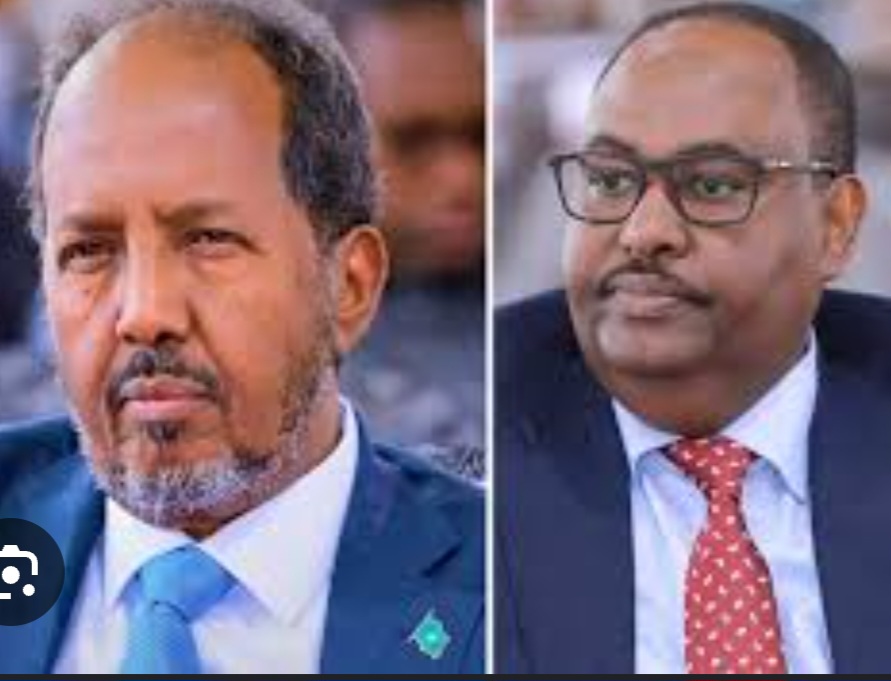
Somalia’s political landscape has long been defined by instability, insurgency, and fragile governance. In recent years, the leadership styles of Presidents Hassan Sheikh Mohamud of the Federal Government of Somalia (FGS) and Said Abdullahi Deni of Puntland State have drawn scrutiny for a striking administrative commonality: their frequent and prolonged overseas travels. Both leaders’ absences from their respective seats of power have raised concerns about governance vacuums, internal power struggles, and the exploitation of political instability by armed groups and rival factions. This article examines the shared challenges posed by their leadership approaches and the implications for Somalia’s security and democratic processes.
Frequent Overseas Travels and Extended Absences
Both presidents have spent significant portions of their terms abroad, often during critical junctures for their administrations.
- President Hassan Sheikh Mohamud (FGS): Since returning to office in 2022, Mohamud has embarked on numerous international trips, including diplomatic engagements in Turkey, the UAE, Egypt, and Western nations. Critics estimate he has spent nearly half of his current term overseas, focusing on securing foreign support for Somalia’s fight against Al-Shabab and debt relief. While these goals are vital, his absence has coincided with escalating clan conflicts, delays in military operations, and disputes over federalism.
- President Said Abdullahi Deni (Puntland): Deni’s administration has been similarly marked by extended stays in the UAE, reportedly consuming one-third of his term. His absences have overlapped with pivotal moments, such as tensions over Puntland’s opposition to Somalia’s centralization efforts and disputes about local elections. His prolonged departures have left key decisions to deputies and advisors, weakening oversight and coordination.
In both cases, the leaders’ physical distance has created administrative paralysis, with bureaucracies struggling to function without clear directives.
Power Vacuums and Internal Struggles
Leadership vacuums in Mogadishu and Garowe have fueled infighting among political elites and security actors. In Somalia’s clan-based political system, a president’s presence is often essential to mediate disputes and assert authority.
- Mogadishu’s Challenges: During Mohamud’s trips, reports suggest that competing factions within the FGS have clashed over control of security operations, resource allocation, and negotiations with federal member states. Al-Shabab has capitalized on this disarray, launching bold attacks in regions where military coordination has faltered.
- Puntland’s Dysfunction: In Deni’s absence, groups like Aaran Jaan (a small corrupt power-brokers) and Ilma Diyaano (a mutiny within the security forces) have intensified efforts to undermine Puntland’s stability. For instance, clashes in Garowe and Bosaso during 2023 election campaigns were exacerbated by Deni’s inability to mediate disputes. As a former member of Puntland’s Technical Committee for Federal Negotiations (TCFN), I witnessed firsthand how Deni’s absence derailed critical discussions on the One-Person-One-Vote (1P1V) elections. Without his leadership, logistical and political hurdles went unresolved, leading to my resignation from the committee and the eventual collapse of the electoral roadmap.
Security Crisis Demands Hands-On Leadership
Somalia remains in a state of war. Al-Shabab and ISIS-Somalia continue to control swathes of territory, and their resilience hinges on exploiting governance gaps. Both presidents have been absent during moments of acute crisis:
- Mohamud’s overseas trips have often coincided with Al-Shabab offensives, such as the 2023 attacks in Galmudug and Hirshabelle. Military officials have complained of delayed approvals for operations and resources during his absences.
- Deni’s stays in the UAE left Puntland’s security apparatus vulnerable to infiltration by militants and clan militias.
The analogy to President Abdullahi Yusuf Ahmed (1998–2004) is instructive. As a former public servant under Yusuf, I recall how his frequent medical trips abroad created administrative chaos. Each month-long absence eroded his authority, emboldening rivals and paralyzing decision-making. Mohamud and Deni risk repeating this pattern.
Erosion of Public Trust
Citizens increasingly perceive their leaders as disengaged. In Puntland, Deni’s focus on international networking over local governance alienated constituencies who expected progress on 1P1V elections. Similarly, Mohamud’s globe-trotting contrasts starkly with the FGS’s inability to deliver basic services or protect civilians.
The resignation of technocrats (like myself) from committees and agencies reflects broader disillusionment. When leaders are physically absent, morale plummets, and corruption flourishes.
Conclusion: Leadership Requires Presence
Somalia’s complex crises demand leaders who prioritize hands-on governance over international engagements. While diplomacy is necessary, presidents can not afford to outsource administration to deputies. The experiences of Yusuf, Mohamud, and Deni illustrate a recurring truth: prolonged absences weaken institutions, empower spoilers, and deepen instability.
For Somalia to stabilize, its leaders must balance global advocacy with domestic accountability. If presidents continue to govern from afar, the voids they leave will be filled by those who exploit chaos—not those who build peace.
The author is a former member of Puntland’s Technical Committee for Federal Negotiations (TCFN) and a political analyst focused on governance and security in Somalia.
Published in WDM.

 Warsame Policy & Media Network (WAPMEN)
You must be logged in to post a comment.