Biography: Haji Warsame Ahmed Gurey

1. **Anti-Colonial Resistance & Exile**: 
   Haji Warsame was indeed a key figure in the **Dervish Movement** and a vocal opponent of colonial rule. His political activism led to his **exile by colonial authorities** from Garowe (Nugaal Region) to Qardho (Karkaar Region) in what is now **Puntland, Somalia**. This punitive measure was a common colonial tactic to disrupt anti-colonial networks, particularly targeting leaders who mobilized resistance across clan lines.

2. **Post-Independence Role**: 
   After Somalia’s independence in **1960**, his expertise in Islamic law and governance earned him recognition by the new Somali government. He was appointed as a **District Judge in Jeriban** (Mudugh/Mudug Region), a role that aligned with his earlier judicial contributions in the Dervish Movement. This appointment reflects the continuity of his commitment to Sharia-based governance and his respected status in Somali society.

### **Key Contextual Insights**
– **Colonial Exile**: His exile to Qardho underscores the broader colonial strategy of fragmenting resistance by relocating influential leaders to distant regions. Qardho, a historic town in the Karkaar Mountains, was already a hub for religious and anti-colonial activities, which may have influenced his continued activism there.
– **Post-1960 Judiciary**: His post-independence appointment highlights how Somalia’s early governments sought to integrate leaders with religious and anti-colonial credentials into the new state’s institutions. Jeriban, located in central Somalia, was part of a region where the Dervish Movement once had strong influence, further emphasizing his symbolic and practical role in reconciliation and state-building.

### **Significance of the Updates**
– **Continuity of Leadership**: Haji Warsame’s transition from Dervish judge to state-appointed district judge illustrates how Somalia’s post-colonial elites drew on pre-independence systems of authority, blending traditional Islamic governance with modern state structures.
– **Regional Politics**: His exile to Qardho and later work in Mudug also reflect the interconnectedness of Somali clan and regional networks. These areas were historically significant to the Dervish Movement and later became focal points in Somalia’s state formation debates.

### **Sources and Further Research**
While details about his exile and post-independence career are not widely documented in English-language sources, this information likely comes from:
– **Somali oral histories** or regional archives (e.g., Puntland/Mudug records).
– **Government documents** from the early Somali Republic (1960–1969), which may mention judicial appointments.
– **Local scholars** in Garowe, Qardho, or Jeriban, who may have preserved his legacy through community narratives.

### **Why This Matters**
Haji Warsame’s story bridges Somalia’s anti-colonial struggle and its post-independence nation-building efforts. His life exemplifies how religious leaders and former resistance figures were instrumental in shaping the nascent state, even as Somalia grappled with the challenges of unifying clan-based governance with centralized authority.
BOOKS BY ISMAIL H WARSAME

1. Talking Truth to Power in a Tribal Context
   This book delves into the intersection of Somali clan dynamics (tribalism) and governance. Warsame critiques how clan loyalty (*qabiil*) often undermines national unity and effective leadership in Somalia. 
   – Themes: 
     – Challenges of building institutions in a clan-based society. 
     – The role of federalism in balancing tribal interests and statehood. 
     – Personal experiences navigating Puntland/Somalia’s political landscape. 

2. Hayaan: The Long Journey of the Camel Boy
   – A **memoir** blending Warsame’s personal story with Somali cultural and political history. The title references his humble beginnings (symbolized by the “camel boy”) and the concept of *HAYAAN* (dignity/integrity). 
   – Themes: 
     – From nomadic roots to political leadership. 
     – Reflections on Somali identity, resilience, and post-colonial struggles. 
     – The importance of ethical leadership in rebuilding Somalia. 

Why These Titles Matter
Together, these works offer a rare **insider’s perspective** on: 
– The tension between **traditional Somali clan structures** and **modern governance**. 
– The emotional and political journey of a key figure in Puntland’s history. 
– Advocacy for *HAYAAN* as a moral compass in Somali leadership. 

How to Locate the Books
As earlier noted, availability can be limited, but here’s a refresher: 
1. Amazon: Search for the exact titles (paperback/ebook) at https://amazon.com/author/ismailwarsame
2. Somali bookstores (e.g., Hoyo Media, Somali Bookshop Online). 
3. Direct contact: Reach out to Ismail Haji Warsame via Twitter ([@ismailwarsame](https://twitter.com/ismailwarsame)) for guidance. 
4. Libraries: Check WorldCat.org or university libraries with African Studies collections. 

Puntland State Troops’ Valiant Fight Against ISIS in the Calmiskaad Mountains, Bari Region

In the rugged and remote terrain of the Calmiskaad Mountains, located in the Bari region of Puntland, Somalia, a fierce battle has been raging between Puntland State forces and ISIS-affiliated militants. This ongoing conflict underscores the broader struggle against terrorism in the Horn of Africa and highlights the resilience and determination of Puntland’s security forces in defending their territory and people.

The Rise of ISIS in Puntland

While Al-Shabaab remains the dominant extremist group in Somalia, ISIS has sought to establish a foothold in the country, particularly in Puntland. The Calmiskaad Mountains, with their harsh and inaccessible terrain, have become a strategic stronghold for ISIS militants. The group has exploited the region’s remoteness to recruit fighters, train operatives, and launch attacks on security forces and civilians.

ISIS’s presence in Puntland poses a significant threat not only to the region but also to the broader stability of Somalia and the Horn of Africa. The group’s ideology, which is even more radical than that of Al-Shabaab, has attracted foreign fighters and created a new front in the fight against terrorism.

Puntland’s Response

Puntland, a semi-autonomous state in northeastern Somalia, has long been a bastion of relative stability in an otherwise turbulent region. Recognizing the threat posed by ISIS, Puntland’s government and security forces have taken decisive action to root out the militants from their mountain hideouts.

The Puntland Security Forces (PMPF, PSF), including the Darawish troops, have launched a series of military operations in the Calmiskaad Mountains. These operations have involved ground assaults, airstrikes, and coordinated efforts to cut off supply lines and isolate the militants. The troops have faced significant challenges, including difficult terrain, harsh weather conditions, and the militants’ use of guerrilla tactics.

Despite these challenges, Puntland’s forces have demonstrated remarkable courage and resilience. They have engaged in intense firefights, cleared militant hideouts, and liberated villages that had been under ISIS control. The troops’ efforts have been supported by local communities, who have provided intelligence and logistical support.

The Human Cost

The fight against ISIS in the Calmiskaad Mountains has not been without cost. Puntland’s troops have suffered casualties, and the conflict has displaced local communities, adding to the humanitarian challenges in the region. Civilians have also been caught in the crossfire, with reports of casualties and destruction of property.

However, the determination of Puntland’s forces and their commitment to protecting their people have been unwavering. The troops have not only fought to eliminate the ISIS threat but have also worked to restore stability and security to the affected areas.

Broader Implications

The battle in the Calmiskaad Mountains is part of a larger struggle against terrorism in Somalia and the Horn of Africa. ISIS’s presence in Puntland represents a new and dangerous dimension to this conflict, requiring a coordinated and sustained response from both regional and international partners.

Puntland’s efforts to combat ISIS have little or no support from the Federal Government of Somalia and international allies, including the United States and the African Union Support and Stabilization Mission in Somalia (AUSSOM). However, urgent support is needed to ensure that Puntland’s forces have the resources and capabilities to fully eliminate the ISIS threat.

Conclusion

The fight against ISIS in the Calmiskaad Mountains is a testament to the bravery and determination of Puntland’s security forces. Despite the challenges, they have made significant strides in weakening the militants’ presence and restoring stability to the region. However, the battle is far from over, and continued efforts are needed to ensure that ISIS is fully eradicated from Puntland and Somalia.

The international community must recognize the importance of supporting Puntland’s efforts and work together to address the root causes of extremism in the region. Only through a comprehensive and coordinated approach can lasting peace and security be achieved in Somalia and the Horn of Africa.

DIFFERENT SOMALI DIALECTS

Somalia has several dialects, which can be grouped into three main categories:

1. **Northern Somali (or Maxaa Tiri)** – This is the most widely spoken dialect and serves as the basis for Standard Somali. It is primarily used in northern Somalia, including regions like Somaliland and Puntland.

2. **Benadir (or Coastal Somali)** – Spoken along the central coast of Somalia, including Mogadishu. It has some differences in pronunciation and vocabulary compared to Northern Somali.

3. **Maay** – Spoken mainly in southern Somalia, particularly by the Digil and Mirifle clans. Maay is quite distinct from the other dialects and is sometimes considered a separate language. It has significant differences in grammar, vocabulary, and pronunciation.

Additionally, there are other minor dialects and variations, such as **Ashraaf** (spoken by the Ashraaf community) and **Northern Frontier District (NFD) Somali** (spoken in parts of Kenya).

While these dialects can differ in pronunciation, vocabulary, and some grammatical structures, speakers of different dialects can generally understand each other, except in cases where the differences are more pronounced, such as between Maxaa Tiri and Maay.

**Dangerous Drugs Used by ISIS and Jihadist Groups: Evidence Found in Puntland Caves**

ISIS and other jihadist organizations have long been associated with the use of dangerous, character-altering drugs. Recent discoveries in the Calmiskaad mountains of Puntland State, Somalia, appear to confirm these claims. Security forces have uncovered evidence of drug use in ISIS hideouts, raising questions about the role of these substances in fueling violence and extremism.

**Captagon and Drug Paraphernalia Found in ISIS Caves**

As Puntland security forces continue to dismantle ISIS strongholds in the Calmiskaad mountain range, they have made alarming discoveries. Among the items found in the caves and control points are dangerous drugs, including Captagon, a potent stimulant linked to jihadist activities.

Captagon, scientifically known as fenethylline, is an amphetamine-like drug that has gained infamy for its use among Syrian rebels and ISIS fighters. Known for its ability to induce heightened aggression and fearlessness, Captagon has been dubbed the “Jihadist’s Drug.” It is often used to enhance combat performance and is reportedly given to suicide bombers in combination with other powerful substances, such as LSD (lysergic acid diethylamide), a hallucinogenic drug.

**The Role of Captagon in Jihadist Activities**

Captagon’s effects make it a tool of choice for extremist groups. Users experience increased energy, reduced fear, and heightened aggression, making them more effective in combat situations. The drug’s association with ISIS and other jihadist organizations has raised concerns about its role in perpetuating violence and terrorism.

Both Captagon and LSD are believed to have been developed by Western intelligence agencies. These mind-altering substances have reportedly been used in Somalia to facilitate acts of violence and suicide missions, further underscoring their dangerous potential.

**Daljir Media’s Investigation**

Daljir Media has been at the forefront of reporting on these findings, shedding light on the use of drugs by extremist groups in Puntland. Their investigative work highlights the ongoing challenges faced by security forces in combating not only the physical threat posed by these groups but also the psychological and chemical warfare they employ.

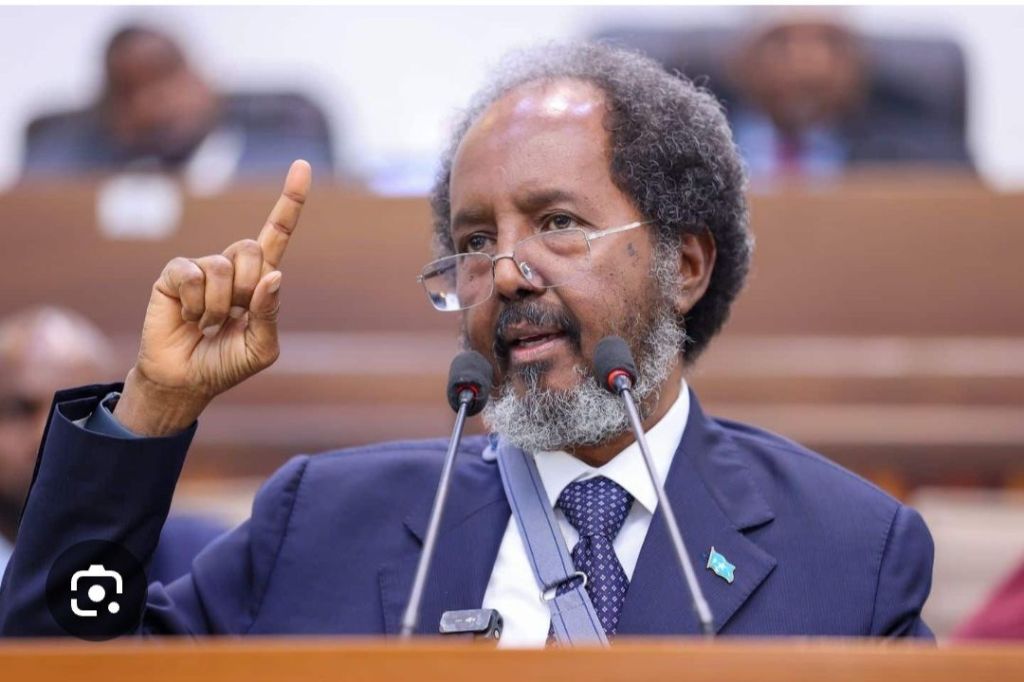
PRESIDENT HASSAN SHEIKH MOHAMUD (HSM) IS AN INCOMPETENT DICTATOR

HSM

Introduction:
Hassan Sheikh Mohamud (HSM), the current president of Somalia, has been accused of pursuing authoritarian control over the country. His methods include widespread corruption, manipulation of the political system, and silencing opposition voices. This article examines his tactics, the obstacles he faces, and the potential consequences of his actions.


1. Methods of Control:
   HSM has been accused of using corruption and a rubber-stamp parliament to consolidate power. Reports suggest that one-third of the cabinet ministers have been coerced or bribed into silence, effectively neutralizing any opposition within the government.

2. Declaring Dictatorship:
   Once HSM has secured control over the government, silenced opposition, and manipulated the political system, he is expected to declare himself an absolute dictator. This move would mark a significant shift in Somalia’s political landscape, undermining any remaining democratic institutions.

3. Obstacles to Power:
   Despite his efforts, HSM faces significant obstacles. The country remains deeply divided along clan lines and federal member states, a legacy of the Civil War and the subsequent Transitional Federal Government (TFG) Charter. These divisions have created legitimate resistance to his rule, making it difficult for him to achieve his ultimate goal of centralized control.

4. Potential Consequences:
   In the meantime, HSM’s actions could cause irreversible damage to Somalia’s political and social fabric. His alleged corruption and authoritarian tendencies pose a significant threat to national security and the stability of the region.

Conclusion:
HSM’s pursuit of absolute power represents a grave threat to Somalia’s future. His use of corruption, manipulation, and coercion to silence opposition undermines any hope for democratic governance. The international community and domestic actors must take immediate action to prevent further damage and hold HSM accountable for his actions. He must be stopped before his tyranny becomes irreversible.

Why Supporting WDM Means Supporting Fearless, Unbiased Journalism

**Introduction:** 
“In a world where media often bends to external pressures, Warsame Digital Media (WDM) stands apart. Are you ready to support a platform that delivers fearless, unbiased, and enlightening coverage of Somalia and beyond?”

**Why WDM Matters:** 
“WDM is more than just a news outlet—it’s a platform for critical thinking and historical context. Our feature stories and editorials are crafted to educate, enlighten, and inspire action. By supporting WDM, you’re helping to sustain a voice that refuses to compromise on truth.”

**What We Offer:** 
– **Critical Analysis:** Dive deep into current affairs with insights you won’t find elsewhere. 
– **Historical Context:** Understand today’s events through the lens of history. 
– **Timely Commentaries:** Stay informed with up-to-date, thought-provoking editorials. 

**How You Can Support Us:** 
“Don’t miss out on the stories that matter. Subscribe today and join a community of informed readers who value fearless journalism. Your support ensures that WDM continues to deliver the critical analysis and commentary you rely on.”

**Contact Us:** 
Tel/WhatsApp: +252 90 703 4081 
Email: iwarsame@ismailwarsame.blog; ismailwarsame@gmail.com

Follow us: @ismailwarsame 

**Closing Statement:** 
“Supporting WDM isn’t just about staying informed—it’s about standing up for truth, integrity, and the power of independent media. Join us today and be part of the change.”

ALL POLITICS IS LOCAL

WDM EDITORIAL

It is really true that if your home is broken, your politics is broken too and misguided for “all roads lead to Rome,” as they say. Treaties and international exposure of a country are meaningless when your people are divided, hungry, and sick at home. When a nation is consumed by corruption, nepotism, and disillusionment and you are not doing anything about it, it is fair to say you are a total failure. The only honourable thing to do in that case is to vacate the seat of power. In the case of Somalia, what is needed urgently is more than governance and political reforms. Somalia needs radical socio-economic changes impossible to achieve under the status quo.

To start with, we need urgent national reconciliation and fostering unity. We need to drop the mentality of “my way or the highway” at every level of the national government (FGS & FMS). Let us stop the political frictions within our governance system. The FGS must provide leadership at home front before wasting millions of dollars of our meagre financial resources for photo opps overseas. Attending every world event while your country and its population are suffering and in bad shape is not only moral bankrupt and irresponsible but also constitutes a criminal negligence.

To meet foreign and domestic challenges requires unity of people and purpose. It is self-explanatory, and there is no other way to put it. It is really that simple.

To the supporters of Federal President Hassan Sheikh Mohamoud and the rest of the pack in the FMS with divisive policies at home, shame on you, for you are sacrificing your country to the wolf, when you continue to live with the political shenanigans of the current national and regional leaderships in Somalia.

Introduction to Public Finance in Post-Conflict Somalia – Puntland Post

https://puntlandpost.net/2025/01/21/introduction-to-public-finance-in-post-conflict-somalia/

HISTORY OF GAZA

Anybody who reads this story on Gaza will understand why this city is impossible to conquer. Empires came and went but never succeeded in conquering Gaza. Take a read.

Gaza has become synonymous with conflict and dispute. Though only slightly larger than Omaha, Nebraska at 140 square miles, the small territory of Gaza has been a hot spot for bitter disputes between sparring powers for millennia, from the Ancient Egyptians up until the British Empire and even today.

Wedged between the Negev and Sinai deserts on one side and the Mediterranean Sea on the other, Gaza was contested by the Pharaohs, Persians, Greeks, Romans, Byzantines, Arabs, Fatimids, Mamluks, Crusaders, and Ottomans. Then, in 1948, 200,000 people sought refuge in Gaza-a marginal area neither Israel nor Egypt wanted. It is here that Palestinian nationalism grew and sprouted into a dream of statehood, a journey much filled with strife.

Though small in size, Gaza’s history is nothing short of monumental. Jean-Pierre Filiu’s Gaza is the first complete history of the territory in any language. Beginning with the Hyksos in 18th century BC, Filiu takes readers through modern times and the ongoing disputes of the region, ending with what may be in store for the future.

https://www.amazon.com/Gaza-History-Comparative-Politics-International/dp/0190201894#:~:text=by%20Jean%2DPierre%20Filiu%20(Author)

[Courtesy].

Neo Economics: A NEW PARADOX OF ECONOMICS

By Dr. Jagdish Bhagwati, an Indian economist in the US

Japanese save a lot. They do not spend much. Also, Japan exports far more than it imports. Has an annual trade surplus of over 100 billion. Yet Japanese economy is considered weak, even collapsing.

Americans spend, save little. Also US imports more than it exports.
Has an annual trade deficit of over $400 billion. Yet, the American economy is considered strong and trusted to get stronger.

But where do Americans get money to spend? They borrow from Japan, China and even India.
Virtually others save for the Americans to spend. Global savings are mostly invested in US, in dollars.

India itself keeps its foreign currency assets of over $50 billion in US securities. China has sunk over $160 billion in US securities.
Japan’s stakes in US securities is in trillions.

Result:
The US has taken over $5 trillion from the world. So, as the world
saves for the US – It’s The Americans who spend freely. Today, to keep the US consumption going, that is for the US economy to work, other countries have to remit $180 billion every quarter, which is $2
billion a day, to the US!

A Chinese economist asked a neat question. Who has invested more, US in China, or China in US? The US has invested in China less than half of what China has invested
in US.

The same is the case with India. It have invested in US over $50
billion. But the US has invested less than $20 billion in India.

Why the world is after US?

The secret lies in the American spending, that they hardly save. In fact they use their credit cards to spend their future income. That the US spends is what makes it attractive to export to the US. So US imports more than what it exports year after year.

The result:

The world is dependent on US consumption for its growth. By its deepening culture of consumption, the US has habituated the world to feed on US consumption. But as the US needs money to finance its consumption, the world provides the money.

It’s like a shopkeeper providing the money to a customer so that the customer keeps buying from the shop. If the customer will not buy, the shop won’t have business, unless the
shopkeeper funds him. The US is like the lucky customer. And the world is like the helpless shopkeeper financier.

Who is America’s biggest shopkeeper financier? Japan of course. Yet it’s Japan which is regarded as weak. Modern economists complain that Japanese do not spend, so they do not grow. To force the Japanese to spend, the Japanese government exerted itself, reduced the savings
rates, even charged the savers. Even then the Japanese did not spend (habits don’t change, even with taxes, do they?). Their traditional postal savings alone is over $1.2 trillion. Thus, savings, far from being the strength of Japan, has become its pain.

Hence, what is the lesson?

That is, a nation cannot grow unless the people spend, not save. Not just spend, but borrow and spend.

Dr. Jagdish Bhagwati, the famous Indian-born economist in the US, told Manmohan Singh that Indians wastefully save. Ask them to spend, on imported cars and, seriously, even on cosmetics! This will put India on a growth curve. This is one of the reason for MNC’s coming down to India, seeing the consumer spending.

‘Saving is sin, and spending is virtue.’
But before you follow this Neo Economics, get some fools to save so that you can borrow from them and spend !!!

SOMALI REGION OF SOMALILAND HAS NOTHING TO OFFER TO ANYBODY BUT A BEGGING BASKET

WDM EDITORIAL

Somaliland has nothing to offer to anybody except a naval base. That will be legally problematic without Somalia consent. Moreover, the naval base alone doesn’t bring any economic benefits to residents there. It is an illusion that will haunt them sooner.

Historically, Somaliland was a meat supply line for the British military garrison in Aden, Yemen, in the 1920s. That was the only reason it had become a British colony called “BRITISH SOMALILAND PROTECTORATE.” It also acted as a sports vacation for wild games. Neither of these advantages is available today . The Middle East conflict is about to end save Iranian confrontation with the West and Israel, and Somaliland Region has little to offer in that regard. Paradoxically, Somaliland Region is engaged in hosting and funding  ISIS and Al-Shabab in Somalia. This is not an empty rhetoric and unsubstantiated accusation. This is a proven fact and open secret now. Come to Puntland State to witness these revelations as the State Forces continue to crush ISIS bases in the mountains of Calmiskaat (Al-Miskat) in Eastern Somalia in the Horn of Africa.

Lately, some American and British paid lobbyists and recent Internet “bots” have been misleadingly engaged to trick the incoming Trump Administration into recognising this would-be begging basket for a statehood. If that happens, the US will sign on for further political instability in the Horn of Africa and the Middle East. Such a bad policy decision will be worse for America than the Iraq invasion as Somalia and the rest of the African countries will fight back to prevent an opening of a Pandora Box impacting the entire continent and putting African post-independent order into disarray. It is our sincere hope that the Americans are not too guillable to entertain such a stupid idea. Look before you leap is an old adage in the English literature.

Foreign terrorists passed through Addis Ababa, Ethiopia, and via Berbera and Hargheisa in Somaliland to Al-Miskat in eastern mountains of Puntland State in the Horn of Africa.

In the US, Michael Rubin, Heritage Foundation, Zio orgs in the US and beyond, and UK MP Gavin Williamson, among others, are national security threats to Somalia’s sovereignty and territorial integrity. I have yet to see Villa Somalia or the Ministry of Foreign Affairs launching any protest against these destabilising and provocative persons or foreign institutions meddling in the internal issues of this country. These troublesome foreign entities should be confronted and reminded them to mind their own businesses. Be warned and stay away from Somali internal affairs.

CHOICES OF A NATIONAL FACING TROUBLE AT HOME

Hassan Sheikh Mohamud

A national political leader represents aspirations of a nation to unity, peace, and prosperity. If he falls short of these aspirations, he would face popular resistance. This is where choices start for an unpopular leader. He would either resign with grace or fight against his own people. If he has strong security forces and an army, he will be tempted to be a dictator. If he is weak, he will definitely be a foreign asset to stay in power. What kind of leader is President Hassan Sheikh Mohamoud of Somalia? Have your your say.

PUNTLAND FIGHTS ISIS ALONE

Puntland State is fiercely fighting terrorist ISIS alone without help from the Somali federal government. Puntland’s fight without the support of the federal government not only highlights Puntland’s self-reliant approach to national issues and self-development but also the federal leaders’ attitude towards Somali unity.

Shortly before the start of the Puntland War on terror, the Federal Government of Somalia had received two shipments of military weapons from Egypt. It would have been a patriotic and national obligation if a small portion of these weapons were allocated to support the ongoing Puntland State campaign against ISIS. The fact that the leader of Puntland State is not on good terms with the President of Somalia does not justify not standing by Puntland by all means necessary.

ISIS was not known in Puntland State before 2015. People say that whenever Somali leaders clash, they are exploited by external enemies. When Abdiweli Mohamed Ali Gas of Puntland State fell out with the Somali  federal government, ISIS was planted in Somalia.

Now, with the rift between Puntland President Deni and Somali President Mohamud, ISIS has become a threat to national security by coming back alive. I have always believed that it wasn’t coincidental..

I have seen Puntland State sending troops to fight Al-Ashabab in Harardhere in Galmudugh State, but I have yet to see Mogadishu extending a helping hand to Puntland State troops fighting terrorism in that state.

Written by Ahmed Siad

sabriedheere@gmail.com

WDM EDITORIAL: A DIVIDED CLANNISH GOVERNMENT, DIPLOMATIC DISARRAY, AND DOMESTIC POLICY FAILURE

That is the nation-state-to-be Somalia. Expert advice on statecraft has no bearing on incompetent, selfish, and amateurish  leaders at the top. People are extremely concerned about the political direction of this poor country and doubt very much of its very survival. Sleep-walking policies by central authorities threaten Somalia’s sovereignty and territorial integrity. In a complex diplomatic world of unprecedented economic, political, and security uphelds and developments with neck-breaking speed, Somali people are disillusioned and fearful for the fate of their country. They have lost trust in their current rulers at every level of the administration. Worst of all, they have no means to change disable governors imposed on them. They are desperate for change and don’t know how to go about this desired change of direction. They are in a dream-like dystopia of human existence. They are waiting for miracles to happen. They had never experienced anything like it before. They are wondering what curse has hit them in their own country. It is no longer about looting of public wealth and properties by unscrupulous government thieves. They are now afraid for their country. They see that they have no say in running the affairs of their own country. They see that everything is for sale to the highest foreign and domestic bidders. They are fearful of losing everything and eventually themselves. This is an alarming story! People are crying for help, and they don’t see it coming.

Domestically, there are flames of clan fire engulfing everywhere in the country and no attempts to put off these tribal violence and conflicts by any level of the national and regional governments. This country belongs to nobody to care about. It is a helpless situation that no one dares to predict the finale of this story. Somalis are simple people who believe in fate without concerted actions on their part and often wait for miracles to occur outside their intervention. They don’t realize that the political world doesn’t operate that way. At least, they have to understand that without their positive reactions to events, things will get worse before they get any better. Now, it is better to be late than never. It is time to act to change the direction of this country. It is time to wake up from the long slumber. It is time to unite and discard petty internal grievances. Call for unity of action and purposeful goals.

WHY THE PORT OF GARA’AD IS NEEDED – A BRIEF PERSONAL ACCOUNT

Attention: National and international dignitaries as well as major business community will gather in Gara’ad on the shores of the Indian Ocean for the official Opening Ceremony of Gara’ad Port next week, a major Puntland community investment. The project is one of the biggest infrastructure undertakings in Africa. The host is Puntland State President, Said […]

WHY THE PORT OF GARA’AD IS NEEDED – A BRIEF PERSONAL ACCOUNT

WDM EDITORIAL: WHY TRIBAL HOSTS OF TERRORISTS EVENTUALLY FALL VICTIMS TO THEIR GUESTS

It’s a law of nature that ill-feeling and hatred towards your neighbours attract all evils and dubious alliances like extremists. Revenge against your brothers and sisters would lead you to join your tomorrow’s existential enemies. That is the human nature of a tribal society like Somalis.

There is no ideological connection between the Somali villagemen and terrorist groups. It’s a relationship of convenience and conspiracies by both parties with different agendas. Shortly after this marriage of convenience, the hosts of terrorist networks experience abuses and actually become hostages of their guests with no way out back to their  lost freedom. That is to say, they fall as victims of terrorism. Soon, they are robbed of their possessions, and family members – sons forcefully are recruited for terrorist activities, and daughters are taken away under threat without any parental consent and more mistreatment to follow.

When we have no sense of community and neighbourly cooperation, and are divided along clan lines with perpetual warfare, all our enemies, whether they are terrorists or foreign powers, would take advantage of this weakness exactly like what is happening now in Somalia. We can continue blaming Al-Shabab. ISIS, Ethiopia, Turkey, Emirates, or Qatar for our misfortune, but we have to accept the naked fact that it was our own fault that we failed to understand the basic logic that divided we all fall.

___________

If you enjoyed this story and would like to read more like it, consider supporting WDM work by  subcribing to our Annual Subscription at +252 90 703 4081. Your support helps us to keep producing more content like this.

PUNTLAND STATE IS AN INDIAN OCEAN AND RED SEA REGIONAL POWER

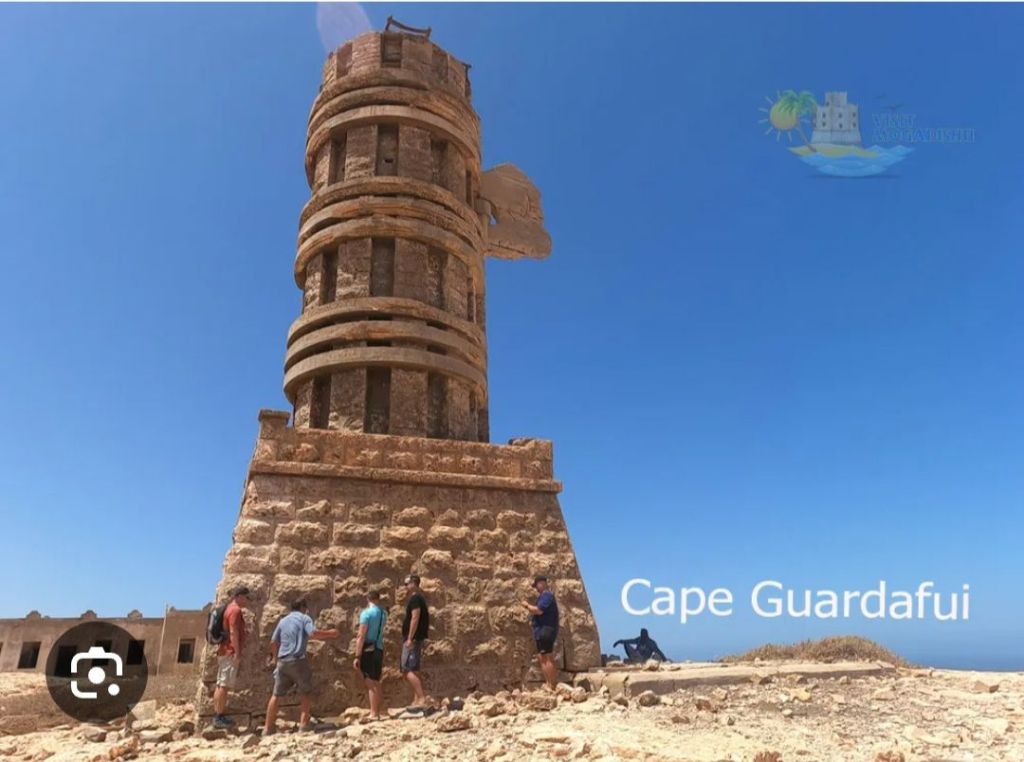
The Federal Member State of Puntland is strategically located at the tipmost of the Horn of Africa, where the waters of the Indian Ocean and the Red Sea mix in an spectacular fashion that amazes scientists and fishermen alike. Off the coastline of Ras Asayr (Cape Guardafui) within the territorial waters of Somalia is the marine navigation route of almost one-third of the international shipping world. Between the Cape and the Sea, there is a natural Suez Canal. Former Italian Colonial Administration of Somalia had built a lighthouse for navigation and used to collect levies from international shipping lines for using the guiding lighthouse. Without passing through this strait, ships could go around the Indian Ocean, spending millions of barrels of fuel and as many days to reach their various destinations of the globe. Nowadays, modern ships don’t need a lighthouse for navigation, but they need to pass through Cape Guardafui.

With this preliminary knowledge, the late vice-president of Puntland State, Mohamed Abdi Hashi, and myself as the Chief of Cabinet at the presidency decided to explore potential business opportunities of Cape Guardafui for navigation, tourism and collection of levies for Puntland Government. Our efforts led us to the study of the history of the Cape. We learned that most international shipping liners are insured by British Lloyd’s Insurance Marketplace Co. When there were security incidents in a particular marine route, Lloyd’s would raise the insurance premiums and change policy. We learned that the Italians in Somalia had been experiencing a problem in sustaining the operations at the Guardafui Lighthouse. That is because the operators of the lighthouse often disappeared. Ships without the guidance of the lighthouse could go astray those days to hit the rocks. Local fishermen used to take advantage of such shipwrecks. When that happens, goods recovered are reported first to the King of Majertainia. That is why we have the slogan, bad kasoo bah, Boqor baa leh, which roughly translates into: the King is sovereign over sea spoils. We also learned that shipping liners had spread false rumours that the local inhabitants in the Cape practised cannibalism and that is why operators of the lighthouse often disappeared. As a result, Lloyd’s insurance premiums skyrocketed on the route to Cape Guardafui. We found out that local people in the Cape persuaded the lighthouse operators to settle in and abandon the lighthouse so that ships could wreck off Cape Guardafui.

As we continued to work on our project, we sought international help. Some Swiss firms indicated business interest to build forwarding facilities such as supply of water, fuel, and explore tourist infrastructure for all year sunshine bath and indulgences in tropical fruits, fresh fish and lobsters. Tourist cruise ships could find it attractive to spend days at would-be tourist resorts of Cape Guardafui.

Finally, the US government warned Swiss firms that they couldn’t implement such a project for: 1. Puntland State was not a sovereign country. 2. Since there was no central government in Somalia, the US considered sea waters of Somalia as international. We suspended the continuation of the project to wait for another day for the next generation to realize it.

But, this is important to note: Successive administrations of Puntland State had never appreciated the strategic position of  national and international importance the state can employ for its own advantages and leverage to be viable and potential independent country, in the place of its permanent quarrels with Mogadishu.

___________

If you enjoyed this story and would like to read more like it, consider supporting WDM work by  subcribing to our Annual Subscription at +252 90 703 4081. Your support helps us to keep producing more content like this.

[This article has been updated after posting].

THE WORLD IS IN DISARRAY. ARE WE READY TO WEATHER THE COMING STORMS?

Americans and Europeans are alarmed by the coming of Donald J. Trump to four more years of chaos in the White House. The Middle East is up in flames. Palestine is being erased from the map. Iran is on the crosshairs of the US with Israel. The US and Europe will not be able to sustain Ukraine’s survival from its war with Russia. Russia will lash out at European countries and NATO for its own survival at the last minute. World War III is probably a real possibility now than ever before.

Sea transportation will twinkle, and prices of goods and services will be beyond the reach of ordinary people due to conflicts in the Middle East. In other words, there will be tough times ahead, and existential threats to all are in the making. This is not a fiction anymore.

Here in fragile Somalia, our leaders aren’t interested in national survival and defence, but how to sell Somalia to the highest bidder, prominently now to Ankara, Addis Ababa, Abu Dhabi and Doha. While they are engaged in these treasonous acts, public institutions are roting and collapsing before our eyes. Somali people are helplessly suffering and can’t do anything about their situation.

Predatory business sharks are buying and selling everything in Mogadishu, including the remaining properties of the Somali State through tax-evasion, illegally acquired and looted national wealth, and money-laundering. Somali international donor community is watching in silence while all their multi-year efforts to revive Somalia go down the drain. It is a sad saga unfolding. One may take the impression that they are complicit and engaged in a cover-up to shield Villa Somalia from the allegations of runaway corruption and incompetence of this fledgling administration. They don’t even acknowledge that President Hassan Sheikh Mohamoud has abandoned the fight against Al-Shabab and ISIS in South-Central Somalia. It wasn’t among his priorities in the first place, despite well advertised false campaigns by the international community working with the Somali government. Instead, he is engaged in picking up petty fights with the Federal Member States, wrecking Somali unity in the process. How is that OK with the International Donor countries?

Now, the Somali sovereignty and territorial integrity are at stake, and there is a public fear in the country that Somalia is facing one of its gravest periods in its entire history.

Let us rise up to defend the nation.

___________

If you enjoyed this story and would like to read more like it, consider supporting WDM work by  subcribing to our Annual Subscription at +252 90 703 4081. Your support helps us to keep producing more content like this.

A story from James Christopher on Medium

“Studying economics, experiencing the less than ethical practices at various tech and finance companies and working on disruptive technologies that can displace humans didn’t give me confidence for a utopian future imagined in science fiction films.“ Read “Don’t Get Crushed When the World Goes Sideways in 2025–2029: A Field Guide“ by James Christopher on Medium: https://medium.com/predict/dont-get-crushed-when-the-world-goes-sideways-in-2025-2029-a-field-guide-0a28772b510d

Ousted Minister Strikes Back

Have you heard that Abdirizak Omar, the ousted Petrolium minister, stabbed President Hassan Sheikh in the back? Rumour has it that Abdirizak has revealed to some Western governments some documents relating to bribes and kickbacks that oil companies gave to President Hassan Sheikh in Somalia. These bribes are estimated to be worth billions, according to sources close to the leaked documents.

Omar’s wife has now moved to Toronto, Canada, in an attempt to re-establish herself and buy a new home. The first house is occupied by the eldest son, so the second house is a necessity for a well-off parents. It’s over. Their old status in Somalia can no longer continue after Omar was ousted as he is no longer the favourite minister of Hassan Sheikh and his sub-clan. His constituency expressed their desire to select and promote another candidate.

Abdirizak Omar is done, and soon Hassan Sheikh Mohamud shall be done too.

By Ahmed Siad

WAREYSI RADIO GOOBJOOG

WAREYSI RADIO GOOBJOOG

ABOLISH THE TITLE, POWERS AND POST OF THE SOMALI PRESIDENT

The most destabilising factor in Somali body-politic is the post of the president. This post is the source of all evils and adequately represents what went wrong in Somalia’s statecraft. Somali society is still primative and can not remodel advanced governance structures of modern societies. Under this title, its abusive nature, historical background, political tradition of governance in Somalia, practise of despotism, corruption, nepotism, tribalism and gross abuses of power without any checks and balances, originates from this presidential position. No matter what the national constitution stipulated under the parliamentary system, the president grabs power upon election, making the parliament, judiciary, and cabinet disabled and irrelevant as well as weakening of other public institutions across the board. The position, title, and powers of a president must be abolished constitutionally in Somalia. We believe that way a great burden on Somalia’s destabilising main factor could be lifted, and Somalia could be saved now from the brink of abyss. The problem of national presidency also cascades down to the presidents of the Somali Federal Member States. The title of regional president should be scrapped similarly. Understand that the title of the “president or head of state” is toxic in Somalia’s statehood and self-government. We know that from our history and experience. It isn’t just a theory.

To think through this idea, we have to first recognise that we have a severe governance problem that can’t be resolved through conventional thinking. We need advanced research into this issue, but we can start with a national congress to explore different ideas and consult widely, and agree to a New Deal.

One option in the menu of options is to  explore the idea of creating a Council of Chairpersons with an annual rotating chair role. That way, continuity of governance experience and government operations could be maintained, and clan rivalries eliminated once and for all.

___________

If you enjoyed this story and would like to read more like it, consider supporting WDM work by  subcribing to our Annual Subscription at +252 90 703 4081. Your support helps us to keep producing more content like this.

WDM

WDM

Puntland Ministries Paralyzed DUE to Lack of Operational Funding

In previous articles, we have highlighted the urgent need for budgetary and structural reforms in Puntland’s government. The latest developments confirm that the situation has worsened, with key ministries and state agencies now frozen due to a severe lack of operational funds.

A Chronic Structural Problem

The Puntland Government has long relied on international donor-funded projects to keep its institutions running. However, when these funds dry up, ministries grind to a halt because the government has failed to allocate even minimal operational and development budgets. Unlike other Somali Federal Member States, which lack basic institutional frameworks, Puntland has well-established public institutions and a vast territory to administer. Yet, without sustainable financing, these institutions risk total collapse.

Who is to Blame?

While Mogadishu’s economic sanctions have exacerbated the crisis, the primary responsibility lies with successive Puntland administrations that failed to implement long-term budgetary solutions. The donor community also shares some blame for fostering dependency rather than supporting self-sufficiency.

The Way Forward

To prevent further institutional paralysis, the Puntland Government must:

  1. Prioritize institutional capacity in annual budget allocations.
  2. Diversify revenue streams to reduce reliance on external funding.
  3. Implement structural reforms to ensure ministries can function independently.

This crisis is not new—it is the result of years of neglect. Without immediate action, Puntland’s governance system may face irreversible damage. The time for reform is now.

(Originally published on Ismail Warsame’s blog. Updated for clarity and 

BADLY NEEDED ADMINISTRATIVE REFORMS IN PUNTLAND

___________

If you enjoyed this story and would like to read more like it, consider supporting WDM work by  subcribing to our Annual Subscription at +252 90 703 4081. Your support helps us to keep producing more content like this.

TURKEY POSES STRATEGIC EXISTENTIAL THREAT TO SOMALIA – REPORTS

https://x.com/radiodaljir/status/1874665964840603723?t=ZSqIJ7v3T7uTed6JQPVEKg&s=09

WHEN IT IS TIME TO STAND UNITED AND DEFEND THE NATION

WDM EDITORIAL

Press reports indicate that Puntland Government opposition, though small and disorganised, is now mostly united to support the administration campaigns against ISIS hiding in eastern mountains of the state. Apparently, such a call for the defence of motherland doesn’t apply to President Hassan Sheikh Mohamud and his small like-minded henchmen of Dambul-Jadid Clique.  It looks like this group has other priorities and isn’t interested in unifying the country for either nation-building nor defence of its sovereignty and territorial integrity.  Defending the country from domestic and foreign enemies is a constitutional mandate and national defence obligation of every citizen. Why does one seek public office if they don’t have basic understanding of the rights and obligations of a citizen? It is incredible, to say the least.

Foreign powers monitoring the jihadist movements worldwide, and people here weren’t surprised to learn that foreign fighters from multiple foreign countries of origin were among the dead in battling with Puntland State forces the other day. Residents in South-Central Somalia are alarmed by the news of the death of foreign jihadists in Puntland State. Now, imagine Houthis of Yemen nearby joining in the fight, too. 

However, we need to see the bigger picture of this Puntland State fight against ISIS – this fight is about the struggles of the Somali people against foreign terrorists, for what is good for Puntland State is good for all Somalis. President Mohamud and his Mogadishu clique should join the fight in good faith and take cues from Puntland State experience.

IT IS ALREADY YEAR 2025!

It is already the 2nd day of January 2025, and the world has not come to an end, despite flames of wars occurring in every corner. Tremendous sufferings of human race, environmental destruction, and poisonous global pollution are taking place throughout due to bad decisions by unscrupulous politicians and corporate sharks at expenses of our own survival on earth, the poor, desperate, and defenceless innocent people.

The date of January 2025 seems to be somehow incomprehensible. It feels that I was stuck in the dates of 1990s, and the calendar couldn’t pass beyond that. I don’t know about you, but the date 2025 is too much and too heavy on me mentally. Paradoxically, I can’t figure out why.

Nevertheless, life goes on even without you, me, or anybody else. That is because Almighty is in control, and no one else has any power to influence the destiny of life on earth.

Feel the real world of Almighty beyond human compression. Only He knows what He is doing, what is in store for all of us.