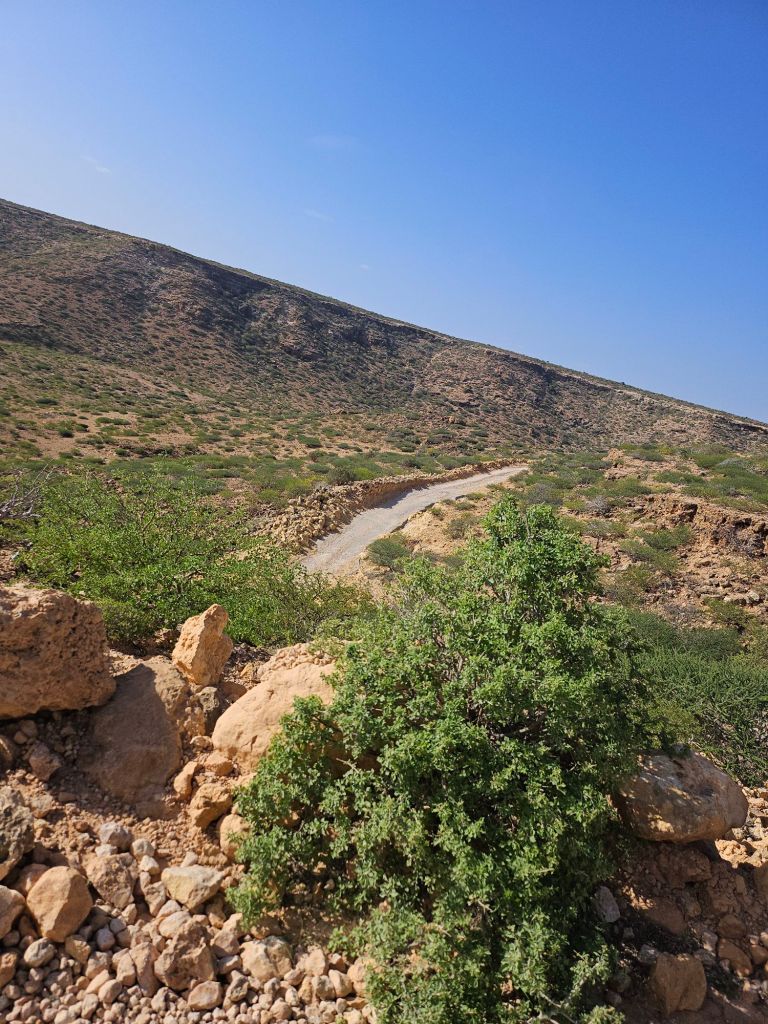
WDM EDITORIAL: MOGADISHU DRAGS SOMALIA INTO A DESPAIR, DISINTEGRATION, AND AT THE MERCY OF CORPORATE GREED AND POLITICAL OPPORTUNISM

Mogadishu https://g.co/kgs/jDYYiaj

Mogadishu is in a world of trouble and the people of this city have no way of freeing themselves from the prevailing corporate greed of snatching all public wealth and properties with the assistance and facilitation of political opportunists, whose sole purpose in life is to enrich themselves at expenses of Somalia’s national sovereignty. Don’t they know that corruption, nepotism, and further weakening and disabling of fragile public institutions will surely lead to the collapse of the Somali state once again? Surely, unchecked arms trafficking, money laundering and looting of public funds will eventually lead to social explosion and violence unprecedented in the troubled Somali history. When that happens, it will be worse than the infamous 400-Day Mogadishu Battle in the 1990s.

Meanwhile, one wonders why the international donor community, financial institutions in particular, is silent about these huge money laundering schemes on real estate in Mogadishu, where, as reported, even the buildings of the Ministry of foreign Affairs and the Central Bank of Somalia are up for sale! Are they complicit in @HassanSMohamud’s power abuses and outright looting of Somali public wealth/taxation revenue and international financial aid in its many forms and instruments, including covert financial channels from the Gulf Monarchs among others, to Somalia? Are they in connivance with the unprecedented money laundering campaigns in the Somali Capital?

We need some answers from the world community, Somalia international partners, World Bank, and the IMF. They know full well that there is neither real parliament nor cabinet with any powers. They also know full well that a judiciary that can reign in President Mohamud’s runaway greed, corruption, and gross abuse of power is nonexistent.

As corruption and gross power abuse reign over @TheVillaSomalia, the rest of the country will drift away further from Mogadishu mayhem, ruling out any attempt to reunify the country. Clan conflicts will rage and spread like wildfire. This is already happening in many enclaves of the country. It is expected the worst is yet to come. Extremists will fill in the political vacuum, and Taliban-type takeover will occur, first in Mogadishu and throughout the South-Central Somalia. Given the political and security situation in the country, it is only a question of time, and possibly soon.

The consequences of extremist takeover of the country will be long-distance bombing of Somalia by Western powers and even Israel, followed by invasion of foreign powers. Why Israel? Because of Houthi fighters trying to gain foothold in the ISIS-held mountains of Eastern Puntland State over-looking the Red Sea.

As the invasion of Somalia begins, have no doubt about it, Turkey, Ethiopia, Qatar, and the UAE will side with the West, Washington will turn AUSSOM into an occupying force, and Xalane at Mogadishu Airport will transform into Baghdad-style Green Zone. Just like Syria, the system is already set and designed for invasion, and Al-Ashabab is just playing the useful idiot role for the West. Just as Al-Nusra, the al-Qaeda affiliate in Syria, was overnight rebranded into a moderate jihadists group by the West, al-Shabaab, al-Qaeda’s affiliate in Somalia, will too be rebranded. Given this sad saga, this then raises a series of questions about what the President knows and why he is lately behaving in such a strange way.

All these fatal scenarios will occur due to the treasonous crimes committed daily by our national leaders, political opportunists and selfish politicians at all levels of the Somali government and corporate greed, mainly in Mogadishu.

The survival of the nation and the Somali people is at stake. The stakes are too high to remain silent about the plight of our troubled nation. It is time to act and change course.

___________

If you enjoyed this story and would like to read more like it, consider supporting WDM work by  subcribing to our Annual Subscription at +252 90 703 4081. Your support helps us to keep producing more content like this.


THE UGLY CASE OF OMAR SAMATER HIGH SCHOOL AND MILITARY REGIME MINISTER ABDIRIZAK MOHAMED ABUBAKAR – A GUT-CRUNCHING STORY OF GALKAYO BETRAYAL

EEC Financed Omar Samater Secondary school
School Emblem

Omar Samater Secondary School (OSSS) was one of three high schools financed and built in Galkayo, Mogadishu (15 May Secondary School) and Hargheisa (1st July Secondary School) by the European Economic Commission (EEC) in the 1960s Opening in 1970 as a boarding education facility, Omar Samater Secondary School, was especially equipped with with state of the art complex school kitchen with food delivery conveyors and technology of food preparation and hygiene. It was the first of its kind school ever built in Somalia, if not in the entire continent of Africa. The school with modern labs, well supplied library, living quarters for both students, and highly qualified teaching staff was a wonder of Somalia. The school served to educate students from the entire Northeast Regions of Somalia, Galgadud Region, then part of Mudugh, and beyond like Hiraan Region.

From eyewitness account of a former student and graduate of Omar Samater Secondary School and former cabinet minister of Puntland State, himself hailing  from Galgadud Region, Mohamed Hassan, one sad day, the Military Regime Minister of Education, Abdirisaq Mohamed Abubakar, surprisingly and suddenly came to visit the school. According to this account, also coroporated by several others, Minister Abubakar was mesmerised by the technology and equipment in operation at school, in the school kitchen, in particular. He declared: “These poor students and school don’t deserve to have such equipment. They deserve to burn charcoal and firewood here. This equipment must be removed. ” When asked where to move the equipment, he was quoted as saying ” to “Curuuba Hotel” in Mogadishu. He instructed the school staff to prepare students for military drills as well, “not indulged in luxury here.”  Students and school staff were helpless to influence this madman’s arbitrary decision or have any say in the matter.

This action wasn’t only abuse of power by the Late Siyad Barre stooge and henchman but a crime against humanity.

A few weeks later, four large military trucks came to the school to ship school equipment away to Mogadishu.

The school kitchen wasn’t designed for charcoal and firewood burning. After removal of the equipment, they had to dismantle concrete walls to build new school kitchen outdoors.

That is an ugly and sad experience of a “city-state dictatorship.” This stoty should never ever repeat itself in Somalia if this country can survive at all.

Hormuud Group of Companies’ Secret Land Grabbing Plan in Lower Shabeelle Region of Somalia

Statement by Dir Biyomaal Community

The Owner of Hormuud Group of Companies in Somalia,  Mr. Ahmed Nor Jimcaalle is planning a secret land grab of Dir Biyomaal lands in Lower Shabeelle Province. Hormuud and its land grabbing strategy in Lower Shabeelle of Dir Biyomaal land rights is alarming. Now, there is ethnic tension among the Dir Biyomaal community following a reported directive by President Hassan Sheikh Mohamoud in collaboration with Mr. Ahmed Nor Jimcaalle, owner of Hormuud Group of Companies. Over the past couple of years, Hormuud has been engaged in secret plans to seize Dir Biyomaal lands without consent. Mr. Ahmed Nor Jimcaalle is expected to facilitate and provide funds for this project, while President Hassan Sheikh will process all its necessary legislation.

Hormuud is providing financial support for an initiative to resettle over 10,000 Hawiye families in Lower Shabeelle. The Dir clan views these actions as a significant threat, characterizing them as ethnic cleansing orchestrated by both President Hassan Sheikh and Mr. Ahmed Nor Jimcaalle, a prominent ideological and financial leader of the Hawiye clan. In light of these developments, the Dir clan urgently calls on the international community, including the United Nations, UN human rights organizations, and International Criminal Court, to recognize their situation and condemn President Hassan Sheikh Mohamoud and Mr. Ahmed Nor Jimcaalle as warmongers engaged in ethnic cleansing. They denounce the covert activities against the Dir clan’s territory in Lower Shabeelle.The clan warns that the actions of President Hassan Sheikh and Mr. Nor Jimcaalle pose a grave risk of reigniting civil conflict in Somalia. This concern is heightened by ongoing unrest in Jubaland, particularly, and the recent conflict between Leelkase and Habargidir Sacad clans in Mudugh Region, which has reopened old wounds from past atrocities committed by the Hawiye clan since 1991.The Dir clan stands firm in their resolve to protect their rights and territory and will not tolerate any further encroachments. This expansionism driven by the Hawiye clan threatens the fragile peace in Somalia. Furthermore, the Dir clan warns international organizations, the International Criminal Court, and donor countries against becoming complicit in what they perceive as ethnic cleansing activities. They assert that the actions of President Hassan Sheikh and Mr. Ahmed Nor Jimcaalle reflect a deep-seated ethnic hatred against the Dir clan, which will never be accepted. The Dir clan pledges to fight for their rightful lands until their last breath, stating emphatically that anyone who attempts to move onto their lands will not be tolerated, and they will not take any responsibility for the consequences.

Music of the Day Song

[Courtesy].

THE IDEA OF GREATER SOMALIA IS DEAD

The vision of Greater Somalia is dead, mainly because of Somalia’s strategic failure and inability to counter complex conspiracies by superpowers supporting Somalia’s strategic and geopolitical enemies. Following that abysmal failure of Somali thought and leadership in that regard, many of us were taking cues from the European experience after the Second World War that territories which came under the rule of different powers should be left alone as long as residents in the occupied lands enjoy equal rights in their new countries.That experiment gave Europe peace and prosperity. In the case of Somalia, leaving alone Somali territories forcefully occupied by our neighbouring countries with the aid of colonial powers came with a high price and tremendous sufferings.

Now, we ended up having a new challenge of defending the remaining, seemingly independent portion of Somalia under attack by our neighbours again, drawing the help this time from even our UAE and Turkish Muslim brothers. A new player is coming in too, Israel, in the mix.

How are we going to handle this new aggression with such a successive failure of leadership in this poor and unfortunate country?

There is a potential risk that the idea of Greater Somalia may eventually transform into greater Ethiopia and Israel into our land.

Have your say.

SOMALI STATE IS ON THE BRINK OF COLLAPSE AGAIN

WDM EDITORIAL

When incompetence and corruption are orders of the day and the system is unable to effectively address and change course; when foreign agents, spies and extremists take advantage of the weakness of a falling regime; when foreign powers dictate their interests; when there is no strong opposition parties to expose and challenge the government of the day; when finger-pointing starts for failure and continuous political fiascos, and scandals by officials lose any meaning, these are the  sure signs that the regime is about to collapse – it may come in slow motion by its own inertia, but it will happen. Unfortunately, there is no apparent alternative when the system finally implodes. It happened in 1991 and it will again. It is now an objective historical process that no one can stop it. In the meantime, a great amount of damage has been done to Somali national interests, some irreversible.

Luckily, the federal system that Somalia had adopted after the Civil War to prevent city-state despotism is the only safety valve now to ensure total collapse of the Somali State doesn’t occur in the same way as in 1991. However, this collapse will occur mainly due to resistance to the federal system by the leaders of successive administrations of the  Somali federal government. This is the unintended consequence of their misguided vision in earnest search for central dictatorship, for federalism in Somalia is a de facto reality following the Civil War.

This time around, public accountability will happen after the ashes of Somalia’s central authority in Mogadishu. For sure, this imminent potential collapse of Somalia’s government will be different from the past in many ways. For one, there will be no hiding place anywhere in the world for looters of public wealth and those that have committed gross wrong-doing and state crimes. This time around, Somali communities are everywhere in the globe to chase criminals, on the top of expected  persecution by future emerging governments of the Somali State.

FROM DIPLOMATIC SOURCES

“It has come to our attention that the current Somali government delegation dispatched to Cairo and Addis Ababa lacks the necessary competencies to effectively represent Somalia’s interests.The team in Addis Ababa, in particular, is facing significant challenges. Notably, there is an absence of a legal team, and the members possess minimal diplomatic experience and negotiation skills. This situation has led to a detrimental impact on Somalia’s standing and negotiations in Ethiopia, where the host country appears to favor representatives from Somalia who lack the requisite capabilities.Moreover, it has been observed that two individuals identified as Ethiopian agents are leading the Somali delegation, further compromising Somalia’s position.It is imperative that Somalia reassess its delegation strategy and consider appointing individuals with proven diplomatic skills, effective negotiators, and a knowledgeable technical team to ensure Somalia’s interests are adequately represented.”

Tensions between the Federal Government and Jubbaland State

DIPLOMATIC ASSESSMENT

“The situation in Somalia, particularly regarding the tensions between the Federal Government and Jubbaland, is indeed complex and critical. The aggressive stance of President Hassan Sheikh Mohamoud towards Jubbaland has heightened divisions within the country, leading to violent confrontations between government and regional authorities. Key Factors Contributing to the Conflict:

1. Political Rivalry

The leadership conflict between the federal government and regional authorities like Jubbaland often stems from differing visions of governance and control over resources.

2. Historical Context

Somalia has a long history of clan-based politics, and Jubbaland’s leadership is closely tied to specific clan interests, complicating relationships with the federal government.

3. Security Concerns

Ongoing security challenges, including threats from extremist groups, exacerbate the situation, as both sides vie for control and legitimacy.

4. International Influence

The involvement of foreign powers in Somali politics can also impact the dynamics between the federal government and regional states.

5.Implications of the Conflict

The implications of this conflict are severe, contributing to a broader humanitarian crisis, displacement, and further instability across Somalia. Addressing these issues requires careful dialogue and reconciliation efforts to bridge divides and foster a more unified political landscape.”

Immediate Press Release

Subject; President Hassan Sheikh and Hawiye Clan Expansionism Against Dir Biyomaal Lands in Lower Shabeelle Province.

Statement on Land Rights and Ethnic Tensions

A direct order from President Hassan Sheikh Mohamoud to the Ministry of Planning and Investment reportedly plans to seize the land of the Dir Biyomaal community by force, without their consent. The Dir clan has warned President Hassan Sheikh Mohamoud about what they perceive as ethnic cleansing plans targeting them, asserting that the expansionist actions of the Hawiye clan will not be tolerated.

The Dir clan calls upon the international community, including the UN and human rights organizations, to acknowledge their plight and condemn President Hassan Sheikh as a warmongering figure. They denounce his clandestine activities against the Dir clan’s Biyomaal lower Shabeelle territory.

Furthermore, the clan emphasizes that President Hassan Sheikh Mohamoud’s actions threaten to plunge Somalia back into civil war, as clearly evidenced by the ongoing unrest jubaland and other part of country since he assumed power, reopening old wounds from the atrocities committed by the Hawiye clan since 1991, which remain unresolved.

The Dir clan also wishes to inform UNSOM and other international organizations that there are no internally displaced persons (IDPs) as suggested. The claim of relocating 10,000 Hawiye clansmen to Dir clan lower Shabeelle land is viewed as a tactic of Hawiye expansionism. They question why, if relocation is necessary, those being relocated are not returning to their own lands.

The Dir clan warns international organizations and donors countries against becoming complicit in what they see as ethnic cleansing activities. They assert that President Hassan Sheikh’s actions reflect a deep-seated ethnic hatred against the Dir clan, which we will never be accepted. The Dir clan pledges to fight for their rightful lands until their last breath, stating emphatically that anyone who moves to their lands will not be tolerated, and they will not take responsibility for the consequences.

NO RELIABLE PEACE IN A TRIBAL SOCIETY

Village of Harfo (North Mudugh) marked red on the map.

In any corner of Somali-inhabited geography, tribal disputes and clashes are live non-stop. Lives are being lost with impunity, and properties and livestock are being destroyed daily. No accountability of any kind rendered. Even today, a country location called Harfo (North Mudugh), which is not far off from Puntland Capital Garowe, two close subclans are clashing for minor habitat issues that don’t serve the loss of human lives.

Now, even such tribal hostilities rage on with the instigation and participation of the fledgling national government. The recent armed conflict in Jubaland State between FGS and the Member State is the prime example. Arms trafficking, including heavy gun-mounted so-called “technicals” is unprecedented as a result of the UN lifting of Arms Embargo on Somalia. Talk about peace and nation-building in Somalia!

In 2005 when I was working briefly with the United Nations and World Bank on the Somali Research and Development Program (RDP) called Joint Needs Assessment (JNA), I have learned something that seemed odd and strange to me at the time. In my little capacity as the Technical Coordinator with a multi-national teams of experts to carry out this needs assessment as the Transitional Federal Government (TFG) of Somalia was established in Mbagathi, Kenya, in 2004, I travelled with these foreign experts from UN and World Bank, or hired by them to conduct such research and assessment for Somalia’s needs to recover from multifaced destruction following the Civil War. In fact, the Somali New Deal, signed in 2013 in Brussels, Belgium, between the Federal Government of Somalia (FGS) and European Union (EU), was based on JNA and RDP field works in Somalia.  Abdirahman Faroole and Abdirisaq Jurile were ministers of planning and international cooperation of Puntland and the Transitional Federal Government, respectively, coordinating with our technical teams of Puntland State, South-Central Somalia and Somaliland administrations.

Upon landing on any Somali town, locally hired UN security staff was handy to give us security briefs on local issues. They always used to say that there was no peace in a tribal society, and human lives didn’t matter much there. I admit I was annoyed by the statements of these UN security personnel on local conditions and wrongly assumed that they were unpatriotic and even traitors. I was wrong.

From there, I learned that stupidity reigns supreme in a clan-dominated environment. There, neighbours and relatives fight to the last man. It could start any minute unpredictably without notice. Tribal conflicts and fights to the finish could be started by a single teenager, followed by the fall of numerous innocent people and bystanders. Unfortunately, this war within clans and subclans has been going on for centuries without any lessons learned. They couldn’t at least develop a mechanism or system for individual accountability. They continue to practise collective responsibilities for individual wrong-doing. That is why everyone is at personal risk of being targeted for belonging to a wrong clan. In fact, one of the biggest faulty lines of the famous Somali traditional leadership lies there. It is a wild world of savagery. You can now see this stupidity displayed in social media as unrestrained and mentally sick people contributing to Somalia’s social chaos and degradation of cherished Somali family values. Be careful!

That is the primative tribal society blessed with feeble rudimentary minds that we expect them to build a nation-state in Somalia. That is an illusion bordering on insanity. That is the reality we are dealing with. Welcome to the real world of Somalia.

___________

If you enjoyed this story and would like to read more like it, consider supporting WDM work by  subcribing to our Annual Subscription at +252 90 703 4081. Your support helps us to keep producing more content like this.
[This article has been updated after posting].

Lacag Shilling Soomaali ah ama lacag kale oo loo daabaco hal Dawlad Goboleed keliya ma aha mid hirgalaysa mana suuroobi karto

QORAAL ARAGTIDA WDM

Madaxweyne Puntland: Siciid Cabdullaahi Deni: Riyo lacag daabac aan suurtoobeyn

Isku dayga hirgelinta arrintaasi, daabacaada lacag hal dowlad goboleed oo qayb ka ah dowlada federalka ee Somalia, Waxay noqon doontaa waqti iyo hanti lumis taas oo si loo daba galo ay noqondoonto arrin adag ama wax mala awaal ahoo kale ah. Lacagta waa in ay dadweynuhu aqbalaan oo ay ku beddelan karaan lacagaha kale ee qalaad. Aynu ka soo qaadno in ay aqbali doonaan shacabka dawladda Puntland, ka dibna ay noqon doonto mid u cuntami doonta guud ahaan shacabka Soomaaliyeed. Si kastaba ha ahaatee, Bangiga dawladda Puntland iyo dadka deegaanka ayaa si degdeg ah ay uga dhammaan doontaa wareegtada lacagta cusub (currency circulation). Maamul-goboleedka Puntland waxa uu awoodi waayi doona in uu daboolo baahida iyo sahayda ka haysata guud ahaan Soomaaliya oo ay ku jirto Somaliland.
Waxaa intaa dheer, way adag tahay in dadka reer Puntland ay aqbalaan ama laga aqbalo in ay alaab iyo adeegyo ku iibsadaan/iibiyaan meeshii doolarka Mareykanka ee hadda laga isticmaalo guud ahaan Soomaaliya. Waa dhaqaale ku salaysan dollarka iyada oo aynaan ka tirsanayn Maraykanka sida wadamo dhawr ah oo aduunka ka jira.
Maadaama uu dhaqaaluhu ku saleysan yahay dollar, sida kor loogu soo cadeeyey, daabacaadda lacagta Soomaaliga, Bangiga Dawladda Puntland waxaa ku waajib ah in uu dejiyo sarifka lacagaha qalaad iyo in uu diyaar u yahay in uu lacag adag oo dollarka Maraykanka ah u qaybiyo macaamiishiisa iyo dhammaan dadka degan iyo dadka safarka ah ee ku sugan Puntland. Sidoo kale waxaa lagama maarmaan ah in la qaabilikaro lacagta Puntland ee ku jirta sarifka lacagaha qalaad sida dollarka ee laga keeno gobolada kale ee dalka Soomaaliya oo ay ganacsatada iyo dadka safarka ah ee reer Puntland ay ku iibsan jireen badeecado iyo adeegyo ka baxsan dowladda, taas oo ah arrin uusan Bankiga Puntland awoodeeda lahayn. Arrintaas ayaa ku filan sida aysan suurtagal u ahayn daabacaada shilin Soomaali ah oo u gaar noqon doonta Dawladda Puntland.
Hadii dhinac kale loo dhigo, beddelka ah in Maamul-goboleedka Puntland loo daabaco lacagteeda maxaliga ah oo la aqbalo sida Somaliland oo kale waa safar adag oo lagu shaacinayo ka go’itaanka Soomaaliya inteeda kale. Tani ma waxa aan ka hadlayno baa marka laga hadalayo hadal jeedinta iyo ku dhawaaqida dabacaada lacag u gaar ah Dawladda Puntland? Taasi ma shaqayn-doonto, waayo Xukuumadda Puntland kaligeed ma go’aansan karto haddii aysan jirin rabitaan baaxad leh ee dadka deggan Puntland. Waxaa la ogyahay in Hogaamiyaha arrintan ku dhawaaqay xilligiisii 1aad, kaligii masuulka ka ahaa in uu meesha ka saaro kalsoonidii ay shacabku ku qabeen Shilinka Soomaaliga markii horeba. Talo, halaga digtoonaado ku takrifalka dadka masaakiinta ah ee deegaanka Puntland.

(Waxa tarjumay Prof. Abdiqani Danla’aan).

إن طباعة الشلن الصومالي أو أي عملة أخرى في دولة اتحادية واحدة ليس بالأمر الممكن ولا الممكن تنفيذه

افتتاحية WDM

رئيس ولاية بونتلاند: مجرد أمنيات بشأن طباعة الأموال محليًا.


سيكون إهدارًا للوقت والموارد لمتابعة حلم بعيد المنال من هذا النوع. يجب أن تكون العملة مقبولة من قبل الجمهور وقابلة للتبادل مع العملات الأخرى. لنفترض أنها ستكون مقبولة من قبل عامة الناس في ولاية بونتلاند، ثم ستكون مقبولة من قبل السكان الصوماليين على نطاق واسع كما حدث من قبل. ومع ذلك، فإن بنك ولاية بونتلاند والمقيمين سينفدون من تداول العملة بنفس السرعة التي حدث بها من قبل. لم تتمكن ولاية بونتلاند من مواجهة تحديات العرض والطلب عليها في جميع أنحاء الصومال، بما في ذلك أرض الصومال.

علاوة على ذلك، من غير المرجح أن يقبل سكان بونتلاند استخدامها لشراء السلع والخدمات بدلاً من الدولار الأمريكي المستخدم حاليًا في جميع أنحاء الصومال. إنه اقتصاد قائم على الدولار دون أن يكون جزءًا من الولايات المتحدة على غرار مواقف عدد قليل من البلدان الأخرى في العالم.

إننا نرى أن بنك ولاية بونتلاند سوف يضطر، من أجل طباعة العملة الصومالية، إلى تحديد أسعار الصرف بالعملة الأجنبية، وأن يكون متاحاً لتوزيع الدولارات الأميركية التي حصل عليها بشق الأنفس على عملائه وجميع المقيمين والمسافرين في ولاية بونتلاند. ومن الضروري أيضاً استيعاب عملة بونتلاند المتداولة في صورة عملات أجنبية من مناطق أخرى في الصومال، والتي اعتاد تجار بونتلاند والمسافرون فيها شراء السلع والخدمات خارج الولاية. وهذا يكفي لطباعة الشلن الصومالي.

إن البديل المتمثل في طباعة عملة ولاية بونتلاند المحلية وقبولها مثل عملة أرض الصومال هو رحلة شاقة إلى إعلان الانفصال الأحادي عن الأجزاء المتبقية من الصومال. فهل هذا ما نتحدث عنه؟ هذا أيضاً لن ينجح، لأن حكومة ولاية بونتلاند لا تستطيع أن تقرر ذلك بمفردها دون إرادة ساحقة من سكان ولاية بونتلاند. إننا نستمتع بتفكير متفائل من جانب زعيم كان، بالمناسبة، في ولايته الأولى، مسؤولاً وحده عن تقويض الثقة العامة في الشلن الصومالي في الولاية في المقام الأول. توقفوا عن السخرية من هؤلاء السكان الفقراء السذج.

Printing Somali Shillings or other currency In One Federal State Alone Is Neither Viable Nor Feasible

WDM EDITORIAL

President of Puntland State: Wishful thinking about printing money locally.

It will be a waste of time and resources to pursue a pipe dream of this kind. A currency must be accepted by the public and interchangeable with other currencies. Let us assume that it will be accepted by the Puntland State public, and then it will be acceptable to the Somali population at large as it had happened before. However, Puntland  State Bank and residents will run out of currency circulation as fast as it had happened before. Puntland State was unable to meet the challenges of demand and supply for it throughout Somalia, including Somaliland.

Moreover, it is unlikely that even Puntland  residents would accept it to buy goods and services in the place of US dollars currently used throughout Somalia. It is a dollar based economy without being a part of the United States similar to the situations of a few other countries in the world.

In our view, for printing Somali currency, Puntland State Bank will be obliged to set exchange rates in foreign currency and be available to hand out hard earned US dollars to its customers and all residents and travellers in Puntland State. It is also necessary to absorb Puntland currency in circulation in foreign exchange from other regions of Somalia that Puntland traders and travellers used to buy goods and services outside the state. That is enough for printing of Somali shillings.

The alternative of Puntland State having its local currency printed and accepted like Somaliland’s is a rough ride to the declaration of unileral secession from the remaining parts of Somalia. Is this what we are talking about? That too won’t fly, for the Government of Puntland State can’t decide that alone without the overwhelming will of the residents of Puntland State. We are being entertained by wishful thinking of a leader, who, by the way in his 1st term, was solely responsible for undermining public trust in Somali shillings in the state in the first place. Stop kidding these guillable poor residents.

THERE IS NO RESPONSIBLE CENTRAL AUTHORITY IN SOMALIA

WDM EDITORIAL

UN Security Council  in Session

The spread of violence and armed confrontations between the fledgling Federal Government of Somalia (FGS) and some of the Federal Member States (airlift of federal troops to Ras Cambooni,  Garbaharey, and Bardheere in Jubaland State) after the UN ARMS EMBARGO on Somalia was prematurely lifted indicates that authorities in Somalia can’t be entrusted with arms and debt relief. Airlifting troops to depose the leaders of the Federal Member States clearly demonstrates that there is no responsible regime for peace and safety of citizens in the country, at least not yet.

Doing due diligence and prudent course of action now by the international community is to re-impose the sanctions on Mogadishu until Somali irresponsible authorities get the message, and even initiate further sanctions against personalities in leadership for their impunity against human rights abuses and violations of the country’s constitutional order, and solemn agreements reached by the people of Somalia to end the long running civil war.

Many in Somalia now believe that the UN Security Council’s lifting of arms embargo has helped peace spoilers get the weapons and funds they needed to continue the civil war under the disguise of a sovereign state.

We believe that the current constitutional crisis and chaos, renewed violence, and instability in this troubled country are just the beginning of what about to come from now on.

Alarmingly, the fight against AlShabab and ISIS isn’t listed anymore in the New Agenda of President Hassan Sheikh Mohamud.

___________

If you enjoyed this story and would like to read more like it, consider supporting WDM work by  subcribing to our Annual Subscription at +252 90 703 4081. Your support helps us to keep producing more content like this.

I DON’T CARE TO WHOM YOU BELONG, BUT ABOUT WHAT YOU DO

Dear Citizen,

I do not care if my president, minister, director, lawyer, or service provider is hailing from Hawiye, Daarood, or anyone else as long as one is playing fair and square. A good government is one that enjoys strong support from all its citizens, with no nepotism, corruption, or preferential treatment- one person or situation should be treated in the same way that another person or situation is treated with equal fairness under the law,  a government that unites its people,  territory and good, credible and representative leadership.

A responsible government is one that abides by the law, upholds the constitution, and respects the will and the participation of all the people. The best government is one that enjoys the trust of its citizens.

Such a responsive administration would defend the rights of its citizens, enforce the law equally, protect its people from external and internal threats, preserve the integrity of the territory of the homeland, maintain peace, administer justice, foster social and economic developments and deliver public services, using best practices.

Ahmed Siad
December 19, 2024

CALL FOR PEACE IN ERIGAVO, SANAAG

WDM APPEAL FOR PEACE

Erigavo was one of the few shining towns for multi-clan peaceful coexistence in Somalia. It is unfortunate that it is experiencing violence and displacement of innocent law-abiding residents living in harmony and understanding for centuries. Erigavo tranquillity and calm must be restored quickly. Violators of peace and security must be brought to justice . Erigavo should be saved from the brink of disaster now. All must help to achieve restraint and calm in Erigavo. Authorities in Somaliland and SSC-KHADUMO must respond positively to the imperative need for peace in Erigavo now.

.. ……End of appeal…….

Core Principles of One Person, One Vote (1P1V)

Analysis of One Person, One Vote (1P1V) in Somalia

The principle of One Person, One Vote (1P1V) is crucial for establishing a genuine democratic framework. However, the current context in Somalia poses significant challenges. Below is a structured breakdown of the key points regarding 1P1V and its implications for democratic elections:

1. Self-Governance

  • Democratic Foundation: Democracy is fundamentally based on the belief that the state belongs to its citizens.
  • Sovereign Right: Citizens possess the inherent right to choose their leaders through free and fair elections, as defined by the constitution.
    1. Rule of Law
  • Governance: Elected officials must operate according to established laws, ensuring fairness in the electoral process.
  • Transparency: The election process should be transparent, with equal rules for all candidates and no misuse of state resources.
    1. Freedom
  • Rights of Participants: Voters and candidates must have the freedom to campaign, express opinions, and assemble without restrictions.
  • Equal Opportunities: All participants in the electoral process should be provided with equal opportunities to engage. Concerns Regarding President Hassan Sheikh Mohamoud’s Approach
  • Lack of Clarity: The interpretation of 1P1V by President Hassan Sheikh Mohamoud remains ambiguous, raising questions about its legitimacy and application.
  • Manipulation of Elections:
  • Constitutional Alterations: There are allegations that changes to the constitution undermine democratic processes.
  • Flawed Electoral Laws: The electoral laws enacted lack broad political consensus, which could lead to disenfranchisement.
  • Illegitimate Electoral Commission: The establishment of the electoral commission is perceived as lacking legitimacy, further complicating the electoral landscape. Summary
  • Legitimacy of 1P1V: A true democratic framework necessitates a legitimate implementation of 1P1V that aligns with principles of self-governance, rule of law, and freedom.
  • Opposition to Autocracy: The Somali populace’s resistance is not against the concept of 1P1V itself, but against an electoral process manipulated to favor President Hassan Sheikh Mohamoud.

This overview underscores the critical need for adherence to democratic principles to ensure that elections genuinely reflect the will of the people.”

The Mental Health of President Hassan Sheikh Mohamoud

“It’s clear that concerns about President Hassan Sheikh Mohamoud’s mental health and leadership are being voiced, particularly in light of conflicting statements and the experiences of vulnerable populations. This situation often leads to skepticism among the public, especially when leaders make statements that seem disconnected from reality or the lived experiences of their citizens. When leaders fail to align their words with the realities faced by the people, it can erode trust and raise doubts about their leadership capabilities. Public perception is crucial in any democratic society. If the populace feels that their leaders are not representing their interests or acknowledging their struggles, it can lead to significant political ramifications. In this context, it is essential for leaders to communicate transparently and authentically, especially in times of economic or social challenges. Addressing these concerns openly may help bridge the gap between the government and its citizens, fostering a sense of unity and trust.”

WDM Editorial: Who Can Extinguish the Flame of Violence in Somalia?

Warsame Digital Media
December 18, 2024

From Mogadishu to Jubaland State to Erigavo, a disputed city in the central Sanaag Region of Northeast Somalia, the flames of violence continue to engulf the nation. This chaos is largely instigated and perpetuated by irresponsible authorities at both national and local levels. The absence of a central authority committed to addressing these simmering tensions has led to devastating instability in a country already crippled by decades of conflict. Somalia, under the grip of tinpot dictators who refuse to learn from history, remains a failed state teetering on the brink of collapse.

The modest gains achieved through the resilience of the Somali people and the concerted efforts of the international community are being squandered. Corruption, petty personal politics, and selfish interests have taken precedence over the nation’s survival. Alarmingly, some actors seem intent on returning Somalia to the 1991 mayhem that destroyed the Somali state and displaced hundreds of thousands into refugee camps worldwide. History is repeating itself, with even soldiers of the Somali National Army now seeking asylum in neighboring Kenya. The new warlords of Somalia are profiting immensely from the misery of their people.

If the current leadership of the fledgling Federal Government is not held accountable, the pain and suffering of Somali citizens will only intensify, causing irreversible damage to the nation’s future. The survival of Somalia as a functional state is at stake. The time for action is now.


Recommendations Moving Forward

  1. Strengthen Governance and Accountability
    • The Somali Federal Government must prioritize transparency and accountability at all levels. Independent anti-corruption bodies should be established and empowered to investigate and prosecute corrupt officials.
    • Local and federal authorities must work together to address grievances and ensure equitable resource distribution to prevent regional conflicts.
  2. International Community Engagement
    • The international community must reassess its approach to Somalia. Rather than focusing solely on security measures, greater emphasis should be placed on supporting governance reforms, economic development, and humanitarian aid.
    • Donor funds should be closely monitored to ensure they are not siphoned off by corrupt officials or warlords.
  3. Empower Civil Society and Media
    • Somali civil society organizations and independent media outlets must be supported to amplify the voices of ordinary citizens and hold leaders accountable.
    • Efforts to protect journalists and activists from intimidation and violence should be prioritized.
  4. Address Root Causes of Conflict
    • The government, with international support, should initiate inclusive dialogue with all stakeholders, including clan leaders, regional authorities, and opposition groups, to address the root causes of conflict.
    • Disarmament, demobilization, and reintegration (DDR) programs for militias and armed groups must be revitalized to reduce the proliferation of weapons.
  5. Economic Development and Job Creation
    • Investing in job creation, particularly for youth, is critical to reducing the appeal of joining armed groups.
    • Infrastructure projects and support for local businesses can help rebuild the economy and provide stability.
  6. Regional Cooperation
    • Somalia’s neighbors, particularly Kenya, Ethiopia, and Djibouti, must play a constructive role in supporting peace and stability in Somalia.
    • Cross-border initiatives to combat arms smuggling and human trafficking should be strengthened.
  7. Protect Displaced Populations
    • The government and international partners must prioritize the protection and support of internally displaced persons (IDPs) and refugees.
    • Long-term solutions, such as resettlement programs and access to education and healthcare, should be implemented to reduce dependency on aid.

Conclusion

The flames of violence in Somalia will not extinguish themselves. It will require a concerted effort from the Somali government, civil society, the international community, and regional actors to address the root causes of conflict and build a sustainable peace. The Somali people have shown remarkable resilience, but their patience is not infinite. Without urgent and meaningful action, the country risks descending into another cycle of chaos and destruction. The time to act is now—before it is too late.

Warsame Digital Media
December 18, 2024

SOMALIS ARE ANGRY AT HASSAN SHEIKH MOHAMUD

According to observers, “The recent speeches delivered by President Hassan Sheikh have sparked significant anger and disappointment among the public, particularly due to his remarks on corruption and a perceived detachment from the struggles of ordinary citizens. Summary of Key Points1. Speech at the Somali Studies Conference – The President highlighted the educational achievements of his children, emphasizing their university graduations. This was interpreted as self-serving, and with many feelings, he neglected broader issues affecting all Somali children. The timing of this speech coincided with protests from the Ileys Academy community, who face eviction after the government sold their school land to a businessman.2. Groundbreaking Ceremony for the Gateway Complex Project – During this event, the President addressed concerns from residents displaced by government actions. His comments, suggesting that the public should not focus on his housing projects but rather on their own interests, were viewed as dismissive. This response, alongside ongoing allegations of corruption related to public funds for major construction projects, has further fueled public outrage. Public Reaction Both speeches have been met with fierce criticism on social media, with many interpreting the President’s remarks as indicative of a leader who is disconnected from the realities faced by his constituents This sentiment reflects a growing frustration regarding governance and accountability in Somalia, particularly around issues of corruption and public welfare. Conclusion. The disconnect between the President’s statements and the pressing concerns of the public has led to significant backlash, raising questions about his commitment to the welfare of all Somali citizens. As discussions continue online, there is an increasing need for leaders to engage meaningfully with their communities.”

AN INDEPENDENT SOMALILAND MAY BE UNREALISTIC

After the end of the Cold War between the United States and the Soviet Union, the United States emerged as a unipolar power since 1990. A unipolar world is when one country dominates the majority of the world in terms of military power, economic power, and social and cultural influence. This was when many countries, such as the Soviet Union, Czechoslovakia, Yugoslavia, Ethiopia, and Sudan, broke into parts.

From 1990 to 2008, if you had the United States on your side, dividing a country and joining the United Nations was easier than it is now.

In 2011, South Sudan became the last independent country to join the United Nations as a result of a 2005 agreement that ended one of Africa’s longest civil wars. Montenegro joined the UN in 2006, and East Timor in 2002. However, Kosovo was unable to get this opportunity in 2008.

The Russian Federation (which has close ties with Serbia) has rejected the declaration and considers it illegal, and does not recognize Kosovo’s independence. In May 2008, Russia, China, and India released a joint statement calling for new negotiations between Belgrade and Pristina.

In reality, however one may believe Indeed, that Somaliland independence is unrealistic at the moment and that the truth must come out, but if Somaliland wants to improve its position within Somalia and intends to act like killing two birds with one stone, then this is may be bit understandable strategy

Ahmed Siad
December 16, 2024

Horn of Africa and Somalia: Operation ATALANTA, EUTM and EUCAP

Somalia’s mandates extended for two years. The Council today decided to prolong the mandate of the EU Naval Force Operation ATALANTA and of the EU’s military training mission in Somalia (EUTM Somalia) until 28 February 2027, adding to its decision of 5 December to prolong the mandate of theEU’s civilian capacity-building mission (EUCAP Somalia) until the same date. These decisions were taken following the holistic strategic review of the Common Security and Defence Policy (CSDP) engagement in Somalia and the Horn of Africa, with the aim to strengthen the EU’s response to an evolving security context and to enhance its role as a maritime security provider.At the same time, the Council updated the mandate of Operation ATALANTA to enhance maritime security off the coast of Somalia, in the Gulf of Aden, the West Indian Ocean and parts of the Red Sea, and better support building a wider regional maritime security architecture. With the new mandate, the operation will continue to fight piracy and reduce illicit trafficking at sea. Synergies with the maritime operation ASPIDES, currently protecting merchant shipping in the Red Sea, will be enhanced. In parallel, the Maritime Security Centre (MSC) Horn of Africa, supporting both ATALANTA and ASPIDES, is being rebranded as MSC Indian Ocean, and its role is being reinforced. In Somalia, the EU’s CSDP action was widened to support the build-up of Somali Security Forces and institutions with the view to take over responsibility for its own security in the future, in line with the Joint EU-Somalia Roadmap. With the renewed mandates, EUCAP Somalia and EUTM Somalia will support the build-up of capable, sustainable, and accountable Somali securityinstitutions through strategic advice, mentoring and training, accompanied by EU-funded equipment support through the EuropeanPeace Facility. To strengthen the regional approach, the missions and the operation will support capacity-building efforts of theregional and, in particular, Djibouti maritime security forces within their means and capabilities.In order to uphold the EU’s core values, all activities will pay particular attention to international humanitarian law, human rights,preventing gender-based violence, protecting children in armed conflicts, and promoting the agenda of women, peace andsecurity and climate, security and defence.BackgroundOperation ATALANTA. Since its establishment in late 2008 in response to the rising levels of piracy in the Western Indian Ocean, Operation ATALANTAhas significantly contributed to the suppression of piracy, as well as the protection of the vessels of the World Food Programme(WFP), African Union Transition Mission in Somalia (ATMIS) and other international vulnerable shipping. The operation deters, prevents, and when needed represses acts of piracy, thus reducing the threat to the international maritime community. Additionally, the Operation has monitored the fishing activities off the coast of Somalia (outside Somali territorial sea) and supported other EUCSDP missions and international organisations working to strengthen maritime security and capacities in the region.EUCAP SomaliaLaunched in July 2012 as EUCAP Nestor, EUCAP Somalia currently contributes to advising, training and equipping the Federal Somali Police Force to contribute to the gradual establishment of the Rule of Law in Somalia. In addition, EUCAP Somalia assists Somalia in strengthening its maritime security capacity in order to enable it to enforce maritime law more effectively. EUCAPSomalia cooperates with EUTM Somalia to contribute to the development of the Somali Navy and Coast Guard, in relation to civilian coast guard functions. EUTM Somalia EUTM Somalia implements its mandate utilizing a three-pillar approach that focuses on training, mentoring, and the provision of strategic advice to the Somali National Armed Forces. Throughout the years, the EU training mission has refocused its tasks and sets out to support the internal development of specialised functions such as leadership, command & control, counter-IED, medical care, and logistics. EUTM Somalia contributes to an intensive training programme at the General Daghabadan Training Center near Mogadishu. In close cooperation with the European Peace Facility, EUTM Somalia provides advice on Somali National Armed Forces needs and training courses for new equipment.

EUTM Somalia website

EUCAP Somalia website

ATALANTA website

Press office – General Secretariat of the Council of the EURue de la Loi 175 – B-1048 BRUSSELS – Tel.: +32 (0)2 281 6319press@consilium.europa.eu – w.consilium.europa.eu/press

Telecom companies in Somalia are prime examples of Somali disunity and disharmony

WDM EDITORIAL

None of the existing phone companies can link up or communicate with any of the others. Even warlords in the height of the Somali Civil War could communicate with each other on common issues. The problem of telecoms here is exacerbated when you have air money (electronic money) to pay for goods and services because the merchant you are dealing with uses a different phone company that doesn’t accept your payment. It is like trying to use a credit card that isn’t acceptable to a restaurant or a shop owner as frustrating and inconvenient as it may be to you. It doesn’t make any business sense for some of one’s potential customers to be locked out of the network.

A government also exists as a regulatory body. But when its leaders are corrupt, telecompanies bribe them to keep the status quo. This is exactly what is happening here. As an example, when I was requested to help officials of Villa Somalia years back for only ten days because they needed my expertise badly at the time, phone companies in Mogadishu started competing for my attention. I turned down all their bribing attempts. They tried to offer me free expensive smartphones to start with. They were disappointed in me. So be it.

You could think that Somalia wouldn’t be fixed until telecom problems of lack of interconnectivity is resolved. Until then we will be dealing with the uncompromising technology warlords of modern telecommunications in this country, and it implies that Somalia is a long way to heal to achieve the elusive peace and prosperity we all aspire to.

(This editorial was drafted today on the go on a rough road from Eyl/Baddey to Garowe, Puntland State  capital City).

MY FRIENDS WORLDWIDE ARE BASHING ME FOR FALLING IN LOVE WITH PUNTLAND CITY OF EYL

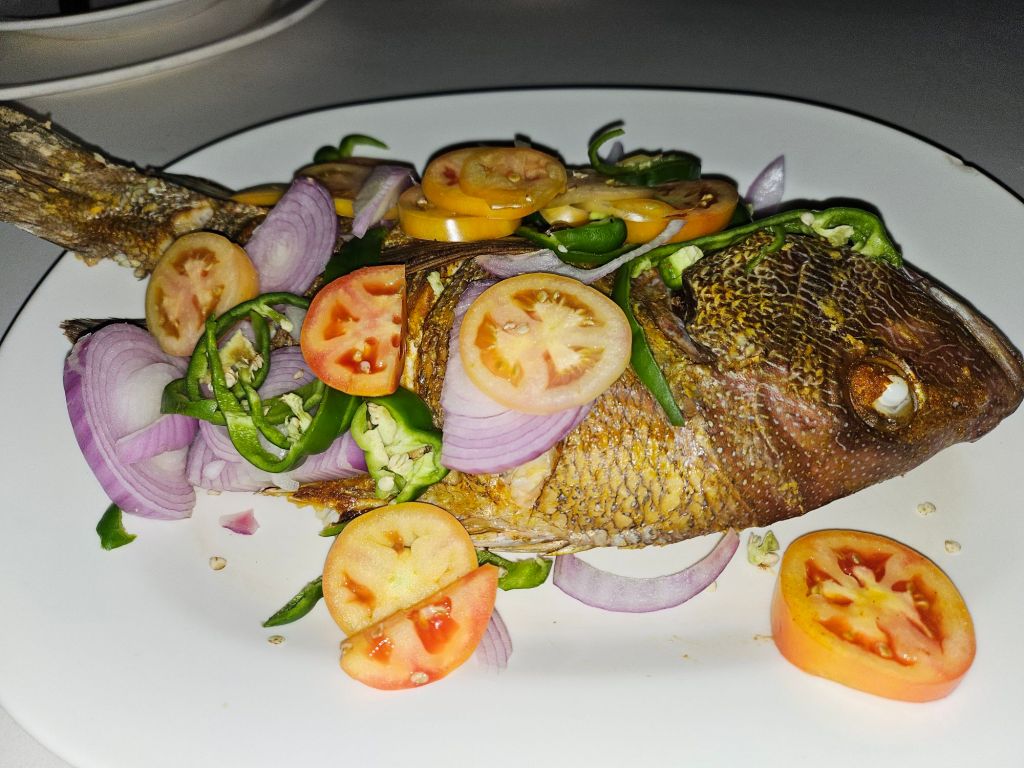
The City of Eyl, about 200Km on a pickup-truck from Nugaal Regional Capital of Garowe, is located on the shores of the Indian Ocean at mid-center of Puntland State, a Federal Member State of Somalia occupying the topmost Horn of Africa, offers a small town life away from noisy urban centres, and is famous for providing breathtaking beauty of scenery and delicious seafood of lobster and fish, among a variety of other marine foodstuff of one’s choice. Alternatively, one could ask for a ride onboard one of multiple fishing boats for a thrilling experience of your own catch.

While one is away in Eyl, one  doesn’t lose connection to the outside world by taking advantage of Golis Telecom voice and data services, which I don’t recommend one to use them too much for a change to avoid the hectic trap of the electronic world one has left behind in urban life existence.

In Eyl, one wakes up early in the morning after a sound sleep in an environment at sea level  or even below, an experience of rest and relaxation one rarely enjoys in an urban setting. After taking a heart-felt breakfast or even before taking breakfast, one takes off his shoes to feel the soothing and crystal clear beach sands before one plunges into the warm waters of the Indian Ocean. One comes out of the ocean water to feel as if burden has been removed from the body. One sits on the beach sands for a while and does some body massage with sand grains on the rough spots of the skin on one’s body. One then returns to an ocean swimming to wash off massaging grains of sand that make one’s body clean and smooth as a baby again. One then returns to his/her residence to have a wonderful lunch one could have only in Eyl City. From there forward, one has a few options for the remainder of the day. One could take an afternoon nap or go back to the ocean to do more of the same as one did in the morning, or one could sit out the afternoon at a table to enjoy the breath-taking breeze of the Indian Ocean over cups of fresh coffee or tea and drink a lot of fresh water to wait for another round of mouth-watering dinner of marine food. 

That is why I have fallen in love with the City of Eyl/Baddey.

AN OPEN APPEAL BY CONCERNED CITIZENS OF SOMALIA

“Dear Respected Leaders [ of the world] and Stakeholders [of Somalia]

We, the concerned citizens of Somalia and advocates for peace, federalism, and democratic governance, write to bring to your urgent attention the deteriorating political, security, and governance situation in Somalia under the current federal government led by President Hassan Sheikh Mohamud. The actions of the federal government have placed our nation on the brink of civil war and state collapse, threatening not only the peace and stability of Somalia but also the broader regional security.

Escalation of Tribal Conflicts and Misuse of Somalia National Armed Forces
Under President Hassan Sheikh Mohamud’s leadership, the federal government has blatantly violated the principles of the Provisional Federal Constitution by pursuing policies of division and confrontation. The misuse of the Somali National Armed Forces (SNAF) in tribal conflicts and politically motivated operations against regional states, particularly Jubaland, is alarming. The recent clashes between Jubaland forces and the Somali National Army in the Raaskanbooni region underscore the government’s direct involvement in escalating tribal wars, undermining federalism, and destabilizing regional administrations.

This conduct not only erodes trust in Somalia’s leadership but also highlights a dangerous pattern of corruption, personal gain, and the pursuit of authoritarian rule. Such actions violate Somalia’s federal framework, which seeks to ensure cooperation, inclusivity, and respect among member states. Instead of fostering unity and progress, the federal government has weaponized the armed forces to suppress opposition and advance its political agenda.

Call for Reimposition of Arms Embargo and Financial Accountability
Given the current government’s failure to uphold its constitutional responsibilities and its misuse of international resources, we urgently call upon the international community and the United Nations to:

Reimpose the Arms Embargo on Somalia: The misuse of Somalia’s national armed forces to wage politically motivated conflicts against regional states and clan groups is a clear violation of their intended purpose. These forces should solely be deployed to combat terrorism and extremism. Until credible reforms are implemented, lifting the arms embargo would further destabilize the nation.

Suspend Funding to the Somali National Army (SNA): The federal government’s mismanagement of funds, money laundering, and diversion of resources to fuel tribal wars necessitates immediate action. All financial aid should be contingent upon robust accountability mechanisms to ensure neutrality and transparency in the use of funds.

Establish an Independent Monitoring Mechanism: The UN and international partners must deploy a monitoring team to investigate the federal government’s actions, including corruption, misuse of military resources, and human rights violations. This team should report directly to the Security Council and other stakeholders to ensure impartiality.

Support Reforms and Federal Dialogue: The international community must facilitate negotiations among Somalia’s federal member states to restore trust and cooperation. Mechanisms must be established to strengthen constitutional adherence, accountability, and inclusivity in decision-making processes.

A Call for Urgent Action
Somalia is at a critical juncture. The current federal government has demonstrated its inability to govern effectively, respect the rule of law, or promote federalism. Instead, it has fostered division, corruption, and conflict, pushing the nation closer to civil war. The international community must not allow these actions to go unchecked.

We appeal to you to act decisively to prevent further destabilization. Immediate measures, including the reimposition of the arms embargo, suspension of military funding, and the deployment of monitoring groups, are essential to safeguard Somalia’s future. The Somali people deserve leadership that respects the constitution, promotes peace, and prioritizes national unity over personal gain.

We trust that you will consider this appeal with the urgency it demands.

Sincerely,”

WDM PRESS STATEMENT

Some people in the Somali media outlets are worried by statements of Western diplomats invited to attend the inauguration of the newly elected president of Somaliland, Abdirahman Cirro, in Hargheisa. They should know that Somaliland can’t be a viable nation-state because of the facts that

  1. It lacks resources of any kind, including manpower.
  2. It is another begging basket without returns to its foreign supporters.
  3. It can only act as a foreign military and naval base. So is Djibouti nearby. That isn’t the would-be independence it is seeking.
  4. It can’t provide employment opportunities to its own residents.
  5. It has no space for business and trade interests to its residents, to forget about someone else.
  6. The entity of Somaliland merely exists because of the Mogadishu/Hawiye problem in Somalia. What other choice do they have?
  7. Western diplomats people were quoting from Hargheisa are just frustrated with Villa Somalia. Remember, they met with Hassan Sheikh Mohamud recently to warn him of Jubaland attack plan, and he didn’t heed their advice. They are fed up with his idiotic one-man show policy and mal-administration. Their statements in Hargheisa are pressure tactics only, but not an implicit support for Somaliland’s call for unitaleral independence, which doesn’t have any economic and political sense. It is a pipe dream for Hargeisa fanatics taking advantage of misinformed and misguided society there.
  8. Historically, Somaliland British Protectorate was a meat supply base for British military garrison stationed that time in Aden, Yemen. It was prohibitively expensive for Great Britain to stay on in Somaliland.

By Arnaud Bertrand’s Take of Recent Syrian Development [Courtesy]

EDITOR’S NOTE.

Now, it becomes apparent what Arnaud Bettrand couldn’t explain and the puzzle he faced with regards to recent Syrian developments. That has been elegantly explained by Daljir Media: ”
The “Arc of Crisis” has been defined as an area stretching from the Indian subcontinent in the east to the Horn of Africa in the west. The Middle East constitutes its central core. Its strategic position is unequalled: It holds in its subsoil about three-fourths of the proven and estimated world oil reserves.

The Arc of Crisis was coined by Zbigniew Brzezinski in 1978 and it matches well with Mackinder’s 1904 Geographical Pivot of History and his Heartland Theory, which emphasized the strategic importance of the Pivot Area for the emerging empire. Pivot Area includes Russia, Ukraine, eastern Europe, and the central Asian countries of Kazakhstan, Turkmenistan, Kyrgyzstan, and Tajikistan. Ukraine is the first target of conquering the Pivot Area.” Click the link below:

https://twitter.com/radiodaljir/status/1868044879051317444?t=Fkh43RIQ_YI4T5SJ5MQUHA&s=08

“What’s happening Syria is probably the most incoherent geopolitical event I’ve come across, and the more you look into it, the more confusing it gets.

I mean, just look at this list:

– First of all, the speed of Assad’s collapse still makes very little sense: after successfully holding out against multiple enemies for 13 years with Russian and Iranian backing in a brutal civil war, his regime suddenly crumbled in just 11 days with almost no bloodshed.
– The “liberators” of Syria being celebrated by the West are Islamist groups on their own official terrorist lists. The country’s new leader, Al-Julani, still has a $10 million bounty on his head as a “Specially Designated Global Terrorist” for founding the Syrian branch of Al Qaeda.
– Biden called this “a historic opportunity for the long-suffering people of Syria to build a better future” while his administration continues to occupy a third of Syria, control its oil fields, maintain crippling sanctions, and bomb its territory… thereby obviously very much compromising this better future.
– Assad’s Prime Minister immediately agreed to work with the rebels and they accepted him – despite being mortal enemies in a brutal 13-year civil war.
– Al-Julani, after years of orchestrating suicide bombings and sectarian massacres against civilians, is now suddenly positioning himself as “diversity friendly”.
– Russia, despite being in an alliance with Syria dating back to the Soviet era, billions invested in protecting Assad, and their only Mediterranean naval base in Tartus, essentially shrugged it all and let their ally fall.
– Syria’s new leaders remain bizarrely silent about Israel invading their territory and the U.S. bombing and occupying their country. They’ve said nothing about their strategic assets – including the entire navy and air force – being destroyed in U.S. and Israeli air raids.
– The U.S. maintains its occupation of a third of Syria (including most oil fields), claiming it’s necessary to “ensure the enduring defeat of ISIS” – despite Trump declaring in 2019 (and the U.S. repeatedly confirming since) that “we have defeated ISIS in Syria”. Western media largely ignore this ongoing occupation while celebrating Syria’s “liberation”.
– Hamas, while in the middle of a war with Israel, took time to congratulate the Syrian rebels – even though Assad was their (and Iran’s) longtime ally and Syria’s fall significantly weakens their own strategic position.
– The U.S. celebrates the liberation of Syrian prisoners while operating its own concentration camps in the country (newyorker.com/magazine/2024/…) holding tens of thousands indefinitely without trial – half of them children – but that apparently doesn’t count as oppression.
– Türkiye is fighting against the Kurdish-led Syrian Democratic Forces (SDF) with apparent U.S. approval, while the SDF was fighting Assad (which the U.S. wanted) – meaning U.S.-backed forces are effectively fighting other U.S.-backed forces.
– Iran, normally eager to defend its regional interests, suddenly abandoned billions in investments and a crucial strategic ally in their “Axis of Resistance”, evacuating their personnel and citizens within hours.

Truly one of the strangest chapters in modern geopolitical history. Every possible explanation contains its own contradictions, and most players are acting against their own stated principles and interests.

At this stage, it looks like the simplest explanation might go something like this: the U.S. welcomes the fall of a longtime opponent; neighboring powers like Israel and Türkiye see an opportunity for territorial gain; rebel leaders seem willing to accept loss of sovereignty and territory in exchange for domestic control over a diminished Syria; Russia and Iran chose to cut their losses given other regional priorities; and smaller players like Hamas are scrambling to adapt. Still, the unprecedented speed and coordination of these events suggests we’re missing some crucial pieces of this very strange puzzle.”

MEDIA BROCAST ABOUT HASSAN SHEIKH MOHAMUD’S SHENANIGANS AND EXPOSING HIM FOR HIS INCORRIGIBLE CORRUPTION

Any other decent politician having these problems would have resigned.

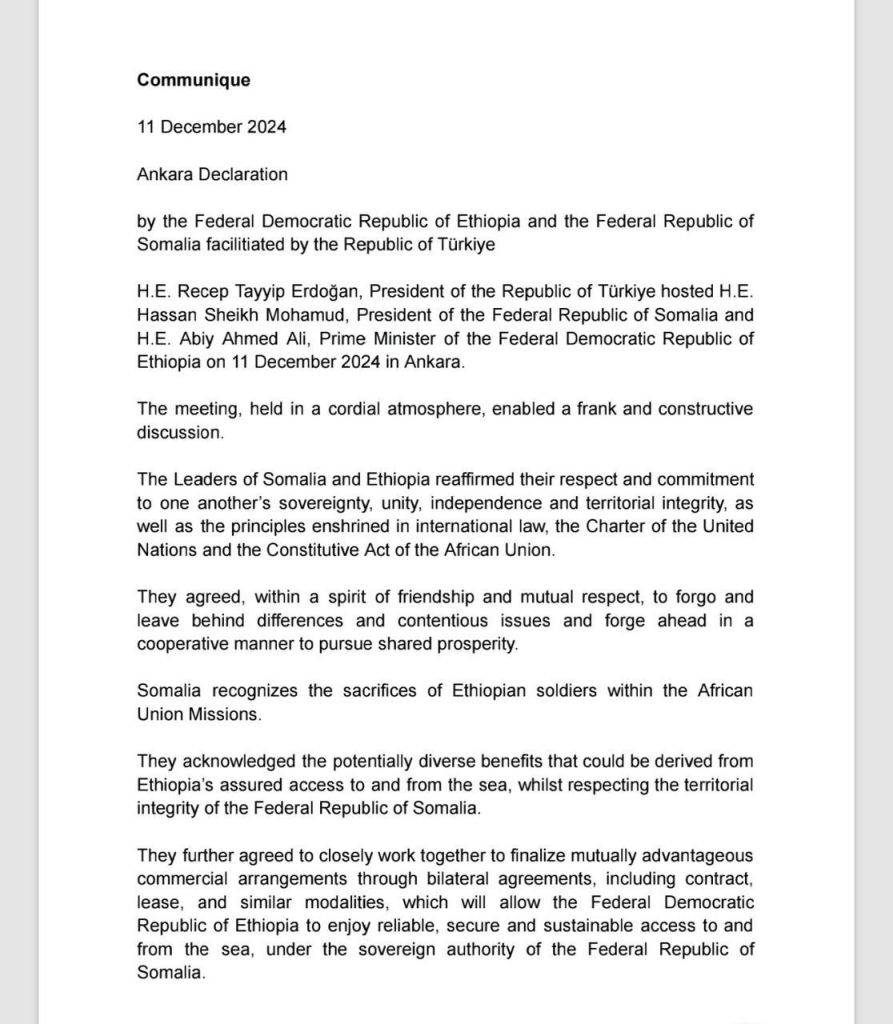
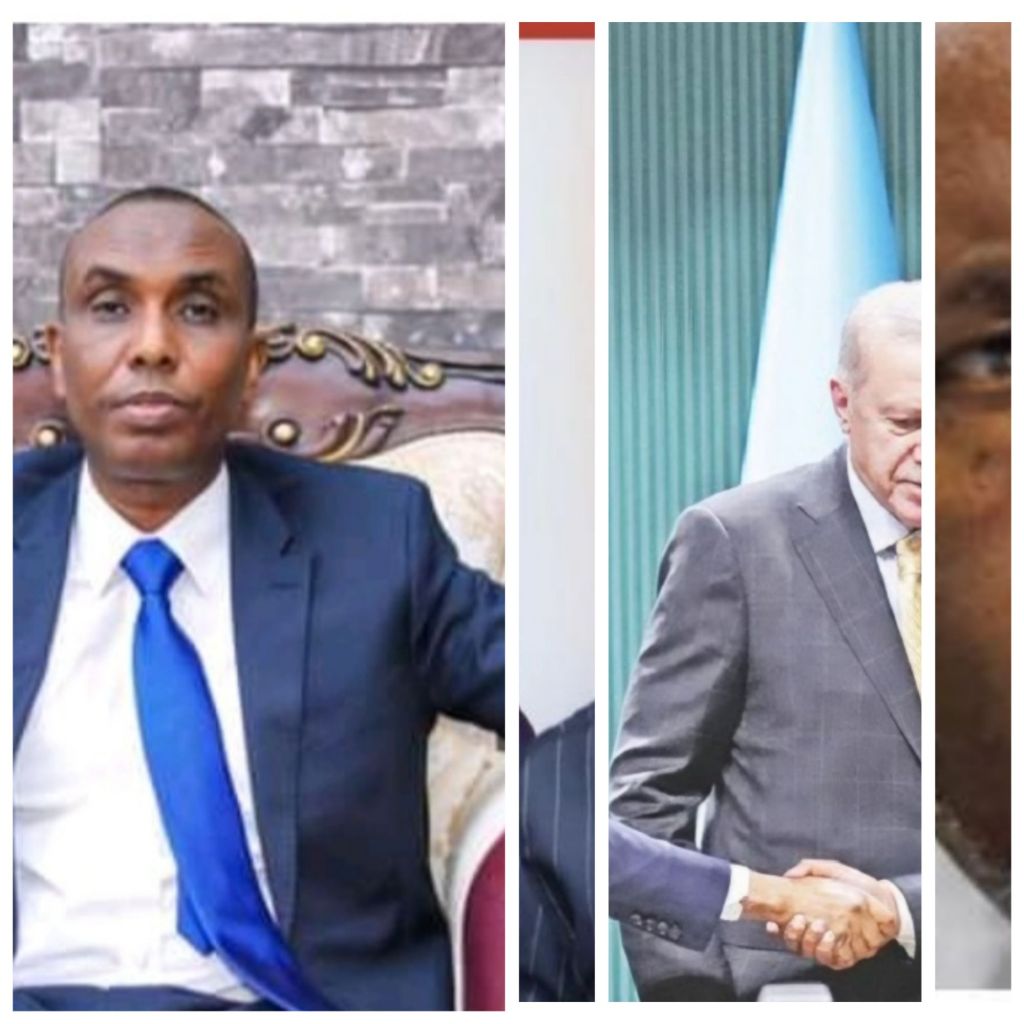
OPPOSITION PARTIES TO ANKARA DECLARATION IN BOTH SOMALIA AND ETHIOPIA ARE FURIOUS

WDM EDITORIAL

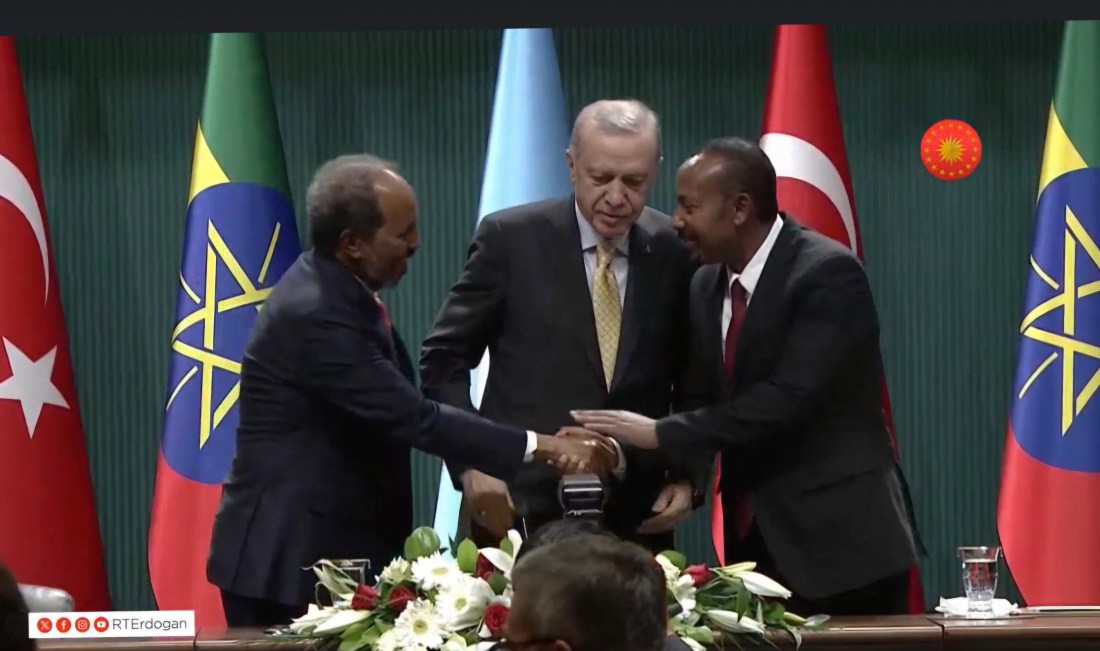
Both opposition parties, in Somalia and Ethiopia, to the Ankara Declaration don’t trust their countries’ leaders as the overriding principle. These two leaders, Hassan Sheikh Mohamud and Abyi Ahmed had lost public trust in their respective countries, and it is unlikely that they will regain that lost credibility ever again in whatever they do in the foreseeable future, let alone this deal. But what we find strange is that the Amharas are accusing Abyi Ahmed of trying to incorporate “Somaliland” into what they call “Oromoma” (Oromo), apparently not into Ethiopia proper.

Analysts of the Ankara Declaration say there were different approaches to the disputes by Somalia and Ethiopia. They found that Somali Side was broad based in addressing their grievances against Ethiopian violations of Somali sovereignty and territorial integrity, while the Ethiopian Side was more specific in their demands, namely the recognition of the role Ethiopian forces played in helping Somalia battle with Al-Shabab as part of ATMIS and their “right” to gain “reliable and secure” access to the Somali sea, terms that were inserted into the Ankara Declaration. While Somalia finally agreed to the Ethiopian demands, they secured Ethiopian recognition of Somali sovereignty and territorial integrity, which means the Ethiopian infamous MoU with Somaliland is now dead. That is the major takeaway for the Somali Side. But, since this wasn’t explicitly stated in the Declaration, it could be subject to different interpretations in the implementation of the deal, specifically by the Ethiopians.

There are also renewed questions on the strategic objectives of Ankara in brokering this deal, given its major role in recent Syrian developments. Time will tell, but precaution applies here. Nations are all after their permanent interests. Make no mistake.

Overall, Ethiopia has secured a major breakthrough in Ankara Talks, an access to the Somali sea, a feat dreamed about but never realised by the past Ethiopian Imperial leaders for two centuries.

In good faith and for mutually beneficial economic cooperation, Ethiopia should be offered commercial facilities in Somali ports as a landlocked neighbourly state. But the historical burden between the two countries is a source of suspicion and mistrust. A lot now depends on Ethiopia to earn Somali public trust and address Somali fears once and for all. Somalis, by nature, are forgiving. They react positively to reciprocity and friendship.

THE SOMALI LAW OF THE SEA: AW NO. 37 OF 10 SEPTEMBER 1972 LAW ON THE SOMALI TERRITORIAL SEA AND PORTS

THE PRESIDENTOF THE SUPREME REVOLUTIONARY COUNCILHAVING SEEN The First Charter of the Revolution;CONSIDERING The approval of the Councils SRC and Secretaries of State;PROMULGATES the following Law:Article 1. The Territorial Sea. 1.The Somali Territorial Sea includes the portion of the Sea to the extent of 200 nautical miles within the continental and insular coasts, delimited according to the provisions of Articles 2 and 3 of this Law. 2. The Somali Territorial Sea is under the sovereignty of the Somali Democratic Republic. Offences committed within these limits of the territorial sea on board a vessel relating to penal health, and public security shall be governed by Somali Law.Article 2. Measurement of the Territorial Sea: 1. The normal base line for measuring the breadth of the territorial sea is the low water line along the coast. 2. In localities where the coastline is deeply indented or if there is a friings of islands along the coast in its immediate vicinity, the method of straight baseline joining appropriate points may be employed in drawing the baseline from which the breadth of the territorial Sea is measured. 3. Waters on the landward side of the baseline of the Territorial Sea form part of the internal waters of the State within the meaning of Article 4 below. Article 3.Territorial Sea for Islands and Archipelagos. 1 Where an island is situated within the 200 mile limit, the belt of waters round it will constitute territorial waters. This belt will be 200 miles wide and will be measured from low-water mark following the sinuasities of the island.2. A group of islands forming part of an archipelago shall be considered as a unit, and its territorial waters shall be measured from the centre of the archipelago. Article 4. Internal Waters and Maritime Ports. 1. The internal maritime waters include all navigable waters in Somali rivers open for maritime vessels and maritime ports with the areas as delimited by the table annexed herewith.2 The internal Somali waters are subject to the sovereignty of the Republic according to Somali Laws and the provision of this Law.Article 5Fishing and Coastal Navigation1 Fishing in the territorial sea and regular transportation of persons and goods between Somali Ports are reserved for vessels flying the Somali Flag and other authorised vessels.2. Any infringement of the above provision shall be punished with a fine from 5,000/- to 100,000/-So. Shs. and in case of repetition of the infringement by the vessel or the operator, the punishment may be doubled and the captain shall be liable for offences prescribed by the Somali Penal Laws and the vessel may be confiscated.3. Any contract of transportation made in violation of paragraph 1 above is void and without effect and the vessel executing or intending to execute the contract shall be subject to a fine equal to 5 times the freight or the fare stipulated or fixed by the usage for similar operation.Article 6Innocent Passage Through the Territorial SeaSubject to the provisions of the Law merchant ships of all nationalities are allowed to the right of innocent passage through the Territorial Sea within the limits laid down by this Law and the general principles of the international Law of the Sea.Article 7Meaning of Innocent Passage1. Passage means navigation through the Territorial Sea for the purpose of either traversing that sea without entering internal waters or of proceeding to internal waters or of making for the high Sea from internal waters.2 Passage includes stopping and anchoring, but only in so far as the same are incidental to ordinary navigation or are rendered necessary by force majeur or by distress, but not for loading or unloading goods for passengers.Article 8Limits of Innocent PassagePassage is innocent so long as it is not prejudicial to peace, good order, health or security of the Republic. Such passage shall take place in conformity with the provisions of this Law, and with the general rules and principles of international Law.Article 9 Prohibited Passage1. Passage in the Territorial Sea and internal waters is not allowed to vessels having the nationality of states not recognised by the Somali Democratic Republic.2. In case of violation of the above paragraph, the Somali authorities may take any measures necessary to ensure its.Article 10Warships1. Foreign Warships are not allowed to passage through the Territorial Sea unless they are authorised by the Somali Government.Article 11Respect of Somali Laws in Territorial Sea1 All ships exercising the right of innocent passage shall comply with Somali Laws and regulations.2. Each vessel, while passing through the Territorial Sea, shall hoist its national flag and comply with the orders made according to Somali Laws – by the competent Authorities.3. In case of infringement of any of the two above paragraphs, the vessel shall be punished with a fine from 1,000/ to 100,000/- So. Shs. unless the fact or the omission constitutes a more grave crime.Article 12Entering to Internal Waters1. All Ships proceeding to internal waters or ports shall comply with the provisions set by the maritime Code for this purpose.2. Subject to the limitation laid down by Article 5 of this Law all mercant ships except those mentioned by Article 9 paragraph 1 above are granted the rights to enter in Somali Ports for any commercial operation, especially to load, unloade, unload cargoes, embark or disembark passengers. Article 13Defence ZonesThe Somali competent Authorities may take the necessary measures to suspend temporarily innocent passage of all foreign ships, in specified areas of the territorial sea, if this becomes necessary for the protection of the security of the State. Article 14Charges for Services RenderedCharges levied on Ships in internal waters are also levied upon foreign Ships passing through the Territorial sea for services rendered or measures taken regarding the vessels for their security and the implementation of rules of the police of the navigation.Article 15Criminal Jurisdiction on Foreign Ships1. The criminal jurisdiction of the Republic shall be exercised on board foreign ships passing through the Territorial sea or anchoring in the ports with respect to the arrest of any person or conduct any investigation in connection with any crime committed on board the ship during its passage. Criminal jurisdiction is confirmed to the following cases:(a) if the consequences of the crime extend to the Territory of the Republic;(b) if the crime is of a kind to disturb the peace of the country or the order of the Territorial Sea or the Port;(c) if the assistance of the local authorities has been requested by the captain of the Ship or by the Consul of the country whose flag the Ship flies;(d) if it is necessary for the suspension of illicit traffic in narcotic drugs.2. The Authorities may take any step authorised by the Somali Laws and regulations for the purpose of any arrest or investigation on board a foreign ship while it is passing through the Territorial Sea after leaving the internal waters or the port.3. In the cases provided for in paragraph 1 and 2 of this Article the Authorities shall, if the captain so requests, advise the consular Authority of the Flag State before taking any steps, and shall facilitate contact between such Authorities and the ship’s crew. In cases of emergency, this notification may be communicated while the measures are being taken.4. Local Authorities shall not take any steps on board a ship passing through the Territorial Sea to arrest any person or conduct any investigation in connection with any crime committed before the ship enters into the Territorial Sea and it is only passing through the Territorial Sea without entering internal waters.Article 16 Civil Jurisdiction on Foreign ShipsThe authorities may not levy execution against, or arrest, the ship for the purpose of any civil proceeding, save only:(a) in respect of obligations or liabilities assumed or incurred by the ship itself in the course or for the purpose of its voyage through the Territorial Sea or internal waters; (b) in the cases provided for by the maritime Code.Article 17 Government Ships1. The rules provided for in the preceding Article shall apply also to foreign government ships operated for commercial purposes.2. The above rules do not affect the immunities which Government ships operated for non commercial purposes enjoy.Article 18Arrest Vessels by the AuthoritiesIn case where a punishment is prescribed for infringement committed by a foreign vessel the Somali Authorities may arrest the vessel until the said punishment is fulfilled or a sufficient security for this purpose is furnished.Article 19Any provision contrary to this Law or inconsistent with it is hereby abrogated.Article 20Entry into Force of this LawThis Law shall come into force on the thirtieth day of its publication.Mogadishu, 10 September 1972.

THE PRESIDENT of the Supreme Revolutionary Council Major Gen. Mohamed Siyad Barre

Brief Expert Analysis of the Ethiopia-Somalia Ankara Declaration (11 December 2024)

By AA,Expert in LLM,December 12, 2024.

Ethiopia presented clear and focused demands during its recent negotiations with Somalia, mediated by Turkey in Ankara, while Somalia’s position remained broad and ambitious. Ethiopia’s objectives were explicitly outlined in the communiqué, reflecting its strategic priorities.Ethiopia’s Demands:1. Recognition of Ethiopia’s Military Role in Somalia:The FGS’s decision to exclude Ethiopia from the Troops Contributing Countries in the new mission (AUSSOM) and its push for Ethiopia’s withdrawal from Somali territory, while condemning certain military maneuvers in parts of the country, appeared to downplay Ethiopia’s role and neutrality in Somalia. As a result, Ethiopia sought to leverage the communiqué to prompt Somalia into acknowledging of its military influence and strategic leverage over the country, positioning this as a basis for its involvement in the new mission.The communiqué emphasizes the significance of the point in a standalone line, stating:“Somalia recognizes the sacrifices of Ethiopian soldiers within the African Union Missions.”Notably, it does not specifically refer to ATMIS or AMISOM, but rather uses the term “African Union Missions” to encompass both past and potential missions.2. Access to the Somali Sea:Ethiopia emphasized the need for assured and secure access to the Somali sea, framing this as a strategic priority. The communiqué included the following language:“They acknowledged the potentially diverse benefits that could be derived from Ethiopia’s assured access to and from the sea.”It further elaborated:“They agreed to closely work together to finalize mutually advantageous commercial arrangements through bilateral agreements, including contract, lease, and similar modalities, which will allow the Federal Democratic Republic of Ethiopia to enjoy reliable, secure, and sustainable access to and from the sea.”3. Expeditious Technical Arrangements on Sea Access:Ethiopia sought to expedite technical negotiations with the Federal Government of Somalia (FGS) to formalize the sea access agreement. This urgency was underscored by its intention to secure agreements with Somalia before revising its arrangements with Somaliland. The communiqué stated:“They decided to start technical negotiations in good faith for these purposes no later than the end of February 2025, with the facilitation of Türkiye, to be concluded and signed in four months.”Somalia’s Position:1. Ethiopia’s Withdrawal from the MoU with Somaliland:Somalia long sought Ethiopia’s explicit retraction of its Memorandum of Understanding (MoU) with Somaliland, which Somalia considers illegal. However, the communiqué made no direct reference to this demand. Instead, it adopted broad and general language, stating:“They agreed, within a spirit of friendship and mutual respect, to forgo and leave behind differences and contentious issues and collaborate in a cooperative manner to pursue shared prosperity.”Ethiopia deliberately refrained to explicitly express cancelling the MoU with Somaliland, likely to serve as plausible deniability in case of any future uncertainties with Somalia, and to avoid a direct confrontation with Somaliland. On the other hand, Somalia critically failed to unequivocally assert this vital position, which lies at the heart of the communiqué and represents the primary source of conflict between the two countries.2. Reaffirmation of Somaliland’s Status as Part of Somalia:Somalia also wanted Ethiopia to explicitly reaffirm that Somaliland remains an indisputable part of Somalia This position stemmed from Ethiopia’s actions, which implied recognition of Somaliland as a sovereign state (Tacit Recognition). Under international law, a state’s actions and statements on such matters carry legal implications and contribute to establishing its official stance. However, the communiqué did not directly address this issue. Instead, it used broad language regarding the relationship between the two nations:“The Leaders of Somalia and Ethiopia reaffirmed their respect and commitment to one another’s sovereignty, unity, independence, and territorial integrity, as well as the principles enshrined in international law, the Charter of the United Nations, and the Constitutive Act of the African Union.”This indicates that Ethiopia deliberately avoided any explicit mention of Somaliland, while Somalia failed to effectively articulate this point, instead relying on general language in the communiqué.Conclusions:1. Ethiopia was precise and strategic in articulating its demands within the communiqué, whereas Somalia’s position was broader and lacked specificity, particularly regarding critical sovereignty issues.2. Ethiopia’s inclusion of terms such as “assured access,” “reliable, secure, and sustainable access” reflects its long-term strategic interests. These terms could significantly influence future negotiations with Somalia, particularly concerning maritime access and sovereignty.3. Somalia needs to be more strategic and articulate in the upcoming technical discussions, ensuring that potential agreements with Ethiopia align with the Somalis commercial interests.

[Courtesy].

REPORTS ON ETHIO-SOMALIA DEAL IN ANKARA

“When Somali President Hassan Sheikh Mohamud and Ethiopian Prime Minister Abiy Ahmed met in Ankara on Wednesday, expectations from their Turkish hosts were high.

The Turkish government had been attempting to mediate the sea port crisis between the two countries for almost a year through two rounds of negotiations, but no tangible progress had been made beyond vague statements of goodwill.

Mogadishu has been demanding that Ethiopia cancel a memorandum of understanding (MoU) it signed with Somalia’s breakaway northern region of Somaliland in January. This agreement aimed to grant Ethiopia port access through Somaliland’s coastline for the next 50 years.

Somalia viewed the MoU as a potential recognition of Somaliland as a sovereign state and threatened war to protect its territorial integrity. Ethiopia, in contrast, argued that as a landlocked country, it had a right to sea access under international law.

“You won’t leave this room until you reach a deal,” Turkish President Recep Tayyip Erdogan said during the negotiations, according to a person familiar with the issue speaking to Middle East Eye.

When Somali President Hassan Sheikh Mohamud and Ethiopian Prime Minister Abiy Ahmed met in Ankara on Wednesday, expectations from their Turkish hosts were high.

The Turkish government had been attempting to mediate the sea port crisis between the two countries for almost a year through two rounds of negotiations, but no tangible progress had been made beyond vague statements of goodwill.

Mogadishu has been demanding that Ethiopia cancel a memorandum of understanding (MoU) it signed with Somalia’s breakaway northern region of Somaliland in January. This agreement aimed to grant Ethiopia port access through Somaliland’s coastline for the next 50 years.

Somalia viewed the MoU as a potential recognition of Somaliland as a sovereign state and threatened war to protect its territorial integrity. Ethiopia, in contrast, argued that as a landlocked country, it had a right to sea access under international law.

“You won’t leave this room until you reach a deal,” Turkish President Recep Tayyip Erdogan said during the negotiations, according to a person familiar with the issue speaking to Middle East Eye.

Jerusalem Dispatch
Erdogan, who has known both leaders for years, has invested heavily in Somalia since 2011. Turkey has established a military base in the country, trained thousands of Somali soldiers, managed Mogadishu’s airport and port, and provided extensive humanitarian and military aid.

In 2021, Erdogan’s decision to sell Turkish armed drones to Abiy tipped the balance of Ethiopia’s civil war against the Tigray forces in Abiy’s favour.

Sticking point
A Turkish official stated that the negotiations between the two leaders and their respective teams lasted nearly seven uninterrupted hours, with Erdogan and Turkish Foreign Minister Hakan Fidan actively participating.

According to a source familiar with the talks, one of the key sticking points was Ethiopia’s recognition of Somalia’s territorial unity. This recognition would effectively require Ethiopia to cancel its MoU with Somaliland.

The source added that while Abiy was willing to sign a statement committing to Somalia’s independence and sovereignty, he resisted any mention of “territorial integrity” or “unity”.

The Somali delegation countered by referencing the 1933 Montevideo Convention, which codifies international legal norms and principles regarding statehood. One of its key criteria for statehood is the possession of a “defined territory”.

“You cannot say you recognise a country but deny that it has a defined territory,” the source explained.

Turkish officials found this argument persuasive, concluding that Ethiopia must either recognise Somalia in its entirety under international law or not at all.

Hours of negotiations later, Somalia and Ethiopia finally reached a final agreement, known as the Ankara Declaration, that addressed the core demands of both. Somalia secured Ethiopia’s recognition of its territorial unity, while Ethiopia was granted commercial access to the Somali coastline.

The declaration also stipulated that technical delegations from both nations, facilitated by Turkey, would begin negotiations no later than February 2025, with a deadline to complete the talks within four months. Turkish officials hailed the deal as a victory for both sides.

the incoming Donald Trump administration is already considering recognising the breakaway state.

Some analysts argue that Abiy achieved his primary objective, as he has long sought to address Ethiopia’s landlocked status. By triggering the crisis, he forced the issue to the forefront and secured a deal granting Ethiopia access to the Somali coast.

“It’s a sort of win-win agreement,” said Omar Mahmood, a senior analyst for Eastern Africa at Crisis Group. “This deal still provides Abiy Ahmed with access to the sea, and it makes sense for the Ethiopian market to be connected to the Somali coast.”

EYL/ BADDEY/INDIAN OCEAN VIEWS AND VIDEOS

The Smart Way to Keep People Passive and Obedient: Insights from Noam Chomsky

Noam Chomsky, one of the most influential intellectuals of the 20th century, has spent decades examining the dynamics of power, control, and media manipulation. In his book How the World Works, Chomsky provides a thought-provoking analysis of how societies are shaped by the limits imposed on acceptable discourse. One of his most powerful observations is encapsulated in the quote: “The smart way to keep people passive and obedient is to strictly limit the spectrum of acceptable opinion, but allow very lively debate within that spectrum. That gives people the sense that there’s free thinking going on, while all the time the presuppositions of the system are being reinforced by the limits put on the range of the debate.”

This concept is a cornerstone of Chomsky’s critique of modern media and its role in shaping public perception and maintaining societal order. Let’s delve into the deeper meaning behind this statement and explore its implications.

The Illusion of Free Thinking

Chomsky argues that by allowing a narrow range of opinions to be expressed while encouraging spirited debate within that range, those in power create an illusion of freedom and democracy. The debate may be heated, passionate, and seemingly unconstrained, but it never steps outside the bounds of what the system deems acceptable. This creates a situation where people feel they are participating in a free exchange of ideas, even as the underlying assumptions and power structures remain unchallenged.

For example, in the realm of mainstream politics, there might be fierce debates over specific policies or candidates, but the fundamental structures of economic and political power are rarely questioned. The media plays a crucial role in this process by framing the debate, selecting which voices are amplified, and which issues are deemed worthy of discussion. As a result, the public is kept within a mental framework that reinforces the status quo.

The Role of Media in Shaping Opinion

Chomsky’s observation draws attention to the subtle ways in which media can be used as a tool of control. By limiting the spectrum of acceptable opinion, the media ensures that certain ideas are never brought to light, while others are constantly reinforced. This is not necessarily through overt censorship, but through the more insidious process of agenda-setting and framing. The media decides which topics are worthy of discussion, which perspectives are given airtime, and which are marginalized or ignored altogether.

This process helps to maintain the power structures within society. For instance, economic debates often focus on how to manage capitalism rather than questioning the system itself. By restricting the debate to such issues, the media and those in power prevent alternative economic systems from gaining traction. The same can be said for debates on foreign policy, social issues, and other critical areas where the spectrum of acceptable opinion is carefully managed.

The Limits of Debate

Chomsky’s insight also raises important questions about the nature of debate and discourse in modern society. If the boundaries of debate are set by those in power, how can true change ever occur? Chomsky suggests that real change requires expanding the spectrum of acceptable opinion, questioning the assumptions that underpin the current system, and allowing for a truly free exchange of ideas.

This can be a daunting task, especially in a society where the media, education system, and other institutions are often complicit in maintaining the status quo. However, Chomsky’s work encourages us to be vigilant, to question the limits imposed on our thinking, and to seek out alternative perspectives that challenge the dominant narrative.

Conclusion

Noam Chomsky’s observation about the smart way to keep people passive and obedient is a powerful reminder of the importance of critical thinking and media literacy. By recognizing the ways in which debate is constrained and opinions are shaped, we can begin to challenge the assumptions that underlie our society and work towards a more open and inclusive discourse. In a world where the spectrum of acceptable opinion is often narrowly defined, it is up to us to push those boundaries, question the status quo, and seek out the truth.

For those interested in exploring these ideas further, Chomsky’s book How the World Works is an essential read, offering a deeper understanding of the forces that shape our world.

For Readers:

Do you think the boundaries of acceptable opinion in our society are limiting true progress, and how can we push beyond them to foster meaningful change?

[Courtesy].

WDM EDITORIAL: WHO WOULD BE ACCOUNTABLE FOR RAS CAMBOONI CRIMES AND POLITICAL FIASCO?

The title of this EDITORIAL is self-explanatory, and one doesn’t need any description to raise the gravity of this unprecedented abuse of political and security powers in a nation still reeling from civil war and bad governance for a long time. Someone must be held accountable. It is a high national treason and gross breach of public trust. But who will hold these national traitors accountable? There are no national federal parliament, judiciary, and constitution.

Making these public institutions incompetent and toothless is another high national treason that has led to the Ras Cambooni crimes, amidst many other breaches of public trust, including dismantling of the federal system, confrontations with the federal member states, looting of public lands, open corruption and nepotism, contracts and foreign agreements in secret.

Hassan Sheikh Cannot Continue to Govern Somalia

Somali President Hassan Sheikh is a man who has never earned the trust of his people. But, he keeps complaining while aggravating his country’s problems. He complains that the Northwest Regions of Somalia signed a memorandum of understanding with Ethiopia and that Ethiopia almost took over the Somali coast in violation of Somali sovereignty and territorial integrity. In the far south of the country, he complains that Ethiopia has delivered huge cache of weapons to Kismayo, Jubaland Administration, and that the region is now under the Ethiopian influence. From Puntland State to the southwest, Hassan Sheikh complains about Ethiopian interference. He doesn’t listen to his people’s ideas on how to get out of the current chaos of his own making. 

Somali people are fed up  and tired of Hassan Sheikh Mohamud’s political shenanigans. Somalia became a place where people scream, but no one hears them. People are complaining about their pain and suffering under the misrule of Hassan Sheikh Mohamud.

I really wonder whether Hassan Sheikh could still pretend to continue to rule Somalia.

Ahmed Siad
December 12, 2024

BREAKING

ON JUBALAND BATTLES

WDM BREAKING  NEWS

RANKING FGS PRISONER

Fierce fighting has been taking place in the Jubaland town of Ras Cambooni on the shores of Indian Ocean near the Somali-Kenyan border throughout the day between the troops of Federal Somali Government and Jubaland State (JLS).

It is now confirmed by multiple news sources that Jubaland State troops have defeated Federal Forces recently airlifted to Ras Cambooni, and now JL Forces are in full control of the area.

EYL: HISTORICAL PEARL CITY OF SOMALIA IN DECLINE

As you would approach Eyl Old City located in midland Indian Ocean coast of the State of Puntland, Northeast Somalia, climbing mountains and finally descending steeply on a windy road many multiple times until you drive through Old Eyl City called Daawad, the name probably after the Castle of Derwish Movement, now a dilapidated ancient strong defence block-building to protect religious/cultural/political leader, Sayid Mohamed Abdille Hassan and his fighters against the invasion of British and Italian colonial powers in the 19th century. Sayid Abdulle Hassan led armed resistance against the British, Italian, and Ethiopian troops in Somalia during colonial administrations. In Daawad, you barely see any building still standing without the scars of time and the elements. Houses are almost all dilapidated and left to ruin. Their owners either perished or moved to other parts of Somalia all the way to Mogadishu and Kismayo many years ago before and after the national independence of Somalia on July 1st, 1960.

The photos below in Eyl/Daawad show the dilapidated house of current justice at the International Court of Justice (ICJ) in the Hague, Abdiqawi Yusuf Omar.

Unknown to many in Somalia, the City of Eyl has always been a metropolitan with a good number of minority clans living in harmony together for centuries. Historically, Eyl City was the administrative capital of the Italian colonial administration in Nugaal Region (now Garowe as its regional capital) of Majertainia (now Northeast Regions or Puntland State) after the fall of Derwish Movement of Sayid Mohamed Abdulle Hassan.

Again, along with one of its windy and snake-shaped streets, you would drive out of Daawad City on another windy road, passing below a high range of mountains. You would feel that huge hanging blocks of glacier-like rocks on the cliff could fall any minute on the road below, crushing people and cars flate. One of these glacier-like rocks is called locally, “Don’t fall on me before I pass by through.”  would take you about thirty minutes to drive to the City of Baddey (Sea-city) on the beaches of the Indian Ocean. Immediately, you would be tempted to walk bare-footed and strip-naked on the sands rarely experienced anywhere in the world – beach sands so smooth and clean that you won’t let go walking away for extended hours. Moreover, swimming in the Indian Ocean is ideal here. Unexpectedly, the ocean water is warm – initially, it feels like a hot tub as you come in from the soothing breezing air of the Indian Ocean beach, and body and foot-messaging sands rarely experienced in other world beaches. However, any minor earthquake or potential tsunamis could wipe out the City of Baddey because of its dangerous location at a bay of the Indian Ocean right beside the shore.

Eyl https://g.co/kgs/X8ojnAz

Early in the morning, you would meet with local fishermen getting ready to sail for fish and lobster catch at boat parking sections of the beach. Equipped with their primative fishing gears of nets, they are anxious to get lucky every day.

In the poorly managed beach hotels in Baddey City, lobster and fish dishes are exceptionally delicious. It feels like an unseen and unheard world of marvel in isolation from the rest of the world. Everything is crude and raw here. The talk of the town is about fish, lobster, and fishing boats. Because it is a fishing community and soil here is salty, there is a scarcity of fruits and vegetables, a trade-off for fish delicacies for a while. As Eyl City is hardly inaccessible to the rest of Puntland State via road, fishing harvests are mainly transferred by way of sea transportation to the Red Sea City of Bosaso, or directly to fishing trawlers of foreign companies from all countries imaginable, most illegally fishing in the territorial waters of Somalia and its Exclusive Economic Zone (EEC) with internationally banned fishing gears and methods, destroying fish habitat and the environment in the process, some reportedly dumping toxic industrial wastes in the Indian Ocean. Sea piracy began initially as a community outrage against foreign illegal fishing trawlers, which caused the destruction of its fishing nets and starved community of its livelihood.

However, the road to the City of Eyl is rough as it could be. But this rough ride is soon forgotten as you start enjoying this unusual ocean scenery and blessings it offers. As you stay on in this life experience, you would discard busy urban life and modernity. You would feel humanity again and the beauty of nature. You would forget about the smartphone and ringing of phones, if you would say, and the world of electronics. Welcome to Eyl!

[This article was updated since posting].

SOMALIA IS LESS IMPORTANT TO TÜRKIYE THAN SYRIA

Is Somalia more important to Turkey than Syria? Türkiye has argueably offered Syria to the State of Israel on a golden platter. Similarly, one could ask the question: Is Somalia more important to Turkey than Ethiopia?

The Emirate of Harar was under the protection of the Ottoman Empire through Egypt when the Ottomans ceded it to the British in 1875. The British Empire then surrendered the Somali Emirate to the Ethiopian Empire in 1897.

Türkiye inherited the Ottoman Empire from the Umayyad Caliphate of Syria. About 3 million Kurds in Syria identify themselves as part of Türkiye too. Syria and Turkey shared more than 900 km of the border. What ethnic Somali are to Ethiopian is what Kurds Syrians are to Türkiye . If Türkiye could sell out Syria to Israel and the USA, Türkiye would also sell out Somalia to Ethiopia.

Despite the fact that Ethiopia has more trade with Türkiye than Somalia, Somalia is Turkey’s fastest growing trading partner in Africa. Moreover, Somalia is the only country in Africa where the government has resorted to outsourcing its public services to Turkish companies amidst the high unemployment rate in the country. Trade relations between Turkey and Somalia are also witnessing remarkable growth, especially in the fields of food, clothing, medicine, furniture, and building materials. The value of pasta (spaghetti) imported from Turkey alone last year reportedly amounted to 300 million US dollars.

The Somali government allows Turkish contractors to participate in construction projects in both the private and public sectors. For example, Turkish contractors built the Istanbul Hotel in Mogadishu from the private sector and the Afgoye-Mogadishu Road and the Mogadishu-Jowhar Road from the public sector. By the way, Turkish activities are not limited to Mogadishu but are also active in other parts of Somalia.

Turkish businesses which are thriving in Somalia include Turkish Airlines, Erdogan and Yardimli Hospitals, the Turkish Visa Processing Center, and two Turkish companies, Favori LLC and Albayrak, which currently run Mogadishu’s airport and main seaport respectively. Turkey’s state-owned Islamic bank Ziraat Katilim has a branch in Mogadishu, and Somalia is home to Turkey’s largest overseas military airbase

Moreover, the Decale Hotel at Mogadishu airport is run by Turkish intelligence and from there they actively monitor the security of Turkish interests in Somalia. Every Friday, cash parcels are loaded onto Turkish Airlines to Istanbul as revenue for Turkish companies in Somalia.

That being said, no one underestimates the huge humanitarian and technical development aid that Turkey provides to Somalia in the form of development projects in various sectors such as health, education, military and police training, and municipal services that have improved the lives of many people in Mogadishu.

Just this year, relations between Turkey and Somalia have reached a new level. The two countries have signed major deals. A comprehensive maritime and defence agreement was signed in February, and an oil and gas cooperation agreement was reached in March 2024. Although these deals need some transparency and perhaps public scrutiny, they are still in their early stages.

Future relations between Turkey and Somalia will depend on a combination of preconceptions and post-conceptions, including the ongoing Türkiye mediation efforts between Somalia and Ethiopia. This is a litmus test for Türkiye. Great power competition for influence in Mogadishu, regional rivalries, security challenges, and domestic Somali politics will pose significant challenges to these agreements and Turkey’s quest for a greater role in the Horn of Africa.

Ahmed Siad
December 11, 2024