International law and norms of international relations are no longer holding nation-states accountable for their bad conduct and behaviour in world affairs. The United Nations is dysfunctional. Political and ideological polarization between great powers is acute and uncompromising. Two existential wars are going on in Europe and the Middle East. Daylight genocide by states is taking place in Palestine and Myanmar and elsewhere. Great powers aren’t now only accomplices in modern-day genocide, but supervisors whose multifaced assistance leads to dangerous and devastating consequences. Small, poor, and weak nations’ sovereignty is at peril or already violated (Lebanon, for example). The idea of nuclear disarmament is long gone. Instead, there is a threat to use nuclear weapons. Misleading stories and misinformation about events go overdrive. Biased and fake news become the norm in print and airwave media.
Storms are wiping out community settlements out of existence – climate change caused by man is to blame. History teaches us that current crises are similar to those of the World I and World II conditions. Artificial intelligence (AI) tops the atomic bomb in terms of its potential danger to human civilization. We aren’t that crazy to say this is the end of the world like religious fanatics do in their wild prophecies, but things aren’t looking good for the continued existence of mankind on Earth if current trends aren’t arrested and reversed as soon as possible. It will be hard to do that under the prevailing political climate.
One would ask why all things are happening at the same time. And why now?
We have no exclusive answers to these legitimate questions. But, we are pretty sure that the World was much safer under a poly-polar or bi-polar (USA & Soviet Union) system. After the collapse of the Soviet Union in 1989, the United States remained the only global superpower with large swathes of the globe and countries under its influence. This is called hegemony. What is happening now is some countries including the former Soviet Union, China, and India are rising up to challenge the status quo called the “New World Order”, sometimes a “Rules-based Order” led by the USA. Formation of BRICS (Brazil, Russia, India, and China) Bloc is part of that global power play. US dollar, World Bank, and IMF face potential stiff resistance. USA hegemony is under threat. But it is fighting back. That means wars everywhere, and vetoes at the UN Security Council.
Equally, other weaker nations and non-atate actors behave as proxies of the USA, Russia, Iran, or even Israel. They, too, are looking to establish their hegemony in their geographic locations in developing countries. Thus, international peace and security are threatened like never before. The world is at a crossroads.
There were heavy rains, and the track between Baidoa and Labaatan Jirow Maximum Security was all but impassable. We were blindfolded as we left Baidoa to prevent us from knowing where Labaatan Jirow was. Inside each one of us was taken to cell . The cell was completely empty, 7×7 feet with a hole in […]
I overheard the other day a phone call from a traditional elder nearby, judging his advanced age, long untamed beard, and dress style. From his phone conversation, I understood that he was somehow frustrated with the Sharia clergymen’s private local councils. Perhaps, he had a civil case in which some of his clan members were pushing for Sharia intervention or assistance. The elder was persuading his countryman to, instead, resort to his clan’s Customary Law. Recently, I also had a conversation with another elder, who told me that these private clergymen demand huge fees for their services, and he knew that because he was involved in a case recently, where both conflicting parties were required to pay what seemed to him an inflated amount in US dollars (paradoxically, today’s Somali currency). I asked him why it was so. He responded to me that was how bad the situation in the country had been, particularly at courts of justice: Public courts and the entire judiciary branch were dysfunctional, incompetent, corrupt, and incapable of reaching decisions and enforcing them. Mostly, they issue multiple contradictory judgments on the same case, depending on which party had paid more bribes. Some people were forced to seek alternatives in the administration of justice. Some had appealed to Al-Ashabab extremists to decide on cases. Others had resorted to business clergymen offering services with expensive charges for both consultations and judgments on civil cases. Different levels of the Somali government are helpless to address instances of corruption in courts of justice because they are equally corrupt and can’t pay sufficient salaries to judges. The bad situation of the administration of justice led to known malpractices in Somalia.
There are three laws in Somalia. They are:
Customary or traditional law
Sharia
Penal (criminal)/civil law
None is binding habitually to the crude nature of a nomadic Somali man without strong state reinforcement. Nomads are free-wheeling and hateful of any restrictions against their impunity for any action of their wish and wimps. Any law he may accept at minimum is the customary law of his clan because it has no enforcement mechanism and because he doesn’t want to lose the support system and the benefits he enjoys within the tribal councils.
The book, A Nation of Sheep, by William J. Lederer “discusses the effects of the apathy and ignorance of the American people on the United States foreign policy, relations with other nations, and the use of foreign aid funds.”
Like Somalis who think of their clans first before their immediate families and country, Americans think first of their big meat steak they eat daily and gas they fill up the tanks of their cars. They are people who elect a felony of 34 criminal counts, a convict in rape and business fraud, who was twice impeached for blackmail, theft of top secret, and classified government documents.
Donald Trump is being elected president of the United States because of the inherent racism and bigotry of men and women of that country. They can’t take in that a woman by non-white immigrant parents could be US president. Some say that because the United States are declining empire, they are consumed by existential political polarisation and fatal ideological differences leading to their eventual fall, like many historical empires before them.
Paradoxically, how can one explain Arab American behaviour in electing Donald Trump, who made Jerusalem the state capital of Israel, and declared Syrian Golan Heights an Israeli territory? That reminds us of their Helsinki drone. They fell in love with their yesterday’s oppressor, Donald J Trump. Yes, we can understand that they were angry at Joe Biden for the Gaza holocaust. But Biden wasn’t at the top of Democratic ticket – Kamala Harris was, and America has one president at a time. US vice president is only an advisor and assistant to the president. Moreover, Harris has pledged to end the catastrophic war in the Middle East once elected president.
With the election of Trump, Gaza, Lebanon, and Ukraine are on the table. It is everyone’s wild guess how an unstable Donald would handle these raging wars.
We are confident that NATO countries, and more generally, European nations, are shell-shocked with Donald Trump’s presidential victory today. They are terrified that he could throw them to the wolf: President Putin of Russia.
Predominantly, most video clips, if not produced by experts and knowledgeable persons of authority, are sources of misinformation and could be quite misleading. Watch out!
In the Somali case, with social media explosion, it could be quite detrimental to normal thinking as they got confused to sort out facts from fallacies. They are habitually transformed into listening machines and collectors of Internet garbage. They relay this garbage to each other daily. Watch out!
Most importantly, to write or read analytical resources requires good command of at least one language, be it one’s own native tongue to develop necessary skills and critical thinking from the logic of expressive words.
One has to understand that all information is either news (facts) or opinions. Educated opinion could act as a reference material and may be reliable. Otherwise, opinions must be scrutinised and listened to with a grain of salt. Don’t be gullible!
Unfortunately, nowadays, there are a lot of people on earth who get addicted to smartphones. Many aren’t selective in their browsing and spend huge hours on the phone. There is no productivity for years of their lives. Be careful!
Negatively, the Internet has impacted individual and family lives equally. In the absence of social skills and human interactions, today’s world is producing new society living in self-made information cocoons.
Back to our theme of reading analytical writings, recently I got a phone call from a media colleague who regularly read WDM critical articles. He asked me, “What is happening these days?” I responded, “you follow our take of what is happening around us from WDM.?”
Many Somalis find reading thoughtful analysis quite boring. They shouldn’t be!
Reports from Puntland coastal communities indicate potential violence between fishermen and illegal foreign trawlers using internationally banned fishing gears. Historically, such foreign illegal fishing off the coast of Puntland State resulted in community self-defence, leading eventually to sea piracy.
Puntland State must intervene to assist the communities impacted and to protect the environment. There is unconfirmed news that these foreign trawlers are being protected by Puntland State authorities.This should be checked out to find malpractices and any complicity.
Please consider supporting the blog in paying annual fees and contributions in the submission of articles. WDM is an independent media outlet without fear or favour. We don’t accept financial contributions and partisan position views from state actors.
Warsame Digital Media podcasts and articles are supported by readers’ generous subscriptions. Please participate.
Please use Sahal or Taaj to send WDM your annual subscription fee of US $37. You can send send it to 252 90 703 4081. You can also pay at PayPal at ismail.warsame@yahoo.ca using credit or debit cards, as you can also use Amal MyCash at 252 71 681 4371.
Following the final collapse of the Somali State and the devastating Civil War, Somali people spent huge efforts and resources to revive the failed state of Somalia. Numerous peace and reconciliation conferences took Somalis to multiple foreign countries and capitals. These included all the capitals of the Horn of Africa and some Arab and European ones. That was in search of the 2nd Somali Republic, some say 3rd Republic considering the Military Regime from 1969-1991 as a republic.
What kind of constitution and governance in Somalia has been an ongoing debate ever since? In the process of national peace and reconciliation process, two issues stood out:
Distribution of delegations to the constitutional conference based on clan.
Adopting a constitution that reflects the reality on the ground in Somalia.
Hence, the temporary formulation of the 4.5 Clan Power-sharing Formula, invented by the defunct National Salvation Council (NSC) known as the Sodare Group, was later applied in the Arta (Carta) Conference in 2000, and continued to be used in the Mbagathi National Constitutional Conference.
The Federal Transitional Charter, which led to the current Provisional Federal Constitution, took two years to develop (2002-2004). This document disappointed the Somali people as successive Somali leaders at the highest levels failed to implement it. This has created confusion and despair among ordinary Somalis.
Fledgling successive Somali administrations had leaders who were known to be anti-constitutionalists/anti-federalists. Federal presidents showed anti-federalist behavior and actions that led to constitutional crises, political gridlocks, and disenchantments of the Federal Member States. Somali people have been disillusioned and disappointed with the system of governance as federalism was to blame for the chaos and public disapproval. Anti-federalist forces took advantage of public grievances.
What is alarming is the gross violations of the Provisional Constitution – Federal Presidents unconstitutionally taking over all powers of three branches of the government, especially Mohamed Abdullahi Farmajo and Hassan Sheikh Mohamud, the current president. Immediately upon election in 2022, Mr Mohamud had embarked on unilateral tampering with the constitution on his wimps and wishes, violations still ongoing to this date close to the end of his term in office. The Federal Parliament with its lower and higher houses was entrusted to prevent these abuses of power by the executive branch. Unfortunately, one cannot expect such checks and balances from a corrupt rubber-stamped legislative assembly.
President Hassan Sheikh Mohamud shall fail as others did before him because of the same malpractices.
Leaders of the Federal Somali Government have yet to understand that Somalia is a failed state and will continue to be so in the foreseeable future. And, as long as its leaders, at all levels, behave the way they do, avoiding national reconciliation and concerted efforts towards national unity, the survival of Somalia as a nation-state is perilously in doubt.
The head of Villa Somalia doesn’t get that obvious fact yet- he has engaged in unilateral amendment of the provisional Constitution, and now he is talking about a pipe dream of holding general elections, where swathes of South-Central Somalia are under the full control of extremist Al-Ashabab movement, Somaliland declared secession, Puntland and Jubaland states are in loggerheads with Mogadishu failing administration. Holding one-person One-Vote election in South-Central Somalia isn’t going to happen any time soon. One could say that it is easier for Al-Shabab to hold an election than President Hassan Sheikh Mohamud’s government in Southern Somalia. He doesn’t fathom that the forces tearing Somalia apart are stronger than those binding it together like the Federal Constitution he is tampering with. He doesn’t get. He isn’t real.
General elections can take place only in the areas of Somali administrations of Puntland and Somaliland, and even those entities have challenges to run elections smoothly. Don’t mislead and misinform Somalia’s International Partners, for Somalis know the reality on the ground. Somalis aren’t the rubber-stamped Federal House of Parliament in Mogadishu. Keep using these MPs for approval of unilateral bills, but know nothing will happen, and your effort will remain a pipe dream.
Any lecture in geopolitics begins by stating that internal stability and territorial integrity of the state are the result of the interaction between secessionist, centrifugal forces, and unifying, centripetal forces. The same lecture in geopolitics also says that ethnic and confessional homogeneity falls into the category of the strongest centripetal forces, along with a round shape of the state territory, the centrality of the capital, a uniform distribution of transport and communications infrastructure, an equitable (as possible) distribution of wealth, of a strong national idea and will.
Ethnically and religiously, Somalia is a homogeneous state. Moreover, all these ethnics do not boast of an identity other than Somali, and they all speak Somali – the official language of the state, along with Arabic – the language of the Koran. Somalia does not have the huge linguistic diversity specific to other post-colonial African states, there are no cultural-civilizational differences, there are no major discrepancies in terms of regional development and distribution of communications and transport infrastructure in the territory. And yet, the Somali state is the expression of the notion of a failed state, ravaged by civil war, secessionism, maritime piracy, terrorism, organized crime and insecurity. In recent years, Somalia has been consistently ranked among the most dangerous destinations in the world. In the first half of 2021, it ranked sixth in the top of the riskiest tourist destinations, after Afghanistan, Syria, Iraq, South Sudan and Yemen1.
What are the causes of Somali secessionism and the collapse of the state? And, if we were to rank, according to the intensity of the effect, the secessionist factors acting on the territory of Somalia, what would be their order?
Keywords: Somalia; Horn of Africa; Gulf of Aden; Somaliland; Puntland; maritime piracy; terrorism; secessionism.
1 . Short geographical description
Somalia is located in the Horn of Africa, on the Southern coast of the Gulf of Aden, in the immediate vicinity of the strategic chokepoint Bab el Mandeb, and the Western Indian Ocean, on the transport corridor linking Europe and the Middle East to Asia. To the North, it borders Djibouti. To the West, it borders Ethiopia and Kenya. In the South, it is crossed by the Equator and, also in the South, are the hydrographic basins of the Jubba and Shebelle rivers (see the map in Fig.1). It has a wide seafront, of 3025 km, and a total area of 637,657 sqkm. There are deep natural harbors in Mogadishu, Berbera and Kismaayo, but dangerous coral reefs keep coastal traffic to a minimum2.
It is a continental state, with an elongated shape along the coast, without islands, with no enclaves and no exclaves on the territories of other states. The colonial-style state capital, Mogadishu, is located eccentrically, in the South, on the shores
”Carol I” National Defence University e-mail: albapopescu1@gmail.com
Figure 1Physical-geographical map of Somalia3
of the Indian Ocean, far-away from the Northern regions of the country.
With the exception of a secluded mountainous area on the Northern coast, the relief of Somalia is flat, with no natural barriers restricting the mobility of humans and animals. In general, the climate is dry and warm, with irregular rainfall. There are also warm, humid, monsoon periods in the Northeast, from December to February, and in the Southwest, from May to October4. The vegetation is savannah and semi-desert5.
It is rich in uranium and has reserves, largely unexploited, of iron ore, tin, gypsum, bauxite, copper, sea salt, coal, natural gas and, most likely, oil6. Mineral sepiolite (sea foam) deposits in Central and Southern Somalia are among the largest known reserves in the world7. Terrestrial fauna has been largely decimated by hunting. Elephants in particular have been killed, causing major imbalances in the ecosystem, knowing that these mammals have the ability to find groundwater and to access it, preventing desertification8. The aquatic fauna was also destroyed by chemical pollution. Arable land represents only 1.75% of the territory’s surface9. Agricultural land represents 70.3% of the territory, of which 68.5% is permanent pasture10.
2 . Brief demographic description
In 2021, the total population of the African state was 12,094,640. According to data provided by the CIA WorldFactbook, in 2021 the ethnic structure of Somalia was overwhelmingly dominated by 85% of ethnic Somalis, and the religious structure was perfectly homogeneous, with 100% Sunni Muslims11 from Shāfiʿī law school12.
Somali ethnic groups are divided into clans and sub-clans. The largest are: Darod, Dir, Hawiye, Isaaq, Rahanweyn (Digil and Mirifle).
Somalia’s population is unevenly distributed. The Northeastern and Central, semi-desert regions, as well as the areas along the border with Kenya, are less populated, while the areas around the cities of Mogadishu, Marka, Boorama, Hargeysa and Baidoa have a dense population.
Like other African states, Somalia has the demographic profile of a state dominated by underdevelopment and poverty, characterized by:
the age-based pyramid with a large base, as a result of the majority percentage, of 60%, of the young population, up to 25 years old;
increased value of the gross birth rate, which in 2020 was 38.25 births / 1000 inhabitants (9th place in the world);
increased fertility rate of 5.41 births / woman of childbearing age (9th place overall);
increased value of the gross mortality rate of 11.82 deaths / 1000 inhabitants;
low life expectancy at birth, of only 55.32 years (57.7 years women, 53.02 years men) – compared to 81.3 years in the European Union (EU) 13;
huge infant mortality, of 88.03 deaths / 1000 live births (2nd place overall) – compared to
3.4 ‰ in the EU14;
huge maternal mortality, of 829 deaths /
100,000 live births (6th place overall);
increased mortality from infectious contagious diseases, which can be prevented by proper sanitation and hygiene15.
These statistical-demographic aspects are added the social ones, just as gloomy. The enrollment rate in primary education exceeds just 40%, there are only 0.02 doctors per 1,000 inhabitants and 0.9 hospital beds per 1,000 inhabitants, urbanization covers only 46.7% of the population and 27.5% of the population rural area does not have access to drinking water sources16. The median prevalence of malnutrition for the last three years among the Somali population was between 10-14.9%17.
3 . Political-administrative data
The Federal Republic of Somalia became an independent state on July 1st, 1960. It is a presidential republic, divided into thirteen administrative regions and five other regions claimed but not controlled by the central government in Somaliland.
These regions are represented by: Awdal, Bakool, Banaadir, Bari, Bay, Galguduud, Gedo, Hiiraan, Jubbada Dhexe (Middle Jubba), Jubbada Hoose (Lower Jubba), Mudug, Nugaal, Sanaag, Shabeellaha Dhexe (Shabeelle Middle), Hoose (Lower Shabeelle), Sool, Togdheer, Woqooyi Galbeed.
In turn, the regions are divided into seventytwo districts and eighteen other claimed but uncontrolled districts in Somaliland18.
Somalia is a failed state, whose central government no longer administers its entire national territory and no longer has a monopoly on the exercise of force at national level (SEE MAP IN Fig.2). Currently, within the Somali state there are separatist and / or self-declared autonomous territories such as:
Somaliland, located in the North, selfdeclared sovereign state;
Puntland, located in the Northeast, selfdeclared autonomous state with publicly stated secessionist intentions19;
Khatumo, located in Southern Somaliland, self-declared autonomous but not recognized by the central government; • Galmudug, located in the Central area,
South of Puntland, self-declared autonomous; • Jubaland, located in the Southeast, on the border with Kenya, self-declared autonomous20.
As can be seen in the map in Fig. 2, the decentralization and dissolution of the Somali state is amplified by the existence of spaces controlled by Islamist authorities, governed by Islamic law and the ultra-conservative legal school, Ṭabaqāt al-Ḥanābilah. Existing mainly in the CentralSouthern regions, towards the Aden coast, these areas develop secessionist potential through the dogmatic and ideological conflict between the Shāfiʿī moderate, traditional, legal school, and the Ḥanābilah ultraconservative legal school, imported from the Arabian Peninsula and Egypt. A legal school that considers as apostasy any faith and dogma that does not belong to Ḥanābilah Sunni Islam22.
4 . Economic data
Figure 2The political situation in Somalia in 201721
With a GDP (PPP) estimated in 2021 of $ 5.37 billion23 and a GDP / Capita in 2020 of $ 309.4124, Somalia is one of the poorest countries in the world. Its main sources of income come from foreign aid, remittances and informal trade. About three-fifths of Somalia’s economy is made up of agriculture. Agricultural income comes from three sub-sectors: nomadic pastoralism, focused on raising goats, sheep, camels and cattle; traditional, subsistence farming, practiced by small farmers; intensive agriculture, with irrigated plantations along the lower Jubba and Shabeelle rivers. The
main crops and agricultural products are sugar cane, rice, cotton, vegetables, bananas, grapefruit, mango and papaya. Incense and myrrh are also harvested in the South, and savanna acacia forests provide timber. There is also an income from fishing, which is declining due to marine pollution and overfishing25.
Since after 1991 the construction of the hydroelectric dam on the Jubba River was stopped and the few power plants in Mogadishu, Hargeysa (Hargeisa) and Kismaayo, still defective, do not cover the energy needs of a modern production activity, the industrial sector is reduced to small craftsmen workshops belonging to the informal sector26.
The banking sector is controlled by the Central Bank of Somalia. The country’s currency, the Somali shilling, is in constant decline. The selfdeclared Republic of Somaliland issues its own currency, the Somaliland Shilling27.
There are no railways. The road network is only 2,900 km. In the rainy season, most rural settlements are not accessible to vehicles. In rural areas, the main means of transport remain camels, cattle and donkeys28.
5 . The geopolitical premises of current secessionism
The exceptional geopolitical and geostrategic value of the Horn of Africa began to assert itself in 1497, with the discovery of the road to the Indies by the Portuguese navigator Vasco da Gama (1460 / 1469-1524). The European colonization of Asia and the development of trade in timber and precious stones, spices and oriental silks, transformed the ports on both banks of the Gulf of Aden into mandatory destinations for ships carrying goods from the Orient and Africa to European countries (see map in Fig.3).
Later, in the contemporary period, the construction of the Suez Canal exponentially increased the geostrategic and geo-economic importance of the region, through the oil and natural gas transit from the Arabian Peninsula to European consumers and by intensifying maritime traffic generated by the Chinese and Indian economic recovery. The geostrategic importance of the region is also amplified by the presence of the Bab el-Mandeb maritime chokepoint, which separates the Gulf of Aden and the Indian Ocean from the Red Sea and, further, from the Suez Canal and the Mediterranean Sea. Closing this strategic strait would disconnect the Mediterranean Sea from the Indian Ocean, forcing carriers to bypass Africa through the Cape of Good Hope (with serious economic and military consequences). In 2018, approximately 6.2 million barrels per day of crude oil and refined petroleum products circulated through the Bab el-Mandeb chokepoint to Europe, the United States and Asia. In 2017, total oil flows through the Bab el-Mandeb Strait accounted for about 9% of the volume of oil globally traded at sea (crude oil and refined petroleum products)29.
The region has a pivotal character and a potential bridgehead character. Its domination facilitates the geostrategic control of Africa, the Middle East, South Asia and the Indian Ocean, which is why, since the post-war bipolarity of the international system, it has been the subject of intense dispute between the hegemonic powers. The geopolitical, geostrategic and geo-economic
Figure 3Gulf of Aden30
stakes for the control of the region and, in extenso, for the control of North and East Africa and of the Arabian Peninsula, transformed this area of geopolitical compression between the maritime and the continental world, and between Christianity and Islam, in a ”shatterbelt”. An area subjected to fragmentation, conflict, underdevelopment and state failure.
In addition, deposits of hydrocarbons, uranium, strategic ores of bauxite, tin, copper, other nonferrous and ferrous ores have been discovered in the basement of the countries of the region and Islamic fundamentalism completes the already loaded political picture of this part of the world.
In the case of Somalia, from a geopolitical point of view, the elongated shape of the country and the eccentric capital predispose to secessionism, through the unequal distribution of the Mittelpunckt’s force of attraction over borders. On the other hand, the relief dominated by the plateau and the savannah vegetation favor the migrations and the mixture of the population, aspect that can potentiate the centripetal, unifying forces. Unsuccessful, however, as the population is strongly divided on clanocratic regional criteria, which significantly exceed the common ethnic origin, language and Islamic Shāfiʿī denomination, division favored by the uneven distribution of the population in the territory, conditioned by the presence of semi-desert relief.
The destruction of the environment, by marine pollution and excessive hunting, and the extremely low percentage of arable land, coupled with climate change that has increased the incidence of drought episodes followed by locust infestations, especially in the Northern regions of the country, create food crisis of famine31, with destabilizing internal and regional consequences, which can accelerate internal secessionist processes.
These internal challenges are added poverty, underdevelopment, clanocratic neopatriarchy that have undermined the idea of central administration, of identity and national idea, of state authority, favoring secessionism and state dissolution.
The historical premises of the current secessionism
6.1. The period preceding the unification of the two Somalis, British and Italian
Local legends say that Islam entered Somalia in the eighth century, when a Yemeni imam, Mohamed Abdurahman Hambali, along with several followers, took refuge in the Galla tribe and started the process of converting the locals32. The current capital, Mogadishu, was founded in 900 AD by Arab merchants and locals converted to Islam.
Certainly, this time, as evidenced by historical sources, in the thirteenth century Islam was present in Somalia. The first regional state cores coagulated around its system of beliefs and values.
In the Northwest of the country the Sultanate of Adal was born. Later it entered into a bloody war of independence against Portuguese rule. The Ajuuraan Sultanate was formed in the Center and South of the country. Due to the animosities between the clans, nomadic attacks and Portuguese interference in local politics, in the 17th century, the territories ruled by the Warsangeli, Sanaag, Bari, Mogadishu, Benadir clans were conquered by the Arabs and, later, by the Ottomans. A century later, they would end up being colonized by Europeans. Local monarchies remained, with British support, until the twentieth century. A pragmatic support, in exchange for the protection provided by the sultans for the British merchant ships that transported goods from Indies33.
In the second half of the nineteenth century, however, the ”race for Africa” started to disturb the British rule in the Horn of Africa. France and, later, Italy tried to gain territories in the region and to limit British control over the Red Sea and the Gulf of Aden – where the Empire ruled the entire Nile Valley and the strategic port of Aden in Yemen – and over East Africa, where Kenya and Tanzania had become British colonies. As a result, the French, interested in Somali non-ferrous ore deposits, focused their interest on the Northeast of the country (present-day Djibouti), while the Italians, in full colonial expansion, took control of Southern Somalia.
Against this background of geopolitical competition between the colonial powers, in the first months of the twentieth century, the troops of Emperor Menelik II of Ethiopia (1844-1913), supported by the British Empire, occupied the Ogaden region in Western Somalia. The Ethiopian occupation of Ogaden was interrupted by the rebellion of the Northern ”dervishes”, led by the French-backed sub-clan Darod (Dulbahante). The two-decade-old War between Somalis and Ethiopians, between 1900 and 1920, killed more than a third of Northern Somalia’s population34. Although the population of Ogaden and Haud was predominantly Somali, following the agreement imposed by the British on July 24, 1948, the two regions returned to Ethiopia35. The arbitrary transfer of territories between the two states has become a permanent source of conflict and regional destabilization. The same agreement established that the territories of Southern Somalia should return to Kenya, under the name of the North-East District, and the territory of the North, near the Bab el-Mandeb Strait, populated by Afar and ruled by France, to become independent, under the name of Djibouti. The years of ”dervish” rebellion and regional instability have been paid by the economic and regional development, so that on July 1, 1960, there was a huge discrepancy between the two reunified independent Somalias, the British and the Italian one. An economic and social rift that fueled secessionism and the future civil war. In addition, in the South there was a strong Italian diaspora, which built colonial-type cities with extensive, prosperous and well-organized plantations. The Southern population, more easily colonized, benefited from the economic and cultural advantages of the colonizers. This aspect generated a fracture between the underdeveloped, anarchic North, crushed by clan fighting, and the peaceful and prosperous South. A hiatus amplified by cultural, linguistic and even by currency differences between the two Somalias. Consequently, at the Potsdam Conference of 1945, while Somalis in the Northern and Western regions advocated independence, those in the South wanted to remain under colonial rule36.
On the other hand, during the Second World War, the conflict between the Brits and the Italians was transferred to the territory of Somalia. The North of Somalia, dominated by the Brits, started to fight with the South of the country, incorporated by the regime of the fascist dictator Benito Mussolini (1883-1945) in the New Italian Empire of East Africa, along with Ethiopia and Eritrea. The victory of the British Empire was followed by the establishment of the Italian resistance in the South. Militarily supported by the Benito Mussolini regime, the resistance movement of the Italian colonists and the affiliated population of the South started a guerrilla war, which ended in 194337. After the war, the geopolitical competition between geostrategic players active in the region generated new rifts, by attracting Somali clans into different spheres of power and by using them as proxy-war vectors, so that, by the end of 1960s, the Somali clans had already their own paramilitary forces.
Against this background of intense fractionalization, the unification desired only by the North and the declaration of independence were overlapped, an aspect that brought with it the problem of the distribution of power between the Somali clans and sub-clans.
From the sequence of events presented above, the following sources of conflict and fragmentation can be distinguished:
the discrepancy between the aspirations for self-determination and national liberation, shared by the British-dominated population in the North, and the desire to maintain the colonial status quo, of the Italian-dominated Somali population in the South;
economic and development gap between the North and the South of the country,
rivalries between clans over the distribution of power and wealth;
the interference of the great powers interested in the local geopolitical game.
6.2. The Communist experiment
The de jure unification of the two Somalias was followed by administrative, legislative and, implicitly, military unification. But the military unification involved the dismemberment of paramilitary units and their transformation into troops of the new national army, subject to a single command, an issue that triggered the dissatisfaction of some of the Northern clans, increasingly vocal in the direction of separation from the rest of the country. On the other hand, the supporters of Somali unity pressed the pedal of pan-Somalism 38 and the rebuilding of the ”Greater Somalia”. Matters that brought to the forefront the issue of Ogaden, reheated the Ethiopian-Somali conflict, and internationalized it in the spirit of the geopolitical game of the Cold War (1947-1991). Re-erupted in 1964, the armed conflict between the two countries was followed by a ceasefire agreement. While the US focused its aid on Ethiopia and pushed for the signing of a mutual defense pact against Somali revisionism between Kenya and Ethiopia39, the Soviet Union, in exchange for the right to use Somali naval bases, developed a program to equip and train Somali troops. In this way, an entire generation of officers was influenced by Communist ideology, and from here to a military coup to replace democratic administration there was only a step40. The assassination of President Abdirashid Ali Shermarke (1919-1969) on October 15, 1969, by one of his bodyguards41 was the catalyst for the events that ended with:
the takeover of power by Generals Salad
Gabeire Kediye (1933-1972) and Mohammad
Syiad Barre (1910-1995);
the establishment of the Supreme
Revolutionary Council;
the appointment of General Siad Barre as president of the country.
On October 21, 1969, the state was renamed the Democratic Republic of Somalia42 and became a Soviet satellite.
In the following years, the civil servants were replaced by the military43, the civil courts were closed, the religious ones lost their importance, the law being applied by the military courts. Also, a new secret service was set up, called National Security Service, charged with identifying and counteracting any ”counter-revolutionary” movement.
Like other African leaders of his generation, Barre became an autocrat. Self-entitled ”Victorious
Leader”, Barre was the author of a unique IslamicCommunist doctrine that combined the principles of Marxist-Leninist-Maoist ”scientific socialism” with Islamic teachings and was one of the founders of the Somali Socialist Revolutionary Party, affiliated to Moscow. Over time, although tribalism was considered a crime against national security, the political leadership of the state became the prerogative of three large clans, all from the North: Marehan (of Barre), Ogaden (of Barre’s mother) and Daarood-Dulbahante (of Barre’s sonin-law)44.
Relying on Soviet support, but without prior consultation with the Kremlin, on July 13, 1977, Siad Barre ordered the Somali army to attack Ethiopia and to occupy the Ogaden region. But the regional geopolitical game of 1977 no longer resembled that of 1969. In 1974, following the coup orchestrated by the Military Council, led by Lt. Col. Atnafu Abate (1930-1977), Emperor of Ethiopia, Haile Selassie I (1892-1975), abdicated. In 1975, Mengistu Haile Mariam came to the forefront of Ethiopian politics and, with Soviet support, imposed the Communist dictatorship. A brutal dictatorship, whose victims included the former Emperor, the nobility, the clergy and political opponents, such as the Patriarch of the Ethiopian Orthodox Church, Abuna Theophilos (1910-1979), and Atnafu Abate himself, accused of counter-revolutionary activities45.
Behind these geopolitical events were the Soviets, interested in consolidating their dominance in the Red Sea and Eritrea (which at that time was incorporated into Ethiopia), given that Southern Yemen was already under their influence, and in creating a ”corridor” to Central Africa, in order to boost future “democratic” movements on the continent. As a result, the Kremlin sided with Ethiopia in the war ignited by Siad Barre. Ethiopia ended diplomatic relations with the United States46, and a year later, in 1978, it recaptured the Ogaden. Under these conditions, Somalia denounced the Treaty of Friendship and Cooperation with the USSR, expelled Soviet diplomatic personnel and military attachés, severed diplomatic relations with Cuba, and Siad Barre faced a serious internal and image crisis. Although initially seemed to want to help Somalia, President Jimmy Carter’s administration, unwilling a new Vietnam, gave up the US involvement in the Ogaden affair. The Somali army has been decimated by Communist Ethiopia, Cuba and other fraternal countries. The war ended on March 23, 1978. In 1982, a new conflict broke out between Ethiopians and Somalis, with no major consequences.
The loss of Ogaden weakened the authority of the Siad Barre regime and allowed the clans to be re-armed. The decline of the Barre regime became apparent in 1986, when Siad Barre himself was targeted by an assassination attempt. Also, the Somali army was facing an accelerated process of fractionalization. On one side were positioned the constitutionalists, loyal to the regime, and on the other hand, the tribalists. The Barre regime lasted until 1991, when the collapse of the Soviet Empire and the change in the global geopolitical game led to the fall of totalitarian regimes, including the one in Somalia.
6.3. The Civil War
Somalia is divided into four large rival clans with a lot of subclans, covering about 85% of the population:
Darod, which rules Puntland and the Northern region on the border with Kenya;
Hawiye, which controls the territory along the coast, located North of Mogadishu;
Isaaq, which dominates Somaliland;
Rahanwein, who rules in the North, towards the border with Ethiopia47.
In 1991, Northern Somalia, dominated by the Isaaq clan, declared independence as Somaliland48, with its capital at Hargiesa, while the Southern Somalia was crushed by clan fighting. In the same year, several clans, reunited in the Somali Democratic Movement and the Somali Alliance, elected Ali Mahdi Muhammad (1939-2021) as President of Somalia. Their decision was challenged by other players on the political spectrum, represented by the Somali Unity Congress, led by General Mohamed Farrah Aidid (1934-1996), Somali National Movement, led by Abdirahman Ahmed Ali Tuur (1931-2003), and the Somali
Patriotic Movement, led by Colonel Ahmed Omar Jess. On the other hand, Barre’s followers in the Center and South of the country continued to fight for the “victorious leader” to return to power. Thus, were created the premises for the future civil war that would devastate the once stable and prosperous South.
Clan fighting and the drought, which affected the Horn of Africa in the 1980s, destroyed the infrastructure, the farms and the plantations in the fertile regions of Southern Somalia, causing famine and humanitarian disaster. UN intervened through the UNOSOM I mission, approved by the UN Security Council in 1992. The prerogatives of the UN military sent to Somalia were limited to defensive actions, which is why the United States formed a military coalition called UNITAF – Unified Task Force which, in December 1992, descended into Southern Somalia and restored order. In 1993, most UNITAF troops were replaced by UN forces in the UNOSOM II mission, which became the protagonists of an open conflict with General Aidid’s rebels, in which 80 Pakistani soldiers and 19 American soldiers were killed in the battle of Mogadishu49. In 1995, the UN decided to withdraw its troops, although the mission was not fully accomplished. In 1996, General Aidid was killed, the bloodiest local militia being “beheaded”.
In 1998, the Northeast region declared itself autonomous under the name of Puntland. It was followed by Jubaland in the Southwest. In 1999, a fourth region, located in the Central-Southern area, declared itself autonomous under the leadership of the Rahaweyn Resistance Army (RRA). Later, it remained under the jurisdiction of the Transitional Federal Government with the capital at Baidoa, the only internationally recognized government. But rivalries between the clans continued. The Northern provinces did not accept the legitimacy of the transitional government in Baidoa or that of President Abdullahi Yusuf Ahmed50, elected by lawmakers in the new capital. As a result, the country’s internal situation continued to deteriorate, with the government failing in its mission to ensure internal security, prosperity and stability. Somalia became a poor state, crushed by armed conflict between clans and subjugated by organized crime networks, piracy and terrorism.
6.4. The Islamist solution
Amid the collapse of the state and the food crisis (transformed into the greatest humanitarian crisis of all time51), the population turned to clanocracy and Islam. Gradually, Islamic courts replaced secular courts, restoring order in the coastal territories. If, traditionally, Somali Islam of the Shāfiʿī law school, was a moderated one, in the 1990s it began to be infiltrated by the ultra-conservative Ḥanābilah ideology brought by the petrodollars of the Arabian Peninsula. In 2000, the ultra-conservative Islamist forces behind these courts formed the Islamic Courts Union (ICU), which enjoyed widespread acceptance among the population. Six years later, an armed conflict broke out between the ICU and the ”warlords” gathered in the Alliance for the Restoration of Peace and Counter-Terrorism (ARPCT). At the end of the conflict, the Islamists took over control of the Central region. The transitional government, backed by Ethiopia and the United States, called on African Union aid, to send troops to restore “order”. Africans avoided getting involved. Instead, Ethiopia acted by launching an air offensive on Somalia, followed by armored and artillery attacks52. The Islamists were rejected beyond Mogadishu and the Americans and the Ethiopians restored the so-called transitional government, with Ali Mohammed Gedi as prime minister53.
On January 9, 2007, the United States intervened directly in the Somali conflict by bombing Islamist positions in the Ras Kamboni region. However, Islamist militias continued to attack Ethiopian troops and the transitional government. In December 2008, Abdullahi Yusuf Ahmed announced his resignation as President of Somalia, accusing the international community of not being involved in supporting the Baidoa government54. Also, in Djibouti, under the auspices of the UN, the Cooperation Agreement between the transitional government and the Alliance for the Liberation of Somalia (ARS) was signed.
Ethiopian troops were withdrawn, Islamist leader, Sharif Sheikh Ahmed, was elected president, Omar Abdirashid Ali Sharmarke, the son of the first Somali president, was designated prime minister.
And, last but not least, we have to mention the Islamists in Harakat al-Shabaab al-Mujahideen – The Mujahideen Youth Movement, a terrorist organization founded in 200655, affiliated with Al Qa’ida in the Arabian Peninsula and the Global Islamist Network56. Most likely detached from the ranks of UTI followers, Al-Shaabab defined himself as the main opponent of any Western and international support given to the faminestricken population and of any Western presence in the region. In August 2014, the US-backed Somali transitional federal government launched
Operation “Indian Ocean” to eliminate the Al Shabaab insurgency in the Southern and Central coastal regions of the country. On September 1, 2014, Ahmed Abdi Godane (1977-2014), the
(official) leader and founder of the organization, was killed57. Since 2015, Al-Shabaab has withdrawn from major cities, focusing on rural areas, where it has continued to operate.
6.5. Oil, pirates and geopolitics
Crude oil must not be left out of the picture. Though Somalia is not registered as an oilexporting state, after new oil-fields were discovered by Australians in Puntland, large companies such as CONOCO, AGIP and AMOCO invested huge sums in leasing hydrocarbon reserves on Somali territory58. Consequently, the American presence behind the scenes of the Somali civil war followed an obvious geopolitical logic and geostrategic logic. And equally logical were the attitudes of France, Russian Federation, China and Arab states, to reject American involvement in the ”Somali problem”.
The dissolution of the Somali state has paved the way for illicit activities and abuses, in which some local leaders and some companies and organized crime networks have been involved. The 2004 tsunami revealed a shocking event. In Somali waters, in the last decade of the last century, cans containing radioactive material and chemical waste, had been dumped. This highly toxic waste has been responsible for the occurrence, since the 1990s, of a significant number of congenital malformations, cancers and degenerative diseases among locals59.
At the same time, fishermen under various flags poached and fished without restrictions, commercial vessels dumped waste in Somali waters, leading to the destruction of the aquatic ecosystem, declining fish production and sentencing the population to starvation. From here, the emergence of piracy was only a step away. Originally appearing as a defensive reaction to ships violating the state’s maritime territory, piracy has become a social phenomenon, with wide popular acceptance, an important source of income for clans that controlled coastal areas60.
Piracy became so common in the region, that the Gulf of Aden was nicknamed the ”pirate alley”, with pirates becoming, willingly or unwillingly, actors in the regional geopolitical game. An incident in 2008 publicly showed practices that, until then, at least officially, had been classified as speculation. Somali pirates captured the Ukrainian cargo ship ”Faina”, which was carrying 33 American tanks destined for the Darfur rebels61, revealing the less visible facets of US-China competition in East Africa and confirming Somalia’s geostrategic importance.
According to the report prepared by the ICC International Maritime Bureau, in the first 6 months of 2012, 44 pirate attacks were reported in the Somali maritime space, 12 in the Red Sea and another 13 in the Gulf of Aden, resulting in the detention of 11 ships, 174 hostages, 2 sailors killed and one wounded and another 44 sailors abducted and held hostage for ransom62. According to the same document, the area of action of the Somali pirates stretched from the Gulf of Aden and the Southern Red Sea, to the Indian Ocean, off the Western coast of the Maldives archipelago. In return, the United States, the European Union, the Russian Federation, India, China and other states mobilized naval forces to protect maritime trade routes.
Moreover, China has justified its ”String of Pearls” strategy, of militarizing the Indian Ocean through a ”string” of naval bases located along the coast of Eurasia and Africa, by the need to secure the sea routes of the ”Silk Belt” in front of the attacks of the Somali pirates63. Turkey has built a military base in Mogadishu64, justifying its presence by the need to fight Al Shabaab terrorism and the maritime piracy. And the United States, Japan, France, Italy, Spain and, most recently, China and Saudi Arabia, have increased their military presence in the neighboring state of Djibouti, which controls the Western shore of the Bab el-Mandeb Strait, due to the need to secure the region against the attacks of the Somali pirates65.
Although much diminished, the phenomenon of piracy in the Gulf of Aden is not fully eradicated. At present, piracy attacks are taking place along the Western coast of Africa, which tends to become the second pole of African piracy66.
Conclusions
Somalia is a classic case of fragmentation of an ethnically, linguistically, denominationally and civilizationally homogeneous state, beneficiary of a flat relief, which favors migration and population mixing and, consequently, national unity.
Somali secessionism is generated by the convergent action of a combination of factors that potentiate the intrastate centrifugal forces, represented by:
Social factors: neo-patriarchal society, clanocratic, tribal type; reduced access to education and healthcare; demographic profile specific to states dominated by underdevelopment and poverty; slipping into ultra-conservative Islam at the expense of moderate, traditional Islam, and replacing the secular Constitution with Islamic law, Shariah;
Economic factors: poverty, underdevelopment, hunger, generated by the preponderance in the GDP structure of income from subsistence agriculture and informal trade; the precariousness of the road, data and energy transport infrastructure; conflicts and internal instability, which alienate potential investors; unskilled labor market, etc.;
Ecological factors: massive coastal water pollution; the destruction of the hunting and fishing fund, which amplifies the effects of food crises and separatism;
Historical factors: the historical conflict with Ethiopia over sovereignty over the Ogaden and Haud regions; the division of the national territory during the colonial period and the creation of the ”Two Somalias”, British and Italian; the interference of the two former metropolises in the internal affairs of the independent and reunified Somali state by supporting some clans against others; the transformation of the national territory into a theater of competition and confrontation between the two political blocs during the Cold War and between the main regional players in the period after the dismantling of the Soviet Empire; the state failure followed by its transformation into a safe haven for radical Islamists from the Arabian Peninsula and a center of maritime piracy in the Indian Ocean and Red Sea;
Geopolitical and geostrategic factors: the elongated shape of the country and the eccentrically located capital, which predispose to secessionism, through the unequal distribution of the Mittelpunckt’s force of attraction over the borders; the unequal distribution of the population that enhances the grouping on the structure of clans and separatism; the exceptional geostrategic value of pivot and potential bridgehead of the geographical position in the Horn of Africa, in the immediate vicinity of the Bab el-Mandeb strategic maritime chokepoint, which exponentially amplifies the geopolitical stake of control and domination of the country; belonging to the subSaharan ”shatterbelt”, the area of geopolitical compression between the maritime, insular world and the continental world and of civilizational compression, between Christianity and Islam; the internal fracture line, between the majority Sunni Shāfiʿī population and the minority, but compact, Sunni Ḥanābilah, in the Central-Southern regions of the country.
If we were to prioritize the importance of these factors, the “time axis” indicates, at the origin and, later, throughout the geo-historical dynamics, the interference of external factors, in this case the colonial and neo-colonial powers, in the local geopolitical balance. Through divide et impera policies, these powers stimulated the fractionalization of the homogeneous ethnic, linguistic, confessional population, by exacerbating the clan identity at the expense of national identity, by undermining the national idea, generating regional partition and developing local ”patriotism”, tribalism, to the detriment of the national one.
The decline to extinction of the national identity, externally fed, favored the ground for conflicts. Conflicts triggered by competition between clans, for power and wealth, and amplified by external interference. Armed conflict has destroyed the economy and turned Somalia into a failed state. The government’s inability to ensure the security and prosperity of its people has amplified tribalism and secessionism. This way a vicious circle was created, in which tribalism generated the conflicts that threw the country into poverty, underdevelopment, famine, conflicts, that end up fueling tribalism. The piracy, initially generated by poverty, was exploited by the clans that control the coastal regions, in accordance with the geopolitical interests of some geostrategic players active in the region. The ultra-conservative Islamist network has found in Somalia the ideal ground for recruitment and safe-haven, with the terrorist organization Al-Shabaab being the local exponent of its armed branch.
In conclusion, Somalia is the classic example of atomizing a nation under the concentrated and concerted action of some dominant powers competing for control of the national territory, extremely valuable geopolitical and geostrategic, an action enhanced by internal collaborationism and civilizational features that predispose to secessionism through neo-patriarchy, tribalism, underdevelopment, poverty and dependence.
Most Dangerous Countries in the World, World Population Review, https://worldpopulationreview.com/ country-rankings/most-dangerous-countries, accessed on 11.07. 2021.
Economy of Somalia, Britannica, https://www. britannica.com/place/Somalia/Economy, accesat la data 11.07.2021.
Mortality and life expectancy statistics, Eurostat, Mai 2021, https://ec.europa.eu/eurostat/statistics-explained/ index.php?title=Mortality_and_life_expectancy_ statistics#Infant_mortality, accessed on 11.07.2021.
Mortality and life expectancy statistics, op. cit.
Somalia, op. cit. 16 Ibidem.
Somalia: Nutrition Cluster Snapshot (January – June 2020), op. cit.
Alba Iulia Catrinel Popescu, Analize incomode, Editura Militară, Bucureşti, 2020, pp.143-202.
Somalia: Gross domestic product (GDP) in current prices from 2016 to 2026, Statista, https://www.statista.com/ statistics/863078/gross-domestic-product-gdp-in-somalia/, accessed on 11.07.2021.
GDP per capita (current US$) – Somalia, https://data. worldbank.org/indicator/NY.GDP.PCAP.CD?locations=SO, accessed on 11.07.2021.
Economy of Somalia, op. cit.
Ibidem.
Ibidem. 28 Ibidem.
Justine Barden, The Bab el-Mandeb Strait is a strategic route for oil and natural gas shipments, US Energy Information Administration, 27.08.2019, https://www. eia.gov/todayinenergy/detail.php?id=41073, accessed on 11.07.2021.
File:Gulf of Aden map.png, Wikipedia, the free encyclopedia, http://en.wikipedia.org/wiki/ File:Gulf_of_ Aden_map.png , accessed on 11.07.2021.
Somalia: Nutrition Cluster Snapshot (January – June 2020), UNICEF, 21.07.2020, https://reliefweb.int/report/ somalia/somalia-nutrition-cluster-snapshot-january-june2020 , accessed on 11.07.2021.
Margaret Castagno, Historical Dictionary of Somalia, African Historical Dictionaries, No.6, The Scarecrow Press, Metuchen, N.J., 1975, p.83.
Margaret Castagno, op. cit., pp. xx-xxviii.
Tibebe Eshete, TOWARDS A HISTORY OF THE INCORPORATION OF THE OGADEN: 1887-1935,
How Italy was defeated in East Africa in 1941, Imperial War Museums, https://www.iwm.org.uk/history/ how-italy-was-defeated-in-east-africa-in-1941, accessed on 13.07.2021.
Gilbert Ware, Somalia: From Trust Territory to Nation, 1950-1960, Phylon (1960) Vol. 26, No. 2 (2nd Qtr., 1965), Clark Atlanta University, https://www.jstor.org/ stable/273632, accessed on 11.07.2021.
Philippe Moreau-Defarges, Relaţii internaţionale după 1945, Institutul European, Bucureşti, 2001, pp.30 – 37.
Mohamed Haji Ingiriis, Who Assassinated the Somali President in October 1969? The Cold War, the Clan Connection, or the Coup d’État, 15.03.2017, https://www. tandfonline.com/doi/abs/10.1080/19392206.2017.1305861, accessed on 13.07.2021.
Peter Woodward, The Horn of Africa-Politics and international relations, London, Tauris Academic Studies, New York, 1996, p.65-69, http://books.google.at/ books?id=9RPO0BL24uQC&pg= PA67&lpg=PA67&dq=S upreme+Revolutionary+Council+Somalia&source=bl&ots= YB4hP97jgm&sig=LzkndNNE4huVrrr7Zl2z5Wo_
A58&hl=de&ei=Yf8PSsq5KMvu_AaGyKSqBA&sa= X&oi=book_result&ct=result&resnum=8#PPA68,M1, accessed on 11.03 2013.
Paul B.Henze , Layers of Time: A History of Ethiopia, New York: Palgrave, 2000, p. 302.
E.J. Keller, The politics of State Survival: Continuity and Change in Ethiopian Foreign Policy, ”The Annals of the American Academy of Political and Social Science”, 01.01.1987, p. 76-87.
Holman Fenwick Willan, Somalia, the Gulf of Aden, and Piracy: An overview, and recent developments, http://www.hfw.com/publications/client-briefings/ somalia,-the-gulf-of-aden,-and-piracy-an-overview,-andrecent-developments, accessed on 15.03 2013
David McKittrick, Abdullahi Yusuf Ahmed: Warlord who as president failed to restore order to Somalia, „The Independent”, 30 March 2012, https://www.independent. co.uk/news/obituaries/abdullahi-yusuf-ahmed-warlordwho-president-failed-restore-order-somalia-7604011.html, accessed on 18.03 2013.
Ethiopia declares war against Somali militants, The Associated Press, 24.12.2006, https://www.cbc.ca/ news/world/ethiopia-declares-war-against-somali-militants1.576842, accessed on 18.07.2021.
Abdullahi Yusuf Ahmed resigns as President of Somalia, Formae Mentis NGO, 29.12.2008, http:// formaementis.wordpress.com/2008/12/29/abdullahi-yusufahmed-resigns-as-president-of-somalia/, accessed on 18.03 2013.
“So Much to Fear”: War Crimes and the Devastation of Somalia, Human Rights Watch, 08.12.2008, https://www. hrw.org/news/2008/12/08/somalia-war-crimes-devastatepopulation, accessed on 18.07 2021.
Data about the Global Islamist Network can be found in: Alba Iulia Catrinel Popescu, Analize incomode, Editura Militară, Bucureşti, 2020, pp.143-202.
Vladimir Alexe, Războaiele cu procură din Africa, Dosare Ultrasecrete, Ziarul Ziua, 13.01.2007, http://www. ziua.ro/display.php?id=214119&data=2007-01-13, accessed on 18.03 2013.
George Vișan, La vânătoare de pirați!, 20.03.2012, http://civitaspolitics.org/2012/03/20/la-vanatoare-de-pirati/, accessed on 18.03.2013: “The modus operandi of the Somali pirates is quite simple. A series of light boats, skiffs, are launched by a base ship, when the ”prey” is identified – a merchant ship. On board the skiffs are Somali pirates armed to the teeth with small arms and sometimes with the rocket launcher, RPG-7. If the merchant ship is lucky, it has an armed detachment of a private security company on board, or it can call in a military ship patrolling pirate-infested waters. The pirates will try to board the ship and capture the ship’s crew and cargo. In exchange for the ship, the crew and the cargo, the pirates will demand a ransom”.
Anthony Sterioti, The Significance of China’s ‘String of Pearls Strategy’, 09.04.2017, https://papers.ssrn.com/sol3/ papers.cfm?abstract_id=2951903, accessed on 18.07.2021.
Willem van den Berg, Jos Meester, Turkey in the Horn of Africa: Between the Ankara Consensus and the Gulf Crisis, Clingendael Institute, 01.05.2019, https://www.jstor. org/stable/resrep21324?seq=1#metadata_info_tab_contents, accessed on 18.07.2021.
Sam Simon, Why are there so many military bases in Djibouti?, 30.06.2020, https://medium.com/@ LongTwentiethCentury/why-are-there-so-many-militarybases-in-djibouti-f8c579e961d5, accessed on 18.07.2021.
Abdullahi Yusuf Ahmed resigns as President of Somalia, Formae Mentis NGO, 29.12.2008, http://formaementis.wordpress.com/2008/12/29/ abdullahi-yusuf-ahmed-resigns-as-president-ofsomalia/
Alexe V., Războaiele cu procură din Africa, Dosare Ultrasecrete, Ziarul Ziua, 13.01.2007
Great Somalia League, 1960, UNBISnet, http://unbisnet.un.org:8080/ipac20/ipac. jsp?session=1Q4103621A49V.b387108&profile= bib&uri=link=3100007~!461493~!3100001~!310
The international Conference in support of the Somali Institutions and the African Union Mission in Somalia, 22-23 April, Brussels, http://www.unsomalia.org/
Wars between the East African neighbors of Ethiopia and Somalia,http://www.historyguy.com/ ethiopia_somali_wars.html
Willan H.F., Somalia, the Gulf of Aden, and Piracy: An overview, and recent developments,http://www.hfw.com/publications/client-briefings/ somalia,-the-gulf-of-aden,-and-piracy-anoverview,-and-recent-developments
For many years, we have been listening to Middle East experts, political pundits, and state actors on how to settle the perennial violence and existential political crisis there. There are two potential solutions these experts put forward:
1. Two-state solution in Palestine with Arabs/Palestinians and Jews living side by side in peace. That wouldn’t sit well with the Jewish Zionists.
2. One-state solution for both the Jews and Palestinians. That is an unacceptable option again for the Jewish population, demanding an exclusive Jewish state. They are fearful of being outnumbered by the Palestinian Arabs.
This analysis and proposals, however, ignore the core of the problem, which is the Arabs and Jews aren’t ready to accept each other – each one wants to get rid of the other, let alone living together or living side by side. The Arabs believe Israel was planted there by Western nations for their own strategic interests to suppress the supposedly unpredictable and unreliable Arab Muslims in the region, and to use Israel to prevent Iranian, Russian, and Chinese influences in the Middle East. The Jews, especially Zionists, claim Bible rights not only to exist in historical Palestine but beyond its borders. However, they know that can’t be achieved without a fight through a lot of destruction of both Arab and Jewish lives and properties. They had to arm themselves to the teeth and build a mighty army, using Western funds, modern arms, and technology, mainly from the United States, but also from Britain. Germany, and even from Japan, to become the only nuclear power in the Middle East.
Another core issue of the situation is that unless the human rights of both Jews and Palestinians are recognised and respected as equal beings, there is little worth talking about any other solution. So, instead of promoting the establishment of two-state or one-state solutions, the rights of people to life with dignity must come first. Unless the Palestinians and Jews understand this fundamental right, there is nothing else that can be done to address the Palestinian-Israeli conflict. A Jewish state will not survive forever with force and violence. It isn’t too late now to choose peace with the Arabs and vice versa. Arabs too must understand that Israel is here to stay.
There was a time in the height of Somalia’s Civil War after the collapse of Somalia’s government when Mogadishu and Hargheisa had ganged up against the existence of Darood clan in this country. But now, in a strange twist of fate, one of the victims of the war, Digil & Mirifle in the name of Somali Speaker of the House of Parliament, Sheikh Adan Madoobe, enlisted himself among the perpetrators. Sheikh Adan Madoobe has no moral compass, no adherence to Islamic principles of justice, and no respect for legislative norms. He is so corrupt that he would sell his soul and country to his yesterday’s abusers, the USC/SNAWing, who had led mayhem of robbery, mass killing and starvation in Baydhaba, Southwest Somalia, in General Aydiid’s hot pursuit of General Mohamed Siyaad Barre. In his corrupt practices in the rubber-stamped Federal Parliament, he has no guardrails to carry out Hassan Sheikh Mohamud“s bidding to grossly violate the Provisional Constitution repeatedly – he doesn’t have any sense of parliamentarian debate and respect for protocols. He doesn’t bother bringing agenda to fellow MPs – forget about debate on issues in parliament. He has no idea about the requirement of quorum in the House. He proclaims resolutions amidst fist-fighting between PMs in the house session. He is a character who has never appeared before in Somali political history. In comparison, even Sharif Hassan (Sharif Sakiin) becomes a decent figure badly missed, having seen the “sell out” nature of Sheikh Adan Madoobe.
Sheikh Adan Madoobe must be stopped and impeached before he and HSM together return Somalia back to square one in renewed civil strives and violence.
Who can tell us where the meeting was held between Hassan Sheikh Mohamud, NISA Director Sambolooshe, and CIA Director William J. Burns, or took place in Mogadishu recently, given a red wall background or a prefabricated container in the picture void of any symbols of statehood like flags?
It seems to us that President Mohamud was informed to present himself to Halane International Camp at Airport, indicating how untrustworthy, dangerous, and precarious place it is to hold high profile International meetings at today’s President Mohamud’s Villa Somalia. Compare this with a similar meeting below with CIA Intelligence Chief in Cairo. Compare it also with the meeting of Late TFG President Abdullahi Yusuf in Villa Somalia with Late Ethiopian prime minister Melez Zenawi many years ago, 2007, in the height of Al-Shabab military offensive against fledgling Somali government then.
Look at how many government assistants the Egyptian President had allowed to take part in the meeting with the US CIA Director at State House. What is it that HSM is hiding from his own government or the Somali people? Or is it that HSM’s government is compromised and infiltrated by Al-Shabab and other not trustworthy officials and personnel? How uncomfortable would one be to work for and with the current Somali Administration?
Egyptian President Abdel Fattah El-Sisi meeting with CIA Director William Burns in Cairo recently.
Compare it with President Ruto’s meeting with Mr Burns in the Kenyan State House before arriving Halane Campound in Mogadishu.
Former Israeli Defense Minister Says Netanyahu Must Be Declared Unfit Moshe Ya’alon, a member of Netanyahu’s Likud party throughout his political career, said the prime minister has put his political survival over Israel’s national interests
Haaretz
Oct 31, 2024 9:12 pm
Former Israeli Defense Minister Moshe Ya’alon has called on the leaders of the military and Shin Bet security service to join forces with Attorney General Gali Baharav-Miara and declare that Prime Minister Benjamin Netanyahu is unfit to serve.
Ya’alon, who also served as the military’s chief of staff, said in a recent appearance on a podcast on the Israeli news site Ynet, “In my view, the necessary step is for all the top security officials to meet with the attorney general, explain that, in their view, [Netanyahu] should be declared unfit for office.
“If it happens – and I believe it should have happened already – it must have the backing of the attorney general…” he added.
Ya’alon said Netanyahu was subordinating the country’s interests to his own political and legal survival. “To think that the most important thing, over all of Israel’s interests, is your personal survival, even if the country burns? Call it what you will,” he said. “We must consider that this war is, first and foremost, a war of survival for the [governing] coalition.”
Later in the interview, Ya’alon voiced support for volunteer soldiers who, prior to the October 7 attack by Hamas, refused to serve in protest of the Netanyahu government’s controversial judicial overhaul plan. “I would have done the same as they did,” he said.
He said their decision was instrumental in stopping what he described as a “Hungarian-style blitz” aimed at completely reshaping Israel’s judicial system.
Ya’alon, who served as chief of staff from 2002 to 2005 and was later appointed defense minister, was a lawmaker in Netanyahu’s Likud party for much of his political career. Recently, he’s become known for his vociferous opposition to the prime minister.
In the same interview, Ya’alon said regarding soldiers deciding to refuse to serve, “As the son of a Holocaust survivor, if I were an officer in Hitler’s German army, what would I have done? I hope I would have refused.”
After facing pushback from the interviewer, Yedioth Ahronoth journalist Moran Azoulay, over the comment, Ya’alon said he did not intend to equate Netanyahu’s government with that of Adolf Hitler or the Israeli military to the Wehrmacht. He said he was merely trying to emphasize the moral duty he felt to resist what he views as actions that are destructive to the character and future of Israel.
Since the beginning of the war in Gaza, American officials have insisted that the eventual creation of a Palestinian state that would exist side by side with Israel is the only way to end the conflict in the Middle East. “The only real solution to the situation is a two-state solution,” declared President Joe Biden during his March 2024 State of the Union address. In May, National Security Adviser Jake Sullivan said that “a two-state solution is the only way to ensure a strong, secure, Jewish, democratic state of Israel, as well as a future of dignity, security, and prosperity for the Palestinian people.” And throughout her presidential campaign this year, including after a meeting with Israeli Prime Minister Benjamin Netanyahu in July, Vice President Kamala Harris has promoted a two-state solution, describing it as the “only path” forward.
But to many people—especially Palestinians—these calls feel divorced from reality. After suffering years of death and destruction and decades of repression, most Palestinians do not believe that a two-state solution is viable or forthcoming. In fact, polls have suggested that a majority of Palestinians now support armed resistance as the way to end the conflict. It is easy to see why, even without a year of war, they might be disillusioned. The United States has spent decades peddling a two-state solution while supplying Israel with arms, allowing it to expand settlements in the occupied territories, and permitting it to seize more Palestinian land and natural resources. Washington has backed Israel internationally almost no matter what the country does. It has, in other words, consistently ignored the rights of the Palestinian people.
The time has come for a fundamental shift in how the world approaches the Israeli-Palestinian conflict. Rather than focusing on a two-state solution as the be-all and end-all of the dispute, international leaders should focus first on ensuring that Palestinians and Israelis have equal rights. Outside governments should, specifically, pressure both peoples to agree to common rules and principles—leaving the shape of the solution for later. And they should let Arab states lead the way in promoting a rights-based resolution to the conflict. Otherwise, any new push for peace is doomed to fail, as have all negotiations over the last 30 years.
SORDID HISTORY
There was a brief period, in the 1990s and the early years of the 2000s, when the Israelis and the Palestinians might have agreed to the vision of a two-state solution peddled by U.S. officials today. An enormous international effort, led by the United States, got leaders from both Israel and the Palestine Liberation Organization—the coalition internationally recognized as the representative of the Palestinian people—to come together and determine how to divide up their shared land. At meetings across the world, from Camp David to Oslo to Jerusalem, they undertook the hard work of deciding which party would govern which territory and what opportunities their people would have. At one point, the Israelis and the Palestinians even came close to signing a permanent agreement.
But the two sides could not reach a deal. The exact reasons for this failure are contested, but the overarching ones are clear. The United States, under President George H. W. Bush and then President Bill Clinton, continually either encouraged or cajoled the parties toward an agreement without specifying what that endgame entailed. Most notably, neither president stated explicitly that the parties should reach an agreement to end the Israeli occupation. As a result, negotiations frequently turned into open-ended discussions rather than concrete ones about terminating the occupation, which frustrated Palestinians and their supporters.
Arab states tried to make up for Washington’s failure by offering Israel an enticing endgame of their own. In exchange for a sovereign Palestinian state, they would grant Israel a collective peace treaty, collective security guarantees, and a tacit agreement that Arab states would not evict the millions of Palestinian refugees living within their borders. They also promised an end to all territorial claims once Israel withdrew. But these proposals were not enough to sell an agreement.
In the decades since these talks collapsed, a two-state solution has become increasingly improbable. Over the last 20 years, the Israeli government has allowed hundreds of thousands of its citizens to settle in the West Bank and East Jerusalem (the section of the city that is part of the Palestinian territories). Around 750,000 settlers reside in both places, accounting for about 25 percent of their joint population. Israeli leaders have become increasingly vocal about their desire to preserve this occupation indefinitely. Present-day Israeli politicians oscillate between arguing that Gaza and the West Bank are “disputed,” rather than illegally occupied, territories and claiming that they were given to the Jews by God.
A two-state solution seems beyond reach.
The West, led by the United States, could have fought back as Israeli politicians abandoned the peace process that Washington had championed. But other than occasional, toothless critiques, American officials did nothing to stop Israel as settlers continued to encroach on Palestinian lands. Arab states also largely gave up on promoting a solution. For decades, most of them declared they would normalize ties with Israel only if the Israelis gave Palestinians a state of their own—the land-for-peace formula. But in 2020 and 2021, several Arab states established relations with Israel even though Israel had made no meaningful concessions to the Palestinians.
As the prospect of a two-state solution withered, many activists and academics began to promote an alternative: a one-state solution. In it, Israelis and Palestinians would share equal citizenship in a democratic country that extended from the Jordanian border to the Mediterranean Sea. But many Palestinians and Israelis alike have expressed concern about such proposals, worried that it would mark the end of their respective national aspirations. Palestinians fear that agreeing to a one-state solution would mean agreeing to continued rule by the current Israeli state and the subsequent erasure of their identity. Israelis worry that sharing a democratic state with Palestinians would necessarily mark the end of a Jewish one. There are, after all, more Palestinians than Jews in Israel and the occupied territories.
The result is a deadlock. A two-state solution seems beyond reach. But a one-state solution also looks implausible right now. And the two communities are only becoming more rigid and unyielding. Hamas’s October 7, 2023, attack, especially, has radicalized both Israelis and Palestinians, who today trust each other even less than before. In a July vote, for example, the Israeli parliament overwhelmingly voted for a resolution that rejected the establishment of a two-state solution.
LOCAL LEADERSHIP
At first glance, it may seem that the Arab world is not ready to lead a new peace process between the Israelis and the Palestinians. There is no regional leader with the stature of former Saudi Crown Prince Abdullah, who got Arab states to unanimously approve the Arab Peace Initiative of 2002. The Arab Spring, in 2010 to 2011, and the different priorities of the region’s principal powers have led many governments to ignore the conflict altogether.
But although Arab states are weak, they may still be the ones best positioned to offer a new way forward. For over a year, the West has been unwilling or unable to push Israel to make peace. No one government or people has the moral high ground on rights in the Middle East, whether it is Israel, the Palestinians, Arab states, or Western ones. And Arab states have, in some ways, a better track record of coming up with solutions: their 2002 collective peace initiative answered all of Israel’s stated concerns. As divided as the Arab world is today, there is no reason to suggest it cannot come together again.
To begin, however, Arab states must jettison many old ideas. They must, in particular, abandon fealty to a two-state solution. Instead, the Arab world should launch a peace process that focuses first and foremost on securing the rights that Israelis and Palestinians both deserve.
A rights-first plan has multiple advantages over one that is focused on the shape of the solution. But perhaps the biggest is that, unlike two-state or one-state proposals, it is virtually impossible for anyone to justify rejecting it, as long as it is based on universal values. The leaders of Israel’s biggest partners may not be willing to push to make a Palestinian state, but they do agree that Israelis and Palestinians are both entitled to the rights enshrined in the UN Charter. Biden, for example, stated early in his administration that Israelis and Palestinians “deserve equal measures of security, freedom, opportunity and dignity.” Harris declared at the National Democratic Convention in August that she believes Palestinians deserve to realize “their right to dignity, security, freedom and self-determination.” Such leaders would be hard-pressed to turn down a plan premised on promoting exactly that, provided it is shorn of thorny institutional issues.
Palestinians gathering at a school turned shelter, Gaza City, October 2024Dawoud Abu Alkas / Reuters
To advance a rights-based approach, Arab states should draw up a document, which they should then present to the United Nations. It would begin by explicitly recognizing that over seven million Palestinians and seven million Israelis live in areas under Israeli control and that as long as the former have fewer freedoms than the latter, violence between the groups will only grow. It would then note that there is no military solution to their conflict and that the only way to establish a durable peace is to afford both peoples full political, cultural, and human rights.
The initiative would commit both the Israelis and the Palestinians to negotiations sponsored by the United Nations. Those negotiations would be governed by the rules and principles embodied in human rights law, humanitarian law, International Court of Justice opinions, the UN Charter, and UN Security Council resolutions. The two parties would also agree that any final resolution would abide by those same laws and institutions. The document would make it clear that the two peoples are entitled to live in peace with each other and to enjoy the whole spectrum of human rights, including freedom, equality, and self-determination.
This process cannot be open-ended: as part of signing on to the initiative, the parties must agree to conclude negotiations in five years, the first three of which will be dedicated to addressing human rights and equality. During this phase, the Israeli state and the Palestine Liberation Organization will agree to find and void all laws, policies, and practices that are discriminatory or in violation of international law. This process will mean, among other things, putting an end to the construction of settlements in occupied Palestinian territories, as well as preventing Israel from annexing more land.
The initiative will also establish an accountability mechanism, led by the United Nations and other international bodies. Such a mechanism might be a committee of countries—the so-called Middle East road map, a 2003 peace initiative, for example, featured a committee of Russia, the United States, the European Union, and the United Nations. That committee, however, had no enforcement powers. To ensure that negotiations proceed in good faith and that the agreed rules are respected by both parties, this one would have real authority. The mechanism will help ensure that the Israeli and Palestinian negotiators meet agreed-on timelines and act as arbiters in cases in which the parties have conflicting interpretations of international law. It will also offer technical and legal assistance.
More:
Netanyahu is clearly incapable of embracing a rights-based approach.
If the parties fail to reach an agreement within the established time frame, they will refer the conflict to the UN Security Council. If the Security Council fails to secure a deal, the process of determining an agreement will fall to the International Court of Justice. In compliance with the rules of the UN Charter, the parties will agree to follow the court’s decision.
The final two years will be dedicated to determining the shape of the resolution, including whether there will be one state, two states, or something else. It will, ultimately, be up to the Israelis and the Palestinians to determine the answer. But from the outset, the groups must agree that the solution will not mean absorbing Palestinians into the present Israeli state structure or expelling them into Egypt, Jordan, and other Arab countries. Both parties must be able to exercise their right to self-determination, as well as preserve their own cultural and political identity. Similarly, the refugee problem must be solved according to international law. If Jews have the right of return (as they do now), then so must Palestinians. Jerusalem must be an open city, where both sides have equal access to all its parts. Arab states, in turn, will commit to forging collective peace and security agreements with Israel.
Elements of this proposal come from earlier ones, including the Arab Peace Initiative and the Middle East road map. Yet unlike these efforts, this new proposal will not be based on advancing a two-state solution. Instead, it will be centered on advancing the rights and dignity of both communities.
HANDLING THE TRUTH
Accepting and implementing this vision requires new leadership for the Israelis and the Palestinians. For both sides, establishing such leadership will prove tricky. But it is not impossible. Among the Palestinians, there is a person with the stature and community support needed to drive a transformation: Marwan Barghouti. One of the Palestine Liberation Organization’s most prominent officials, Barghouti is now serving multiple life sentences in Israeli prisons for his involvement in the second intifada from 2000 to 2002. As a result of his commitment to Palestinian independence, he is immensely popular among all Palestinian factions. But he backs a peaceful solution with Israel, making him one of the only leaders with both the standing and drive necessary to broker a deal. It is therefore essential that Israel let him out of prison.
The Israelis, however, have a harder path forward. Netanyahu is clearly incapable of embracing a rights-based approach—or any productive approach. The heads of the country’s other major parties are no better. There is simply no large Jewish constituency in Israel that supports equal rights for Palestinians.
So how can Israel be made to accept a rights-based approach? The answer, in short, is international pressure. So far, the United States and its European partners have been happy to stick to the two-state mantra even though they acknowledge that the chances for its realization are slim. They have done so because it is a slogan that requires no tangible action and because Israel made a nominal commitment to it in the past. But these countries cannot continue to tacitly accept the status quo while claiming they support a Palestinian state. As Israel continues to settle the West Bank and violently repress Palestinians, the country’s supporters will have to grant that they are dealing with apartheid rather than a temporary occupation. That is far more difficult to defend. To avoid the moral shame of supporting such a system, the West will eventually have to take a harder line with the Israeli government.
The Zionist project can no longer define the future of Israel.
If the Israelis are forced to accede to a rights-based approach, many Palestinians might still be uncomfortable negotiating with them, worrying that a framework that does not foreground a two-state solution will eventually lead to a single state that dissolves the Palestinian national identity into that of Israel. But they shouldn’t fear. When apartheid collapsed in South Africa in 1994, the country’s Black population did not lose their identities to white South Africans. Neither did white South Africans lose their identity to their Black peers. Instead, the very structure of the state was rebuilt to ensure equal rights within a framework that preserved the cultural identity of both peoples. The same would be true here. There are many ways Israelis and Palestinians can split or share the same territory without one dominating the other, including a binational federation that would preserve each side’s right to self-determination and cultural identity.
What is clear is that attempting to stick to old paradigms will not work. There is, for all intents and purposes, already one state across the land between Jordan and the Mediterranean Sea—a fact that the world must contend with. TheZionist project of establishing a peaceful, democratic, and Jewish state in historic Palestinian lands is collapsing if it isn’t already dead. In other words, the Zionist project can no longer define the future of Israel. A different project, based on equal rights, has to take its place.
Focusing on the rights of Israelis and Palestinians, not their governments’ duelling claims to sovereignty, will push the communities toward a solution in which both can live in peace and dignity. It is the only viable alternative for both communities. It fits within the framework of two states, one state, or even a federation. It is the best way to end the carnage and promote security and stability in a tragically tumultuous region.
MARWAN MUASHER is Vice President for Studies at the Carnegie Endowment for Peace. As Foreign Minister of Jordan from 2002 to 2004, he helped develop the 2002 Arab Peace Initiative and the 2003 peace initiative known as the Middle East road map.
Make America Great Again (MAGA) is an outgrowth of the Tea Party of Sarah Palin character within GOP. GOP is now under the spell of personality cult of one man, Donald J Trump. Whether he loses US Presidential Election 2024 or not, MAGA will remain a formidable force in American politics for the foreseeable future. Racism, bigotry, and election denial will continue to dominate US politics for years to come. Given inescapable economic cycles affecting American elections, MAGA will succeed one day, and that development could herald the end of the so-called ‘American Democracy,’ eventually turning it into a modern-day facist state in the Western Hemisphere.
The rise of MAGA is made possible by US double-standards for justice, human rights, democracy, and their hegemonic foreign policy pursuits. Merciless and greedy capital owners and oligarchs cause unrelenting living hardships for many ordinary citizens of America. Perpetual wars, political dictat, and unfair economic sanctions habitually imposed against weaker nations, using Western dominated financial instruments, have turned America into a force for evil.
Most US politicians are under the influence of powerful domestic interest groups and lobbyists representing dark forces of capital and partisan politics. Constitutional principles, international law and relations, and family values are being eroded. Some argue that the US is an empire in decline. But, there are also people of goodwill in America who are standing in the way of MAGA. We wish them success. That is why we endorse Kamala Harris for president.


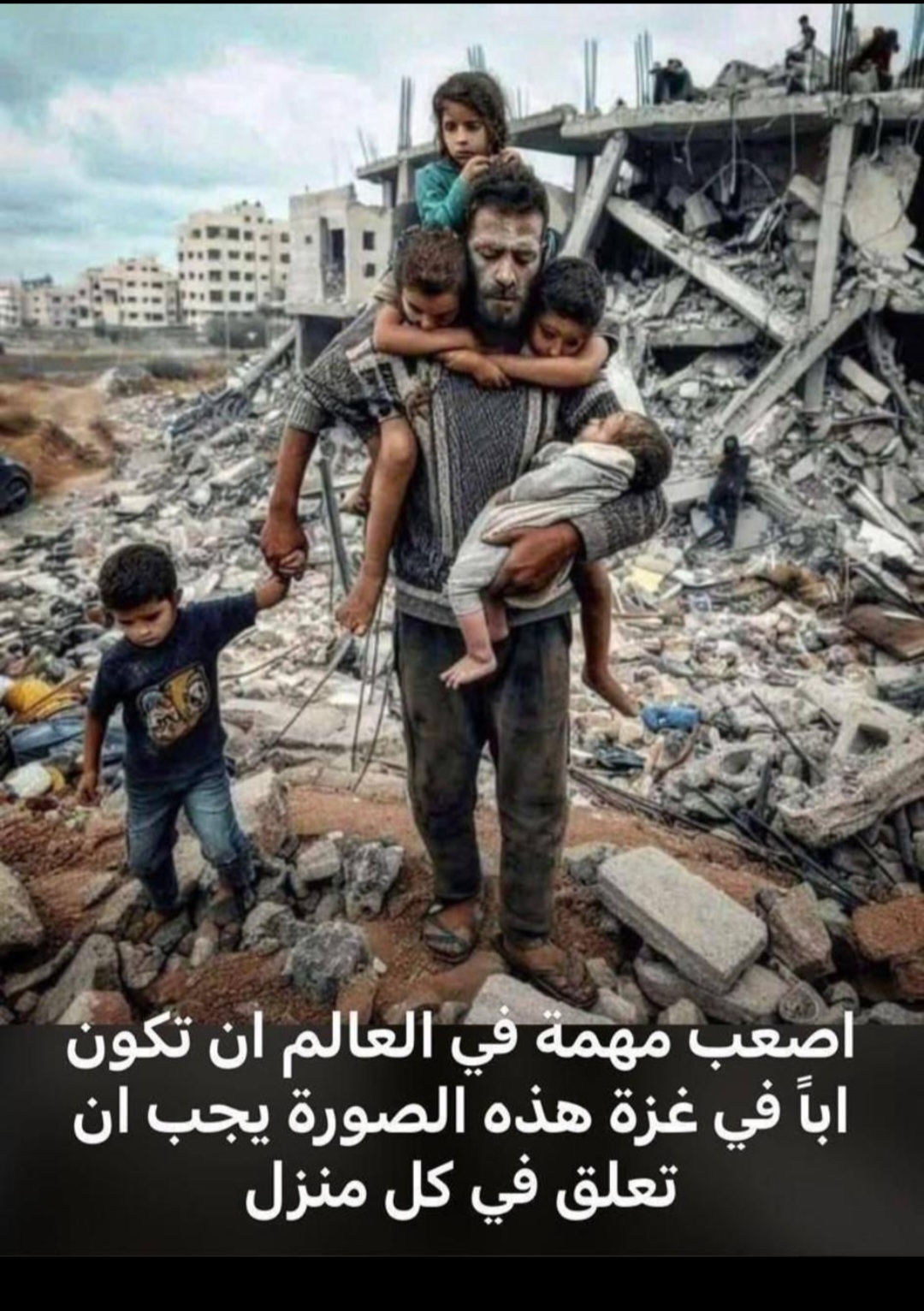
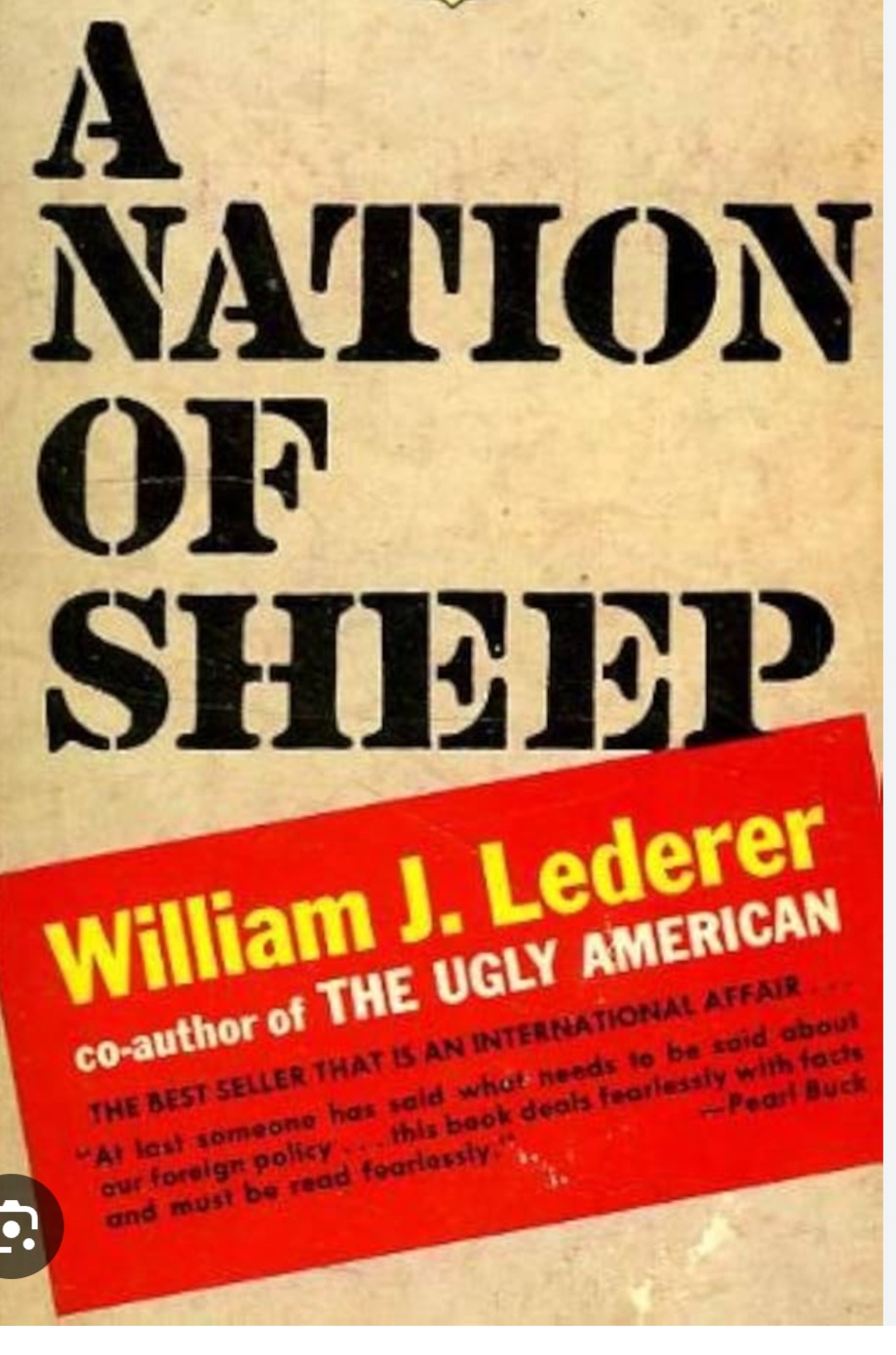
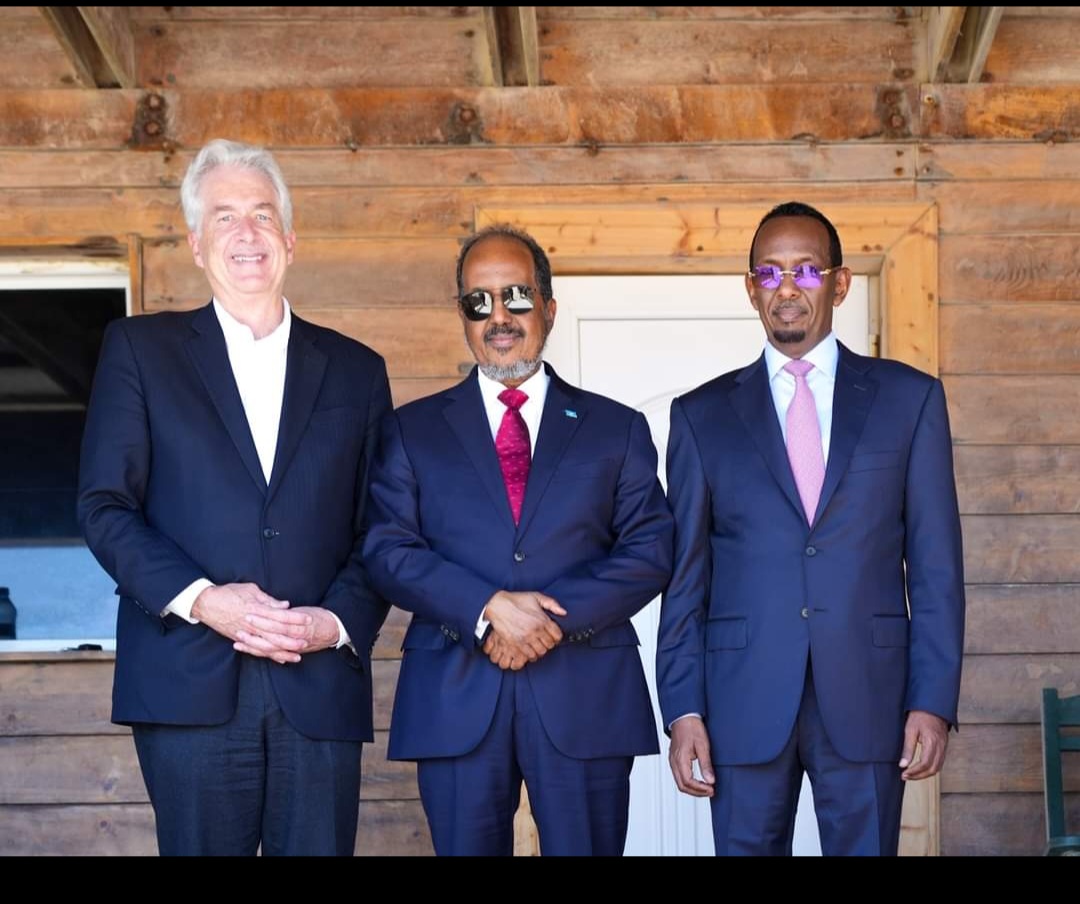
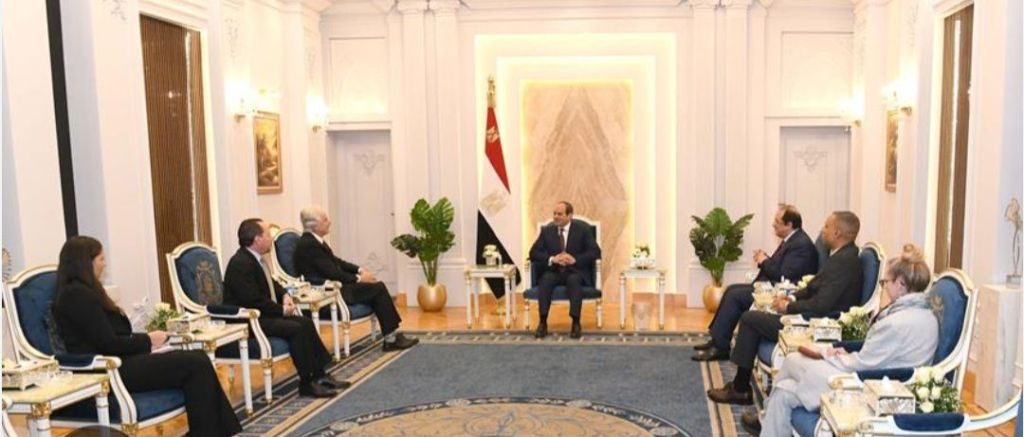
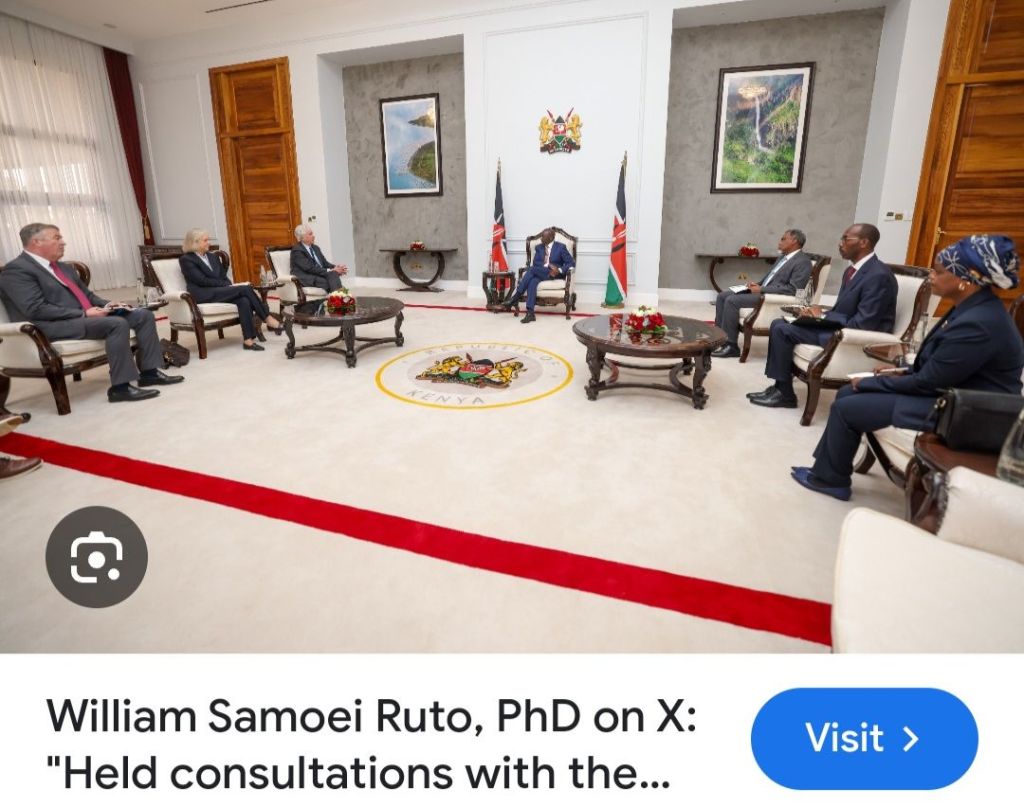


 Warsame Policy & Media Network (WAPMEN)
You must be logged in to post a comment.