Watch “The importance of Council Elections in Puntland” on YouTube

MINISTER JUXA ON THE PRESSING ISSUE OF DEMOCRATIZATION IN PUNTLAND

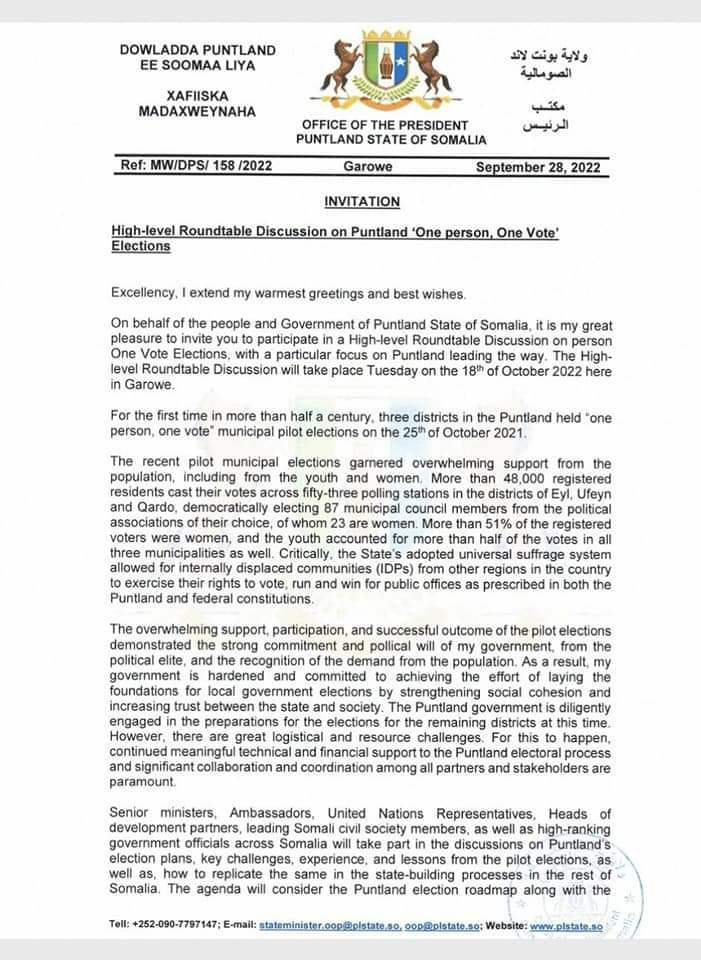
ROUNDTABLE DISCUSSIONS ON PUNTLAND FORTHCOMING ELECTIONS

COMMUNIQUE ISSUED ON ABYI’S OFFICE LETTERHEAD

Somali-Ethiopian Communique on Ethiopian Prime Minister’s Letterhead

Watch “Different Regions of Somalia have Different Development Needs” on YouTube

FRENCH PRESIDENT MACRON POLICY IS CONDEMNED

Italian politician condemns the French President Macron policy on Afrca

PUNTLAND DOESN’T INVOKE ITS BARGAINING CHIP WITH FGS

Kindly review this article:

Ununiform development needs in Somalia is a reality on the ground, and those regions still in humanitarian or recovery stages couldn’t be allowed to hold back those which are in development stage, when considering aid distribution and technical assistance programs. Peace and stability must be the criteria to gauge development needs.

https://ismailwarsame.blog/2022/09/28/peace-and-stability-must-be-criteria-for-development/

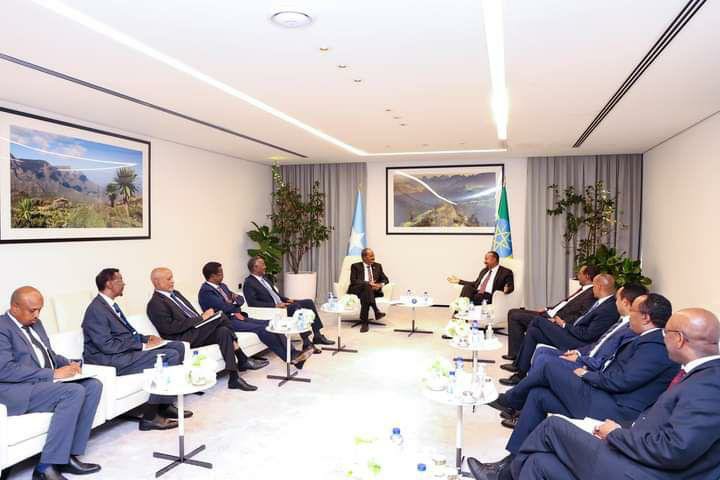
HAUNTING POLITICAL IMAGE OF SOMALIA’S PRESIDENT HASSAN SHEIKH MOHAMUD

Picture of the Day: Only Foreign Minister Abshir Huruse stands out as an odd man in the crowd of HSM in Addis Ababa today.

PEACE AND DEVELOPMENT

يجب أن يكون السلام والاستقرار معايير التنمية.

حافظ على السلام لتعيش بسلام.  يدفع.  عندما أنشأنا دولة بونتلاند في الصومال في أغسطس 1998 ، على الرغم من أن المناطق الشمالية الشرقية كانت مستقرة نسبيًا باستثناء مودوغ ، كانت هناك إقطاعيات فرعية من العشائر ومقاتلين عشائريين مهددين والعديد من نقاط التفتيش غير القانونية على طول الطرق والطرق السريعة الرئيسية ، على رأس العناصر الدينية المتطرفة مثل آل.  – اتحاد الاسلامى.  قامت ولاية بونتلاند ، من خلال السلطة الأخلاقية والتشريعية ، بإزالة هذه العناصر من الفوضى المجتمعية في غضون فترة زمنية قصيرة.  عاد السلام الكامل والممتع إلى المناطق الشمالية الشرقية من الصومال.  من الحالة الإنسانية إلى الانتعاش والتنمية ، انتقلت بونتلاند إلى وضع الحكم الذاتي وتقديم الخدمات العامة ، بغض النظر عن مدى شعور الناس بعدم الرضا ، بناءً على توقعاتهم من حكومة مراوغة ، في أعقاب حرب أهلية شرسة في تاريخ  هذه الأمة المضطربة.
قارن سيناريو بونتلاند بتلك المناطق الصومالية التي لا تزال تعاني من العنف والأزمات الإنسانية.  هناك ، لا أحد يتحدث عن مرحلة التعافي من الحرب الأهلية.  لا يزالون بحاجة إلى تدخل إنساني.
خلال تقييم الاحتياجات المشتركة لفرقنا (JNA) مع الأمم المتحدة والبنك الدولي في 2005-2006 ، اكتشفنا أن أجزاء مختلفة من الصومال تحتاج إلى مناهج إنمائية مختلفة.  كان استنتاجنا أن بونتلاند وأرض الصومال قد انتقلتا إلى مرحلة التنمية بينما كانت بقية الصومال في الغالب في مرحلة إنسانية.  لا تزال احتياجات التنمية غير المعلوماتية في الصومال حقيقة واقعة على الأرض ، ولا يمكن السماح لتلك المناطق التي تمر بمرحلة إنسانية أو مرحلة التعافي بعرقلة تلك التي هي في مرحلة التنمية ، عند النظر في توزيع المساعدات وبرامج المساعدة الفنية.  يجب أن يكون السلام والاستقرار معيارين لقياس احتياجات التنمية

PEACE AND STABILITY MUST BE CRITERIA FOR DEVELOPMENT

Keep the peace to live in peace. It pays. When we established Puntland State of Somalia in August 1998, although Northeast Regions were comparatively stable save Mudugh, there were sub-clan fiefdoms and menancing clan militiamen and numerous illegal checkpoints all along the roads and main highway, on top of religious extremist elements like Al-Itihad Al-islaami. Puntland State, through moral and legislative authority, had cleared up these elements of societal anarchy within a short period of time. Full and enjoyable peace returned to Northeastern Regions of Somalia. From humanitarian situation to recovery and development, Puntland had moved forward to the status of self-government and delivery of public services, no matter how unsatisfied people felt, based on their expectations from an elusive government, following a vicious civil war in the history of this troubled nation.

Compare Puntland scenario with those Somali regions which are still experiencing violence and humanitarian crisis. There, nobody is talking about recovery stage from the Civil War. They still need humanitarian intervention.

During our Teams’ Joint Needs Assessment (JNA) of Somalia with the United Nations and World Bank in 2005-2006, we had discovered that different parts of Somalia needed different development approaches. Our conclusion was that Puntland and Somaliland had moved to development stage while the rest of Somalia was mostly in humanitarian stage. Ununiform development needs in Somalia is still a reality on the ground, and those regions in humanitarian or recovery stages couldn’t be allowed to hold back those which are in development stage, when considering aid distribution and technical assistance programs. Peace and stability must be the criteria to gauge development needs.

QUOTES FROM ISMAIL H WARSAME

Write when you feel tired and hungry to kill verbosity and redundancy.
By Ismail Warsame.


Don’t waste time with friends and colleagues, who disappoint you. It is a losing exercise to win them back.
By Ismail Warsame

WHY PEOPLE OF PUNTLAND SHOULD SEIZE THIS VOTING OPPORTUNITY

WDM EDITORIAL

Aren’t you still tired and fed up of being told that your member of Parliament would be picked up by your clan elder? How would you allow your Puntland State President to continue to be selected by a group of unrepresentative 66 persons in your so-called parliament? By continuing to accept this kind of unaccountable and unrepresentative government, you risk losing the hope and future of your kids, existing generation, or even Puntland self-government. If you don’t change, you will have no rights to blame others for your misfortunes because of failure in your civic responsibilities. Once you skip the opportunity to vote and make a difference in your life and others’, you abandon all your rights as a full citizen.

In my opinion, after many trials and errors, Puntland State is now posed to make history in introducing One Person One Vote to the State and Somalia, starting with elections of District Councils. Make sure you contribute to the process and play your important role as responsible resident of Puntland State of Somalia. Good luck!

EXTENDED SESSION OF PUNTLAND HOUSE OF REPRESENTATIVES CAME TO CLOSE TODAY

NEWS BRIEF

Puntland House of Representatives has been in session for several months lately, longer than anytime in the past. The sticking issue, among others, was the establishment of the High Court. Earlier, the House rejected Puntland President’s proposal of a list of names that would constitute members of the Court. House members insisted on keeping the House in-session until the issue is resolved. It seems that the President and House Speaker struck a deal late last night to end the session, pending October session to reconsider the composition of the High Court.

Puntland House of Representatives has not been vocal or expressed support to the President’s plan of holding District Council elections. Some members even cast doubt on the timing of these elections. This is a House whose members were selected through the old system of constituency selection, and therefore, they were not expected to whole-heartedly endorse the principles of One Person One Vote. However, the legislations for these Council elections are already in place to proceed.

There are other issues as well between the Executive and Legislative Branches of which the general public knows very little about. There is lack of information sharing with or dissemination of legislative accomplishments or public issues under discussion to the residents of the State. The public is widely uninformed.

Getting to know the younger profile picture of this author and knowledge producer

Watch “Farta Cismania” on YouTube

Watch “Dib u Dhiska Villa Somalia” on YouTube

PUNTLAND IS READY FOR 1P1V

WDM EDITORIAL

Based on conversations, debates and discussions in towns, Puntland is ready for democratic elections. There is a general public understanding that the old system of indirect selection has reached the dead-end. Many believe that Puntland will not survive with the repeat of that clan selection process. The salvation lies in the introduction of democratic principles that has no alternative historically in governance.

Current Puntland Administration has no other choice but to accept the reality on the ground and expedite the process of District Council Elections. Failure to meet this challenge will be a colossal miscalculation that will see existential threat to Puntland self-government.

So, let us not waste time in political bickering. Let us move forward full of hope and confidence that better days are ahead of us.

Watch “Safar Halis ah ee Wafti Puntland” on YouTube

Watch “Shirkii Mbagati 2.0” on YouTube

MINI-CABINET RESHUFFLE IN PUNTLAND STATE

President Said Abdullahi Deni had decreed last night a mini-reshuffle of his already unusually large cabinet. Among noticeable changes include the replacement of the minister of Finance, Hassan Shire Abdi (Abgaal), a long time member of the so-called Aaran Jaan Group (Devil’s kids), a small group of political lobbyists based in Garowe, Nugaal Region. Hassan Shire has been replaced by a Deni loyalist, Abdirahman Dhabancad, who has been moved from the ministry of Interior and Federal Affairs. Dhabancad will not bring constituency representation to President Deni’s Administration. Also important in this Cabinet reshuffle is the appointment of Mr Abdi Farah Juxa, who now becomes the minister for Interior and Federal Affairs. Mr Juxa brings to the Administration vast experiences, having served before this appointment as Federal Government Minister of Interior and Federal Affairs in Farmaajo Administration, and earlier, as minister of education in Puntland Government during President Abdirahman Faroole’s Administration. The rest of the new minister-designates will not contribute any added values or experiences to the Cabinet. Public reactions to the Cabinet reshuffle is somehow muted, some saying it didn’t go far enough.

WDM takeaway of this mini-cabinet reshuffle is that the President’s move could help a bit rather than hinder government policy towards completing planned elections of Puntland District Councils. The time frame for these elections is, however, tight, and government is required to expedite this process. Given a potential window of opportunity, even Puntland House of Representatives could be elected by One Person One Vote in their respective regional constituencies, using data to be collected from districts’ elections and election experiences so acquired.

Watch “Ahmiyadda taariikheed ee Shirkii Mbakati 2001-2004” on YouTube

Puntland Government Press Release

The Ministry of Fisheries and Marine Resources of Puntland Government expresses its deep concern regarding the minutes from the meeting on 21/9/2022 between the Federal Minister of Fisheries & Marine Resources and foreign ambassadors, in which the Minister of Fisheries stated that he “does not recognize any license that is not issued by the Federal Ministry of Fisheries”, and threatened, “whoever is engaged in fishing activities with a license granted by the Federal Member States will be on the list of those who are accused of illegal fishing”. 

Puntland Government wishes to highlight that the above statement contradicts the constitution and the following political agreements:

1. Article 44 of the Constitution of the Federal Republic of Somalia stipulates that the distribution of natural resources shall be negotiated by the Federal Government of Somalia and its member states through a constitutional framework. 

2. The Baidoa Convention held on February 2nd 2018, Article 2; Paragraph B, confirms that the Federal Member States (FMS) have the authority over anything below 24 nautical miles.

3. The Addis Ababa Agreement held on March 22nd 2019, Article 3, states that the revenue generated from below 24 nautical miles will be managed by the Federal Member States.  

4. The Constitution of Puntland State, Article 3; Section 3 states that foreigners who are granted a permit from Puntland Government are allowed to fish between 12-24 nautical miles. 

Therefore, such reckless statement from the Minister of Fisheries & Marine Resources of the Federal Government could incite political instability, plunge the country into further division and jeopardize the economic future of the fishing sector as a whole.

In conclusion, we call on the officials of the Federal Ministry of Fisheries of Somalia to retract for his unsubstantiated statement, and honor the previous agreements and consultations between the Federal Government of Somalia and Puntland Government.


Watch “Abdullahi Yusuf and Ethiopia” on YouTube

Watch “Puntland-Ethiopian Relations” on YouTube

Watch “Abdullahi Yusuf and Jama Ali Jama” on YouTube

REGIONAL POWER PLAYS ON CARTA SOMALI CONFERENCE OF YEAR 2000

Watch “Shirkii Carta, Djibouti, Puntland, Somalia” on YouTube

Watch “How DJIBOUTI erred in its relations with Puntland” on YouTube

HOW PUNTLAND HAD SAVED DJIBOUTI FROM UNION WITH ETHIOPIA

NOTICE

Some WDM subscribers are still slow sending in their Annual subscription Fees of $37. Please expedite your support in order not to lose your membership. Use one of the following payment methods:

Tel/Sahal/WhatsApp: +252 90 703 4081; EVCPLUS: +252 61 588 388; MyCash :+252 71 681 4371

PayPal/bank e-transfer Accounts: ismail.warsame@yahoo.ca

HOW DJIBOUTI ERRED IN ITS RELATIONS WITH PUNTLAND

https://wp.me/p32mpX-3Fv

ON THE HISTORY OF PUNTLAND-DJIBOUTI RELATIONS

In 1991 [corrected] Djibouti, under the late President Hassan Guled Abtidon, hosted a Somali Peace Conference. Former Somali top officials, including Abdirisaq Haji Hussein and Mohamed Haji Ibrahim Egal attended the conference. Djibouti treated Somali dignitaries differently, offering preferential hosting treatment to delegates from Mogadishu, a fact that caused the resentment of late prime minister, Abdirisaq H. Hussein. Mr Hussein, famous for his wits in Somali language, reminded Hassan Guled of the fact that Djibouti “received some of us as brothers and some of us as friends”. Hassan Guled was stunned. He immediately drew the attention of his aides to discontinue such different standards for Somali guests.

In 1996 Abullahi Yusuf and I passed through Djibouti from Addis Ababa on our way to the commercial city of Northeast, Bosaso. We checked in Sheraton Hotel Djibouti for two nights to prepare our flight connection to Bosaso. We were officials of the National Salvation Council (the Sodare Group). While there, Ismail Omar Ghuelleh, the Chief of Staff at Djibouti presidency and Director of Intelligence then, heard about our presence in town. One afternoon Guelleh invited us for a tea at his home. We met him in his Qat-chewing room. We also learned later that Djibouti First Lady was having her own Qat session next room. Ghuelleh was watching a large TV screen on the wall with Ethiopian Satellite channel on. Further into our chit-chat, he informed us that Djibouti couldn’t survive on its own. They were contemplating about Djibouti joining Ethiopia. Abdullahi Yusuf advised him not to do that and that Djibouti should better hang on while we are trying to revive the failed state of Somalia. Guelleh seemed unpersuaded. The rest is history. Djibouti didn’t join Ethiopia because of our help in the Somali peace and reconciliation process.

Later as Ghuelleh became president of Djibouti, we met him again and submitted a letter to urge him to take up Somali peace and reconciliation process from foreign hands as he was a Somali man himself. He agreed.

From our side, we had mobilised the entire Somalia’s political elites, factions and warlords to help Djibouti take up the job of Somalia’s national reconciliation process. We had convinced the international Community to abandon parallel initiatives on Somali talks and persuaded Kenyan President, Daniel Arab Moi, to hold off any plans of convening Somali conference in Nairobi, as we asked him to talk to Meles Zenawi to help Ismail Omar Ghuelleh to be able to host Somali peace conference. He agreed. Thus, we developed the concept of “Frontline States” working together on Somalia’s issues. But the problem was that Ethiopia was an AU-sponsored “Mandated Country” then for Somalia’s Peace and National Reconciliation. Puntland and Djibouti jointly had successfully pushed this agenda despite Zenawi’s annoyance and disappointment.

Meanwhile, we convened all Somali factions, except Hussein Aideed’s Salbalaar faction, to Garowe to establish a new alliance, the Somali Peace Alliance (SPA). Puntland had led this alliance as one delegation to Djibouti. We met with Ghuelleh in his office at Presidency.. He said, “you have done more than half the job”.

Enter our next meeting with President Ghuelleh in Djibouti. Abullahi Yusuf and I were transiting through Djibouti on our way to London via Addis Ababa. It was private medical check-up for Puntland President in the UK. While there, Ghuelleh wanted to see Abdullahi Yusuf. The encounter so happened that Ismail Thani, Ghuelleh’s Chief of Staff, visited us in Sheraton Hotel and informed us that President Ghuelleh wanted to see President Abullahi Yusuf. We both stood up to go to the Presidency. Thani advised me to stay behind as Ghuelleh wants only Mr Yusuf. At presidency, Thani too was asked to leave the two Presidents alone. Nobody knew what had happened between the two men, save what Mr. Yusuf told me afterwards. However, Mr Yusuf returned to our hotel annoyed, Here lies the extreme rift between Puntland and Djibouti, or rather, disagreement between the two men. It is my understanding, though, that Abdullahi Yusuf felt the same resentment Abdirisaq Haji Hussein had expressed then in 1991, after the former met privately with Mr Ghuelleh.

See related topic:

https://ismailwarsame.blog/2022/09/20/how-djibouti-erred-in-its-relations-with-puntland-2/

Watch “President Hassan Sheikh Mohamud of Somalia has taken over the Executive Branch of the Government” on YouTube

HAS US GOVERNMENT BEEN DECEIVED BY SOMALI CLAN POLITICS?

There is a strange and odd Somali saying of recent origin stating “a truth teller is shame teller”. But strange as it may sound, sometimes telling the naked truth is uncomfortable to people. This story is one of those stories when stating the fact is uneasy to both the truth teller and the audience. The issue here is that the President of the Federal Republic of Somalia, Hassan Sheikh Mohamud, has led a delegation of his own sub-clan to visit United States of America as official Somali state delegation. Although many members of his entourage of the same sub-clan have been denied US entry Visa, according to multiple independent sources, those junior officials who got through were Mohamud’s close aides, some of which are either distant relatives or his Damul-Jadid party associates, but still from same sub-clan.

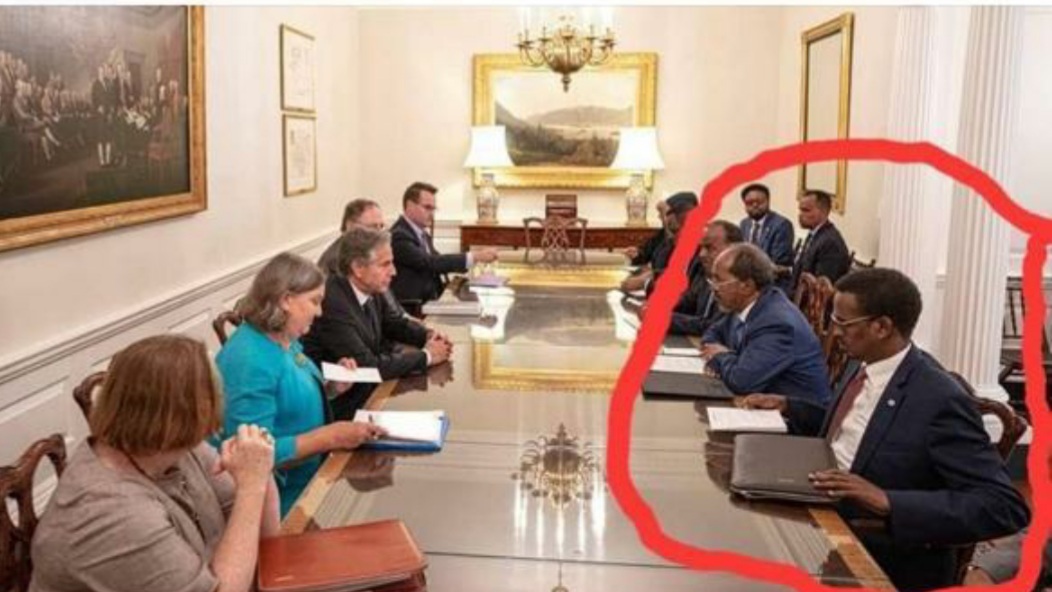
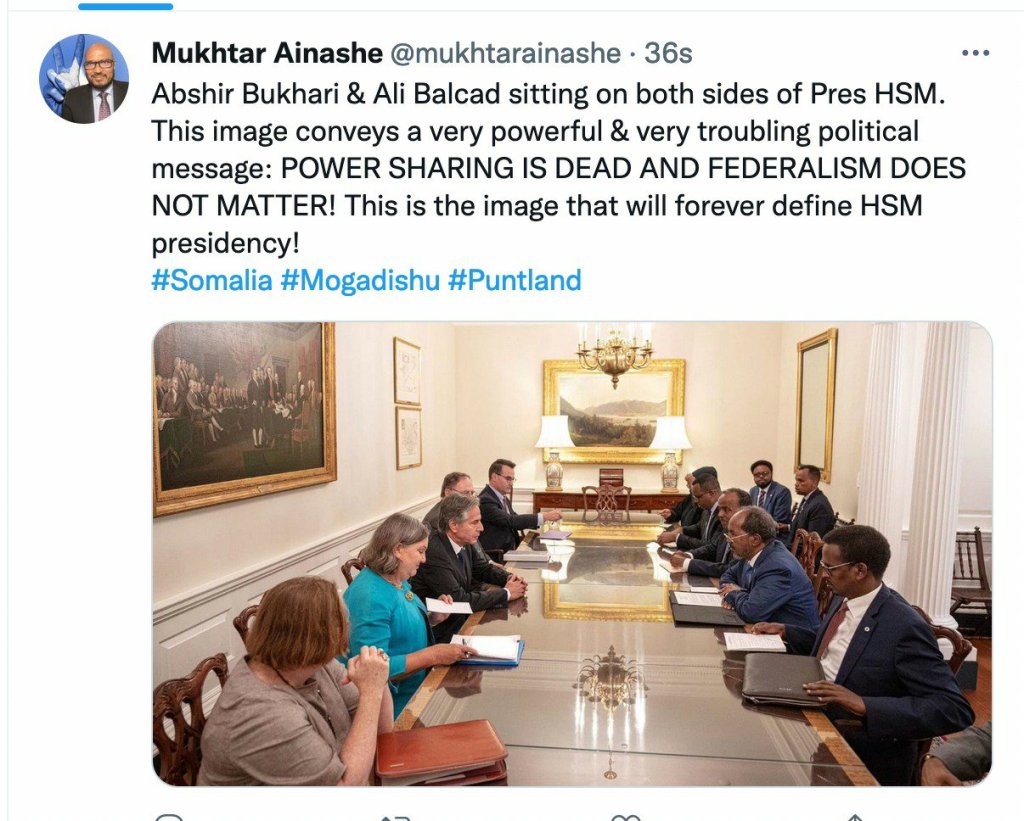
Foreign Secretary Blinken meeting with Mohamud’s sub-clan members under the disguise of FGS delegation

I know the fact that many foreign officials dealing with Somalis since the failure of Somalia’s state in 1991 are weary of these clan nuances, and that there is no genuinely representive Somali person, but a clan member, according to them. Any foreigner, who had experienced Somalia’s mayhem, would ask you the question, “whose clan are you speaking for? You can’t speak for other Somalis or Somalia”. This is the tragedy of Somalia’s story.

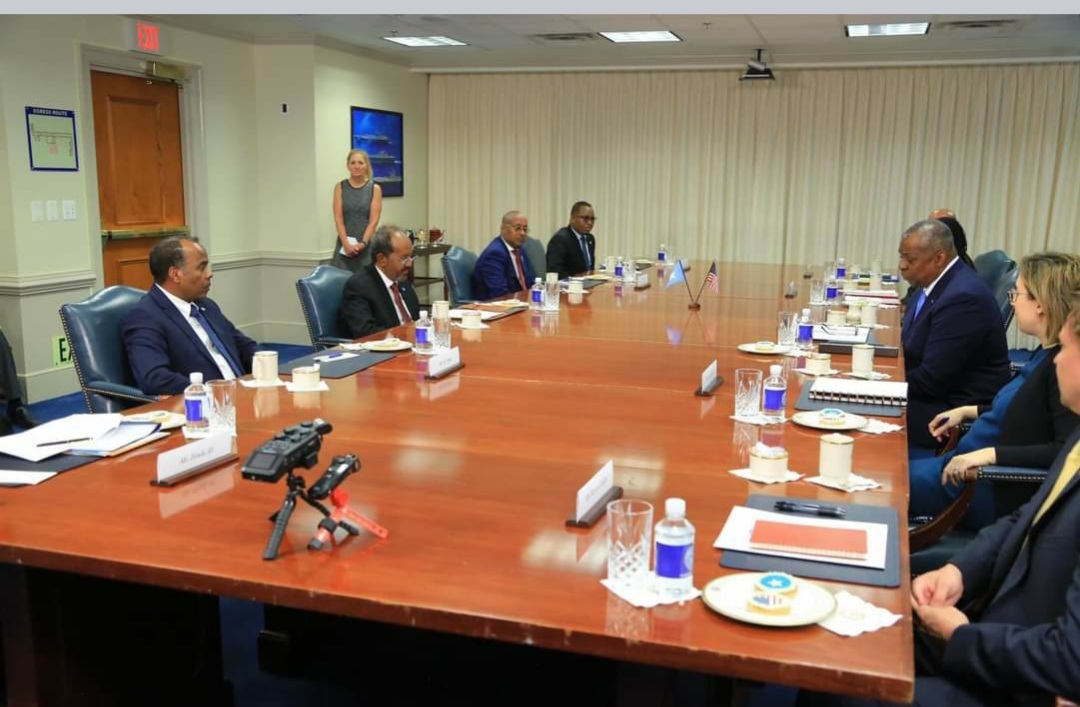
Defence Secretary Austin meeting with the boss of Somalia’s sub-clan-FGS delegation at Pentagon.

Knowing this reality makes this story less scandalous and understandably less impressive as one could be tempted to ask, “what makes your story different from numerous other clanish bashing?” A vulnerability and Somalia’s weakness that foreign powers exploit to their advantage in handling Somali issues at personal, regional and national levels. This story is different because the facts are there in pictures and in substance that one cannot argue. This is unprecedented development in US-Somali relationships.

Whatever the issue here under debate, the purpose of this story-telling is not to create doubts in the minds of US policy-makers, but to help them engage better with Somalia and its government of the day. The intention here is also to expose malpractice in public services, and that US government and others should be weary of Somali clan politics, especially under the leadership of President Hassan Sheikh Mohamud.

Amazingly, most of his meetings in the US are at ministerial level. Being a micromanger is the trademark of HSM in politics. Remember, we warned about that in several earlier WDM articles. HSM, keeping this in mind, picked up his party aide, Hamse Abdi Barre, as the prime minister of Somalia.

Postscript

You remember clan organizations during the Civil War?

  1. HAG
  2. Somali Concern
  3. United Somali Alliance

Here we go again:
https://apnews.com/press-release/ein-presswire-newsmatics/africa-united-states-district-of-columbia-somalia-hassan-sheikh-mohamud-f3009483bd9e09985445d2f2ffac95f5

LISTENING TO HSM ATTENTIVELY IN WASHINGTON YESTERDAY.

Waiting for being appointed PM after Hamse Dismissal, perhaps in two-three year’s time.

PICTURE OF THE DAY. USC AGAIN OR FGS?

USC OR FGS?

WDM BREAKING NEWS

According to reliable news sources, most members of President Hassan Sheikh Mohamud’s delegation planned to accompany him to visit United States were denied Entry Visas. These members of Mohamud’s delegation were either Damul-Jadid Party members or drawn from his own sub-clan. These included Minister of education, Farah Abdulkader, Defence Minister, Abdulkadir Mohamed Nur, Minister of internal Security, Doodishe, Spy Chief, Mahad Salad, National Security Adviser, Hussein Moallim Mohamud, among others. This is unprecedented development in US-Somali relations.

Observers also noted that even President Hassan Sheikh Mohamud was given a restricted visa waiver by US State Department as he was denied Entry Visa before after the end of his first stint in Villa Somalia. Stay tuned.

Watch “Protocol irregularities of President Hassan Sheikh Mohamud in foreign visits” on YouTube

Hassan in the Emirates with Somalia’s Chief Intelligence Officer as Arabic translator
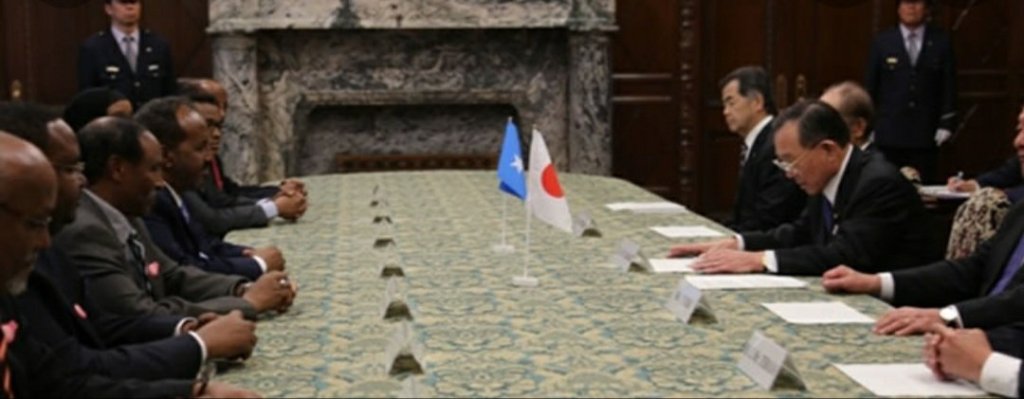
Hassan in a meeting in Japan with no one taking any notes from Somali side. It was his first term as Somalia’s President. Look at Japanese side, all with papers and pen.
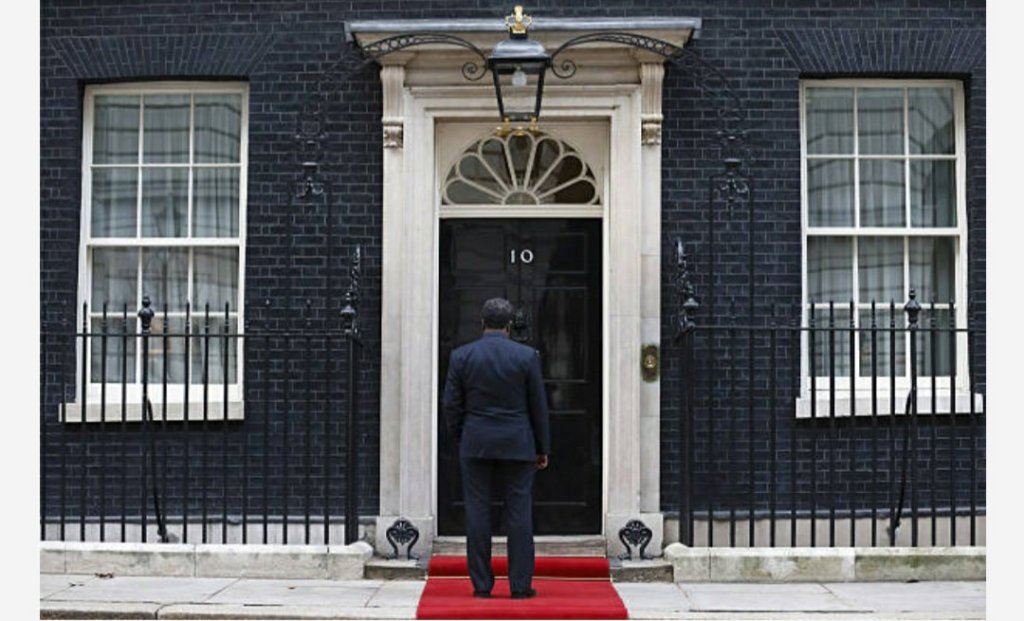
Hassan at door of 10 Downing Street alone with no one to receive him.

WHY SOMALIA IS HARD TO RUN

The political slogan by President Hassan Sheikh Mohamud (HSM), “Somalia in peace with itself and with the rest of the world” was too good to be true. It was inconsistent with both the political character and past deeds of the Somali leader. To have a nation in peace with itself, especially in the case of Somalia, means to me that political leaders must be chosen by the people. That is the first condition, I believe, to secure national peace. You can’t maintain peace, harmony and trust when leaders come to power through manipulations, corruption, interest groups and religious Tariqa. You can’t earn trust of your citizens, if you are known to be greedy and out there to accumulate wealth through corruption and misuse of public office.

Now, think of discussing resources-sharing with such politicians symbolized by President Hassan Sheikh Mohamud. Whether it is fiscal federalism or equitable and fair management of petroleum and other mineral resources, it would look and sound like debating with General Mohamed Farah Aydid on re-instating the failed state of Somalia. HSM and his political constituency aren’t yet ready to share the spoils of Somali state, no matter what system of governance Somalis agreed upon. It is winner takes all -a zero-sum game in political and clan rivalry.

Only recently it was the meeting in Mogadishu of finance ministers of FGS and FMS, failing to reach consensus on fiscal federalism due to the political interference by the Federal President. In HSM’s style of leadership and in direct violation of the Federal Constitution, the Cabinet and Prime Minister don’t exist. The only obstacle to HSM’s absolute power is the existence of Federal Member States. How would he then share resources and power with them? This is the basis for Puntland State argument on the brewing dispute on petroleum management with the administration of President HSM. This is also one of the key factors making Somalia hard to run.