
Month: September 2019
SEPTEMBER 18, A DAY TO REMEMBER
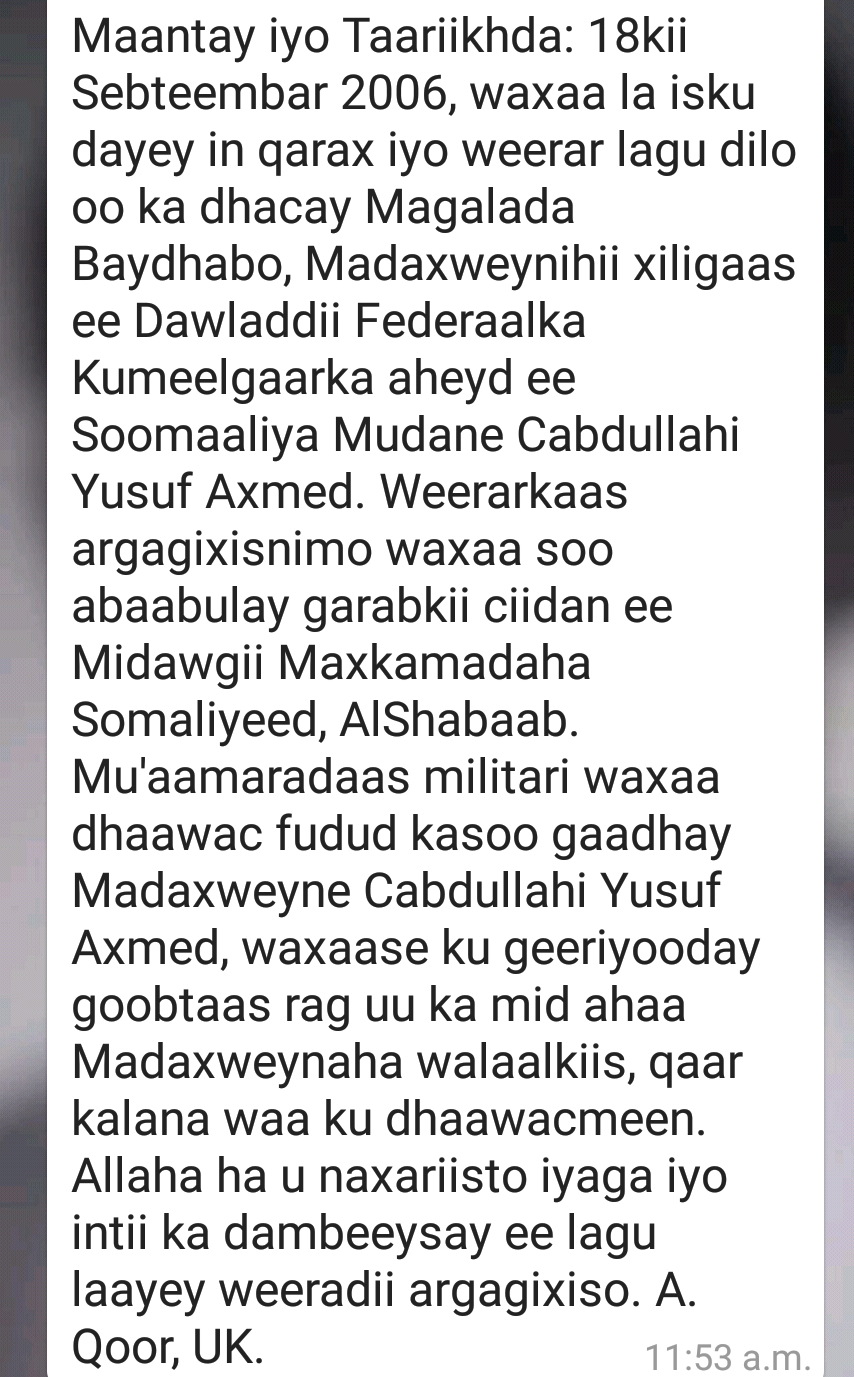

Historic
Important speech by President Deni at Gara’ad Seaport today.
HISTORY
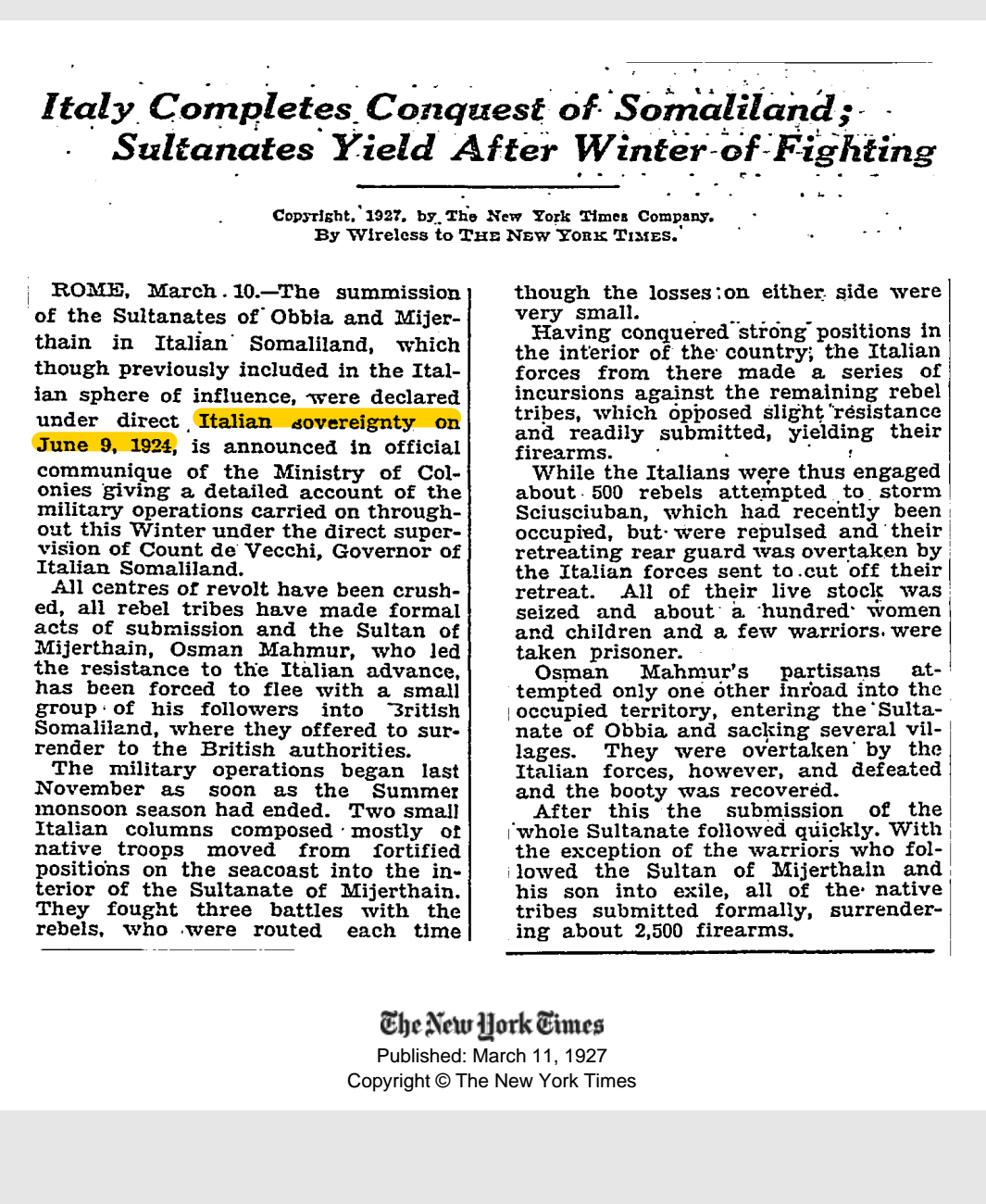
Take a read.
NOTED
JOIN YOUR WDM COLLEAGUES/READERS TO ENJOY ARTICLES OF CRITICAL ANALYSISES ON SOMALIA AND REGION
September 17, 2019
WDM NOTIFICATION
This is to notify you that annual subscription to access WDM articles is now required.
Any reader subscribing to the articles will receive a confidential Access Key via email as payment goes through by PayPal or a major credit card.
You will receive email notification immediately after your payment. Each of you will receive a letter of appreciation with the WDM Access Key, subsequently.
This is a secure payment through your financial institutions as you will also get notification on the screen on the portal of your own device instantly.
WDM
PS: For those readers at home in Somalia, they could too send their subscriptions to:
Sahal Account 496091 or e-Dahab Account 77731. One may also use TAAJ.
Inquire at Tel: +252 90 703 4081
Annual subscription
$37.00
PUNTLAND ELECTORAL COMMISSION
Take a listen.
Report by Puntland Electoral Commission
Take a listen.
Protected: N&N ELECTION 2020 STRATEGY SEEKING RUBBER-STAMP APPROVAL FROM FMS. SUBSCRIBE TO READ MORE ….
NO NORTH-SOUTH DIALOGUE, NO UNITARY SYSTEM. IT IS NOW CONDEFERALISM OR SEPARATION

September 17, 2019
Now that N&N Government in Somalia turns out to be acting as a road-block or destructive force to the negotiated settlement on Federal System under a provisional constitutional arrangement, the time has come to re-negotiate on the way foward for Somalia’s future governance: CONFEDERALISM
In this context, South-North approach to this debate is a non-starter, as far as Puntland is concerned.
The stakes are so high that it is about a choice between separation disintegration and confederation of Somalia’s provincial states.
N&N Government is incapable of seeing through this imminent danger in Somalia’s State of Union. They are delusional as they they think they were leaders of a united country. They live in utopia in a dream-land.
[simple-paynent id=”5422″]
BREAKING NEWS: IMPORTANT DELEGATION OF INVESTORS AND DIGNITARIES HEAD TO … SUBSCRIBE TO READ MORE ..

September 16, 2019
Important delegation from Puntland Investment Forum, international and local dignitaries are heading to Gara’ad starting from Wednesday, September 18.
It is reported that Puntland President, Said Abdullahi Deni, will lead this high level delegation to visit the site of Gara’ad construction site.
This visit is a bold step by President Deni to boost share holder’s participation in completing the construction of the port as quickly as possible.
Gara’ad Port will be fully operational within 12 months, according to informed sources, as all necessary financing has been secured.
Please read on the economic benefits of would-be Gara’ad Port to the Region:
https://ismailwarsame.blog/2018/08/13/why-the-port-of-garaad-is-needed/
Annual subscription
$37.00
Protected: SOMALIA NOW IN FAST TRANSITION TO UNCERTAINTY. SAUDI ARABIA SET TO CEASE AS MAJOR OIL EXPORTER. WORLD IN CRISIS
Protected: Artificial Intelligence Crimes: Be Cautious
Protected: BREAKING NEWS: PUNTLAND TAKES AN IMPORTANT STEP TOWARDS SELF-RELIANCE. ON FIRST DAY OF INVESTMENT FORUM, EVERYTHING WENT WELL, EXCEPT …
WDM DOESN’T WANT YOU TO MISS OUT. PLEASE GET IN!
September 17, 2019
WDM NOTIFICATION
This is to notify you that annual subscription to access WDM articles is now required.
Any reader subscribing to the articles will receive a confidential Access Key via email as payment goes through by PayPal or a major credit card.
You will receive email notification immediately after your payment. Each of you will receive a letter of appreciation with the WDM Access Key, subsequently.
This is a secure payment through your financial institutions as you will also get notification on the screen on the portal of your own device instantly.
WDM
PS: For those readers at home in Somalia, they could too send their subscriptions to:
Sahal Account 496091 or e-Dahab Account 77731. One may also use TAAJ.
Inquire at Tel: +252 90 703 4081
Annual subscription
$37.00
Puntland Situation Report – August 2019
“Somali Law & Policy Program
August 2019
- EXECUTIVE SUMMARY
Over the course of the August reporting month, the security situation in Puntland State of Somalia
remained relatively stable and even optimistic, although the state continued to face serious threats
from conventional and non-conventional forces. Unprecedentedly low numbers in violent deaths
for August signaled an improved security situation in Puntland, especially with regards to a decline
in violent extremist activities. The cycle of attacks, mostly concentrated in and around Bossaso,
have dropped significantly since June, giving credence to the administration’s efforts and
community-led engagement to restore Bossaso as a center of economic activity in Somalia, and
the wider region. Two roadside bombings in Bossaso during August indicated that IED (improvised
explosive devices) attacks remain the foremost security threat to state forces and government
officials in Puntland.
Although low numbers in violent deaths in Puntland were reported, the sub-national conflict with
Somaliland and regional fault-lines continued to intensify. Significantly, instability in the regional
fault-lines and local/clan conflicts remained key factors that fueled insecurity, and as the month
ended, it was unclear whether or not the government had any action plans to tackle this threat.
Sporadic armed clashes with Somaliland forces in Sanaag region continued, exerting further
pressure on Somaliland already facing low-intensity insurgent attacks on its forces in Sool region.
The El Afweyn clan conflict in western Sanaag region continued to rage on and an armed skirmish
in Sanaag region between Puntland and Somaliland forces was followed by defections of
Somaliland forces to Puntland. Local clan conflicts in Mudug region continued to worsen, as there
were reports of a series of revenge killings between sub-clans from Puntland and Galmudug.
The Puntland leadership attempted to address a growing trend of local clans adopting Islamic
Sharia Law to govern traditional justice systems. In a bid to quell the growing trend, the Puntland
Vice President hinted at government-community dialogue process during his speech marking Eid
celebrations in Puntland. Moreover, the justice process for the high-profile case of violent rape and
murder of 13-year-old Aisha Ilyas concluded with the Puntland High Court upholding of murder
convictions for three men.
Puntland’s relations with the Federal Government of Somalia (FGS) remained fraught with
disputes, with Puntland levying allegations against FGS interference in the Jubaland state
elections. This development is significant as the two sides’ growing rift worsens, as the 2020/2021
federal elections loom closer. Somaliland and Puntland relations fared no better, as the Puntland
leadership vocalized contradicting perspectives towards the conflict over Sool and Sanaag
regions. Contradiction was also a theme when the Transitional Puntland Electoral Commission
(TPEC) was appointed, as the Puntland vice president disagreed publicly with the president’s
TPEC nominations. Furthermore, the new administration’s reform efforts to implement systems of
integrity was tested when media reports surfaced that potentially tarnished the state’s commitment
to public finance management. The dispute between FGS and Puntland education ministries and
its impact on Somali students came to surface, indicating that the federal-state political dispute
was having an adversarial effect on Somali students. Finally, Somali local airlines were focused on
launching allegations of “unfair competition” against international airlines companies, but the local
airlines’ shortcomings have paved the way for foreign-owned carriers to dominate the Somali
aviation market’
W: naisomalia.com E: contact@naisomalia.com
Protected: WHY PUNTLANDERS DON’T TRUST N&N GOVERNMENT
A WANKER
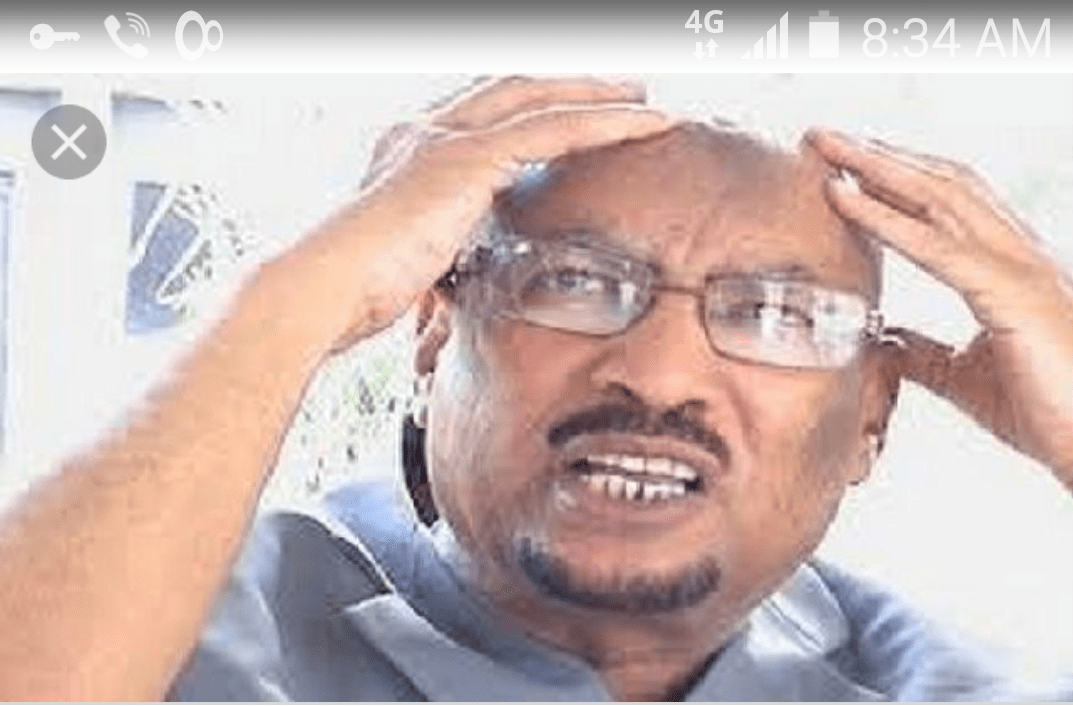
It is all MJ’s fault, says a wanker in Hargeisa.
Protected: IS THERE A ROADMAP TO SELECT AND PROMOTE POTENTIAL QUALITY LEADERS?
WHAT IS WRONG WITH THIS PHOTO?

September 13, 2019
Is it the empty chair? Is it the extra chair? Is it the seating arrangement? Is it the wrong protocol? Is it the servitude attitude of the President of a Federal Member State? Or is it political insensitivity of the Prime Minister?
Annual subscription
$37.00
The U.S. can’t integrate irreconcilable ethnicities in Horn of Africa region. It’s a no-brainer
Last updated May 29, 2019
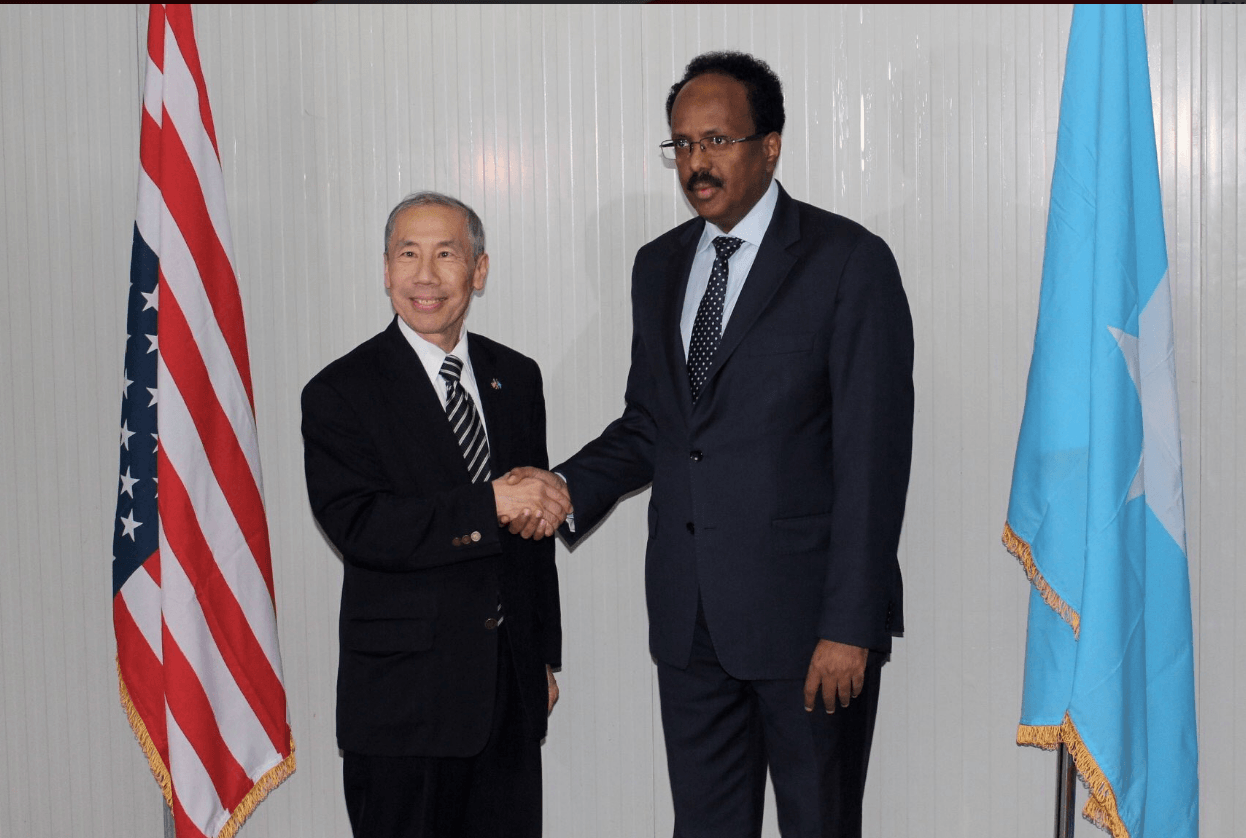
Amb. Yamamoto presenting credentials to President Farmaajo on Nov. 17, 2018 in Mogadishu.
By The Star Staff Writer
MOGADISHU — The U.S. Ambassador to Somalia Donald Yukio Yamamoto, who admits to be both “persistent and patient,” has nowadays taken on too many conflicting responsibilities. He’s trying to ostensibly help Somalia recover from decades of wars and chaos. He’s working hard to fight China’s influence in the Horn of Africa region. And most oddly he wants to economically integrate Somalia, Ethiopia and Eritrea before he, if possible, unites them in confederacy.
What a real pity.
While it’s unlikely that the Ambassador will achieve any of these four endeavors, one thing is certain: Yamamoto’s kamikaze mission to unite Ethiopia and Somalia will not only be mission impossible, but will also leave him with egg on his face. The Soviet Union had in 1977 tried this high-wire act and failed miserably.
Yamamoto’s ill-advised regional integration initiative has the potential to beget wars, famines, displacements and to impede Somalia’s march toward recovery. The integration project ominously seems to jibe with Ethiopia’s hegemonic tendencies in the Horn of Africa region – and Yamamoto is fronting to mask the real agenda behind it.
It appears that the U.S. has finally decided to get its real intention of creating a greater Ethiopia out into the open after a decade-long sanction on Eritrea and a quarter-century of chaos in Somalia failed to put these two inherently anti-Ethiopia nations under Addis Ababa’s tutelage.
The good news is, Somalis and Eritreans are not falling for Yamamoto’s sophistry.
During the scramble for Africa, Ethiopia had an outsized ambition of controlling much of the East African region, including Khartoum, Sudan, and of having unrestricted access to the Red Sea and the Indian Ocean. It even wrote to the Europeans to ask for their support to seize parts of Somalia’s coastline.
Ambassador Yamamoto made no secret of his support for the defective economic integration agreement between President Mohamed Abdullahi Mohmaed “Farmajo”and Ethiopian Prime Minister Abiy Ahmed that allowed Addis Ababa to invest in four Somali ports. That agreement, which was unveiled last June, is yet to be tabled in the House for fear of tossing it out.
The U.S.’s support for the bromance between Farmajo and Abiy — possibly recommended by Yamamoto, who’s trying to ward off any Chinese encroachment on the strategic Horn of Africa region — is another big, U.S. misjudgment that will, in the end, backfire. Both leaders may not stay too long, as opposition against them in their respective countries is increasing by the day.
Hot potato
In Somalia, President Farmajo’s endorsement alone is not enough to merge with Ethiopia. The man is fast becoming a national pariah and irrelevant. After all, he owes his survival to foreign peacekeepers and is so powerless that his forces can’t stop terrorists’ mortars from landing inside his palace. His ineptitude has appalled many Somalis who once adored him. It’s in Yamamoto’s interest, therefore, to drop Mr. Farmajo like a hot potato – before it’s too late.
There’s credible fear that Farmajo’s polices, such as the stifling of critics who constantly question his competency, his hasty decisions to auction the nation’s offshore blocks and inability to fix the spiraling insecurity could spark off an uprising that would engulf the country and destabilize it further.
Like his late uncle, the former President, Farmajo will try to clutch at any straw to salvage his embattled rule. His desperation to associate himself with America is akin to Barre’s last gasp attempt to prevent his inevitable downfall. According to a 1992 Washington Post report, Barre offered Somalia as a pawn in the East-West rivalry. Trusten Frank Crigler, the U.S. Ambassador in Mogadishu between 1987 and 1990, said President Barre boasted that he had told President Ronald Reagan that he would “bring you Somalia” to “do with it what you will,” the Post reported.
Yamamoto, a career diplomat who worked in Somalia, Ethiopia, Eritrea and Djibouti, shouldn’t be the one buttressing a regional economic integration among countries whose people openly hate each other. He can’t achieve the unachievable by exercising selective memory.
Somalis must forestall any attempt by Yamamoto to help Farmajo prolong his term or string the Somali public along with unworkable integration agreement. The two Americans – one of Somali origin and the other of Japanese heritage – should come clean on the rumors that the U.S. is determined to help Farmajo rule the nation unchecked in exchange for a free hand to the U.S. to do whatever it wants in the country.
Cold facts
Ambassador Yamamoto seems not to be too fond of history. Or at least he doesn’t seem to care much about the fact that Somalis don’t trust Washington’s initiative of regional integration. Yamamoto deludes himself if he thinks that Somalis and Eritreans, who were never strategic allies of Americans, would believe his words at face value.
The United States can’t sweep Somalis’ and Eritreans’ concerns about the clamor for integration under the rug. Both nations were until recently sworn enemies of Ethiopia.
The seemingly good relations among Somalia, Ethiopia and Eritrea are but skin-deep, brittle and deceptive. There is little that can prevent these countries, which have little close historical bonds, common values or aspirations, from relapsing to hostilities.
Already, the border between Somalis in the Ogaden region and Oromos of Ethiopia is a virtual war zone. Eritrea has recently closed its border with Eritrea for security concerns. If there were countries that are unlikely to coexist in full peace, let alone integrate, they’re the nations in this region, which is a tinderbox that can catch fire at any moment.
On January 26, Eritreans expressed outrage after the Ethiopian Embassy in Britain posted a photo of Ethiopian fans at the Standard Chartered Dubai Marathon holding up a picture of a map that showed Eritrea as a part of Ethiopia.
Calling the map “erroneous,” the Embassy later took down the photo and apologized deeply “to all”.
Many Eritreans, however, read sinister into the post, with a Twitter user, Fthi, demanding that Ethiopian Prime Minister Abiy Ahmed “refrain from using inflammatory statements regarding” his country’s sovereignty.
“At the very least it is very disrespectful to #Eritreans to suggest that #Eritrea & #Ethiopia don’t need different” army, said the Twitter user, referring to Ethiopian Prime Minister’s recent suggestion that regional countries, including Eritrea, should have one army and one Embassy.
Losing Somalia
Somalis have already paid a heavy price for U.S.’s impetuous, security-focused policy, and if Washington doesn’t change tack, it will ultimately be the loser because Somalis, who endured and survived decades of lawlessness and violence have the tenacity and stamina to ride out all foreign-backed ruinous policies. Washington had already lost many Somalis, who once held the U.S. in high regard despite its catastrophic policies toward their country.
President Farmajo and his fellow American, Yamamoto, may dabble in their integration project, but Somalis, of all political and social stripes, don’t believe uniting economically with Christian-dominated countries – Eritrea and Ethiopia — is a viable and suitable recovery path for their Muslim nation.
If Yamamoto’s aim is to destroy Somalia, he will soon have the blinding realization that Somalis are not milk and water.
Somalis know how to defend their country and teach unforgettable lessons to aggressors. Somalis calmly take all their enemies’ blows on the chin and quickly give them a bloody nose, precisely as they did to Americans in 1993 and Ethiopians in 2007-2009. America – or any other country for that matter – doesn’t matter a hoot to Somalis.
By espousing unrealistic economic integration in the Horn of Africa region, Yamamoto very much seems to be testing Somalis’ resolve and nationalism, but the result could look more like tempting fate than testing the waters.
Mr. Ambassador, America doesn’t need to hold fast to asinine policies that time and again proved their futility and now threaten to cost it the friendship of a whole Somali nation.
Somalis wish to have America as a partner, but America has to first stop its vicious attack on Somalis’ unity, respect its sovereignty and allow Somalis create a real, functioning government that is at peace with its neighbors — not a part of them.
In 1977, the Soviet Union tried to coax Somalia and Ethiopia into a federal system, with the Ogaden region and Eritrea, which was then a part of Ethiopia, becoming autonomous territories under the new dispensation.
At the behest of the Kremlin, Fidel Castro of Cuba mediated between President Barre of Somalia and Mengistu Haile Mariam of Ethiopia in Aden, South Yemen, which was then an independent, pro-Soviet state. Castro’s efforts, however, came a cropper, as none of the two leaders was bold enough to publicly endorse his idea, much less realize it. The idea’s natural death came when Somalia waged a liberation war against Ethiopia to retake its occupied territory, the Ogaden region.
Like Yamamoto’s regional integration initiative, the Soviets mooted the federalism idea to see if it can unite two rivals, who were then in its orbit, to minimize their insuperable differences.
Realistic alternatives
The best Ambassador Yamamoto can do as an old hand in the region, which is both realistic and commendable, is to ask his boss, President Trump, to appoint him as a special envoy for the Horn of Africa region to help Somalia, Ethiopia, Eritrea and Djibouti weather the very difficult transition period they’re going through.
Or alternatively, he should conscientiously focus on Somalia’s peace efforts and block out unattainable regional ideas. “We will go to Somalia and we stay there until we get the job done,” Yamamoto told Somali-Americans before coming to Mogadishu.
Somalis are waiting to see if he would make good on that promise and help them stand on their own feet once again. Or if the U.S. would trigger a new conflict, like it did in the recent past when it sanctioned Ethiopia’s invasion of Somalia.
As a seasoned diplomat from an Ivy League institution, Yamamoto should have known better than to propose an idea that will surely sink like a stone. Laying oneself open to unnecessary criticism is not the mark of a sharp-witted Ambassador. It may be in Yamamoto’s DNA to loathe China, but he will not succeed fighting it through Somalia.
Mr. Ambassador, you cannot yoke together a menagerie of irreconcilable ethnicities in a new regional order. It’s a no-brainer. Isn’t it?
SECRET FAMILY OF RELIGION
PRESIDENT DENI OF PUNTLAND REHEARSING SAME COSTLY PRESIDENTIAL RECEPTIONS
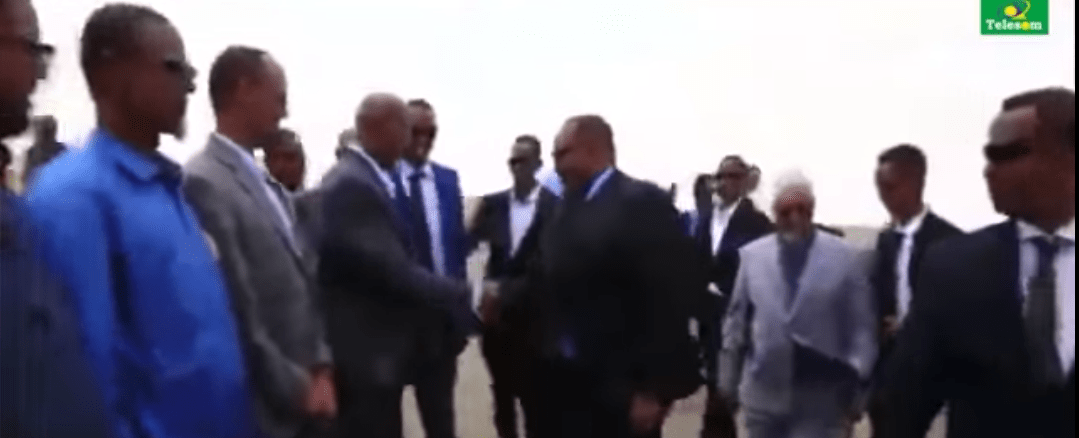
Sounds familiar? Surprisingly, some of Deni Cabinet Members are becoming more equal than the others to attract huge presidental style welcome parties at Garowe Airport.
Read an early writing on the same issue:
https://ismailwarsame.blog/2014/07/01/costly-protocol-irregularities-of-puntland-administrations/
NOW MORE THAN READY

YOU CANNOT ARGUE WITH SUCCESS IN PUBLIC SERVICE. GET TO KNOW RT. HON. AHMED HUSSEN, CANADA’S MINISTER OF IMMIGRATION, CITIZENSHIP AND REFUGEES


September 12, 2019
A LETTER FROM AFRICA
Ahmed Hussen, Canada’s Minister of Immigration, Citizenship and Refugees, represents the finest example of what a yesterday’s refugee in Canada could achieve, given honest and hard work, to make Canada proud of its asylum system.
Mr. Hussen, a capable lawyer and family man, has set the bar high for others to take up on his lead as a role model for all existing and aspiring refugees of Canada from all corners of the world, from Ukraine to the Bahamas, from Portugal to the shores of Italian Sicily, from Africa to Asia. Mr. Hussen, a leader and visionary on his own right, has already admirably succeeded in turning Canada Immigration into the envy of the world, bringing in and injecting into the system a new wave of vibrant, youthful and ambitious new talents, consistent with the needs of Canada labour market and businesses to compete globally and improve lives at home. Many of Hussen’s colleagues are now realizing how lucky Canada was in providing Mr. Hussen with an opportunity to thrive and develop his God-given potential to the fullest. He is a shining role model for all the kids of immigrant population in the country of Canada.
While Mr. Hussen proudly represents all Canadians from the Atlantic to the Pacific, immigrants from Muslim countries, Asia, Africa, Arab countries, and most importantly, multiple European countries have discovered Hussen’s wise and pragmatic leadership on the Immigration Portfolio he now handles. Observers are particularly impressed by his custom-design immigration on the needs of different Provinces of Canada, specifically traveling and reaching out to them to discuss with them on their special needs in new immigrants. That is commendable achievement for the Right Honorable Ahmed Hussen.
I have no doubts in my mind that all Canadians, his Toronto Liberal Party Riding Constituency, in particular, will proudly rally behind Mr. Hussen in this crucible election at the time the entire world seems to be in a political turmoil, and Canada needs to navigate through these troubled waters.
Watch short historic video documentary and photoes on the Night of Ahmed Hussen’s Election Victory as Canadian Member of Parliament in October 2015.
By Ismail Warsame
Email: ismailwarsame@gmail.com
(C) Rights reserved.
SECURITY RATINGS ON SOMALI TOWNS REGIONS

September 11, 2019
Members of the International Community working with Somalia have had developed and adhere to a system of security rating in various parts of Somalia. This starts with points such as 1, 2, 3, 4, 5 and so on. The lower the number, the better rating for the area peace and stability, the safer it is for expatriate organizations and foreign personnel to go and spend a night there.
There are also contradictions in the system of rating as you discover that Mogadishu is one of the most dangerous places for an expatriate to visit. But, it is the most frequented place by foreigners in the country. Why? This happens in Mogadishu because of the following reasons:
1. There is Xalane Campound, which is off-limits to access by natives and therefore safer than elsewhere in Somalia
2. There is more money, more opportunities to make money and more capacity to absorb aid. That attracts more expatriates to Mogadishu.
Another contradiction in this rating is the fact that Garowe City is many times safer than most big cities of the USA. The difference is that the law and order situation in the US is many times better than that of Garowe – If incidents happen, security reaction is swift. There are no people walking with guns and driving technicals in towns in the USA or Western Europe.
But, the bottomline in the security rating on Somali towns by UN and other foreign agencies is the notion that, in a tribal society, violence can break out any time without prior warning – there is no reliable peace in a tribal society. Personal safety and public security could deteriorate spontaneously.
Clearing out signs of insecurity in towns, however, could help improve this foreign imposed ratings. For example, an expatriate foreign worker could bring his/her family members along with him/her to Hargeisa. They can’t that in Garowe. Why? Because in Hargeisa, you don’t see people moving with guns and roving technicals and security escort pick-ups, while to do that is fashionable in Garowe, even among former politicians and officials. That is damaging to Garowe security rating. In Puntland cities, one often sees many individual stray soldiers clad in military fatigues and guns wandering about, especially around Qat stalls. This is a sign of insecurity in cities.
Once, I saw a heavily guarded UN convoy in Garowe, perhaps UN VIP visiting, onboard white vehicles with UN inscription led by two Puntland Army technicals. That made me sad as it showed me that the government isn’t sophisticated enough to conceal such display of insecurity in town. Ironically, these UN guys are the ones who make the security rating for Puntland Zone. These security escorts for them are from the Presidency itself. Do something about it.
Annual subscription
$37.00
HOW I HAD HELPED REPAIR AND RE-BUILD VILLA SOMALIA
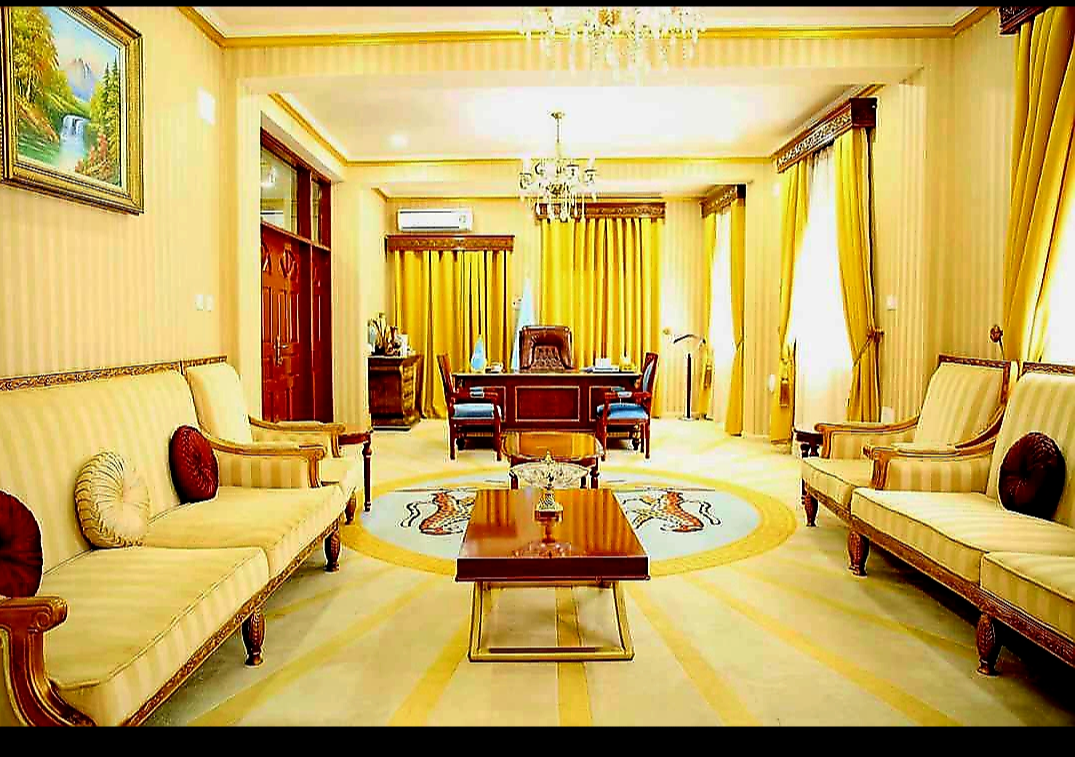
September 11, 2019
In 2006, Villa Somalia was a dilapidated squatter-campound, initially looted and ramsacked and strip-naked by USC mob, and then spoiled by the militia of Hussein Caydiid, who were squatting there as their shit-hole and living space. It was a place beyond any normal repair.
As the forces of late President Abdullahi Yusuf seized the campound from the militia of Caydiid, they couldn’t believe their eyes to appreciate the extent of destruction the Camp had suffered. Recall, the forces of Yusuf had entered Mogadishu first, losing considerable men and material along the way from Afgoye. The Ethiopian forces came to Mogadishu days later.
President Yusuf and his soldiers made minor repairs in parts of the residence sections of the Villa. The President also let Hussein Caydiid militia to stay on with him in the Campound and get integrated into his own security detail. Ethiopian forces came along and had occupied most of the campound as they too moved into Mogadishu, especially into the run-down Office Complex of Villa Somalia.
At that time, I came to Mogadishu, after completing my contract with the Joint Needs Assessment for Somalia, JNA Project, with the UN and World Bank. I was not with the Transitional Federal Government (TFG).
A group of us, including General Morgan, MPs Jurile, Ali Bashi, and Abdullahi Ulaa and Ahmed Giitaara etc took residence in the current living quarters of the FGS Prime Minister. We made our own repairs of the building then.
It so happened that President Yusuf, owing to the absence of most of his office personnel and presidential staff, had asked me to help him out and run Villa Somalia for only ten days, knowing my experience with Puntland Presidency. I, however, found Villa Somalia dysfunctional. In just a few days, I had managed to make the place operational with state of the art equipment and independent communication gear outside the control of Hormud Telecommunication Co. with Internet hooked up with VSat.
Next, I called for the poor Campound engineer inherited fron Hussein Caydiid militia and hooked him up with a wealthy businessman of Puntland origin, to start repairing the whole Villa Somalia and ordered the Ethiopian forces to move out of the campound altogether. China-donated funds for government housing repairs were available at discretion of Prime Minister Mohamed Ali Mohamed Gedi. I requested for the release of these funds for the repair works of Villa Somalia to the level it is today. Former TFG President, Sheikh Sharif Ahmed, had inherited the fruits of that labour, where he took over Villa Somalia with no teaspoon missing.
One memorable episode I would like to share with the readers is the fact that one day came to my office General Abdi Qaydiid, the TFG Police Commissioner then, now a Senator, waving a sheets of papers for me to rubber-stamp for him. I looked at papers. They already carried the signature of the president. It was about the promotion of ranks of nearly three hundred police officers. I looked at him and told him that his papers were forgery. Qaydiid couldn’t believe his ears. “What?” “Forgery, “I said. “Don’t you see the signature of the president?” he asked. “This document was not prepared and issued by this office,” I told him flatly. “They have been prepared by my Commander’s Office,” he shot back. “That is why they are forgery,” I told him. He quickly stormed out of my office to the President’s. Later, I was informed that the President advised Qaydiid to wait a bit until I leave office in a few days’ time.
Annual subscription
$37.00
BILL GATES ON RICHES
COSMOPOLITAN

September 10, 2019
According to Google definition, “Cosmopolitan comes from cosmos meaning one universe and refers to a large city comprising people from many parts of the world. On the other hand, metropolitan city is one having a large population and employment opportunities and one which is also lined socially and economically with nearby areas”.
These cities have cultural diversities and opportunities for all. Street names and cities’ landmarks carry names reflecting on the diverse cultural heritage and history of these cities.
Let us apply these characteristics to Puntland seemingly urban centres: Garowe, the Puntland Capital City, the Seaport City of Bosaso, Galkayo and Qardho. It seems that they are all still clan villages in camparison with Mogadishu, the National Capital of Somalia, where its street names reflect on the history of the City from precolonial era to the fall of Somalia’s Central Government in 1991.
In Puntland, let us start from Garowe. Try to count the names of its streets and other landmarks? What would you discover? One thing is sure that you won’t find any street named after the First and Founding President of Puntland State of Somalia. But, why? Is it because Garowe is still a village with sub-clan mentality? Is it because there is no cultural diversity? Or is it because its successive local councils are not diverse enough to improve the cultural heritage of the Capital beyond local sub-clan vision? What is the problem?
Other other urban cities of Puntland don’t fare any better, if not even worse than Garowe. The similar situation exists in Somaliland.
Isn’t that the main reason why Mogadishu remains the National Capital City, cosmopolitan and metropolitan cultural centre of Somalia? No other city in other parts of the country would come even close to have any chance as the alternative, unless you don’t want to start a new capital city from ground zero, while ready at the same time to embrace upon cultural diversities required in a capital city.
Annual subscription
$37.00
Exclusive: US extracted top spy from inside Russia in 2017
By Jim Sciutto, Chief National Security Correspondent
Washington (CNN) — In a previously undisclosed secret mission in 2017, the United States successfully extracted from Russia one of its highest-level covert sources inside the Russian government, multiple Trump administration officials with direct knowledge told CNN.A person directly involved in the discussions said that the removal of the Russian was driven, in part, by concerns that President Donald Trump and his administration repeatedly mishandled classified intelligence and could contribute to exposing the covert source as a spy.The decision to carry out the extraction occurred soon after a May 2017 meeting in the Oval Office in which Trump discussed highly classified intelligence with Russian Foreign Minister Sergey Lavrov and then-Russian Ambassador to the US Sergey Kislyak. The intelligence, concerning ISIS in Syria, had been provided by Israel.The disclosure to the Russians by the President, though not about the Russian spy specifically, prompted intelligence officials to renew earlier discussions about the potential risk of exposure, according to the source directly involved in the matter.At the time, then-CIA Director Mike Pompeo told other senior Trump administration officials that too much information was coming out regarding the covert source, known as an asset. An extraction, or “exfiltration” as such an operation is referred to by intelligence officials, is an extraordinary remedy when US intelligence believes an asset is in immediate danger.The source was considered the highest level source for the US inside the Kremlin, high up in the national security infrastructure, according to the source familiar with the matter and a former senior intelligence official.According to CNN’s sources, the spy had access to Putin and could even provide images of documents on the Russian leader’s desk.The covert source provided information for more than a decade, according to the sources, and an initial effort to extract the spy, after exposure concerns, was rebuffed by the informant.CNN is reporting the additional information about the covert source who was extracted from Russia in 2017. The information, which adds further understanding to the value of the informant, was initially withheld by CNN but was subsequently reported by the New York Times Monday evening.A US official said before the secret operation there was media speculation about the existence of such a covert source, and such coverage or public speculation poses risks to the safety of anyone a foreign government suspects may be involved. This official did not identify any public reporting to that effect at the time of this decision and CNN could not find any related reference in media reports.Asked for comment, Brittany Bramell, the CIA director of public affairs, told CNN: “CNN’s narrative that the Central Intelligence Agency makes life-or-death decisions based on anything other than objective analysis and sound collection is simply false. Misguided speculation that the President’s handling of our nation’s most sensitive intelligence—which he has access to each and every day—drove an alleged exfiltration operation is inaccurate.”A spokesperson for Secretary of State Mike Pompeo declined to comment. White House press secretary Stephanie Grisham said, “CNN’s reporting is not only incorrect, it has the potential to put lives in danger.”
Wide concerns about Trump in intelligence community
The removal happened at a time of wide concern in the intelligence community about mishandling of intelligence by Trump and his administration. Those concerns were described to CNN by five sources who served in the Trump administration, intelligence agencies and Congress.Those concerns continued to grow in the period after Trump’s Oval Office meeting with Kislyak and Lavrov. Weeks after the decision to extract the spy, in July 2017, Trump met privately with Russian President Vladimir Putin at the G20 summit in Hamburg and took the unusual step of confiscating the interpreter’s notes. Afterward, intelligence officials again expressed concern that the President may have improperly discussed classified intelligence with Russia, according to an intelligence source with knowledge of the intelligence community’s response to the Trump-Putin meeting.Knowledge of the Russian covert source’s existence was highly restricted within the US government and intelligence agencies. According to one source, there was “no equal alternative” inside the Russian government, providing both insight and information on Putin.The secret removal of the high-level Russian asset has left the US without one of its key sources on the inner workings of the Kremlin and the plans and thinking of the Russian president at a time when tensions between the two nations have been growing. The US intelligence community considers Russia one of the two greatest threats to US national security, along with China.”The impact would be huge because it is so hard to develop sources like that in any denied area, particularly Russia, because the surveillance and security there is so stringent,” a former senior intelligence official told CNN. “You can’t reacquire a capability like that overnight.”
Months of mounting fear
The decision to pull the asset out of Russia was the culmination of months of mounting fear within the intelligence community.At the end of the Obama administration, US intelligence officials had already expressed concerns about the safety of this spy and other Russian assets, given the length of their cooperation with the US, according to the former senior intelligence official.Those concerns grew in early 2017 after the US intelligence community released its public report on Russian meddling in the 2016 election, which said Putin himself ordered the operation. The intelligence community also shared a classified version of the report with the incoming Trump administration, and it included highly protected details on the sources behind the intelligence. Senior US intelligence officials considered extracting at least one Russian asset at the time but did not do so, according to the former senior intelligence official.In the first months of his administration, Trump’s handling of classified intelligence further concerned intelligence officials. Ultimately, they decided to launch the difficult operation to remove an asset who had been working for the US for years.The President was informed in advance of the extraction, along with a small number of senior officials. Details of the extraction itself remain secret and the whereabouts of the asset today are unknown to CNN.UPDATE: This story has been updated to include additional details about the covert source.
CNN’s Marshall Cohen contributed to this report.
(Credit: CNN)
WDM EDITORIAL: FGS BLOCKADE COULD PUSH JUBALAND CLOSER TO KENYA

September 10, 2019
The air blockade of Jubaland by the N&N Regime of the Federal Government of Somalia could dangerously and unintentionally lead it towards separation, secession and closer to Kenya. The hostile action of N&N against a part of its own territory and people is perhaps unprecedented, and most probably unconstitutional, as it looks like massive collective punishment of the residents of Jubaland. The blockade, unresolved, could upgrade to the status of crime against human rights and crime against humanity. It is a troubling development in the Region.
N&N air-blockade of Jubaland resembles Saudi Arabia’s air-blockade of Qatar, while the silence of the UN, IGAD and the rest of the International Community on the issue could be interpreted as tatamount to Saudi Arabian Coalition of UAE, Egypt etc in supporting the Kingdom’s blockade of Qatar. Kenya sounds like supporting Jubaland in the same way N&N was behaving diplomatically to help Qatar out of the Saudi blockade. It is a strange and dangerous development
N&N subversive campaign against Jubaland may constitute treason as it could lead to national catastrophe of dismembering Somalia and loss of Jubaland to Kenya.
Somalis must speak out to hold N&N Regime to account and stop the treasonous action and betrayal of the nation.
The International Community and Somali foreign partners must come out of their sheepish positions and step in to mitigate the dangerous political stalemate on Jubaland.
Within Jubaland, there must a stop to the destruction of environment – the commercialization of Jubaland forest as coal to generate revenue for Al-shabab and its collaborators in Kismayo. All stakeholders must agree to come together to sort out their political differences in the best interests of the people of Jubaland. This is the 3rd term Ahmed Madoobe is claiming the leadership of Jubaland under illegal means and suspicious circumstances. He has to understand that enough is enough. He cannot play an outlaw for ever.
Support the WDM with
Annual subscription
$37.00
MIT AT CENTRE OF EPSTEIN SCANDAL
SETTING THE RECORD STRAIGHT


@ismailwarsame
Support WDM with
Annual subscription
$37.00
PUNTLAND: TWO SCHOOLS OF THOUGHT ON SOMALI POLITICS

September 8, 2019
For the benefit of those, who are either forgetful of what was happening politically in Somalia during the past two decades, or were too young to know development of major political events, let them recall or know Puntland’s historical two schools of thought along the way over many years:
1. a) To establish Puntland State of Somalia in August 1998, as a first building block towards a Federal Somalia;
b) Not to establish Puntland without the full participation of South-central Somalia.
2. a) Puntland should lead the way for the revival of the failed central state of Somalia;
b) Puntland must leave South-central and Mogadishu to their own devices and to secede from Somalia.
3. a) Puntland should participate in Arta (Djibouti) Conference in 2000.
b) Puntland should not take part in Arta Conference.
After TFG President, Abdullahi Yusuf, resigned,
4. a) Puntland should abandon the rest of Somalia;
b) Puntland must continue fighting for Somalia and strengthening the still fragile federal institutions.
This robust Puntland political debates had suffered setbacks in both Faroole and Gaas presidency -Faroole’s in the sense that he behaved as a strongman and uncompromising politician with unconventional sub-clan constituency mindset to stifle dissent and debate, while Gaas acted indifferent to the important role of Puntland in Somali politics, and because of his attitude of knowing it alone, the use of his position for personal gain, and most importantly, because of his intolerance and lack of respect for Puntland’s intellectuals. Add to this, the lack of vision of both Omar Abdirashid and Abdiweli Gaas as prime ministers of Somalia then.
Poor Puntland representation in Mogadishu Government had compounded the problem of the State losing its sense of direction, political weight and influence.
Now, Farmaajo Government came about and started a campaign of purging Puntlanders from Federal Public Service, on the top of grabing up the constitutional powers from Federal Member States.
Puntland State, however, has no schools of thought any more as to how to address this abuse of federal powers. This is a test for President Deni, among many other challenges Puntland State is currently facing
Support WDM with
Annual subscription
$37.00
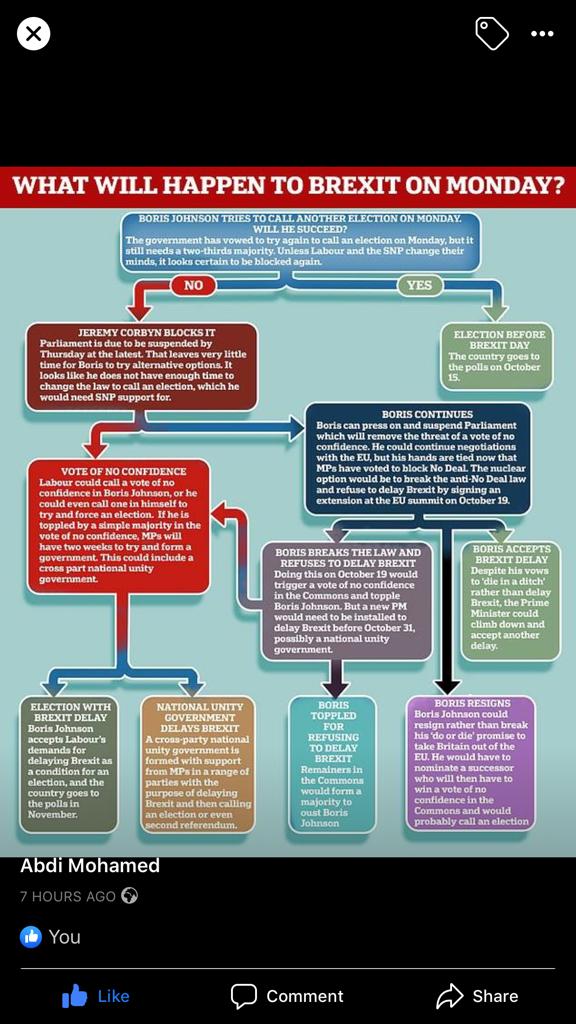
GETTING RID OF BREXIT IS AS COMPLICATED AS AN ORGANIZATIONAL CHART
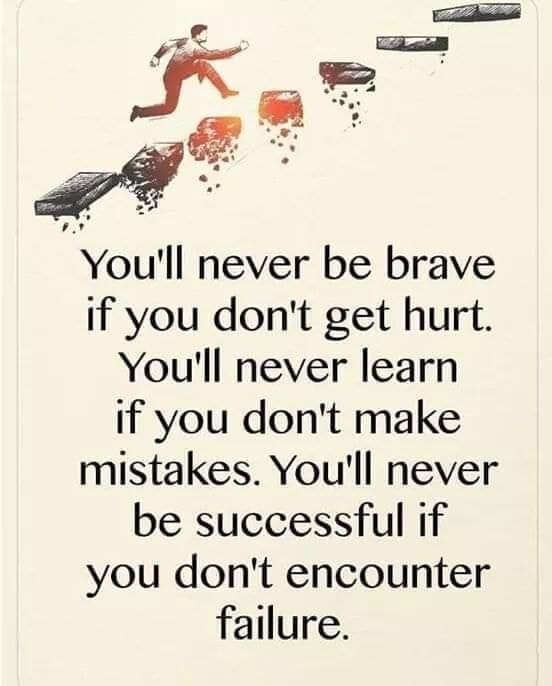
WISDOM
STRONGMEN AND DICTATORS

September 8, 2019
Strongmen or dictators could appear in societies of laws and strong culture of liberal values, but not for long – at least they don’t leave behind respectable opportunities to their offsprings to inherit. Try to name a dictator whose kid had replaced his father politically in a nation of laws and free choice.
That is because dictators do more harm than good. No matter how benevolent one may claim they were, they had destroyed many good men and people of goodwill, perceived rightly or wrongly, to oppose the whims and wishes of dictators. Still, everyday you could meet people praising a particular dictator in the history of human kind. Whether it is Hitler, Stallin, Siyad Barre or Sayyid Mohammed Abdulle Hassan, there are a few people in the world still fond of good old days with a dictator.
It is a taugh debate to have with such sycophants, participants and parties to repressive regimes. There are still Neo-Nazis in the world. There are people in Somalia still singing “Aabo Siyaad”. What you don’t see, though, is any love or respect accorded to any living relative of a former dictator. Isn’t that true? Does that tell you something fundamental, that dictators don’t leave behind positive historical legacy to be proud of? How you could love your wife while you hate her kids? That is exactly the situation of the people praising “Aabo Siyaad” type of dictators today. They are still talking of “Kacaan” (revolution), not understanding that the word itself means violent overthrow of orderly society and suppression of human rights.
Now, when I hear the slogans in Somalia like N&N, I recall the legacy of the repressive regime that led to the total ruin of Somalia. We couldn’t dig it out of the deep hole. There is still a lot of hard work to do. The regime of N&N is not the right vehicle to ride towards better Somalia. A pity dictator denying basic rights to kids in schools in any part of the country will not lead Somalia to greener pastures tomorrow.
Support WDM with
Annual subscription
$37.00
8+8+8 & 1+1+1
GOD SAVE THE QUEEN
September 7, 2019
Boris Johnson could go to prison over Brexit. Take a read here.
Support WDM with
Annual subscription
$37.00
BURIED IN THE SANDS OF THE OGADEN: LESSONS FROM AN OBSCURE COLD WAR FLASHPOINT IN AFRICA

SEPTEMBER 6, 2019

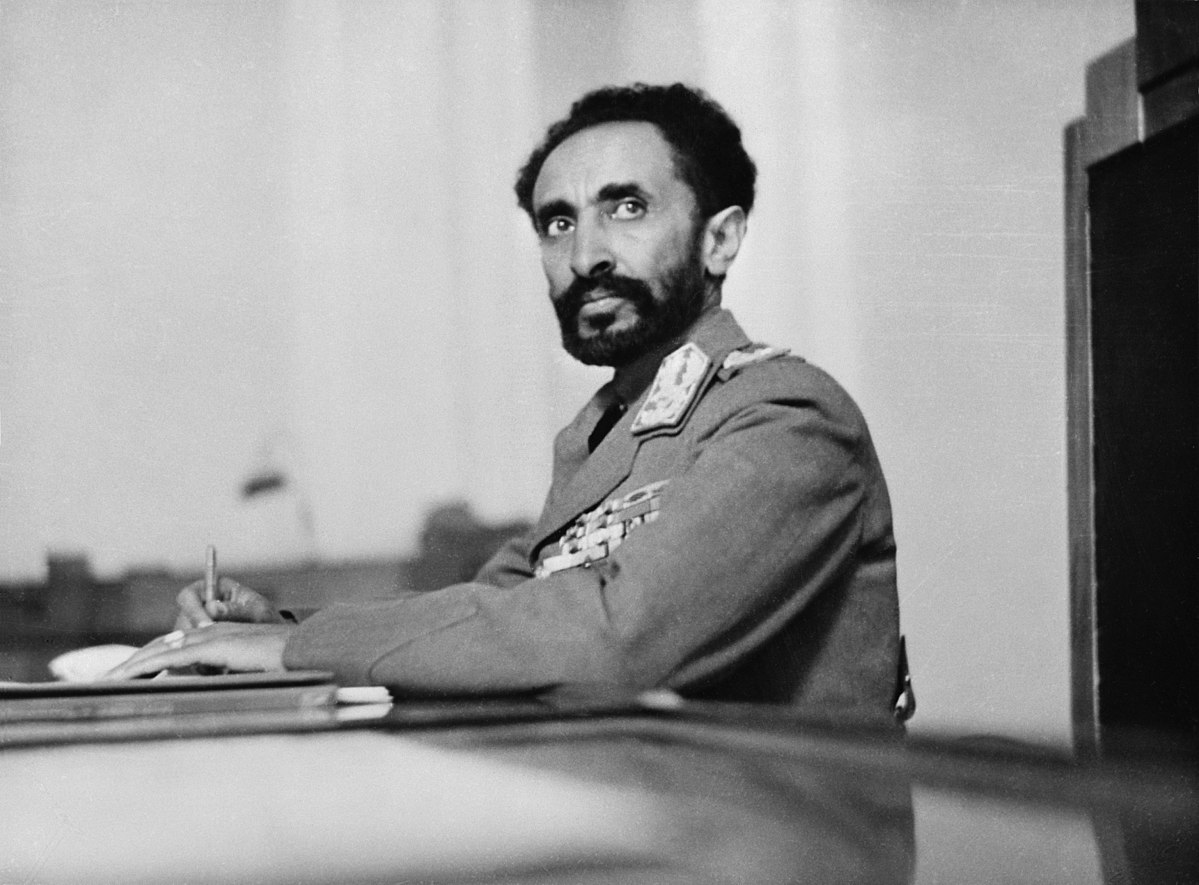
Figure 1: Former Ethiopian Emperor Haile Selaisse
Zbigniew Brzezinski, the national security advisor to President Jimmy Carter, once quipped that “SALT [Strategic Arms Limitation Treaty] lies buried in the sands of the Ogaden.” The Ogaden War (1977–1978) between Somalia and Ethiopia upended the Cold War geostrategic balance in the Horn of Africa, and bore tragic consequences for the region that linger today. While many observers associate the Soviet invasion of Afghanistan on Christmas Eve of 1979 with the end of détente, historians now recognize that it was the Soviet intervention in the Ogaden conflict, for American decision-makers like Brzezinski and Carter, that precipitated the end of this era. Three decades later, the Horn is once again a potential flashpoint of global competition — this time between the United States and China.
Examining the Ogaden crisis offers key insights for this new era. First, East African states will remain motivated foremost by domestic considerations and calculations of their own regional interests. Competition among, and within, regional powers in the Horn of Africa will likely continue to transcend the wishes of distant superpowers. However, East African leaders will remain closely attuned to the emerging Sino-American competition and will seek to exploit this dynamic to advance their agendas.
Recent policy pronouncements that seek to place “great power competition” at the center of American interests in Africa risk exacerbating this tendency. Examination of the Cold War in the Horn suggests that such threat-based definitions of American interests will likely cede leverage to regional actors with costly results. Broadly considered, competing with China in Africa should not become an interest in and of itself, detached from how Chinese activities in Africa might actually threaten American security and prosperity. As the tragedy of the Ogaden War illustrates, such a zero-sum approach would be inherently destabilizing, counterproductive to long-term U.S. interests, and ultimately dangerous.BECOME A MEMBER
The Ogaden Crisis
In 1973, Ethiopia, under Emperor Haile Selaisse (pictured above), represented a stalwart American regional partner. Ethiopia hosted a major U.S. military and communications facility at Kagnewand received a foreign military assistance package that included F-86 and F-5 fighter jets. Somalia, meanwhile, was firmly in the Soviet sphere under the regime of Siad Barre. Somalia hosted a Soviet naval and air base at Berbera on the Gulf of Aden that menaced the oil fields of the Gulf States and the Bab el-Mandeb maritime choke point. Somalia also received extensive Soviet equipment and assistance. The Ogaden War totally reversed this strategic alignment. By 1983, Ethiopia recieved over $2.3 billionin Soviet equipment, the largest Soviet military assistance program in sub-Saharan Africa, while Somalia aligned itself with the Western powers.
The rapid upending of allegiances in the region confounded contemporary observers and frustrated the efforts of the superpowers to impose their Cold War frameworks on the region. The roots of this realignment lay in Somalia’s irredentist claims to the Ogaden region, another corner of the globe where history, ethnicity, and culture clashed with colonial-era boundaries. Ogaden Somalis held deep ties with their kin on the Ethiopian side of the border, who shared a strong sense of Somali identity. Since Somalia’s independence in 1960, Mogadishu had supported various Ogaden rebellions against the ruling Ethiopian government. The 1974 overthrow of the regime of Emperor Haile Selassie in Ethiopia by a clique of young Marxist officers known as the “Derg,” or Committee, shook what had previously been a relatively stable regional order. As political unrest overcame Ethiopia and the Derg grew increasingly radical, ethnic insurgencies by Eritreans, Oromos, Tigrayans, Afars, and Ogadens flared on the peripheries of the former Ethiopian empire. Eritrea, which been in various degrees of rebellion since 1960, was home to the most serious insurgency. The burden of these simultaneous rebellions placed a massive strain on the military resources of the revolutionary Ethiopian state.
Fearful of losing Ethiopia to the Soviet orbit, American arms shipments continued, albeit in diminished quantities, after the fall of Selassie. The Marxist Derg, which required huge volumes of military equipment to meet the threat of the Eritrean insurgency, maintained this relationship while simultaneously reaching out to the Soviets for assistance. While the Soviet Union began to answer some of the Derg’s urgent requests for arms, Mogadishu remained Moscow’s primary partner in the region. In fact, a 1976 CIA analysisassessed that in the event of war, “the Soviets would have little choice but to support their clients in Mogadicio [sic]” while the Ethiopians “would almost certainly ask for additional US assistance.”
Instability in Ethiopia presented Somalia with an opportunity to realize its dream of a “Greater Somalia” that incorporated ethnic Somalis living in Ethiopia. Barre’s regime initially sought to achieve this goal through irregular warfare. In early 1975, the Somali state helped restructure the Ogaden insurgency as the Western Somali Liberation Front in order to establish greater political and military control. According to a CIA study conducted after the war, the group “obtained virtually all of its training, arms, supplies, and funds through the Somali government.” By May 1977, these insurgents controlled the majority of the lowland Ogaden region. The Ethiopian government in these regions existed in a state of siegeand effectively ceded control over the countryside. The insurgents even destroyed a critical bridge on the Addis Ababa-Dijbouti railway, a line which carried over 40 percent of Ethiopia’s exports and half of its imports. Meanwhile, Soviet officials advised the Derg to focus their military efforts on the insurgency in Eritrea, and assured their new Ethiopian comrades that they could restrain their Somali clients from mounting a conventional invasion of the Ogaden.
The World Turned Upside Down
Despite the successes of the Ogaden insurgents, Barre grew increasingly impatient with the slow pace and indecisive nature of the irregular campaign. After conventional assaults by guerillas in the spring of 1977 failed to secure any major towns, Somalia began preparations to deploy conventional forces to achieve its political goal of unifying all Ogaden Somalis under the Somali state. In brazen defiance of Moscow, the Soviet-equipped and Soviet-trained Somali National Army (SNA) invaded the Ogaden in July 1977. The speed and combined-arms character of the Somali advance overwhelmed the underequipped Ethiopian units stationed in the barren plains of the Ogaden desert. However, after a 700-kilometer advance, the Somali formations approached the cities and towns of the Harar plateau, a more mountainous and multiethnic region on the western edge of the Ogaden. Here, their assault sputtered. Ethiopian resistance stiffened, enabled by the urban and mountainous terrain. Meanwhile, logistical difficulties hamstrung Somali mechanized formations. In the skies, the outnumbered Ethiopian Air Force, relying on superior training and American-made AIM-9 Sidewinder missiles, wrested air supremacy from the Somalis. After seizing Jijiga in fierce fighting, the Somali invasion stalled once again outside Harar, a town of 48,000 and the home to Ethiopia’s prestigious Harar Military Academy. The four-month battle over Harar (September 1977–January 1978) allowed the Soviets to take stock of the bizarre Marxist-on-Marxist war and assess their interests in light of Somalia’s reckless behavior.
By August 1977, the Soviets began to come down firmly, and publicly, in support of Ethiopia. The Soviets sharply reduced aid to Barre in hope of forcing him into a peace agreement that would allow the Soviets to maintain their relationships with both Ethiopia and Somalia. However, continued Soviet support for Barre’s opponents enraged the Somali president, who expelled all Soviet advisors from Somalia in November 1977. Barre believed that this expulsion would open an instant and much-needed deluge of arms from the new administration in Washington.
Cold War Paradigms and Missed Opportunities
Members of Carter’s national security team entered the Horn crisis with widely divergent perspectives on the utility of détente and U.S.-Soviet competition in the so-called “Third World.” While such divisions are typical of the early phases of an administration, the policy differences and power struggles between Brzezinski and Secretary of State Cyrus Vance prevented a coherent and decisive response to the crisis. Brzezinski, a Cold War hawk, believed that the Soviet Union had taken advantage of American weakness in the post-Vietnam era to rapidly advance its Marxist agenda in the Third World. In contrast, Vance sought to capitalize on détente with the Soviets to achieve breakthroughs in priority areas such as arms control. Vance also vowed to avoid underestimating the nationalist character of revolutionary movements, a sin he believed doomed his predecessor, Henry Kissinger, to a fruitless and prestige-harming intervention in the Angolan civil war.
These contradictory visions prevented a strong, coherent response to the initial Somali invasion in July 1977. The State Department issued what one historian described as a “watered-down reprimand” of the illegal Somali invasion of Ethiopia. The National Security Council walked back a stronger Vance-supported draft in order to avoid alienating Barre, who Brzezinski believed might be pried out of the Soviet orbit. Barre received this and other U.S. signals as approval of his invasion and a portent of future military assistance. Blinded by opportunism, “the administration just could not move beyond the Cold War mindset,” historian Louise Prentis Woodruff later wrote.
In the summer of 1977, neither the United States nor the Soviet Union attempted to resolve the crisis bilaterally, despite the interests of both superpowers in a hasty cessation of hostilities and the restoration of the status quo ante. The Soviets likely surmised that by reducing aid to Barre and increasing aid to Ethiopia, they could force Barre to the negotiating table. Had this gambit succeeded, the Soviets might have retained their base at Berbera and frozen the United States out of both the peace process and the region, mimicking Kissinger’s virtuoso performance that ended the 1973 Yom Kippur War. Acting alone, however, the Soviets could not restrain their erstwhile Somali partners.
Decisive Soviet Intervention
The Soviet decision to massively intervene in favor of the Ethiopians in the late fall of 1977 caught the Carter administration flat-footed. Soviet aid and advisors, many of whom flew directly from Mogadishu, poured into Ethiopia by air and sea. In four months, the Soviets provided over 100,000 tons of military equipment, three times the existing Ethiopian stock, and over 1,000 advisors, led by the deputy commander of all Soviet ground forces. Perhaps most critically, 17,000 Cuban combat troops, including many veterans of the Angolan conflict, arrived to decisively tip the military balance in favor of the Ethiopians. Cuban formations quickly made their presence felt when they stonewalled a final Somali attack on Harar in January 1978.
One month later, the newly internationalized Ethiopian forces, which included Cuban mechanized brigades; a South Yemeni tank battalion; and Cuban-piloted MiGs, Sukhois, and Mi-8 helicopters unleashed a massive counterattack. Facing relentless combined arms assaults on multiple axes, the SNA lost Jijiga and fled eastward. When the Somalis committed their only strategic reserve, a mechanized brigade, to stabilize the situation, Cuban pilots decimated the formation from the air as it crossed the open desert. With his army expelled from the Ogaden in tatters, Barre repeated his urgent calls for Western military aid.
The Horn Heats Up the Global Cold War and Ends Détente
The shock of the Soviet intervention exacerbated the divisions within the U.S. government and ultimately led Carter to endorse Brzezinski’s more confrontational Cold War perspective. Brzezinski later wrotethat the Soviets “embarked on a repetition” of their Angolan playbook in the Horn in violation of the spirit of détente. In retrospect, however, much of the crisis of détente stemmed from mutual misperceptions of its meaning in Moscow and Washington.
According to the superb Cold War historian Odd Arne Westad, the Soviets thought détente, as formulated during the Nixon-Kissinger era, allowed each side to both “intervene in areas where local revolutions were coming under threat” and “keep Third World policies separate from their bilateral relationship.” While the Soviets believed they held the upper hand in what they called the “Global South” in the 1970s after successes in Vietnam and Angola, they did not believe that intervention in defense of a Marxist regime facing an illegal invasion represented a departure from the norms of détente. Carter, in contrast, felt blindsided by Soviet behavior in Ethiopia as he believed détente incorporated principles of non-intervention. The Horn of Africa, lacking the established treaty relationships, norms of superpower behavior, or channels of East-West communication that characterized competition in other regions, provided the perfect context for a crisis to expose this mutual misunderstanding.
The Ogaden War unleashed a chain of events with apocalyptic consequences for East Africa — many of which endure today. Barre’s regime sputtered after its defeat. With his prestige in free-fall and the hoped-for Western assistance limited, Barre attempted to levy new taxes. This sparked widespread discontentment among clans and ultimately led to a civil war that catalyzed the overthrow of Barre. The civil war left Somalia a failed state for decades. Meanwhile, the Derg, flush with confidence from victory and continued Soviet backing, pushed an ambitious program that included collectivization, the introduction of intensive farming methods, and the nationalization of forest areas. These reforms, combined with a drought, decimated Ethiopian agricultural output and sparked a severe food shortage. By 1985, an estimated one million Ethiopians had perished in what a BBC reporterfamously described as a “biblical famine.”
Digging Lessons from the Sands of the Ogaden
Many of the leading storylines of today’s Horn echo narratives from the Ogaden crisis. Great powers, now the United States and China, once again jockey for military bases on the strategic Gulf of Aden through which approximately 15 percent of global maritime traffic travels, including over 4.7 million barrels of oil daily. Whereas American strategists once worried about Soviet access to the Gulf of Aden through Berbera, Somalia, they now focus their fears on a new Chinese facility in Djibouti, its first on the African continent. Ethiopia, the most populous and second wealthiest state in the region, is again in the midst of dramatic internal changes, the outcome of which will shape the geopolitical dynamics of the region for decades.
The modern Horn also contains new dynamics that would have befuddled Cold War strategists. Economically, China represents the largest external trading parter for most East African countries. Chinese investment in the region, much of which occurs under the Belt and Road Initiative, is extensive, opaque, and closely linked to Chinese geopolitical ambitions. Meanwhile, the United States is engaged in a decade-long campaign against al-Shabaab, the deadly al-Qaeda-affiliated terrorist group in Somalia. The nuances of these modern conditions resist the blunt application of analogies from the past. Nevertheless, as former State Department Counselor Eliot Cohen wrote, historical analogies can be useful “not for the purposes of prediction, but as ways of exploring a problem.” In this tradition, the Ogaden War represents a useful vehicle to interrogate modern great power competition in the Horn of Africa.
Lesson #1: Competition can be expensive and dangerous
Past experience suggests that Horn countries will attempt to exploit the Sino-American rivalry to maximize their own power and prosperity. However, as the tragedy of Siad Barre’s Somalia illustrates, this competitive dynamic is prone to dangerous miscalculation and escalation. Djibouti is a case in point.
The Chinese presence in Djibouti, much like the Soviet base at Berbera during the Cold War, deeply unsettles U.S. officials. What has Djibouti gotten out of this militarization? A lot, in fact. In 2014, Djibouti negotiated a $25 million increase in the annual lease the United States pays for basing rights. Meanwhile, the Export-Import Bank of China loaned Djibouti nearly $1 billion dollarswhile Beijing has assumed funding for over 40 percent of the country’s infrastructure projects.While local officials reaped the benefits of Sino-American competition, they also increased the danger that competition will turn to confrontation.
Recent incidents in Djibouti — where U.S. military officials allege that Chinese forces used military lasers against American aircraft, injuring two pilots — illustrate the risks inherent in this environment. The Ogaden War teaches analysts and policymakers that Horn countries such as Djibouti can easily overestimate their own ability to navigate great power rivalry. As a relatively new arena of strategic competition between Washington and Beijing, the Horn of Africa lacks established treaty relationships and norms of behavior that might otherwise prevent misunderstandings, constrain great power behavior, and limit miscalculations by local powers. The tragic consequences of the Ogaden War illustrate the risks of strategic opportunism by all players in this fluid environment.
Lesson #2: It’s not a zero-sum game
Nationalism, regional balance-of-power politics, and internal political dynamics within modern Horn countries continue to transcend the binary logic of great power rivalry. The most important narratives in the region remain driven by the actions of African states themselves. These states seek great power assistance to achieve their domestic aims but will remain flexible in their loyalties.
This lesson should inform perspectives on the project of Ethiopian reform under Prime Minister Abiy Ahmed. Abiy, now in his second year in office, has undertaken ambitious reforms to the authoritarian Ethiopian state. He ended Ethiopia’s 20-year war with Eritrea, released political prisoners, increased press freedoms, and welcomed dissidents back to the country. Ethnic tensions and political instability, however, threaten this reform agenda. An estimated 2.9 million Ethiopians are currently displaced from internal ethnic violence. The 42-year-old leader has already put down two coup attempts, one by famously challenging revolting soldiers to a push-up contest.
In this fragile environment, China and the United States are competing to shape the reform process in Ethiopia and emerge as the principal international partner to the Horn of Africa’s most populous nation. Ethiopia’s recent history and the Ogaden crisis should teach U.S. policymakers that it would be a mistake to view Ethiopia principally as a zero-sum arena for great power competition. The modern Ethiopian state has historically pursued close ties with both Beijing and Washington. For example, the regime of Prime Minister Melas Zenawi, who governed Ethiopia from 1995 until his death in 2012, simultaneously secured both extensive Chinese economic investments to revitalize its economy and U.S. security assistance in support of its counter-terrorism campaign against al-Shabaab. Abiy’s administration will likely continue to appeal to both countries as it confronts immense internal challenges.
There is serious risk that ethnic tensions, long held in check by Ethiopia’s delicate model of ethnic federalism, may overwhelm the Ethiopian state or reverse the gains of the Abiy era. Viewed from this lens, every Chinese project in Ethiopia is not necessarily a threat to U.S. interests or influence. Both U.S. and Chinese interests in the Horn are advanced by a stable, prosperous Ethiopian state that is at peace with its neighbors, open for foreign investment, and engaged in the regional campaign against al-Shabaab.
Rivalry and the Way Ahead
Given these lessons and the similarities to the contemporary geopolitical environment, it is vital that the United States define its interests in the Horn independent of Chinese activities. Competing with China in Africa should not become an interest in and of itself, unmoored from how Beijing’s activities in Africa might actually threaten American security and prosperity. While select actions, such as construction of the Djibouti base, may endanger American interests, not all Chinese actions in the Horn are inherently threatening, and some activities may be complementary. As the former U.S. National Intelligence Officer for Africa Judd Devermont testified to Congress, “There are better ways to advance U.S. interests than criticism and knee-jerk opposition.” The Ogaden crisis shows that reflexively defining U.S. interests in Africa and elsewhere in opposition to a great power rival can encourage regional leaders to play both sides in an attempt to maximize their own internal and regional positions. The tragedy of Said Barre’s Somalia, however, should highlight the risks inherent in such an environment for regional actors who find themselves courted by both Washington and Beijing.
During the Ogaden crisis, Cold War attitudes pushed American decision-makers into a series of choices that ignored the inconvenient nuances of regional politics, and encouraged destabilizing behaviors by would-be partners for the sake of gaining an advantage against the Soviet threat. Paradoxically, this zero-sum, threat-based conceptualization of U.S. interests degraded the American strategic position in the Horn and simultaneously threatened progress on wider détente-era priorities, such as strategic arms control. In the new competition with China, similarly opportunistic zero-sum strategies will be at best expensive and at worst dangerous for U.S. interests — and potentially devastating for the nations caught in-between.BECOME A MEMBER
Sam Wilkins is an active-duty U.S. Army Special Forces officer. Sam previously served as a Special Forces Operational Detachment-Alpha Commander in Somalia and Nigeria and as an Infantry Platoon leader in Afghanistan. Sam is a graduate of the United States Military Academy at West Point and is currently a student at the Johns Hopkins School of Advanced International Studies (SAIS). These views are those of the author and do not reflect the position of the United States Military Academy, Johns Hopkins SAIS, the Department of the Army, or the Department of Defense.
Image:
Wiki Commons (Library of Commons)
GET MORE WAR ON THE ROCKS
FOLLOW US


NEWSLETTER
- COPYRIGHT © 2019 WAR ON THE ROCKS. ALL RIGHTS RESERVED.
 Warsame Policy & Media Network (WAPMEN)
You must be logged in to post a comment.