“SEND HER BACK”

LETTER 116

‘Go Back Home’: A Familiar Taunt for Some Australians

From left, Representatives Ayanna Pressley, Alexandria Ocasio-Cortez, Rashida Tlaib and Ilhan Omar responding to President Donald Trump.CreditAnna Moneymaker/The New York Times

Image

CreditCreditAnna Moneymaker/The New York Times

The Australia Letter is a weekly newsletter from our Australia bureau.Sign up to get it by email. This week’s issue is written by Isabella Kwai, a reporter with the Australia bureau.

______

The premise of “Go Back to Where You Came From,” an Australian reality show that debuted in 2011, is instantly intriguing: Six Australians with strong opinions on immigration retrace the journeys of recent refugees. The purpose, the show’s creators said, was to tackle the heated issue of refugee policy and show a more human side to the issue. Last year’s season even sent an anti-immigration senator to Syria.

I thought of the show this week after President Trump invoked the racist trope that gave it its name, telling four nonwhite American congresswomen on Twitter to “go back” to where they had come from.

His insult ignited a conversation about racism and American identity. More than 4,800 people wrote to The New York Times about their own experiences with the phrase. But it also touched a nerve for many in Australia.

“Barely a day goes by where I am not asked on social media to justify my presence in Australia,” said Mehreen Faruqi, a senator for the Greens party who immigrated from Pakistan. “I will never be Australian enough for some people, simply because of the color of my skin.”

One of every two Australians is an immigrant or the child of one, and as the culture has become more diverse, immigration has continued to be a central political issue.

Interestingly, Australians’ attitudes toward immigration are, on the whole, positive, said Andrew Markus, a professor at Monash University who surveys public opinion on cultural diversity. Most recognize the economic benefits of immigration, even as they dislike perceived drawbacks like overcrowding, he said.

The “fundamental change” in public discourse about immigration has been in “the power of social media,” Professor Markus said. Prejudiced and bigoted statements, he said, are now “amplified.”

The “go back” insult is offensive because it is not about citizenship, said Susan Harris Rimmer, a law professor at Griffith University in Queensland. “It’s about your skin color,” she said. “You are seen to be more loyal or disloyal depending on whether you look like the norm.”

Although far-right lawmakers have stoked the fires of ethnic division here, commentators said this week that it would be hard to imagine an Australian leader emulating Mr. Trump’s comment.

But the phrase does appear. One expert said he had seen it on bumper stickers. I saw variations of it on a few hat tags at a rural festival last year.

Some Australian pundits wonder if the remark from Mr. Trump — who has since insisted that he doesn’t have a racist bone in his body — will embolden Australians who oppose immigrants to speak out more loudly.

Have you ever been told to go back to where you came from? If you have a personal story about it, or a comment, please do write to me at nytaustralia@nytimes.com or join the discussion in the NYT Australia Facebook group — we love hearing from you.

Now, on to some of our favorite stories.

_____

LEARN FROM SOMALI HISTORY

Please answer the following history questions.

Is federalism in Somalia a defacto or dejure?

What is the legacy of the Somali Civil War? How would you bring Somalia back together again, by force or by consensus?

Under what umbrella system of understanding was agreed upon by all then? How would you start putting Somalia back together?

Is federalism casted on stone or a transitional phase to some other system of governance, subject to further negotiations and civil contracts?

Do our people questioning the wisdom of federalism know that it was the only system all Somalis re-instating the failed of Somalia could agree to as a first step or starting point?

Why do our people keep questioning it when it is the law of the land now, and there is no alternative they have or vehicle to change it?

Do you have an agreeable alternative now by all? Do you still entertain the fallacy that it was foreign imposed by Ethiopia, Kenya and what you may have?

If you wrongly believe that Ethiopia used Abdullahi Yusuf to divide Somalia, why did they help depose him? Why Did Dictator Mengistu Haile-Mariam of Ethiopian Derg put Abdullahi in jail? Why did Abdullahi expell Col. Gabre from Mogadishu?

Do know you that the Late President of the TFG, Abdullahi Yusuf, is the Founder of the 2nd Somali Republic after the First Republic had failed in 1991, re-installing it back into Villa Somalia?

Do you know that since the State of Puntland has failed to develop and claim its heritage and valueless contributions to the revival of the Somali Republic, she had also neglected irresponsibily the fundamental historical fact that its Founder, Abdullahi Yusuf, is also the Founder of the 2nd Somali Republic?

Do you know federalism was agreed upon for the first time by all Somali warring factions, including the “Salbalaar” of Hussein Caydiid, during the failed Cairo Talks in 1997, not in Mbagati in Kenya in 2004?

Do you remember that one of the top prioties of a government is people’s easy access to public services delivery? Who can guarantee this without decentralization of power and regional self-government? How come do you suggest for Somalia to return to “One City-state” government? Are you “Hawtul-Hamag” hell-bent again to fly into an evening hell-fire during the rainy season?

And finally, do you know who is preventing federalism to function, the people or the authorities? Is federal Constitution imposed or agreed to?

Let us know your answers. Have your say.

https://ismailwarsame.blog

@ismailwarsame

ILHAN CUMAR OO FARAS CADAHA MINNESOTA FUUSHAY

Ilahan oo si weyn loogu soo dhaweeyey, minneapolis xaafad ka mid ah:

Dhageysi wacan. Halka riix.

https://ismailwarsame.blog

@ismailwsrsame

SUCH DEBATE IN GUIDING YOUTH OF PUNTLAND IS LONG OVERDUE. IT IS NEVER TOO LATE NOW.

https://ismailwarsame.blog

@ismailwsrsame

CONTINUOUS UPDATING OF WDM ARTICLES

July 18, 2019

Please note that WDM articles are always being updated both in contents and format. Never take the first posting as final. Please revisit the blog as often as you have the time.

https://ismailwarsame.blog

@ismailwarsame

MR. ISSA GOGOYEH ON “SOMALILAND”

July 18, 2019

One of the professionals of Northwestern Regions of Somalia , Eng. Issa Gogoyeh, has spoken out to clear the confusion surrounding “Somaliland“. Take a read his Facebook entry today.

https://ismailwarsame.blog

@ismailwarsame

ALARMING MENTAL CONDITION OF THE CURRENT OCCUPANT OF THE WHITE HOUSE, USA.

AYAAN HIRSI MAGAN THROWING HER HAT INTO THE TRUMP FRAY TOO

Prejudice?

I was born in Somalia and grew up amid pervasive Muslim anti-Semitism. Hate is hard to unlearn without coming to terms with how you learned it.

Democratic Rep. Ilhan Omar at a news conference in Washington, April 10. PHOTO: JIM BOURG/REUTERS

I once opened a speech by confessing to a crowd of Jews that I used to hate them. It was 2006 and I was a young native of Somalia who’d been elected to the Dutch Parliament. The American Jewish Committee was giving me its Moral Courage Award. I felt honored and humbled, but a little dishonest if I didn’t own up to my anti-Semitic past. So I told them how I’d learned to blame the Jews for everything.

Fast-forward to 2019. A freshman congresswoman from Minnesota has been infuriating the Jewish community and discomfiting the Democratic leadership with her expressions of anti-Semitism. Like me, Ilhan Omar was born in Somalia and exposed at an early age to Muslim anti-Semitism.

Some of the members of my 2006 AJC audience have asked me to explain and respond to Ms. Omar’s comments, including her equivocal apologies. Their main question is whether it is possible for Ms. Omar to unlearn her evident hatred of Jews—and if so, how to help.

In my experience it is difficult, perhaps impossible, to unlearn hate without coming to terms with how you learned to hate. Most Americans are familiar with the classic Western flavors of anti-Semitism: the Christian, European, white-supremacist and Communist types. But little attention has been paid to the special case of Muslim anti-Semitism. That is a pity because today it is anti-Semitism’s most zealous, most potent and most underestimated form.

I never heard the term “anti-Semitism” until I moved to the Netherlands in my 20s. But I had firsthand familiarity with its Muslim variety. As a child in Somalia, I was a passive consumer of anti-Semitism. Things would break, conflicts would arise, shortages would occur—and adults would blame it all on the Jews.

When I was a little girl, my mom often lost her temper with my brother, with the grocer or with a neighbor. She would scream or curse under her breath “Yahud!” followed by a description of the hostility, ignominy or despicable behavior of the subject of her wrath. It wasn’t just my mother; grown-ups around me exclaimed “Yahud!” the way Americans use the F-word. I was made to understand that Jews—Yahud—were all bad. No one took any trouble to build a rational framework around the idea—hardly necessary, since there were no Jews around. But it set the necessary foundation for the next phase of my development.

At 15 I became an Islamist by joining the Muslim Brotherhood. I began attending religious and civil-society events, where I received an education in the depth and breadth of Jewish villainy. This was done in two ways.

The first was theological. We were taught that the Jews betrayed our prophet Muhammad. Through Quranic verses (such as 7:166, 2:65 and 5:60), we learned that Allah had eternally condemned them, that they were not human but descendants of pigs and monkeys, that we should aspire to kill them wherever we found them. We were taught to pray: “Dear God, please destroy the Jews, the Zionists, the state of Israel. Amen.”

We were taught that the Jews occupied the Holy Land of Palestine. We were shown pictures of mutilated bodies, dead children, wailing widows and weeping orphans. Standing over them in military uniform were Israeli soldiers with large guns. We were told their killing of Palestinians was wanton, unprovoked and an expression of their hatred for Muslims.

The theological and the political stories were woven together, as in the Hamas charter: “The Prophet, Allah bless him and grant him salvation, has said: ‘The Day of Judgment will not come about until Muslims fight the Jews (killing the Jews), when the Jew will hide behind stones and trees. The Stones and trees will say, “O Muslims, O Abdulla, there is a Jew behind me, come and kill me.” ’ . . . There is no solution for the Palestine question except through Jihad.”

That combination of narratives is the essence of Muslim anti-Semitism. Mohammed Morsi, the longtime Muslim Brotherhood leader who died June 17 but was president of Egypt for a year beginning in 2012, urged in 2010: “We must never forget, brothers, to nurse our children and our grandchildren on hatred for them: for Zionists, for Jews”—two categories that tend to merge along with allegations of world domination.

European anti-Semitism is also a mixture. Medieval Christian antipathy toward “Christ killers” blended with radical critiques of capitalism in the 19th century and racial pseudoscience in the 20th. But before the Depression, anti-Semitic parties were not mass parties. Nor have they been since World War II. Muslim anti-Semitism has a broader base, and its propagators have had the time and resources to spread it widely.

To see how, begin at the top. Most men (and the odd woman) in power in Muslim-majority countries are autocrats. Even where there are elections, corrupt rulers play an intricate game to stay in power. Their signature move is the promise to “free” the Holy Land—that is, to eliminate the Jewish state. The rulers of Iran are explicit about this goal. Other Muslim leaders may pay lip service to the peace process and the two-state solution, but government anti-Semitism is frequently on display at the United Nations, where Israel is repeatedly compared to apartheid South Africa, accused of genocide and demonized as racist.

Media also play their part. There is very little freedom of expression in Muslim-majority countries, and state-owned media churn out anti-Semitic and anti-Israel propaganda daily—as do even media groups that style themselves as critical of Muslim autocracies, such as Al Jazeera and Al-Manar.

Then there are the mosques, madrassas and other religious institutions. Schools in general, especially college campuses, have been an Islamist stronghold for generations in Muslim-majority countries. That matters because graduates go on to leadership positions in the professions, media, government and other institutions.

Refugee camps are another zone of indoctrination. They are full of vulnerable people, and Islamists prey on them. They come offering food, tents and first aid, followed by education. They establish madrassas in the camps, then indoctrinate the kids with a message that consists in large part of hatred for Jews and rejection of Israel.

Perhaps—I do not know—this is what happened to Ms. Omar in the four years she spent in a refugee camp in Kenya as a child. Or perhaps she became acquainted with Islamist anti-Semitism in Minnesota, where her family settled when she was 12. In any case, her preoccupation with the Jews and Israel would otherwise be hard to explain.

Spreading anti-Semitism through all these channels is no trivial matter—and this brings us to the question of resources. “It’s all about the Benjamins baby,” Ms. Omar tweeted in February, implying that American politicians support Israel only because of Jewish financial contributions. The irony is that the resources available to propagate Islamist ideologies, with their attendant anti-Semitism, vastly exceed what pro-Israel groups spend in the U.S. Since the early 1970s the Kingdom of Saudi Arabia has spent vast sums to spread Wahhabi Islam abroad. Much of this funding is opaque, but estimates of the cumulative sum run as high as $100 billion.

Thousands of schools in Pakistan, funded with Saudi money, “teach a version of Islam that leads [to] anti-Western militancy,” according to Connecticut Sen. Chris Murphy—and, one might add, to an anti-Semitic militancy.

In recent years the Saudi leadership has tried to turn away from supporting this type of religious radicalism. But increasingly Qatar seems to be taking over the Saudi role. In the U.S. alone, the Qatar Foundation has given $30.6 million over the past eight years to public schools, ostensibly for teaching Arabic and promoting cultural exchange.

For years, Qatar has hosted influential radical clerics such as Yusuf al-Qaradawi and provided them with a global microphone, and the country’s school textbooks have been criticized for anti-Semitism. They present Jews as treacherous and crafty but also weak, wretched and cowardly; Islam is described as inherently superior. “The Grade 11 text discusses at length the issue of how non-Muslims should be treated,” the Middle East Media Research Institute reports. “It warns students not to form relationships with unbelievers, and emphasizes the principle of loyalty to Muslims and disavowal of unbelievers.”

The allegation that Jewish or Zionist money controls Congress is nonsensical. The Center for Responsive Politics estimates that the Israeli government has spent $34 million on lobbying in Washington since 2017. The Saudis and Qataris spent a combined $51 million during the same period. If we include foreign nongovernmental organizations, the pro-Israel lobbying figure rises to $63 million—less than the $68 million spent lobbying for Saudi Arabia and the United Arab Emirates.

In 2018 domestic American pro-Israeli lobbying—including but not limited to the American Israel Public Affairs Committee, or Aipac—totaled $5.1 million. No comparable figures are available for domestic pro-Islamist lobbying efforts. But as journalist Armin Rosen observes, Aipac’s 2018 total, at $3.5 million, was less than either the American Association of Airport Executives or the Association of American Railroads spent on lobbying. Aipac’s influence has more to do with the power of its arguments than the size of its wallet.

Now consider the demographics. Jews were a minority in Europe in the 1930s, but a substantial one, especially in Central and Eastern Europe. Today Jews are at a much greater disadvantage. For each Jew world-wide, there are 100 Muslims. In many European countries—including France, Germany, the Netherlands and the U.K.—the Muslim population far exceeds the Jewish population, and the gap is widening. American Jews still outnumber Muslims but won’t by 2050.

The problem of Muslim anti-Semitism is much bigger than Ilhan Omar. Condemning her, expelling her from the House Foreign Affairs Committee, or defeating her in 2020 won’t make the problem go away.

Islamists have understood well how to couple Muslim anti-Semitism with the American left’s vague notion of “social justice.” They have succeeded in couching their agenda in the progressive framework of the oppressed versus the oppressor. Identity politics and victimhood culture also provide Islamists with the vocabulary to deflect their critics with accusations of “Islamophobia,” “white privilege” and “insensitivity.” A perfect illustration was the way Ms. Omar and her allies were able to turn a House resolution condemning her anti-Semitism into a garbled “intersectional” rant in which Muslims emerged as the most vulnerable minority in the league table of victimhood.

As for me, I eventually unlearned my hatred of Jews, Zionists and Israel. As an asylum seeker turned student turned politician in Holland, I was exposed to a complex set of circumstances that led me to question my own prejudices. Perhaps I didn’t stay in the Islamist fold long enough for the indoctrination to stick. Perhaps my falling out with my parents and extended family after I left home led me to a wider reappraisal of my youthful beliefs. Perhaps it was my loss of religious faith.

In any event, I am living proof that one can be born a Somali, raised as an anti-Semite, indoctrinated as an anti-Zionist—and still overcome all this to appreciate the unique culture of Judaism and the extraordinary achievement of the state of Israel. If I can make that leap, so perhaps can Ms. Omar. Yet that is not really the issue at stake. For she and I are only two individuals. The real question is what, if anything, can be done to check the advance of the mass movement that is Muslim anti-Semitism. Absent a world-wide Muslim reformation, followed by an Islamic enlightenment, I am not sure I know.

Ms. Hirsi Ali is a research fellow at Stanford University’s Hoover Institution.

Correction
An earlier version misstated the sum spent on lobbying for Saudi Arabia and the United Arab Emirates.

“TOO FINNISH TO BE CALLED SOMALI”

Somalian: A column by Maryan Abdulkarim

Roots aren’t always a source of pride since we don’t choose our history. But heritage should never be a source of shame either, Yle’s columnist writes.

Maryan Abdulkarim Image: Nella Nuora / Yle

I remember the first time someone called me ‘Somali’ in Finnish.

Something about how the word was spoken made me uncomfortable. I wanted to say something but I didn’t know how to respond. Of course I am Somali, but I hadn’t yet internalised that I was supposed to feel shame. And that’s why it felt uncomfortable; the word carried an apology-seeking undertone. But at the time I was just a kid growing up in Finland.

My grandparents did their part by reclaiming territories belonging to their ancestors. Some of the land was regained, but all of it wasn’t. My grandfather was exiled in Mogadishu when his home became part of Ethiopia. Life went on and my grandparents lived out the rest of their days in an independent state that came to be known as Somalia.

My parents, both of whom were born into colonialism, started their family in an independent state, though civil war later expelled them.

With my background, discussions around “Finnishness” as a characteristic—that is, who is Finnish enough by some imaginary measure—strike me as absurd. The suggestion that I should be ashamed of my heritage because it extends beyond the boundaries of “Finnishness” repulses me. I know that this particular stigma does not slander all nationalities in the same way. Sometimes foreign blood is a source of pride in Finland, but this honour unfortunately does not apply to people of Somali origin.

I am not a foreigner in this country. I am a local with my own history and roots reaching far beyond Finland’s borders. Roots aren’t much to boast about as we don’t have the power to choose our own history. But where we come from can never be a source of shame.

People are complicated. My history and roots aren’t the only conflicting things in my life. I am too old to be a millennial but too young to feel like a bona fide Gen-Xer.

My goal isn’t to fulfil some idealised version of what it means to be Finnish or have a superficial generational experience. I’m just living my life.

I’m too Finnish to be Somali as I’ve grown up here. For a Finn, I’m too Somali to fit into the narrow blond-haired, blue-eyed Finnish female ideal.

In relation to others, I often feel like I’m too much of one thing and not enough of another, but not enough of anything to fit neatly into a box. I know who I am and I’m okay with it. I don’t need terms to tell me what or who I am. Pigeon-holing is a pressure that comes from outside.

I fluster people just by being me, so I suppose I too should be bewildered or at least look like I’m confused about who I am.

Over the years, the word ‘Somali’ has bounced around me in schoolyards, public spaces, in political rhetoric and made news headlines.

The word rarely carries a neutral or positive tone. For some Finns, Somali, my actual heritage, is a swear word. This hurt me when I was younger and I couldn’t relate to the Finnish word ascribed to my identity.

Today I’m not allowing my very existence, my Somali background, to be discussed as if I were a passive bystander.

I find it especially disturbing when the word is hijacked by ethno-nationalists to amplify their version of the Finnish ideal—a prototype more fragile than ice floating atop a moving stream.

”Somali—aren’t you even ashamed?” a white Finn once asked me at the bus stop. I wasn’t ashamed, but I did feel embarrassed on behalf of my interrogator’s ignorance.

Maryan Abdulkarim

The writer, originally from Tampere, now lives in Helsinki and works in media and culture.

Sources

Yle / Maryan Abdulkarim

FCO TRAVEL ADVICE TO SOMALIA

“The Almighty never trusts Britain in the darkness”, in response to “the Sun never sets on the British Empire”

July 18, 2019

Travel to Somalia. Click this link to read about it. Look at map with Britain treating Northwest Regions (Somaliland) as an independent country whose borders reach Garowe of Puntland; Galkayo incorporated into Galmudugh and Qardho and Badhan into Somaliland. The Map is officially coming from British consular Services. This map reminds one of the other map produced recently by Ethiopian Foreign Ministry, swallowing and erasing Somalia off the globe. Is Britain messing up again?

https://www.gov.uk/foreign-travel-advice/somalia.

https://ismailwarsame.blog

@ismailwarsame

UNDERSTAND N&N GOVERNMENT POLITICS AND POLICIES, DON’T BANDWAGON

Annual subscription

$37.00

July 17, 2019

N&N Government supporters, could you answer these basic questions:

1. Have you ever heard of N&N Government speaking about or promoting the very law of the land, the Federal Constitution, upon which the three branches of government are based?

2. Under which Somali constitution President Farmaajo was elected in 2016?

3. What happens if the leaders of a state and government do not respect and adhere to the laws of the country?

4. Why does the Constitutional Upper Chamber of Somali Parliament has difficulties to function in Mogadishu? Who is holding it back and why?

5. What is happening to the Review of the Federal Constitution that being held hostage by N&N Government?

6. In your mind, how do you interpret President Farmaajo’s many statements declaring that he wanted to build a strong Central Government?

7. Would there be a strong democratic federal Somali government without strong people and viable federal member states?

8. And finally, why are they not promoting the Federalism System, the only system of governance that all warring clans of Somalia could agree to in 2004, following the Civil War?

By answering these basic questions, you would wise up to the meaning and objectives of N/N. In the end, you would be a supporter of either the idea of restoring a strong Mogadishu City-state, or a blind follower of a N&N bandwagon? If you are supporting N/N, but you aren’t either of the above, then you are a critical thinker and you will do well.

Alernatively, if you would prefer tyranny, dictatorship and suppression of your basic human rights, I wish you well.

In conclusion, I would give you heads-up about life and politics in Mogadishu:

Elders who had returned to Mogadishu to support N&N Government almost all have left Mogadishu for these reasons:

a) N&N Government is pursuing wrong-headed policies through unconstitutional means.

b) Hawiye political and financial elites don’t want a government at any level, let alone a functioning one. They think they are better off that way amid anarchy of stateless and predatory business enterprises.

c) Al-Shabab and other extremist entities couldn’t operate freely in Mogadishu without having support and protection from the masses there.

In this regard, a lot of youth express support for N&N Government, not knowing the danger of policies they are bandwagonning now.

https://ismailwarsame.blog

@ismailwarsame

FOR STUDENTS OF SOMALI HISTORY

Annual subscription

$37.00

July 16, 2019

Do you know the three phases of Somalia’s Military Government in the period of 1969 – 1991?

ANSWERS:

1. Military-Administrative Government. In this phase, Somalia had made significant progress that captured the attention of the people of Somalia and the world.

2. One-man rule Government, an absolute dictatorship. In this phase, things went wrong in Somalia, and turned to the worst.

3. Client Government. In this phase, Dictatorship gave way to the rule of corrupt elite created by the Regime and hailing from all clans of Somalia. This was the end of Somalia as we knew it, that led to the status of “failed State”

The last phase (3) is now reflected in the current Federal Government of Somalia and Federal Member States. If things go on course as they are now, what you expect for is obvious.

https://ismailwarsame.blog

@ismailwarsame

A REAL PARLIAMENT DEBATE, CHECKS AND BALANCE OF POWER

The Real Parliament

https://ismailwarsame.blog

@ismailwarsame

PDRC TALKS TONIGHT

Annual subscription

$37.00

July 14, 2019. It was well organised event, attended by the elite and establishment of Puntland in Garowe. The attendees were highly attentive and well behaved, untraditionally quiet for a Somali gathering of that size.The audience and guests had received warmly the Keynote Speaker, Dr. Ali Isse Abdi, who was honoured to inaugurate the opening of a new PDRC resource library before the start of PDRC Talks event tonight.Dr Abdi had elegantly presented a well thought narrative of the planned or projected East African Economic Integration among Somalia, Djibouti, Eritrea and Ethiopia.Audience were quite curious to know how that Economic Integration could work amid mistrust and suspicion between nations in the Region, given known and heavy historical burden in the way of cooperation of any kind. Dr Abdi tried hard to use historical parallels of Europe before embarking upon the creation of European Common Market, and eventually European Union (EU).Audience were asking Dr Abdi the sticking question as to why FGS was not transparent about any treaty or agreement it had entered into regarding the cited economic Integration. Dr Abdi was tight-lipped about any information on FGS policy on the issue or any of its commitments to the East African Deal. When pressed to give plausible answers for FGS silence on the matter, Dr. Ali had dodged all questions in regard to this matter by pushing others in the Panel Discussion to answer them on his behalf.In the light of the above development, PDRC should act as an independent research centre that is committed to facilitating frank and candid debates on all issues of public interest. It shouldn’t be screening and censoring hard talk and taugh questions. With Dr Ali Isse Abdi, PDRC was too soft, and unnecessarily, politically too correct, an unexpected cultural behaviour from a research Think Tank acting as a loyal government Commission.Dr Ali Isse Abdi was a Puntland Presidential Election Candidate 2019. Currently, he is the leading economic and Financial Advisor with the FGS. He is known to be the main Resource Person for the projected East African Economic Integration. He is closely associated to both Somali and Ethiopian government circles.https://ismailwarsame.blog@ismailwarsame

Dr Ali Isse Abdi on the East African Economic Integration

VACATION

July 13, 2019

Dear WDM readers,

This is to inform you that I will be off the job for a much needed personal vation for the next five days.

Until then, so long.

Ismail Warsame

https://ismailwarsame.blog

@ismailwarsame

“FREE PARLIAMENT”, A LOITERING GROUP IN GAROWE HOTELS?”

THE SOMALIS

Annual subscription

$37.00

The Somalis. Take a listen.

https://ismailwarsame.blog

@ismailwarsame

BREAKING NEWS

Bomb-blasts rock City of Kismayo with unofficial reports of death and injuries. The reports are still sketchy, but there are reports of at least two dozens dead, including Ms. Hodan Naaleeyee and her husband Fariid, and multiple more wounded. Hodan was a Somali-Canadian TV and Radio Presenter from Toronto.

Reports add that the hotel attacked is still under gunfire, as we write, between security forces and gunmen inside the Cascasey Hotel in downtown Kismayo. Unconfirmed reports indicate that there might be other Bomb-blasts elsewhere in the City.

Speculations and rumours are flying wild already in Kismayo and beyond, treating these blasts as election-related violence in Jubaland.

https://ismailwarsame.blog

@ismailwarsame

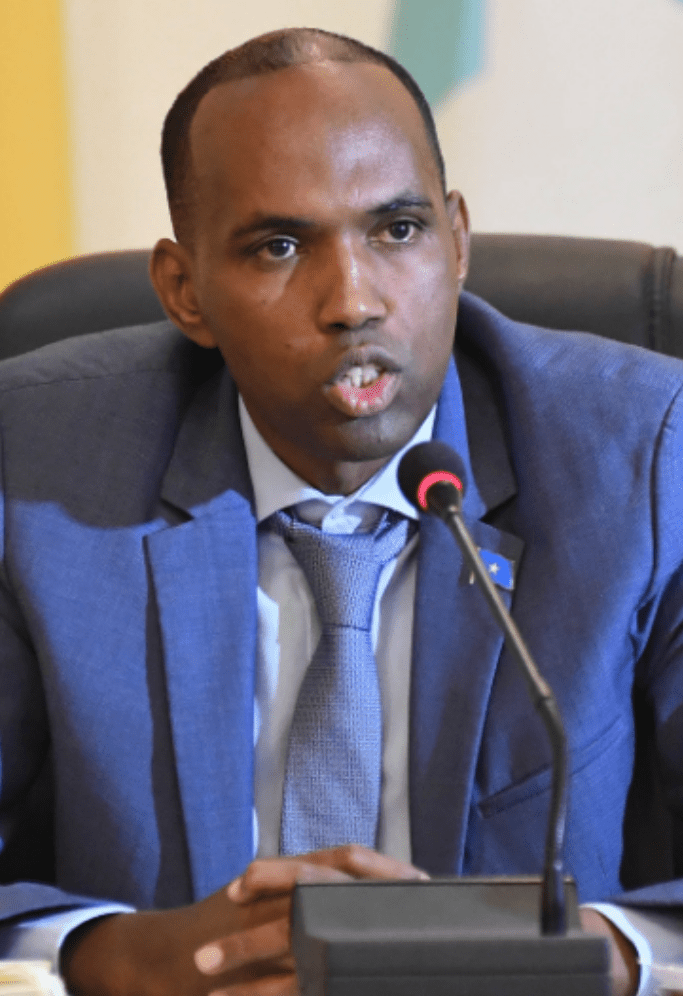
POLITICAL FALLOUT FROM KHAYRE’S VISIT TO GALKAYO

July 12, 2019
Federal Prime Minister Hassan Ali Khayre came to GALKAYO and would leave it, leaving behind the City of Galkayo as divided as ever before because of his NN divisive policies.
Khayre’s vist has political fallouts for both Puntland and FGS:
  1. Khayre has enhanced and entensified the bickering, political wrangling and confrontations between FGS and Federal Member States.
  2. Khayre didn’t act as a role model in leadership by being disrespectful to local political authorities and tradional leaders there.
  3. Khayre’s visit to North Galkayo has exposed Puntland’s political weakness and waning of its political influence even within its own constituency, Puntland youth, in particular.
  4. The visit has shown that Puntland political elite is divided on the way forward for Puntland State and its relationships with the FGS and rest of Somalia.
  5. The visit has exposed agents and political activists of N&N in Puntland.
  6. The political damage done to Puntland and FGS cooperative relations as a result of this visit will linger on for quite sometime.
Recommendation
FGS leaders shouldn’t underestimate these political fallouts, instigated and brought about by Prime Minister Hassan Ali Khayre’s provocative conduct of Galkayo visit.

The poor handling of Khayre’s visit to North Galkayo should act as a clarion call to Puntland Administration officials, in terms of their relations with Puntland population and youth issues, in particular. There must be renewed emphasis on what Puntland State stands for, the legacy of the Civil War and revival of Somali State on the basis of power-sharing, equitable distribution of resources and installation of a government based on checks and balance of power – no more of a City-state, weak public institutions, including rubber-stamp parliament and powerless judiciary – the administration of justice.

There must be a quick damage control before parties develop hardening of attitude and entrenched political positions.

WHAT DIFFERENCE FREE PRESS COULD MAKE

Annual subscription

$37.00

July 11, 2019

It has been only a few months ago since Warsame Digital Media WDM started media coverage of socio-political issues in Somalia. In just this short period of time, WDM is delighted to inform its readers that both the result of readers’ satisfaction and impact of the Blog on the decision-making processes by key players of Somalia’s political establishment have been a worthwhile effort.

WDM can confirm now that we have been receiving phone calls and notifications from government officials at Federal, State and City levels that their careers and thinking had been impacted by the Blog’s media coverage on issues in their respective area of endeavors one way or the other.

The blog is committed to further advance the cause of press freedom and unbiased coverage of all topics of interest to WDM readers. Please stay tuned and keep looking for forward to reading more thought-provoking stories and unfearful critical analysis of socio-economic issues of Somalia and sub-region shaping lives and livelihoods in the Horn of Africa during these troublesome times.

In this regard, the support of our readers through WDM annual subscriptions and donations would make a significant difference.

Thank you,

Chief editor

Ismail Warsame

Ismail@ismailwarsame.blog

https://ismailwarsame.blog

@ismailwarsame

N&N 2020 GENERAL ELECTION PLAYBOOK IS WELL UNDERWAY NOW

July 11, 2018
N&N Concept Note on Federal Election 2020 boils down to removing the carpet under the feet of leaders of the Federal Member States by-passing them to convey N&N message directly to the general public, especially to the youth. So far, the plan is working well.
The remaining hold-outs among the Heads of the Federal Member States are feeling the N&N political pressure now to either give in or get eliminated. The battle grounds are now shifting to Puntland and Jubaland. In the case of Puntland, there is still a political space for Puntland President Deni to maneuver as he was elected a half year ago for a 5-year Puntland mandate. Ahmed Madoobe of Jubaland is now fighting for survival. He is deeply entangled with vicious confrontation with leaders of N&N. How this would end up is everybody’s wild guess.
Prime Minister Khayre’s visit to Galmudugh and Northern Galkayo in an uncoordinated fashion with the local authorities tells volumes of information on how this political game will play out in the next few months and beyond. The plan has risk factors that could spark off renewable of the civil war. It is a daring political gamble. But, it seems to have the overwhelming support of youth in the country. And this is the very reason why N&N leaders are reluctant to approach politics as usual by ignoring community leaders, civil societies and local governments. These are to be undercut and undermined by talking to the people directly. That populalist political approach had made the election of Mohamed Abdullahi Farmaajo possible in 2016, to the surprise of those who regarded themselves political weights.
So far, no local politicians are equipped to deal with the N&N Concept on populalist agenda.This is how electioneering and political campaigns are conducted in democratic one-person one-vote elections. But, the Heads of Federal Member States are doing politics in the conventional Somali ways: clan politics. That is why they are losing battles one after the other. Puntland President Deni had underestimated Khayre’s recent visit to Galkayo by sending junior politicians to deal with the issue. The gathering yesterday in a North Galkayo stadium tells the rest of the story. But, the war has not been won or lost yet, and the final casualties are unpredictable.

HASSAN ALI KHAYRE: UNWORTHY OF HIS FEDERAL TITLE

Annual subscription

$37.00

July 11, 2019

Hassan Ali KHAYRE has misbehaved in his Galkayo visit as a naughty boy. He has become a disgrace to the FGS, dignity of the residents of Mudugh, peace and harmony in the City.

By acting as a stubborn child in Galkayo in total disregard of Puntland authorities and his crude disrespect of members of Northern Galkayo society of all walks of life, he has, first and foremost, lost the last portion of any political capital that he might still have remaining.

Secondly, Khayre has explicitely proven to all now that he has no any crebility left to hang on and cling to the position of Federal Prime Minister. He will go down in history not only as an immature and childish, but also as stupidly disrespectful and foolishly arrogant. He is a troubled youth, who needs more long-term rehabilitation himself than the “mooryaans” of Mogadishu Civil War militia. He is a destabilizing problem in Somalia. Somalia and the world must stop this troubled kid.

For heavens sake, he has to go!

https://ismailwarsame.blog

@ismailwarsame

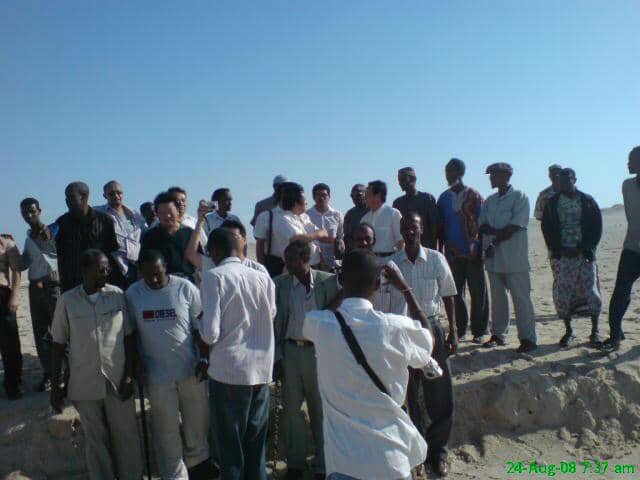
DO YOU RECALL THESE PHOTOS OF CHINSESE PORT, AIRPORT AND ROAD ENGINEERS AT GARA’AD PORT SITE IN AUGUST 24, 2008?

The new GARA’AD Port site is exactly located in the spot assessed at that time. Former Puntland Administration of General Cadde had no political will to go ahead with the construction of GARA’AD Port. The project had a construction component of a Galdogob-Gara’ad Road, passing through the City of Galkayo ( see the red soil of Galdogob in one of the photos).

Later, the Somali Ambassador to China, Amb. Mohamed Awil, had paid a heavy career price for lobbying and bringing in Chinese engineers in Gara’ad in 2008, when the Director General of TFG Ministry of Foreign Affairs, Mr. Abdisalam Haji Ahmed Liban (Dabancad)/Habar-Gedir/Indhayar, had accused the Ambassador Awil of favoring Gara’ad instead of Obbia. Dhabancad got the blessing of then Prime Minister Omar Abdirashid Ali Sharma’arke and TFG President Sheikh Sharif Ahmed, to fire the Ambassador from his posting to China.

https://ismailwarsame.blog

@ismailwarsame

“FREE PARLIAMENT”, A LOITERING GROUP IN GAROWE HOTELS?”

Annual subscription

$37.00

July 10, 2019

They are known in Garowe for the misnomer of “FREE PARLIAMENT” (Baarlamaanka Xorta ah). They are mostly retirees, minding only their retirement existence and an old man’s love for evening chat and city gossips. Every evening they gather around a long rectangular table in one of the city hotels to kill the boring passage of their time before they retire to bed at 10 o’clock. They take their break from their most unproductive conversations at Ishaa (evening) prayer, to return to continue the boring sessions at table.

During the entire existence of this informal group in Garowe, they had never produced even a few pages of minutes on a serious topic they had discussed and deliberated. They seem to be devoid of any ideas useful for the society they live in. Yet, they want uncritical old men, idlers and pseudo- professionals to hang on and loiter with them every evening. They are afraid of taking cue from formal standards of the civilised societies to establish professional associations or social clubs, and thus taking up some important societal issues seriously.

Observers of this chatting group said that most these old men are employee-consultants of various private and public organisations, construction industry, and they are not at liberty to join organized civil society entities. The question is, why do they then allow to call themselves a “Free PARLIAMENT”? Obviously, they want to live and operate in the darkness without bringing in and out any ideas to benefit the society.

This is the Baarlamaanka Xorta ah (FREE PARLIAMENT) you hear about in Garowe City.

https://ismailwarsame.blog

@ismailwarsame

DELUSION TURNS INTO HYSTERIA IN SOMALILAND

Annual subscription

$37.00

For Northwest Regional Aministration (Somaliland), early on, it was seeking a delusional secession and recognition for statehood. Now, with diminishing returns and hitting a dead-end, the delusion turns into hysteria and empty claim of securing some recognition from the most unexpected places like Guinea Conakry, even recognition of Somaliland by municipality of the city of Birmingham in the UK.
The leaders of the Federal Government of Somalia are enjoying with sadistic satisfaction the madness and mental suffering of Somaliland leaders. The victims of this political nightmare are the Somalis in the Regions, whose lives and future were torn apart by lies, indoctrination and false promises of ushering in an independent country called “Somaliland Republic” – a tragedic story of treason and public deception by opportunistic bunch of elitist politicians in Hargeisa, mostly composed of henchmen of the Late Military Dictator, Siyad Barre.
The raging hysterical rhetoric in Hargeisa needs help, not from psychologists and psychatrists, but from spin doctors to calm things down in the Regions.
The recent political noises in Hargeisa, sparked off by ill-advised approach of the FGS to Muse Bihi’s exclusively private trip to Conakry, is a prelude to realization that the solutions to Somali problems lie within Somalis themselves, and no foreign imposition could have a lasting sustainability, even if it could happen in a remote scenario.

HELP MAINTAIN THE EDITORIAL AND CONTENTS INDEPENDENCE OF THIS BLOG

Annual subscription

$37.00

Free press is a rarity in many countries, including Somalia. What is peculiar in some countries like Somalia is an additional self-censorship in favor of emotional bias involving sectarianism, tribalism and political factionalism.
Warsame Digital Media WDM
(https://ismailwarsame.blog) is committed to clear out this clutter and present unbiased and balanced critical analysis on socio-political situation in Somalia and the Sub-region.

These short easays and articles reflect on the best interests of Somalia and entire sub-region. The blog has already sparked off animated intellectual debates on current issues. It brings up new ideas and positive analysis on socio-economic developments in the country. It touches on hot topics of modern Somali history, issues of governance and legacy of Somali Civil War. WDM is engaged in straight forward thinking to call the spade a spade.

We value our readers and deeply appreciate their contributions and comments. We welcome volunteer writers and grateful for their submissions to WDM.

To keep the service going as a free press without fear or favor, however, we need your help with annual subscriptions and donations. You may use any convenient medium of payment of your choice, or simply call +252 90 703 4081, WhatsApp # is +1647 570 5380 and email at ismail@ismailwarsame.blog for further inquiries.
Ismail Warsame
Warsame Digital Media

HOW THINGS WENT WRONG IN SOMALIA

HOW? Take a watch:

SOMALI HERITAGE PHOTOES

Annual subscription

$37.00

BREAKING NEWS, PRIME MINISTER KHAYRE IN GALKAYO, NO EASY PASSAGE TO BARAXLEY

Annual subscription

$37.00

July 9, 2019

Federal Prime Minister, Hassan Ali Khayre, has finally made to Northern Galkayo Quarter of Baraxley yesterday afternoon.

On his way to GALKAYO City from Cadaado, he had to overcome numerous check-points and other obstacles of no-passage to Galkayo by the locals, specially at village of Bandiradley, reportedly. The Prime Minister had to buy his way through these local check-points.
Upon arrival in Baraxley, he had to utilyze PR exercises to seek photo opportunities with those Habar-Gedir opposition figures to his N/N Administration such as Fiqi, Mahad Salad, among others.
Khayre’s visit to Galkayo/Baraxley comes amid a meeting between Sacad clans there, which had put Khayre’s agenda in Baraxley into the back-burner, according to reliable sources.

This self-imposed working visit should act as learning experience for Prime Minister Khayre on the state of disarray in Galmudugh. We wish him all the best!

A TELLING PICTURE OF KHAYRE’S VISIT TO MUDUGH

PRESIDENT DENI OF PUNTLAND STATE MAKES FIRST BOLD MOVES

Annual subscription

$37.00

July 8, 2019
Congratulations to President Said Abdullahi Deni for making first encouraging steps towards taking the ownership of PUNTLAND STATE multifaced problems, some of which are chronic and intractable. However, these are only first steps in overalling a stagnant socioeconomic and administrative/political malfeasance that had crippled the State so long since its foundation in 1998.
The President is right to start reforming the State’s Acheel’s Heels: Security and Finance Sectors. Flashing out aging and corrupt bureaucrats from Puntland finance sector is a much welcome effort by the President.
Appointment of good people in position of authorities is not enough, though. Transparent standards and legal instruments must accompany with these official appointments. To fight corruption and mal-administration in public affairs, autonomous agencies and departments such as the Auditor-General and Accountant-General must be empowered with independent powers, financial and legal means to discharge their responsibilities. If that doesn’t happen immediately, there is nothing much to celebrate for the President’s seemingly bold official appointments last night.

It is equally important to appoint bureaucrats on merit and qualifications through competitive interviews and exams, including their through vetting and background checks, while taking into account the necessary employees diversity at ministries and agencies. President Deni seems not bringing in new qualitative ideas and innovative system of personnel recruitment. He has immediately embarked upon doing business as usual.

It is also the right time for the President to make an appropriate Cabinet Reshuffle as six months is more than enough to evaluate the performance of individual ministers. There is no point in keeping on a non-performing Cabinet Member.

PUNTLAND STATE has been held back for much of its existence by two major crippling factors:
  1. Epidemic corruption with impunity
  2. Weak and equally corrupt House of Representatives.
Puntland House of Representatives were solely responsible for all that went wrong in Puntland, I can ascertain this with authority. They were the reason why we have “Madax-ka-Nool” government here. It is a sham Parliament in both its election (in fact, selection process) and legislative operations. Until this House and its leadership behavior change, a goodwill of the Executive and its compliance with laws and regulations of the land can’t be expected, not to talk about checks and balance of power.
To sign off, I must share my personal experience with you that the people of Puntland love their government as they equally admire competent, transparent and honest leaders. They will definitely fall in love with President Deni, only if he earns that public trust.
@ismailwarsame

Postscript:

Puntlanders might have been a bit disappointed with the current setup of the Ministry of Energy, Water and Mineral Resources in the terms of lack of employees diversity. Based on the historical background of these agencies now coming under a ministry, the President couldn’t do it better otherwise without risking a political capital for the time being because of known sub-clan considerations and contradictions. These agencies are now also better off, being attached to a ministry for funding and more public transparency.

In tribal politics, no politician can assert his paramount leadership role, however, without first securing his last word command on his immediate sub-clan power-base.

FIRST VISIT TO PUNTLAND BY THE NEW UN SECRETARY-GENERAL REP TO SOMALIA, Mr JAMES SWAN, JULY 8, 2019

https://ismailwarsame.blog

@ismailwarsame

PORT OF GARA’AD

Take a watch on

PLTV

No papers but a home: Somali women take on South Africa’s property market

JULY 8, 2019 / 11:12 AM / UPDATED 5 HOURS AGO

JOHANNESBURG (Thomson Reuters Foundation) – In the hallway of a large, brick-face apartment block in Johannesburg, Halima Jawahir greets her tenants, a group of six Somali women drying their henna-painted hands in the sunlight streaming through the windows.

After fleeing ongoing civil war in her native Somalia in 2016, Jawahir is now reinventing herself as a property mogul in the Mayfair neighborhood in Johannesburg, South Africa’s biggest city.

She rents an entire building of more than 100 flats from a South African landlord, before sub-dividing them into rooms, and subletting them to other mainly Somali and Ethiopian refugees.

But as a refugee without documentation, Jawahir is also breaking the law by subletting flats – a risk worth taking, she said, to save up enough to one day own her own property.

“I am a widow, so I have to look after myself,” said the 45-year-old, adjusting her green hijab as she sat on the couch in her second-floor flat.

The United Nations estimates that at least 30,000 Somali refugees live in South Africa.

The country is wrestling with a massive backlog of asylum applications, according to human rights groups, leaving many refugees waiting months or even years for the authorization to work, go to school and find a place to live.

Faced with this legal and economic uncertainty, some Somali women are challenging social norms and navigating the male-dominated property market in the hope that, one day, they will have the security that comes with owning a place of their own.

Jawahir’s building is one of about a dozen properties in Mayfair that are being rented and then sublet by Somali refugee women, according to the Somali Community Board of South Africa.

For renters, subletting provides a stable source of income, and for their tenants it is often the only way they can afford a place to live, said Jawahir.

ADVERTISEMENT

This is especially true for refugee women, many of whom are running their households and raising their children alone as they wait in limbo to be granted refugee status.

“Undocumented migrants do not qualify for government housing or subsidies and the impact of this overburdens mothers,” said Tiffany Ebrahim, a researcher at the Socio-Economic Rights Institute of South Africa, a human rights organization.

“And the private (housing) market is inaccessible because it is so expensive, forcing people to fall back on solutions that are temporary with little security of tenure.”

Jawahir, whose name was changed to protect her identity, said that “as refugees and as women, we are always hustling”.

FLEEING FROM HOME

Jawahir left Mogadishu for South Africa in 2016, after men robbed her at gunpoint at her home, killing both of her parents.

“One bullet is still in my elbow,” she said, pointing to scars across her arms and legs. “It makes it difficult to lift heavy things.”

Once she was settled in Mayfair – a neighborhood so popular with the Somali diaspora that it is known as Little Mogadishu – Jawahir took the same route as other female Somali refugees in the area and set up her own business subletting flats.

To supplement the rental income, she uses her contacts in Saudi Arabia, Dubai and East Africa to import perfumes, jewelry, honey, and shoes to sell in both stores and markets in Mayfair. She also sells cellphone credit to passersby.

ADVERTISEMENT

At the end of each month, Jawahir said she sends about $350 home to her family in Mogadishu, the Somalian capital.

Any extra money is put aside for future needs, including the possibility of one day buying the property she now rents out.

“If my husband was alive, he would be happy for me,” Jawahir said. “Look at me, I am alone but empowered. I did this all by myself.”

‘A DREAM FOR MANY’

Although subletting is legal in South Africa, doing so without proper documentation showing asylum or refugee status could lead to evictions – for both the original tenant and the subletter, Jawahir explained.

And many have no other option, noted Abigail Dawson from the Consortium for Refugees and Migrants in South Africa.

“We find that it is easier for many to fly under the radar, as the process of becoming ‘legal’ is such hard work,” she said, referring to the backlog of refugee status appeals not yet processed by the government.

The Department of Home Affairs and the South Africa Human Rights Commission were not available for comment.

For Somali women in South Africa, many of whom lack a basic education and have no legitimate job prospects, the risk of subletting to others is worth it for the chance to one day own their own home, said Omar Muhammad from the Somali Community Board.

“Many of them (Somali refugees) cannot even speak English, so have little freedom to find opportunities outside their community,” he told the Thomson Reuters Foundation in his office in Mayfair.

“Property ownership is a dream for many, because it would mean full independence.”

The benefits that refugees get from owning property are not limited to money, added Ebrahim from the Socio-Economic Rights Institute.

“Location is everything,” she said. “Having a secure place to live could be linked to accessible hospitals, schools, economic opportunities and most importantly, social networks that are needed in difficult times.”

PROPERTY AND COMMUNITY

Indhonuroon Farah brought her five children to South Africa from Somalia 10 years ago, after her husband was killed in clashes between Somali clans when returning from work.

She managed to secure her refugee documentation soon after – this was before the height of the application backlog – which meant she could send her children to school.

“I arrived here with nothing and no one,” said Farah, sitting behind the counter of her shop in Mayfair, where she sells fabrics, shoes, Kenyan honey and beaded bracelets.

“I would sell goods in townships all over South Africa and eventually made enough money to buy a property in Somalia,” she said, adding that it is more socially acceptable and affordable for women to own property in her home country.

She now rents that property out for extra income. Eventually, she wants to do the same in her adopted home.

“If I had more money, I would buy in South Africa too,” she said. “Then when I die, I would have something to give my children here.”

As she spoke, an elderly beggar walked into her shop on crutches, asking for donations. Farah paused to open a drawer and pulled out a bag of porridge for the man.

“If you have something, you must share with others,” she said, smiling.

“This is just how women must think. We can be mothers, shop owners, or landlords. It is how we have gotten through harder times.”

Reporting by Kim Harrisberg @KimHarrisberg; Editing by Jumana Farouky and Zoe Tabary. Please credit the Thomson Reuters Foundation, the charitable arm of Thomson Reuters, that covers humanitarian news, women’s and LGBT+ rights, human trafficking, property rights, and climate change. Visit news.trust.org

REUTERS NEWS NOW

Subscribe to our daily curated newsletter to receive the latest exclusive Reuters coverage delivered to your inbox.

Submit

WORLD WAR COULD ENDED IN 1943

Help Us Keep World News Unchained – Click Here To Donate Now!

Second World War Could Have Ended in 1943 Had Allied Bombing Focused on Military-related Targets

By Shane Quinn
Global Research

Click to read this article in your browser.

Britain’s air commander Arthur Harris was convinced that efforts to “scourge the Third Reich” by “bombing Germany city by city”, as he put it in July 1942, would bring the war to a swift end. The outcome behind these increasingly destructive air raids proved very different to how it was foreseen.

British, and from 1943 American attacks, against densely populated areas – often avoiding armament hotspots – served to lengthen the Second World War by as much as two years.

In Europe, Allied air raids performed a central role in allowing the German war machine to roll on largely undamaged, before it came shuddering to a halt in the east.

Amid the thick of the action was Albert Speer, since his personal appointment as Nazi war minister by Hitler in February 1942, and he noted of Allied air tactics that “the war could largely have been decided in 1943 if instead of vast but pointless area bombing, the planes had concentrated on the centres of armaments production”.

Speer was an architect by trade, had never fired a gun before, and so he was “thunderstruck” at his assignment to succeed the deceased Fritz Todt.

“I have confidence in you”, Hitler reassured an uncertain Speer, “I know you will manage it. Besides, I have no one else. Get in touch with the Ministry at once and take over”.

Speer’s wide-ranging capabilities quickly came to the fore. Each month, the Nazi leader rang him to receive updates on armaments production, before jotting the results down in a prepared document.

In the spring of 1943 for example, Hitler contacted Speer and said to his minister upon hearing of the customary dazzling figures,

“Very good! Why, that’s wonderful! Really, a hundred and ten Tigers? That’s more than you promised… And how many Tigers do you think you’ll manage next month? Every tank is important now”.

The dictator rounded off these conversations with a brief analysis of what was unfolding at the front.

“We’ve taken Kharkov today. It’s going well”, he informed Speer, before resuming with, “Well then, nice to talk to you. My regards to your wife”.

The victory that Hitler was referring to, in eastern Ukraine, is known as the Third Battle of Kharkov, which concluded during the spring melt of March 1943. For Hitler it represented a measure of revenge following Stalingrad, a disaster which he was mainly responsible for.

At Kharkov – the Soviet Union’s third largest city – the Germans were outnumbered by 8 to 1 in manpower and 5 to 1 through tanks; but a combination of elite Wehrmacht and SS divisions, led by Field Marshal Erich von Manstein, inflicted more than 80,000 casualties on the Red Army who were completely driven from Kharkov by 16 March 1943.

The Tiger heavy tank, that Hitler implored Speer to produce in maximum numbers, played an important role in recapturing Kharkov, which helped to stabilize part of the eastern front.

Yet in 1942, had “Bomber” Harris concentrated his air attacks against the German war economy, they could have decimated production of Tigers – which had appeared on the battlefield for the first time near Leningrad in September 1942.

Recognizing the danger perhaps a little late, Speer warned Hitler on 20 September 1942 that,

“the tank production at Friedrichshafen and the ball bearing facilities in Schweinfurt were crucial to our whole effort”.

Towards the end of 1940, the Royal Air Force had introduced Stirling and Halifax four-engine heavy bombers, which could carry pay loads of explosives weighing up to 14,000 pounds (over 6,000 kilograms). Both aircraft also held flying ranges in which to roam across Germany without refuelling.

British bombers – which dwarfed their Luftwaffe counterparts – were rolling off the production lines in increasing numbers from 1941. Had the Stirling and Halifax, bolstered from February 1942 with the Lancaster, been sent towards German industrial zones in regular squadrons, they could have inflicted grievous harm upon the Nazi war industry even prior to 1943.

With Hitler spurred into action by Speer’s forebodings about factory vulnerability, he ordered greater anti-aircraft defences to be erected around these regions. Yet Hitler need not have worried too much. British commander Charles Portal, Chief of the Air Staff, outlined conclusively behind closed doors on 15 February 1942 that “the aiming points are to be built-up areas, not, for instance, the dockyards or factories”.

The panzer complexes in Friedrichshafen, along Germany’s far south, did not experience serious Allied bombardment until late April 1944. Thereafter, the raids were still intermittent at times and non-existent mostly.

The even more important ball bearing plants at Schweinfurt, in central Germany, were not attacked at all until 17 August 1943 – when Allied aircraft suffered heavy losses and the installations were mostly undamaged. Nazi Germany’s ball bearing facilities were pivotal not merely to the performance of her panzers, but also to U-boats, aircraft, heavy armour and other weaponry.

The greatest tragedy of many underlying these air attacks, was that it enabled the death camps in central and eastern Europe to remain in mass killing mode for much longer. From early 1942, the Nazis ramped up their systematic genocide mostly perpetrated against Europe’s Jewish populations, and also on Slavic races, Romani people, etc.

Hundreds of thousands of human lives could have been saved, had German war centres been demolished in 1943 or even 1944. What’s more, by at least late 1942 the Allies had information that the Nazis were committing massive crimes against humanity.

In the meantime, on 30 May 1942 Air Marshal Harris implemented the first 1,000 bomber raid over Cologne, western Germany, a Roman-era city. Among the airplanes were almost 300 four-engine heavy bombers, featuring the Stirling, Halifax and new Lancaster. This demonstration of terror bombing had little effect on German military capacity, simply destroying thousands of civilian homes, along with schools, hospitals and ancient buildings.

One can imagine the possible impact, in early summer 1942, had these British bombers been dispatched instead towards Nazi Germany’s ball bearing and panzer depots. Little collective thought was given to such ideas, because of the determination to hit urban environments. The following month, June 1942, the Nazis embarked on their renewed offensive eastwards with heavy armour that was pouring out of these unhindered factories.

Lack of accuracy with aerial bombing, mostly due to poor radar and navigation, was an issue for the Allies – but among such an enormous volume of aircraft, a proportion would surely have found their mark against Germany’s arms industries. Schweinfurt and its ball bearing plants were bombed a paltry 22 times throughout the war, as Cologne was raided on 262 occasions while Berlin endured 363 attacks.

By the spring of 1945, less than 2% of all Allied bombs had fallen upon the Germans’ war-related factories. Much of the rest was dumped over populated regions and workers’ homes. Quite revealing is that, at the post-war Nuremberg trials, absent from court proceedings was the issue of aerial bombing of urban civilian targets. Such deliberations would have shone light on potential Allied war crimes relating to “dehousing” and so on, which they pursued far more than the Luftwaffe.

Meanwhile, as the war advanced beyond 1942 much of the cream of Wehrmacht armies had been wiped out; though they could, in fits and spurts, still send out soldiers of fearsome repute. Among those was Werner Wolff, who after 1942 became one of the most decorated of the Nazis’ young infantrymen. On repeated occasions, the 20-year-old Wolff destroyed Soviet tanks single-handed such as in the mid-1943 Battle of Kursk, less than 300 miles west of Moscow.

On 14 October 1943, a daylight raid over the Schweinfurt factories reduced German ball bearing construction by an alarming 67%. To Hitler’s pleasure, American bombers suffered heavily during this attack, but a follow-up assault would have dealt a deadly blow to Nazi war production, heralding the conflict’s conclusion.

Speer confessed, “what really saved us was the fact that, from this time on [October 1943], the enemy to our astonishment once again ceased his attacks on the ball bearing industry”. The Allied raids over ball bearing centres did resume sporadically for a time, but once more stopped abruptly in April 1944.

Yet there may well be a separate factor behind these sometimes baffling policies, practically avoided and obscured to this day. Following the German defeat at Stalingrad in early 1943, and almost certainly by spring 1944, Western intelligence departments had earmarked Soviet Russia as the upcoming enemy.

Days after Hitler’s invasion of the USSR, then Missouri senator Harry Truman (future vice president and president) said he hoped that Germany and Russia would “kill as many as possible” between them, with Washington ideally providing assistance to either side that was losing in order to prolong the fighting.

The British were especially uncomfortable with their having the Soviet Union as a major ally. Field Marshal Alan Brooke, from December 1941 the principal adviser to Winston Churchill, wrote in July 1943 that the Soviet Union “cannot fail to become the main threat” after the war. Brooke continued, “Therefore foster Germany, gradually build her up, and bring her into a federation of western Europe”.

Brooke complained that, “this must all be done under the cloak of a holy alliance between England, Russia and America”, while he denounced the Soviet populace as “this semi-Asiatic race”. Brooke’s views are particularly telling, as from winter 1941 he was also Chief of the Imperial General Staff, and so held command of the entire British Army.

Britain’s disdain for Bolshevism long predated the war, and mostly prevented London from signing an alliance with Moscow prior to the Nazi-Soviet Pact of August 1939. A British union with the Kremlin before autumn 1939, together with France, would have made it much trickier for Hitler to initiate a large-scale European conflict.

On 16 April 1939, Stalin formally suggested that a second triple entente be formed aligning Russia, Britain and France against Germany, as preceding the First World War. Britain’s government quickly rejected Stalin’s overtures and the Soviet dictator – already in contact with the Nazis – finalized his pact with Hitler four months later, ensuring that war would again be a certainty.

In April 1944, two months before the D-Day landings, London had formulated long-term strategic planning commissions, advancing the redevelopment of both Germany and Japan in opposition to the USSR. It is likely these strategies were evolving during 1943. In the opening months of 1944, Western military intelligence was now concealing from the Kremlin vital information on German troop formations in the east; while the British and Americans amassed “superbly detailed and accurate” material on Russian military forces.

It is therefore not outlandish to propose that German industry may have been spared the brunt of Allied air attacks, partly also in order to preserve it for planned hostilities with Russia. In the summer of 1943, the Allies were aware too that German technological advances, regarding rocket and missile design, far exceeded that of the Western powers. Washington and London would be tempted indeed to lay their hands on the technicians and their futuristic formulas, realized after the war as hundreds of Nazi scientists were sent to the United States. It was a German citizen and former SS major, Wernher von Braun, who masterminded America’s space program.

During autumn 1944 the British Foreign Office warned that,

“It is already becoming known that our soldiers are thinking of a possible war against Russia”.

Like-minded ideas prevailed in the US capital for months, as borne out by General Leslie Groves’ remarks in March 1944.

In late 1944, Britain’s high command was expounding plans which included rearming Germany for the envisaged attack on Russia. At this time also, high level British intelligence was privy to “super secret appreciations” leaking out from Washington that the Soviets were their imminent new foe.

In May 1945, with the ink still damp on German surrender papers, Churchill had conceived the “elimination of Russia” – with Moscow still officially an ally – in a proposed land invasion comprising hundreds of thousands of Allied troops, along with 10 re-equipped Wehrmacht divisions.

It was called Operation Unthinkable: A war plan broadly scorned by scholarship since late 1990s declassified documents finally revealed its contents. On closer inspection, however, Operation Unthinkable looks quite plausible when combining all of the above factors.

RAF planes were marked down to strike Soviet cities from British bases in northern Europe. Following the US atomic attacks on Japan in early August 1945, nuclear weapons were attached to such schemes. On 15 September 1945, the Pentagon was breaking out alone in her position as the great world and nuclear power, with a stratagem to attack vast areas of the Soviet Union with scores of atomic bombs.

*

Note to readers: please click the share buttons above or below. Forward this article to your email lists. Crosspost on your blog site, internet forums. etc.

Shane Quinn obtained an honors journalism degree. He is interested in writing primarily on foreign affairs, having been inspired by authors like Noam Chomsky. He is a frequent contributor to Global Research.

* * *

Can you help us keep up the work we do? Namely, bring you the important news overlooked or censored by the mainstream media and fight the corporate and government propaganda, the purpose of which is, more than ever, to “fabricate consent” and advocate war for profit.

We thank all the readers who have contributed to our work by making donations or becoming members.

If you have the means to make a small or substantial donation to contribute to our fight for truth, peace and justice around the world, your gesture would be much appreciated.

Visit our website Visit our website
Follow us on Facebook Follow us on Facebook
Follow us on Twitter Follow us on Twitter
GRTV GRTV
Copyright © 2019 Centre for Research on Globalization, All rights reserved.
You are receiving this e-mail because you signed up for our newsletter

Our mailing address is:

Centre for Research on Globalization

P.O. Box 55019

11 Notre-Dame Ouest

Montreal, Qc H2Y 4A7

Canada


Add us to your address book

Dr. Lumumba

Take a listen

AHMED HUSSEN, CANADA’S MINISTER OF IMMIGRATION, REFUGEES AND CITIZENSHIP

LISTEN TO TIMIRO CUKAASH

Don’t take freedom for granted. Take a listen

ON JUBALAND

Annual subscription

$37.00

July 7, 2019
There are major issues and minor ones in Jubaland political stand-off and confrontation between FGS and Ahmed Madoobe Administration.
Let us talk about minor issues first. Among them includes, but not limited to, that:
  1. There is a big difference between Ahmed Mohamed Islaam (Ahmed Madoobe) and Jubaland issues. This is where people err in debating and deliberating on Jubaland.
  2. People also ignore facts: There are many forms of Mr. Ahmed Madoobe. There is Madoobe of the Union of Islamic Courts with their mixture of Al-Shabab and other extremists.
  3. There is Madoobe of Ras Gambooni Brigade
  4. There is Madoobe as Ethiopian Prisoner and Ethiopia supporting Madoobe suddenly.
  5. There is Madoobe of the Free Parliament in Asmara, Eritrea, and there are other forms of Ahmed Madoobe.
As the Head of the Jubaland Administration, he had ignored and marginalized the residents of the Kismayo in favor of new comers that compose of , among others, residents of the Southwest State. Unfortunately, supporters of Ahmed Madoobe now in his confrontation with FGS are those denied of their residence rights, the Harti, upon his election last time.
Let us take up the major issues now, which are of more concern:
  1. Farmaajo-Khayre Administration is engaged in destabilizing Jubaland in its campaign to impose its will on Federal Member States in violation of the Federal Constitution, and thus, unravel the Federal Systen, paving the way to restoration of Central Unitary Authorities hailing from One City-state of Mogadishu by:
  2. Eliminating Ahmed Madoobe as an obstacle to the policies of current FGS leaders.
  3. Dislodging Kenyan Defence Forces KDF as part of AMISOM from Kismayo, whom they see them as defence and political shelter for Ahmed Madoobe.
  4. Paving the way for the establishment of new Jubaland Alliance and reversing the influx of Absame into Lower Jubaland Region
  5. All above measures boil down to FGS leaders’ attempt to seize power in Jubaland State as part of wider game plan to return the country to tyranny and highly centralized unitary government in Mogadishu.
Recommendations.
  1. Resist FGS unconstitutional interference in Jubaland, while not defending Ahmed Madoobe at all.
  2. Have credible and competent candidates for the forthcoming Jubaland Election.

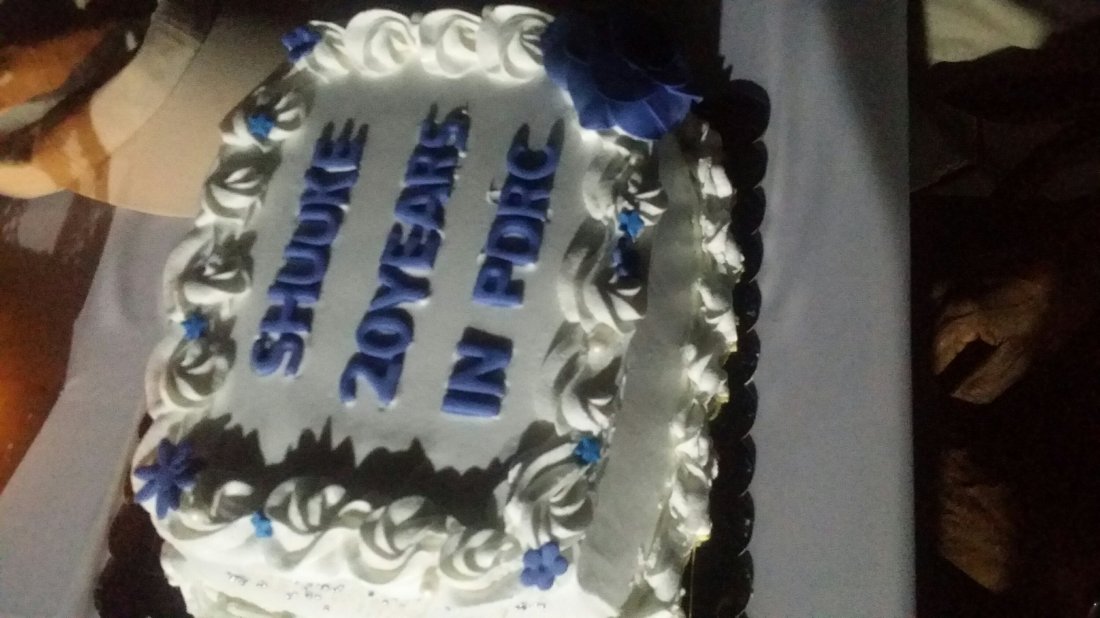
SHUKE: CUTTING THE CAKE AFTER LIFE-TIME OF PUBLIC SERVICE