Somalia at the Brink: Possible Responses if Mogadishu Falls to Al-Shabab

Introduction

Somalia stands at a perilous crossroads, as the threat of Mogadishu—the nation’s capital and symbolic center of governance—being overrun by Al-Shabab militants grows increasingly imminent. Al-Shabab, a jihadist group aligned with al-Qaeda, has persistently destabilized Somalia through guerrilla warfare, terror attacks, and the establishment of parallel administrations in rural regions. Should Mogadishu fall, it would mark not just a territorial setback, but a profound political, military, and psychological blow to the fragile Somali state. This essay explores the possible responses Somalia might undertake in such a scenario, including internal government reactions, regional and international interventions, civilian responses, and long-term strategic recalibrations.

1. Immediate Government and Military Response

Evacuation and Relocation of Government Apparatus:
If Mogadishu is lost, the Somali federal government (SFG) would likely relocate its operations to a more secure city, such as Baidoa, Beledweyne, or Garowe. The movement would aim to preserve continuity of governance and maintain diplomatic lines with the international community. Such a move would also be aimed at preventing a total collapse of state authority.

Counteroffensive Plans:
The Somali National Army (SNA), supported by regional state forces, would likely plan an immediate counteroffensive to retake the capital. This could involve conventional assaults, urban warfare tactics, and the solicitation of emergency support from international partners, particularly the African Union Transition Mission in Somalia (ATMIS), Turkey, and the United States.

Emergency Powers and Martial Law:
The government may invoke emergency powers or martial law, suspending normal governance structures to focus on security operations. This might include curfews, increased surveillance, and rapid conscription of local militias into government-aligned forces.

2. Regional and International Involvement

ATMIS (now AUSSOM) Reinforcement:
The African Union, under pressure from regional stakeholders such as Kenya, Ethiopia, and Uganda, may reinforce its presence in Somalia. This could involve deploying more troops or extending ATMIS’s mandate beyond its scheduled withdrawal. A fall of Mogadishu would rekindle fears of regional spillover, prompting action even from reluctant neighbors.

U.S. and Turkish Involvement:
The United States, which has conducted drone strikes and advisory missions in Somalia, may escalate its direct involvement. Similarly, Turkey, which has trained Somali forces and established significant influence in Mogadishu, might increase its support through intelligence sharing, equipment, and strategic guidance.

UN and Humanitarian Agencies:
The UN would likely ramp up humanitarian aid and may consider imposing sanctions or arms embargoes to prevent further destabilization. Humanitarian corridors might be negotiated to allow the evacuation of civilians and the delivery of aid.

3. Civilian Reaction and Internal Displacement

Mass Exodus from Mogadishu:
A takeover by Al-Shabab would trigger a massive wave of internally displaced persons (IDPs), overwhelming nearby towns and refugee camps. The humanitarian toll would be severe, with shortages of food, shelter, and medicine. International agencies would struggle to cope with the sudden influx.

Resistance Movements:
In historically resistant neighborhoods, local militias and civilians may form spontaneous resistance groups. This could lead to prolonged urban warfare within Mogadishu itself, turning it into a battlefield similar to other war-torn capitals like Aleppo or Kabul.

Potential Ethnic and Clan Fallout:
Given Somalia’s complex clan dynamics, a power vacuum or perceived favoritism could spark inter-clan conflict, especially if Al-Shabab’s takeover is seen as benefiting or facilitated by certain groups.

4. Long-Term Strategic Shifts

Political Realignments:
The fall of Mogadishu could force a renegotiation of Somalia’s federal structure. Regional states like Puntland or Jubaland may push for greater autonomy or even threaten secession, arguing that the central government failed to maintain national integrity.

Rebuilding from the Periphery:
If the capital is lost, the SFG might adopt a “periphery-first” strategy, rebuilding legitimacy from regional strongholds and gradually attempting to retake the capital through alliances with local power brokers.

Dialogue with Militants?
Though controversial, a devastating loss might prompt discussions—either directly or through intermediaries—about negotiating with elements of Al-Shabab. Such talks would likely focus on ceasefires or humanitarian access, not political recognition.

Cyber and Media Warfare:
Losing the physical capital would prompt an ideological war. The government and its allies might intensify propaganda campaigns to counter Al-Shabab’s narrative, using social media, religious leaders, and diaspora engagement.

Conclusion

The fall of Mogadishu to Al-Shabab would be a catastrophic turning point for Somalia, reverberating across East Africa and the wider international community. Yet it would not necessarily signify the end of the Somali state. The resilience of Somalia’s regional structures, the capacity for guerrilla resistance, and the potential for international support all suggest that the nation could recalibrate and respond—albeit through hardship. The key to survival and eventual recovery would lie in unity, strategic foresight, and the unwavering commitment of Somalis and their allies to reclaim their capital, their sovereignty, and their future.

Insecurity in Mogadishu and the Periodic Exodus of Federal Politicians and Employees

Mogadishu, Somalia’s capital, has long been a symbol of both resilience and chaos. For years, its residents have endured a relentless cycle of violence fueled by Al-Shabab insurgency, clan-based vendettas, and business-related revenge killings. This toxic environment has earned the city the grim moniker of a “hell on earth,” a reality that even the nation’s highest-ranking officials seem unable to withstand. Recent waves of Federal Government politicians and employees, including parliamentarians, ministers, and security escorts, fleeing to regions like SSC-Khatumo—a budding regional administration in northern Somalia—highlight a troubling pattern: Mogadishu’s insecurity is not only destabilizing daily life but also paralyzing governance, driving periodic exoduses that undermine public trust and institutional legitimacy.

The Security Crisis in Mogadishu

At the heart of Mogadishu’s turmoil lies the entrenched presence of Al-Shabab, an extremist group that continues to launch brazen attacks on government installations, hotels, and civilians. Despite sustained military campaigns, the group retains the capacity to strike with impunity, turning streets into battlegrounds and sowing fear among residents. Compounding this threat are clan-driven conflicts and revenge killings, often rooted in competition for resources or political influence. Business disputes, too, escalate into violence, as powerful actors resort to armed force to settle scores. For Federal officials, navigating this landscape means living under constant threat—a reality that has rendered Mogadishu increasingly ungovernable. Even President Hassan Sheikh Mohamud has faced criticism for his frequent travels, interpreted by many as an attempt to escape the capital’s dangers.

Historical Precedent: Puntland as a Refuge

The phenomenon of officials seeking respite outside Mogadishu is not new. For years, Puntland, a semi-autonomous state in northeastern Somalia, served as a sanctuary for politicians and bureaucrats weary of the capital’s volatility. Its relative stability, bolstered by local governance structures and geographic distance from Al-Shabab’s strongholds, made it a pragmatic escape route. However, this reliance on Puntland also underscored the Federal Government’s fragility, revealing a leadership more focused on survival than systemic reform.

The Rise of SSC-Khatumo as a New Haven

Recently, SSC-Khatumo has emerged as an alternative refuge. This region, which declared its autonomy in 2023 after decades of territorial disputes, offers a combination of strategic remoteness and nascent governance. For Federal officials, it represents not only a safer space but also a political opportunity. By engaging with SSC-Khatumo, Mogadishu’s elites may aim to strengthen federal alliances or legitimize their authority in contested areas. However, the optics of high-profile visits—such as Prime Minister Hamse Abdi Barre’s anticipated trip—risk being perceived as performative. Critics argue that these delegations prioritize photo-ops over substantive engagement, doing little to address the root causes of displacement.

Public Perception and Governance Implications

The exodus of officials has deepened public cynicism. To ordinary Somalis, the spectacle of leaders fleeing their posts reinforces a narrative of abandonment. Many view these trips as indulgent escapes rather than legitimate efforts to stabilize the country. This perception erodes trust in institutions already weakened by corruption and inefficiency. Moreover, the absence of key decision-makers from Mogadishu disrupts governance, delaying critical policies and security strategies. The psychological impact is equally dire: when leaders appear unwilling to share in the hardships of their citizens, it breeds disillusionment and apathy.

Conclusion: A Cycle in Need of Breaking

The periodic influx of Federal politicians and employees into regions like SSC-Khatumo is a symptom of Mogadishu’s unaddressed security decay. Until the government confronts Al-Shabab’s insurgency, mediates clan conflicts, and strengthens judicial mechanisms to curb impunity, such exoduses will persist. Sustainable solutions demand more than fleeting visits to safer regions; they require comprehensive security reforms, inclusive dialogue, and economic investments to dismantle the conditions breeding violence. For Somalia’s leaders, the choice is clear: either continue escaping Mogadishu’s chaos or commit to transforming it into a city worthy of their presence. The latter path, though arduous, is the only way to halt the cycle of fear and flight—and to restore hope in a nation weary of both.

Comprehensive Analysis and Expansion of Puntland’s Counter-ISIS Strategy in the Cal-Miskat Mountains

By Jama Haji Warsame, Puntland State, Somalia

Introduction
Puntland’s battle against ISIS in the Cal-Miskat Mountain Range is a pivotal effort to stabilize Somalia and curb regional extremism. While the original reports outline a strategic framework, a deeper dive into specific challenges, stakeholder dynamics, and innovative solutions is essential for a robust policy response.


Short-Term Security Challenges: Context and Data

  1. Tactical Adaptations by ISIS:
    • ISIS has historically employed hit-and-run tactics in Somalia’s rugged terrain. For instance, in 2022, militants used similar strategies in the Golis Mountains, causing prolonged skirmishes. The use of IEDs has surged, with over 50 incidents reported in Puntland in 2023 alone, complicating troop movements and endangering civilians.
    • Humanitarian Impact: The UN estimates 30,000 civilians have been displaced since operations began, straining resources in cities like Bosaso. Organizations like the Somali Red Crescent are providing aid, but funding gaps exceed $15 million.
    • Financial Strain: Puntland’s annual security budget is 25 million dollars, yet counter−ISIS operations consume 4010 million dollars, the stabilization package, remains critical but insufficient.

Long-Term Consequences: Lessons from History

  • Security Vacuum: The 2017 withdrawal of Ethiopian troops from central Somalia led to Al-Shabab’s resurgence. Puntland must avoid this by pre-positioning trained local forces in liberated areas.
  • Economic Stagnation: The fishing and livestock sectors, contributing 60% of Puntland’s GDP, face disruption. Unemployment among youth (over 70%) heightens vulnerability to radicalization.
  • Regional Spillover: ISIS affiliates in Mozambique and the DRC demonstrate the group’s capacity to exploit governance gaps. Cross-border intelligence-sharing with Kenya and Ethiopia is vital.

Stakeholder Roles: Collaboration and Challenges

  • Local Leaders: In Somaliland, clan-led peace councils reduced intercommunal violence by 50% in 2020. Replicating this model could enhance trust in Puntland.
  • Federal Government Tensions: Puntland’s boycott of Somalia’s National Security Council in 2023 over resource-sharing disputes risks fragmenting counterterrorism efforts. Mediation by the AU or IGAD is critical.
  • International Partners: The U.S. AFRICOM provides drone surveillance and occasional airstrikes, while UAE trains PMPF troops. The UAE’s port investments in Bosaso could be further leveraged for more economic-security linkages.

Post-Conflict Engagement: Innovative Solutions

  1. Rehabilitation Programs:
    • Nigeria’s “Operation Safe Corridor” DE radicalized 2,000 Boko Haram fighters via psychosocial support. Puntland could partner with UNICEF to replicate this, focusing on vocational training in agriculture.
  2. Infrastructure Development:
    • Prioritize towns-Cal-Miskat road projects to enhance market access and security mobility. Mobile health clinics piloted in Galmudug, reduced maternal mortality by 30%, and could be expanded.
  3. Gender-Inclusive Strategies:
    • Include women in community policing, as seen in Kenya’s “Nyumba Kumi” initiative, which improved local intelligence by 40%.
  4. Environmental Considerations:
    • Mine-clearance efforts must integrate environmental NGOs to restore grazing lands. The HALO Trust’s work in Somaliland offers a blueprint.

The Way Forward: Integrated Strategies

  • Phased Governance Rollout: Within 6 months of liberation, mobile administration units (MAUs) could be deployed to provide basic services, building on lessons from the Somali Regional State in Ethiopia.
  • Economic Revitalization: Partner with the World Bank’s Somalia Urban Resilience Project to fund youth entrepreneurship in Bosaso, targeting sectors like renewable energy and digital services.
  • International Coordination: Establish a “Cal-Miskat Stabilization Coalition” with the AU, EU, and Gulf states, modeled on the Global Coalition Against Daesh, to pool resources and intelligence.

Conclusion
Puntland’s success hinges on transcending military action to embrace holistic governance, economic inclusivity, and regional cooperation. By integrating lessons from global counterinsurgency efforts and addressing gaps in gender and environmental policy, Puntland can transform Cal-Miskat into a beacon of resilience, deterring extremism through sustainable development. The international community must act decisively, recognizing that stability in Puntland is a linchpin for regional security.

HANDLING THE SURRENDER OF HIGH PROFILE ISIS AND AL-SHABAB LEADERS

Handling the surrender of high-profile extremist leaders like Amir “Lahore” while ensuring justice for the victims is a complex and sensitive issue. Both Puntland and Somali Federal Governments have experienced this dilemma before. Federal Ministers for Religious Affairs Mukhtar Roobow and Defence “TikTok” were high-profile Al-Shabab leaders. The President of Juabaland State Ahmed Mohamed Islam (Ahmed Madoobe) also comes under those politically rehabilitated Al-Shabab leaders. Others included Al-Shabab leader in Galgala mountains of Bari Region  in Puntland State, “Amir Atom,” exiled to Qatar some years back. These former extremist leaders denounced Al-Shabab, while Col. Hassan Dahir Aweys, leader of Al-Shabab and defunct Union of Islamic Courts, refused to abandon extremist ideology and preferred detention instead.

Drawing from historical cases such as Mukhtar Roobow, Ahmed Madoobe, Amir Atom, and Hassan Dahir Aweys, the following framework emerges that the Puntland government could consider to balance amnesty, justice, and long-term stability:

1. Conditional Amnesty

  • The amnesty offered by the Puntland government could be conditional, requiring individuals like Lahore to provide actionable intelligence, disclose the locations of other fighters, and cooperate fully with authorities in dismantling extremist networks.
  • This approach ensures that the surrender contributes to broader security goals while holding individuals accountable for their actions.

2. Transparent Legal Process

  • Even if Lahore has surrendered under an amnesty, he should still face a transparent legal process. This could involve a public trial where evidence of his crimes is presented, and victims or their families are given a platform to share their experiences.
  • A fair trial would demonstrate the government’s commitment to justice and the rule of law, while also addressing the grievances of those affected.

3. Victim-Centered Justice

  • Establish mechanisms for restorative justice, such as truth and reconciliation commissions, where victims and their families can confront perpetrators and seek closure.
  • Compensation or reparations for victims’ families could also be considered as part of the justice process.

4. Public Accountability

  • The government should communicate clearly with the public about the terms of the amnesty and the legal process Lahore will undergo. Transparency is key to maintaining public trust and ensuring that the amnesty is not perceived as a free pass for serious crimes.

5. Rehabilitation and Reintegration

  • For lower-level fighters who surrender, the government could focus on rehabilitation and reintegration programs to help them rejoin society. However, for high-profile leaders like Lahore, rehabilitation should only be considered after they have fully accounted for their actions and served any sentences imposed by the courts.

6. International Cooperation

  • Given the transnational nature of groups like ISIS and Al-Shabab, Puntland could seek assistance from international partners, such as the African Union, the United Nations, the US and EU, to ensure that the legal process meets international standards and to provide additional resources for justice and reconciliation efforts.

7. Long-Term Security Measures

  • While addressing individual cases like Lahore’s, the government should also focus on long-term strategies to prevent the resurgence of extremism. This includes addressing root causes such as poverty, lack of education, and political marginalization.

8. Balancing Amnesty and Justice

  • The government must strike a delicate balance between offering amnesty to encourage defections and ensuring that serious crimes are not overlooked. Amnesty should not equate to impunity, especially for those responsible for mass atrocities.

By taking a multifaceted approach that prioritizes justice, transparency, and reconciliation, the Puntland government can address the immediate challenge of dealing with surrendered extremists while laying the groundwork for long-term peace and stability.

CAN PUNTLAND STATE OF SOMALIA FIGHT AND DEFEAT ISIS AND AL-SHABAB ALONE WITHOUT HELP FROM VILLA SOMALIA?

Certainly, she can. Here is why. Historically, any support of Puntland State to Somalia has always been one-sided or one-way street. Whether it was a fight for national independence, defence of national sovereignty and territorial integrity, or re-institution of the failed state. Puntland State has pioneered the current Somali governance system and country’s re-engagement with the international community. There was nothing worth talking about that came from Southern Somalia in the way of re-building this country. All that Mogadishu has offered to this country were sectarian violence, warlordism, corruption, and mismanagement of public affairs. Tribal agenda, sectarian violence, and divisions within will never help Somalia. Instead, Puntland has embarked upon self-government, self-reliance and self-defence, an experience that will enhance not only Puntland’s security, but will aid Somalia in particular, and the Horn of Africa in general to meet the challenges of extremism in the sub-region. Defeating ISIS and Al-Shabab is almost half done in Puntland State, and it is predicted that the fight shall be over before Ramadan. Next, after this campaign against extremists in the eastern mountains of Puntland State is to re-think a new military strategy to get rid of extremists throughout Somalia. Puntland State doesn’t need any permission from anybody to take the fight to extremists anywhere in the Somalia.

Apart from above assessment, let us tune now to various independent security analyses:

1. Puntland’s Capabilities and Challenges

  • Security Capacity: Puntland has its own security forces, including the Puntland Dervish Force and the Puntland Security Forces (PSF, PMPF, Darawiish), which have demonstrated resilience in combating extremist groups. They have successfully conducted operations against Al-Shabab and ISIS-Somalia in remote areas like the Galgala Mountains.
  • Territorial Knowledge: Puntland’s familiarity with its terrain and local clan networks gives it an advantage in counterinsurgency efforts.
  • Resource Constraints: Despite these strengths, Puntland lacks the advanced weaponry, intelligence infrastructure, and sustained funding required for a prolonged, large-scale campaign. Without external support (including from Somalia’s federal government or international partners), its capacity to maintain momentum could diminish.

2. Federal vs. Regional Dynamics

  • Political Tensions: Historical friction between Puntland and Mogadishu over resource-sharing, political representation, and security coordination complicates joint efforts. Puntland has often criticized the federal government for corruption and inefficiency.
  • Fragmented Counterterrorism: Al-Shabab and ISIS exploit gaps in coordination between federal and regional forces. A unilateral Puntland campaign could leave vulnerabilities elsewhere in Somalia, as militants often regroup across regional boundaries.

3. The Role of Al-Shabab and ISIS

  • Al-Shabab’s Resilience: Al-Shabab remains a potent force with revenue streams ($100+ million annually from extortion and smuggling), territorial control in south-central Somalia, and the ability to launch attacks nationwide. ISIS-Somalia, though smaller, has entrenched itself in Puntland’s mountains.
  • Transnational Threats: Both groups have regional and international linkages, meaning localized victories in Puntland would not eliminate the broader threat without a Somalia-wide strategy.

4. International and Regional Context

  • Foreign Support: The Somali National Army (SNA) and African Union Transition Mission in Somalia (ATMIS, AUSSOM) rely heavily on international funding and training. Puntland’s isolation from these channels could limit its operational reach.
  • Regional Stability: The Horn of Africa’s interconnected security landscape (e.g., Ethiopia’s involvement in Somalia, Kenya’s counterterrorism efforts) means Puntland’s success depends partly on regional alliances.

5. The Claim of Victory “Before Ramadan”

  • While Puntland has made gains in recent operations, declaring imminent victory is optimistic. Insurgencies are rarely eradicated quickly; they often adapt through guerrilla tactics, recruitment, and exploiting governance gaps. Sustainable success requires not just military action but also reconciliation, development, and governance reforms.

6. Legal and Political Authority

  • Puntland’s authority to operate beyond its borders is legally contentious. The Somali Constitution designates security as a shared federal and state responsibility, but unilateral cross-regional operations could escalate tensions with Mogadishu and other federal member states.

Conclusion

Puntland has demonstrated significant resolve and capability in combating extremism, but complete victory without collaboration is unlikely. A cohesive, national strategy—backed by international partners—is critical to address the root causes of radicalization, such as governance failures and economic marginalization. While Puntland’s self-reliance is commendable, long-term stability in Somalia demands unity, resource-sharing, and trust-building between federal and regional entities.

WDM EDITORIAL: MOGADISHU DRAGS SOMALIA INTO A DESPAIR, DISINTEGRATION, AND AT THE MERCY OF CORPORATE GREED AND POLITICAL OPPORTUNISM

Mogadishu https://g.co/kgs/jDYYiaj

Mogadishu is in a world of trouble and the people of this city have no way of freeing themselves from the prevailing corporate greed of snatching all public wealth and properties with the assistance and facilitation of political opportunists, whose sole purpose in life is to enrich themselves at expenses of Somalia’s national sovereignty. Don’t they know that corruption, nepotism, and further weakening and disabling of fragile public institutions will surely lead to the collapse of the Somali state once again? Surely, unchecked arms trafficking, money laundering and looting of public funds will eventually lead to social explosion and violence unprecedented in the troubled Somali history. When that happens, it will be worse than the infamous 400-Day Mogadishu Battle in the 1990s.

Meanwhile, one wonders why the international donor community, financial institutions in particular, is silent about these huge money laundering schemes on real estate in Mogadishu, where, as reported, even the buildings of the Ministry of foreign Affairs and the Central Bank of Somalia are up for sale! Are they complicit in @HassanSMohamud’s power abuses and outright looting of Somali public wealth/taxation revenue and international financial aid in its many forms and instruments, including covert financial channels from the Gulf Monarchs among others, to Somalia? Are they in connivance with the unprecedented money laundering campaigns in the Somali Capital?

We need some answers from the world community, Somalia international partners, World Bank, and the IMF. They know full well that there is neither real parliament nor cabinet with any powers. They also know full well that a judiciary that can reign in President Mohamud’s runaway greed, corruption, and gross abuse of power is nonexistent.

As corruption and gross power abuse reign over @TheVillaSomalia, the rest of the country will drift away further from Mogadishu mayhem, ruling out any attempt to reunify the country. Clan conflicts will rage and spread like wildfire. This is already happening in many enclaves of the country. It is expected the worst is yet to come. Extremists will fill in the political vacuum, and Taliban-type takeover will occur, first in Mogadishu and throughout the South-Central Somalia. Given the political and security situation in the country, it is only a question of time, and possibly soon.

The consequences of extremist takeover of the country will be long-distance bombing of Somalia by Western powers and even Israel, followed by invasion of foreign powers. Why Israel? Because of Houthi fighters trying to gain foothold in the ISIS-held mountains of Eastern Puntland State over-looking the Red Sea.

As the invasion of Somalia begins, have no doubt about it, Turkey, Ethiopia, Qatar, and the UAE will side with the West, Washington will turn AUSSOM into an occupying force, and Xalane at Mogadishu Airport will transform into Baghdad-style Green Zone. Just like Syria, the system is already set and designed for invasion, and Al-Ashabab is just playing the useful idiot role for the West. Just as Al-Nusra, the al-Qaeda affiliate in Syria, was overnight rebranded into a moderate jihadists group by the West, al-Shabaab, al-Qaeda’s affiliate in Somalia, will too be rebranded. Given this sad saga, this then raises a series of questions about what the President knows and why he is lately behaving in such a strange way.

All these fatal scenarios will occur due to the treasonous crimes committed daily by our national leaders, political opportunists and selfish politicians at all levels of the Somali government and corporate greed, mainly in Mogadishu.

The survival of the nation and the Somali people is at stake. The stakes are too high to remain silent about the plight of our troubled nation. It is time to act and change course.

___________

If you enjoyed this story and would like to read more like it, consider supporting WDM work by  subcribing to our Annual Subscription at +252 90 703 4081. Your support helps us to keep producing more content like this.

REPEAT THE RISE OF UNION OF ISLAMIC COURTS (UIC) IN SOMALIA

Given the dysfunction, disarray of FGS, and infiltration of Alshabab into the rank-and-file of security apparatus and all public institutions of the fledgling government of Somalia, it looks that there will be a take-over of Mogadishu by another phase of UIC. This time, it could be a bit more complicated for them as there are foreign troops in the name of ATMIS and other security industries of Blackwater type. But one thing is certain: FEDERAL GOVERNMENT OF SOMALA has been compromised and can’t be expected to operate and meet the security and governance challenges of the day.

Already, Alshabab is becoming bold enough to cut off movement of people and goods to certain regions, Bay and Bakool as recent example, attacking government and ATMIS military bases anywhere in South-Central Somalia and continue to extort and blackmail defenseless population there by establishing a parallel government with its own kangaroo courts.

One may ask as hindsight where was President Hassan Sheikh Mohamud during the rise of UIC and Alshabab in Southern Somalia then? An advisor to the leaders of UIC in Mogadishu?
Have your say.

SOMALIA: A HARD NUT TO CRACK. WHY?

There are obvious reasons for political crises and stalemates in the country. But the main culprit is about not learning from the Somali character by both unsophisticated, unlearned native politicians, and diplomats of our International Partners. The Somali man responds negatively to threats and coercion. Historically, any meaningful collective act was attained through negotiations and consensus-building. No amount of marginalization and deprivation would compel this man to bend to servitude by another human being. To earn his goodwill, one has to recognize him as equal with full dignity. This is a fundamental truth about Somali anthropology. Read the experts on the issue – Sayyid Mohammed Abdulle Hassan, Abdi Sheikh Abdi, Richard Burton, I. M. Lewis, B W. Andrewiezky, Enrico Cerulli, among quite a few more.

Moreover, what complicated Somali political impasse further is the most ignored fact that Somalis went the wrong way to national reconciliation process, following a vicious civil war – a topic still considered a taboo. That means we are still in self-denial and no system or remedy is in place to right a wrong. Think about people’s trust-level in national or shared public institutions.

Enacting or rushing legislative bills through known corrupt parliament without proper consultations and public debates wouldn’t bring Somalis together. States would fight against what they perceive as centralist policies and dictatorial power grab. If you assume that Somalia has had an accepted Central Authorty, you have already missed the point.

Finally, Somalia’s Achilles Heels are Alshabab, ISIS, other extremists, and economic and financial cartels. But, worse than Alshabab is the epidemic of corruption, diseases and ignorance.

In the meantime, our International Partners would continue to urge for dialogue to resolve disputes. But, until the contentious issues are studied and properly addressed, we will go on doing business as usual. Thus, we shall all risk losing Somalia again. It is time to get real and serious about continued and potential survival of this nation.

UNINTENDED CONSEQUENCES OF MOGADISHU UNION OF ISLAMIC COURTS

Who is the mother of Al-Shabab? Do you have any argument that Al-Shabab was a faction or part of the defunct Union of Islamic Courts (UIC)? If you have any objections to raising this question, then probably you don’t have any question regarding Damul-Jadid faction of Islaax Somalia fighting along UIC against Transitional Federal Government of Somalia (TFG) in 2006. President Hassan Sheikh Mohamud, who was then leader of Damul-Jadid, led the group to join the fight along Al-Shabab and militia of UIC. Students of SIMAD College were transported to the battlefield in the vicinity of Baydhaba, the Seat of TFG then, unprepared and untrained, to fight along Al-Shabab or UIC militia. Former Interior Minister, Odawaa, commanded this operation in which SIMAD students were routed out by joint counter-offensive of TFG and Ethiopian forces. Like thousands, who had perished in Mogadishu following the outbreak of the Civil War from 1991, SIMAD College students were unaccounted for and nobody was held accountable for this heinous crime.

Trying to follow up and attempting to express remorse for past mistakes or crimes is an initial positive step forward by perpetrators. I don’t see this happening. This, in turn, makes everybody skeptical of President Mohamud’s sincerity in fighting Al-Shabab. Until he shows otherwise, the burden of proof is on the President.

AMID CAPTURE AND EXECUTION OF SOME EXTREMIST OPERATIVES, IT IS TOO EARLY TO CELEBRATE IN GALKAYO

Puntland authorities may get complacent and put their guard down as a result of some initial successes in apprehending and bringing some extremist foot-soldiers to justice. Authorities should take note that they are dealing with mafia-style organization consisting of leadership, intelligence networks, financiers and supporting local and national networks. In Puntland urban centres, there are local financiers and intelligence networks of Al-Shabab that needs to be dismantled and eliminated.

Foot-soldiers of Al-Shabab are easy to be replaced promptly. In military terms, this recruitment isn’t expensive for a mafia organization extorting businesses on daily basis, and acting as a shadow government in the country. There is no shortage of funds in its recruitment drive of young unemployed and disillusioned youth in inner cities of Somalia.

What is needed here is penetration of the organization’s financial system and intelligence networks. Real successes depend on disrupting and breaking up this backbone of the mafia.

Now that residents of Galkayo have discovered the evil nature of Al-Shabab, and a lot of confusion and unknowns are cleared, a counter religious narrative is badly needed to warn people of the blasphemy of the group and its peudo-religious activities. People have to rise up against the satans in towns. Residents must also know that the authorities, in isolation, couldn’t do the work effectively without the cooperation of the general public. Those who rent out rooms in their houses must know their tenants. Businesses should know their customers. Suspicious activities should be reported immediately to the authorities. Strange and threatening telephone calls should be monitored and reported. In short, citizens should fight back to help eradicate the menace of Al-Shabab in the country.

https://amazon.com/author/ismailwarsame

BREAKING NEWS

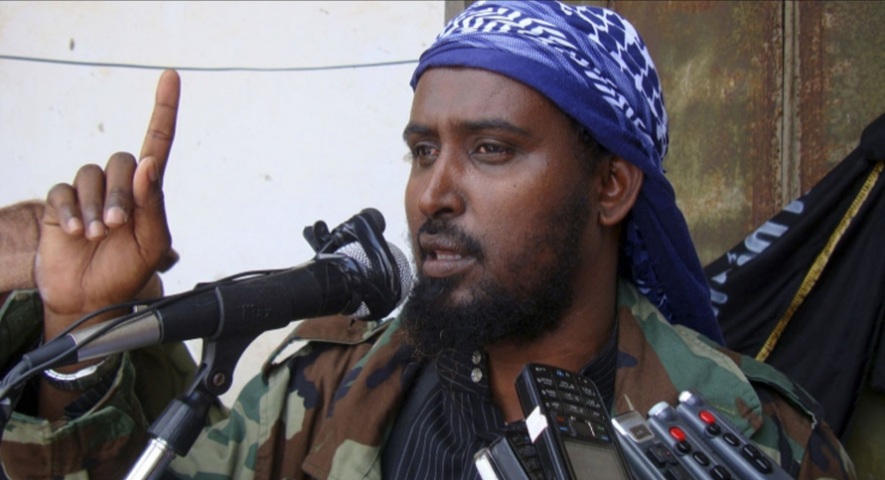
According to reliable intelligence sources, the notorious long time Spokesman of the extremist movement in Somalia, Al-Shabab, Mr. Ali Dheere, is gravely sick with cancer. The terrorist organization is reportedly seeking entry visa clearance from the Gulf State of Qatar for his emergency medical attention.

According to the source, the intelligence agencies of the Federal Government of Somalia have already secured the exit clearance for Ali Dheere from Mogadishu Airport for evacuation to Doha. Stay tuned.

https://amazon.com/author/ismailwarsame

WHY ETHIOPIA WOULD THINK TWICE TO INVADE SOMALIA AGAIN

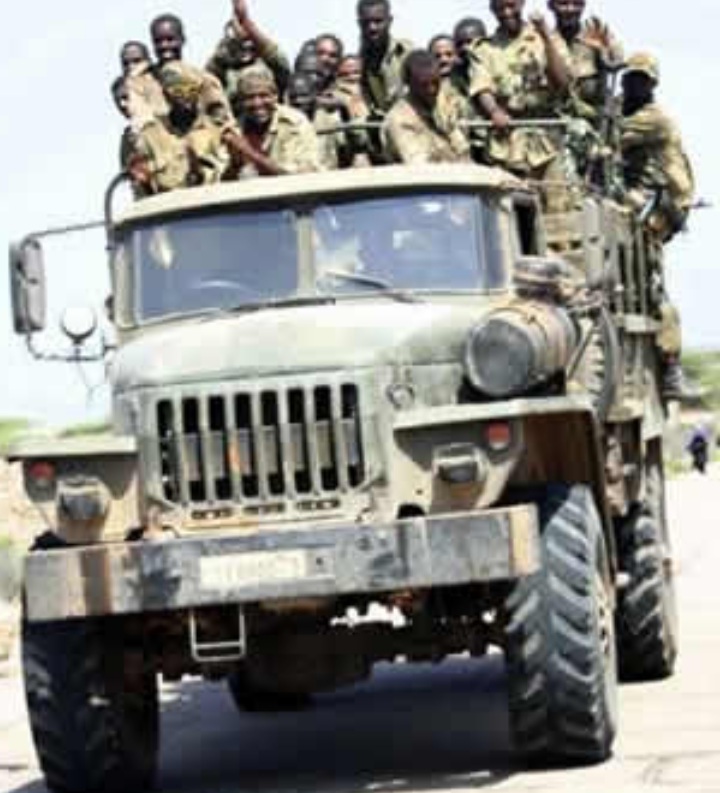
A friend of mine sent me a much circulated WhatsApp message the other day about an imminent or ongoing Ethiopian invasion of Somalia under the pretext of propping up Farmajo. I expressed my doubt about that possibility happening any time soon. My skepticism is based on the fact that Ethiopian forces had suffered heavily in Mogadishu during their occupation (2006-2009) at hands of Al-Shabab militants -they would think twice before coming back to Somalia.

To appreciate the extent of their losses and eventual defeat, I will share you a story. I wasn’t with or a member of the Transitional Federal Government (TFG), but I had volunteered to work on the release of a group of four young Somalis from Thailand prison. I was on my way to Bangkok via Addis Ababa. I flew from Mogadishu onboard a huge Ethiopian military transport aircraft full of wounded soldiers in late 2007. On the plane, the sound of moaning and crying of wounded soldiers were deadly shocking. The foul smell was suffocating and killing. Later in Addis Ababa, I had had a chance to visit the Ethiopian Ground Forces Hospital with the help of Hassan Taakilo, then the Military Affairs Coordinator at Abdullahi Yusuf’s Presidency (Villa Somalia) and his friends of TPLF military commanders on leave in Addis. By the way, based on my conversations with those TPLF military commanders from war front in Somalia, I discovered right there that, because of their long armed struggle with Mengistu Haile-Mariam Derg government, and the support they had received from Somalia then, the TPLF political/military establishment had had sympathy to Siyad Barre’s supporters and Marehan clan base. There, in the hospital, I saw hundreds, if not thousands of wounded and disabled Ethiopian soldiers brought from Mogadishu war theatre. It was the worst horror scene I had ever witnessed in my enire life.

Many Somalis don’t know about what had happened to the Ethiopians in Somalia. It was a military fiasco that shook the foundations of Melez Zenawi TPLF Government. It was an historic military defeat that would keep Ethiopia away from Somalia for a while. Somali Politicians, and especially the likes of Farmajo should know this recent history. Abyi Ahmed of Ethiopia isn’t too stupid to repeat the same historic blunder of Melez Zenawi in Somalia. Add to this, the military and political quagmire in Tigray Province of Ethiopia and its ramifications of international condemnation for war crimes and human rights violations by Abyi’s invading military with Eritrean help.

Get your copies of these best seller books at https://amazon.com/author/ismailwarsame

WDM YEARLY SUBSCRIPTION

Annual fee

$37.00