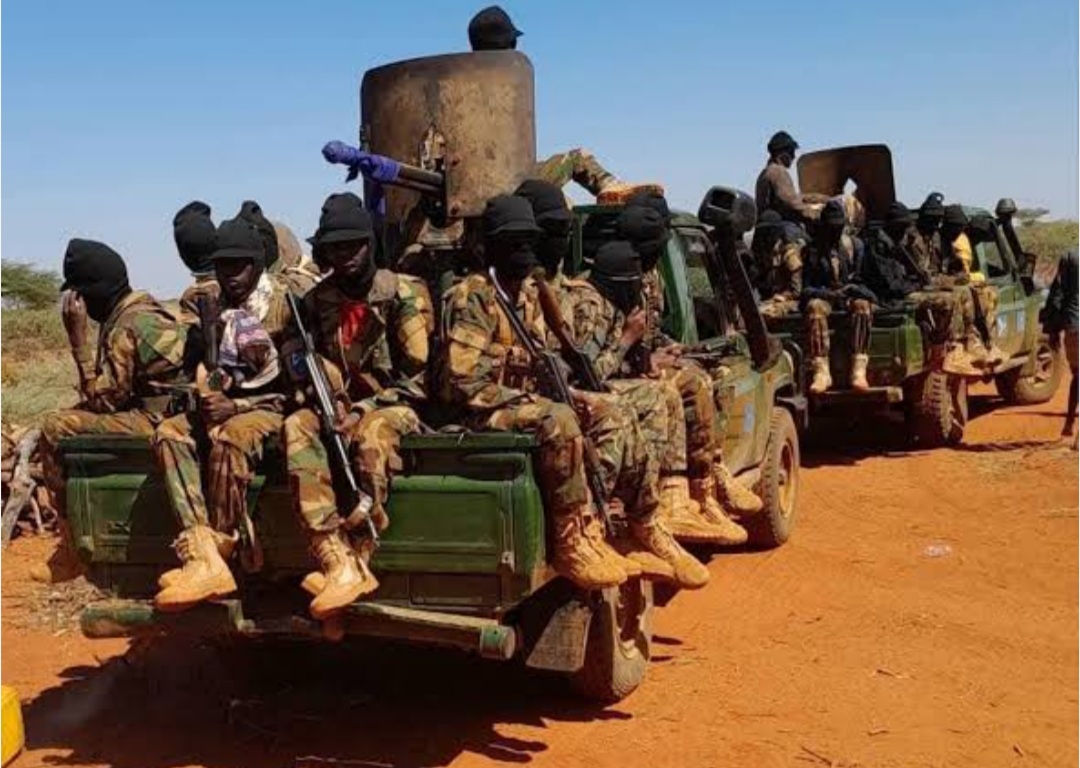
WDM EDITORIAL: Destabilization Schemes of SSC-Khatumo and Mogadishu’s Regime Against Puntland State

In recent developments, the Puntland State of Somalia is once again facing a familiar pattern of betrayal and political sabotage, orchestrated by the Mogadishu-based Federal Government and its current enablers in the SSC-Khatumo administration. As history tends to repeat itself, the people of Puntland are witnessing the reemergence of a destabilization campaign designed to fracture the state, weaken its institutions, and undermine its regional authority — all under the guise of federalism and unity.

The Historic Role of SSC in Undermining Puntland Unity

Since its inception, the SSC (Sool, Sanaag, Cayn) political project has wavered between opportunism and surrender. Over the years, successive SSC movements and leaders have promised to align with Puntland, only to defect to Somaliland under pressure or in pursuit of personal gain. This pattern has eroded public trust and has repeatedly compromised Puntland’s efforts to ensure the liberation and stability of disputed region like Sool.

Despite these betrayals, Puntland State has consistently shown restraint and political maturity. It invested blood and treasure to support the people of Laascaanood in resisting Somaliland’s military occupation. This pivotal role of Puntland helped pave the way for the emergence of the latest SSC-Khatumo administration. This new formation was expected to usher in a new era of cooperation, built on mutual respect and shared interests — particularly in securing and rebuilding the liberated territories. That cooperation, however, has been sabotaged before it even began.

SSC-Khatumo’s New Alliance with the Mogadishu Regime

Instead of honoring its historical and political connection with Puntland, the SSC-Khatumo leadership has chosen a different path: aligning itself with the Federal Government in Mogadishu, led by President Hassan Sheikh Mohamud. This regime has proven time and again to be hostile to Puntland’s autonomous status and political model. It seeks to centralize power under Mogadishu while undermining federal member states that resist domination — Puntland being the prime example.

SSC-Khatumo’s choice to bypass Puntland and instead deal directly with Mogadishu is not just a diplomatic slight; it is a dangerous political maneuver aimed at redrawing regional boundaries and upsetting the power balance. The federal regime has been emboldened by SSC-Khatumo’s support and is now actively promoting a narrative that seeks to carve Sanaag Region out of Puntland’s jurisdiction, effectively redrawing Somalia’s federal map through backdoor agreements and unconstitutional decisions.

Laascaanood: From Liberation to a Launchpad for Destabilization

Laascaanood, a town once symbolizing unity and resistance against external occupation, is now quickly becoming the center of a new political crisis. In recent weeks, the town has become a hub for destabilizing elements, flown in or funneled through Mogadishu. These include political opportunists, anti-Puntland activists, and intelligence operatives working under the cover of federal legitimacy. Their aim is clear: to transform Laascaanood into a rival political capital, capable of challenging Puntland’s governance in the regions of the north.

By hosting clandestine meetings, issuing unilateral declarations, and working with Mogadishu’s political machinery, SSC-Khatumo leaders are playing a dangerous game. They are not only undermining the sovereignty of Puntland but are also weakening the fragile trust that communities across Sool, Sanaag, and Cayn have placed in peaceful federal coexistence.

The Consequences of Political Short-Sightedness

SSC-Khatumo’s leaders must understand that the road they are on leads to disaster. By alienating Puntland and embracing Mogadishu’s power games, they risk plunging the region back into conflict, reversing hard-won gains, and exposing their own people to renewed instability. Puntland has shown remarkable patience, but its political and security institutions are fully capable of responding to threats against its territorial integrity.

If the current trajectory continues — with SSC-Khatumo acting as an extension of Hassan Sheikh Mohamud’s anti-federal regime — it will only hasten confrontation. Sanaag will not be surrendered. Puntland’s borders are not up for negotiation. Any attempt to redraw them through covert deals or misinformation campaigns will be met with firm resistance, both politically and militarily.

A Call for Accountability and Strategic Clarity

The Somali people, international partners, and regional observers must see this crisis for what it is: a federal-level conspiracy to weaken Puntland through divide-and-rule tactics. SSC-Khatumo, if it truly represents the people of Sool, Sanaag, and Cayn, must return to the table of honest dialogue with Puntland. The region’s future must be shaped by unity, not division; by cooperation, not confrontation.

Failure to heed this warning will only lead to renewed instability — and this time, Puntland will act not just in defense, but in the preservation of its legacy, borders, and the will of its people.

Conclusion: Puntland Will Stand Firm

The people and government of Puntland are alert. They are ready. They will not allow political adventurism, opportunism, or federal collusion to destroy decades of stability and unity. SSC-Khatumo’s reckless actions and Mogadishu’s sabotage campaigns will not succeed. Puntland remains the anchor of federalism, security, and institutional governance in Somalia — and no amount of scheming will change that reality.

Let this be a final call for reason. Let it also be a warning.Published by WDM Opinion Desk – Defending Puntland’s Integrity and the Truth.

Marvelous Encounter with Chinese Hospitality in Nairobi

Recently, I had the distinct pleasure of being an esteemed guest of a dear Mandarin speaking friend in Nairobi, Kenya, who generously hosted me for lunch at several fine Chinese restaurants. What began as a simple invitation quickly turned into an eye-opening cultural experience—one that left a lasting impression on my palate and spirit.

Falling in Love with Chinese Cuisine

To say I’ve fallen in love with Chinese cuisine would be an understatement. The richness, diversity, and presentation of the dishes captivated me from the very first bite. Each meal was a colorful orchestra of flavors—sweet, sour, salty, spicy—expertly balanced and served with artistry. The variety was remarkable: from steamed dumplings to sizzling, to silky soups to aromatic teas, every dish told a story of centuries-old culinary heritage.

Beyond the food itself, I was fascinated by the etiquette and tools used in Chinese dining. The graceful use of chopsticks, the traditional serving ware, and the emphasis on sharing and harmony at the table all reflected a deep-rooted culture of respect, refinement, and mindfulness. It was more than a meal—it was a ritual of community and appreciation.

Meeting the Faces Behind the Flavors

Even more enriching was the opportunity to meet my friend’s Chinese colleagues and acquaintances—professionals and workers who were both cultivated and cordial. This was my first real interaction with Chinese individuals in a social setting, and I was deeply impressed by their warmth, humility, and intellect.

Despite language and cultural differences, there was a genuine spirit of friendship and curiosity in our conversations. I learned about their work in Nairobi, their impressions of Kenya, and their personal journeys. They, in turn, were interested in my background and perspectives as far as body could convey. It was a reminder of how shared meals can bridge cultures and create meaningful human connections.

Gratitude to a Generous Friend

None of this would have been possible without the generosity of my friend, who thoughtfully extended these invitations and made sure I felt welcome in every setting. It was not just about food—it was about hospitality, sharing, and opening doors to new experiences. I am sincerely grateful for the time, effort, and kindness that went into making me feel like a valued guest.

A New Chapter of Curiosity

This experience has opened a new chapter in my appreciation for Chinese culture and hospitality. I look forward to exploring more about their traditions, cuisine, and community here in Nairobi and beyond. It is often said that food is a universal language—and now I know this to be true.

To my friend: thank you for the marvelous entertainment and for introducing me to a world I am eager to know more about.

WDM EDITORIAL: REGIONAL STATE PRESIDENT SAID ABDULLAHI DENI’S ANTI-DEVELOPMENT POLICY TOWARDS MUDUGH REGION BACKFIRES ON HIM

President Said Abdullahi Deni of Puntland is learning the hard way that calculated political neglect and coercion cannot subdue a community’s rightful aspiration for development and dignity. For years, President Deni has cynically used vital international donor-funded projects meant for Mudugh as a political bargaining chip in his disputes with the Federal Government of Somalia. In doing so, he has betrayed not only the development hopes of the region but also the trust of the people of Mudugh whose loyalty and sacrifice he has taken for granted.

Among the most glaring examples of this sabotage is the deliberate freezing of key infrastructure projects such as the Galkayo-Garowe, Galkayo-Galdogob, and Gara’ad road corridors—critical arteries for trade, mobility, and economic integration. These roads, funded by international partners and multilateral institutions, were earmarked to boost regional equity and support the long-marginalized Mudugh region. However, President Deni has weaponized these lifelines to serve his political grievances, essentially holding development hostage for personal political leverage.

Perhaps even more insulting is his blatant obstruction of local initiatives, particularly when the Mudugh diaspora and business community sought to rehabilitate Galkayo Airport using their own resources. Not only did he block their efforts, but he reportedly dismissed their need entirely, saying, “Galkayo doesn’t need an airport. Its residents can use the airports of Garowe and Bossaso instead.” This statement, if true, reflects a deep contempt for the basic rights and regional pride of the Mudugh people—people who have contributed immensely to the stability of Puntland, including sending their sons and daughters to the frontlines in the fight against ISIS in the Calmiskaad Mountains.

Meanwhile, basic services such as access to clean water and efforts to tackle environmental pollution in Galkayo have been ignored under his leadership. Galkayo, the second most populous city in Puntland and a major commercial hub, continues to suffer from dilapidated infrastructure, poor sanitation, and systemic underinvestment—all symptoms of an intentional policy of neglect.

Now, President Deni is facing the consequences of his actions. The Mudugh community is rising up. From elders to youth, from local leaders to diaspora members, the people are pushing back against his authoritarianism and demand accountability. In response, Deni has reportedly resorted to threats, intimidation, and desperate phone calls to silence this growing resistance. But the tide has already turned. His tactics, once effective in stifling dissent, are now falling flat in the face of a united community fed up with betrayal.

A Warning to the Mudugh Authorities:

The momentum of the people must not be stifled. This is a defining moment for Mudugh. Do not interfere with the community’s right to speak out, debate, and hold their leaders accountable. To silence these voices would be to repeat the mistakes of Deni’s administration. It is time for a transparent, grassroots conversation about stalled development, frozen funds, and unmet promises.

A Final Message to President Deni:

It is not too late to change course—but the window is rapidly closing. Unfreeze the donor-funded development projects in Mudugh before the international community loses patience and redirects those funds to more cooperative and deserving regions. The people of Mudugh are not begging for favors; they are demanding their share of development and dignity, long denied but never forgotten.

Said Abdullahi Deni’s legacy is at a crossroads. He can choose to be remembered as a divider who betrayed his own citizens for political gamesmanship—or he can finally rise to the occasion, correct his wrongs, and act like a leader for all regions under Puntland’s care. The choice—and the consequences—are his.

WDM Media
Voice of the People. Mirror of the Nation.

Hitler Used a Bogus Crisis of ‘Public Order’ to Make Himself Dictator – The Atlantic

https://www.theatlantic.com/ideas/archive/2025/06/hitler-public-order/683098/

Emirates Policy Center | Expansion of the Islamic State in Puntland: A New Round of Jihadist Infighting in Somalia

https://epc.ae/en/details/featured/expansion-of-the-islamic-state-in-puntland-a-new-round-of-jihadist-infighting-in-somalia

Somali Opposition to the Federal Government: Strengths, Weaknesses,and Key Actors

Introduction

Since the establishment of the Federal Government of Somalia (FGS) in 2012, the nation has grappled with persistent opposition stemming from federal member states (FMS), political alliances, civil society, and armed groups. This opposition reflects deep-rooted tensions over governance structures, resource allocation, and national identity. Understanding the dynamics of this opposition is crucial for Somalia’s path toward stability and unity.

1. Historical Context and Evolution of the Opposition

The roots of opposition to the FGS trace back to the collapse of the central government in 1991, leading to the emergence of clan-based administrations and regional entities. The 2012 provisional constitution introduced a federal system intended to balance power between Mogadishu and the regions. However, the implementation of federalism has been fraught with challenges, leading to friction between the central government and FMS over issues like resource sharing, security, and political representation.

2. Main Forms of Opposition

A. Federal Member States (FMS) as Opposition

FMS have often acted as de facto opposition to the FGS, asserting their autonomy and challenging central authority:

Puntland: Established in 1998, Puntland has been a vocal critic of the FGS, especially concerning constitutional reforms perceived to centralize power. In March 2024, Puntland announced its withdrawal from the federal system, citing unilateral constitutional amendments by the FGS  .

Jubbaland: Under President Ahmed Mohamed Islam (Madobe), Jubbaland has clashed with the FGS over electoral processes and autonomy. In November 2024, Jubbaland suspended ties with the FGS following disputes over regional elections and constitutional amendments  .

B. Political Alliances and Movements

Political figures and former leaders have formed alliances to challenge the FGS:

Forum for National Parties (FNP): Founded in 2019 by former Presidents Sharif Sheikh Ahmed and Hassan Sheikh Mohamud, the FNP advocates for political reforms and has been critical of the FGS’s approach to federalism and elections  .

Council of Presidential Candidates (CPC): Formed during the 2021 electoral crisis, the CPC opposed term extensions and called for transparent elections, highlighting the need for consensus between the FGS and FMS  .

C. Civil Society and Media

Journalists, scholars, and civil society organizations have played a role in opposing the FGS by advocating for transparency, accountability, and inclusive governance. However, they often face challenges such as censorship and limited freedom of expression.

D. Armed Opposition: Al-Shabaab

While not part of the political opposition, Al-Shabaab remains a significant threat to the Somali state, exploiting governance vacuums and conflicts between the FGS and FMS to expand its influence.

3. Strengths of the Opposition

Regional Autonomy: FMS like Puntland and Jubbaland have established functioning administrations, providing them with leverage in negotiations with the FGS.

Territorial Control: Control over strategic regions allows FMS to assert authority and resist centralization efforts.

Public Support: In some regions, local populations support FMS leaders who they perceive as better representing their interests compared to the FGS.

International Engagement: FMS have engaged with international actors independently, seeking support and investment, which enhances their political standing.

4. Weaknesses of the Opposition

Fragmentation: The opposition lacks a unified agenda, with differing priorities among FMS and political alliances, leading to inconsistent strategies.

Clan-Based Politics: Reliance on clan affiliations can undermine national cohesion and limit the appeal of opposition movements beyond specific groups.

Limited Institutional Capacity: Some FMS struggle with governance challenges, including limited administrative capacity and financial resources.

Susceptibility to External Influence: Engagements with foreign actors can lead to perceptions of external interference, potentially undermining legitimacy.

5. Key Actors in the Somali Opposition

Said Abdullahi Deni (Puntland President): A prominent critic of the FGS’s centralization efforts, advocating for greater regional autonomy.

Ahmed Mohamed Islam (Madobe) (Jubbaland President): Opposes FGS interventions in regional affairs, emphasizing the importance of respecting FMS autonomy.

Sharif Sheikh Ahmed (Former President): Leader of the FNP, advocating for political reforms and inclusive governance.

Hassan Sheikh Mohamud (Current President): Previously part of the opposition during Farmaajo’s tenure, now leading efforts to reconcile with FMS while facing criticism over constitutional reforms.

6. International Dimensions

International actors have influenced Somalia’s political landscape:

United States: Has engaged with both the FGS and FMS, including military cooperation with Puntland in counterterrorism efforts  .

Gulf States: Countries like the UAE and Qatar have supported different Somali factions, contributing to regional rivalries and political alignments  .

African Union and United Nations: Have facilitated dialogues and supported peacekeeping missions, aiming to stabilize the country and promote governance reforms.

7. Conclusion and Outlook

The opposition to Somalia’s Federal Government is multifaceted, encompassing regional administrations, political alliances, and civil society actors. While the opposition has strengths in regional autonomy and public support, challenges such as fragmentation and clan-based politics persist. Moving forward, fostering inclusive dialogue, respecting the autonomy of FMS, and implementing constitutional reforms through consensus are essential steps toward national unity and stability.

Somalia–Turkey Relations and the Geopolitical Contest in the Horn of Africa

In a small teashop in Garowe, the capital of Puntland, an intense debate reflects the broader currents of international politics playing out in Somalia. The topic? Turkey’s deepening presence in Somalia and the strategic rivalries involving the UAE, Qatar, the United States, and the specter of rising threats from geopolitical instability in the Red Sea and Gulf of Aden. Somalia, a nation long beset by internal conflict, is now an epicenter of great power competition in the Horn of Africa.

I. Turkey’s Strategic Entry into Somalia

Turkey’s modern engagement with Somalia began in earnest in 2011, when then-Prime Minister Recep Tayyip Erdoğan visited Mogadishu at the height of a famine crisis. His visit was the first by a non-African leader in over two decades and marked a significant shift in Turkey’s foreign policy — a blend of humanitarian outreach, religious solidarity, and strategic ambition. Ankara launched a range of humanitarian and development initiatives, from building hospitals and roads to opening its largest embassy in Mogadishu.

But what started as humanitarian support quickly evolved into a robust, long-term strategic presence:

Military cooperation: In 2017, Turkey opened Camp TURKSOM in Mogadishu, one of its largest overseas military bases. The facility trains Somali National Army (SNA) units, helping shape a Turkish-aligned military core within Somalia.

Economic investment: Turkish companies control key infrastructure, including Mogadishu’s main port and airport. They have also been active in construction, energy, and education sectors.

Diplomatic leverage: Turkey has positioned itself as a key external actor in Somalia’s politics, often bypassing traditional Western donors and institutions.

II. Centralization vs Federalism: The Critique of Turkey’s Policy

One of the central critiques emerging from within Somalia — echoed in the Garowe debate — is Turkey’s over-reliance on Mogadishu’s central government. This approach, critics argue, ignores the realities of Somalia’s federal structure, where semi-autonomous member states like Puntland, Jubaland, and Galmudug wield significant power and territorial control.

Turkey’s preference for working exclusively with the federal government has created friction with federal member states. These entities often view Ankara’s approach as undermining Somalia’s federal model and centralizing power in Mogadishu, a city with tenuous control beyond its immediate surroundings. Turkey’s alignment with weak or embattled central governments, as seen during the Farmaajo administration, has further exacerbated distrust in regions like Puntland, where political independence and territorial autonomy are zealously guarded.

III. Turkey’s Enduring Footprint and Realpolitik

Despite critiques, another view — espoused in the same debate — argues that Turkey has already cemented a near-permanent presence in Somalia. Its deep institutional ties, military base, and control over revenue-generating infrastructure mean that even if the federal government collapses or is replaced by another force, including Al-Shabaab, Turkey is likely to retain its foothold.

This perspective reflects a realist understanding of foreign policy: Turkey is in Somalia not merely as a humanitarian actor but as a geopolitical competitor seeking influence in a strategic maritime corridor. Somalia offers Turkey a base on the western flank of the Indian Ocean, adjacent to the Bab el-Mandeb Strait, one of the world’s most critical shipping chokepoints.

IV. The Gulf Rivalry: UAE, Qatar, and the Shadow of Proxy Politics

Turkey’s position in Somalia cannot be understood without examining the fierce geopolitical rivalry playing out between Turkey-Qatar on one side and the UAE-Saudi Arabia on the other.

UAE’s strategy: The UAE has pursued a “federal-first” strategy, cultivating ties with Puntland and Somaliland, where it has built the Berbera port and military facilities. Abu Dhabi views Turkish and Qatari influence in Mogadishu as a threat to its broader Red Sea and Indian Ocean strategy.

Qatar’s alignment: Doha, often aligned with Turkey, has funded political actors in Mogadishu and has supported Islamist-leaning political movements such as Damul Jadiid — a factor that aligns poorly with UAE’s secular authoritarian model.

The result is a complex web of local and regional alliances, with Somali factions often serving as proxies for competing Gulf powers. The rivalry spills into domestic politics, clan dynamics, and even armed conflicts.

V. The United States and the Resource Factor

Adding another layer is the role of the United States. Although historically supportive of Somalia’s federal government, Washington has become increasingly wary of foreign actors such as Turkey, China, and the Gulf states entrenching themselves in Somalia’s institutions and infrastructure. Of particular concern is the potential exploitation of untapped offshore hydrocarbons — believed to exist in Somalia’s Indian Ocean waters.

U.S. officials are especially cautious of Turkey gaining exclusive energy rights in Somalia, particularly in light of Ankara’s assertive energy policies in the Eastern Mediterranean. American interests also include counterterrorism, maritime security, and preventing Chinese or Russian encroachment in this strategic corridor.

VI. The Red Sea, Gulf of Aden, and the Bigger Chessboard

Beyond Somalia itself, the Horn of Africa is embedded in a larger geopolitical theater. The Red Sea and the Gulf of Aden are now areas of intense interest due to:

Increased naval traffic and global trade routes.

The militarization of strategic ports (Djibouti, Berbera, Assab).

Rising Houthi-Iranian influence in Yemen, directly across the water from Somalia.

New military alliances, such as the Red Sea Council (Saudi Arabia, Egypt, etc.), seeking to control maritime routes and exclude rival powers like Turkey and Iran.

Somalia’s long coastline — the longest in mainland Africa — makes it a pivotal node in this maritime network. Any power with influence in Somalia has a say in broader Indian Ocean geopolitics.

VII. Conclusion: Somalia as a Geopolitical Battleground

The debate in the Garowe teashop captures a microcosm of a larger truth: Somalia, once seen solely through the lens of state failure and humanitarian crisis, is now a stage for global strategic competition. Turkey’s presence is deep and likely enduring, but it is also challenged by Emirati pragmatism, Qatari alliances, American caution, and Somali federal complexity.

In the years to come, the key questions will be:

Can Somalia navigate these external rivalries without becoming a client state of any particular axis?

Will Turkey broaden its engagement beyond Mogadishu to federal states like Puntland, or continue to alienate regional power centers?

How will hydrocarbons, port politics, and military rivalries reshape Somali sovereignty?

Somalia’s future lies not just in peace-building and governance reform but in managing its geography — a blessing and a curse in the current world order.

The Bosaso Base: Security Saviour or Sovereignty Threat in Somalia’s Puntland?

By WDM
May 18, 2025


In the bustling port city of Bosaso on the Gulf of Aden, Puntland’s economic heartbeat, a quiet storm is brewing. Along its sun-scorched coastline, foreign flags fly over a sprawling military facility—a base reportedly hosting U.S. intelligence operatives, Emirati naval and military assets, and drone launchpads targeting ISIS militants in nearby Calmiskaad. While officials tout it as a critical tool for regional security, whispers of backroom deals, civilian risks, and shadowy missions beyond Puntland’s borders demand a closer look. Is this base a lifeline for stability or a ticking time bomb for Somali sovereignty? Let’s unpack the debate.


Whose Agenda Rules in Bosaso?

Foreign military bases are rarely just about “security.” In Bosaso, two global heavyweights—the U.S. and UAE—are playing very different games.

  • The U.S. Counterterrorism Playbook: Washington’s focus is laser-sharp: degrade ISIS-Somalia, a faction that’s carved out hideouts in Puntland’s mountains. Drone strikes from Bosaso have reportedly pummeled insurgent positions, but as we’ve seen in Yemen and Afghanistan, such tactics can backfire. Civilian casualties breed resentment, and “surgical” strikes often leave political wounds that fester.
  • The UAE’s Grand Chessboard: For the Emirates, Bosaso is a strategic jewel in its crown of Horn of Africa investments. With ports in Eritrea and Yemen already under its belt, the UAE seems intent on dominating trade routes and countering rivals like Turkey and Qatar. But at what cost? Leaked reports suggest murky agreements with Puntland’s leadership, including sweetheart deals for port access and presidential security. Critics argue this isn’t aid—it’s a transaction.

The Tightrope Walk: Security vs. Somali Sovereignty

Puntland’s government, which operates semi-independently from Mogadishu, faces a brutal calculus. Partnering with foreign powers brings cash, weapons, and intelligence to fight groups like ISIS and Al-Shabaab. But reliance on outsiders risks turning Puntland into a pawn in someone else’s war.

  • The Presidential Bubble: The fact that Puntland’s president now resides in the military base speaks volumes. While his safety may be guaranteed, what about the people? Locals have little say in deals struck behind closed doors, and rumours of U.S.-led strikes spilling into neighbouring regions could spark backlash.
  • Mission Creep: A Slippery Slope: Media reports hint at operations stretching beyond Puntland’s borders. If true, this risks inflaming tensions with Somalia’s federal government and neighbouring states in the sub-region. Without clear rules or oversight, the base could become a hub for proxy wars, not peace.

Risks of Foreign Presence: More Than Just Bombs?

Foreign bases often come with unintended consequences:

  1. Blowback: Concentrating foreign troops and drones in Bosaso makes it a prime target for insurgent attacks. Civilians, not soldiers, often pay the heaviest price.
  2. Proxy Wars: The UAE’s rivalry with Turkey (which backs Mogadishu) could turn Puntland into a battleground for regional power plays.
  3. Eroding Trust: Secrecy fuels distrust. If locals view the base as a tool of foreign exploitation—not protection—it could fuel the very extremism it aims to crush.

A Better Path Forward?

Security is vital, but it can not come at the cost of Somali sovereignty. Here’s what’s missing from the Bosaso equation:

  • Transparency: Puntland’s government must disclose the terms of its foreign partnerships. Who’s funding the base? What’s the scope of operations?
  • Accountability: Civilian harm from drone strikes must be investigated and compensated. No more “oops” apologies.
  • Invest in People, Not Just Drones: Jobs, schools, and hospitals do more to counter extremism than any drone. Why is 90% of foreign aid still military-focused?

Final Thoughts: Who Wins, Who Loses?

The Bosaso base is a double-edged sword. For now, it may keep ISIS at bay and line the pockets of a few elites. But if history teaches us anything, it’s that foreign military interventions in Somalia rarely end well. Without transparency, equity, and local buy-in, Bosaso’s base risks becoming another chapter in Somalia’s long story of external exploitation—dressed up as a “security partnership.”

What do you think? Is foreign military presence a necessary evil in fragile states like Somalia or a recipe for disaster? Drop your thoughts in the comments.

Background information

The United Arab Emirates (UAE) has maintained a notable presence in Bosaso, the commercial hub of Somalia’s Puntland State, since 2017.  This involvement encompasses both maritime security initiatives and infrastructure development.

UAE Presence in Bosaso

The UAE has been instrumental in supporting the Puntland Maritime Police Force (PMPF), a regional security entity established in 2010 to combat piracy.  This support includes training, equipment provision, and operational assistance. 

In addition to security collaborations, the UAE, through its subsidiary P&O Ports, secured a 30-year concession in 2017 to manage and develop the Port of Bosaso.  The development plans involve constructing a 450-meter quay, dredging to a depth of 12 meters, and enhancing port infrastructure to accommodate larger vessels. 

Reports of Radar Installation

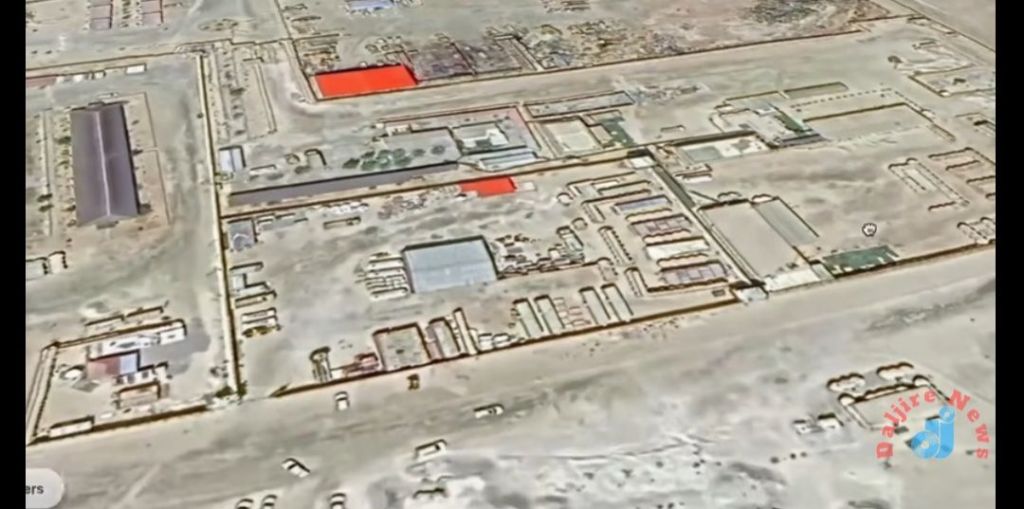
In April 2025, open-source intelligence (OSINT) analysts reported the presence of a structure near Bosaso’s UAE-operated airbase that resembles an Israeli-manufactured ELM-2084 Multi-Mission Radar system.  This radar is known for its capabilities in tracking drones, missiles, and aircraft over distances up to 470 kilometres.  The installation, if confirmed, could enhance surveillance and air defence in the region. 

Official Denials and Regional Dynamics

The Puntland government has officially denied the existence of any UAE military base or radar installations in Bosaso.  Minister of Information, Mahmoud Aydid Dirir, labelled the reports as “fabricated propaganda” aimed at undermining Puntland’s stability and progress in counter-terrorism efforts. 

These developments occur amid complex regional dynamics, with various international actors seeking strategic footholds in the Horn of Africa.  The UAE’s activities in Bosaso reflect its broader strategy to secure maritime routes and expand its influence in East Africa.

⚠️ Conclusion

While the UAE’s involvement in Bosaso is evident through its support for the PMPF and port development projects, reports of advanced military installations like the ELM-2084 radar remain unconfirmed and are officially denied by Puntland authorities.  The situation underscores the intricate interplay of local governance, foreign interests, and regional security concerns in Somalia’s northeastern corridor.

Opinion: Mohamed Abdullahi Farmaajo Is No Role Model for Hassan Sheikh Mohamud

(C) 2025 WDM Copyright

The suggestion that Mohamed Abdullahi Farmaajo could serve as a political blueprint for Hassan Sheikh Mohamud is not merely misguided—it risks erasing the lessons of Somalia’s recent history. While both leaders have occupied the presidency, their approaches to governance, constitutional integrity, and national cohesion diverge sharply. To position Farmaajo as a model for Mohamud is to endorse a legacy of authoritarianism, foreign policy recklessness, and clan-based division—a path incompatible with Somalia’s fragile democratic aspirations.

1. Authoritarian Centralization vs. Sectarian Fragmentation

Farmaajo’s tenure was defined by a systematic erosion of democratic norms. His administration weaponized state institutions to silence critics, imprison journalists, and stifle opposition through tactics like the 2018 electoral meddling in Galmudug and Jubbaland. By centralizing power in Mogadishu, he destabilized Somalia’s federal framework, undermining hard-won progress toward inclusive governance.

Hassan Sheikh Mohamud, while navigating Somalia’s complex clan dynamics, has faced accusations of favoring his Hawiye lineage, particularly in appointments and resource allocation. However, unlike Farmaajo’s overt power grabs, Mohamud’s challenges stem from the perennial tension between clan loyalty and national unity—a struggle inherent to Somalia’s political landscape. Emulating Farmaajo’s autocratic playbook would only exacerbate these divisions rather than resolve them.

2. Foreign Policy Gambles vs. Diplomatic Pragmatism

Farmaajo’s alignment with Qatar and Turkey alienated traditional partners like the UAE and Western donors, polarizing Somalia’s foreign relations during a critical period of state-building. His 2018 agreement ceding Somali airspace management to Ethiopia—crafted in secrecy without parliamentary oversight—exposed a blatant disregard for sovereignty. This deal, framed as “regional cooperation,” set a perilous precedent for external interference.

Mohamud, by contrast, has pursued a more balanced diplomatic strategy, reaffirming ties with multilateral institutions like the African Union while cautiously engaging Gulf partners. His administration’s support for the Somali National Army’s offensive against al-Shabaab, backed by international allies, reflects a pragmatic approach to security—one that avoids Farmaajo’s reliance on foreign patronage.

3. Clan Populism vs. Incremental Reconciliation

Farmaajo’s rhetoric of “Somali nationalism” often served as a veil for sub-clan favoritism, deepening societal fractures. His manipulation of clan loyalties, exemplified by the politicization of security forces and federal agencies, prioritized short-term control over long-term reconciliation.

Mohamud’s efforts, though imperfect, have leaned toward dialogue. His handling of the SSC-Khatumo crisis—a breakaway region challenging Puntland’s authority—illustrates this contrast. Where Farmaajo ignored the 2019 Las Anod protests, enabling violent crackdowns, Mohamud has cautiously supported SSC-Khatumo’s quest for representation, framing it as a constitutional rather than partisan issue. This shift, while contentious, acknowledges local agency—a marked departure from Farmaajo’s top-down coercion.

4. Constitutional Sabotage vs. Institutional Reform

Farmaajo’s most damaging legacy lies in his assault on electoral norms. His 2021 bid to illegally extend his term via a rubber-stamp parliament ignited street battles in Mogadishu, threatening a return to civil war. Such brinkmanship exposed a willingness to trade stability for personal power.

Mohamud, meanwhile, has cautiously advanced constitutional reforms, including controversial amendments to Somalia’s electoral model. While critics argue these changes centralize power, they also aim to universalize suffrage—a step toward one-person, one-vote elections absent since 1969. The difference? Farmaajo sought to bend institutions; Mohamud, however haltingly, seeks to rebuild them.

Conclusion: Charting a New Path Beyond Populism

Somalia’s next chapter demands leaders who transcend the zero-sum politics of the past. Farmaajo’s tenure—a case study in the perils of populism—offers no roadmap for progress. His foreign gambles, clan patronage, and disdain for federalism exacerbated the very crises he vowed to solve.

Hassan Sheikh Mohamud need not replicate these failures. Instead, his administration must prioritize inclusive dialogue, strengthen judicial independence, and depoliticize security forces. The SSC-Khatumo question, for instance, should be resolved through constitutional mechanisms, not backroom clan deals.

Somalia’s future hinges on rejecting the false choice between strongman rule and sectarian fragmentation. Leaders must embrace compromise over coercion, transparency over secrecy, and nationhood over clanhood. Farmaajo’s legacy is a warning, not a model—and Mohamud’s success depends on learning from it, not reviving it.

Somalia deserves leaders who build bridges, not walls. The stakes are too high for anything less

WHITE PAPER Reframing Somalia’s State Architecture: Confederation as a Strategic Response to Post-Federal Paralysis

Prepared for Somali Policymakers, Constitutional Experts, and Academic Stakeholders
May 2025

Executive Summary
Three decades after the collapse of central authority, Somalia remains trapped in a cyclical crisis of political fragmentation, weak institutions, and contested sovereignty. The federal model, formally adopted to distribute power and promote reconciliation, has not delivered the intended outcomes. The persistent gap between constitutional theory and governance practice has produced a stalemate, enabling extremist actors to exploit the resulting vacuum.

This paper proposes that Somali leaders consider a transition from federalism to confederation as a pragmatic response to political paralysis. A confederal framework could provide the necessary flexibility for self-governance while preserving a shared national identity, laying the groundwork for long-term stabilization.

1. Background: Post-Conflict Governance in Somalia
The post-1991 Somali political agenda prioritized five critical goals:

National reconciliation among fragmented communities and regions.

Conflict resolution and peace-making to end violence.

Equitable power-sharing across clans and territories.

Anti-corruption and public accountability.

Reconstruction of national institutions

While some progress has been made, especially with external support, foundational challenges persist due to unresolved political structure.

2. The Federal Project: Ambitions and Breakdown
Somalia’s Provisional Constitution (2012) institutionalized federalism as a compromise mechanism. In practice, implementation has stalled due to:

Ambiguity in constitutional powers between federal and member states.

Mogadishu-centric centralism, often undermining local autonomy.

Irregular recognition of federal member states (e.g., SSC-Khatumo, Somaliland).

Interference in regional elections and internal affairs by the federal government.

Incomplete constitutional review process and absence of judicial enforcement mechanisms.

These systemic weaknesses have led to growing disillusionment among stakeholders.

3. Political Paralysis and National Security Risks

Electoral gridlocks have become normative rather than exceptional.

Security coordination failures have emboldened extremist groups like Al-Shabaab and ISIS.

State capture and clientelism are widely reported in both federal and regional institutions.

Citizens increasingly view both the federal and state authorities as illegitimate.

Without a structural reset, the federation may continue to unravel from within.

4. The Confederation Option: Conceptual Foundations
Confederation offers a flexible model based on voluntary association of sovereign entities, with minimal central authority. This could entail:

Shared responsibilities in foreign policy, national defense, and currency

Full autonomy for member states in domestic governance, taxation, security

Coordinated rather than hierarchical policymaking

Structured opt-in mechanisms for policy harmonization

Comparative Lessons: Historical precedents (e.g., early Swiss Confederation, Senegambia, the United Arab Emirates to some extent) suggest that confederations can serve as transitional frameworks in post-conflict or diverse societies.

5. Policy Rationale for Somali Confederation

Current Challenges of Federalism:

Incomplete and contested autonomy for member states

Centralized implementation bottlenecks

Weak national ownership and political legitimacy

Zero-sum competition among political elites

High potential for conflict due to power centralization

Potential Advantages of Confederation:

Guaranteed and formalized regional autonomy

Decentralized flexibility in governance

Stronger local accountability and legitimacy

Incentives for negotiated cooperation over competition

Reduced conflict through clearly defined and shared sovereignty

6. Risks and Mitigation Strategies

Potential Risks:

Fragmentation into mini-states

Diplomatic isolation of the central authority

Resource inequalities among regions

Misuse of confederation as a step toward secession.

7. Recommendations for Policymakers and Researchers

1. Launch a National Commission on State Architecture Reform, including confederalism as a legitimate option.

2. Fund academic studies and policy dialogues across universities and think tanks to analyze comparative confederation models.

3. Revise the constitutional review agenda to include confederation as a transitional or permanent framework.

4. Engage in inclusive consultations with unrecognized or marginalized regions.

5. Negotiate a compact on shared sovereignty, drawing from international mediation support if needed.

8. Conclusion:

The Strategic Imperative of Rethinking Unity
Somalia’s struggle is not with federalism alone but with the assumptions underpinning its governance model. Confederation does not signify disintegration—it offers an opportunity to rebuild legitimacy from the ground up, turning imposed unity into negotiated coexistence.

Inaction risks entrenching the current deadlock and empowering non-state actors further. Policymakers and scholars must now lead a proactive, evidence-driven exploration of Somalia’s next constitutional chapter.

Prepared by:
Ismail Warsame/ Warsame Digital Media
iwarsame@ismailwarsame.blog
For distribution to Somali Federal Government, Federal Member States, Constitutional Review Committee, Somali Research Community.

Trump’s Gulf Tour: Power, Women, and the Politics of Optics

https://ismailwarsame.substack.com/p/trumps-gulf-tour-power-women-and

The BRICS in Trouble: The Global Geopolitical Shift After Trump’s Gulf Visit and U.S. Strategic Resurgence

https://ismailwarsame.substack.com/p/the-brics-in-trouble-the-global-geopolitical

A Fractured Federation: Southwest State’s Final Stand and Somalia’s Looming Disintegration

https://open.substack.com/pub/ismailwarsame/p/a-fractured-federation-southwest?utm_source=share&utm_medium=android&r=5b23go

Analytical Report: U.S. Response to President Hassan Sheikh Mohamud’s Unilateral Governance Measures in Somalia

https://ismailwarsame.substack.com/p/analytical-report-us-response-to

Report on the Political Implications of SSC-Khatumo’s Alignment with President Hassan Sheikh Mohamud’s Administration

May 2025

Prepared by WDM

Executive Summary

This report examines the political and strategic implications of the recent alignment between SSC-Khatumo and President Hassan Sheikh Mohamud’s federal government. This development is analyzed in the broader context of Somalia’s federal dynamics, inter-regional relations, and the symbolic and practical ramifications of SSC-Khatumo’s emerging role within the federal framework. While the move has been seen as a symbolic victory for SSC-Khatumo, it also exposes the fragile nature of federalism in Somalia and the complex interplay between legitimacy, recognition, and political leverage.

1. Introduction

The emergence of SSC-Khatumo as a political administration in northern Somalia has altered the federal landscape. Following its military victory over Somaliland forces and the liberation of Sool, Sanaag, and Cayn (SSC) territories, SSC-Khatumo has moved swiftly to assert itself within Somalia’s federal structure. Its recent political alignment with President Hassan Sheikh Mohamud’s administration marks a turning point with both opportunities and significant complications

2. Background and Context

SSC-Khatumo was born out of years of political marginalization, inter-regional contestation, and grassroots mobilization. Its roots lie in community resistance against both allegedly Puntland’s neglect and Somaliland’s expansionist policies. With the defeat of Somaliland forces in 2023–2024 with the assistance of Puntland State, SSC-Khatumo declared itself an autonomous administration seeking formal integration into the Somali federal system.

Simultaneously, the federal government under President Hassan Sheikh Mohamud has faced increasing isolation from influential federal member states (FMSs) like Puntland and Jubaland. This has left Villa Somalia with a diminished political coalition and a pressing need for new allies.

3. Analysis of SSC-Khatumo’s Alignment

3.1. Symbolic Recognition

SSC-Khatumo’s entry into the political orbit of Villa Somalia carries symbolic weight. It is viewed as a validation of its self-declared authority and an acknowledgment of its role in safeguarding Somali unity. The comparison to the Banadir Administration—Mogadishu’s local government entity without full FMS status—underlines the initial limitations of this recognition but still marks a step up from complete exclusion.

3.2. Practical Benefits and Risks

While symbolic recognition is important, practical benefits remain elusive. SSC-Khatumo lacks clear federal member state status and thus does not enjoy the same constitutional protections or budgetary entitlements as recognized FMSs. Furthermore, its relationship with the central government may expose it to co-optation risks, potentially undermining its grassroots legitimacy.

3.3. Proxy Representation of Puntland and Jubaland

In the vacuum left by Puntland and Jubaland, SSC-Khatumo is being perceived—rhetorically or otherwise—as a substitute voice in national politics. This dynamic places an unfair burden on a nascent administration and could invite tension with more established FMSs, particularly if SSC-Khatumo is seen as an instrument of Villa Somalia’s centralization agenda.

4. Implications for Somali Federalism

4.1. Fragility of the Federal System

The Somali federal model remains underdeveloped, and the selective recognition of regional entities exacerbates tensions. SSC-Khatumo’s ambiguous status is indicative of a system that lacks standardized criteria for inclusion, recognition, and political representation.

4.2. Risks of Political Fragmentation

Without a coherent framework, the piecemeal integration of new administrations could fuel further fragmentation. SSC-Khatumo’s rapid inclusion, juxtaposed with the exclusion of existing FMSs from key national processes, could provoke institutional instability and heighten inter-regional rivalries.

5. Geopolitical and Strategic Considerations

SSC-Khatumo’s emergence also affects Somalia’s geopolitical positioning. It challenges Somaliland’s claims over disputed territories, potentially reshaping diplomatic narratives. Moreover, its alignment with Villa Somalia could be leveraged in regional and international engagements, particularly regarding aid, security cooperation, and constitutional reform.

However, the symbolic recognition of SSC-Khatumo by the Federal Government could intensify the territorial disputes between Puntland and Somaliland. It challenges existing claims, alters political alliances, and adds complexity to Somalia’s federal dynamics. Resolving these disputes will require careful negotiation and a commitment to inclusive dialogue among all stakeholders

6. Recommendations

For the Federal Government:

Clarify SSC-Khatumo’s status within the federal constitution.

Ensure equitable resource distribution and institutional support.

Avoid politicizing the administration’s alignment for short-term gains.

For SSC-Khatumo:

Maintain independence in local governance to retain grassroots legitimacy.

Engage Puntland and Jubaland to avoid regional alienation.

Advocate for formal federal recognition through legal and political channels.

For International Partners:

Support inclusive dialogue on federalism and territorial administration.

Encourage a consistent framework for regional recognition.

Monitor political developments to ensure alignment with peace and stability goals.

7. Conclusion

SSC-Khatumo’s integration into President Hassan Sheikh Mohamud’s political alliance is both a symbolic step forward and a cautionary tale of Somalia’s federal experiment. It reflects the persistent gaps in institutional design, legitimacy, and political inclusion. The next phase of Somali state-building must prioritize consistency, dialogue, and transparency to prevent further fragmentation and to harness the energies of emerging regional actors like SSC-Khatumo for national unity and development.

The Misguided Trajectory of SSC-Khatumo: A Political Analysis of Isolation, Influence, and Consequence

Author: WDM
May 2025
Publisher: Warsame Digital Media

Executive Summary

This report examines the recent political direction of SSC-Khatumo, a regional administration representing Sool, Sanaag, and Cayn, which has chosen to distance itself from Puntland in favor of asserting independent governance. While hailed by some as a bold move toward self-determination, this analysis argues that SSC-Khatumo’s leadership has adopted a misguided path shaped by political naivety and manipulation from Mogadishu-based factions. By falling into the orbit of groups like Damul Jadiid and Aaran Jaan, SSC-Khatumo risks political isolation, strategic vulnerability, and internal disillusionment. The report urges a reassessment of current trajectories and advocates for renewed regional cooperation.

1. Introduction

The political experiment currently underway in SSC-Khatumo has been hailed by some as a long-overdue assertion of self-governance. However, a closer examination reveals a trajectory marked by shortsighted strategy, external manipulation, and a weakening of foundational alliances. At the heart of this transformation is a leadership that, while buoyed by grassroots support, has increasingly distanced itself from long-standing partners like Puntland and aligned itself with factions in Mogadishu known more for political subterfuge than regional empowerment.

This report critically examines SSC-Khatumo’s separation from Puntland and its alignment with opportunistic factions in Mogadishu. Drawing on historical alliances, political patterns, and stakeholder dynamics, the report argues that SSC-Khatumo is being lured into a political trap that threatens the long-term viability of its autonomy and governance.

2. Historical Context and Strategic Foundations

SSC-Khatumo originated from a defensive movement aimed at countering Somaliland’s territorial claims over Sool, Sanaag, and Cayn. These territories are demographically aligned with the Darod-Harti clan family, which also forms the backbone of Puntland. The mutual interest in resisting Somaliland created a strong alignment between SSC forces and Puntland.

Puntland provided critical support—military, financial, and diplomatic—allowing SSC to establish a foothold. The relationship, while uneven at times, was based on shared identity and strategic necessity. SSC also benefited from Puntland’s decentralized governance model and international partnerships.

However, internal dissatisfaction grew within SSC ranks, especially over perceptions of marginalization and limited autonomy within Puntland’s structure. These grievances were gradually politicized, setting the stage for SSC’s reassertion of independence in 2023–2024. This period also saw increasing overtures from Mogadishu-based actors, who viewed the SSC-Puntland rift as a means to weaken Puntland’s defiance of Mogadishu centralization policies.

3. The Fall into the Damul Jadiid–Aaran Jaan Orbit

Damul Jadiid and Aaran Jaan are networks within Somali federal politics, often associated with centralized authority, behind-the-scenes influence, and a history of political manipulation. These factions have long viewed Puntland’s assertiveness as a threat to Mogadishu’s control and have sought to undercut it using proxy actors.

SSC-Khatumo’s leadership, either out of political naivety or personal ambition, appears to have welcomed this overture. The Damul Jadiid-Aaran Jaan axis offered rhetorical support, minimal funding, and vague promises of recognition, which appealed to a leadership eager to escape Puntland’s association. In doing so, SSC-Khatumo opened itself up to exploitation by a political faction with no history of supporting genuine regional autonomy.

4. The Rift with Puntland

SSC-Khatumo’s unnegotiated departure from Puntland is framed by its leaders as a move toward full self-determination. However, this move has come at the cost of severing ties with the only regional partner that consistently supported SSC’s struggle against Somaliland occupation of SSC territories.

Instead of negotiating for greater autonomy or formal separation within Puntland, SSC-Khatumo chose a confrontational approach, driven by mistrust and encouraged by external actors. This rift could weaken both entities in the face of growing threats from Mogadishu and Hargeisa.

5. The Federal Government’s Calculated Silence

The Federal Government of Somalia (FGS) has maintained an ambiguous stance toward SSC-Khatumo, apart from legally unbinding statement by prime minister Hamse Abdi Barre through media channels and behind-the-scenes diplomacy, it has avoided formal recognition or material backing. This silence is strategic.

Mogadishu avoids antagonizing Somaliland while encouraging SSC to drift further from Puntland. SSC is effectively being used as a pawn in a broader political game—its struggle romanticized publicly but unsupported in practice. This calculated neglect may eventually leave SSC stranded.

6. Stakeholder Analysis

Internal:

SSC Elders and Youth: Increasingly divided; many support autonomy but question isolation.

Diaspora: Financially supportive but growingly skeptical about long-term strategy.

Regional:

Puntland ally may now feel betrayed and could pivot to a more assertive stance.

Somaliland: Watching SSC’s instability with interest; could exploit divisions.

National:

FGS: Seeks to weaken Puntland using SSC as leverage; offers minimal commitment.

External:

International Partners: Hesitant to engage SSC directly without federal recognition.

ATMIS/AUSSOM: Focused elsewhere; not equipped to mediate SSC’s crisis.

7. Consequences of Isolation

SSC-Khatumo’s current trajectory risks several negative outcomes:

Economic Weakness: No institutional or financial base to sustain governance.

Military Vulnerability: Limited capacity to defend against Somaliland or internal insurgency.

Political Fragmentation: Leadership lacks cohesion; multiple factions emerging.

Loss of Public Trust: Community expectations are high; delivery is low.

8. Possible Future Scenarios

1. Reconciliation with Puntland: A negotiated reentry or partnership based on autonomy guarantees.

2. Federal Recognition Gambit: Unlikely to succeed due to FGS’s weak credibility and Somaliland sensitivities.

3. Long-Term Isolation: SSC becomes a de facto isolated entity, vulnerable to infiltration and collapse.

9. Conclusion

SSC-Khatumo’s leadership has made a critical strategic error by alienating Puntland and aligning with self-interested factions in Mogadishu. While the desire for autonomy is legitimate, the path chosen is fraught with risk, driven by short-term pride rather than long-term viability. Without recalibration, SSC-Khatumo may find itself isolated, under-resourced, and politically adrift. The region’s future lies not in emotional separation but in strategic cooperation with like-minded regional partners.

Timeline of Key Events

2012–2017: Original Khatumo movement

2022: Las Anod protests escalate

2023: Re-declaration of SSC-Khatumo

2024: Unilateral break with Puntland

Ismail Warsame, Toronto, ON (2025)

https://www.medioq.com/CA/Toronto/1821205281277945/Ismail-Warsame?e=910673634

Cultural Erosion and Identity Crisis: The Arabization of Somali Society and the Suppression of Indigenous Heritage

https://ismailwarsame.substack.com/p/cultural-erosion-and-identity-crisis

TODAY’S SOMALI SONG

https://vm.tiktok.com/ZMBTXs6hX/

Sweet Somali Song

https://vm.tiktok.com/ZMBTXERnP/

Why Clothing Matters: Identity in a Fractured Nation

https://open.substack.com/pub/ismailwarsame/p/why-clothing-matters-identity-in?utm_source=share&utm_medium=android&r=5b23go

The TikTok Video Attached Describes How Somalis Have Been Mentally Enslaved. Copy the Link Below and Take a Listen

https://open.substack.com/pub/ismailwarsame/p/the-tiktok-video-attached-describes?utm_source=share&utm_medium=android&r=5b23go

WHITE PAPER: Toward a Functional Somali State: Embracing an Equitable Confederation of Clans

https://ismailwarsame.substack.com/p/white-paper-toward-a-functional-somali

The Paradox of Federal Formation: Why Puntland Ceding Territory to SSC-Khatumo Is an Unrealistic Fantasy

https://ismailwarsame.substack.com/p/the-unfinished-collapse-how-somali

The Unfinished Collapse: How Somali Politicians Still Don’t Understand What Was Lost

https://ismailwarsame.substack.com/p/the-unfinished-collapse-how-somali

Sheikh Adan Madoobe Must Be Impeached: Somalia Deserves Better

https://ismailwarsame.substack.com/p/sheikh-adan-madoobe-must-be-impeached

Healing Old Wounds: A Call for Dhulbahante Leadership to Foster Truth and Reconciliation

https://ismailwarsame.substack.com/p/healing-old-wounds-a-call-for-dhulbahante

Discover Truth. Explore Depth. Stay Informed.

https://ismailwarsame.substack.com/p/discover-truth-explore-depth-stay

Opinion | Somaliland’s Go-To Diversion: Reengaging Puntland in Times of Trouble

https://ismailwarsame.substack.com/p/opinion-somalilands-go-to-diversion

Turkey’s Meddling in Somalia: A Dangerous Campaign Against Puntland’s Stability

By: WDM

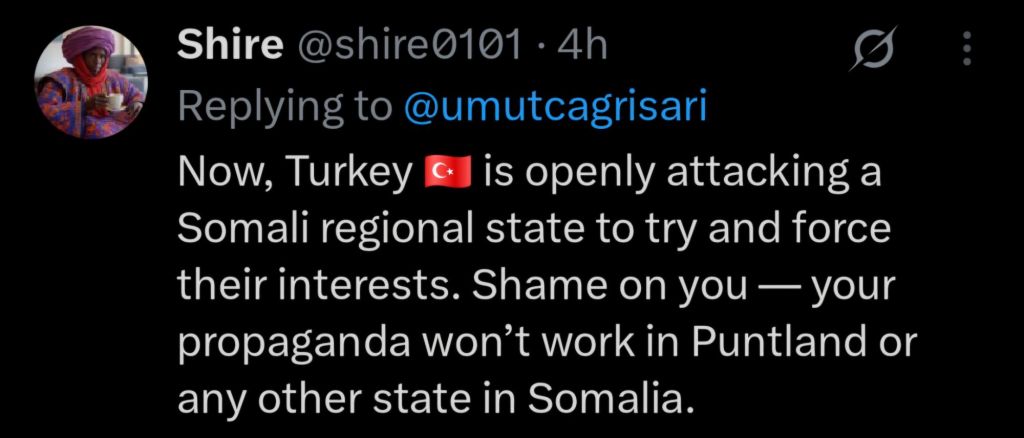
In a disturbing display of neocolonial arrogance, Turkey has escalated a media and diplomatic campaign targeting Puntland State — one of Somalia’s most stable and functional federal member states. The target of Ankara’s ire? A legal, transparent, and well-documented partnership between Puntland and the United Arab Emirates focused on trade, security, and infrastructure. This campaign is not only baseless; it is dangerous and exposes Turkey’s increasingly aggressive posture in the Horn of Africa.

Let us be unequivocal: Puntland is not a sovereign actor conducting rogue foreign policy. It is a constitutionally recognized federal state within Somalia, operating well within the bounds of its decentralized governance powers. Its cooperation with the UAE — dating back over decades — has helped combat piracy, ISIS, build ports, and inject real economic value into a region long neglected by Mogadishu.

Contrast this with Turkey’s own role in Somalia. Ankara’s deepening ties with the Somali federal government have increasingly taken the form of secretive deals, including a murky hydrocarbon agreement signed without parliamentary scrutiny, stakeholder consultation, or environmental assessment. These opaque arrangements suggest that Turkey’s growing presence is not about development or partnership — but extraction, control, and influence.

Turkey’s latest provocation — using pundits and proxies to vilify Puntland — is an unacceptable interference in Somalia’s fragile federal system. It is a brazen attempt to intimidate a peaceful region into submission, to punish Puntland for choosing practical partnerships over political allegiance, and to delegitimize any actor that does not tow Ankara’s preferred line.

This campaign also undermines the very stability that Turkey claims to support. Puntland is not a rebel territory or a breakaway enclave; it is a functioning federal member state with its own institutions, security forces, and governance structures. By attacking Puntland’s legitimacy, Turkey is not just meddling — it is fueling division and weakening Somalia’s already fragile federalism.

For a country that presents itself as a benevolent partner in Africa, Turkey is increasingly behaving like a 21st-century empire-builder — silencing dissent, pressuring local authorities, and cutting deals behind closed doors. This is not development. This is not diplomacy. It is coercion.

The international community must not stand by while a foreign power bullies a peaceful region for engaging in legal, beneficial partnerships. Turkey must be held to account for its destabilizing rhetoric and backroom dealings. Somalia needs genuine allies — not overlords.

If Turkey wants to be a partner in Somalia’s future, it must start by respecting the country’s federal structure, ceasing its propaganda against Puntland, and submitting its own dealings to the same transparency it demands of others. Until then, its influence in Somalia will be viewed not as a partnership but as provocation.

A Call for Accountability: Donor Complicity in Undermining Puntland’s Federal Rights

By: Warsame Digital Media (WDM)

To the international donor community,

The people of Puntland State of Somalia have watched with growing alarm as international aid, pledged in the name of unity, development, and federalism, is increasingly weaponized to serve narrow political interests. Aid intended to improve lives and strengthen governance is instead being manipulated to impose authoritarian control from Mogadishu—at the expense of equity, trust, and federalism.

This is not an accusation made lightly. Puntland, a founding pillar of the Somali Federal Republic and a model of self-governance, has been deliberately sidelined in development programming, budgetary allocations, and donor-led initiatives. Resources acquired in the name of “Somalia” are disproportionately channeled through federal institutions that lack the will—or in some cases, the constitutional authority—to represent or deliver on behalf of all federal member states.

Donors cannot claim ignorance. Repeated warnings have been issued by Puntland and other federal entities, urging a more balanced and transparent mechanism for aid delivery. Yet little has changed. Development partners continue to funnel assistance through a centralized bureaucracy that has shown open hostility toward Puntland’s autonomy and governance model.

Let us be clear: aid that undermines local ownership, disregards constitutional mandates, and serves as a lever for political compliance is not aid—it is coercion. It empowers autocracy, stifles regional initiative, and erodes the very foundations of the federal system donors once helped to craft.

Puntland has thrived not because of external largesse but because of internal resilience. We built functioning institutions while others crumbled. We maintained peace and democratic transitions while others turned to conflict. We earnesly fight extremists where others abysmally fail. We are not seeking special treatment—only our fair share, delivered through mechanisms that respect our identity, governance, and constitutional rights.

This is an urgent call for course correction. The donor community must:

1. End the monopolization of aid through Mogadishu and adopt a dual-track system that directly engages capable federal member states like Puntland.

2. Uphold constitutional principles in all aid agreements and programming.

3. Insist on transparency and accountability in the distribution of donor funds, not just at the federal level, but across all tiers of government.

4. Respect regional autonomy and avoid becoming complicit in centralization schemes that threaten peace and stability.

Donor silence is no longer neutral—it is enabling. If the international community truly values democratic governance, federalism, and sustainable development, then it must act now. Puntland will continue on the path of self-reliance and determination. But we will not remain silent as our people are denied the resources, respect, and representation they rightfully deserve.

The time for quiet diplomacy has passed. The donor community must choose between enabling authoritarian consolidation—or supporting a pluralistic and balanced federal Somalia.

Puntland has chosen its path. Will you stand with us?

Puntland Will Not Bow to Donor-Driven Authoritarianism

https://ismailwarsame.substack.com/p/puntland-will-not-bow-to-donor-driven

Puntland Will Not Bow to Donor-Driven Authoritarianism

WDM EDITORIAL

In a troubling and deeply consequential trend, the politicization of donor assistance by the federal authorities in Mogadishu has reached a critical point—weaponizing aid to enforce authoritarian control over the autonomous Puntland State. What was once a mechanism to uplift Somali communities has now become a tool of coercion, deployed not for development, but for domination.

Millions of dollars earmarked for Puntland—resources secured in the name of the Somali people—are either diverted, delayed, or deliberately politicized by a federal administration bent on centralizing power at the expense of regional autonomy. The donor community, whether by willful ignorance or silent complicity, enables this injustice. By funneling aid through Mogadishu without enforcing equitable distribution, international partners are empowering a centralized elite and undermining the very federal system they claim to support.

Let it be stated clearly: Puntland will not be strong-armed into submission through manipulated aid schemes or bureaucratic blackmail. Our people have endured decades of adversity—not through handouts or appeasement—but through self-reliance, governance, and sheer determination. We built institutions when others faltered, and we maintained stability while others dissolved into chaos. To now be treated as a subordinate entity, expected to beg for what is rightfully ours, is not only unacceptable—it is an affront to our dignity and legacy.

This conspiracy to starve Puntland into political obedience will fail. No amount of donor deception or Mogadishu maneuvering will erase the will of a people determined to chart their own course. Puntland does not reject aid—it rejects manipulation. We will welcome partnership, but only one that respects our autonomy, our rights, and our people.

The international community must choose: continue propping up authoritarianism cloaked in federal rhetoric, or stand with regions like Puntland that actually embody the democratic and developmental aspirations they so often preach. Time is running out for neutrality. Silence, at this juncture, is nothing less than endorsement of tyranny.

Puntland is not for sale. We will weather this storm, as we have others—by standing firm, standing free, and standing together.

Independent Media Matters. So, Does Your Support

At Warsame Digital Media (WDM), we don’t answer to pressure groups.
We answer to you — our readers.

Here’s why your support is critical:

1. It protects our independence.
No outside agendas. No censorship. We tell the truth — even when it’s inconvenient for those in power.

2. It keeps us focused on real journalism, not empty clicks.
We don’t chase trends or viral nonsense. We cover stories that matter — for our communities, our future, and our freedom.

3. It keeps WDM open for everyone.
We believe everyone deserves access to honest, fearless reporting.

Right now, most of our readers enjoy WDM without paying — and that is not good enough. If you believe independent journalism is worth fighting for, we need you to step up.

A small monthly contribution or an annual fee of $37 only make the biggest difference.
It powers deep investigations, amplifies unheard voices, and shields us from outside control.

If you can, please support WDM today.
We’ll make it quick, easy — and you’ll be part of something truly powerful.

Join us at iwarsame@ismailwarsame.blog/ismailwarsame@gmail.com. +252 90 703 4081.

Protect independent media. Power the future.

Somalia’s War Within: Why Al-Shabaab Cannot Be Defeated from a Compromised Government

https://ismailwarsame.substack.com/p/somalias-war-within-why-al-shabaab

Somalia Is Being Held Hostage by Corrupt Power — Not Law

Somalia today is not governed by a constitution. It is ruled by corruption, impunity, and raw political power.

The 2012 Provisional Constitution, once seen as a beacon of hope after decades of civil war, has been shredded by the very leaders who were supposed to uphold it. Four chapters have been illegally altered without public consent. The rest of the constitution remains incomplete, abandoned like so many other broken promises to the Somali people.

A constitution is supposed to be sacred — a contract between the people and their government. In Somalia, it has been turned into a private tool for those in power to entrench themselves. Law means nothing when leaders at both the federal and member state levels treat institutions as personal property and parliaments as rubber stamps.

This is not governance. This is organized looting disguised as politics.

Somalia is not unique in lacking a finalized constitution. Other nations function under customary laws and respected traditions. But Somalia’s problem runs deeper: there is no functioning legal order left. Even customary laws, Islamic principles, and parliamentary practices have been hijacked by corruption and clan favoritism. The result is a lawless shell of a country, where the president’s personal interests dictate the fate of millions.

Elections are delayed or manipulated. Courts are powerless. Parliamentarians sell their votes to the highest bidder. Ordinary Somalis, facing insecurity, poverty, and injustice, are left with no voice, no protection, and no hope. Meanwhile, extremist groups exploit this vacuum, positioning themselves as more reliable dispensers of “justice” than the so-called government.

How long can Somalia survive like this? How long can a nation endure when every rule is negotiable, every law up for sale?

The international community, exhausted and distracted, has allowed Somalia’s leaders to play endless games without real consequences. But it is Somalis — the farmers, the mothers, the youth — who pay the price every day.

If Somalia is to have any future, it must start by taking back its constitution — not through secret deals among politicians, but through a public, transparent, and nationally owned process. The unfinished constitution must be finalized, ratified, and enforced. Institutions must be rebuilt to serve the people, not the rulers. And leaders who betray their oath to the law must be held accountable — without exception.

Enough is enough. Somalia does not need more speeches, false promises, or cosmetic reforms. It needs a revolution of law — a return to constitutional order — or it risks becoming a country permanently governed by force and fraud.

The Somali people deserve a government bound by law, not by the greed of the few.

The SSC-Khaatumo Conundrum: Between Somaliland’s Shadow and Mogadishu’s Neglect

By WDM Staff Writer

Introduction
The regions of Sool, Sanaag, and Cayn (SSC) in northern Somalia have long been a flashpoint in the contest for territorial control, autonomy, and clan identity. The SSC-Khaatumo movement, born out of a desire to liberate these areas from Somaliland’s administration, now faces a crisis of legitimacy and direction. Despite sacrifices by local communities and Puntland’s support, the Federal Government of Somalia (FGS) has been accused of undermining SSC-Khaatumo’s aspirations, leaving residents trapped between Somaliland’s oppression and Mogadishu’s indifference. This essay examines the historical roots of the conflict, the post-liberation challenges, and pathways toward a sustainable resolution.


Historical Context: Clan, Colonialism, and Contested Borders
The SSC regions are inhabited predominantly by the Dhulbahante clan, a sub-group of the Harti Darod. Their historical ties to the Somali National Movement (SNM), which spearheaded Somaliland’s secession in 1991, were tenuous. Somaliland bases its claim on colonial-era borders, while Puntland asserts kinship with the Dhulbahante. This duality has left SSC residents politically fractured, navigating between Somaliland’s quest for recognition and Puntland’s clan-based governance.
The SSC-Khaatumo movement emerged in the 2000s as a third way, advocating self-governance. Its formation reflected local disillusionment with both Hargeisa’s heavy-handedness and Garowe’s political manoeuvres. The liberation struggle, particularly the 2023 recapture of Las Anod from Somaliland, was fueled by Puntland’s military backing and diaspora funding. Yet, victory has not translated into stability.


The Liberation Struggle and Post-Conflict Realities
The ousting of Somaliland forces from Las Anod in 2023 marked a symbolic triumph. However, the euphoria faded as SSC-Khaatumo struggled to transition from rebellion to governance. Key challenges include:
• Security Vacuum: Somaliland’s intermittent incursions and clan militias’ rise have perpetuated instability.
• Economic Collapse: Years of conflict destroyed infrastructure, leaving healthcare and education in disarray.
• Political Fragmentation: Internal divisions among Dhulbahante elites hinder cohesive leadership.
Puntland’s support, while instrumental, has also drawn accusations of overreach, with critics alleging Garowe seeks to absorb SSC into its administration. Meanwhile, the diaspora’s financial contributions have sometimes exacerbated factionalism, as competing groups vie for resources.


The Federal Government of Somalia: A Partner or Adversary?
The FGS’s role has been contentious. While Somalia’s Provisional Constitution (2012) allows regions to form federal states, Mogadishu has withheld recognition of SSC-Khaatumo. Critics argue this stems from:
• Political Calculations: The FGS fears antagonizing Somaliland, seen as a potential partner in future unification talks.
• Centralization Efforts: Mogadishu may view robust regional states as threats to its authority.
• Resource Allocation: The FGS, grappling with insurgencies like Al-Shabaab, prioritizes other regions.
Moreover, allegations persist that Mogadishu has tacitly supported Somaliland’s operations to weaken SSC-Khaatumo. This perceived betrayal has deepened local resentment, with residents feeling abandoned after risking lives to reject Somaliland’s secessionist agenda.


The Humanitarian Toll and Diaspora Dynamics
Civilians bear the brunt of this geopolitical stalemate. The UN reports over 200,000 displaced since 2023, with aid access restricted by conflict. Clan militias exploit the chaos, engaging in extortion and violence. The diaspora, while vital in funding relief and advocacy, often struggles to align its vision with on-the-ground realities, sometimes prioritizing symbolic victories over governance.


Pathways Forward: Autonomy, Alliances, or Arbitration?
Resolving the crisis requires addressing both immediate needs and structural inequities:
• Strengthening Local Governance: SSC-Khaatumo must prioritize inclusive institutions, integrating traditional elders and civil society to bridge clan divides.
• Engaging the FGS: Mogadishu should honor constitutional provisions for state formation, offering technical and financial support conditional on transparency.
• International Mediation: The AU and UN could broker talks between SSC-Khaatumo, Somaliland, and the FGS, ensuring residents’ voices are central. In doing so, don’t ignore that Puntland State is a critical stakeholder in these negotiations.
• Regional Alliances: Closer ties with Puntland or other federal states might provide interim security but risk dependency.


Conclusion: Toward a Dignified Future
The SSC regions’ plight underscores the fragility of Somalia’s federal experiment. Residents, having rejected Somaliland’s authoritarianism, deserve more than Mogadishu’s neglect. A sustainable solution demands courage from SSC leaders to transcend clan politics, sincerity from the FGS to uphold federalism, and international pressure to safeguard human rights. Only through inclusive dialogue can SSC-Khaatumo realize its founding ideal: a dignified existence free from oppression.

White Paper: Puntland and SSC-Khatumo: Reassessing Political Cooperation and the Future of SSC Territories

Executive Summary

This white paper examines the political dynamics between Puntland State and SSC-Khatumo following the liberation of the SSC territories from Somaliland administration. Initially, both administrations had agreed to convene a Congress to determine their future relationship. However, the congress never materialized, primarily due to SSC-Khatumo’s unilateral alignment with the Mogadishu-based federal government. This paper discusses the implications of that decision, the recent stance articulated by Puntland’s leadership, and offers recommendations for future cooperation to ensure stability and mutual benefit for the communities of northern Somalia.

Introduction

The territories of Sool, Sanaag, and Cayn (SSC) have long been contested spaces, central to the political disputes between Somaliland, Puntland, and emerging local administrations like SSC-Khatumo. The recent liberation of SSC territories was a significant achievement, made possible through the sacrifices of local communities and Puntland’s consistent support. The understanding at the time was that a congress would be convened to democratically decide the relationship between Puntland and SSC-Khatumo post-liberation. However, this crucial step was bypassed, altering the expected course of collaboration.

Background

Puntland State of Somalia was established in 1998 to protect and advance the interests of the Eastern Daroods (Dhulbahante, Warsangeli, Majeerteen, Lelkase, Awrtable, among others), and has maintained relative political stability, while reconstructing the failed state of Somalia.

SSC-Khatumo Movement emerged to advocate for the specific interests of SSC territories, opposing both Somaliland’s secessionist claims and, at times, perceived neglect by Puntland.

A shared understanding developed that post-liberation, both sides would hold a congress to formalize their future relationship.

However, post-liberation, SSC-Khatumo leadership unexpectedly aligned with the Federal Government in Mogadishu—an administration that had provided little direct assistance during SSC’s most critical battles.

Current Situation

In response to these developments, the President of Puntland State, Said Abdullahi Deni, publicly stated that SSC-Khatumo faces a strategic decision:

Option 1: SSC-Khatumo continues independently, managing its political and administrative affairs without Puntland’s direct support.

Option 2: SSC-Khatumo returns to negotiations with Puntland to formalize a cooperative framework that respects historical ties and shared strategic interests.

This declaration marks a significant turning point, emphasizing Puntland’s expectation for either renewed partnership based on mutual respect or a formal separation of paths.

Analysis

Implications of SSC-Khatumo’s Alignment with Mogadishu

Political Vulnerability: Mogadishu’s remote governance risks alienating SSC communities and ignoring their unique local needs.

Loss of Regional Support: By distancing from Puntland, SSC-Khatumo potentially weakens its bargaining power and stability prospects.

Fragmentation Risk: Without a cohesive Harti-based regional strategy, northern Somalia could descend into renewed political fragmentation.

Puntland’s Strategic Interests

Regional Stability: Puntland’s success has been rooted in maintaining stable borders and alliances.

Cultural and Clan Solidarity: The Harti clans share historical bonds that Puntland seeks to preserve.

Federalism Advocacy: Puntland supports a federal Somalia, but with meaningful autonomy for regions—a vision that aligns with SSC’s original demands.

Recommendations

For SSC-Khatumo Leadership

Return to Dialogue: Engage Puntland in formal discussions to outline a cooperative framework.

Prioritize Local Interests: Align political decisions with the immediate needs and aspirations of SSC communities.

Demand Mutual Respect: Ensure that any relationship with Puntland is based on equality and mutual benefit.

For Puntland State

Remain Open to Negotiations: Despite frustrations, keep channels open for reconciliation.

Support Local Empowerment: Emphasize partnerships that respect SSC autonomy within broader strategic cooperation.

Promote Unity Among Harti Communities: Prevent external manipulation by reinforcing internal solidarity.

For the Broader Somali Stakeholders

Support Local Initiatives: Encourage community-led political solutions rather than top-down impositions from Mogadishu.

Facilitate Dialogue: International partners and Somali federal institutions should facilitate—not dictate—discussions between Puntland and SSC-Khatumo.

Conclusion

The missed congress between Puntland and SSC-Khatumo represents a critical moment in the political evolution of northern Somalia. However, the window for constructive engagement remains open. Both sides must act pragmatically and prioritize the interests of their communities over external political alignments. A future built on negotiated partnership offers the best path forward for durable peace, autonomy, and development in the SSC territories.

Prepared by:
WDM
Date: April 26, 2025

Nepotism in Somali Leadership: When Clan Loyalty Undermines National Duty

By WDM Staff Writer

In a country emerging from decades of civil war and institutional collapse, Somalia’s fragile governance depends heavily on inclusive leadership, justice, and transparency. Yet, recent developments point to a disturbing trend that continues to haunt Somalia’s state-building efforts: the dominance of clan loyalty over national interest.

The Somali president’s recent delegation to Kampala, Uganda—composed entirely of individuals from the Mudulood subclan of the Hawiye—raises serious concerns about nepotism, exclusion, and the misuse of presidential authority. This isn’t merely a case of preferential appointments; it’s a bold, unambiguous display of tribal favoritism cloaked in the trappings of official state business.

The Delegation: A Clan Affair

A look at the names on the delegation list confirms the bias:

1. Hassan Sheikh Mohamud

2. Cali Balcad

3. Odowaa Yusuf Raage

4. Cabdirisaaq Hassan Sheikh

5. Jihaan Hassan Sheikh

6. Jihaan Abdullahi Hassan

7. Maxamed-Amiin

8. Cabdirisaaq British

9. Cabdirahmaan Xudeyfi

10. Cali Khadar

11. Maxamed Duugoow

12. Hinda Culusow

All twelve individuals are members of the Mudulood subclan. This is not only politically insensitive but constitutionally questionable, reflecting a government increasingly alienated from the ideals of inclusivity and equity.

The Dangers of Nepotism

Nepotism is more than a moral failure—it is a national threat. When state appointments are driven by clan affiliation rather than competence or merit, the result is a government that lacks diversity, credibility, and trust. It alienates citizens, fuels factionalism, and lays the groundwork for political instability.

Moreover, such blatant exclusion risks deepening clan-based grievances that have long fueled Somalia’s internal conflicts. For a nation still grappling with reconciliation and healing, leadership that favors one subclan over the rest sends a dangerous and divisive message.

Leadership or Clan Stewardship?

A president is not a clan elder. He is a national figurehead, elected to represent every Somali regardless of lineage. When presidential decisions are dictated by tribal lines, the sanctity of the office is compromised. The optics of the Kampala delegation make it appear as if the presidency is being used to serve narrow interests rather than the Somali public at large.

This situation begs the question: what message does this send to other clans and communities? That they are not part of the Somali state? That they have no place in diplomacy, governance, or policy? This exclusionary approach only reinforces feelings of marginalization and could dangerously erode any remaining trust in central governance.

Toward Inclusive Governance

Somalia cannot afford to treat national institutions as extensions of clan structures. If genuine nation-building is to take place, there must be a clear and deliberate break from the politics of nepotism and favoritism.

Accountability begins with leadership. President Hassan Sheikh Mohamud must be reminded that his mandate is not to serve the Mudulood, but to serve the Somali people. The international community, civil society, and Somali citizens must hold their leaders to higher standards. There must be transparency in government appointments, a commitment to meritocracy, and respect for the multi-clan, multi-ethnic fabric of Somali society.

Conclusion: A Call for Justice


This is a betrayal of public trust, an erosion of national dignity, and a blow to the hopes of a united Somalia. Until leaders rise above clan loyalty and embody the principles of equality and fairness, Somalia will remain trapped in the cycle of division and dysfunction.

Let this moment serve not as an excuse for silence but as a rallying cry for justice.

SOMALIA-EU QUESTIONABLE OPERATIONAL ROADMAP