
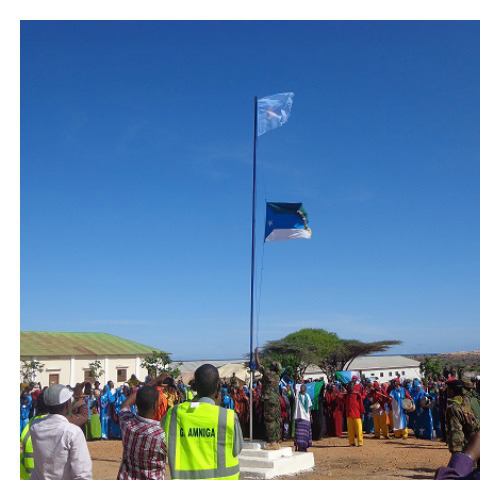
 I wonder why some Somalis are upset by the formation of Jubaland State. Is Jubland State for the unity of Somalia? yes! Do they recognize the Somali Federal Government? Yes! Are they against Al-Shabab? Yes! Are they inclusive and want every stakeholder to be part of the process? Yes! Are they more than one region to meet the constitutional requirements of Somalia to form a regional federal state? Yes! Are they seeking the support of Somalia’s federal leadership? Yes! Are members of the Federal Parliament from Gedo, Middle and Lower Jubaland support the formation of Jubaland State? Yes, mostly! Do they want to restore law and order there? Yes! Are they committed to protecting the rights of minorities in the state? Yes! Are they economically viable and sustainable entity? Yes? Are inhabitants of the area sick and tired of the violence, warlordism, extremism and environmental predators? Yes! Then what and why is the fuss? why, we Somalis, don’t appreciate God‘s blessings and pray for more?
Category: world
What hope for peace? Greed, grievance and protracted conflict in Somalia
Posted by Managing Editor for YaleJournal.org • April 2, 2013
by Tuesday Reitano*
Introduction
2013 might just be Somalia’s year. A confluence of events – the successful end of the political transition, the formation of a promising new government headed by a new guard of civil society leaders, and the rollback and significant weakening of the militant terrorist group al Shabaab – offers the best hope for a peace that Somalia has had in decades. But the challenges remain immense, and recent achievements can be easily reversed. Without an effective central government since 1991, parts of the country have been torn apart by decades of conflict, chronic poverty, inequality, food insecurity, and public health challenges. State institutions, where they exist, are a patchwork of colonial legacies that were never fit for the purpose of governing a sovereign state and delivering services to its people.
Any analysis that attempts to identify the underlying and precipitating causes of conflict in Somalia wades into turbulent waters. There are numerous competing narratives and differing interpretations of a complex and contentious twenty-year conflict. What is clear, however, is that the best chance of sustaining the peace in Somalia will be through ensuring the legitimacy of leadership and by addressing some underlying causal dynamics.
Understanding the drivers of conflict in Somalia
The root causes of the Somalia crisis can be traced to three phenomena: colonialism, Cold War politics, and the Barre dictatorship, perpetuated by a combination of both greed and grievance. The interaction of these forces in the post-colonial state ushered in the clan conflict of the 1980s and the two decades of perpetual violent anarchy that followed.
Two other actors that have been drivers in the conflict in Somalia are the criminal elements in the country and radical ideologies. Somalia’s extended coastline, – the longest in Africa – its strategic location as the gateway to the Gulf States, and the poor government controls have made the country very vulnerable to trafficking, smuggling and organised crime. The United Nations Office on Drugs and Crime (UNODC)[1] observed that established trafficking routes in the Horn of Africa expand elastically to smuggle or traffic all manner of illicit goods from people to weapons to illicit drugs. Somalia further serves as a quasi-free-trade zone with its neighbours, most notably Kenya, on a wide range of licit and contraband goods that, despite being smuggled, are still cheaper than buying domestically. Local criminal networks are quick to facilitate these kinds of illicit activities for any product for which a buyer can be found, and have used funds to infiltrate key trade and political sectors, using violence and intimidation to safeguard criminal activities. For these groups, which in some cases include powerful provincial leaders, armed militia groups, and business elites, there has been a vested interest in perpetuating conditions of lawlessness and disorder.
Al Shabaab, the extremist ideology that splintered off of the Ethiopian-funded Union for Islamic Courts movement at the beginning of the Millennium, has become the largest and most powerful Somali militia force in the country, controlling much of the South and, up until 2011, Mogadishu. Up until this time, Somalia’s civil war had been largely free from radical ideologies, but al Shabaab’s on-going insurgency against the African Union Mission in Somalia (AMISOM) has been the main source of armed conflict in the last five years[2]. However, the goals and actual grievances of al Shabaab are unclear, and have become more so since the self-proclaimed terrorist group has increased its international linkages to al Qaeda and other foreign extremist groups[3]. While on paper the group subscribes to the same long-term goals as international al Qaeda (namely global jihad), in reality al Shabaab leaders have focused on Somali priorities, evicting AMISOM and deposing the former Transitional Federal Government (TFG), and the agendas of international figures remains opaque[4]. This seems to suggest that while ideological extremism has been suggested to be a primary driver in the conflict in Somalia, in fact it is less ideology than control over strategic locations which may be at play here.
What hope for peace?
The perceived legitimacy of the state and its ability to provide security and deliver services to its people are absolutely critical to building a peaceful society. Furthermore, having robust legitimacy in place will decrease the likelihood that insurgent, terrorist or militant groups will attract mass support[5]. It is for this reason that the recent election of the new government may prove to be the key to breaking the protracted conflict, moving Somalia down the path to peace, security and development.
The selection of the three most pivotal positions in government – the President, Vice President and the Speaker of the Parliament – was, in part, the result of a civic mobilization by a coalition of “constructive elites” associated with the establishment of universities, schools, hospitals, charities, and businesses in Mogadishu over the past twenty years. Analysts consider it a positive indication that the 2012 Government of Somalia is being built around prominent civil society figures who have stayed in the region and who are part of network of civic and private sector actors with a real interest in promoting peace and governance,[6] as opposed to members of the old TFG guard. As emphasised at the high-level London Conference on Somaliain February 2012, ensuring peace dividends for the population, and introducing basic services into areas liberated from Al-Shabaab will be an important tool to reinforcing the new government’s position.
The protracted conflict in Somalia should also be understood as part of an inter-related web of conflicts that blight the Horn of Africa. Over the past two decades, external actors have frequently and increasingly been central protagonists in Somalia’s armed violence. This has taken numerous forms – international peace enforcement, protection forces, occupying armies, proxy wars, covert operations, smuggling of both commodities and illicit goods across borders, and as the source of policies or development resources that have inadvertently fuelled local conflicts.[7] There is little doubt that the actions of these external actors, whether positively or negatively intentioned, will continue to have considerable impact on the future of Somalia and the success of its state-building transition.
In particular, the on-going competing interests of neighbouring powers Ethiopia and Kenya continue to play out within Somalia’s borders, with financial interests coming quickly to the fore. A recent article in The Economist highlighted the growing unrest in the recently liberated port of Kismayo in South-Central Somalia. Formerly a bastion and primary resource generator for Al-Shabaab, the port was liberated by AMISOM in September 2012 and “is now run by a chaotic security committee on which Kenyans, Ethiopians and several competing Somali factions joust. A presidential delegation from Mogadishu, Somalia’s capital … was turned away when it tried to visit.” Kenyans are jockeying with local militia for control of the port (which generated an estimated $50 million in taxes under Al-Shabaab), as well as for the stockpile of illicit charcoal (estimated in the region of $40 million), in what threatens to become another episode in the Somali conflict.
As a potentially more positive example, the role of the diaspora as they engage with post-conflict Somalia is a variable in the country’s stability. Somalia has a very large, dynamic, and dedicated diaspora community. $1.3-2 billion are remitted into the country annually,[8] equivalent to approximately one third of the country’s GDP. Analysts who have examined the role of diaspora in conflict have broadly concluded that, historically, countries with large diaspora show a greater propensity towards armed conflict.[9] Indeed, the Somali diaspora has played a role in both fuelling armed conflict and supporting the peace in the past,[10] and is likely to continue to do so as the diaspora dominates large swathes of Somalia’s political and civic life, including the central government, provincial governments, Al-Shabaab, business communities and civil society groups.[11]
Similarly, while the international community seeks to support Somalia’s transition and to provide humanitarian relief and development dividends to its people, lessons must be learned from the past. Since Barre, the delivery, distribution of aid in Somalia has been a flashpoint for conflict. One of the most notorious cases was Operation Provide Relief, an airlift of 48,000 tonnes of food aid by the United States in 1992, which attracted armed militia from across the region and resulted in 80 per cent being looted and more than 200,000 famine related deaths.[12] Every effort should be made by the international community to ensure that the injection of external resources does not provoke conflict and exacerbate instability, and the growing presence of emerging donors such as Turkey and China will need to be monitored.
To avoid the new government being overwhelmed and marginalizedby international aid, funding should be channelled through legitimate state institutions in such a way that it builds local and national capacity to deliver services and maintain the rule of law.[13] Given the incredibly weak capacity of Somali institutions, some innovative solutions may be required. For example, a new trust fund established jointly by the British and the Danish, the “Somaliland Development Fund”, takes a shared governance and fund management model that will support the provincial government to meet its developmental priorities, improve service delivery capacity and support public financial management reforms, whilst at the same time ensuring transparency, accountability and limited international oversight.[14] The OECD International Network on Conflict and Fragility (INCAF) is piloting an approach by which national and international partners enter into “transition compacts” as a modality to better align international financial support to country-specific priorities and strengthen mutual accountability.
The quiet success of the provincial governments of Somaliland and Puntland in managing conflict and shifting into relative stability has offered insights into what a more universal model of state-building might look like. Somali communities in these provinces have developed an impressive array of informal systems to manage and mitigate conflict, and to provide citizens with modest levels of security and stability.[15] These have been most effective and resilient when built around hybrid coalitions of clan elders, women’s groups, professionals, clerics and business people. To offer one noteworthy example, community pressure has served to eject pirates from some coastal towns in Puntland. This coalition-based approach has also proven its utility in overcoming clan politics. The analogy of the “wagon train” was used by a senior EU official in an interview with the author in Hargeisa in May 2012, describing significant infrastructure investments that have been made even in contested areas, with all clans and factions paying a share, so that no single group would “shoot down the wagon train”. The potential for this kind of collaborative, mutually advantageous coalition turns clan politics from a zero-sum game into a positive sum game, and thus can and should be harnessed at the national level to create a compact towards a more stable future.
The most ubiquitous source of conflict management in Somalia is customary law, or xeer, which is applied and negotiated by traditional clan elders and dedicated peacemakers and, much like the examples given above, relies on a principle of collective responsibility.[16] In an effort to build state institutions and accelerate Somalia’s road to development, the international community needs to use caution in imposing modern civil law. Traditional community structures have legitimacy that derives from people’s shared beliefs and traditions, rather than from Western state models. Therefore, reinforcing support to such community structures and processes can help to safeguard against peace spoilers, and also prevent the growth of weak transitional state structures with the potential for greater corruption and exploitation by criminal actors and vested interests.
Conclusion
This analysis of conflict drivers and potential for peace-building concludes that while there is good reason to have hope for a brighter future for Somalia, this transition period will be characterised by enormous ambiguity, uncertainty and potential for a reversion to conflict. The willingness of both local and external actors to act in good faith and with a common purpose will be crucial to building a culture of trust and transparency.
The cornerstone of the debate rests with the new government, and whether they can break the greed-grievance cycle perpetuated by the governments that have gone before. If they can remain committed, and are empowered, to build a genuinely open, accountable and citizen-centric set of state institutions, then this might indeed be Somalia’s year.
— Scott Ross was lead editor of this article.
*Tuesday Reitano is an Assistant Director at STATT, a boutique consulting firm that specialises in fragile states and transnational threats. She is a senior research associate at the Institute of Security Studies, and has ten years of experience as a policy expert within the United Nations. She is currently focused on research on the impact of organised crime on democratic governance and statehood across Africa, as well as globally.
On the Political Stagnation of Puntland
The latest political announcements (press statements) by Puntland political parties and their petition to Puntland State President, the Electoral Commission and to some members of the international community under the heading: Resolving Local Municipality Elections Stalemate, issued in Garowe, March 21, 25, 2013, indicate either the non-existence of mutual dialogue or break-down of political discourse within the State on the best way forward for holding local government elections. A number of political parties including UDAD, Midnimo, PDP and Wadajir seem to have forged an association to challenge the Government on its latest reform proposals and planned changes in Voter IDs registration. Among other things, these new political parties demand the immediate delay of Municipal Elections in Puntland until adequate preparations are done to insure fair public participation and a new independent Electoral commission installed.
As a neutral person on the current disagreements, “stalemate” as they put it, I think it is not appropriate for me to comment on these specific documents and respective political statements surrounding these issues, despite repeated requests by members of the Puntland public to do so.
Discussing democratization process in Puntland State, however, gives me a great deal of pleasure. But, it is long overdue. It is unfortunate that Puntland State has not come out of age yet and still in the woods. In other words, Puntland has been heavily suffering far too long from political stagnation since its foundation in August 1998. Democratization in the State has never been in the good books of its successive leaders as it was never contemplated as political imperative or priority for the continued survival and sustainability of the regional administration against all imaginable upheavals of Somali clan politics and rocky relationships with the rest of Somalia.
It is extremely important to note here that rushing things of such importance and magnitude is not wise for it creates more problems and serious fatal errors in hasty fashion to feel and look good in the eyes of foreign donor community. The fate of the State hangs on it and nobody has the right to gamble at the expense of nation’s existence, public safety and regional political stability. It requires tremendous efforts, resources, thorough preparatory work and ample time to build political consensus and legal framework for the final implementation of the electoral process in fair and transparent manners.
They said commonly, “A thousand-step journey starts with first one”. Leaders of Puntland State (authority and opposition) task and obligation to their people is to make sure that ‘One First Step” towards democratization must be moved straight forward towards the right direction. The alternative spells danger and political suicide for all concerned.
Somalia: A Government Failing at its own Peril
BY FAISAL A. ROBLE 03/23/2013
Preface
Somalis could aptly capture the disappointment with Hassan Sheikh Mohamoud’s administration in the following proverb: “Dha’do roob noqonwaayday!” and a fittingly comparable Indian saying goes “Clouds come floating into my life, no longer to carry rain or usher storm….,”
One must wonder why conditions in Mogadishu and adjoining southwestern regions of Somalia are descending back to anarchy and to a renewed conflict. One may also wonder why all the fanfare orchestrated in the month of February when Somalia’s new leader, Hassan Sheikh Mohamed, visited the US and Europe so quickly dissipated. Yet, most Somalis suspect that policy makers in WashingtonD.C. and its proxy country in the Middle East – the kingdom of Qatar – were hasty to declare “mission accomplished” in the long conflict of Somalia.
If indeed true, that would have been good news to be welcomed by Somalis – a population so hungry for peace, development and security in their own backyard. But it was not meant to be so. As matter of fact, the month of February, 2013 could go into the annals of the history of this troubled country as the month when hope for lasting reconciliation and a new history making among the country’s disparate clans was thrown into oblivion. As such, there is a credible fear the adage of “clouds floating into our life, but no longer carrying rain”could be the true fate of the nation in the lurking.
The government of Hassan Sheikh Mohamoud, who has been eroding whatever little is left of Somalia’s cohesion and coexistence, is responsible for, in the words of Dr. Weinstein, the production of a “renewed conflict” between the center and the regions.
A novice in politics who enjoys deep roots in religious radicalism (Africa Confidential, October 2012), Hassan Sheikh took power in September of 2012. At the outset, his lack of experience worked in his favor, because, as often noted by those who elected him in September of 2012, he was perceived as the lesser of two evils (between him and the former President Sheikh Sharif). In a sense he is a man without history and without paper trail.
Alas, a Somali scholar who spent with Hassan Sheikh (almost three days of a grueling session in Djibouti in 2010) said this: “for three hard working days of deliberations and discourse, Hassan said nothing. All that was feasible in his face was that he came across as a man of tremendous anger and partisanship.”
Despite some cosmetic gains, most often orchestrated by donors who are anxious to hand over Somalia’s affairs and make her leaders responsible for their citizens’ protection and management, Hassan Sheikh’s policies so far bear truth to this cogent observation by one of Somalia’s prominent academics.
Let us skin off the layers of the ongoing dismantling of the tangible gains Hassan Sheikh Mohamoud’s predecessors so far made and the rapid dissention to the abyss of conflict.
Jubbaland: The residents of Jubbaland had seen enough terror, occupation and wanton bloodshed in the hands of militia commanded by the late Aidid Farah, who is alleged to have introduced into Somali political culture what Dr. Lidwein calls “clan cleansing.”
They have also suffered multiple invasions by the allied forces of Jubbland valley (Dooxada Juba) encouraged and funded by the first transitional government, headed by Abdi Qasim (Qasim is now a close advisor to Hassan Sheikh). The longest occupation of the region has been under the forces of Al-Shabab.
In 2008, a new chapter ushered in Jubbaland where a grass roots effort was launched to establish a local administration that would tackle invading outsiders and possibly put security matters in the hands of locals (this effort was based on an earlier effort carried out by the United Nations in 1993). The objective was to empower local folks not only to govern themselves, but to also protect and provide for their security. This was advised by a theory that combines the tools of local governance and grass roots approach to neighborhood protection.
Instead of joining and promoting this noble effort, the government of Hassan Sheikh Mohamoud made its number one national policy to fight and dismantle the gains so far registered in this region. By doing so, he deliberately violated key Sections of the provisional Federal Constitution of Somalia, including but not limited to Sections of Articles 48, 49, and 47. Worse, he used divisive languages and politics of wedge that eroded the prestige of his own office.
The very perception that the President of Somalia is painted with such an ugly picture as “tribalist,” or “vendetta carrying USC cadre,” makes him an irrelevant of a leader with no national appeal. Unless he shows some significant and immediate mending of relations with all sections of the Somali communities, his administration is looking for a rocky future ahead.
For a potential amelioration of the situation and perhaps the only way to save his presidency, a must–study lesson to him in this respect would be the recent agreement reached between Puntland and his own Prime Minister, Saacid Farah, a more calm and conciliatory figure.
Somaliland: Somaliland had declared a unilateral secession from the rest of Somalia in 1991 on the ashes of Somalia’s failed state. It is recalled that Barre’s regime exacted an unforgettable massacre against the Issaq population in the region.
The hope for meaningful talks on the nagging question of Somaliland’s unilateral secession, and the resolution to the conflict in Khatumo, was dashed first by mismanaging the talks, and finally by the immature request by this government to lift the 20 year-old arms embargo.
A lasting reconciliation between Somaliland with Mogadishu requires trust-building and Mogadishu recognizing the limits to its power. It would also require finding reputable ways to give Khatumo leaders a prominent role in the talks for they are major stakeholders in the outcome.
The search for more arms and weapons for Mogadishu-commanded militia army, the so-called “Somali National Army (SNA)” is in total contradiction to the spirit of fostering genuine and productive talks with Somaliland and the resolution to the question of secession. The conflict in Somalia is not due to lack of arms, but more arms in the wrong hands in southern Somalia at a time of heightened insecurity and tangible suspicion of Mogadishu by the regions.
On March 17, 20013, only weeks after the UN’s lifting of arms embargo on Somalia, massive amounts of ammunitions, rifles (AK47s) and other weapons were “stolen” from the presidential palace of Hassan Sheikh Mohamoud. Whether or not the loss of such a huge amount of weapons was the design of an inside job is beside the point. The lesson here is that Somalia is still awash with weapons, particularly Mogadishu, and most of it is in the wrong hands.
Moreover, Hassan Sheikh Mohamoud’s government does not have the right infrastructure and legal capacity to keep weapons from falling into the wrong hands. Thus, peaceful communities in Somaliland, Puntland, and Jubbaland are not comfortable with weapons flying all over.
Return of Terror/Anarchy to Mogadishu: On March 19, 2013, the New York Times carried a front-page story about Al-Ahabab resuming its aggressive acts of terrorizing the residents of Mogadishu. This is one of a series of troubling signs of the deterioration of Hassan Sheikh’s administration. Despite his premature and uninitiated over-pledging pronouncement to the nation that his three top priorities are “security, security, security,” the nation is less secure now than six months. Security is slipping out of hand; dead bodies continue to turn up in Mogadishu’s dark alleys as if we were experiencing a de javu of the days of extreme anarchy.
About ten days ago, the corpses of six civilians with their hand and legs cuffed together were dumped by government soldiers in to the city’s allies. Rape cases are not abated, despite the international attention received by the rape of a Somali woman, only because of a human rights advocate from Europe who refused to let the issue get buried under the rhetoric of the President as a “friend of women.”
Moreover, Somalia’s equal opportunity critic and cartoonist, Amin Amir, had recently posted at aminarts, a serious of cartoons reflecting the Somali sentiment; the disposition of Mogadishu becoming a “one-clan city;” pressure for the immediate return of “stolen or looted properties” is building up; prisoners freed out of government jails in a freak way, and massive amounts of weapons stolen from the government’s depot located at the presidential campus. If the worsening conditions are not arrested, the euphoric welcome extended to this President is soon to be replaced with despair and a potential demise to the modicum of gains so far registered.
Baydhabo region: Who thought that millions of Somalis would worry at the very news of Ethiopia’s leaving Bydhabo region? Local and international news media is awash with concrete information that as soon as Ethiopians pulled out of Xudur, a prominent town within the Bydhabo region, Al-Shabab easily overran the ragtag militia soldiers reporting to Mogadishu.
It is also reported that, if reinforcement is not given to the AMISOM troops stations in Baydhabo, Al-Shabab is poised to recapture the regional seat of the Digil Mirigle coalition.
Is the comeback of the Al-Shabab, therefore, simply a military question, or an indication that Hassan Sheikh Mohamoud’s government is losing the faith of the Somali people at-large?
There is some truth to the argument that his imprudent conflict with the leadership of IGAD, with his neighbors who through unfortunate circumstances hold sway on Somalia, particularly in the area of security, and with the officers of the United Nations Office for Somalia (UNOS) is partially a cause to the faltering security conditions in the southwestern regions of the country.
Unfortunately, the main reason why security is deteriorating in Mogadishu and in Southwestern regions is a function of bad internal politics. Since assuming power, the government’s domain has been narrowing and it lost faith with Puntland, Somalialnd, Jubbaland, and to some extent the Digil Mirifle coalition. The recent brouhaha over the rights of Galmudug to form its state, which could have been discussed in private chambers and the clashes in Marka, also further eroded this government’s grip on the nation’s affairs.
Whereas his government was supposed to reach out to all section of the Somali society, Hassan Sheikh arrogantly narrowed his power base to a coalition representing some members of his clan and that of his religious group, Dumjadid.
While writing this piece I reached out to my good friend, Said Samatar, a prominent historian and an authority on Somali political culture and asked him what good could Hassan Sheikh have done at the outset to get this time right?
This is what he said:
“Hassan Mohamed should have put on his Maawis (Somali garb), wrap his Shaaland, and carry his Bakoorad (cane); with that take a tour consisting of a coalition of Hawiye elders to Puntland, Jubbaland, Bay, Bakol, and Somaliland; meet and great those elders, give a peace and justice overtures; let the Hawiye elders convey the message that their son is ready to respect Somali Xeer and mutual respect to each other.”
In one of his speeches to the Somali Diasporas Hassan Mohamoud prematurely and triumphantly announced that the role of the elders is finished. Considering how deeply he sinking in so many fronts, particularly with security slipping out of his hands, one is tempted to give a try to Said Samatar’s traditionalist approach to interject a dose of optimism and hope to the faltering search for peace in Somalia. After all, the government and the land belong to the people of Somalia and it is their responsibility to fix it.
Source: Wardheernews.com
Why Obama’s Israeli Trip is One Big Mistake
NETANYAHU INSULTS THE PRESIDENT, BACKED ROMNEY, AND HASN’T MOVED THE PEACE PROCESS. NO WHITE HOUSE SHOULD REWARD BEHAVIOR LIKE THAT, NOT EVEN FROM AN ALLY.
By Janine Zacharia, Tuesday, March 19, 2013
Iran is accelerating its nuclear program. Syria’s gruesome civil war is beginning to bleed across its borders. Two years after Hosni Mubarak’s ouster, Egypt’s political transition is, at best, dicey. And yet according to deputy national security adviser Ben Rhodes, “more important” than all of that “in some respects” is that President Obama take this opportunity to “speak directly to the Israeli people.’’
I get the logic of whoever dreamed up the president’s trip to Israel this week: Send Obama to reassure the Israelis he’s got their back on Iran. Demonstrate he doesn’t prefer the Arabs—an impression left in his first term when he visited Cairo but didn’t stop by Tel Aviv. Pay his respects at the graves of Israel’s fallen and acknowledge the historical artifacts that show Jews’ ties to the land. Let them know he really admires their technological prowess. Then maybe Israelis will feel more inclined to make peace with the Palestinians knowing the relationship with their most important ally is solid.
But this trip—the timing and the script—makes no sense. And even more than simply being a big waste of Obama’s time at a moment when he has little time to waste, it’s burning crucial American political capital that ought to be reserved for moments that truly warrant it.
The White House says the president is going to hear out what the newly appointed Israeli government has planned. Here’s a quick preview:Defense Minister Moshe Ya’alon wants to bomb Iran and Housing Minister Uri Ariel wants to build new settlements. If Obama wants to talk about drafting ultra-Orthodox Jews into the Israel Defense Forces or the price of apartments in Tel Aviv, he’ll find an audience. Those relatively marginal issues are what dominated Israel’s recent election, not the future with the Palestinians.
Three years ago, Vice President Joe Biden went to Israel tasked with a similar mission—reassure Israelis that Obama loves them. Biden hit all the right notes, saying that the bond between Israel and the United States was “unshakeable” and “unbreakable” so many times that we reporters who covered that trip started keeping a running tally. Then as the vice-presidential motorcade was leaving the Yad Vashem Holocaust museum, news that Israel’s Interior Ministry had authorized 1,600 housing units in East Jerusalem destroyed what should have been a pure celebration of American-Israeli ties. Biden returned to his hotel to consult with the White House on what to say, leaving Netanyahu waiting awkwardly at his residence for an hour and a half for dinner. When Biden arrived, he issued an unprecedented rebuke that embarrassed the Israeli prime minister as they sat down to eat.
American-Israeli ties remained sour. Two months after Biden’s visit, Obama refused to hold a photo op with Netanyahu when he visited the White House. The next year, when the president agreed to share the stage with Israel’s prime minister, Netanyahu lectured him before the cameras in the Oval Office on why Obama’s (hardly original) idea that the 1967 borders could be a baseline for peace negotiations with the Palestinians was bunk. In 2012, Netanyahu—frustrated that he couldn’t goad Obama into saying when the U.S.would bomb Iran—publicly suggested the president had no “moral right” to stop Israelfrom taking action itself. All the while, Netanyahu, over the past few years, did nothing to further peace with the Palestinians. He floated via surrogates that he thought Obama was naïve on the Middle East. And he left the strong impression last year that he was rooting for Mitt Romney to win the U.S. presidential election.
n spite of all this, the president is headed to Tel Aviv. The anti-Obama peace-process skeptics can’t help but gloat. As Barry Rubin, a conservative, pro-Israel American pundit put it on his Facebook page: “I think we have just won a huge victory … Obama has admitted defeat on trying to bully, manipulate, or pressure Israel.”
The White House doesn’t want this trip to be about Netanyahu or his new government. That’s why Obama will address Israeli college students in a convention hall rather than speak to politicians in the Knesset. But when it comes to how this trip will be perceived inIsrael, it will be all about Netanyahu and his political fortunes. Netanyahu will be seen as the victor in his battle with Obama, rewarded not only for defying—or standing strongly against, depending on one’s political perspective—an American president. And Netanyahu will learn one powerful lesson from Obama’s visit: I don’t have to do anything on the Palestinian issue. I can continue to expand settlements, focus solely on Iran, and insult the U.S. president, and he will still come and thank me with a two-day dog-and-pony show.
It’s clear why the White House wants to avoid the thorny Israeli-Palestinian disputes ofJerusalem, settlements, and refugees. Past presidents have expended enormous time and energy on the matter and failed miserably. The last time Obama tried to articulate some guiding principles on borders, he got shouted down by Bibi. The United States “will always continue to be engaged in this process in terms of trying to move it forward,’’ Rhodes told reporters in a pretrip briefing that illustrated just how radically Obama has scaled back his ambitions since September 2010, when he said he thought peace could be achieved within a year.
So why is Obama going? Is it really an attempt at “repairing relations with America’s primary Middle East ally” as the Washington Post’s Scott Wilson wrote? Or as Jeffrey Goldberg wrote in a column for Bloomberg, to reintroduce himself to Israelis and convey to them that he understands their situation? Perhaps. But if it is, then this is truly a waste of time. Just as Defense Secretary Chuck Hagel—whose nomination was held up by those who worried he wasn’t pro-Israel enough—wasn’t running for Israeli defense minister, Obama isn’t running for Israeli office (or any office for that matter). And anyone who knows Israelis and their current mindset on the Palestinians (Palestinians, who?) knows that a little ego stroking isn’t going to get that population behind a peace deal.
That doesn’t mean the trip couldn’t do some good. While the president is there ostensibly repairing the relationship with Israelis who’ve felt jilted, Obama may be sending an important signal to Tehran. The message: Just because I can’t stand Bibi doesn’t mean I won’t stand with him in preventing you from getting a nuclear weapon.
Since Obama is making the 12-hour flight, there’s one important thing he can accomplish if he wants to achieve something beyond simply making Israelis feel good. When he delivers his speech in Jerusalem on Thursday, he can remind Israelis that if they want their nation to be a nation like all others—one with internationally accepted borders, no longer targeted by divestment campaigns, and not facing a possible third Intifada—they need to stop saying they have no partner and make peace with Palestinian President Mahmoud Abbas before it is too late. And if they can do that, he looks forward to coming back a second time as president—when they have a peace deal to sign.
How to Create a Regional State in Somalia’s Context
There are a few simple steps along the way to establish a regional state in Somali context. These are critical steps to follow for a successful conclusion of the creation of a federal state:
1. Respectful of the Federal Constitution, two or more regions must have common political, security and economic interests and must have potential to operate as a cohesive political block as well as a viable and sustainable economic unit.
2. Regions must have overwhelming grass-root support for the idea of creating their own state. These include all levels of their masses, and traditional elders at forefront.
3. A fully representative people’s congress must be held initially as Consultative Conference to resolve and agree upon:
a) Endorsement of the very idea and need for the creation of the state
b) Selection of Constitutional Committee for drafting the state’s constitution
c) Selection of Preparatory Committee for the final Constitutional Congress
d) Selection of Chairing Committee of the Constitutional Congress
e) Selection of Fund-raising and Finance Committee
f) Selection of Security Committee
g) Selection of logistics and Accommodation Committee
h) Selection of the venue of the Constitutional Congress
i) Allocation of delegates to each participating region to the Constitutional Congress for the subsequent division among clans in each region along the traditional sub-clan proportionality.
j) Creation of an atmosphere of voluntarism and regional political activism to spark off enthusiasm for urgent people’s action and personal contributions.
k) Avoidance of confrontation with central authorities in the attempt to create the state.
4. Convention of Constitutional Congress to pass the draft Constitution.
5. Setting up an independent electoral or supervisory Committee with the formulation of criteria for their mandate.
6. Election of the Chief Executive Officers (e.g. President, Vice President) if they are to be elected by the Congress.
7. Selection of members of the Legislative Council (local parliament) by the participating regions either directly by the residents or in an indirect democratic fashion by their constituencies through traditional customs to be double-checked by the Electoral Committee; Election of the Speaker and his Assistants, and immediately the Chief Executive Officers by the newly constituted Assembly if they are to be elected that way.
8. Start of regional power-sharing negotiations to form the Cabinet.
Critical mistakes to avoid:
1. When forming a regional state, never start from power-sharing approach. This is a non-starter and a recipe for failure.
2. Avoid prematurely announcing candidates for leadership and never allow anyone to put their candidacy forward until the final execution of points 1-5 above. This is the main source of division within the participants and sure factor to fail the whole idea of successfully concluding the efforts.
3. Denounce anyone seeking special clan, regional privileges or status.
3. Suppress any hints of intimidation against Congress participants. Free will of people and expression must reign supreme. Everyone must feel comfortable and feel secure and safe in the Congressional environment. Everyone must feel ownership of the state to be created.
All successful Somali regional conferences including those of Puntland, Somaliland and TFG conform to the above simple steps. All those that failed violated them by starting first with power-sharing and leadership competitions.
-End-
An Open Letter to President Hassan Sh. Mohamoud, a Re-joiner.
Said Faadi’s recent open letter to Somalia’s incumbent President, H.E. Hassan Sh Mohamud, in WardheerNews was quite articulate, relatively fair and consistent with current political developments in Somalia and its nascent, renewed foreign relations. I, however, take some critical exceptions to the credit Mr. Faadi has accorded to the President regarding the latter’s recent foreign trips and high profile symbolic receptions he received in Washington, Brussels and London. One would also argue that a dignitary, who could not pull himself, organize and adhere to the basics of protocol requirements in his meetings with his foreign counterparts, and thus suddenly finding himself alone knocking the doors of 10 Dawning Street, has the diplomatic skills, leadership, efficient political machinery and think-tank in place to claim this credit within a few months after his election.
Am I being mean to the President? Not at all. Am I happy and pleased with the President’s successful foreign missions? Absolutely, yes! Then, one would ask logically, what was my problem for not giving the President the credit he might have deserved in securing meetings with President Barack Obama and Prime Minister David Cameron.
Well, here is my problem. Leaders of Western countries judge leaders of developing countries in black and white approach: Either they have created and own these leaders or they don’t regardless of the leadership qualities and vital national interests of developing countries (a euphemism for third grade and poor nations). To demonstrate this point in Somalia’s context, a few years ago I was Nairobi, Kenya, as the New Somali National Authorizing Officer (NAO) Designate with the European Union. At the time, the Transitional Federal Government of Somalia (TFG) was trying to re-claim that position as a member of ACP (African-Caribbean-Pacific) countries through the Lome, Cotonou treaties with the EU. The NAO position was taken over by the European Commission as the Somalia’s Central Government collapsed in 1991. But, in the absence of a government in Somalia, there was no European Commission Delegation to Somalia. Strangely enough, the EU had created a “Somali Operating Unit” within the European Commission Delegation to Kenya, and acting arrogantly and disrespectfully of Somalis as the Official National Authorizing Officer for Somalia, representing the interests of the country within the world community, while at same time solely managing or mismanaging hundreds of millions of US dollars contributed and collected in the name of Somalia for relief and humanitarian assistance. Nairobi European Resident Officers working for the infamous “Somali Operating Unit” seemed to be trained in hatred and demeaning attitude towards the Somali person and especially, to any Somalia’s authorities, always bent to undermine Somalia’s credibility and abilities to function as sovereign.
While still in Nairobi, trying desperately to re-establish the Office of the National Authorizing Officer for Somalia to reconnect the TFG with the ACP establishment and world community, in general, I received a phone call from the Head of the “Operating Unit” during that period of time, informing me of planned visit to Nairobi by the European Commissioner for Development and humanitarian Assistance, Luis Michelle, to discuss on Somalia’s issues. The Unit Officer told me in that phone conversation that the Commissioner would not would like to meet with the Somalia’s TFG Prime Minister, Ali Mohamed Ghedi. I thought this was not only disrespectful, but also absurd and irrational. Prime Minister Ghedi, who was in town at the time, did meet with the Commissioner against the best wishes of that Officer.
To further demonstrate Western leaders hypocrisy in their dealings with and standards for poor and weak nations, when the Former President of the Transitional Federal Government, Abdullahi Yusuf Ahmed, was making his first trip to New York a few months after the establishment of the TFG 2004, to attend the UN Annual General Assembly Meeting, the same United States Government of the day issued him a restricted diplomatic visa that he wouldn’t be allowed to travel beyond the perimeters of the City of New York. This was the Leader, who is genuinely the father of the 2nd Republic of Somalia; a man who laid the solid foundations for Somalia’s recovery, operating from his offices in villa Somalia, Mogadishu, after a long vacancy, and made possible for Mr. Hassan Sheikh Mohamud to get elected President of the Somalia. The AMISOM, the National Security and Stabilization Plan and IGAD commitments to get involved in Somalia’s recovery are the selfless efforts, achievements and the historic works of the man. Would Somalis recognize and remember him? A government with zero revenue couldn’t function indefinitely. Western leaders through their surrogate organizations in Nairobi sabotaged the TFG, and finally when they feared that the Somali militants were fast becoming a threat to their own national security interests, they had to pick up the pieces again. However, they needed a new face since they messed up and lost credibility with Yusuf’s Government. They found that in former President Sheikh Sharif for only temporary use.
The question is: Why was TFG President Yusuf treated that way by Western leaders, Ethiopia? It is simple and pure; he was a nationalist and his own man. He was willing to pay any price in the best interests of his own country.
Finally, Prime Minister Shirdoon’s most recent statement in the media outlets on the formation of Jubaland Administration sounds like the proverbial boy whose mother was praying for God’s help to enable him speak , and when the son spoke up finally with obscene words addressed to his own parent, prayed again for his silence for good.
Is Carmo (Armo) National Somalia Police Academy being neglected by the Somali Federal Government?
The Armo (Carmo) National Police Academy is a Somali Federal institution invested heavily by Somalia with the help of international organizations for the purpose of training police officers at national level. A good number of police officers have graduating the school over the years. Former cadets of the academy are already active police officers in Mogadishu and Puntland State of Somalia.
The current Somali Federal Government looks neglecting that important institution despite its declared policy statements on national security as priority number one. If this were not intended as double talk, Carmo Police Academy should be fully utilyzed as important infrastructure in the country. They should not be sending cadets all the way to Uganda when they can do the same here at home.
Somalis have to blame only themselves for creating their own dictators
When the Military Junta led by General Siyad Barre overthrew the civilian government of Somalia in October 1969, the General was so timid that he could not inform the nation of the coup d’état that had just taken place, according to the late prominent elder and businessman Ali Barre ( Cidi Libaax). One day in the 1980s Ali Barre told me that in the early days after the Military takeover, he patted on the shoulders of Siyad Barre and encouraged him, “to speak to the people bravely like a man”. History is full of similar stories from Stalin to Mussolini to all petty and big dictators in history. Dictators, therefore, are not born, but created by their own people.
In the case of Somalia, there is a popular cliché in the native language, “wax la salaaxo, madaxxaa ugu sareeya” (meaning literarily the human head is the highest point someone can reach out and fondle”). In Somali setting, it means nobody is to be satisfied with the decisions and rulings of pertinent officials, bodies, departments and institutions until someone has the opportunity to go all the way to the Chief Executive Officer of the government, in most cases, the President. Based on my personal experience, everyone in the country, every Somali visitor from other parts of world, including the members of the large Somali Diaspora, seek to see the guy at top for whatever personal or mundane reasons they may have in mind. Some even bring foreign interested persons along with them to quickly secure their access to the President or Prime Minister. Failure to secure that opportunity is extremely disappointing to them. There is only 24 hours in a day and it is humanly impossible for everyone to meet with the President. Think about the enormous, unnecessary and extra burden on a Somali political leader, his offices and staff. Think about the acrimony and hatred that surround these offices, the inherent and chronic personal complains, false and unjust accusations against the staff and security personnel, influence peddling, the bribery and corruption practices the enterprise creates in the process. Unfortunately, in Somalia the positions of the President, Prime Minister, and Chief of Staff, Protocol or Public Relations Officers are the worst jobs in the world for any decent person has to seek and accept.
I could recall bitter experiences during my tenure as the Chief of Staff and I have the scars to show. Although I paid high prices at personal level, there is no doubt and nobody can deny that I had the greatest impact and made enormous difference in confronting this dilapidating Somali political culture in Puntland State of Somalia as the constituency finally accepted my approach to government operations and decision-making process.
Under these crushing, cruel and painful working conditions, one cannot expect like other normal countries to produce a good Head of State or Government. That way Somalis turn their leaders into authoritarian devils overnight by bestowing them the powers of the final say on everything. That way they disable the functions of other public institutions of government while at the same they whine about bad governance and dictatorship. They must learn the hard reality that they cannot have both ways. The powers of the any public servant including the President, Prime Minister and other officers must be respected, not worshipped. Instead, they must be constantly challenged. Leaders must be compelled to fight for popular support, not the other way round. Only that way people of Somalia can help themselves prevent dictatorship and have the opportunity to choose better leaders and maintain good governance. Do not create unaccountable, monstrous authoritarian leaders, please! That is one of the best ways you can really and positively contribute to a better Somalia.
In another related story, once upon a time people elected a man to be their leader for a fixed term in office. At the end of the term, the man wanted re-election to another term. People told him that he had not done well to deserve re-election. He told them, “how come!? I have been doing successfully what you had elected me for-meeting with you all my time”.
Other related articles:
The Way Forward for Somalia
Public Trust Deficit in Somalia
Federalism, a Guarantor of Peace among Somali Clans
Hope and Lessons in Somalia
Outside View: Building a Secure Somalia
TFG Top Priorities as Expressed by the President
Somalia, Foreign and International Conspiracy
Correspondence Corner
Dear Fernandez,
To answer your questions, inquiries on personal background are relevant because in the Somalia of today, and as a result of the most vicious civil war in its history, objectivity in political analysis becomes an issue. Emotions usually play out into Somali authors’ essays and descriptions of events in the country. Although Somalis are patriarchal in their lineages, my mother is Northerner while father is from Central Somalia regions. I was born in Northern Somalia and raised in Mudugh Region ( Galkayo) of Central Somalia and Banadir Region (Mogadishu) of Southern Somalia. I finished formal education (High School) in Mogadishu. I went overseas for higher learning and trained as Mechanical Engineer with Masters Degree in thermal power engineering. Since then, I have been acquiring other skills as well, including public administration and political science.
Since I was raised mostly in Mogadishu, I am deeply connected to Southern Somalia too. My political constituency is PuntlandState of Somalia in the North Eastern Somalia though. I therefore consider myself as someone having broad multi-clan background. I am not sure whether that makes sense to you.
I travel a lot in Europe, North America and East Africa and therefore I cannot say I am stationed in one place. My e-mail address, ismailwarsame@gmail.com, however, is permanent if someone wants to reach out to me. Right now, I am in Garowe, Puntland, Somalia.
With regards to your question on whether Somalia can become a Federal state, I attach my relevant views on the subject expressed in these articles found both in; http://Wardheernews.com and http://imailwarsame.com
The Way Forward for Somalia
Kismayo Solution: The South-West State of Somalia
The Current Status, Goals and Vision of the Transitional Federal Government
Public Trust Deficit in Somalia
Federalism, a Guarantor of Peace among Somali Clans
Self-Governance Options for Somaliland
Hope and Lessons in Somalia
Outside View: Building a Secure Somalia
TFG Top Priorities as Expressed by the President
Somalia, Foreign and International Conspiracy
AYA Response to Riyale’s Provocations
AYA Memo on Escalating Conflict in Somalia’s Northern Regions
Letter to Prime Minister Berlusconi
Other articles of interests are
EU and Africa Guiding principles for Cooperation
UN 2006 Security and Humanitarian Report on Somalia
UN Arms Embargo Monitoring Group Report
Presidential Briefing at ICG Meeting
European Union Policies on Multilateral issues
Somalia Aid Coordinating Body (SACB) Guiding Principles
Basis for European Union-Somalia Relationship
SACB Addis Declaration on Somalia
Declassified briefing to the European Union member states by the Author
Safarkii Dheeraa ee Wiilka Reer Miyiga
The Long Journey of the Nomadic Boy
Don’t get high on Khat (aka Kat, Qat, Chat); It is not worth it
In addition, there is a Provisional Federal Constitution to be adhered to by Somalia’s leadership as well as the basis for governance for new Somalia. Respecting that Constitution by all is the basis for restoring trust among people of Somalia.
I am not so sure if I understood well your question regarding the role of religion in Somalia. However, I must say that there are two permanent factors in the country.
1. Clan
2. Islam (in the form of Somali traditional Sunni sect).
Islamic religion in Somalia is now experiencing deep crisis as the new adherents of Saudi Wahabism make their presence felt and forcefully imposed upon the population, hence extremism and radicalism resulted in the creation of Al-Shabab, Al-Itihad, Al-Takfir, Al-Islah, among others of fundamentalist Islam. Wahabism now is a political and religious force to be reckoned with. You may be aware that Saudi Arabia has been extending religious scholarships to a huge number of Somali youths for decades. When these graduates came back to Somalia, the resulting effect is devastating for the stability of the country and religious harmony. That is the main source of the current religious intolerance never recorded in the history of religion in Somalia.
I hope this will give you a brief introduction to the “state of the union” in Somalia.
Regards,
Ismail
Dear Ismail
It is a pleasure to contact you and I appreciate your qick answer.
I found your blog through a Somali news site, named Wardheer News. An article signed by you and look up in the web who you are, and I found your blog. That`s all. It has been my first contact with the blog but it will not be, for sure, the last one.
I guess you are living in America (US or Canada), Aren’t you? Sorry for asking some personal questions. Are you a national Somali?, if so where are you or your family coming from in Somalia?, and, finally, which is your family clan?
My tow first (non personal) questions is basics and difficult. It is about the future of Somalia.
– Will Somalia be a real Federal state?
– Is Islam more than the nationalistic idea what is going to unify Somalia?
I have watched out about this three aspects of (name of the city omitted for privacy reasons). I am leaving the country before Summer what is a wise decission I took…
Thnaks in advance. Best regards.
Fernandez (name of the sender modified for privacy protection)
Updated
Correspondence Corner
Kat (aka Qat, Chat, Khat) is Grave National Security Threat to Somalia
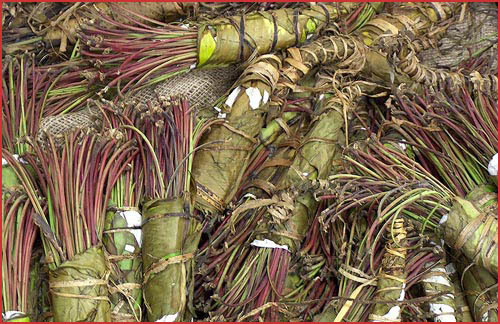 Courtsey of Wikipedia
If Somalia is to survive as a nation-state and having at least a normal functioning government with even average bureaucratic operations, it must urgently find effective solutions to the epidemic of Kat addiction among its population as a national priority. The problem is more than socio-economic issue. It is a grave national security threat as well.
In the summer of 1997, I was a member of a delegation of the now defunct National Salvation Council (the NSC, aka Sodare Group) from Addis Ababa, Ethiopia, to Mogadishu, Somalia. The delegation members included NSC Co-chairmen, Ali Mahdi Mohamed and Abdullahi Yusuf Ahmed as well as Council members that included Mohamud Mohamed Guled (Gacmadheere), Duuliye Sare Abdi Osman Farah among others. We numbered about 13 men and one female. We were on our way to meet with an Italian delegation led by then Deputy Foreign Minister for Africa, Senator Serri, who was about to visit Mogadishu for the sole purpose of mediating between disputing Mogadishu warlords despite many other problems of Somalia. The vision of the Italian delegation on solving Somalia’s predicament was not beyond the Banadir Region at that particular time.
Abdullahi Yusuf’s intention in the mission was to disrupt the Italian visit (which he did successfully) while Ali Mahdi’s was to win over the Italian favor against Hussein Aidiid and Osman Ali Atto.
We made a two-day stop-over in Djibouti. The Prime Minister of Djibouti then, Barkat Gourad Hamadou, honored us with a lavish luncheon with tender baby-goat’s meat and other delicacies of Djibouti at his residence. After the lunch, we were taken to a large and well furnished room with an Arabic seating with soft cushions specifically designed for long-time session in comfort for Kat indulgence, gossiping experience, news and secrets debriefing under the “high” influence of the stuff. In front of every person a bazooka-like wrapping was placed and a large silver tray full of the tools of the trade: A big and tall golden tea thermos, crystal glasses, shining and engraved tea-mugs, various branded cold soft drinks in plastic Coca Cola –type bottles and commercially distilled water in gravines with swimming crystal clear ice-rocks, all to be consumed in the breezing air-condition of the room- an artificial weather hide-out from the environment of burning heat of the City of Djibouti.
After a few chit-chats, Prime Minister Hamadou noticed that none of the members of our delegation was using the stuff as they were all non-chewers, at least, at that period of time. The Prime Minister was a bit annoyed and asked: “Why are you in civil war then, if there is nothing to fight for?” I guess we spoiled the daily indulgence session for our generous, high-level Djibouti host. Luckily, the conversation didn’t break up as we a had had a lot to discuss on Somalia, Somalia-Djibouti past and future relationships and the Horn of Africa, in general.
During those few years, I discovered, in separate sessions, that Ismail Omar Gheleh, the current President of Djibouti, was pondering about his desire to join his tiny country with Ethiopia as he was desperately convinced that Djibouti would not survive on its own. There was rampant corruption in the seaport operations, the main revenue generating enterprise besides the high spending men of the French legionnaires at Djibouti night clubs. The City of Djbouti was on the verge of being taken over by the influx of Ethiopians, who needed no immigration papers to come in. It was only Puntland help in 1999 to commit him to Somalia’s National Reconciliation process, encouraging him to take it over from Ethiopia, an AU and IGAD Mandated Country for Somali National Reconciliation Process. President Abdullahi Yusuf convinced President Daniel arab Moi of Kenya to support President Ismail Omar Ghueleh to play the role. It was undoubtedly a diplomatic success that pushed Ethiopia aside from the Somali issues. One may guess already why Ethiopia was not happy with President Yusuf lately. The second help came to Djibouti from post-9/11 World Order. Besides God’s wish, it was only these two factors that saved Djibouti from voluntary union with Ethiopia. Unfortunately, he betrayed Puntland State during the initial phases of the Arta Conference, a rift that eventually undermined the TNG of Abdulkassim Salad Hassan to pave the way for holding Embagati (Kenya) all inclusive and broad-based Somali National Conference and finally, the establishment of the Transitional Federal Government of the Somali Republic (TFG) in 2004, transforming it into the Somali Federal Republic in 2012.
Suddenly, the Prime Minister shared with us the socio-economic devastation Kat consumption has been causing on Djibouti at the time. He informed us that Djibouti was paying Ethiopia a hundred thousand US dollars daily, and that was only the portion of the payments that goes though from bank to bank. Think about residents who buy the stimulant on their own from individual Chat traders on the top of train and air passengers who also bring sacks of the green leaves to their families, relatives and friends in Djibouti cities.
On a number of occasions, I stopped over in Djibouti for a short stay. On multiple times, arriving at Djibouti International Airport, I used to see popular demonstration-like commotion at the gates of the airport-population rushing to the airport when Kat cargo delivery from Ethiopia is delayed for only a few hours. One would see custom and passport control officers whose mouths are asymmetrically filled with Qat and chewing it on the job. Think about the officers’ mental judgment and decision-making capability under the influence of the hyper-leaves at country’s highly sensitive and main border entry point.
The situation is even worse in Somalia with a few millions of US dollars spent every day on the habit. With no credible fiscal statics available, the country may be fast sinking into public and personal bankruptcy. A failed state desperately trying to recover from decades of civil war and total collapse of public services and institutions, has also population wholly consumed by the epidemic of daily Chat use, effectively destroying the socio-economic fabric of its society, abysmally curtailing manpower productive hours and bringing havoc to family livelihoods and relationships while it is also at same sometime constitutes an instigator and main source of corruption and loose social morals. A country with the geographical size larger several times than Italy or UK with porous long borders with Ethiopia and Kenya requires alert and non-Chat chewing security personnel and efficient bureaucracy.
The irony is that Somalis nowadays like to talk about safeguarding their sovereignty and territorial integrity, while at sometime allowing their neighbor states to dump poisonous addictive Kat to their citizens, drain their economy, disable their manpower and threaten their vital national security interests. Think about the real double-talk and double standard with a proverbial ostrich attitude!
Somalia has to come up with a solution to the menace of the Qat. While fully it is understandable that it is tough to try to ban the habit outright, at least a committee of experts should be immediately setup to study the problem and submit recommendations to competent bodies for, at minimum, regulating it and eventually outlawing it. Massive public education and media programs relating to its dangerous hazards to personal and public health should be initiated and launched immediately to stop the spread of the habit to young generation. Somalia cannot afford to continue to ignore its greatest, silent killer of its productive members of the society and the gravest national calamity posed by Kat trade. Please wake up!
Federalism, a Guarantor of Peace among Somali Clans
Nowadays and for while during the past two decades, Somali thinkers, writers and politicians were keenly debating on best way forward for Somalia’s governance and political arrangements Post-Civil War. This debate is extremely crucial for the survival of Somalia as a country as well as a strong cohesive nation-state.
While many among debaters were and are still sincerely looking for best possible governance system (s) and pros and cons of each of the “Menu of options”, a few of them continue to ignore the status quo (current Somalia’s political situation) dismissing it as side track and unimportant clannish nuisance or refuse to acknowledge the extent of public mistrust following the vicious civil war involving heinous crimes of ethnic cleansing, mass murder, forceful and illegal landing-grabbing, plunder of both public and private wealth and barbaric destruction of national heritage and state archives in Mogadishu and elsewhere.
In my humble opinion, any politician of conscience at any level of government (President, Cabinet and parliament members) whose political power base had committed such grave and gross human rights abuses, national robbery, national betrayal and treason should apologize to the nation and resign immediately. If that is not forthcoming, it would be mean that the civil war is still technically on, and there is no guarantee that history would not repeat itself. Such politicians have no moral legitimacy to govern until they come clear and publicly accept their personal and power-base responsibilities for what happened in Somaliaduring the Barre regime and following the final collapse of Somalia’s central state in 1991. Somalis, please be warned. One should never entertain with the idea to translate the recent US recognition of the current Somali Government as a victory of one faction over others in the Civil War, and again attempt to misuse state resources to try to subjugate others. That would be a futile exercise and would unfortunately hasten the disintegration of Somaliaas we know it. It is the expectation of all Somalis from the world community to watch out any signs for the repetition of that sad saga.
During the past ten years we witness multiple self-proclamations of regional federal mini-states such as MakhirState,KhatumoState,AwdalState,GalgamudState, Hibin and HeebState,AsaniaState,RasAsayrStateamong many others. With keen observation, one would realize that those self-proclamations were characteristically peaceful and surprisingly did not spark off any clan fighting with the unique exception of Khatumo, rightly resisting aggressive occupation of its territory by “Somaliland”militia. Why? This could be a case-study; of all clan wars in the country, the self-proclaimed federal mini-states brought relative peace to their respective constituencies. In my opinion, one of the main reasons for such peaceful environment within for all sub-clan systems is the fact that their constituencies see themselves as equal stake-holders in that mini-entity (state), which acts as the accepted and shared mechanism for conflicts resolution and constitutes common interest for all. Logically and practically, one would therefore take note of this new development to expand the concept to a national level in Somalia’s long journey to restore lost trust among its people and regions.
For historical prospective, a few months after we had established the Puntland State of Somalia in August 1998, a sub-sub-subclan among the inhabitants of coastal Indian Ocean Mudugh town of Gara’ad and surrounding areas including the District City of Jeriiban unilaterally announced the creation of Coastal State, declaring its independence from Puntland State, following sub-clan grievances regarding their expected share in the newly constituted Puntland Parliament. That grievance was actually proved to be the mistake or intentional concession of their allocated Parliament seat to another sub-clan in Mudugh Region by their local traditional elder. The subclan members opposed the move by the elder. To address the issue and resolve it, a delegation led by the Late State President, Abdullahi Yusuf Ahmed and me included, went to the District and met with all stake-holders. One of the first questions we asked our interlocutors was: “How many sub-subclans belong to or created the CoastalState, and how many regions are there in the proclaimed entity?” The audience looked at each other, and surprisingly, the answer was obvious. The District belonged to the larger Mudugh Region and even most of the inhabitants of the Jeriiban District alone via their representatives did not belong to and were not party to the “CoastalState”. That was the end of the story. I believe, CoastalStatewas the first unviable mini-state created in Somalia.
The lesson we learned from that experience was that a state whether it is a national or regional must enjoy the trust of all its constituencies to survive, safeguard its unity, develop and prosper in peace and harmony. Anyone aspiring to see the Somalia he or she wants or imagines must take this lesson seriously into account.
Those Somali writers debating on federalism lately almost all of them ignore the fundamental reason for the debate itself on the issue and failed to find the answers to two critical questions:
- What is the main reason that has brought us here to debate on Somalia’s governance options?
- How would you restore trust of the people nation-wide in a central authority when people of Somalia have not yet officially and technically ended the Civil War in the absence of comprehensive national reconciliation given what happened?
President Hassan, in a thoughtful, prepared and defiant speech to the Somali Diaspora in his recent visits to US and Belgium says openly, “ if you look back on what happened yesterday, you lose the opportunities of today”, thus dismissing outright any possibility for accountability for crimes of mass murder, crude human rights abuses, robbery and plunder of personal and public properties. With such a vision for Somalia, forget about reconciliation and peaceful conflict resolutions!
Finally, I am aware that many Somalis would like to give the current government in Mogadishuthe benefit of the doubt and wish her to succeed in the best interest of the entire nation. To those I say the taste of pudding is in the eating. Anyone who helps Somaliarecover from its present predicament will be highly appreciated and undoubtedly recognized.
 Warsame Policy & Media Network (WAPMEN)
You must be logged in to post a comment.