
| Source: SOMALIA WATCH |
| By Federico Battera, Saturday, August 12, 2000 UNDOS Research Specialist, Professor Development Studies – University of Trieste, Italy Summary and purposes The crisis of the State in Africa goes back to the early 80s: postcolonial African state has been neither able ‘to rule’ economy, nor territorial policy. Ethnicity has spread all over the continent. However, after the failure of the consociative policies channeled through one-party systems, the most evident factor has been its territorial dimension. Since the middle of the 80s, as the State machine has been evidently unable to expand, politicization has taken over territory, giving ethnicity a new relevance as to contrast territorial legitimacy, which had been acquired by the State through the decolonization process.Somalia has not escaped the trend, sliding into a civil war since the beginning of the 80s. By early 90s it has become the paradigmatic example of the failure of the state. Centralization, as conceived by the collapsed regime, turned into a non-state existence, distinguished by independent areas controlled by different ‘fronts’ or ‘movements’ drawn up along clan lines. By mid 90s the situation improved in certain areas and stabilized in others. A de facto regionalization has gone out: since then, some areas has progressed to a ‘recovery’ condition, other has been classified by UN as ‘transition’ zones or ‘crisis’ zones, the latter characterized by a steadfast state of ravage and insecurity.The crisis of the State in Africa has generated in major cases conditions of democratic change. Constitutional processes has been the consequence of the change. Almost everywhere, it has been the output of a widely expressed need of strengthening democratic procedures. Only in few cases, the issue of territorial dimension of ethnicity has been addressed through strict federalist guidelines (as tried to do Ethiopia), but decentralization and devolution has remained the major question on the ground, together with democracy.’Recovery’ areas in Somalia (mainly Northwest and Northeast Somalia) around mid 90s gained momentum, as the situation in the rest of the country remained critical. Since then, new local conditions in the North have granted security and a certain stability, besides their differences. In 1991, the liberation struggle from Barre’s regime in Northwest Somalia ended with the declaration of independence of Somaliland. The constitutional process was the unavoidable following step. In 1993, a National transitional Charter were approved and accepted by all the communities in the region, giving full legitimization at the process. In 1997, a new (interim) Constitution were passed out, after a new Constitutional Conference that ended a two-years crisis. After that, Somaliland is waiting its international recognition.The constitutional process in Northeast Somalia has started later. As has been rightly stated by Farah, better conditions of peace and recovery do not necessarily lead to a climate favorable to a new institutional framework. Besides, Northeast Somalia did not share the same eagerness of Somaliland to acquire independence. Nevertheless, a constitutional process has started since the end of 1997. The aim of this paper is to outline the constitutional process and the main characteristics of the Charter approved and secondly to draw up the political effects of the new process on Somalia. After all, a new political entity has been originated from Somali disorder.As what concern the first point, the Charter, comparing to the Draft, stresses the Islamic identity of the new entity and its presidential biases. Regarding the political effects of the birth of the new regional state, it is personal opinion of the author that it will affect the entire reconciliation process in Somalia and, in a certain extent, the stability of Somaliland. Comparing to Somaliland, the territorial dimension of the new entity is openly averted. One reason is that a request for an international recognition is not on the agenda. However, an alternative explanation resides on the clan structure of the new state. Contrary to Somaliland, clan agreement has preceded any territorial definition. So far, Puntland has yet to be clearly defined on the map, a part the vague identification with Northeast Somalia. As we will see, important issues like that of decentralization of the state have not been avoided only with the intent of endorsing with more power the new political leadership (as trying to avoid the same fate of the country) but because of the naturally decentralized structure of Somali society. Seems like that the manifest ambiguities of the Charter has been provided in order to leave the door open for different future solutions. Indeed, the Charter is only provisional. Further alterations have not to be excluded, depending on internal and international conditions. As Somaliland, seven years later the first National Charter still in the middle of its constitutional process, Puntland might not easily finalized its one. The process, the participation degree and the informal institutional constraints that has been settled during the whole period more than its final document is the mirror of the vitality of the involved society. Focusing on it is not a vain academic exercise.The author had the opportunity to follow the meetings of the Preparatory Committee, which with the assistance of foreign consultants drafted the Charter that was later submitted to the Constitutional Conference. Comparing the Draft with the final Charter has been the main source of the paper. Such a method elucidates the needs and the expectations of the members of the Constitutional Conference in charged with its approval. Such a source has been compared to local sources as well as previous reports.BackgroundFollowing the pattern of the Booroma National Charter, which formalized the birth of Somaliland during 1993, a new entity – the Puntland State of Somalia – was established in July 1998 out of a long Constitutional process that lasted more than two months. As in Boorama, the Constitutional Conference produced a three-year provisional Charter and elected a political leadership, i. e. a President and an Executive Council (called Council of Ministers in the Boorama Charter).Boorama paved the way, but it is a fact that the Puntland Constitutional Conference has been the product of a longer process, which officially started during 1997 but went back to the second National Reconciliation Conference of Addis Ababa of 1993. Indeed, during the National Reconciliation Conference, the SSDF (Somali Salvation Democratic Front) leadership anticipated its ‘federalist’ view of the future of Somalia, unofficially disclosed during 1994 in a statement by the Somali Community Information Centre in London. During the last five years, the federalist position has gradually acquired substance, recognizing the de facto situation on the ground: a clan-divided Somalia. Finally, the failure of several national reconciliation processes, from Sodere (1996) to Cairo (1997), created the condition for an autonomous regional process, pending the formation of other regional entities and the establishment of a new Federal Somalia.The Features of the CharterThe Charter, however transitory, defines a presidential system with a President able to dismiss the unicameral Parliament or House of Representatives (see Art. 12.5 of attached Charter). The House of Representatives consists of 69 members, representing of all constituent regions (Art. 8). However, an other chamber (of elders) has been proposed, called the Isimada (Art. 30) whose constitutional powers are not clear but would ostensibly need to be defined by the future Constitution.Even though, the Isimada could play a significant role, since the Charter formally recognizes to it a role of mediation between institutions (both State and regions and districts), in case of stalemate or disputes among “the community” (i. e. Puntland community as well a single clan) (see Art. 30.2): power that, together with that of selecting the members of the House of Representatives (30.3), gives it potentially an important role. The selection of the members has been carried out thanks to a careful balance between the numerical relevance of all communities and their number, to avert the exclusion of any political minority. Hence, this was an indirect election, without direct competition between parties and candidates. This required long debates among the communities involved; debates characterized by opposing vetoes between and among the communities followed by the selection of suitable candidates. Being the local community the natural constituency, it has been a consequence that only the elders played a role, as stated by the Charter itself (see, Art. 8.6).Although the selection seems to have relied on territorial criteria, it closely follows more an ‘a-territorial’ and consociative model. Such a criteria has already settled on the issue of the ministerial posts as well of the departments, agencies, judiciary agencies etc. So far, these are the de facto base of the forthcoming decentralization of the State (Art. 1.8), waiting for the matter to be regulated by law (Art. 18.1). Meanwhile, the State, and the Executive in particular, will nominate the governors of the regions and the mayors of districts, but always after direct consultation with district elders (Art. 18.3). The matter of decentralization is particularly delicate because one of the reasons for the collapse of Somalia was the unbalanced relation between the political center and periphery. In this sense, the Charter is still unclear and vague. What is evident is that the Charter does not recognize any formal function to the District Councils (DCs) and definitely removes any pre-exisiting regional community council (Art. 9.5).The matter shall be resolved in the future by the Executive.Besides the legislative one, the House of Representatives has other important responsabilities (see Art. 10.3): the approval and the rejection of ministerial nominees proposed by the President, the ratification or rejection of agreements and negotiations to achieve a federal national solution with other regional entities, and of all the future proposals submitted by the Executive concerning decentralization. Moreover, the Charter bestows the power to remove the immunity of the President on the House of Representatives (the so-called impeachment; Art. 14.1) upon a two-thirds majority vote. The procedure must be submitted to the House by the Executive-nominated (but House-approved) Attorney General.The Judiciary must be independent of both the Executive and the Legislative (Art. 19.1). Three levels of proceedings have been put in force (Primary Courts, Courts of Appeal and Supreme Court) (Art. 19.2), but the Charter recognizes, encourages and supports “alternative dispute resolution” (Art. 25.4) in keeping with the traditional culture of Puntland. Therefore, the State directly recognizes the force of the xeer (the customary law), that so far has held more sway than penal codes in the region.Islamic jurisprudence (fiqh) is the “basis” of law (Arts. 2 and 19.1). An implicit recognition of the superiority of ?ari‘a law exists, even though the lawmakers have preferred to avoid the more mandatory “the only source” of law, as in other juridical contexts. This is an ambiguous formula aiming to both recognize the ongoing regional process of re-Islamization as well as defuse its excessive aspects. Therefore, the Charter continually emphasizes the values of Islam, the State religion (Art. 2). The President himself must be a practicing Muslim (Art. 12.3), a quality not required for the members of the House (Art. 9). The Constitutional Court, which shall come into force with the future Constitution, is entrusted with all the issues and conflicts that might arise between Islamic jurisprudence and the law of the State and the Constitution itself (Art. 21.5). This conformity to Islamic values and the general reference of the Charter to the Islamic identity of Puntland is, moreover, stressed by the good relations that, pending the creation of Federal Somalia, Puntland is willing to maintain with the Organization of Islamic Conference (OIC) (Art. 5.3), which the original Draft did not mention.The general stress on the Islamic identity is confirmed in the chapter on the fundamental rights and freedom (Art. 6). On this point, the Charter introduces the widest changes in respect to the Draft. The Charter recognizes the freedom of thought and conscience, but forbids any religious propaganda other than Islam (Art. 6.2). This was one of the more discussed issues, during the meetings of the Preparatory Committee, which introduced the Draft to the Conference. In its approved version, the Draft made no reference to such a prohibition. In Article 6.2.1, the Draft explicitly recognized other religious denominations without the limitations introduced later by the Charter, which prefers to consider other creeds as “freedom of thought and conscience“. So clarified, the prohibition of other religious propaganda is not intended to limit a fundamental right of thought, which is per se unlimitable. It is a fact, that almost all the future Puntland citizens are, practicing or not, Muslims. Such statements are probably intended to define more precisely the religious identity of the State, especially in respect to the outside Islamic world, in particular after allegations that Ethiopia stand behind the constitutional process had been spread in the country.Contrary to the Draft, the Charter necessitates the adoption of regulation of freedom of expression. Article 6.3 contains the prohibition of torture unless the person is sentenced by courts in accordance with Islamic law. This is an indirect admission of the legality of corporal punishments. Such punishment is admitted by Islamic law (as hudud) but not by Somali customary law (xeer). Defining this punishment as “torture” contradicts the new State’s (not the Charter) acceptance of the Universal Declaration of Human Rights (Art. 5.2). This evident contradiction has been obviously only a problem of lack of understanding between different linguistic versions. The Draft, originally written in English, strongly forbids torture (Art. 6.3) and any other degrading treatment – “no one shall be subjected to torture, cruel, inhuman or degrading treatment or punishment…“. The English version of the approved Charter cuts the sentence relating to the degrading treatment, introducing a misleading distinction between torture and Islamic (corporal) punishments – “no one shall be subjected to torture unless sentenced by the Islamic Courts“. This distinction is more evident in the Somali version of the Charter, with the word jir-dil (lit. “body-beaten”) replacing “torture” openly referring to corporal punishments.It is worth noticing that the Charter explicitly introduces a specific citizenship (Art. 1.11), regulated by law, but recognizing from now on the right of every Somali citizen, who respects the Charter and the law, to reside in Puntland and conduct any economic activity (Art. 1.5). The issue of citizenship was intentionally avoided by the Draft which preferred formulas as “the people of Puntland will accept only those limitations on their sovereignty that may arise from their obligations as citizens of a democratic Federal Somalia” (Art. 1.5 of the Draft)”. Moreover, the Charter, at the Article 1.9, cut the word “Democratic” from that of the Draft, preferring to label Somalia simply “Federal” (Art. 1.9). This thought-provoking omission (almost all present constitutional systems define themselves as ‘democratic’) probably should be understood as the product of the strong will to adhere to a re-established Somalia only at particular conditions leaving open other options, but saving the federal formula. In other words the present Charter is intended to give precise limitations to those who should participate in the name of Puntland in a constitutional process at the national level, affecting the agenda of future reconciliation processes.As far as this delicate point of the cession of sovereignty is concerned, the Draft introduced as Annex 1 (Powers and Functions that Puntland is willing to transfer to or share with the Federal Government of a democratic Federal Somalia) a fine distinction between transferable functions and shareable functions. The former is defined as functions exclusively belonging to the Federal Government, (mainly, the regulation of currency and Foreign affairs), and the latter as those belonging to the states, (the regulation of the seas and the airspace of Somalia, national defense, the determination of customs fees and the management of the Federal Bank). Of all these regulations remains scant in the final Charter apart from a reference in Article 1.6. This article leaves, in a very vague way, to the dialogue between states or between Puntland state and the Central government, after the approval of the House of Representatives (Art. 10.3), what will be transferred to the future Central Federal Government. Hence, Puntland is part of Somalia, and it is striving to recreate the unity of Somali people (Art. 1.4), but the modalities of realization remain only an option still to be negotiated. So far, in fact, Puntland has not advanced any international recognition.The effects of the birth of Puntland on the process of reconciliation and fragmentation in SomaliaAt a first glance, the Charter outlines the structure of the government as the Draft does, but more unbalanced to the presidency. First, the President has the power to dismiss the House of Representatives (Art. 12.5, h), a power the Draft did not grant. Second, the State of Emergency (Art. 12.5, l), limited by the Draft to six months, is totally unlimited in the Charter. The choice of the name of the chief of the Executive itself (President) instead of Chief Minister, as proposed in the Draft, comes from the need to ensure a stronger Executive, as was so clear during the long discussions within the Preparatory Committee. Most likely, the Preparatory Committee intended to reserve this title for the Federal Executive. Therefore, the House has no way to dismiss the Executive – but the same occurred in the Draft – except for the impeachment (requiring upon a two-thirds majority) and the rejection of other ministerial nominees (Art. 10.3, d).The Constitutional Conference itself empowered the President for a three-year transitional period. Cabdullahi Yuusuf, a prominent military and political leader of the now dissolved SSDF, was elected with more than 80% of the votes (377) cast out of the 469 members of the Community Constitutional Conference. This gives him a free hand for his three-year term of office, as is the case for other Arab and African presidential systems. Nevertheless, without any formal strong check and balance, the Executive does face an “informal” balance in the strong political autonomy of the traditional leaderships (isimo). Indeed, the Charter recognizes their crucial mediation functions (Arts. 30, 8 and 18); among the most important of them is the role of selecting the representatives. Differently from the Guurti of Somaliland, in this case the Isimo have preferred to renounce more defined roles that would have restricted their exercise of authority, preferring to maintain an uninstitutionalized ‘gray zone’ where they could intervene without any defined restriction and with much more flexibility in order to achieve a more widespread political consensus. It remains to be seen whether those recognized powers will remain in place in the more complex and complete Constitution to come, at the end of the transitional process.This unceasing search for the widest political consensus over issues and this concern about unanimity, manifested during the Constitutional Conference (which went far beyond the scheduled fifteen days) show how a political tradition both resists and adapts itself to modern politics. Freedom of association, including the right to form political parties, however admitted (Art. 6.2, b), is de facto bypassed by a non-party system, where different positions over issues are channeled through clan networks and interest groups (economic, regional, religious and family groups). That does not mean that opposition and disputes are definitively overcome, but that these are rather voiced through interest groups.The formation of Puntland itself is the result of an intercommunity agreement between all Harti (Majeerteen + Dhulbahante + Warsangeli) communities of the North. Is a matter of concern that this agreement should start a border conflict with the neighboring countries or the others de facto entities. Indeed, the Article 1. of the Charter establishes the borders along the former regions and districts which comprise a Harti majority: Bari, Nugaal, Sool, southern Togdheer (Buuhoodle district), Mudug (with the exception of Hobyo and Xarardheere districts) and Southern, Eastern and North-Eastern Sanaag. So defined, the Puntland State of Somalia claims sovereignty over territories that constitute part of Somaliland (Sanaag, Sool and Togdheer).That these regions and districts constitute parts of Somaliland may be matter of future conflicts between the two states. The communities of these districts did not completely take part in the first constituent congress (shir beeleed) of 1991 in Burco which declared independence, but did participate in the 1993 congress in Boorama which drew up the first Charter of Somaliland. Moreover, Somaliland, since the 1991 declaration, is in search of an international recognition relying on the legal basis of its previous short independence (only five days) before it merged with the former Italian Trusteeship Territory of Somalia in 1960.The creation of Puntland State of Somalia has, indeed, created a stalemate between the two entities. Fortunately, it has not so far deteriorated to a military conflict, maybe thanks to the Ethiopian political mediation between the two. The geographical proximity and the economic dependence on Ethiopia, together with the open hostility of Egypt and the Arab League towards the independence process in Somaliland lead to unalignment of the political position of Somaliland to that of Ethiopia.At the present, the government of Somaliland is, indeed, unable to exert a direct rule over its eastern part, which has largely joined Puntland. Maxmuud Fagadheh, a Dhulbahante from Eastern Somaliland, Foreign Affairs minister of the Cigaal government, is still in the government of Somaliland. In the meantime, 213 delegates out of the 469 to be present at the Constitutional Conference of Puntland came from Eastern Somaliland. Sool and Sanaag sent 27 of the 69 representatives to the Parliament of Puntland. Maxamed Cabdi Xaashi, the former leader of dismissed USP, the leading political and military faction in Eastern Somaliland, has been elected to the Vice-Presidency of Puntland, and three of the nine cabinet ministers of Puntland come from the contested regions. Moreover, an official statement of Harti traditional leaders (Isimo) of Eastern Somaliland associated themselves with the process of formation of Puntland and, so doing, legitimized this process, although the Isimo themselves are fully entitled to be part of the Guurti (the Senate of elders of Somaliland). In other words, Eastern Somaliland might become a buffer zone between the two entities, without clearly defined sovereignty.One of the first effects of the formation of Puntland might be that Somaliland government gives up its claim of independence. In this perspective, the recent declaration of President Cigaal in favor of a confederation system for a united Somalia, after his February journey in Egypt makes sense. A more long-term effect should be the proliferation of other new regional entities as the product of intercommunity (interclan) agreements. Besides, Puntland itself, as it appears today, could be easily named Hartiland. The Charter itself, in Article 1.2, leaves the door open to further additions to Puntland State, first of all “The community that participated in the Garowe consultancy meeting on February 1998“, the meeting which started the final phase of the constitutional process. This is a clear reference to the Marreexaan of Northern Galgaduud, which withdrew in the last stages of the process. Their further participation could transform Puntland from a Northern Hartiland to a Northern Daaroodland.In this perspective, Somalia should take the form on the ground, which was outlined by the SSDF network document in London 1994: a Federal Somalia founded on five entities corresponding to the five large clan confederations – Dir (Isaaq + Ciise + Gadabuursi) in the northwest, Northern Daarood in the north-east, Hawiye in the middle, Digil and Mirifle in the interiverine area (Bakool e Baay), Southern Daarood in the TransJuba area. A similar process is, indeed, restarting in the interiverine area after the push out of SNA from Baaydhaba by the RRA, with the support of Ethiopian troops. On the contrary, one in Hiiraan, the other in TransJuba had different experiences. In Hiiraan the process started in May 1998. It was led by five ex USC (United Somali Congress)-SNA factions (representing five different Hawiye clans of the region), after their successful ‘secession’ from Caydiid’s movement. This process is still incomplete because it tried to embrace the whole Hawiye clan family. A similar process in the TransJuba region has never started because of the internal conflict between factions, among different Daarood movements and the guri/galti (indigenous/newcomers) conflict. Finally, it was definitively halted by the recent seizure of Kismaayo by the combined forces of SNA and SNF.Among the main hindrances in the spreading of the pattern of regional reconstruction processes are: the pursuit of a centralist and anti-federalist approach by the joint administration of Mogadishu, and in particular by the SNA-Caydiid faction, and the anti-clan and unitary approach of the militant wing of the Islamist movement, based mainly in the Upper Juba region (Gedo) (but now threatened by the Ethiopian army), but with a strong political presence in both Banaadir and Mogadishu. These two factors are, in a certain way, bound together, even if the Islamist movement seems to have dropped its ‘taliban’ strategy of military conquest, after its failures at Boosaaso in 1992 and in the Ogaadeen between 1996 and 1997. This movement now prefer to affect local administrations through its social and juridical programs.Concluding remarks and options for the futureBoth northern regions, Somaliland and Puntland, were largely spared the civil conflict following the dramatic collapse of Barre regime. This fact gives them an undeniable asset in respect to the southern regions for a true implementation of reconciliation process. Even if they have not been completely free of clan strife, the northern regions still preserve strong societal ties. The institutional recognition of the role played by the traditional leadership in Puntland in the seven-year period of peaceful self-government in a stateless situation, has come only at the end of this process. However, the mediation role of the elders has not been so successful in other regions of Somalia for several reasons. Generally speaking, outside the Majeerteen context, Somali society lacks a stable hierarchy of paramount chiefs, and it follows that mediation can achieve only a local dimension. Nevertheless, in the northwestern regions (Somaliland) a regionalist feeling has widely spread in the last thirty years. In this part of Somalia, after the collapse of the State, the elders have collectively expressed this feeling better than the SNM, frequently paralyzed by leadership competition. Such regional affinities may be reached in the interiverine region, which has developed similar regionalist feelings after years of ravaging war and exploitation by the former regime, even if the civil conflict has left room for a confrontation between groups. Similar results are more hard to find in the Shabelle and Juba regions because of the confused societal situation complicated by the civil war and migrations.What is going on in Somalia from a political and constitutional point of view represents a defiance of the territorial principle and roots of international law. There is no doubt that international law is still playing and will play an important role in affecting the future juridical and constitutional framework of local governments, but what we are seeing throughout Somalia (and in other part of Africa) is a re-appropriation of imported institutional formulas by local political (and juridical) tradition. This involved the issue of the transplant of western institutions and their encounter with the so-called ‘informal’ sector, which as a concept has been by now enlarged to embrace not only the economic but the political and juridical dimensions. This issue is beyond the purpose of this paper, but has deep influence on contemporary Somalia.From a territorial point of view, the birth of Puntland not only reopens the whole question of internal borders in Somalia but also weakens the meaning of internal and external borders. They remain (in accordance with international law) and even produce a schizophrenic proliferation of district and sub-district boundaries defining community homelands but, in the meantime, generating the search for alternative and ‘informal’ solutions. This is one of the reasons for the failure or the incomplete success of the formal district governments and the better performances of the more flexible and aterritorial institutions such the guurti and isimo.From this point of view, the problem of sovereignty between Somaliland and Puntland that arises from the participation of Sool and Sanaag in the latter’s constitutional process is simply eluded by the participation of Harti in the parliamentary process and in the government of Somaliland. A similar process is smoothly developing between Puntland and the Somali region of Ethiopia: though not widely known, some Ethiopian Harti representatives sit in the Puntland House of Representatives.Similar problems between regional entities may arise and similar solutions may be found when other regional processes reach a more advanced stage. Hence, the formation of new entities will not necessarily mean conflict, but contested territories should play in the future a buffer role. The local concept of State sovereignty does not naturally match with the rigid concept of State territory. Instead, it should expand in the ‘official’ territory of other countries in a flexible way and wherever members of its community are found. This is exactly one of the options offered to end the conflict and to reconstruct Somalia by the LSE consultant to the European Union during 1995. Today, is effectively put into effect in all Somali regions without respect of internal and external borders. From another point of view, it is a slide back to a legal status of the community group, confirmed by a citizenship which corresponds to kinship. These are new elements of extreme importance to those who are directly or indirectly committed to developing alternative solutions in the African context, split up between State sovereignty and ethnic allegiance. What is advancing in Somalia is a more flexible and a more restricted idea of what the State is and means in Africa (and elsewhere). |
Category: Uncategorized
The Mental Split: Why Some Puntlanders Can’t Hold Puntland and Somalia in the Same Head
WAPMEN EDITORIAL
There is a quiet but corrosive confusion eating away at Puntland society — not a military threat, not a fiscal collapse, but a mental fracture. Many residents have reached a breaking point where they can no longer hold two ideas at once: Puntland and Somalia.
One thinker once asked: “Who can keep two opposing ideas in his head without losing his mind?”
The tragedy in Puntland today is that these ideas are not opposing at all — yet they are treated as mortal enemies.
On one side are those chanting “Puntland! Puntland!” as if Puntland were a besieged secessionist republic. On the other are those chanting “Somalia! Somalia!” as if Puntland were an illegal deviation from a unitary past that no longer exists. Each camp believes the other is committing political heresy. Each is trapped in illusion. And between them lies a society caught in intellectual paralysis.
This is not an ideological debate. It is a failure of civic education.
Puntland Is Not Anti-Somalia — And Somalia Is Not Anti-Puntland
Let us state this plainly, because too many leaders have failed to do so:
Puntland was created to save Somalia, not to escape it.
Federalism — imperfect, messy, and often abused — was designed to reconcile local self-rule with national unity. Puntland is not a substitute for Somalia, nor is Somalia a threat to Puntland’s existence. One is a federal member state, the other a federal republic. This is not rocket science. Yet decades after Puntland’s formation, large segments of the population still do not grasp this basic constitutional reality.
Why?
Because no successive Puntland administration invested seriously in civic education. No sustained effort was made to teach citizens what federalism means, what Puntland’s legal status is, where its powers begin and end, and how Somali unity actually functions in a post-1991 political order.
The result is a vacuum — and vacuums are always filled by slogans, rumors, clan narratives, and emotional politics.
A Civic Brainstorming That Exposed a Deeper Deficit
Appraising yesterday’s civic brainstorming at the Puntland State Presidency — and observing the general political mood expressed in individual remarks and group discussions — one thing stood out with unsettling clarity: the central role of government and the education sector in producing this confusion.
The questions raised, the anxieties voiced, and the contradictions openly displayed were not signs of public apathy. They were symptoms of institutional neglect. People were not confused because they are incapable of understanding federalism; they were confused because no one systematically taught it to them.
When citizens debate the very existence of Puntland versus Somalia inside a federal system, the problem is not the audience — it is the curriculum, the messaging, and the silence of those entrusted with public instruction.
Civic awareness does not emerge spontaneously. It must be cultivated — in schools, universities, civil-service training, public media, and official discourse. Puntland’s government and education authorities abdicated this responsibility for years, and yesterday’s brainstorming merely held up a mirror.
Confusion Produces Flight, Not Loyalty
This mental split has real consequences. When people feel forced to choose between Puntland and Somalia — instead of understanding how the two coexist — they disengage. Some retreat into cynicism. Others relocate physically, politically, or psychologically. You see it in migration patterns, in political apathy, and in how easily external actors exploit internal uncertainty.
A society unsure of its political identity is easy to manipulate.
And manipulation thrives where education is absent.
Leadership Failure, Not Public Ignorance
Let us be clear: this is not the fault of ordinary citizens. It is a leadership failure — collective, prolonged, and unforgivable.
Puntland’s administrations governed budgets, ports, and security forces, but neglected the most critical infrastructure of all: the civic mind. They assumed people would “just understand” federalism by osmosis. They were wrong.
You cannot build a stable polity on assumptions. You must teach it, explain it, debate it, and reinforce it — relentlessly.
Until the Confusion Is Addressed, Instability Will Persist
As long as Puntlanders are trapped in a false binary — Puntland versus Somalia — the region will continue to bleed cohesion. Unity will remain rhetorical. Federalism will remain misunderstood. And politics will remain emotional rather than institutional.
The cure is not louder slogans.
It is serious civic education, honest leadership, and institutional courage.
Puntland and Somalia are not mutually exclusive ideas.
They are incomplete without each other.
Until Puntland’s leaders finally grasp — and teach — that simple fact, this confusion will remain not just a debate, but a danger.
From Consultation to Congress: Puntland Must Rise to the Moment
EDITORIAL
Today’s all-day consultation convened by the President of Puntland State of Somalia, Said Abdullahi Deni, was not an ordinary meeting. It was a rare convergence of accumulated state memory: former cabinet ministers, ex-parliamentarians, veteran security commanders, and leading intellectuals—nearly one hundred minds shaped by war, peace, institution-building, and the hard lessons of Somali federalism. Such a gathering carries a responsibility larger than a communique. It demands elevation.
What unfolded in the Puntland State Presidency at outskirts of Garowe today was not merely “brainstorming.” It was a de facto congress—without the name, mandate, or legitimacy to match its gravity. And that mismatch matters.
Puntland at an Inflection Point
Somalia and the Horn of Africa are entering a dangerous phase: contested sovereignties, collapsing regional norms, external interventions masquerading as partnerships, and an increasingly erratic federal center. Puntland sits at the intersection of these storms—security pressures from extremist networks, constitutional overreach from Mogadishu, and geopolitical tremors from the Red Sea to the Gulf of Aden.
At such moments, process becomes substance. History teaches that decisions taken without broad legitimacy—even if correct—are easily delegitimized, resisted, or reversed. Puntland’s own founding in 1998 was not an executive decree; it was a grass-roots congress, painstakingly assembled to produce collective ownership and political durability (cf. Puntland State Formation Conference, Garowe, 1998).
Consultation Is Not Enough
A consultation advises power. A congress authorizes it.
The distinction is not semantic. Under Somalia’s federal dispensation, strategic actions—especially those touching security posture, inter-state relations, and constitutional interpretation—derive legitimacy from collective deliberation, not presidential briefings. This principle is embedded in the logic of the Provisional Federal Constitution, which recognizes shared sovereignty between federal institutions and member states, and—critically—between governments and their constituencies (Somalia Provisional Constitution, Arts. 1, 50).
By stopping at consultation, Puntland risks undercutting the very strategic clarity it seeks. Worse, it signals caution where confidence is required.
Why a Puntland Congress Matters—Now
Transforming this elite gathering into a Puntland Congress would do three essential things:
Anchor Strategy in Legitimacy
Decisions emerging from a congress carry moral and political weight that no executive statement can replicate. They bind institutions, unify elites, and reassure the public that Puntland is acting collectively—not reactively.
Reclaim Institutional Memory
Puntland’s veterans are not ceremonial figures. They are custodians of precedents forged through civil war, state collapse, and regional brinkmanship. A congress converts memory into policy.
Signal Readiness to Friends and Foes
In a region where perception often precedes power, a congress announces seriousness. It tells Mogadishu, neighbors, and international partners that Puntland’s next steps are not improvisations but the outcome of sovereign deliberation.
The Cost of Delay
Somalia’s tragedy is littered with missed moments—times when leaders chose expediency over institution-building. The result has been fragmentation, foreign manipulation, and perpetual crisis management. Puntland has long claimed to be different: rule-based, consultative, and grounded in consent.
This is the moment to prove it.
Elevating this consultation into a Puntland Congress is not a rebuke of the presidency; it is its completion. It would provide the President with a fortified mandate—one capable of sustaining difficult decisions in an unforgiving regional climate.
A Call to Courage
Great leadership is not defined by convening meetings, but by knowing when to formalize history. The brain power is already assembled. The issues are already grave. The hour is already late.
What remains is the courage to name this gathering what it truly is—and allow Puntland, once again, to lead Somalia not by noise, but by constitutional seriousness.
References (selected):
Somalia Provisional Federal Constitution (2012), Arts. 1, 50.
Puntland State Formation Conference (Garowe), 1998—foundational resolutions and communiqués.
——–
Support WAPMEN — the home of fearless, independent journalism that speaks truth to power across Somalia and the region.
Tel/WhatsApp: +252 90 703 4081.
Somalia’s Perpetual Crisis: How Exclusion and Short-Term Power Doomed the State
Somalia’s tragedy is not merely one of collapse, but of an unending cycle of failed rebirths. The state did not fail solely because it lacked governments or resources. It has consistently failed to rebuild because its would-be architects—across the political spectrum and the clan map—have repeatedly chosen factional control over inclusive nation-building. The conduct of Mogadishu-centered elites since the Transitional Federal Government (TFG) is a stark chapter in this longer story, but it is a symptom of a deeper, systemic disease.
Let us speak plainly, without nostalgia, tribal defensiveness, or historical amnesia.
A Distorted Genesis: The TFG and the Missed Moment
When the TFG was formed in 2004—painfully negotiated and internationally backed—it sought to return to Mogadishu. However, the narrative that city elites simply refused it entry oversimplifies a volatile reality. Mogadishu was not under a unified authority but fragmented among warlords. By 2006, power had consolidated under the Islamic Courts Union (ICU), which brought a harsh but unprecedented stability. The TFG’s entry was not blocked by a petty refusal; it was rendered moot by the rise of a rival, popular governance project. The international and regional decision to empower the TFG to dismantle the ICU via a catastrophic Ethiopian invasion in 2006 was the true pivot. This foreign intervention, invited by a faction within the TFG but opposed by most Somalis, did not fill a passive vacuum. It actively destroyed a Somali political order and birthed the very extremist forces, like Al-Shabab, that would become the enduring crisis. The message became unmistakable: sovereignty was negotiable, and power could be outsourced.
That moment should have triggered national self-reflection. Instead, it inaugurated a politics of denial and dependency, where Somali elites learned to weaponize foreign patronage against domestic rivals.
Sabotaging Federalism: A System Designed to Fail
Federalism was not imposed; it was a Somali compromise to end the centralized tyranny that had fueled civil war. Yet, once codified, it was gutted in practice by a center that demanded obedience and by regional leaders who built personal fiefdoms. The system has collapsed into open confrontation. Puntland has suspended recognition of the federal government over constitutional disputes, while relations with Jubaland have broken down into federal intervention and armed clashes. This is not state-building. It is state capture by multiple, competing centers.
The failure is not Mogadishu’s alone. It is a collective failure of a political class that treats federal units not as pillars of a shared republic, but as clan-based franchises for resource capture and patronage. The “4.5” clan power-sharing model, intended as a temporary fix, has solidified into an engine of zero-sum competition, where governing is about dividing the spoils of port revenues and international aid rather than building common institutions.
The Somaliland Catastrophe and the Illusion of Silence
The most damning evidence of this systemic failure is the handling of Somaliland. For over three decades, successive governments in Mogadishu have oscillated between denial and empty rhetoric, mistaking inertia for strategy. This was not a problem that would fade. While Somalia fractured and talked to itself, Somaliland built de facto institutions. Mogadishu’s chronic irresponsibility created the space for others to act. The reckless Memorandum of Understanding with Ethiopia and the subsequent recognition by Israel in December 2025 were not merely diplomatic coups for Hargeisa; they were the direct harvest of Mogadishu’s strategic neglect. Yet, this too is a Somali tragedy, not a pure victory: Somaliland itself is fractured, its government struggling to control eastern regions that reject its independence project. A problem ignored mutates, but it does not resolve cleanly for anyone.
The Capital That Cannot Be a Capital
At the heart of Somalia’s predicament lies the deadly illusion that controlling Mogadishu equals controlling Somalia. The capital city is treated as a clan estate, the ultimate prize in a war of attrition. By refusing to share it—politically, symbolically, and administratively—dominant actors have turned it from a necessary unifying center into the primary centrifugal force of national fragmentation. This mentality is mirrored in regional state capitals, where local elites replicate the same politics of exclusion. The disease is national.
Failure to Diagnose: Confusing Symptoms for Causes
Worst of all, Somalia’s political class has never honestly diagnosed the illness. They blame foreign conspiracies while perfecting domestic sabotage. They seek foreign troops to hold off enemies created by previous foreign interventions. They confuse militia control with governance, and international recognition with legitimacy.
Somalia’s tragedy is not a lack of intellect or goodwill. Its tragedy is that the logic of its politics—shaped by the trauma of dictatorship, clan fracture, and foreign manipulation—rewards short-term predation over long-term construction. Those who claim to speak for the nation have consistently refused to listen—to history, to other Somalis, and to the clear lesson that no faction can build a state that belongs only to itself.
Until Somalia confronts this original sin—this systemic culture of exclusion, fragmentation, and denied sovereignty—no amount of conferences, constitutions, or foreign troops will save it. A state cannot be rebuilt by those who never accepted that it must belong to all. And Mogadishu will never be the capital of a nation until every Somali, from Hargeisa to Kismayo, believes it has stopped behaving like the capital of a faction. The curse is not the city, but the unbroken, ruinous politics practiced within it.
13 Years of WDM (now WAPMEN) — Fearless, Independent, Uncompromising
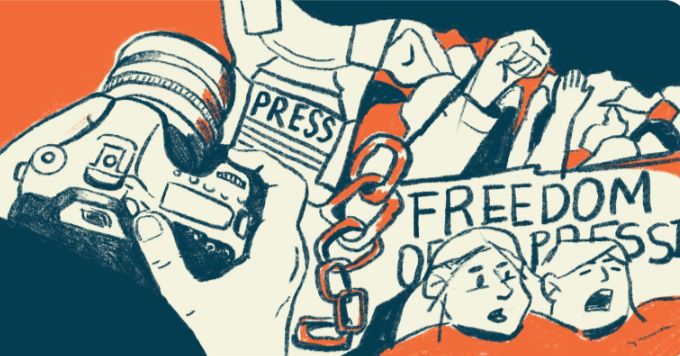
Thirteen years ago, Warsame Digital Media (WDM) was born out of a simple but dangerous idea: tell the truth, even when power is uncomfortable with it.
What began as a modest digital platform has grown into a trusted voice for independent Somali journalism, policy analysis, and unapologetic commentary—often standing alone when silence was safer, and conformity more rewarding.
For 13 years, WDM has:
Challenged authoritarian drift, corruption, and political deception
Defended federalism, constitutionalism, and collective sovereignty
Preserved institutional memory against deliberate amnesia
Given voice to citizens, scholars, and dissenters excluded from official narratives
Refused funding, patronage, or protection that demanded compromise
WDM has survived threats, censorship, character assassination, isolation, and financial hardship—not because the road was easy, but because the mission was necessary.
In an era of shrinking civic space, manufactured consent, and media capture, WDM chose the harder path: independence without apology.
This anniversary is not a celebration of longevity alone.
It is a reckoning—with those who abused power, distorted history, and mistook silence for consent.
To our readers, contributors, critics, and supporters across Somalia and the diaspora:
You kept this platform alive.
To those who hoped WDM would fade:
We are still here.
And to the next generation of truth-tellers:
The fight continues.
13 Years Strong.
13 Years Unbought.
13 Years Unbroken.
— Warsame Digital Media (WDM)
White Paper: Colonial Treaties, Clan Territories, and the Limits of Unilateral Sovereignty Claims in Northern Somalia
Executive Summary
This policy paper examines the legal status of colonial-era treaties between the British administration and northern Somali clans and assesses their relevance to post-1991 sovereignty claims. It argues that these treaties collectively established the British Somaliland Protectorate as a colonial administrative unit, not clan-owned sovereign entities. All such treaties were extinguished by the 1960 Union of British and Italian Somaliland, transferring sovereignty to a unified Somali Republic. The collapse of the Somali state in 1991 did not revive colonial treaties nor dissolve Somalia’s international legal personality. Consequently, Somaliland cannot obtain international recognition without Somalia’s consent through negotiation, as required by international law governing state continuity, territorial integrity, and secession.
1. Introduction
Since 1991, claims to sovereignty in northern Somalia have frequently invoked colonial-era treaties as a legal foundation for unilateral independence. This paper evaluates such claims against established principles of international law, including state succession, territorial integrity, and recognition. It demonstrates that colonial treaties do not confer enduring sovereign rights on clans and cannot be selectively resurrected to justify unilateral recognition.
2. Colonial Treaties and the Formation of the British Somaliland Protectorate
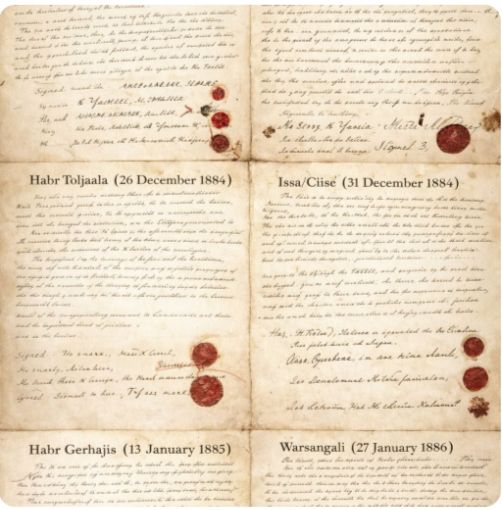
Treaties concluded between Britain and northern Somali clans in the late nineteenth and early twentieth centuries were instruments of colonial administration. Under international law, treaties concluded between colonial powers and non-state entities did not create sovereign equals nor vest sovereignty in local signatories (Shaw, 2017; Crawford, 2006).
Collectively, these agreements constituted the British Somaliland Protectorate, whose external borders were fixed by inter-imperial agreements between Britain and Italy. They did not:
Create independent clan states
Transfer sovereignty to clans
Establish inheritable territorial title
Colonial sovereignty resided exclusively in the administering power.
3. Dhulbahante Territory and Colonial Incorporation by Occupation
Dhulbahante territories were incorporated into the Protectorate through colonial occupation, following the defeat of Sayid Mohamed Abdulle Hassan and the collapse of the Dervish Movement. International law recognizes occupation as a lawful mode of colonial territorial acquisition during that period (Shaw, 2017).
This history confirms that the Protectorate was not a voluntary confederation of clans but a colonial construct established through mixed methods of treaty and force.
4. Colonial Borders vs. Clan Borders
International law distinguishes between administrative colonial borders and internal social or customary boundaries. Colonial borders defined the territorial scope of the colony for purposes of administration and later state succession; they did not abolish internal communal land tenure or clan territoriality (Crawford, 2006).
The principle later known as uti possidetis juris preserved colonial administrative borders at independence to prevent conflict—not to reallocate internal ownership or sovereignty (ICJ, Burkina Faso v. Mali, 1986).
5. Legal Extinguishment of Colonial Treaties by the 1960 Union
Upon independence and union in 1960, sovereignty passed from the colonial administrations to the Somali Republic as a single successor state. Under the law of state succession:
Colonial treaties lapse unless expressly preserved
Sovereignty vests in the successor state, not sub-state entities
Internal groups do not retain a right of unilateral withdrawal
This position is consistent with the Vienna Convention on Succession of States in Respect of Treaties (1978) and customary international law (Crawford, 2006).
6. Post-1991 Collapse and the Continuity of the Somali State
The collapse of Somalia’s central government in 1991 did not terminate Somalia’s international legal personality. Under international law, statehood is not extinguished by governmental collapse (continuity doctrine). Somalia retained UN membership, treaty capacity, and territorial integrity (Shaw, 2017).
The International Court of Justice has repeatedly affirmed that internal instability does not dissolve statehood (Legal Consequences of the Construction of a Wall, Advisory Opinion, 2004).
7. Recognition, Secession, and the Requirement of Negotiated Consent
International law strongly disfavors unilateral secession from an existing sovereign state. Outside the context of decolonization, recognition of a breakaway entity requires the consent of the parent state, except in exceptional cases of remedial secession.
In its Kosovo Advisory Opinion (2010), the ICJ deliberately avoided recognizing a general right to unilateral secession and emphasized the primacy of territorial integrity in relations between states.
Somaliland’s case does not qualify as:
Decolonization (self-determination was exercised in 1960), nor
Remedial secession (no sustained denial of internal self-determination meeting the high threshold recognized in doctrine)
Accordingly:
Somaliland cannot lawfully obtain international recognition without Somalia’s consent
Such consent can only arise through formal negotiation with the internationally recognized Somali state
Recognition absent consent would violate Somalia’s territorial integrity under UN Charter Article 2(4) and UN General Assembly Resolution 2625 (1970)
International practice—from Sudan/South Sudan to Ethiopia/Eritrea—confirms that negotiated separation, not unilateral declaration, is the lawful pathway.
8. Policy Implications
For Somali stakeholders:
Sustainable political outcomes must be negotiated, inclusive, and legally grounded. Colonial reinterpretation offers no lawful shortcut.
For international actors:
Recognition without Somalia’s consent would contravene settled international norms and set a destabilizing precedent.
For mediation frameworks:
Dialogue should focus on negotiated constitutional or confederal arrangements rather than unilateral recognition strategies.
9. Conclusion
Colonial treaties in northern Somalia established a colonial administration, not sovereign clan entities. These treaties were extinguished by the 1960 Union, transferring sovereignty to a unified Somali state. The 1991 collapse did not revive colonial arrangements nor authorize unilateral secession.
Somaliland cannot secure international recognition without Somalia explicitly letting it go through negotiation. Any alternative approach lacks legal foundation and contradicts international law on state continuity, territorial integrity, and recognition.
References (International-Law Sources)
Crawford, J. (2006). The Creation of States in International Law (2nd ed.). Oxford University Press.
Shaw, M. N. (2017). International Law (8th ed.). Cambridge University Press.
International Court of Justice (1986). Frontier Dispute (Burkina Faso v. Mali), Judgment.
International Court of Justice (2004). Legal Consequences of the Construction of a Wall in the Occupied Palestinian Territory, Advisory Opinion.
International Court of Justice (2010). Accordance with International Law of the Unilateral Declaration of Independence in Respect of Kosovo, Advisory Opinion.
United Nations (1945). Charter of the United Nations, Article 2(4).
United Nations General Assembly (1970). Resolution 2625 (XXV): Declaration on Principles of International Law concerning Friendly Relations.
Vienna Convention on Succession of States in Respect of Treaties (1978).
The Rule of the Jungle Returns: When Power Replaces Law
WAPMEN EDITORIAL

The mask has slipped. The pretense of a civilized international order has evaporated, revealing a hollow stage. When Israel razed Gaza, killing civilians en masse while the world watched—paralyzed, mute, complicit—we learned a brutal lesson: there is no referee left on the field.
That moment was not an aberration. It was a signal flare.
What followed was predictable. If impunity is rewarded, it becomes doctrine. If international law is optional for the powerful, it becomes irrelevant for everyone else. Gaza is not only a graveyard of innocents; it is the funeral of a global system.
The Death of the Umpire
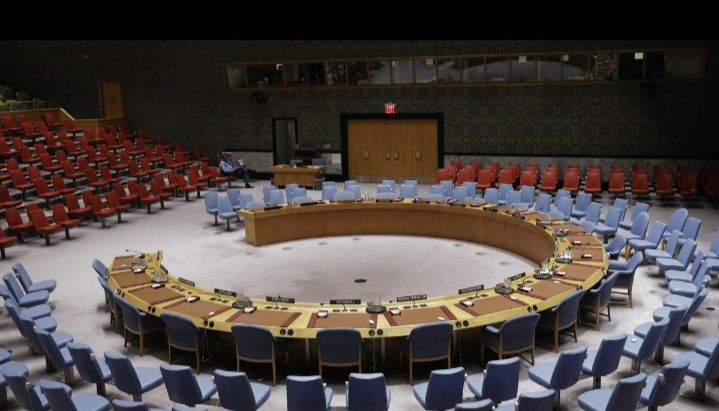
Let us speak plainly: there is no United Nations anymore—not in any meaningful sense. There are buildings, budgets, and bureaucrats. There are speeches, statements, emergency sessions, and vetoes. But there is no enforcement, no moral authority, no deterrence. International law has been reduced to a pamphlet—waved by the weak, shredded by the strong.
Human rights? Selective. War crimes? Contextual. Genocide? Debated. Justice? Deferred—forever.
This is not a failure of capacity; it is a failure of will. The system was not overwhelmed; it was captured.
From Gaza to the World
Once the precedent is set, the contagion spreads. If mass killing can be televised without consequence, why should others restrain themselves? If borders can be violated with applause from allies, why respect sovereignty elsewhere?
Today the names whispered are Venezuela and Iran. Tomorrow, it will be someone else. The lesson has been absorbed: power, not principle, decides. Might does not just make right—it erases the question altogether.
We are not drifting toward chaos; we have institutionalized it.
The New Normal: Permanent War
What is emerging is not a single world war, but something more insidious: a permanent state of global confrontation—proxy wars, sanctions wars, cyber wars, economic strangulation, information warfare—all unfolding simultaneously, everywhere. The battlefield is no longer defined; it is ambient.
And the victims are always the same: civilians, the poor, the stateless, the voiceless. Gaza today. Somewhere else tomorrow.
This is not a future imagined by dystopian fiction; it is a present engineered by geopolitical arrogance.
Somalia and the Periphery Beware
For fragile states—Somalia among them—the implications are dire. When international law collapses, small nations lose their only shield. Sovereignty becomes negotiable. Recognition becomes transactional. Fragmentation becomes profitable for outsiders.
When the jungle rules, the smallest creatures are the first to be trampled.
A World Without Restraint
We were told “never again.” What they meant was “never again—for us.” The rest of humanity can queue for condolences.
This is the dreadful truth we now inhabit: a world without restraint, without accountability, without shame. A world where the powerful act first and explain later—if at all.
What we are waiting for now is not peace, but escalation. Not diplomacy, but alignment. Not justice, but survival.
The jungle is back. And it is hungry.
———-
Support WAPMEN — the home of fearless, independent journalism that speaks truth to power across Somalia and the region.
Tel/WhatsApp: +252 90 703 4081.
Strategic Silence Is Not Neutrality — It Is a Choice
WAPMEN Editorial
When a sovereign state is openly violated, silence is never innocent. It is calculative.
In the wake of Israeli aggression—recognizing a region of Somalia as an independent state in brazen violation of international law—the world did not speak with one voice. Many did the right thing. Regional blocs, international organizations, and responsible states rose to defend Somalia’s territorial integrity, the sanctity of borders, and the fragile legal order that still pretends to govern international relations.
Others chose to wait.
This strategic silence—particularly from Somalia’s immediate neighborhood—is neither accidental nor benign. It reveals two uncomfortable truths that Mogadishu, Garowe, Hargeisa, and every Somali citizen must confront without illusion.
Silence Option One: Sinister Self-Interest
Some actors see Somalia not as a state to be defended, but as a chessboard to be exploited.
In a region already saturated with proxy wars, port rivalries, military basing, and intelligence games, Somalia’s fragmentation is not a tragedy—it is an opportunity. Silence, in this context, is consent by omission. It keeps doors open for future leverage:
Access to ports and airspace
Strategic footholds along the Red Sea and Gulf of Aden
Influence over fractured Somali authorities desperate for recognition or protection.
For these actors, condemning Israeli recognition would be inconvenient. It would limit their room to maneuver. So they wait, watch, and calculate—hoping Somalia’s weakness will ripen into concession.
Silence Option Two: Extortion by Delay
Others are practicing a more refined diplomacy: transactional patience.
They are withholding public support not because they disagree with Somalia’s position, but because they want something in return—quietly, privately, and urgently.
Votes. Contracts. Security arrangements. Diplomatic alignment. Intelligence cooperation.
This is not principled neutrality. It is leverage politics. Somalia’s sovereignty becomes a bargaining chip; its crisis, a negotiating table.
Time, they believe, will soften Somalia’s resolve.
International Law Is Not a Buffet
Let us be clear: the recognition of a breakaway region without the consent of the parent state violates the UN Charter, the principles of the United Nations, and the founding norms of the African Union. If these rules apply only when convenient, then no African state is safe—least of all those with internal tensions and unfinished nation-building projects.
Those who remain silent today are not hedging; they are eroding the very rules that protect them tomorrow.
Somalia Must Read the Room—Coldly
Somalia should welcome the solidarity it has received. But it must also document the silence.
History remembers who spoke when it mattered—and who calculated instead. Strategic ambiguity has consequences. When the precedent is set that borders can be redrawn by external actors, silence becomes complicity.
Somalia does not need heroes. It needs clarity.
And clarity begins with naming silence for what it is:
either self-interest masquerading as diplomacy,
or concessions dressed as patience.
Time will tell—but only if Somalia stops waiting for it to speak.
WAPMEN
Fearless analysis. Uncomfortable truths. No strategic silence.
Who Is Watching the Fire While the House Burns? Inflation, Dollarization, and the Crisis of Priority in Somalia
There is a silent emergency stalking Somalia—not always announced by sirens, rarely the central debate in parliament, and too often a footnote in presidential speeches. It is the slow, grinding violence of an economic system that imports its prices and exports its sovereignty. The most damning question is not whether anyone is watching, but whether the watching is matched by action that reaches the poor.
A Country with a Currency It Cannot Control
Somalia’s economy runs on the US dollar, a foreign currency whose value is decided in Washington and global markets. When shocks hit—wars, banking crises, or interest rate hikes abroad—Somali households pay the price immediately. Bread costs more. Fuel spikes overnight.
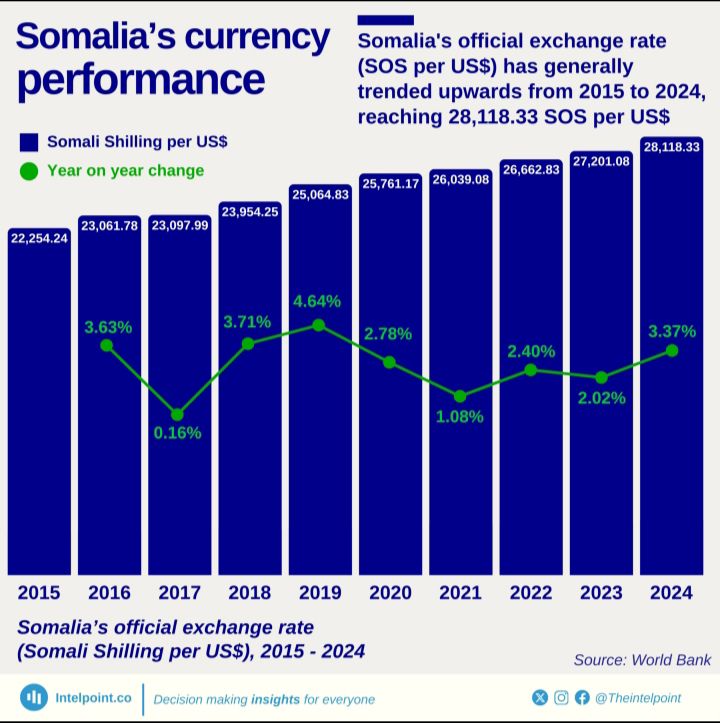
This is the brutal arithmetic of a country that imports over 60% of its GDP. The poor are left naked before global storms. The woman selling vegetables earns in shillings but buys wholesale in dollars. The displaced family negotiates rent in a currency tied to recessions an ocean away.
The Illusion of Neutrality in a Digital Dollar Economy
Dollarization is not neutral; it is a regressive tax on the poor, but its mechanism is more modern than cash. The economy survives on fragile inflows of dollars from remittances (about 27% of GDP) and aid, which flow out just as fast to pay for imports, creating a chronic trade deficit exceeding $5 billion.
Most transactions use digital dollars via telecom networks. However, these companies can use the hard currency they collect for their own external business, creating an artificial scarcity of physical cash within Somalia. This paradox—a digital dollar economy starving for paper cash—drives up costs for everyone, especially those outside the digital fold.
The Chasm Between Institutional Reform and Daily Survival
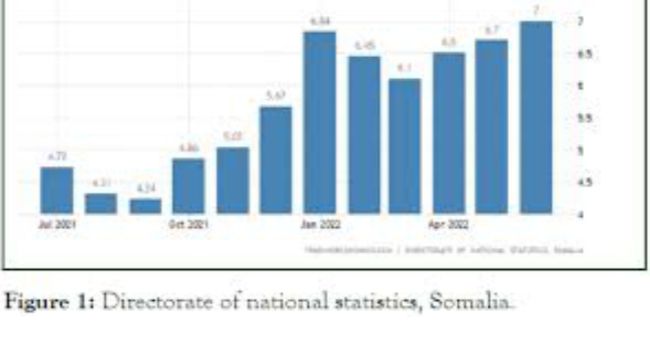
Contrary to the claim that no one is watching, institutions are trying to build the watchtower in the middle of the storm. The Somali National Bureau of Statistics reports inflation, which was 3.9% as of October 2025. The Central Bank of Somalia (CBS) is actively reforming, with a dedicated policy group and a sequenced plan: first, build financial infrastructure and regulate mobile money; later, perhaps reintroduce a national currency.
Yet, these vital but technical reforms exist in a parallel universe to the daily crisis faced by the 54% of the population (over 10 million people) living below the poverty line. With nearly 400,000 youth entering the job market each year in a stagnant economy, per-capita income does not grow. This is the core disconnect: while experts design payment systems and regulations, mothers count coins that buy less every week.
Leaders Argue Over Power While the Foundation Cracks
The political sphere remains consumed by survival—the survival of leaders. Disputes over elections, federal power-sharing, and clan arithmetic create paralysis, preventing a unified response to the economic emergency.
While they quarrel, foreign powers and businesses deal with Somalia not as a sovereign state but as an unmanaged space, extracting ports, security contracts, and political loyalty. The state fragments, and the demographic pressure cooker ticks: 70% of the population is under 30, waiting for a future that is not being built at the speed it is needed.
What Must Be Said: The Fire and the Firehouse
A country that debates inflation statistics while ignoring the cost-of-living anguish is in crisis. A leadership that obsesses over staying in office while citizens sink into poverty is losing its way.
Somalia’s tragedy is not a lack of plans. It is the agonizing gap between long-term institutional rebuilding and immediate human desperation. The Central Bank is trying to rebuild the firehouse—creating a Financial Stability Committee, drafting new banking laws, launching national payment systems. But for the family watching their purchasing power burn, the reforms feel like a blueprint delivered as the embers fly.
The question is not “Who is watching the fire?” The CBS is watching. The Bureau of Statistics is measuring the smoke. The real, unanswered question is: Who will bridge the chasm between the reform documents in Mogadishu and the empty market stalls in Baidoa, Garowe, and Kismayo?
Until inflation, currency sovereignty, and social protection are treated with the same urgency as political survival, Somalia will remain what it is today: a nation where the house burns, not for lack of firefighters, but because they are building the fire engine next to the flames.
—
Support Independent Journalism
To continue fearless, fact-based reporting that speaks truth to power across Somalia and holds both suffering and reform to the light, support independent journalism.
Tel/WhatsApp: +252 90 703 4081.
WAPMEN EDITORIAL | Declassified Fiction: When CIA Paperwork Rewrites Somali History
https://www.cia.gov/readingroom/docs/CIA-RDP87T00289R000100460001-8.pdf?utm_source=chatgpt.com
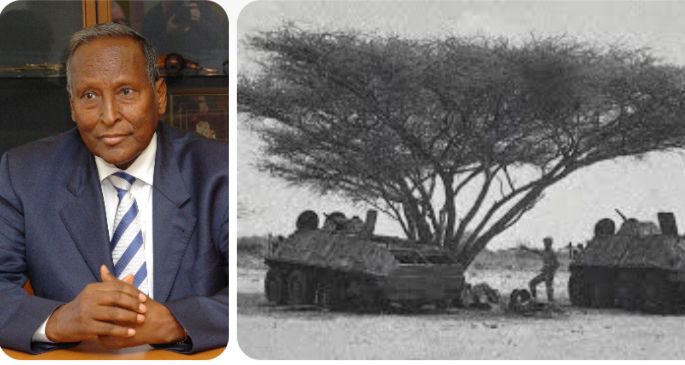
A newly circulated declassified CIA document is being waved around as if it were a final arbiter of Somali history. It is not. On the critical question of the Somali resistance movements of the 1980s—and specifically the arrest of Abdullahi Yusuf Ahmed—the document is factually wrong, historically careless, and politically misleading.
Let us be precise and put the record straight.
False Claim #1: Abdullahi Yusuf Opposed an SSDF–SNM Merger
False. Flatly false.
The document alleges that Abdullahi Yusuf opposed a merger between the Somali Salvation Democratic Front (SSDF) and the Somali National Movement (SNM). This reverses reality.
Historical fact:
SSDF was the older, structured, and umbrella resistance movement—already composed of three organized factions—operating from Ethiopian territory years before SNM emerged as a major force. It was SNM that declined to join SSDF, not the other way around. The refusal was rooted in strategic autonomy and internal political calculations within SNM, not hostility or obstruction from SSDF leadership.
To suggest Abdullahi Yusuf blocked unity is to invert the burden of decision-making and misread the political dynamics of the era.
False Claim #2: Ethiopia Arrested Abdullahi Yusuf for Anti-Unity Politics
Again, false.
The CIA paper asserts that Ethiopian authorities detained Abdullahi Yusuf because he resisted inter-movement unity. That is a convenient fiction.
Historical fact:
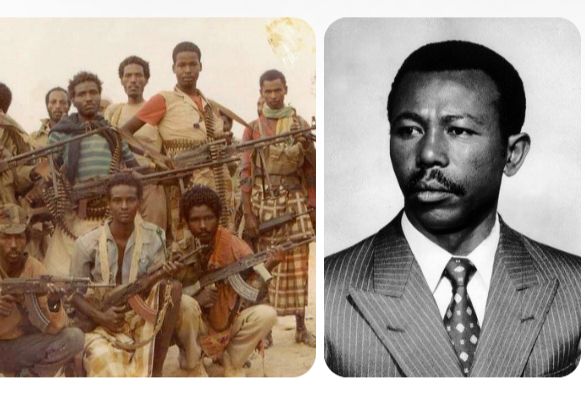
Abdullahi Yusuf was arrested by order of Mengistu Haile-Mariam—not for opposing Somali unity, but for political disagreements over the control, direction, and independence of SSDF vis-à-vis Ethiopian security dictates. Addis Ababa expected compliance; Abdullahi Yusuf insisted on Somali decision-making autonomy.
That defiance had consequences.
This was a power struggle, not an ideological schism over unity.
What Really Happened
SSDF predated SNM and functioned as a multi-faction resistance platform.
SNM chose not to merge with SSDF; this was a strategic choice, not a rejection by SSDF.
Ethiopia arrested Abdullahi Yusuf because he resisted Ethiopian micromanagement of Somali resistance politics—not because he opposed unity.
The detention reflected Cold War patron–proxy tensions, not Somali inter-movement hostility.
These facts are well-known to participants, contemporaries, and serious historians of the Somali liberation era.
The Declassified Trap
Declassified does not mean accurate. Intelligence documents often capture:
Partial briefings
Informant bias.
https://www.facebook.com/share/v/17geZVDMge/
Strategic misinterpretation
Or outright political convenience
When such documents are lifted from their context and treated as gospel, history is not revealed—it is distorted.
Somalia’s past cannot be footnoted into existence by Langley memos written at a distance, filtered through regional agendas, and blind to internal Somali political realities.
WAPMEN Verdict
This CIA document fails the historical test. It misattributes motives, reverses agency, and erases the real cause of Abdullahi Yusuf’s arrest: his refusal to subordinate Somali resistance to foreign command.
Somalia deserves better than recycled intelligence myths masquerading as history.
————
WAPMEN — Warsame Policy & Media Network
Critical analysis, fearless rebuttals, and historical accountability.
Villa Somalia’s Crisis of Authority: How Federal Failure Invites National Disintegration
The Israeli government’s recognition of Somaliland is not merely a diplomatic shock; it is a glaring symptom of chronic dysfunction at the heart of Somalia’s federal government in Villa Somalia. States do not fragment solely because of external conspiracies. They disintegrate when the governing center loses its legitimacy, competence, and authority, yet continues to issue commands as if its power were unchallenged.
For years, Mogadishu has issued proclamations it lacks the capacity to enforce. This “paper sovereignty” is dangerously exposed when a federal center, failing to secure even the wider vicinity of the capital, attempts to rule like a unitary command post. This contradiction invites defiance, accelerates the isolation of regions, and creates a vacuum that foreign powers are all too eager to fill. That door has now been kicked open.
Decrees Without Capacity Breed Fragmentation
A government that does not fully control its capital cannot credibly dictate the political destiny of distant regions. Yet Villa Somalia persists in a paradox: employing rhetoric of maximum centralization while possessing minimum state capacity. The result is a predictable spiral: regions hedge their bets, local elites seek external guarantors, and diplomacy becomes a transactional free-for-all.
Thus, the Israeli move is not because Somaliland discovered a magic key to recognition, but because Somalia’s federal center has neglected the hard, consensus-based work of unity. Instead of fostering negotiation, constitutional restraint, and genuine power-sharing, it has pursued unilateralism. Key Federal Member States like Puntland and Jubaland have suspended cooperation with Mogadishu over disputes about the 2026 electoral process, with some opposition groups forming a parallel “Council for the Future of Somalia”.
Security Failure and Political Overreach
The government’s fragility is most stark in the security sector. Despite an initial offensive, al-Shabaab has resurged, recapturing territory in Middle Shabelle and demonstrating the ability to launch high-profile attacks in Mogadishu, including a recent attempt on the president’s convoy. Meanwhile, the fight against the Islamic State in Somalia (ISS) in Puntland is being waged primarily by regional forces with little support from the federal government.
This security crisis unfolds alongside a political power grab. The government’s unilateral push for a “one person, one vote” model for the 2026 elections—an ideal most agree is currently unfeasible—is widely seen as a maneuver to concentrate power and extend its mandate. By unilaterally changing electoral laws and packing commissions with loyalists, Villa Somalia is dismantling the fragile federal settlement, not defending it.
The Open Market of Influence
Somalia’s internal incoherence has turned the country into an open market for foreign influence, where global actors bargain directly with sub-state authorities. The list is long: Israel, Turkey, Ethiopia, Kenya, and Gulf states all play their parts. This does not happen in a vacuum. It happens when the center cannot bind the periphery to a shared national project.
The international reaction to Israel’s move is telling. While it was celebrated in parts of Somaliland, it triggered widespread protests across Somalia and near-universal diplomatic condemnation. The African Union, Arab League, Organization of Islamic Cooperation, and regional bloc IGAD all reaffirmed support for Somalia’s sovereignty and territorial integrity. This global stance highlights that the problem is not a lack of external support for Somali unity, but internal actions that erode it.
Has Villa Somalia Learned Anything?
That is the most damning question. The silence is an answer. There has been no fundamental reckoning, no admission that sovereignty cannot be enforced by press releases. Instead, we hear more orders and denunciations while the structural rot deepens. The government is now poised to assume the rotating presidency of the UN Security Council in January 2026—a symbolic victory that will only magnify its domestic contradictions on a global stage.
If Villa Somalia continues to confuse command with consent, Somalia will not merely face recognition gambits; it will face managed disintegration. The path back requires an urgent return to consensus: halting unilateral constitutional changes, agreeing on a feasible and inclusive electoral model for 2026, and rebuilding cooperative security frameworks with the Federal Member States.
WAPMEN’s bottom line:
You cannot shout unity from a palace you cannot project authority from. You cannot defend sovereignty while hollowing out federal trust. And you cannot stop foreign exploitation without first fixing the broken politics at the center. Until Villa Somalia learns this, every new “diplomatic shock” will be less a surprise and more an indictment.
Somaliland’s Gamble: A Dangerous Bargain with a Pariah State
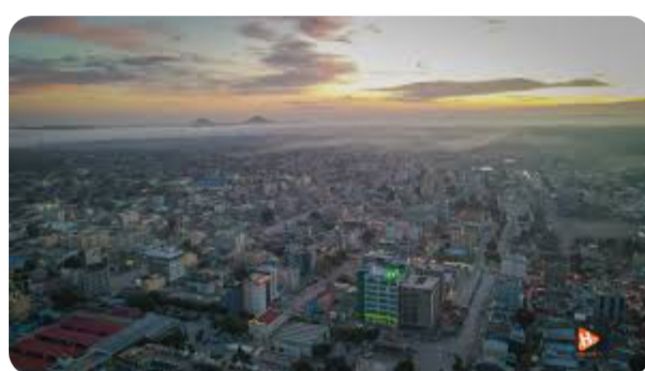
The recognition of Somaliland by Israel is not a diplomatic breakthrough; it is a perilous trap. In a desperate bid to end three decades of international isolation, the leadership in Hargeisa has shaken hands with a partner that is itself increasingly isolated, morally compromised, and engaged in multiple regional wars. Far from unlocking a path to global acceptance, this move has triggered a unified wall of international condemnation, entangled Somaliland in the geopolitics of the Middle East, and exposed it to severe and unforeseen security and political risks.
A Chorus of Condemnation, Not a Bandwagon of Recognition
Contrary to Somaliland’s hopes, Israel’s move has not sparked a wave of followers. Instead, it has provoked a near-universal diplomatic backlash that has reinforced Somaliland’s isolation.
Somalia’s government, calling the recognition a “naked invasion” and an “existential threat,” has declared it null and void, vowing to pursue all diplomatic and legal avenues in response.
The response from regional and international bodies has been unequivocal:
· The African Union (AU) firmly rejected the move, warning it “sets a dangerous precedent” for peace and stability across the continent and undermines the sacrosanct principle of colonial-era borders.
· A bloc of 21 Arab and African nations and the Organization of Islamic Cooperation issued a joint statement condemning the recognition as a grave violation of international law.
· Key regional powers, including Egypt, Turkey, Saudi Arabia, and Djibouti, have all stood with Somalia, rejecting the agreement.
· The European Union and the United States have both publicly reaffirmed their commitment to Somalia’s sovereignty and territorial integrity. U.S. President Donald Trump, when asked, simply replied “no” to recognizing Somaliland.
This unified opposition makes it clear: Israel is not a key that unlocks doors; it is a pariah whose endorsement only bolsters the resolve of the international community to keep those doors shut.
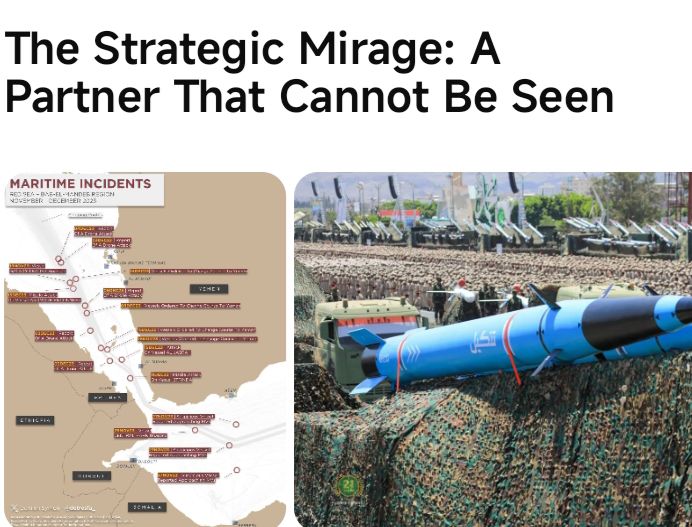
Strategic Mirage: An Invisible and Vulnerable Partner
Israel’s primary strategic interest is blatantly transparent: to secure a foothold on the Red Sea opposite Yemen to counter the Houthi movement. However, this very objective guarantees that Israel cannot be the robust, visible partner Somaliland needs.
· A Covert, Not Open, Presence: Given the ferocity of the ongoing conflict between Israel and the Houthis—which has included Israeli airstrikes leveling the Sana’a airport and Houthi drones striking deep inside Israel—any open Israeli presence in Hargeisa would instantly make Somaliland a direct target. Therefore, any Israeli involvement will necessarily be covert, intelligence-focused, and militarily limited, offering Somaliland little tangible security benefit while absorbing massive risk.
· The Houthi Veto: The Houthis have proven to be a resilient, strategically smart adversary that has withstood a years-long military campaign and continues to challenge Israel directly. They have explicitly stated they will not allow Israelis to function in the region. Their demonstrated capacity to strike distant targets means this is not an idle threat but a severe and imminent danger to Somaliland’s stability.
The Toxic Motivations Behind Netanyahu’s “Gift”
Somaliland’s recognition is less about Hargeisa and more about the desperate political calculations of Benjamin Netanyahu.
· A Diversion from Isolation: Netanyahu, besieged by war crimes allegations and unprecedented international isolation, is using this move as a low-cost diplomatic spectacle to create an illusion of statesmanship and break out of his pariah status.
· A Geopolitical Provocation: The move is a direct challenge to Turkey, a major supporter of Somalia’s government, and part of Israel’s broader rivalry for influence in the Horn of Africa and Red Sea.
· Tainted by the “Displacement” Shadow: Most alarmingly, analysts note that the recognition is entangled with discussions about the forced displacement of Palestinians from Gaza. This associates Somaliland’s sovereign aspirations with a project of demographic erasure, poisoning its moral standing and aligning it with what much of the world views as a ongoing atrocity.
A Path to Peril, Not Prosperity
For Somaliland, the consequences of this gamble are dire and multifaceted:
1. Deepened Regional Hostility: The move has turned diplomatic frost into active hostility from its most important neighbors and the entire African bloc.
2. Fuel for Internal Fracture: It risks inflaming internal tensions within Somaliland’s own contested borders, particularly in the eastern regions like Sool and Sanaag, where allegiance to Somalia remains strong.
3. Security as a Target: Somaliland has volunteered to become a front in the Israel-Houthi-Iran conflict, jeopardizing its hard-won relative stability.
4. Symbolic, Not Material, Gain: With major powers refusing to follow Israel’s lead, Somaliland remains locked out of international financial institutions and meaningful multilateral aid.
Somaliland’s leaders have bet their people’s future on a partner who is using them as a pawn. True sovereignty and lasting recognition cannot be built on a foundation of geopolitical cynicism, widespread condemnation, and imminent security threats. The only viable path forward for Somaliland’s aspirations is not through a desperate pact with a pariah, but through good-faith, African-led dialogue with Mogadishu, supported by the international community that has just resoundingly rejected this dangerous shortcut. To ignore this reality is to court disaster.
WAPMEN EDITORIAL | Urban Mobility or Urban Mayhem?

Beware the Deluge of “Modern” City Transport — The Fekon & Bajaj Time Bomb (and the Case for an Import Ban)
They sold it to us as modernization. What we got instead is urban mayhem—and nowhere is the danger clearer than in Garowe.
Garowe is being quietly overrun by two machines that thrive in regulatory darkness: Fekon (two-wheeler motorcycles) and Bajaj (motorized rickshaws). Left unchecked, they will drown the city—physically, socially, and institutionally.
The Fekon–Bajaj Flood
They multiply faster than the city can breathe. They swarm intersections, mount sidewalks, choke drainage lines, and turn residential lanes into racetracks. Built for limited utility, they now operate everywhere—markets, schools, hospitals—without routes, inspections, or accountability.

This is not mobility. It is a mechanized anarchy.
When Informality Becomes a Weapon
Untrained drivers under daily cash pressure speed through crowds and ignore crossings. Accidents rise. Tempers flare. The victims are predictable: children, elders, women, and street vendors. The beneficiaries are fewer: importers, platform owners, and a shadow economy feeding on state absence.
A City on the Brink
Garowe’s roads were never designed for this volume or mix. Add ride-hailing cars, delivery bikes, minibuses, and scooters to the Fekon–Bajaj surge and you get gridlock with teeth—noise, fumes, near-misses, delayed emergencies, and eroding trust.
Every horn blast is a warning siren.
The Hard Decision We Must Face: Ban the Imports—Now
Regulation alone will not catch up with the flood. Puntland State must consider an immediate ban on the import of Fekon and Bajaj into urban centres—starting with Garowe—until a credible framework exists.
This is not anti-livelihood; it is pro-city survival.
What that means in practice:
Immediate moratorium on new Fekon and Bajaj imports into urban centres of Puntland State of Somalia.
Cap and freeze existing numbers; no new registrations.
Mandatory registration, licensing, and visible IDs for all existing units.
Designated routes and exclusion zones (schools, hospitals, pedestrian cores).
Safety standards (speed governors, lights, brakes, passenger limits).
Driver training and strict enforcement—no license, no road.
Public transport investment to absorb demand humanely and at scale.
Progress Is Discipline
Modernity is not how many engines you unleash; it is how well you govern movement. If Fekon and Bajaj are not halted and regulated today, they will rule Garowe tomorrow—by default, by force, by chaos.
This is a final notice. Pause the imports. Regulate what exists. Reclaim the streets. Or prepare to watch a promising capital choke on its own traffic.
WAPMEN warns today so we don’t mourn tomorrow.
Editorial: Somalia Turned into a Proxy Playground: The Price of Fragmented Sovereignty
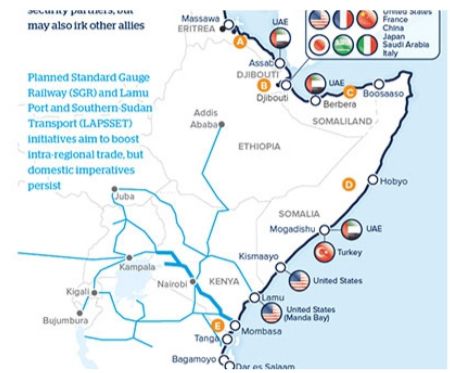
There is a fundamental rule of statecraft: a nation that does not control its territory cannot control its destiny. For years, Somalia’s profound security challenges and fragmented governance have made its sovereignty negotiable in the eyes of rival foreign powers. Today, the most severe bill for this vulnerability has arrived.
Israel’s recognition of Somaliland as an independent state is not merely a provocative diplomatic act. It is the direct outcome of a long-term erosion of Somali sovereignty—an erosion accelerated by internal divisions and exploited by external actors pursuing their own strategic contests on Somali soil.
Sovereignty Hollowed Out: A Stage for Regional Rivalries
Somalia’s fragility has transformed it into an arena for regional and global competitions.The search results confirm a pattern of external interference:
1. Gulf Rivalries: The Horn of Africa has become a theater for a “great game”-style contest, primarily between Saudi Arabia and the United Arab Emirates (UAE), with their competition playing out in Somalia’s political and economic spheres.
2. Neighborhood Pressures: Ethiopia’s quest for sea access led to a controversial memorandum of understanding with Somaliland in early 2024, which Somalia condemned as a violation of its sovereignty. Turkey has positioned itself as a key mediator, brokering the Ankara Declaration between Ethiopia and Somalia in December 2024.
3. Global Interests: Beyond the Gulf, countries including Egypt, Qatar, and Turkey have vested interests, often aligned in competing blocs.
The claim that Somalia “invited them all in at once” is an oversimplification. Engagement with these powers is often a necessity for a government grappling with an existential threat from al-Shabaab, which launched a major offensive in 2025. However, the consequence is a perilous dependency. As one analysis notes, a nation cannot reclaim sovereignty while it depends on foreign forces for its core security.
The Recognition Crisis: Symptom of a Larger Disease
Israel’s move is a stark exploitation of this fractured landscape.Key facts from the search results include:
1. Israel framed its recognition as being “in the spirit of the Abraham Accords”.
2. The international reaction was swift: Somalia rejected it as an “unlawful action”, and a broad coalition—including Egypt, Turkey, Djibouti, the African Union, and the Organization of Islamic Cooperation—reaffirmed support for Somalia’s unity and territorial integrity.
3. Analysts warn this sets a dangerous precedent, making state recognition “transactional rather than principled” and risks emboldening other secessionist forces within Somalia’s federal system.
This crisis is not solely about Israel or Somaliland. It is about the cumulative effect of Somalia’s compromised sovereignty. A country where the federal government struggles to project authority, where federal states like Puntland and Jubaland have contested its authority, and where foreign partners fund, train, and build bases, inevitably finds its unity questioned in foreign capitals.
The Reckoning and the Path Forward
The battlefield in Somalia is multi-layered:against al-Shabaab, within its own political structures, and now against diplomatic maneuvers that threaten its map. The solution cannot be a wholesale rejection of foreign partnerships, which are currently essential for security. It must be the rigorous and unified pursuit of a coherent national strategy.
Somalia must anchor its foreign policy in unwavering national consensus. This means clearly defining its red lines, coordinating all external engagements through a single sovereign framework, and relentlessly building its own security institutions to reduce asymmetric dependencies. The alternative is to accept a permanent future as a geopolitical arena, where its borders and destiny are debated by others.
On the Mike
Israeli Provocation and the Test of Somali Federal Courage
WAPMEN Editorial
The silence is deafening—and it is dangerous.
On December 26, 2025, Israel became the first country to formally recognize the self-declared Republic of Somaliland, crossing a red line that international law draws in bold ink: respect for sovereignty and territorial integrity. This is not diplomacy; it is provocation. It is not neutrality; it is a direct intervention. The Federal Government of Somalia immediately and rightly condemned this as an “unlawful step” and a “deliberate attack” on its sovereignty.
This moment demands clarity and courage, especially from Puntland State leaders.
A Naked Violation, Plain and Simple
Recognition of a breakaway territory without the consent of the parent state is a flagrant violation of core international principles.It contravenes the United Nations Charter and directly opposes the African Union’s foundational commitment—reaffirmed in its swift rejection of this move—to the “sovereignty, territorial integrity and independence of its Member States.” Furthermore, it spurns the clear stance of regional partners; a coalition of Arab nations, including Saudi Arabia, Egypt, and Jordan, has jointly condemned the act as a violation of international law and a threat to regional stability.
Israel’s move disregards these norms with alarming ease, treating Somalia’s fragility as an opportunity. The message is chilling: when a state is weak, its borders become negotiable. That logic, if normalized, threatens every post-colonial state whose cohesion was forged through painful compromise and collective will.
Puntland Must Speak—Now
Puntland’s leaders cannot afford strategic ambiguity or tactical silence.This is not a Mogadishu-versus-Garowe quarrel; it is a Somalia-versus-fragmentation moment. Puntland’s historical claim to responsible federalism—grounded in consent, constitutionalism, and unity—demands a public, unequivocal condemnation of Israel’s action, aligning with the national position and the unified African and Arab stance.
Silence will be read as acquiescence. Hesitation will be interpreted as calculation. Both would be fatal to Puntland’s credibility and Somalia’s collective defense.
Federalism Is Not a License to Disintegrate
Somali federal member states exist to strengthen the republic,not to outsource sovereignty or shop for recognition abroad. Any foreign state that selectively recognizes Somali regions is not supporting self-determination—it is engineering partition. That path leads to Balkanization, proxy competition, and perpetual instability.
The response, as seen in the unified international condemnations, must be national and unequivocal: federal institutions, member states, elders, civil society, and the diaspora must speak with one voice.
The Call to Action
Somalia must continue to formally challenge this provocation through all diplomatic channels,regional bodies, and international forums, building upon the strong support already shown by the AU and Arab League. Federal member states must close ranks. Puntland must now lead by example—by speaking up, condemning the violation, and reaffirming Somalia’s territorial integrity without equivocation.
This is a test of sovereignty. It is also a test of leadership.
History will not be kind to those who watched their country carved up in silence.
—
Support WAPMEN – the home of fearless, independent journalism that speaks truth to power across Somalia and the region.
Tel/WhatsApp: +252 90 703 4081.
WAPMEN EDITORIAL | The Anatomy of a Fracture: How Somalia Was Made Vulnerable
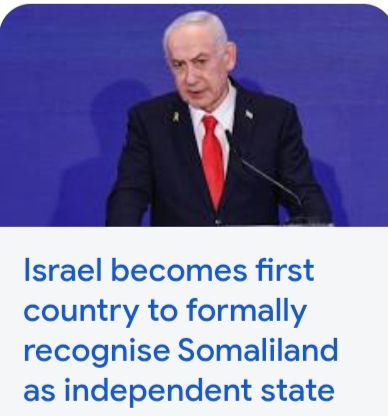
The outrage is loud. Social media is aflame. Statements are flying. Somalia’s political class has rediscovered its vocal cords—all because Israel has become the first United Nations member state to grant full diplomatic recognition to Somaliland.
Yes, the outrage is justified. This act is a serious assault on Somalia’s sovereignty and sets a dangerous precedent. It has rightly drawn condemnation from the international community, including from members of the League of Arab States who have rejected the move as a violation of international law. Saudi Arabia explicitly stated it contradicts international law and entrenches unilateral measures, while Egypt coordinated with regional partners to condemn it.
But let us be honest—brutally honest, as WAPMEN must be.
Israel did not invent Somalia’s dismemberment. It is merely the latest external actor to step into a vacuum of sovereignty that has been meticulously carved out by Somalis themselves over decades. The precedent was not set in Tel Aviv; it was nurtured in Villa Somalia and in regional presidential palaces.
Selective Outrage Is a Moral and Strategic Failure
Browse the internet and you will find wall-to-wall condemnation of Israel. Turkey, a close ally of Somalia, has enlisted firmly on Mogadishu’s side, calling Israel’s recognition “overt interference in Somalia’s domestic affairs”. Yet one question is conspicuously absent: What made Somalia so vulnerable to this?
The truth is, Israel’s move, while unprecedented in its formality, follows a well-worn path of external engagements with Somalia’s breakaway regions. Somaliland has for years cultivated informal ties with entities like Taiwan and the United Arab Emirates. Just months ago, Ethiopia pursued a memorandum of understanding that would have granted it sea access in exchange for recognizing Somaliland, backing down only under intense diplomatic pressure.
Why has no sustained outrage been directed at the domestic political vandalism that hollowed out Somali sovereignty long before any foreign power decided to formalize its fracture?
Somalia Was Not Betrayed Overnight — It Was Systematically Undermined
Somalia did not wake up to find itself dismembered. It has been methodically weakened by a ruling elite whose political culture has been identified by analysts as the primary impediment to state resurrection—a culture aloof from society and rooted in personal gain over national interest.
Federalism, conceived as a mechanism for shared governance, has been converted into a tool for fragmentation. We do not need to speak in abstractions.
· Puntland, following controversial constitutional amendments in March 2024, declared it would operate as an independent government. It later signed a separate cooperation agreement with Ethiopia, directly counter to Mogadishu’s authority.
· Jubaland, in November 2024, suspended all cooperation with the federal government after an arrest warrant was issued for its president. This political dispute has escalated into armed clashes between federal and regional forces.
These are not the actions of stakeholders in a collective republic. They are the hallmarks of quasi-states conducting parallel foreign and security policies. Once you normalize the defiance of the central state, do not act shocked when foreign capitals normalize the defiance of Somalia.
Recognition Is Not the Disease — It Is the Symptom
Israel’s recognition is a stark diagnosis of a profound sickness within.
A country whose leaders wage political war against their own federal units, whose center and regions consistently violate the provisional constitution for short-term advantage, and whose political class trades long-term sovereignty for immediate survival cannot credibly demand the world respect borders it fails to enforce itself.
Sovereignty is not declared; it is enforced—politically, legally, and institutionally. Somalia stopped enforcing it long ago.
The Silence on Leadership Failure Is Complicity
It is easy to point fingers outward. It is harder—but necessary—to confront the internal wreckage.
The same political class now crying foul over Israel—and now benefiting from the diplomatic solidarity of allies like Turkey and Arab states—has for years cheered constitutional violations when it suited them, applauded federal overreach to weaken rivals, and justified fragmentation when it brought leverage. They stayed silent as the very idea of a single Somali political will was eroded.
They planted the wind. Now they reap the whirlwind.
WAPMEN’s Uncomfortable Conclusion
Israel’s move is dangerous and must be challenged with every diplomatic and legal tool available. The condemnations from Ankara, Riyadh, Cairo, and beyond are a necessary and welcome defense of international principles.
But Somalia’s greatest enemy is not in Tel Aviv. It is in the culture of impunity that treats the state as a disposable instrument rather than a collective trust. It is in the leadership failure that remains, as scholars have documented, the central obstacle to the state’s resuscitation.
Until Somali leaders are held accountable for dismantling their own country’s sovereignty—brick by brick, agreement by unauthorized agreement—foreign powers will continue to do what opportunists always do: step into the ruins and claim what the owners abandoned.
WAPMEN does not trade in illusions. We deal in causes, not symptoms.
And the cause of Somalia’s vulnerability is Somali political irresponsibility—first, foremost, and ongoing.
Somaliland–Israel Recognition: Somalia Didn’t “Lose” Somaliland — It Spent It
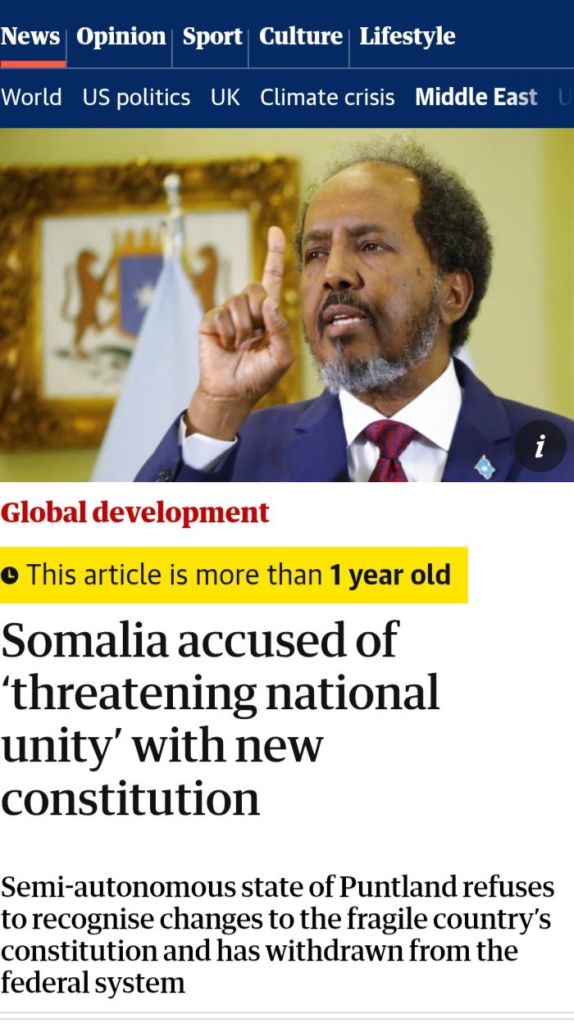
Israel’s formal recognition of Somaliland on December 26, 2025, is not a bolt from the blue. It is an invoice arriving—late, stamped, and payable—after years of Somalia behaving like a state that wants the title deed to unity but refuses to maintain the house of governance.
In geopolitical terms, recognition is rarely a moral reward; it is a transaction. Somaliland did not suddenly become “more real” today. It simply became more useful to an external actor. And Somalia, by becoming ungovernable, made the transaction cheaper.
What did we expect after making the country ungovernable? We expected exactly this.
When a federal center treats the Provisional Constitution as a suggestion box—opening the door to corruption, land grabs, and unconstitutional power plays—it does not “strengthen the state.” It advertises the state as for sale. The recent constitutional changes, which Puntland refused to recognize and which led it to withdraw from the federal system, are a prime example. Mogadishu was accused of “threatening national unity” by concentrating power.
This trajectory was not state-building; it was state-unbuilding.
For years, WDM has warned that Somalia’s federal experiment “has now entered its terminal crisis stage,” where relations between the center and member states have decayed into “mutual suspicion, coercion, and political trench warfare”—fertile ground for fragmentation. We explicitly framed Somalia’s future as a fork in the road: “A negotiated consensus” or “A dangerous fragmentation—where Mogadishu’s unilateralism spawns rival governments, contested institutions, and international confusion”.
We warned that the Garowe–Mogadishu confrontation was not political theatre, but a collision course that could breed “parallel governments (Garowe vs Mogadishu model)” and invite increased foreign meddling. We doubled down that delay is a strategy of cowards: “Somalia always pays more when it waits. More instability. More fragmentation. More foreign interference”.
So no—this is not “Somaliland winning.” This is Somalia defaulting.
The weaponization of the center normalized fragmentation.
The pattern of the federal center treating member states as targets, not partners, hardened in recent years. WDM documented that under the regimes of Farmaajo and Hassan Sheikh Mohamud, the National Consultative Council (NCC) was transformed from a dialogue platform into “a forum to pressure Puntland and Jubaland” and “a tool to override federalism”. Once a state normalizes internal war-by-politics, it should not act surprised when outsiders start treating its map as negotiable.
“Other countries to follow?” Yes—because the center taught them how.
Reuters frames Israel’s move as a “first”. That word is the danger. Once one country crosses the line, the next ones will not need to argue the entire case again. They will only need to ask: What do we gain? What does Mogadishu offer? What can Hargeisa deliver?
Somalia’s federal center, by violating the spirit and procedures of its own constitution, has made itself a weak negotiator—sometimes not even a negotiator at all, just a loud protester outside the room. This is the strategic humiliation: a state that cannot keep its own federation intact will struggle to keep its sovereignty arguments persuasive abroad.
How long have we been warning? Long enough that the warnings now look like minutes of a meeting Somalia refused to attend.
When WDM titles an essay “Garowe vs. Mogadishu: The Looming Political Collision Course” and explicitly lists fragmentation as a probable outcome, that is not commentary—it is an alarm. When WDM publishes “Somalia’s Federalism in Paralysis” and describes terminal decay, that is not pessimism—it is diagnosis. When WDM says Somalia must choose confederation or fragmentation, that is not provocation—it is an exit map from a burning building.
The Bottom Line
Somaliland’s recognition is not merely Somaliland’s diplomacy. It is Somalia’s self-inflicted emptiness being filled by other people’s interests.
If Mogadishu wants to stop the dominoes, it must stop behaving like a landlord who evicts tenants (member states), then screams “unity!” from the rooftop of a collapsing building.
Somalia’s unity cannot be enforced by decree, purchased by corruption, or performed on television. It must be negotiated, constitutionally, and collectively owned—or it will be internationally auctioned, piece by piece.
By the way, how much do you think the recent Somalia’s E-VISA controversy has contributed to this balkanization of Somalia? Have your say.
Citations
1. Garowe vs. Mogadishu: The Looming Political Collision Course. WDM Editorial, Nov 3 2025.
2. Somalia’s Federalism in Paralysis. WDM White Paper, Nov 27 2025.
3. The Price of Delay: Somalia’s Leaders Are Choosing Chaos Over Consensus. WDM Editorial, Dec 23 2025.
4. Somalia accused of ‘threatening national unity’ with new constitution. The Guardian, Apr 5 2024.
5. Israel becomes first country to formally recognise Somaliland as independent state. Reuters, Dec 26 2025.
Galkayo: The City of Contradictions
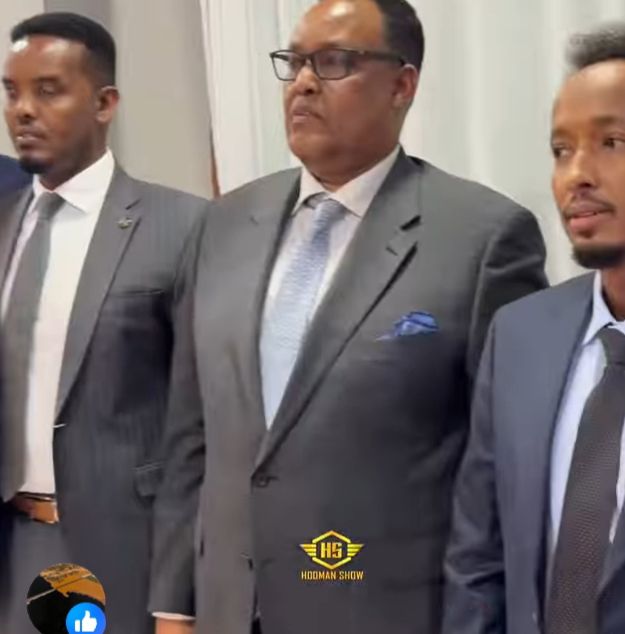

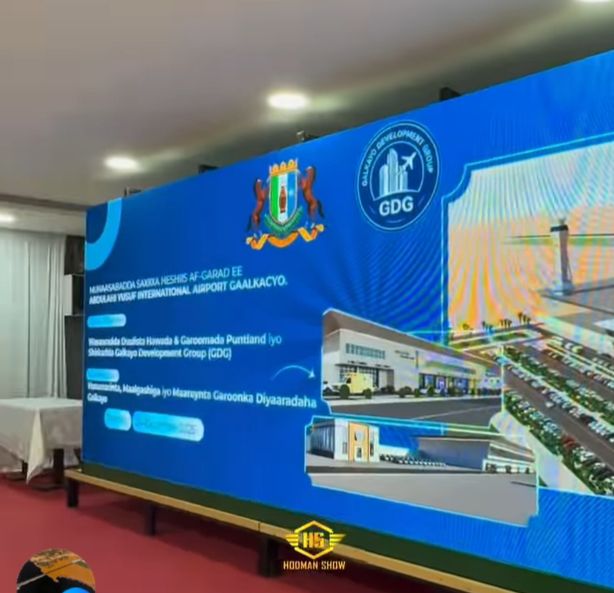
A Satire by Warsame Policy & Media Network (WAPMEN)
In Somalia, there is a city living two lives—one of soaring ambition, the other of quiet desperation. Its name is Galkayo.
By day, Galkayo stands as a testament to Somali audacity. Its children, scattered across continents, have accomplished what governments draft in proposals and donors debate in conferences. They carved a deep-sea port from the rocky shores of Gara’ad—opening it in 2022—no permissions asked, no international aid requested. Now, they are rallying behind the Abdullahi Yusuf International Airport, with the business community reportedly proposing a $20 million investment—a bold statement that this city will not be left on the ground.
This is the Galkayo of cranes and wire transfers, of blueprints and belief. A city that proclaims: If the state will not come to us, we will become the state.
But when the sun sets, another Galkayo wakes.
This Galkayo is not measured in milestones, but in escapes. Its professionals, elders, and entrepreneurs slip away—sometimes with suitcases, often with only the clothes they wear—not because of drought or unemployment, but because of the silent, persistent terror of clan vendettas, the brutal cycle of “Aano” revenge killings that have claimed dozens of elite residents since 2022. Here, survival is the nightly agenda.
In this Galkayo, trash mounds rise like monuments to neglect. Rainwater, when it comes, has no plan but to flood—streets, homes, and hope alike—a direct result of a collapsed drainage system and municipal paralysis. Drainage exists in speeches. Public health is a rumor. The city decays without spectacle, eroding under apathy.
So we ask: What city builds an airport it cannot safely reach, where the key road link to Harfo is described as ‘one of the worst’ and remains stalled by political disputes? What logic builds a port to the world while its own neighborhoods drown in waste and fear?
This is not irony—it is civic schizophrenia.
Galkayo has perfected exporting dreams while importing disorder. Its diaspora funds monuments to tomorrow, while its politicians treat the city like a temporary settlement. Clan justice operates unchallenged—swifter than courts, deadlier than law, and more respected than any institution—in a documented vacuum of justice where promises of new police forces remain unfulfilled.
We speak always of “community resilience,” but never ask why resilience must do the work of government. We celebrate self-reliance, yet ignore why a city that can fund multimillion-dollar projects cannot broker a basic peace among its own or even collect the garbage.
The disconnect is no longer hidden—it is glaring, grotesque.
A city cannot be both a gateway to the world and a hostage to its own streets. You cannot court international flights while your citizens book one-way tickets out of fear. You cannot dredge an ocean for ships but not your own roads for rain. You cannot champion development while dismissing revenge killings as “tribal affairs.”
Galkayo must choose.
Will it be the city that builds—or the city that buries?
Because runways and ports do not make a home. Safety does. Dignity does. Law does. Without these, every poured foundation, every newly paved tarmac, will stand not as a symbol of progress—but as a tombstone for what Galkayo could have been.
A city reaching for the skies, yet unable to walk its own streets at night.
—
Warsame Policy & Media Network (WAPMEN).
Somalia’s Cheapest Mistake Is the One It Still Refuses to Stop Making
Why Centralization, Term Extensions, and Constitutional Shortcuts Remain a Clear and Present Danger
WAPMEN EDITORIAL
Somalia’s problem is no longer confusion. It is amnesia.
The country keeps relearning the same lesson—at enormous cost—while its leaders insist on repeating the same behavior under new names, new slogans, and new excuses. Administrations change, but the instinct to centralize power, bypass consensus, and manipulate constitutional processes remains stubbornly intact.
Today, Somalia is led by President Hassan Sheikh Mohamud and Prime Minister Hamse Abdi Barre. The faces are different from 2019. The danger is not.
Federalism Was a Peace Settlement — Not a Courtesy to the Center
Somalia’s federal system was not adopted because it was fashionable. It was adopted because unchecked central authority destroyed the Somali state.
Federalism was the compromise that made reunification possible after civil war. It was the minimum condition for coexistence among mistrustful communities emerging from collapse. It was, in effect, a peace settlement disguised as a governance model.
Any federal leadership—past or present—that treats federalism as temporary, cosmetic, or negotiable by executive fiat is tampering with the foundations of the republic.
The Constitutional Review Trap: Same Playbook, New Actors
A constitution derives legitimacy from process, not presidential announcements.
Yet Somalia continues to flirt with the same dangerous pattern:
Closed-door constitutional engineering
Minimal public participation
Marginal consultation with Federal Member States
Political timing designed to shape electoral outcomes
This is not reform. It is constitutional ambush.
Whether attempted under previous administrations or revived under the current one, the result is identical: mistrust, resistance, and institutional paralysis.
A constitution rushed without consensus does not unify the country—it fractures it.
Term Extension Is Not Stability — It Is Deferred Crisis
Somalia’s leaders often justify mandate extensions in the name of stability. This is a fiction.
Term extension does not buy time; it burns legitimacy. It replaces consent with coercion and turns elections from solutions into triggers. The 2021 crisis proved this beyond debate.
Any attempt—explicit or disguised—to normalize term extensions under President Hassan Sheikh Mohamud’s administration would not be a technical adjustment. It would be a deliberate political gamble against Somalia’s fragile equilibrium.
Why Confederalism Refuses to Go Away
Confederalism did not enter Somali political discourse because Puntland or other Federal Member States woke up one day craving fragmentation.
It emerged because:
Federalism was violated, not respected
Power-sharing was undermined, not honored
Federal Member States were treated as administrative dependencies
When the center abandons partnership, the periphery explores protection.
Confederalism is not rebellion. It is a warning signal—a constitutional distress flare fired by communities that feel excluded from national decision-making.
Ignore it, and the union weakens further.
Puntland’s Position: Constitutional Self-Defense, Not Defiance
The stance of Puntland State of Somalia has consistently been mischaracterized as obstructionist.
In reality, Puntland has been defending:
The Provisional Federal Constitution
The principle of shared sovereignty
The idea that Somalia is a collective ownership state, not a Villa Somalia possession
Federalism survives only when limits are respected. When the center overreaches, resistance is not insubordination—it is constitutional self-defense.
The Choice Before the Current Leadership
President Hassan Sheikh Mohamud and Prime Minister Hamse Abdi Barre face a clear choice:
Consensus or coercion
Dialogue or decrees
Legitimacy or longevity
Somalia does not need faster constitutions, stronger executives, or clever political shortcuts. It needs slower politics grounded in consent, inclusion, and restraint.
The cheapest option is always to do the right thing early. Somalia’s tragedy is that its leaders keep choosing the most expensive alternative—doing the wrong thing until the country pushes back.
Final Word
Federalism was meant to heal Somalia, not hollow it out.
Constitutions are meant to unite, not ambush.
Elections are meant to confer legitimacy, not postpone accountability.
Those who ignore these truths should not pretend surprise when the system resists.
Somalia has learned this lesson before.
The scandal is that it must keep learning it again.
WAPMEN — Warsame Policy & Media Network
Fearless analysis. Institutional memory. No amnesia.
Support WAPMEN — the home of fearless, independent journalism that speaks truth to power across Somalia and the region.
Tel/WhatsApp: +252 90 703 4081.
Ambassador Al-Azhari
Warm Christmas and New Year Greetings from WAPMEN
Dear WAPMEN Readers,
As Christmas Eve arrives and many among our readers gather tonight to celebrate the birth of Christ, we at the Warsame Policy & Media Network (WAPMEN) extend our warmest wishes to you and your families.
May this Christmas bring peace to your homes, light to your hearts, and renewed hope for a world too often weighed down by division, injustice, and conflict. In times such as these, moments of faith, reflection, and compassion remind us of our shared humanity and common destiny.
As we look ahead to the New Year, we reaffirm our commitment to fearless, independent analysis, principled journalism, and honest conversations about governance, justice, and the future of our societies—especially in Somalia and the Horn of Africa. Your readership, engagement, and support continue to inspire and sustain this mission.
From all of us at WAPMEN, we wish you a Blessed Christmas and a Peaceful, Prosperous New Year filled with clarity, courage, and hope.
With respect and gratitude,
Ismail H. Warsame
Founder & Editor
Warsame Policy & Media Network (WAPMEN).
The Price of Delay: Somalia’s Leaders Are Choosing Chaos Over Consensus
WDM EDITORIAL
Somali political stakeholders have a choice—make history cheaply today, or pay an unbearable price tomorrow. The window for a dignified, lawful, and consensual transition is closing fast. And once it shuts, no amount of posturing, ultimatums, or hastily assembled “interim authorities” will restore legitimacy to a system already wobbling on its last legs.
Let us be blunt.
President Hassan Sheikh Mohamud’s tenure in Villa Somalia is nearing its political end.
The emergence of Golaha Mustaqbalka Soomaaliya and its ultimatum to form an alternative federal administration is not a cause—it is a symptom. It reflects a growing consensus across Somalia’s fractured political landscape that the center has failed to convene, reconcile, and govern inclusively. But here is the danger: if this process drifts into a rushed, reactive interim arrangement after Villa Somalia loses all legitimacy, Somalia will not be fixing a crisis—it will be manufacturing a bigger one.
When Everyone Loses Legitimacy, No One Can Negotiate
Here is the hard truth policymakers prefer to avoid:
Once Hassan Sheikh Mohamud loses legitimacy, he becomes politically irrelevant— unworthy of serious negotiation. But at the same time, any alternative administration born out of haste, exclusion, or political vengeance will suffer the same fate.
That is how Somalia repeatedly ends up with dueling claims of authority, parallel institutions, and endless conferences that solve nothing. Legitimacy is not retroactive. You cannot declare it after the fact. You must build it—carefully, deliberately, and collectively.
The National Congress: Inevitable—But at What Cost?
A national congress to renegotiate consensus is inevitable. The question is not if, but when—and under what conditions.
Do we convene it now, while some institutional credibility remains, and while dialogue is still possible?
Or do we wait until the center collapses politically, the alternatives look improvised, and the country enters another gray zone of contested authority?
History answers this question mercilessly. Somalia always pays more when it waits. More instability. More fragmentation. More foreign interference. More lost years.
Doing the Right Thing Is Always Cheaper—If Done on Time
Consensus-building today is politically uncomfortable—but economically, socially, and strategically cheap. Consensus-building later, after legitimacy evaporates, is prohibitively expensive.
Somalia does not need another brinkmanship experiment. It does not need ultimatums followed by improvisation. It needs sobriety, foresight, and a recognition that no single actor—Villa Somalia included—owns the state.
This is the last call for a negotiated, dignified exit from the current impasse. Delay will not strengthen anyone’s hand. It will only ensure that when the reckoning comes, everyone arrives weakened—and the nation pays the bill.
The clock is ticking.
The cost is rising.
And history, as always, will not forgive those who chose delay over duty.
——–
Warsame Policy & Media Network (WAPMEN).
Fearless analysis. Uncomfortable truths. No delay, no illusions.
Garowe vs. Mogadishu: From Looming Collision to Declared Contingency
WAPMEN Editorial | Revisited with the Kismayo Communiqué Context
Somalia is no longer merely staring at an avoidable political crisis — it has now named it, anticipated it, and formally prepared for it. What was previously dismissed as speculative alarmism has been elevated into a written contingency by the Golaha Mustaqbalka Soomaaliya, convened in Kismayo recently.
The federal project is no longer eroding quietly. It is being openly challenged by its own stakeholders — not through bullets or barricades, but through pre-emptive political architecture.
The Kismayo Line in the Sand
The most consequential sentence in the Kismayo Communiqué is not rhetorical — it is procedural and revolutionary:
In the event the Federal President refuses to negotiate a consensual way forward before the end of his mandate on May 15, the Golaha Mustaqbalka Soomaaliya shall pursue an alternative national political arrangement.
Stripped of diplomatic language, this is a formal notice of parallel authority.
For the first time since the end of the Transitional Federal Government era, Somali political actors have collectively stated — in advance — that legitimacy will not be inherited by default. If the incumbent president overstays, stonewalls, or manufactures a transition without consent, the response will not be protest alone. It will be institutional duplication.
From Hypothesis to Doctrine
This declaration fundamentally reframes the earlier Garowe–Mogadishu standoff.
What was once whispered — rival conferences, dual parliaments, competing claims — is now codified as a contingency plan. The Communiqué transforms Garowe’s posture from defensive resistance into conditional statecraft.
Garowe is no longer merely warning against federal overreach; it is preparing to outlive it.
Mogadishu, meanwhile, is betting that inertia, international silence, and the myth of inevitability will carry it past May 15 without consequence.
That bet may prove fatal.
Parallel Government Is Not a Threat — It Is an Admission of Failure
Let us be clear: the emergence of a parallel political track is not a coup against federalism. It is an indictment of its abuse.
When negotiation is refused, mandates are violated, and elections are personalized, legitimacy does not evaporate — it relocates.
Somalia has lived this movie before:
1991: Power claimed without consent → state collapse
2000–2004: Competing authorities → transitional purgatory
2025–2026 (looming): Manufactured continuity → institutional bifurcation
The Kismayo Communiqué is a warning shot meant to prevent the repeat — but it also acknowledges readiness for it.
Garowe’s Calculation vs. Mogadishu’s Hubris
Garowe’s strategy is grounded in one premise: sovereignty is collective, not presidential. The federal center is a trustee, not an owner.
Mogadishu’s strategy rests on a different assumption: if you control the capital, you control the country.
That assumption has failed Somalia repeatedly.
Federal Member States are no longer passive recipients of directives. They are co-authors of the state. The public is no longer illiterate. And the international community, however fatigued, cannot indefinitely recognize an authority whose mandate has expired by its own constitution.
The Fork Has Been Marked
The question is no longer whether Somalia could split into parallel legitimacies.
The question is who forced it there.
A negotiated settlement before May 15 keeps Somalia whole.
A unilateral extension after May 15 triggers the very outcome Villa Somalia claims to fear.
The Kismayo Communiqué did not invent this danger.
It simply named the consequence.
Somalia now stands warned — in writing.
—————
Support WAPMEN — the home of fearless, independent journalism that speaks truth to power across Somalia and the region.
Tel/WhatsApp: +252 90 703 4081.
Puntland, SSC-Khaatumo, and the Cost of Unfinished Federalism
Why Un-negotiated Separation and Federal Over-Reach Are Two Sides of the Same Failure
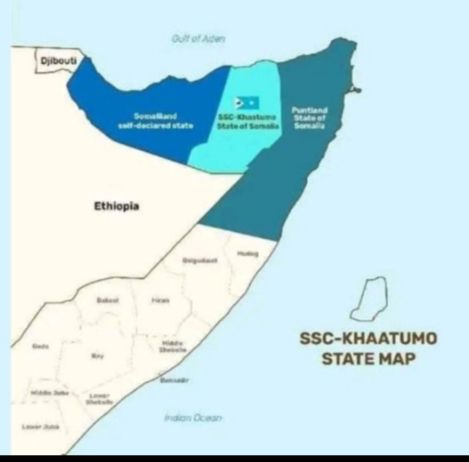
When Abdirahman Faroole stood before the delegates at the Golaha Mustaqbalka Soomaaliya in Kismayo recently, he did more than recall a grievance. He punctured a national illusion. The separation between Puntland State of Somalia and SSC-Khaatumo was never negotiated, never constitutionalized, and never settled. It was improvised—then normalized by fatigue. What Faroole called federal over-reach is not an episode; it is the predictable outcome of Somalia’s habit of substituting delay for decision.
This debate is often miscast as a territorial quarrel or a clash of personalities. That framing is convenient—and wrong. The real conflict is about legitimacy without renewal. Puntland’s authority in SSC areas did not evaporate overnight; it eroded through representation without influence, inclusion without voice, and loyalty assumed rather than renewed. When legitimacy thins, force tempts. When force appears, trust collapses. That spiral explains far more than slogans ever will.
SSC-Khaatumo’s emergence, in turn, is not an act of political vandalism. It is an audit. Communities do not abandon frameworks that protect them; they exit arrangements that ignore them. The problem is not that SSC asserted itself; it is that Somalia allowed assertion to replace negotiation. Un-negotiated separation hardens positions, militarizes misunderstandings, and leaves every party claiming legality while delivering instability.
Enter the federal center—and here the reckoning sharpens. The Federal Government of Somalia has perfected a dangerous craft: symbolic authority without operational responsibility. From Mogadishu come flags, declarations, and endorsements. What does not reliably come are enforceable guarantees—revenue sharing that works, dispute resolution that binds, security coordination that endures. This is not federal leadership; it is performative sovereignty. When the center inserts itself into unresolved regional disputes without convening binding talks, it does not arbitrate—it aggravates.
To pretend this is a clan war is to misdiagnose a constitutional disease. Puntland was founded as a multi-clan federal bulwark when Somalia was dissolving into armed particularism. That achievement is real—and so is its expiration date if not renewed. Institutions that are not refreshed invite older logics to return. When federal mechanisms weaken, clan arithmetic fills the vacuum. Blaming identity for institutional decay is how governance failures metastasize into existential feuds.
The seductive argument—that SSC should bypass Puntland and align directly with the center—offers shortcuts where only hard roads exist. Somalia’s tragedy is not a lack of symbols; it is a shortage of settlement. Direct alignment would not end ambiguity; it would relocate it. Stability is not achieved by skipping layers of federalism; it is achieved by negotiated inclusion—clear competencies, shared revenues, credible arbitration, and timelines that bind.
Calls for Puntland’s withdrawal from SSC miss the point entirely. Withdrawal without settlement produces vacuums, not peace. Authority cannot be abandoned; it must be transformed. Equally, SSC’s legitimacy cannot be wished away; it must be recognized, negotiated, and constitutionalized. Anything less is theater with consequences.
Strip away the rhetoric and the truth is stark: Somalia keeps fighting the same argument because it refuses to finish the same agreement. The Puntland–SSC rupture is a delayed constitutional reckoning over authority, representation, and consent—prolonged by a federal center that prefers applause to arbitration. History is unforgiving to systems that confuse postponement with stability.
Somalia does not suffer from too much federalism or too little unity. It suffers from unfinished bargains masquerading as settled orders. Until the separation is negotiated, the roles clarified, and the guarantees enforced, legitimacy will keep returning—loudly—where it was once neglected quietly.
———-
Support WAPMEN— the home of fearless, independent journalism that speaks truth to power across Somalia and the region.
Tel/WhatsApp: +252 90 703 4081.
After the Long Night: A Glimpse of Somalia After Hassan Sheikh
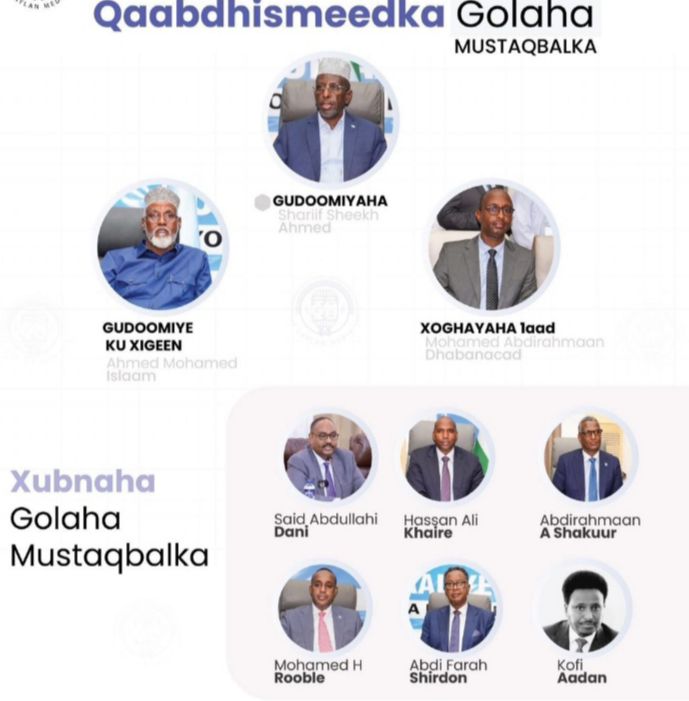
Somalia has learned, painfully, that leadership does not end with ballots, speeches, or borrowed legitimacy from foreign podiums. It ends when reality knocks. And reality, as usual, arrives late, uninvited, and unimpressed.
This image—circulating quietly, almost shyly—does not scream victory. It does not promise miracles. It does not declare itself the future. That alone makes it revolutionary.
What it shows is something Somalia has been starved of for decades: the early outline of post-Hassan Sheikh Mohamud politics, beyond May 2026. Not slogans. Not clan arithmetic. Not Villa Somalia theatrics. But faces that suggest influence, continuity, negotiation, and uncomfortable political conversations.
Although not necessarily more qualitative, it carries visible signs of reckoning—a rare political currency in a country exhausted by grand claims and chronic under-delivery.
In Somalia, that is radical.
The End of the Traveling Presidency
For nearly a decade, Somali politics has resembled a departure lounge. Leadership was measured in air miles, hotel conferences, and donor applause. Governance was something to be discussed abroad, not practiced at home. Federalism became a word to be recited, not respected. National reconciliation turned into an annual slogan, dusted off whenever legitimacy dipped.
The post-2026 moment, however, will not tolerate this circus. The country is exhausted. The regions are assertive. The people are watching.
This image hints at figures who understand that Somalia is no longer governed from one compound, one clan narrative, or one donor briefing. It suggests personalities shaped by friction—between federal member states and Mogadishu, between tradition and modern statehood, between unity and forced uniformity.
A New Kind of Political Gravity
What makes this emerging constellation interesting is not perfection—but plurality.
These are not messiahs. They are not strongmen. They are not loud. And that is precisely the point.
They represent something Somalia desperately needs:
Leaders who know federalism is not rebellion
Figures who grasp that reconciliation is not surrender
Personalities who accept that power must circulate—or it explodes
If Hassan Sheikh’s era was defined by central accumulation and political monoculture, the post-2026 phase—if this image is any indication—may finally reintroduce political gravity, where influence is earned, not imposed.
Satire Aside, This Is Serious
Of course, Somalis are trained skeptics. We have seen promising faces before—only to watch them mutate once they taste Villa Somalia tea. We know how quickly “national figures” become “national disappointments.”
But satire must also know when to pause.
This image does not promise salvation. It promises possibility—not excellence, not genius, but a baseline of political honesty long absent from the stage. And in Somalia’s political history, even that is not cheap.
It whispers—quietly—that the next chapter may not be written by one man, one network, or one borrowed script. It suggests that post-Hassan Sheikh Somalia might finally rediscover dialogue over dominance.
The Real Test Ahead
If these emerging figures truly shape the future, their test will be simple and brutal:
Will they respect federal member states as partners, not provinces?
Will they treat reconciliation as a process, not a photo-op?
Will they govern Somalia as a shared republic, not a captured estate?
If they do, May 2026 may not mark just the end of a presidency—but the end of an era of political recycling.
And if they fail?
Somalia, as always, will survive them too—but poorer in hope.
For now, this image stands as an early signal flare in a long night: the idea that Somalia’s future leadership might finally look forward, not inward.
Somalia’s War on Time: When Friday Starts on Thursday and Ends on Early Friday Evening
Welcome to Somalia, the only country on earth where time itself has been federalized, fragmented, and thoroughly humiliated.
Here, clocks are decorative items, calendars are opinion pieces, and Friday—the holiest day in Islam—has been stretched, bent, sliced, and redistributed like a contested aid package. Ask ten Somalis when Friday night begins, and you will receive ten answers, all delivered with absolute confidence and theological authority.
Is Thursday evening Friday?
Is it Saturday on Friday evening?
And most importantly: is a Somali day still 24 hours, or has it been downsized like a donor budget?
No one knows. And worse—no one agrees.
A Day That Begins Yesterday Evening and Ends Tomorrow Evening?
In today’s Somalia, a “day” is no longer a fixed unit of time. It is a political and cultural negotiation.
Friday begins when someone decides it begins. It ends when someone else says it ends. In between, weddings are scheduled, shops are closed, prayers are announced, and public debates erupt—often heated, sometimes violent—over whether now is still Friday or already Saturday.
We have managed to turn timekeeping, one of humanity’s earliest scientific achievements, into a clan-based interpretive exercise.
This is not astronomy.
This is not jurisprudence.
This is chronological anarchy.
Importing Confusion by the Container Load
Where did this madness come from?
Some blame it on “Arab ways of counting time”—the idea that a day begins at sunset, creating a Frankenstein creature made of two halves of two different days. Others point fingers at poorly translated religious traditions, half-learned fiqh lessons, and WhatsApp sheikhs who discovered theology on YouTube last week.
But let us be honest: Somalia did not just import this confusion—it weaponized it.
We imported clocks from Europe, prayers from Arabia, lunar calendars from scholars, solar calendars from colonial offices, and then never bothered to reconcile any of them. The result? A nation where Thursday night can legally, spiritually, and socially be Friday, depending on who is speaking—and where.
Federalism, But Make It Temporal
Naturally, Somalia being Somalia, even time could not escape federalism.
In one town, Friday night starts at sunset Thursday.
In another, it begins at midnight.
In a third, it starts when the mosque loudspeaker says so.
In a fourth, it starts when the wedding hall lights turn on.
We now live under Multiple Time Zones Without Borders.
GMT? Forget it.
EAT? Optional.
Somali Time? Negotiable.
This is federalism taken to its logical extreme: every community is its own time authority.
When Religion Becomes Casual and Science Optional
Ironically, this chaos is defended in the name of religion—yet it violates both religious discipline and scientific reason.
Islam is precise. Astronomy is precise. Prayer times are calculated to the minute. Yet in Somalia, we treat time like a rumor: flexible, adjustable, and open to reinterpretation after dinner.
We argue passionately about when Friday starts, but show little concern for when honesty starts, when accountability starts, or when governance starts.
Apparently, God demands accuracy in prayer times—but not in clocks.
A Nation That Lost Its Watch—and Its Way
This confusion over days is not a small issue. It is a symbol.
A country that cannot agree on when a day begins will struggle to agree on:
when elections should be held
when mandates expire
when contracts start and end
when responsibility begins
When time itself is blurred, accountability evaporates.
Missed a deadline?
“It was still Friday night.”
Extended your term?
“Friday hasn’t ended yet.”
Delayed salaries?
“Time is relative.”
Conclusion: Reset the Clock, Reset the Mind
Somalia does not need new clocks. It needs clarity of thought.
A day is 24 hours.
Friday is Friday.
Night is night.
Religion does not fear precision.
Culture does not require confusion.
And identity is not threatened by a clock that actually works.
Until Somalia makes peace with time, time will continue to mock Somalia.
And somewhere, in the middle of Thursday-Friday-Saturday, a Somali will confidently announce:
“Relax. It’s still Friday night.” The day starts from one morning until the next morning.
———–
Support WAPMEN — the home of fearless, independent journalism that speaks truth to power across Somalia and the region.
Tel/WhatsApp: +252 90 703 4081.
WAPMEN Annual Subscription – Support Independent Journalism
WAPMEN (formerly WDM) delivers fearless analysis, bold editorials, and independent commentary that speaks truth to power.
Subscribe for just US$37 per year and help keep WAPMEN free from political influence and censorship.
Payment options:
• Sahal: +252 90 703 4081
• EVC Plus: +252 61 158 8388
• MyCash: +252 71 681 4371
• PayPal: ismail.warsame@yahoo.ca
Info & assistance:
Email: ismailwarsame@gmail.com
Tel/WhatsApp: +252 90 703 4081
By subscribing, you’re not just supporting WAPMEN—you’re standing for truth, justice, and independent ideas.
Subscribe today. Share widely.
© 2025 Warsame Policy & Media Network (WAPMEN)
New Somalia e-visa security flaw puts personal data of thousands at risk | Investigation News | Al Jazeera
Which Is Worse: Antisemitism or Goyism?A False Moral Hierarchy Built on Weaponized Language
In a sane moral universe, this question would not even exist. Hatred is hatred. Bigotry is bigotry. Dehumanization—whether aimed at Jews, Christians, Muslims, atheists, or anyone else—rots societies from the inside out. Yet we do not live in a sane moral universe. We live in an age where words are not merely descriptive; they are weapons. And nowhere is this more visible than in the increasingly cynical deployment of the term antisemitism, and the conspicuous silence around its mirror image: goyism.
Let us be clear from the outset: antisemitism is real, historically catastrophic, and morally indefensible. It produced pogroms, ghettos, expulsions, and the Holocaust—the darkest industrialized crime in human history. Any attempt to trivialize or deny that legacy is obscene. Jews, like all peoples, have the absolute right to safety, dignity, and freedom from persecution.
But acknowledging that truth does not require surrendering reason. Nor does it justify the intellectual fraud now underway in many political and media circles.
From Shield to Sword: The Mutation of “Antisemitism”
Today, antisemitism has been stretched far beyond its original meaning. It is no longer confined to hatred of Jews as Jews. Instead, it is increasingly invoked to describe:
criticism of the Israeli government,
opposition to Zionist ideology,
protest against occupation, siege, or collective punishment,
or even appeals to international law and human rights.
In this distorted framework, a Jewish anti-Zionist can be labeled antisemitic, while a non-Jewish supporter of ethnic supremacy is applauded as a “friend of Israel.” This is not moral clarity. It is semantic coercion.
When a word that once named a real and deadly hatred is inflated to silence debate, it loses precision—and eventually credibility. That is not a victory against antisemitism; it is a gift to it.
The Taboo Twin: What Is Goyism?
Now enter the term no one wants to touch.
Goyism—the belief in Jewish exceptionalism taken to the point of contempt for non-Jews—is not a myth invented by antisemites. It is a documented attitude present in some religious, political, and ideological currents, just as supremacist thinking exists in all communities when power goes unchecked.
Goyism manifests when:
non-Jewish lives are treated as expendable,
international law is dismissed because “it doesn’t apply to us,”
mass civilian suffering is justified by ethnic or theological hierarchy,
critics are dehumanized as morally inferior simply for not belonging to the “chosen” group.
To name this phenomenon is not antisemitism. It is anti-supremacism. The refusal to acknowledge its existence, however, is intellectual dishonesty.
Which Is Worse?
The question itself is flawed.
Asking “which is worse” is like asking whether racism or sectarianism is more poisonous. Both kill. Both corrode. Both rely on the same logic: some lives matter more than others.
Antisemitism targets Jews.
Goyism targets non-Jews.
Both deny equal human worth. Both are morally bankrupt.
The real danger lies not in naming either, but in ranking suffering, monopolizing victimhood, and criminalizing criticism.
The WAPMEN Position: No Sacred Hatreds
Warsame Digital Media rejects all ethnic, religious, and civilizational supremacism—without exception and without fear.
Hatred of Jews is wrong. Period.
Hatred of non-Jews is wrong. Period.
Exploiting historical trauma to justify present-day injustice is wrong.
Turning moral language into a bludgeon against dissent is wrong.
There are no holy bigotries.
There are no protected supremacies.
There are no untouchable ideologies.
If antisemitism must be confronted honestly, then so must goyism. If Jewish lives matter—as they absolutely do—then all lives must matter equally, not rhetorically, but in practice.
Anything less is not justice.
It is tribalism dressed up as morality.
And history has already shown us where that road leads.
PUBLIC NOTICE | COMMUNITY ALERT – PUNTLAND
Beware of Fraudsters Exploiting Salary Delays
Members of the public are advised to remain highly vigilant. Reports indicate that thieves and con artists in Puntland are taking advantage of real and perceived stories about civil servants, workers, and members of the armed security forces who are experiencing prolonged salary delays or non-payment for months.
These individuals exploit public sympathy by falsely claiming to be unpaid government employees or security personnel, soliciting money, assistance, or other forms of support from well-meaning citizens, businesses, and members of the diaspora.
⚠️ Be cautious and alert:
Do not give money or assistance based solely on emotional appeals.
Verify claims before offering any financial or material support.
Be especially careful with requests made through phone calls, social media, or intermediaries.
Report suspicious behavior to local authorities or community leaders.
Solidarity without exploitation
While genuine hardship exists and deserves institutional solutions, fraud and deception only deepen mistrust and harm society. Helping must be guided by verification, transparency, and accountability, not manipulation.
Do not be a victim. Do not enable fraud.
Protect yourself, protect your community, and spread awareness.
Public Safety & Community Awareness Notice
The Ilhan Omar Obsession: MAGA’s Fear of the Unbowed

Donald J. Trump and his MAGA movement are obsessed—pathologically so—with one woman: Congresswoman Ilhan Omar. The evidence is not subtext; it is screamed at rallies where crowds chant “Send her back!” following his lead. It is in Trump’s own words, calling her “garbage” and her native Somalia a “filthy, dirty, disgusting” country. Omar herself has described this relentless focus as a “weird” and “creepy” obsession.
But why? Not because she commands armies or controls institutions. She doesn’t. And not because she is uniquely radical in a Congress stuffed with ideological extremes. She isn’t.
It is because she represents what MAGA fears most: a minority that did not arrive quietly, assimilate on their terms, or ask for permission to succeed. She embodies a community that, in a single generation, has gone from refugee resettlement to electing representatives to a city council, a state legislature, and the United States Congress—herself being the historic first.
This rapid ascent shatters a foundational nativist myth. To ideologues like Trump’s senior adviser Stephen Miller—whose arguments for immigration policy seek a return to 1920s-style racial quotas—groups from what he calls “third world countries” like Somalia were destined to “replicate the conditions they left.” They were meant to be permanent guests, not architects of policy.
Ilhan Omar proved them wrong. And the backlash is not merely rhetorical; it is operational. Following Trump’s inflammatory comments, U.S. Immigration and Customs Enforcement (ICE) launched operations targeting undocumented immigrants in the Twin Cities’ Somali community, leading to what Omar decried as the racial profiling of U.S. citizens. The administration also moved to end Temporary Protected Status (TPS) for Somalis. The message is clear: rhetoric fuels policy, and fear justifies enforcement.
This pattern is driven by a single ideological engine: the Great Replacement Theory. This paranoid, racist belief that “real Americans” are being demographically and culturally replaced is now mainstream on the American right. Miller’s rhetoric “borrow[s], at least in spirit” from this conspiracy theory, warning of “voting blocs loyal to foreign interests” and “civilizational erasure.” Omar has stated that Miller “regularly echoes” this toxic theory. When arguments fail, identity is weaponized. Hence the relentless, false claims that she is in the country illegally or committed marriage fraud—the oldest tricks in the nativist handbook, designed to permanently label someone as “other.”
What truly terrifies Trumpism, then, is not Ilhan Omar the individual, but Ilhan Omar the symbol: a Black, Muslim, refugee woman who punctures their mythology. She speaks without apology, wins elections without their blessing, and, most unforgivably, defines her own American story. She calls her journey the realization of the American Dream, inspired by her grandfather’s faith in a country “where you can eventually become American.” She draws a line between the hate from official Washington and the “real America” that welcomed her.
In doing so, she holds up a mirror to America’s unresolved anxieties. She notes that this rhetoric “reminds of the way the Nazis described Jewish people in Germany,” placing it in the brutal continuum of American history—where Irish Catholics were depicted as vermin, Italians were lynched, and Japanese Americans were interned. Every non-Anglo-Saxon group has been attacked until it organized, resisted, and forced recognition.
The lesson for Somalis—and for all targeted minorities—is stark and non-negotiable: politics is not a spectator sport. Representation is not gifted. It is seized. Rights are protected not by silence but by numbers, discipline, and relentless civic engagement.
Ilhan Omar is not the problem. She is the warning of the future MAGA fears, where the marginalized claims power and refuses to be invisible. But that future is already here with votes, organisations, and successive winnings at all levels and fields of public life.
Villa Somalia Is Not Somalia
WAPMEN EDITORIAL
There is a dangerous delusion stalking Mogadishu’s corridors of power. It goes like this: “We control the capital. We sit in Villa Somalia. Therefore, we control Somalia.”
This is not sovereignty. This is fantasy politics dressed in state uniforms.
Mogadishu is a capital city, not a crown. Villa Somalia is a building, not a mandate from the Somali people. Occupancy does not equal ownership. Sitting in a chair does not confer authority over a nation that is federal by constitution, collective by history, and plural by political reality.
The Capital Fallacy
The belief that controlling Mogadishu equals controlling Somalia is a relic of the failed unitary state that collapsed in 1991. That system died in blood and ruins. Trying to resurrect it through rhetoric and coercion is not leadership—it is historical amnesia.
Somalia today is not a city-state. It is a multi-layered federal republic composed of Federal Member States with constitutional standing, political legitimacy, and territorial ownership. No amount of flag-waving in Mogadishu can erase that fact.
Fake Sovereignty, Real Damage
Claiming monopoly over Somali foreign policy, national representation, and sovereignty—while ignoring or marginalizing Federal Member States—is not statecraft. It is institutional fraud.
Sovereignty in a federal system is shared, negotiated, and consent-based. It flows upward from the people and their states, not downward from Villa Somalia press releases. Without the endorsement, participation, and consent of Puntland, Jubaland, Southwest, and Galmudug, Hirshabelle, there is no legitimate national authority—only a shrinking circle of self-affirmation.
Somalia Is Not Owned—It Is Held in Trust
Somalia is a collective political property, not the private estate of whoever controls Mogadishu’s checkpoints. The Federal Government is a trustee, not a landlord. Trustees who mistake themselves for owners always end the same way: rejected, resisted, and eventually removed.
You do not control Somalia because:
You control Mogadishu
You sit in Villa Somalia
You issue passports or attend international forums
You control Somalia only when all its constituent states consent to the project. Anything else is delusion backed by insecurity.
The Federal Reality Check
Federalism is not optional. It is not a concession. It is the price of Somali survival after state collapse. Attempts to centralize power by sidelining states, weaponizing foreign policy, or pretending Somalia begins and ends at KM4 are acts of political sabotage.
The sooner Mogadishu’s power-holders accept this reality, the better. Somalia does not need another strongman fantasy. It needs constitutional humility, shared governance, and genuine partnership.
Final Word
Villa Somalia is not Somalia.
Mogadishu is not the country.
Control without consent is not sovereignty—it is occupation of office.
Somalia belongs to all its peoples, all its states, and all its regions—or it belongs to no one at all.
—
Support WAPMEN — the home of fearless, independent journalism that speaks truth to power across Somalia and the region.
Tel/WhatsApp: +252 90 703 4081.
Ports, Legitimacy, and Strategic Miscalculation in Puntland’s Foundational Crisis (2000–2001)
WAPMEN Academic Essay / Policy Paper
Ismail H. Warsame
Founder & Editor-in-Chief, WAPMEN (Warsame Policy & Media Network)
Former Chief of Cabinet (Chief of Staff), Puntland State of Somalia (1998–2004)
Abstract
WAPMEN Policy Context: This academic essay is published as part of the Warsame Policy & Media Network (WAPMEN) series on Somali state formation, federalism, and conflict governance. It is intended for scholars, policymakers, federal and state-level officials, and international partners engaged in Somalia’s political stabilization.
The early years of Puntland State of Somalia were marked by profound institutional fragility, contested legitimacy, and acute security dilemmas. This paper examines the 2000–2001 internal military confrontation involving Jama Ali Jama and General Adde Muse Hersi against the administration of Abdullahi Yusuf Ahmed. While acknowledging the personal sacrifices and historical roles of the principal actors, the study argues that two core strategic miscalculations shaped the outcome of the conflict: first, the assumption that control of Bosaso port equated to control of Puntland State; and second, the misreading of the confrontation as a narrow intra-clan dispute rather than a challenge to a broader political compact underpinning Puntland’s formation. By situating these errors within theories of state formation, political legitimacy, and post-conflict governance, the paper contributes to a deeper understanding of why early Puntland survived internal fracture and what lessons this episode offers for contemporary Somali federalism.
Keywords: Puntland, Bosaso Port, state formation, legitimacy, Somali federalism, political conflict
1. Introduction
The establishment of Puntland State in 1998 represented one of the earliest attempts to reconstruct Somali governance after the collapse of the central state in 1991. Conceived as a bottom-up political project rooted in local reconciliation and collective security, Puntland emerged in an environment characterized by institutional weakness, militarization of politics, and unresolved clan grievances. Within three years of its founding, Puntland faced an existential crisis during the 2000–2001 internal confrontation that pitted rival political-military coalitions against each other.
This paper revisits that crisis through an analytical lens rather than a purely commemorative or polemical one. While written in the context of remembrance and condolence for the late Jama Ali Jama and General Adde Muse Hersi, it seeks to extract analytically useful lessons from their political choices and strategic calculations. The central question addressed is not one of moral judgment, but of political reasoning: why did the challenge to the Puntland state project fail, and what does this reveal about the nature of authority, legitimacy, and statehood in post-collapse Somalia?
2. Historical Context: Puntland’s Foundational Moment
Puntland’s formation was the product of a series of reconciliation conferences involving eastern and northeastern Darood clans, culminating in the Garowe constitutional process of 1998. Unlike faction-based administrations in southern Somalia, Puntland articulated itself as a collective political covenant designed to restore order, provide basic governance, and shield its territory from the centrifugal violence afflicting the rest of the country (Lewis 2002; Samatar 2001).
However, this foundational consensus remained fragile. Institutions were nascent, security forces were unevenly integrated, and political authority rested as much on negotiated legitimacy as on coercive capacity. In such an environment, political disputes—particularly leadership succession and constitutional interpretation—carried a high risk of militarization. The 2000–2001 confrontation must therefore be understood not as an anomaly, but as a stress test of an unproven political system.
3. The First Strategic Miscalculation: Bosaso as a Proxy for State Power
A central assumption guiding the strategy of Jama Ali Jama and General Adde Muse Hersi was that control of Bosaso port—Puntland’s principal economic artery on the Gulf of Aden—would translate into effective control of the state. From a materialist perspective, this reasoning had surface plausibility. Bosaso generated customs revenue, facilitated external trade, and served as Puntland’s main gateway to the outside world.
Yet this assumption conflated economic leverage with political legitimacy. As studies of state formation emphasize, territorial control and revenue extraction alone do not constitute state authority; they must be embedded in recognized political frameworks and social consent (Menkhaus 2004; de Waal 2003). Puntland’s cohesion in 2000–2001 derived less from Bosaso’s revenues than from a widely shared perception that the state represented a collective achievement worth defending.
By reducing Puntland to a strategic port city, the challengers underestimated the depth of political identification that had already formed around the Puntland project. This miscalculation limited their ability to mobilize sustained support beyond narrow constituencies and rendered their military gains politically hollow.
4. The Second Strategic Miscalculation: Clan Reductionism and the Loss of Political Vision
More consequential than the first error was the interpretation of the conflict as an intra-clan struggle within the Mohamud Saleimaan lineage. This framing ignored the reality that Puntland’s legitimacy rested on a broader inter-clan compact encompassing multiple Darood communities across Bari, Nugaal, Mudug, Sanaag, and Sool.
Clan identity has always been a central axis of Somali politics, but successful political projects are those that transcend lineage arithmetic by institutionalizing collective interests (Hoehne 2006). By approaching the confrontation as a sub-clan dispute, Jama Ali Jama and General Adde Muse Hersi failed to recognize that many actors—regardless of internal disagreements—perceived the challenge as a threat to the very survival of Puntland State.
This misreading produced strategic isolation. Rather than fracturing Puntland along clan lines, the confrontation consolidated a defensive coalition around the incumbent administration, reinforcing the notion that the state itself, not any single leader, was under siege.
5. Outcomes and Costs
The failure of these strategic assumptions had lasting consequences. Politically, the challengers were marginalized; militarily, their efforts were contained; institutionally, Puntland emerged more centralized and security-conscious than before. The costs, however, extended beyond individual careers. The confrontation deepened mistrust, militarized politics, and delayed institutional consolidation during a critical formative period.
At the same time, the episode demonstrated a crucial insight: even in its infancy, Puntland possessed a form of political resilience rooted in collective legitimacy rather than coercive dominance alone. This resilience helps explain Puntland’s relative durability compared to other post-1991 Somali administrations.
6. Discussion: Lessons for Somali Federalism
The 2000–2001 Puntland crisis offers enduring lessons for Somali federalism. First, economic assets—ports, airports, and revenue nodes—cannot substitute for political legitimacy grounded in inclusive governance. Second, reducing political conflicts to clan binaries obscures broader social compacts and often backfires strategically. Finally, early-state survival in fragmented societies depends less on individual leaders than on shared narratives of collective ownership.
These lessons remain relevant as Somalia continues to grapple with contested federal authority, resource disputes, and center–periphery tensions. The Puntland case underscores that even fragile political orders can endure when perceived as legitimate and collectively owned.
7. Conclusion
Remembering Jama Ali Jama and General Adde Muse Hersi requires neither hagiography nor erasure. They were political actors shaped by an extraordinarily volatile moment, making consequential decisions under immense pressure. Their strategic miscalculations during the 2000–2001 confrontation illuminate, rather than diminish, the structural realities of Puntland’s early statehood.
Ultimately, this episode affirms a central proposition: a state cannot be held by a port alone, nor reduced to clan arithmetic. Legitimacy, once forged through collective struggle, becomes a durable force—one that can outlast both ambition and error. Reflecting honestly on this history is not an act of condemnation, but a necessary step toward a more stable and just Somali political future.
Policy Implications and Recommendations
1. Ports Are Strategic Assets, Not Sovereign Substitutes. Federal and state actors should avoid equating control of economic nodes (ports, airports, customs) with political authority. Sustainable governance requires legitimacy grounded in inclusive political compacts.
2. Reject Clan Reductionism in State Conflicts. Policymakers must resist framing federal or state disputes as sub-clan rivalries; such narratives obscure broader political settlements and escalate conflict.
3. Protect Foundational Political Compacts. Early-state agreements—such as Puntland’s 1998 covenant—should be treated as constitutional assets deserving protection during leadership disputes.
4. Institutionalize Conflict Resolution Mechanisms. Somalia’s federal system requires non-militarized arbitration mechanisms for constitutional and electoral disputes to prevent recurrence of armed confrontations.
5. Leverage Historical Memory as Policy Guidance. Somali political actors and international partners should integrate historical case studies into governance reform strategies rather than treating each crisis as unprecedented.
Bibliography
Menkhaus, Ken. Somalia: State Collapse and the Threat of Terrorism. Oxford: Oxford University Press, 2004.
Lewis, Ioan M. A Modern History of the Somali: Nation and State in the Horn of Africa. 4th ed. Oxford: James Currey, 2002.
Samatar, Abdi Ismail. “Puntland and the Crisis of Somali Federalism.” Bildhaan 1 (2001): 54–67.
Hoehne, Markus. “Political Identity, Emerging State Structures and Conflict in Northern Somalia.” Journal of Modern African Studies 44, no. 3 (2006): 397–414.
de Waal, Alex. “The Politics of Destabilisation in the Horn of Africa.” Global Dialogue 5, no. 1–2 (2003): 1–12.
Warsame, Ismail H. Talking Truth to Power: Essays on Somali Governance, Federalism, and State Collapse. Nairobi: Warsame Digital Media, 2019.
Warsame, Ismail H. “Statehood, Ports, and Political Legitimacy in Puntland.” Warsame Digital Media (WDM), n.d.
Warsame, Ismail H. “Puntland at the Crossroads: Founding Ideals and Political Fragmentation.” Warsame Digital Media (WDM), n.d.
Warsame Digital Media (WDM). “Puntland’s Founding Moment and the 2000–2001 Internal Confrontation.” Editorial series, n.d.
JAMA ALI JAMA
In Remembrance and Condolence

With profound sorrow and solemn reflection, we extend our heartfelt condolences on the passing of Jama Ali Jama and General Adde Muse Hersi. Their lives were intertwined with the early, turbulent birth of Puntland State—a chapter of history into which their names are indelibly etched. May Allah in His infinite mercy grant them peace, forgive their shortcomings, and bestow patience and strength upon their families, friends, comrades, and all who mourn them.
They lived and led during one of the most fragile periods in modern Somali history—a time when Puntland was in its first breath, its institutions mere sketches, and political disputes too often descended into armed confrontation. In such volatility, decisions were forged under immense pressure, shaped by a confluence of fear, ambition, miscalculation, and the heavy burden of legacy.
History records that during the military confrontation of 2000–2001, both men committed grave strategic and political misjudgments.
The First Error: A Misplaced Equation
They operated under the belief that control of Bosaso—the vital port on the Gulf of Aden—equated to control of Puntland itself.This view tragically reduced the nascent state to a mere geographic and economic prize. In reality, Puntland was not just a port or a revenue stream. It was—and remains—a political project, a collective will, and an emerging state sustained by shared sacrifice and a legitimacy that transcends territory.
The Second, Deeper Error: A Failure of Vision
They interpreted the conflict through a dangerously narrow lens—as an intra-clan struggle within the Mohamud Saleimaan.This perspective blinded them to a fundamental truth: Puntland represented a historic covenant among the eastern and northeastern Darood clans, a union forged to defend a new political order against the tides of fragmentation. In missing this, they overlooked the broad-based social and political consensus that had already crystallized around Puntland’s survival and sovereignty.
The cost of these errors was high, paid not only in their personal destinies but in the stability and cohesion of that fragile moment.
Yet, to remember is not to simplify. History renders no leader as purely angel or demon. Each is a product of their time, navigating imperfect choices under the weight of impossible circumstances.
As we honor their memory, let us do so with humility and historical honesty. May their story serve as an enduring lesson: that a state cannot be held by a port alone; that legitimacy is never merely clan arithmetic; and that unity, born of collective struggle, becomes a force not easily broken.
May Allah grant Jama Ali Jama and General Adde Muse Hersi His utmost mercy and eternal rest. And may Somalia, through reflection on its painful past, continue to walk the path toward a more peaceful and just future.
Further reading:
THE LATE ADVOCATE YUSUF HAJI NUR
—————————-
Bibliography
1. Ken Menkhaus, Somalia: State Collapse and the Threat of Terrorism (Oxford: Oxford University Press, 2004), 47–69.
2. Ioan M. Lewis, A Modern History of the Somali: Nation and State in the Horn of Africa, 4th ed. (Oxford: James Currey, 2002), 285–292.
3. Ismail H. Warsame, Talking Truth to Power: Essays on Somali Governance, Federalism, and State Collapse (Nairobi: Warsame Digital Media, 2019), 112–126.
4. Abdi Ismail Samatar, “Puntland and the Crisis of Somali Federalism,” Bildhaan 1 (2001): 54–67.
5. Ismail H. Warsame, “Statehood, Ports, and Political Legitimacy in Puntland,” Warsame Digital Media (WDM), n.d., https://ismailwarsame.wordpress.com/.
6. Markus Hoehne, “Political Identity, Emerging State Structures and Conflict in Northern Somalia,” Journal of Modern African Studies 44, no. 3 (2006): 397–414.
7. Warsame Digital Media (WDM), “Puntland’s Founding Moment and the 2000–2001 Internal Confrontation,” editorial series, n.d.
8. Alex de Waal, “The Politics of Destabilisation in the Horn of Africa,” Global Dialogue 5, no. 1–2 (2003): 1–12.
9. Ismail H. Warsame, “Puntland at the Crossroads: Founding Ideals and Political Fragmentation,” Warsame Digital Media (WDM), n.d.
Economist: Immigrants contribute $26 billion to Minnesota’s economy | MPR News
BREAKING: WAR ON AMERICAN STREETS
ICE Agents Tackle, Pepper-Spray U.S. Citizens in Minneapolis; “Operation Metro Surge” Sparks Fear, Fury in Somali Community

MINNEAPOLIS, MN – Federal immigration agents are waging open war on American soil, violently detaining U.S. citizens, unleashing chemical weapons on crowds, and terrorizing a whole community under orders from the top.
This is not a border. This is Cedar-Riverside, Minneapolis. And this is the shocking reality of ICE’s “Operation Metro Surge.”
SHOVED TO THE PAVEMENT: “I’M A CITIZEN!”
On Tuesday, in a scene ripped from an authoritarian crackdown, ICE agents sprinted after a Somali-American man, tackled him to the ground, and slapped him in cuffs—all as he desperately shouted he was a U.S. citizen and shoved his ID in their faces.
They took him anyway. He was hauled to an ICE office, forcibly fingerprinted, and held until bureaucracy finally confirmed what he screamed on the street: He is an American. This is what “surge” looks like: the arrest of a citizen on a public sidewalk.
PEPPER SPRAY AND PANIC
Just one day earlier,on Monday, the same neighborhood choked on clouds of pepper spray. ICE agents, conducting ID checks, fired the chemical irritant directly at a crowd of protesters who dared to block their vehicles. No arrests. Just punishment by aerosol.
The message is clear: comply or burn.
THE SURGE IS HERE
The violence flows directly from Washington.On December 4th, ICE proudly announced “Operation Metro Surge,” a dragnet targeting “criminal illegal aliens.” But the first week’s carnage tells a different story: citizens detained, crowds gassed, and a community paralyzed by fear.
People now carry passports to go to the grocery store. Businesses are empty. In a stunning act of solidarity, Latino shops are now offering free delivery to Somalis too afraid to leave their homes.
TRUMP: “TERMINATE” AND “GARBAGE”
The fuel on this fire?President Donald Trump. He has labeled Somali immigrants “garbage” and officially terminated their Temporary Protected Status (TPS), signing a death warrant for thousands. The rhetoric from the top has given agents the green light for chaos on the ground.
LOCAL GOVERNMENTS FIGHT BACK
While federal agents raid,local leaders are rebelling. Minneapolis Mayor Jacob Frey has banned the use of city property to stage these raids. The St. Paul City Council is demanding an investigation after its own police force fired pepper balls and chemical irritants at protesters last month.
But it may be too little, too late. The rule book has been shredded. The surge is on.
COMMUNITY UNDER SIEGE
“The fear is everywhere,”a community leader told WAPMEN, voice trembling. “We are hunting for groceries, not freedom, in the land of the free.” The Minnesota chapter of the Council on American-Islamic Relations (CAIR-MN) has formed an emergency task force, urging anyone confronted by ICE to call 612-206-3360 immediately.
This is a developing story. WAPMEN is monitoring the situation on the ground. Stay with us.
#MetroSurge #SomaliCommunity #ICERaids #BreakingNews.

 Warsame Policy & Media Network (WAPMEN)
You must be logged in to post a comment.