SECRETARY-GENERAL APPOINTS FATIHA SEROUR OF ALGERIA AS DEPUTY SPECIAL REPRESENTATIVE IN SOMALIA
United Nations Secretary-GeneralBan Ki-moon today announced the appointment of Fatiha Serour (Algeria) as his Deputy Special Representative for Somalia. The Secretary-General extends his sincere thanks to Peter De Clercq of the Netherlands who served as Deputy Special Representative since the establishment of the United Nations Assistance Mission in Somalia (UNSOM), and was recently appointed Deputy Special Representative for the United Nations Stabilization Mission in Haiti (MINUSTAH).Ms. Serour is currently Director of “Serour Associates for Inclusion and Equity”, an association focused on supporting inclusive approaches to economic development. She previously served in senior advisory positions with the Department of Social and Economic Affairs (2000-2001 and 2003-2006), the United Nations Assistance Mission in Afghanistan (UNAMA) from 2001-2002 and as Director for Youth at the Commonwealth Secretariat (2006-2010).
In her most recent position as Regional Director for Europe, North Africa and the Middle East at the United Nations Office for Project Services from 2010-2012, she led national and international teams to implement projects for the United Nations system, international financial institutions, governments and other partners in world aid.
Dr. Serour holds a Ph.D. in Development Strategies for Africa from the University of Aberdeen, United Kingdom, and a Master of Arts in International Relations from the University of Lille, France. She is fluent in English, French and Arabic.
Location of Puntland State of Somalia (Photo credit: Wikipedia)
Puntland State of Somalia is one of the few achievements I happen to be proud of. Other Puntlanders, stakeholders and supporters in Somalia and beyond, within the Diaspora and external players today can pause for moment to imagine their social, political status and relationships with Somalia without the existence of Puntland State. While people always give the visible leader the credit for it, I had the chance to know full well that there were a few of us that made the difference in initiating its creation and playing the critical role in making it a functioning reality that changed the political landscape of Somalia for ever. This is my moral authority and basis on which I pen this short article.
Once again, Puntland State is at cross-roads and it was unfortunate that the democratization process failed abysmally. That was a great setback for the people of Puntland. Nevertheless, the State is relatively safe and has high hopes for a better future. But, to survive and progress, Puntland requires an urgent political change that the current administration cannot deliver. Faroole is a spent force and is running out of ideas, on the top of his poor domestic policies. He becomes a divisive figure and liability for Puntland despite his foreign contacts drama and superficial Diaspora perception that he is the man who can challenge the ill-advised and naïve Damul Jadid Clique in Mogadishu. To refresh up the memory of the readers of this article, Faroole was against the foundation of PuntlandState from the onset to consist of Sool, Sanaag Bari (now Haylaan), Nuguaal, Bari, Mudugh and the District of Buuhoodle (now Cayn). He was among the proponents of creating only Northeastern Regional Administration ( not even a regional state) composed of only Mudugh, Nugaal and Bari ( Karkar Region was part of Bari then). He fled to Australia in early July 1998 before the creation of Puntland State and in the last days of the Puntland Constitutional Conference to found the State when he and his colleagues failed resoundingly in their attempt to exclude Sool, Sanaag and Buuhoodle in the process. He came back later to Somalia in early 2000s to oppose Puntland State every step of the way. For a long time he was frequenting anti-Puntland conferences and lobbies in Djbouti, Mogadishu and elsewhere. As he left the Conference, I vividly recall his departing words, on the mike, to the Late Islaan Mohamed Islaan Muse, then the Chairperson of the Constitutional congress and I quote, “Shirku waa afduubanyahay”, unquote ( The Congress is being held hostage). Following Puntland State constitutional crisis involving Supreme Court President, Yusuf Haji Nur, Jama Ali Jama and Late Abdullahi Yusuf, and as gesture for Puntland internal reconciliation, I personally persuaded the later to include Faroole in the New Puntland Cabinet as a counter-weight to the defection of Hassan Abshir Farah, then the Puntland Interior Minister, to Arta’s produced TNG of President AbdulQasim Salad Hassan. Despite his background, he was appointed Puntland Finance Minister. He became President of Puntland State due to the unpopularity of then the incumbent Puntland President, General Mohamud Hersi Muse (Boqor), bribery, intimidation of non-Majertaine MPs in Garowe and absence of capable Presidential candidates on the scene at the time. This can happen again if Puntland communities do not do their due diligence in searching and finding better alternative candidates.
The People of Puntland State are now ready for change. To effectively take part in that on-going political need and imperative for change, Traditional Elders, business community, intellectuals and any person at grass-root level has to help in selecting truly representative and worthy members of Puntland State Parliament. People who hail from Khatumo areas have the moral obligations and legitimacy too as founders of Puntland State to help in the current efforts for political change. All Puntlanders have every right and owe to their country to select and promote capable and honest patriots as presidential candidates on merit: personal integrity, character, leadership talent, experience and vision. They have to do their due diligence to get it right this time around, and peacefully. We must insure that if such a candidate wins the election, he/she must not use Puntland State as stepping stone or leverage for a national position in the Federal Government of Somalia, but willing instead to concentrate and focus on the unity, peace and socio-economic development of Puntland as his/her priority No. 1.
I know a good number of Presidential candidates have put their names forward. My assessment is that while many of the declared candidates have something to contribute, they don’t pass the test of leadership requirements needed in Puntland at this crucial moment. Puntland State deeply suffers from political stagnation, has serious governance and security problems. The country is politically polarized and unity is at stake. Economy has collapsed because of lack of sound fiscal management and absence of competition in a free market, leaders’ destructive interference in the market, nepotism and cronyism of the administration. No one among the known Presidential candidates can meet the challenges now Puntland faces.
Current political perception within Puntland Diaspora and supporters of Puntland is that there are two front runners among these candidates: They claim to be Abdiweli Hassan Ali (Gas) and incumbent President, Abdirahman Mohamed Mohamud (Faroole). I take an exception to this artificial and cosmetic assessment of reality in Puntland. My take on them is based on my Puntland experience and reading of the prevailing political situation at home now.
Let me call a spade a spade. Dr Abdiweli’s chance in that race is extremely limited. I also suspect that Dr. Abdiweli (Gas) has other personal national goals and ambitions and Puntland is not his priority. Based on his short political life as Prime Minister of Somalia, he did little or nothing for Puntland interests, although I acknowledge that he had had a bad working relationship with Faroole that made doing business with Puntland difficult. In fact, tampering of the Provisional Federal Constitution was done under Abdiweli’s watch. He and his team ( including his right-hand Constitutional Minister, Abdi Hosh) failed to deposit the constitutional version agreed upon in Garowe I and Garowe II to Congress delegates that provisionally approved the Federal Constitution. Instead, a print-out of completely another version was distributed to the 800 Congress Delegates, including the Traditional leaders that gathered and finally approved it in Mogadishu. That was a long time before President Hassan Sh. Mohamud got elected. To sum it up, the Road Map Dr Abdiweli seems to be proud of today is faulty and had done considerable damage to Somalia’s future governance as it was detrimental to Puntland vital national interest: Federalism as safeguard against Central Dictatorship and return to a One-City Republic Status. In terms of team work and selection of aides and political advisors, he is considered the worst Prime Minister that the successive Somali Transitional Governments had ever had.
The Roadmap received help and new boost from the most unexpected source: Jubaland, a non-existent entity during the Roadmap process. The appearance of JubalandState (which, of course, PuntlandState has been working tirelessly for throughout its existence) saved the day to re-enforce the Puntland State Vision on future governance system for Somalia. This de facto establishment of Jubaland Administration, in turn, led to the overwhelming acceptance of federalism by the international community as the only viable option for Somalia’s governance. Abdiweli also did nothing to contribute to the noble cause of creating JubalandState. He was not even visible during those tough political and military fights for Jubaland. One may recall that he was a tourist and traveling guest among the Puntland Diaspora in every corner of the world on a mission without an objective beyond his personal interests. Therefore, Puntland does need a man with that profile. It is too risky to take a chance!
I strongly believe that Puntland State communities have yet to produce the right Presidential Candidates to choose and elect from, and that is a heavy responsibility for all concerned. Let us debate on it and get this done. Take a note that time is of the essence in this regard.
Map of Jubaland State of Somalia (Photo credit: Wikipedia)
The obvious contradictions in the rushed agreement between Jubbaland and Federal Government of Somalia show that the talks have actually collapsed, and heads of the international community there and Ethiopian Leaders could not face the failure for their own sake. The stakes were even higher for them than the negotiating parties. They had to bring a lot of pressure to bear on the parties to save face by producing a signed paper and a photo opportunity for the occasion.The result is a confusing document which creates more problems and itself a source of future conflicts and everlasting tension in the region for all concerned. One thing is sure. Jubaland constitution and the conference that produced it were not acknowledged, consistent with FGS earlier position, but they had to swallow the fact that they won’t have their way unless they face the reality on the ground in Jubba and negotiate with Ahmed Madobe as the de facto Head of the three regions. That is the only plausible outcome of Addis Talks. It is one step forward and two steps back, in my opinion.http://allafrica.com/stories/201308290096.html
allAfrica.com: Somalia: Jubaland Gains Recognition After Intense Bilateral Talks in Ethiopia
allafrica.com
allAfrica.com: Somalia: Jubaland Gains Recognition After Intense Bilateral Talks in Ethiopia
allafrica.com
allAfrica: African news and information for a global audience
English: Coat of arms of the state of Puntland in Somalia (Photo credit: Wikipedia)
Puntland State of Somalia suspends its planned and ill-prepared multi-party elections, following local political violence where scores of people lost their lives and many others got hurt. The ruling political elite, who initially half-heartedly embraced the idea of pluralism on “My way or the highway” approach by using the instruments of political coercion, intimidation of public servants and use of public resources in a desperate attempt to stay in power or extend their term in power, has to fall back on the State’s political founding formula of sub-clan power-sharing through traditional selection process of members of Parliament along sub-clan lines, a scenario appropriate then at height of the Somalia’s Civil War, but no longer valid after nearly two decades of local self-government, a political stagnation and paralysis of vicious circle that Puntland State is unable to grow out of it.
The multi-party experiment, or they call it, Democratization Process, was meant to fail as it was hastily ill-prepared for an already pre-determined election outcome in favor of the ruling group, thus creating the seeds of political confrontations and violent reactions to the government political maneuvering. Fragile, poorly-prepared and ill-equipped new political parties and the masses rightly noticed that there could be no fair play in the process as they also saw and predicted the danger of destabilization and threats to peace in Puntland.
The local Parliament, another institution always bent on self-preservation rather than deliberating on and legislating genuine bills to move the country forward, has to quickly endorse political clannism in an Annex to the constitution. For the Puntland Parliament, it is business as usual as its members see the institution as permanent job for retirement without ever worrying about the obligations of public accountability, a dangerous source of political corruption and bad governance leading to facilitation of poor executive leadership in the State.
Some elements among the so-called opposition are yesterday’s men whose capabilities, ideas and visions are even far below than that now in power in the State. They have been already tested when they had had their once in a life-time accidental opportunity and a shot at positions of leadership. One would wonder if those are still able to marshal at least animal instincts to search for a new generation of leadership and talents to take over next and lead the country. They are better advised to go quietly and retire for the good of their people, family and country.
The time-tested traditional leadership of the various regions of Puntland now seems in disarray as the old generation gets aged and senile or passed away. The new generation of the traditional leaders are either inexperienced, pushed aside by or accommodated by the regime for its own agenda. The loss of Las Anod in Sool Region, the passing away of Islaan Mohamed Islaan Muse, Boqor Mohamud, Beldaaje Haji Farah, Garad Abdiqani Garad Jama and Ugaas Yassin is the greatest loss of PuntlandState since its foundation in August 1998 and the main causes of poor and unaccountable governance in the country. PuntlandState of Somalia was originally founded on the principle of over-whelming grass-root support led by the traditional leadership with the skills and art of modern statecraft equipped with all the three branches of government independent of each other with all checks and balance of power in place. Puntland State had had in its history incidents where a sitting President was removed by the Supreme Court, a Vice President impeached by Parliament and Ministers brought before Parliament for accountability and on Question Period on a Vote of Confidence. Unfortunately, that is no longer applicable to Puntland State of today. They got a serious governance problem. There is a lack of able, mature, wise men and women of vision, integrity and selfless commitment to efficient management of public affairs.
The Role of International and Donor Community
The International Donor Community acts in a wishy-washy fashion in Puntland Governance and Democratization Process. They tend to persuade their client leaders in the State for their poor Ad Hoc assessed positions on the agenda without a plan (B) to fall upon amid changing fluid situations. They have to re-assert the fact that there is no true democracy without the principle of one man (woman) one vote. There will be resistance to that principle by people who endured lawlessness for so long and there will be price to be paid by implementing it. By nature, people resist and ridicule anything new. If they are genuine in helping Puntland, in particular, and Somalia, in general, they have to be bold enough to push the Democratization Process forward and support the State contain the political violence that surely would occur. This should not be a trial and error exercise on their part. They must deliver for the sake of contributing to world peace and security at least.
The Way Forward
For Puntland State of Somalia, staying permanently in a vicious circle and political stagnation is not an option. Keeping multi-party democracy hostage to sub-clan patronage system for ever is not the solution to the current Puntland governance problems. Using public institutions and resources by the ruling elite for their own interests and advantage is to go alla Somalia Style of Siyad Barre. That would definitely lead to a total ruin of Puntland again.
What is required now in Puntland is a genuine debate about not only to avoid political destabilization, but ways and means of how to lift Puntland out of its chronic political paralysis and bring it out of the woods on the road to good governance based on:
The wishes and aspirations of its people demonstrated through fairly prepared elections.
The equitable distribution and fair management of public resources
Political pluralism in a plane field to compete without violence and political intimidation, a fair game to produce quality result and sound popular leaders and talented statesmen.
To achieve the above, Puntland state of Somalia has to renew itself by addressing its fatal problem of intellectual bankruptcy. There is no shortage of learned Puntlanders. They are all over the world and inside Puntland. There is a total brain-freeze though among these talented intellectuals. Their problem: they only see the bigger picture of Somalia, ignoring Puntland altogether. By the way, this is the problem of successive Puntland leaders as well-never concentrating on Puntland development as the first historic and founding pillar of Federal Somalia, for someone’s perspective, one of the first Mandates of the creation of Puntland State.
The way forward for Puntland State of Somalia is not easy, but is worth doing it for the sake of present and future generations. Doing it is a great honor to those who sacrificed a lot in the foundation of State, in the first place, in order to re-instate and achieve a united, strong and prosperous Federal Republic of Somalia owned by free people of Somalia.
Puntland State suspends scheduled local elections. It is a serious setback for all concerned and bad news for democratization process. I hope it is a tactical retreat and not shutting the doors to democracy. The so-called opposition leaders want to maintain the status quo for years to come. They don’t know anything better. That explains their resistance to multi-party political competitions.
The Government too approaches and conducts multi-party system under suspicious manners, acting and running like a one-party fashion, compelling all officials under its influence to adhere and be loyal to the Ruling Party. This plays counter to democratic principles and freedom of choice. The Government handling of the process is full of conflicts of interest. This is one of the main reasons as to why the process hit a dead-end and loss of lives. They were not listening to those, who have enough experience on the political reality on the ground in Puntland State of Somalia. Absence of dialogue is never conducive to democratic space. This is core of the problem. My way or the highway position will not fly in Puntland. One should share ideas, solicit for ideas and consult with sincere patriots and time-tested traditional leadership.
Now it is time for the Government to start restoring trust among key players and have ample time for dialogue to build consensus, moving the political process forward. Massive media information, education on the importance of democracy, citizens’ rights and obligations, freedom of individual choice and community awareness are required. To make the right individual election choices, citizens must be informed beyond the sub-clan interests.
At moment, both sides of the debate are trying, in their own excuses and pretext, to stifle democracy. They may succeed for a short period of time, but cannot arrest the political trend in the country and expectation of world community, if Puntland was to survive as a federate State of a Federal Somalia.
Cooperation Within CBP in Savannah Leads to Largest Khat Seizure in Agency’s History (Photo credit: CBP Photography)
29/06/2013
Re: Banning Khat
As a Chairman of London Somali Youth Forum I would like to take the opportunity to encourage the Home Secretary, Theresa May to continue with her plans to ban Khat in the United Kingdom. Over the past five years as a youth activists and a Local Government civil servant, I have witnessed the direct and unintended consequences of Khat use in the United Kingdom.
In a recent article, Professor David Nutt, chair of the Independent Scientific Commitee on Drugs has commented on the banning of Khat and has accepted the relative harms associated with Khat use, following investigation from expert advisors.
Although I respect the views of scientist, I would like to bring their attention to the fact that any drug that is associated with low/high level of harm has devastating consequence for our Somali community and youths. It may be low level harm to the scientist, however, the community, welfare departments, health agencies and the third sector have to pick up the pieces and respond to impacts of Khat use on family life, economy and wellbeing of our citizens.
I would like to encourage the Home Secretary and the Coalition Government not to bow down to any pressure from, what Cyril Connolly (renown reformist) once called The Enemies of Promise. For our community, youths and Somali Professionals, this is issue is fight against outdated cultural ideology, ignorance, poverty of aspirations, a struggle to unlock the potential opportunities of over community so that they can take their rightful position in our economy as citizens.
I make my conclusion from our direct involvement and experience with our communities/youths and we feel the Coalition Government should continue with its plans to ban Khat on the following grounds:
Impact on family life:
It is widely accepted that the issue of Khat has indirectly caused family breakdowns in Somali families and this historical lack of stable home coupled with absence fathers (leadership) means that a young Somali youth growing up in London is becoming ever harder, forcing a majority to turn to khat use as a tool for escapism, inevitability impacting on their life chances to compete and progress in life. As a Forum, we genuinely subscribe to the aims and notion or policies of Every Child Matters. As a result, we would fully support a ban on the use and availability of Khat, which is destroying the life chances of our children, cementing their place in a life of misery and wasted human capital for generations.
Loss Generation:
I would like to take the opportunity to underline the impact Khat use is having on Somali youths in London. It is arguable that the issue was just isolated to older Somali men who regularly chewed the substance. However, that trend has now changed where young Somali now form a growing and alarming number of Khat users, affecting their prospects, health and stability at home. As a youth activist and a strong campaigner for the progress of our youths, I find it astonishing that the issue is now trickling down to our first/second generation Somali youths, some languishing in mental health institutions and others wasted on the wilderness of benefit dependency with no aspiration for progress. As I pass through outside Khat stations in around London, and I speak to young people, I am witnessing the collective deteriation of our youths, which will ultimately result in a lost generation.
Community Integration/cohesion and Economic Empowerment
As we strive to promote tolerance, integration and progress for our youths, we, as a Forum, feel the issue of Khat availability and use is hampering our efforts to work for a common good so that our youths that have been affected by the issue take appropriate steps to be part of our society as productive citizens. However, previous subsequent delays, debates and lack of political will to tackle this issue effectively mean our work is even harder. The issue further defeats the objectives of recent Government Welfare Reforms. For example, the Work Programme from Department for Work and Pensions require people on benefits to make serious steps and efforts in finding work and employment training. However, the experience I have seen show that the readily availability of khat is having the opposite effect on the success of such programmes because the intended target group are not in a position to wake up for such employment training/work due to the heavy use of Khat the nights before.
In many ways, I sense this is an already transformative Coalition Government that is bold and I would like to inform the Government that Somali youths, community/mothers and professionals are fully behind such ban, because this about unlocking their potential as citizens, removing barriers to progress. The Community and the Nation expects.
Yours
Sincerely
Mohamed Ibrahim: Chair of London Somali Youth Forum
At the 6975th meeting of the Security Council, held on 6 June
2013, in connection with the Council’s consideration of the item entitled
“The situation in Somalia”, the President of the Security Council made the following statement on behalf of the Council:
“The Security Council welcomes the Somalia Conference held in London on 7 May, co-chaired by the President of Somalia and the Prime Minister of the United Kingdom. The Security Council fully supports the conference communiqué. At the Conference, the international community underlined its support to the Federal Government of Somalia and its plans for strengthening its armed forces and police, rebuilding the justice sector and improving public financial management. The Council expresses its gratitude for the pledges of assistance made by Member States in London.
“The Council welcomes the launch on 3 June of the United Nations Assistance Mission to Somalia (UNSOM), and reiterates its support for the new Special Representative of the Secretary-General, Mr Nicholas Kay. The Council underlines the importance of UNSOM quickly establishing a significant presence in Mogadishu and beyond, in view of the urgent need to support the Government of Somalia on its peace and reconciliation agenda, and expresses its commitment to support the Secretary-General in this regard. The Council expresses the
importance of UNSOM supporting a Somali-led peace and reconciliation process. The Council takes note of the closure of the former UN Political Office for Somalia and thanks former SRSG Mahiga and all UNPOS staff for their service to Somalia.
“The Council reiterates its expectation that UNSOM shall be an integrated mission by 1 January 2014.The Council stresses UNSOM’s role in supporting the Government of Somalia in coordinating international support and calls for cooperation from international partners and organisations including the African Union (AU) the Intergovernmental Agency on Development (IGAD) and the European Union.
“The Council welcomes sustained international engagement on Somalia. In that context the Council welcomes the intention of the European Union to hold a conference on Somalia in Brussels in September. The conference will help deliver tangible peace dividends for all Somalis as well as signalling a new partnership between Somalia and the international community on political reconstruction and economic development. The Council also takes note of the recent special meeting on Somalia in the margins of the Fifth Tokyo International Conference on African Development.
Fadeexad soo Wajahdey Madaxweyne Xasan sheikh ka dib markuu isu ekeysiiyey Madaxweyne Maamul goboleed
Madaxweynaha Dowlada Federaalka Soomaaliya Xasan Sheikh Maxamuud ayaa la cadeeyey in Fadeexadii ugu xumeyd ay soo foodsaartey ka dib markii Safarkiisa Japan u kaxaystey koox ay isku heyb yihiin, kuwasoo muujiyey In Madaxweyne xasan Sheikh uusan Qaranka Soomaaliya ku matalaynj shirka ka socda Japan. Warar aan ka helney Nairobi ayaa sheegaya in beesha Caalmka ee aadka ugu dhexjirta Siyaasada soomaaliya ay aad uga xumaadeen habdhaqanka Madaxweynaha, Beesha Caalamka ayaa iyago qayb wayn ka ahaa dib u heshiisiintii, hirgalintii Road mapka, waxayna si hoose ula socdeen siyaasada Soomaaliya.
Dhinaca kale Beesha Caalamku waxay Rajowayn kamuujinayeen Dowlada federaalka soomaaliya maadaama ay iyagu Dhaqaalaha ku baxa Madaxda Federaalka iyo Amisom ay iyagu bixiyaan.
Fadeexadaan Cusub ka dhacdey Japan ayaa muujineysa in Madaxweynuhu uu siyaasadiisa ku ekeysiiyey Hal Qabiil iyo siyaasad xambaarsan hab beeleed, tasoo muujineysa in Madaxweynuhu u fakarayo inuu yahay Madaxweynaha Maamul goboleedka Jowharland.
sida aan Warka ku heyno Xafiisyada laga maamulo dhaqaalaha ku baxa Soomaaliya ee beesha Calamku ku leeyihiin Nairobi iyo safaradaha Wadamada daneeya arimaha Soomaaliya waxaa aad loo hadal Hayaa Fadeexadaan oo tan iyo shalay saxaafaduhu Wax ka qorayeen.
Hoos ka akhriso Wafdiga Madaxweynaha u raacay Japan.
A confrontation over the form of federalism that a future Somali state would adopt is looming, as confidential sources report that the provisional Somali Federal Government (S.F.G.) is in the process of making a concerted push to control the formation of local, regional, and presumptive regional-state administrations in south-central Somalia.
The S.F.G., say the sources, is attempting to resist the early formation of a Jubbaland state in the south that would base itself on a decentralized-federal model, as Puntland has done; head off a similar process to the one in the south in the southwestern Bay and Bakool regions by placing an administration allied to it in charge there; counter the Galmudug authority in the east-central area by backing ex-warlord Abdi Qeybdid against the sitting government; and influence the leadership that will succeed the recently-deceased chair of the Ahlu Sunna wal-Jamaa (A.S.W.J.) movement, Sh. Mohamed Yusuf Hefow, that controls most of the central and east-central regions of Galgadud and Hiiraan. On each of those political fronts, the S.F.G. faces opposition, both locally and nationally by the autonomous state of Puntland, which resists the S.F.G.’s bids for control.
The S.F.G.’s Strategy of Political Conflict
By adopting a strategy of political conflict in south-central Somalia’s regions, the S.F.G.’s president, Hassan Sh. Mohamud, is attempting to solve his most pressing political problem, which is to establish the S.F.G.’s authority – dominance and control – over those regions. In the process of trying to do so, Mohamud is forcing the issue of what the state-form of Somalia will be. The options have narrowed down to two, a centralized federalism favored by the S.F.G. and its allies, and a decentralized federalism advocated by Puntland and its allies. The core political conflict in Somalia is between the S.F.G. and Puntland over state-form; the south-central regions are the arenas in which that conflict is being played out. Both the S.F.G. and Puntland are aware of the high stakes involved in their confrontation; if the S.F.G. prevails in the south-central regions, Puntland will be politically isolated and subject to pressure to abandon its autonomy, which gives it generous control over its natural resources and security policy; if Puntland is able to block the S.F.G., the latter will have had to cede significant authority over nascent regional states. The S.F.G.’s pursuit of a strategy of political conflict has turned a constitutional issue into a political power struggle.
Whether or not the S.F.G.’s strategy succeeds – and its success is highly problematic – that strategy is intelligible and follows from the power position of the S.F.G. The new federal government was to all intents and purposes imposed by the Western “donor”-powers/U.N. under veiled and explicit threats to withdraw financial support. The “donor”-powers wanted a “permanent” government established in Somalia so that they could decrease their commitment to the country and at the same time make agreements favorable to them with it. In pursuing those aims, they ended up settling for a provisional/interim entity operating under an incomplete constitution that left the fundamental question of state-form open; absent from the constitution was a determination of centralized or decentralized federalism, and there were not yet regional states set up in south-central Somalia.
As a result of the “donor”-powers’ actions, the S.F.G. was left with the challenge of establishing its authority in the south-central regions without a constitutional basis, scant resources to buy allies in the regions, and military forces that did not extend beyond the capital Mogadishu. Under those constraints, the S.F.G. had few options; it could renounce the attempt to control the south-central regions and allow those regions substantial autonomy, which would weaken whatever (potential) power it might have; or it could do what it has chosen to do, which is to contest the forces for decentralized federalism region by region by allying with factions in each region that felt marginalized by nascent autonomous administrations with power bases independent of the S.F.G. The new federal government opted for the latter, which set up the conditions for political conflict. A source reports that the strategy of political conflict was urged upon Hassan by his inner circle of advisers from his Damul Jadid movement.
The consequences of the conflict strategy carry severe risks to stability. The divide between the forces of centralized and decentralized federalism has become confused with sub-clan rivalries within the regions, exacerbating animosities that already existed. Those rivalries have also given the revolutionary Islamist movement, Harakat al-Shabaab Mujahideen (H.S.M.), which had been pushed out of control over its most lucrative territories, an opportunity to recruit from disaffected sub-clans, and it has drawn Puntland into the fray.
The conflict strategy shows the power deficit of the S.F.G. and its efforts to rectify it. None of what the S.F.G. feels that it has had to do would have been necessary had an effective process of state-building been instituted, which would have involved a process of social-political reconciliation among Somali factions leading to a constitutional agreement to which the major factions would have signed on. That possibility was eliminated by the “donor”-powers’ actions, and that constitutes their most egregious political failure.
As a result of the “donor”-powers’ actions, the domestic Somali actors have been left to pick up the pieces. Absent political reconciliation and the trust that comes with it, the Somali domestic actors are constrained to pursue their perceived interests and attempt to make them prevail. There is no reconciliation process in place; the stage is set for sub-clan-impelled constitutional confrontation abetted by ex-warlords and revolutionary Islamists. Interpreted through the dramaturgical model in political science, a tragedy is unfolding in which the protagonists-antagonists can see nothing to do but play a zero-sum game.
The Status of the Conflict
It is too early in the conflict over the state-form that Somalia will/might take to make a grounded prediction about its outcomes. The S.F.G. has only attempted to implement its strategy of political conflict in earnest since the return of Hassan to Mogadishu in mid-February from his round of visits to the external actors with interests in Somalia. Having touched base and gotten promises of support, Hassan had to try to “deliver” on his end of the bargain, showing that he led a (potentially) effective government.
Hassan’s most important political front, which demands his immediate attention, is the south, where a convention is slated to be held on February 23 to form a Jubbaland state comprising the Lower and Middle Jubba regions and the Gedo region. Approximately 500 delegates, including elders from the three regions are expected to attend, with the S.F.G. and regional states (Ethiopia and Kenya) as observers. Up until the present, it has appeared that the Jubbaland process would issue in a regional state modeled on Puntland. The S.F.G. will try to reverse that outcome.
According to one source, Hassan’s strategy has found willing supporters among sub-clans in the south that feel disadvantaged by the dominance of Ahmed Madobe, the interim governor in Kismayo, and his Ras Kamboni militia, which is allied with Kenyan forces in the south and is mainly composed of members of the Mohamed Suber sub-clan of the Ogaden-Darod. That leaves other Ogaden sub-clans, the Majertein-Darod (with ties to Puntland), and the Marehan-Darod more or less disposed to thwart any attempt by Madobe to dominate the Jubbaland state.
Another source confirms open-source reports that ex-warlord and Marehan leader, Barre Hirale, has met with Hassan and is “on good terms with the S.F.G.” The source says that the Marehan will “listen to Hirale if he is empowered.” Meanwhile, on February 13, Garoweonline reported that a delegation whose members are involved in forming a Jubbaland state met with Puntland’s president, Abdirahman Mohamed Farole, to discuss how “Puntland’s efforts to establish [the] Jubbalnad state could be improved.” On February 15, Garoweonline reported that Hassan and the S.F.G.’s prime minister, Abdi Farah Shirdon, who is Marehan, had split on the Jubbaland issue, with Shirdon supporting the ongoing process and Hassan attempting to undermine it.
The reports from closed and open sources present a picture in which fations in the south have not (yet) fully aligned, crystallized, and polarized around the issue of state-form, and around the S.F.G. and Puntland, with the S.F.G. itself split. The S.F.G.’s presence at the slated convention represents a concession by Hassan by virtue of his acknowledging the Jubbaland process, but it also is an opportunity for him to influence its outcome. Puntland will not be present at the convention, but it will attempt to work through its allies. How the local factions will align, insofar as they do, and how big a role the regional external actors decide to play, and on which of the sides, will determine the outcome, in addition to the efforts of Hassan and Farole.
The second front opened by Hassan in implementing his strategy of political conflict is the southwestern Bay region, dominated by the Rahanweyne clan, where an attempt to form a regional state composed of the Bay and Bakool regions was underway but had not advanced as far as it has in the southern regions. In the south, Hassan has been constrained to try to turn an ongoing process that was going against him to his favor or to subvert it, whereas in the southwest he has attempted to head off such a process before it began to function independently of the S.F.G.
Hassan moved by issuing an S.F.G. decree replacing the longtime Bay political leader and sitting governor, Abdifatah Gesey, who had been backed by Ethiopia and had forces in the region, with Abdi Hasow. Gesey resisted the S.F.G.’s action, declaring that he remained governor. According to a closed source, Ethiopia turned against Gesey and used its forces to oust him. On February 15, Garoweonline reported that Gesey had mobilized his militia and was still in the Bay region’s capital, Baidoa, whereas Hasow was out of public view. According to Garoweonline’s sources, the confrontation between Gesey and Hasow had caused the Bay administration to grind to a halt. Efforts to mediate the dispute were initiated and a delegation was sent to the region by the S.F.G.
On February 21, Garoweonline reported that Gesey was taken by S.F.G. security forces to Mogadishu after mediation efforts had failed. Sources in Mogadishu told Garoweonline that Gesey was “promised another title” in the regional government.
An indication of why Ethiopia switched sides and altered the distribution of power in favor of the S.F.G. is given in an Ethiopian government statement on February 16 concerning talks between the Somali Federal Parliament’s speaker, Mohamed Osman Jawari, and Ethiopia’s foreign minister, Tedros Adhomam, in which Jawari is reported to have urged the formulation of a “common position” between the S.F.G. and Ethiopia on the London conference on Somalia that will be held later in 2013. In return, Ethiopia promised to “work with Somalia on pushing donors to keep their promises.” Jawari then traveled to the ethnic Somali Ogaden region (Somali Regional State) of Ethiopia, where he met with regional officials and visited schools. Reports did not mention any hint that Jawari had taken up alleged human rights violations committed by Ethiopia and Ethiopian-backed militias in the Ogaden.
Just as in the south, the outcome of the face-off in Bay cannot be predicted. The S.F.G. has gained a foothold and has leverage, but it has yet to achieve the traction to push back its adversaries decisively.
A similar stand-off characterizes the situation in the Galmudug authority in east-central Somalia, where two governments dominated respectively by different sub-clans of the Hawiye claim claim the right to rule. According to a source, the S.F.G. has recognized one of the contenders – the faction led by ex-warlord Abdi Qeybdid – as the “legitimate” authority. During the past month there have been outbreaks of politically-inspired sub-clan violence in Galmudug with open sources claiming that Qeybdid’s militia is responsible for initiating the clashes. Again, as in the south and southwest, the S.F.G.’s strategy of political conflict is being implemented in Galmudug, and its outcome is uncertain.
In the central region of Galgadud and part of the Hiiraan region, the dominant A.S.W.J. movement is in the process of naming a leader to replace Sh. Mohamed Yusuf Hefow, who died in mid-February. Hefow had been in discussions with the S.F.G. to merge A.S.W.J. with it. A.S.W.J., which has several factions that support or oppose collaboration with the S.F.G. in various degrees, has now become subject, according to a source, to pressure from the S.F.G. to integrate with it on the S.F.G.’s terms. Again, the outcome is uncertain, but the S.F.G.’s push is underway. The source reports that a delegation from the federal parliament is in Galgadud, claiming that they are “consulting with local communities on extending government rule” to the region. The source says that the presence of the delegation has led to a dispute between some of the A.S.W.J.’s leadership and the S.F.G.
Assessment
One of the sources contributing to this analysis has put the S.F.G.’s/Hassan’s strategy of political conflict succinctly and precisely: Hassan is attempting to isolate some leaders and factions in each region and to empower others favorable to him. In doing so, Hassan is splitting each region politically, intervening in local conflicts and exacerbating them, and working with whoever will ally with him for whatever reason, whether it be ex-warlords, dissident clans, or factions within a movement. That is the familiar strategy of divide-and-rule, which is used by actors who cannot (Hassan) or do not want to expend the military and/or financial resources required to control the outcome of a conflict.
Hassan is playing the divide-and-rule game to extend the authority of the S.F.G. into the south-central regions, but in doing so he is carrying with him the program of centralized federalism. Puntland has yet to play its hand overtly, but it can be expected to do so if it appears that the centralized-federalist project is gaining traction and momentum. Since Hassan’s strategy necessitates opposition to its implementation by the forces that he is attempting to isolate, as it has done in each case, the path is open not only to confrontation at the local level and the re-activation of H.S.M., but to counter-moves by Puntland.
It is too early to predict whether or not Hassan will be successful, but it can be said that a political battle is looming that will overshadow all other political issues in the territories of post-independence Somalia.
Hassan’s strategy is obviously high risk and high stakes. In his best-case scenario, Hassan prevails in each south-central region and Puntland is faced with the option of compromising its autonomy or separating from south-central Somalia. Short of the best case for Hassan, “Somalia” becomes irretrievably fragmented and balkanized, or its territories become a mixture of uncoordinated regional and local forms of administration.
It is unclear whether or not the “donor”-powers understand what is happening in Somali domestic politics and, if they do, whether they are prepared to intervene and in what way. That the “donor”-powers will act decisively to try to prevent political breakdown is unlikely. The United States, for example, was prepared to support the S.F.G.’s request to have the United Nations arms embargo on it lifted, but then backtracked after European opposition and stated that it would wait for the completion of a U.N. “review” of the desirability of taking such action. The U.S. backtrack was a blow to the S.F.G., which had expected more robust support when the U.S. recognized it.
As it stands, no actor, external or domestic, is working to avoid the impending confrontation. There is no formal process of reconciliation underway. The discourse of Somali political actors and intellectuals is not addressing the issue directly or, in some cases, at all. The external actors are silent about it. At the point at which the conflict intensifies to the degree that it is impossible for actors to ignore it, it is likely that it will be too late to resolve; this analysis is simply an early warning.
Report Drafted By: Dr. Michael A. Weinstein, Professor of Political Science, Purdue University in Chicago weinstem@purdue.edu
English: Coat of arms of the state of Puntland in Somalia (Photo credit: Wikipedia)
May 25, 2013
PRESS RELEASE
Puntland Government Position on Natural Resources in Somalia
It has come to the attention of the Puntland Petroleum and Minerals Agency (PPMA) that over the past few months the international media has been covering matters concerning hydrocarbon issues in Somalia.
Many of these reports have contained misleading information about the nature of the Somali Federal Constitution and the constitutional rights of Federated States. This press release seeks to correct and clarify the legal issues and rights and responsibilities surrounding hydrocarbon issues in Somalia.
Puntland State of Somalia is a Federated State within the Federal Republic of Somalia, with an adopted State Constitution. The people of Puntland are proud to have contributed significantly to rebuilding Somalia through their efforts to ensure peace, security, governance, and economic development, and will continue to do so.
On August 1, 2012, the Somali National Constituent Assembly – of which Puntland had delegates – adopted the Provisional Federal Constitution (PFC) in Mogadishu, under which the country’s current Lower House of Federal Parliament and new President were established.
Provisional Federal Constitution
Under Article 55 of the PFC, the Somali Federal Government (SFG) has the following four delegated powers: (a) Foreign Affairs; (b) National Defense; (c) Citizenship and Immigration; and (d) Monetary Policy. These powers, as the Constitution states, are the only “powers and responsibilities of the Federal Government” until all the Federated States of Somalia are completely established and reach a comprehensive negotiated settlement with the Federal Government, concerning the final constitutional allocation of power and resources between the Federal Government and the Federated States. The powers endowed to the SFG in Article 55 are also are subject to other constitutional provisions that guarantee the States’ rights of consultation with the SFG over federal matters and national security arrangements.
In addition, all matters specifically concerning natural resources are dealt with in Article 45 of the PFC. This Article states that the “the allocation of the natural resources of the Federal Republic of Somalia shall be negotiated by, and agreed upon, by the Federal Government and the FederatedStates in accordance with this Constitution”. The SFG and the Federated States, once completely established, shall agree upon in a negotiated settlement a system of management and revenue sharing from natural resources, to be incorporated into the finalized Federal Constitution.2 of 2 Article 45 operates parallel to Article 208 of the PFC, which stipulates: “(1) Until such time that all the Federated States of Somalia are established and the Federated State Constitutions are harmonized with the Somali Federal Constitution, the Federated States existing prior to this Provisional Constitution shall retain and exercise powers endowed by their own State Constitution. (2) Existing Federated States must be consulted in the decision-making process regarding the federal system and national security arrangements”.
PuntlandState Constitution
Following on from these Articles in the PFC, Article 54 of the PuntlandState Constitution stipulates that PuntlandState owns, administers and receives all the revenues from natural resources in Puntland. Under the provisions of the current PFC, Puntland shall retain its constitutional rights – enshrined in the Puntland State Constitution and in harmony with the PFC.
Puntland Petroleum and Minerals Agency
The Puntland Petroleum and Minerals Agency (PPMA) is the competent authority charged with the management, oversight and regulation of Puntland Government’s hydrocarbon and minerals policies and operations.
Any entity, either from the Somali Federal Government, or any individual(s) purporting to be a consultant to, or having a role in advising the Somali Federal Government or Puntland Government, whether they are foreign or Somali nationals, are not responsible for, nor have the authority to discuss, negotiate or represent Puntland Government in hydrocarbon and/or minerals operations in any part of Puntland territory, onshore or offshore, to any Somali or foreign company.
Confirmation of Support for Current PSAs in Puntland
Petroleum and Minerals Agency PPMA reaffirms that the people and Government of Puntland shall honor, respect, and uphold the current PSAs with our partners. These contracts were signed in 2007 and are legally valid agreements.
Further inquires, please contact:
Mr. Issa M. Farah, the Director General of Puntland Petroleum and Agency at
The Assembly was attended by H. E. Yoweri Kaguta Museveni, President of the Republic of Uganda; H.E. Ismail Omar Guelleh, President of the Republic of Djibouti; H.E. Hassan Sheikh Mohamud, President of the Federal Republic of Somalia; H. E. Uhuru Kenyatta, President of the Republic of Kenya. The Summit was also attended by H.E. Mr. Erastus Mwencha, Deputy Chairperson of the African Union Commission, H.E Ambassador Hussein Elamin Elfadil, Ambassador of Sudan and permanent reprehensive to IGAD, H.E. Nicholas Westcostt , Director General for Africa , European Union, and H.E.Amb. Renzo Mario Rosso the Ambassador of Italy to Ethiopia and Permanent Representative to the AU and IGAD in his capacity as the Co-Chair of the IGAD Partners Forum (IPF).
The Assembly was preceded by the 48th Extra-ordinary Session of IGAD Council of Ministers held on 24th of May 2013, in Addis Ababa, Ethiopia. As a follow up to its decision on 3rd May 2013 of its 21st extra-ordinary session, the Summit received a briefing from the chairperson of the IGAD Council of Ministers H.E Dr. Tedros Adhanom, Minister of Foreign Affairs of the Federal Democratic Republic of Ethiopia, and also a report from H.EAmb(Eng.)Mahboub M. Maalim, Executive Secretary of IGAD on the high level fact finding and confidence building mission delegated by the Summit to Mogadishu and Kismayo in the Federal Republic of Somalia.
The Summit deliberated on the report and the overall political and security situation in Somalia,
In this regard,
The Summit:
After listening to the briefing by H.E Dr. Tedros Adhanom,Minister of Foreign Affairs of the Federal Democratic Republic of Ethiopia, on the Council consultation in its 48th Extraordinary session and Further considering the report from H.E Amb(Eng.)Mahboub M. Maalim, Executive Secretary of IGAD on the fact finding and confidence building mission to Mogadishu and Kismayo ,
Having taken Note of the findings of the mission and the recommendations made and further considering the various views observed by the Somali Federal Government as well as major stakeholders in Mogadishu and Kismayo;
Recalling the previous decisions of the IGAD Assembly of Heads of State and Government and the Council of Ministers on Somalia; Considering the major political and security priorities of the Federal Government of Somalia, and the efforts for peace and stability within the framework of the provisional constitution;
The Summit;
1.Commends the successful fact finding and confidence building mission led by H.E Amb.(Eng.)Mahboub M. Maalim;
2.Endorses and adopts the report of the fact finding and confidence building mission to Mogadishu and Kismayo;
3. Notes with Satisfaction the agreement of all stakeholders to respect the provisional constitution, to accept the government leadership, to conduct the process in an all inclusive manner, the need for IGAD’s
supportive role and conduct the process in a way that helps the fight against Al-Shabaab;
4. Urges that the Federal Government of Somalia should timely convene and lead reconciliation conference with the support of IGAD while consulting key stakeholders in the Juba Regions with a view to chart out a roadmap on the establishment of interim administration and formation of a permanent regional administration in accordance with the Provisional Constitution with IGAD playing a supporting role;
5. Noted with concern the situation in Kismayo and appeals for calm and
restrain by all parties as such actions may threaten peace and stability mainly the fight against Al-shabab;
6. Calls upon all parties in Mogadishu and Kismayo to uphold the tenets of the five principles enumerated in the communiqué of the 21st Extra- Ordinary Summit ;
7. Re-iterates its previous call for the Federal Government of Somalia to as soon as possible integrate the various militia forces into a unified national command of Somali National Army;
8. Stresses the need for enhanced engagement by the international community and the AU in improving the operational capacity and coordination of AMISOM and Somali National Forces in view of supporting the on-going operations for peace and greater stability;
9. Reaffirmed the strong commitment of IGAD countries to assist the peace building and the reconstruction process in Somalia;
10.Recognises the important role to be played by the Somali refugees in the reconstruction of Somalia , and calls on international community to support the initiative by the governments of Somalia and Kenya
and UNHCR to convene an international conference on repatriation of Somali refugees to be held later this year;
11. Directs the Chairperson of the Council of Ministers and IGAD Secretariat to make the necessary arrangements to ensure continuous consultation and dialogue in Somalia;
12.Expresses appreciation to international partners and Organizations that are currently providing financial, material and technical assistance to the Federal Government of Somalia and appeals for increase in the
level of support;
13.Underscored the efforts made by the Ethiopian Prime Minister H.E Mr. Hailemariam Desalegn, in his capacity as IGAD Chair, in facilitating member countries efforts for the regional peace and security;
14.Directs the IGAD Secretariat to transmit these decisions to the African Union Commission and the United Nations Security Council;
15.Congratulates the AU on the occasion of the celebration of the 50th anniversary and its accomplishments; 16.Expresses its appreciation to the Government and the people of Ethiopia for hosting this Extra-ordinary Summit and for shouldering the heavy responsibility of hosting the 50th Anniversary of the AU;
17. Decides to remain seized of this matter.
Issued this 24th of May 2013 in Addis Ababa, Ethiopia
REPORT OF THE IGAD CONFIDENCE BUILDING MISSION TO MOGADISHU AND KISMAYO 16-19 MAY 2013
I. Preamble
Following the decision by the 21st Extraordinary Summit of the Heads of State and Government of IGAD as per paragraph 10 of the communiqué released on the 3rd May in Addis Ababa, Ethiopia, the Executive Secretary, Amb. Eng Mahboub Maalim led a delegation composed of Ambassadors of member states to Mogadishu and Kismayo to conduct a confidence building mission and collect views from various stakeholders on Juba regions state formation.
Premise of the mission:
The communiqué of IGAD 21st Extraordinary Summit of Head of States and Governments held in Addis Ababa, Ethiopia on the 3rd May 2013. The following paragraphs formed the basis of the mission:
Paragraph 4: Noted with appreciation the increased engagement, convergence of ideas and solidarity among IGAD member states in support of Somalia. In this regard, noted with appreciation the meeting between H.E. Uhuru Kenyatta, the President of Kenya, and H.E. Hassan Sheikh Mohamud, President of the Federal Republic of Somalia of April 27th 2013 in Mombasa, Kenya and welcomed the joint statement of understanding which elaborates principles of engagement. In this regard, urged for its full implementation.
Paragraph 6: Noted with appreciation and welcomed the Somali Federal government’s document titled National Stabilization Plan and reiterated the need for all processes particularly the ongoing efforts towards setting up Somali regional administration and stabilization efforts, to be anchored on the following principles: –
Leadership of the government of the Federal Republic of Somalia in the process;
Respect of the provisional constitution of the Federal Republic of Somalia;
All inclusive consultative process with the peoples of Somalia;
supportive role of IGAD based on the priorities of the Somali government; and
Fighting the Al Shabab as the primary focus of the Somali Federal government; AMISOM; regional and international partners;
And further requested the Somali federal government to align the document with the aforementioned agreed five principles.
Paragraph 10: Decided to conduct a confidence – building mission to Kismayu led by the IGAD Executive Secretary and composed of representatives of the federal government of Somalia and one senior delegate from each member state of IGAD with the aim of assessing the situation and submitting a report to the IGAD summit to be held on the sidelines of the AU summit in May 2013.
II. Methodology
The Ambassadorial team developed terms of reference based on the five principles in the communiqué and held discussions with the Federal Government and stakeholders in Mogadishu and Kismayo:
The technical committee and Signatories to secession of hostilities
Clan elders, Civil society and Business Community
Delegation of the Federal Government in Kismayo
Commander of Somali National Army and Ras Kiamboni Brigade (RKB)
III. Positions on the Issues
a) The Federal Government
The Federal Government and its Leadership including H.E. President, H.E. Speaker, H.E. Prime Minister, H.E. Ministers of Interior/National Security and Justice emphasized the government position as follows:
i. The process in Kismayo is not done in the spirit of the constitution
ii. The lead role of the Federal Government is missing
iii. The inclusiveness of the process is questionable
iv. The process does not help the joint efforts to fight Alshabab
v. Demanded IGAD to support the Somali Federal Government’s efforts to uphold the constitution
vi. Underlined the need for dialogue and reconciliation as way out of the impasse
Some members of the Federal Parliament from the region supported the process, while other MPs opposed the process in Kismayo.
b) The Kismayo Actors
Ahmed Madobe and his team, as well as the signatories, technical committee argued that the process:
i. Is in line with the Federal Provisional Constitution,
ii. Is inclusive
iii. Has significantly contributed in the fight against Alshabab and liberated many areas in Juba regions
iv. Appreciate continued IGAD role
v. Underlined the need for dialogue and reconciliation as way out of the impasse
Other Stakeholders in Kismayo believe that:
i. The process is not done in the spirit of the constitution
ii. The lead role of the Federal Government is missing
iii. The inclusiveness of the process is questionable
iv. The process does not help the joint efforts to fight Alshabab
v. Demanded IGAD to support the Somali Federal Government’s efforts to uphold the constitution
vi. Underlined the need for dialogue and reconciliation as way out of the impasse
c) AMISOM
The Ambassadorial team was briefed by AMISOM Force Commander on the political and security situation in the country. With regard to Juba regions, AMISOM view is to implement the five principles of the communiqué. The force commander informed the team that in the initial stages there was a technical communication problem between the force headquarters and AMISOM sector II that has since been resolved.
The force commander informed the team that the challenge has been the fact that each troop contributing country (TCC) signed separate MOU with the African Union (AU).
AMISOM sector II Commander briefed the delegation on the security situation and the role the sector has been playing in ensuring peace and security in the region.
He stated that Alshabab’s strength and capability has been significantly diminished. He however added that probing attacks, ambushes and IEDs are still continuing.
He blamed the resurgence of insecurity particularly in Kismayo as a result of the political tension.
d) Somalia National Army/ Ras Kiamboni Brigade
The delegation held a session with Somalia National Army(SNA) and Ras Kiamboni Brigade (RKB) commanders who informed the delegation on their continued efforts against fighting Alshabab and expressed their logistical and financial problems.
IV. Findings and recommendations
Based on the summit communiqué of 3rd May 2013 and particularly on the five principles enumerated there in, the Ambassadorial team conducted its fact finding and confidence building mission, made observations and came up with the following recommendations:
Whether or not the process is being done in the spirit of the provisional constitution of the Federal Government of Somalia:
The Federal Government and various stakeholders in Kismayo are in agreement on the need to follow the provisional constitution in the establishment of the regional administration;
However the Ambassadorial team observed that there is a difference in interpretation of the provisional constitution between the Federal Government and various stakeholders in Kismayo.
Recommendations
The Federal Government and Parliament of Somalia to expedite enactment of the necessary laws that govern the establishment of regional administration.
Whether or not it is all inclusive:
The mission found the inclusivity of the Kismayo process contestable, especially among the minority.
Recommendation
Recognizing the fragility of the situation in Kismayo, the Federal Government should timely convene and lead reconciliation conference with support of IGAD while consulting key Stakeholders in Kismayo. Meanwhile the mission calls upon the stakeholders in Kismayo to go to Mogadishu and dialogue with the Federal Government regarding the interim regional administration.
Whether or not the process is led by the Federal Government of Somalia:
The Ambassadorial team has observed that the process was not a government led process;
In principle all have agreed that the government needs to take leadership of the process;
The Federal government and the stakeholders in Kismayo however have expressed strong reasons and explanations as to why the process was not led by the government.
Recommendation
The IGAD Ambassadorial team proposes that the Federal Government of Somalia takes the lead role in the formation of regional administrations including Juba regions.
Whether or not IGAD is playing a supportive role:
The Ambassadorial team has observed that the role of IGAD is accepted by all stakeholders;
Regarding the Juba regions process, IGAD facilitation has been absent since February ;
However during this period the council and the summit have remained engaged in the stabilization of Somalia.
Recommendations
Noting that the Federal Government and other actors have expressed willingness in IGAD role to facilitate the process, IGAD and the Federal Government should be more proactive. In this regard, IGAD to expedite support to the Federal Government in its priorities including the formation of regional Administration;
Calling on IGAD secretariat to provide technical support to the federal government as and when requested;
IGAD member countries provide the Federal Government with experience and technical assistance on federalism, devolution and decentralization as and when requested by the Federal Government.
Whether or not the process is accomplished in such a way that it helps the joint effort to combat Alshabab:
The team has observed that this process indeed was a tool resulting in liberation of many areas of Juba regions;
However the last stage of the Juba regions process that ended with an election has resulted in tension;
The team observed that the high political tension in Kisimayo is not only threatening force cohesion and increasing insecurity but also impairing the operational tempo of the fight against Alshabab.
Recommendations
Calls upon the Federal Government of Somalia to provide immediate security and logistical support to the regions;
Calls upon the Federal government of Somalia to immediately integrate the various militia forces into a unified national command of Somali National Army and logistically provide force sustainability;
The AMISOM Sector II should be provided with a political support unit to help in dealing with the political aspect of the disputes in Kismayo and to facilitate cooperation and coordination between the sector and the Federal Government.
A few days before the “Somalia Conference 2013” held in London on May 7, a foreign journalist friend of mine sent me an e-mail asking what my thoughts were regarding the upcoming conference hosted by Prime Minister David Cameron. I replied: “My heart’s belief in miracles outweighed my mind’s interest in the pursuit of objective analysis.”
I am as optimistic as I was then, but hardly quixotic.
While the conference’s Final Communique outlines specific acknowledgements and directives that could have various effects on various actors, the most important messages were asserted in the implicit, or by way of omission.
The communique acknowledges improved conditions such as security sector, drastic reduction in the number of pirate attacks, receding famine, and the large number of the diaspora returning home. Likewise, it acknowledges challenges such as al-Shabaab’s hit-and-run campaign of terror and the fact that the provisional constitution is an incomplete document that fails to address some of the most serious issues of contention.
On the political front, the communique welcomes the Federal Government’s plans “to resolve outstanding constitutional issues, including the sharing of power, resources and revenues between the Federal Government and the regions.” It continues to state, “We welcomed the dialogue on the future structure of Somalia that has begun between the Federal Government and the regions. We welcomed progress on forming regional administrations and looked forward to the completion of that process. We encouraged the regions to work closely with the Federal Government to form a cohesive national polity consistent with the provisional constitution.”
The message seems clear; however, there is one thing missing — the term “federal state.” Though the concept is prominently established in the constitution, oddly it is replaced with terms such as “regions” and “regional administrations” in the communique. Throughout the communique the term is sidestepped seven times.
Was this the result of collective amnesia, or was it a deliberate action articulated in a carefully crafted language? If I were a betting person, I’d go with the latter.
As a newly rebranded coalition mandated by a new resolution, the international community has a new plan and initiative that will most likely to be much different than the discredited version outsourced to the hegemon of the Horn- Ethiopia. Hegemons tend to grant themselves the right to roam around freely and randomly exploit any ventures they deem expedient to their perceived unilateral self-interest.
Despite the fact the U.S. dual-track policy still has a de facto presence on the ground, this new language seems to have been injected to indicate rejection of the prevalent domestic clan-centric political order. Who can ignore the stubborn fact that, in current day Somalia, “federalism” means nothing other than legalized clan domination? The Alfa Clan, or the most armed, mainly gets the lion’s share and subjugates others while crying wolf.
The writing is on the wall: Somalis must renegotiate the form of government and indeed governance in a way that decentralizes power, leaves space to accommodate Somaliland, and brings the nation back together. The international community has been receiving earful of grievances from various clans, such as those from Sol, Sanaag, Ein and Awdal who inhabit Somaliland and say they are facing existentialist threat from the current arrangement, and, as such, are invoking their rights to stay in the union.
However mortifying this may be to some actors, reason should prevail. Staying the old course is a recipe for renewed civil war and perpetual instability. Somalia is too war-weary and too important to let it drift back into chaos again.
Contrary to the common perception, Somalia is perhaps the most important political theatre in the 21stcentury as it is where geopolitics, geoeconomic and georeligious dynamics intersect and interplay. And it is where two old empires (British and Turkish) are positioning themselves for global influence. Meanwhile, the curtains are slowly opening to unveil the covert rivalry of civilizations, instead of the clichéd “clash.”
Whether or not this latest high profile conference would prove “a pivotal moment for Somalia” would depend on two particular factors. First, it depends on how soon the Somali leadership comes to understand that without reconciliation, improved security, public services and development cannot be sustained. Second, it would depend on how key international partners avoid the political temptation of zero-sum gains.
Competition of civilizations can be healthy so long as the key actors cooperate, collaborate and negotiate ways that would not take away from each other and the others. However, it’s no secret that the difference between pre-Erdogan (Turkish Prime Minister) and post-Erdogan visit of Somalia is day and night, and that Turkey has been quite humble about the life-changing provisions it has made available for the Somali people and nation.
At the end of the day, what tips the scale and wins the hearts and minds of people are the tangible direct services provided to them at their most dire moment. Everything else is considered a costly symbolism. “There are two kinds of people, those who do the work and those who take the credit;” said the late Indira Gandhi. “Try to be in the first group; there is less competition there,” she added. This, of course, is even more pertinent to the Somali government.
While improvement of security apparatus, finance system and rule of law are indeed issues of high priority, the federal government would have to provide substantive public services far beyond Mogadishu. More importantly, the government must strategically balance the ways, means and ends at its discretion to achieve its objective of secure, reconciled and cohesively functioning Somalia. That is what Somalis yearn for, and that is what the international community wishes to assist Somalia with.
To think strategically is to recognize “what time is it.” What works today might not work tomorrow; and what is available today might not be available tomorrow.
(Reuters) – As many as 3,000 African Union peacekeepers have been killed in Somalia in recent years in an attempt to end an Islamist insurgency and bring stability to the Horn of Africa nation, a senior U.N. official said on Thursday.
“I want to pay tribute to the countries and to their soldiers who paid such an enormously heavy price,” U.N. Deputy Secretary-General Jan Eliasson told reporters.
“You would be shocked to learn that maybe it is up to 3,000 AMISOM (African Union Mission in Somalia) soldiers that have been killed during these years that AMISOM has been there,” he said.
The 17,700 strong African Union force began deploying to Somalia in 2007. It includes troops from Burundi, Uganda, Kenya, Sierra Leone and Djibouti.
“Uganda, Burundi have paid a tremendous price,” he added. “The Kenyan troops are, of course, also a large part of AMISOM.”
Somalia is only just emerging from two decades of civil war. Its government is struggling to rebuild a country riven by clan divisions and whose infrastructure and institutions are in tatters.
A newly appointed parliament last year elected a new president, the first vote of its kind since the toppling of former military dictator Mohamed Siad Barre in 1991.
African Union peacekeepers have been largely responsible for pushing al Qaeda-linked al Shabaab out of the capital Mogadishu and other urban centers in the past two years, but the group is still able to launch major attacks, including a suicide bombing on Sunday that killed at least eight people.
Eliasson said on the sidelines of a donor conference in London earlier this week that sought pledges to rebuild Somalia that the United Nations has given strong backing to the country’s new leadership.
Heads of State and Governments, Excellencies, Ambassadors, Special Representatives, Honored Guests – the Prime Minister and I welcome you to the second Somalia Conference in London.
Mr. Prime Minister, I wholeheartedly thank you and your government for your personal engagement in shaping our future and for your support in hosting this Conference. I particularly congratulate you for re-opening your Embassy on our soil in Mogadishu after more than two decades absence.
People may ask why Somalia matters at this time but there is a huge amount at stake right now: the future of our country, the security of the region and the wider world, and the removal of the piracy stranglehold on the Gulf of Aden.
I know you all understand this and I fully appreciate the political capital being invested to support Somalia.
Since the last meeting held here in London more than one year ago, more has been achieved than anyone would ever have imagined. In just one year the cornerstones of a new Somalia have been successfully and peacefully laid.
The political transition has ended and I stand here as the elected President of a sovereign nation, with an elected Speaker leading a new Parliament representative of all the regions and all communities and with a legitimate and effective government delivering our Six Pillar Policy Framework – the foundation of a new beginning. Progress has defied the skeptics. Somalia has rejoined the world community.
Under my leadership, we offer the world a legitimate partner you can trust, hard at work to deliver an integrated national security plan; economic reform and new financial management systems; rule of law and judicial reform; and an environment conducive to commercial growth. We are achieving real progress week by week, month by month. But challenges do remain.
Despite being militarily defeated, Al Shabaab have melted into society and begun a new phase of insurgency and a campaign of terror – an experience I know that Great Britain comprehends as well as any other. Our Constitution is only partially complete. Piracy must come to an end. Millions of Somalis still live in desperate conditions as refugees in neighbouring countries or as internally displaced persons in their own country. And we lack developed government institutions, schools, hospitals, roads, sanitation and other basic services.
As you will hear over the coming hours, however, we come to London to share with you our detailed plans to address these challenges.
We are rebuilding our armed forces. We are restructuring and developing our police force. We are reforming our justice sector. And we are revolutionizing our public finance management systems. We are driving Somalia from emergency to recovery; and from recovery to development and reconstruction.
Ultimately, however, it will be a Somali owned solution that will fix Somalia, but no country has ever recovered from such social and economic collapse without the help of the world. And so in partnership with our endeavors, we respectfully ask for your total and unflinching commitment, partnership and support. We hope that you will agree how you can support the implementation of our plans and put an end to our dependence on the international community.
The Federal Government of Somalia has now laid down the foundations for a new public finance management mechanism, which we believe will give enable our donors to agree funding arrangements with the confidence that funds will reach their intended recipient.
The progress that has been made in Somalia over the past three years would not have been possible without the courageous support of IGAD, the African Union and our brothers and sisters in AMISOM and the ultimate sacrifice paid by many brave African soldiers. We owe to it their memory to ensure that we do not take one single step backwards.
The progress that has been made in Somalia over the past three years would also not have been possible without the committed support of the United Nations, the United States, the United Kingdom and the European Union. We owe it to the publics who contribute to these governments and institutions to see this process through to a successful conclusion.
We are also indebted to the kindness and generosity of countries like Turkey, Norway, the Arab League member states and other countries. Your assistance over the past few years has spread hope and belief among our people.
We welcome UNSOM, the new United Nations Mission in Somalia, and we are grateful for the consultation offered in agreeing both the mandate and the appointment of the SRSG. We congratulate His Excellency Mr. Nicholas Kay on his appointment as SRSG. We are looking forward receiving him and the new UN mission in Mogadishu. I wish to thank Ambassador Mahiga, the outgoing SRSG, for his relentless and determined efforts in leading the design of the roadmap and seeing the transition through. Our best wishes and tributes go to him. The people of Somalia are eternally grateful.
Winning the war in Somalia has been proved. Winning the peace in Somalia will take patience and great skill. We are at a critical junction. The time is now.
We have little time today and lots to achieve. All of us, especially those in the background who have worked so hard to make this conference happen, will want to depart with a real sense of progress.
I thank you all for coming, and for your dedicated support. Together we can make Somalia strong again. A tree standing tall in the African bush with deep roots binding it securely to its region and offering shade and protection to its people as they rebuild their lives.
Kismayo, 01 May, 2013 – AMISOM troops in support of Somalia Government Forces this morning thwarted two planned terror attacks by suspected al Shabaabterrorists in the southern Somalia port city of Kismayo.
The joint forces apprehended a woman carrying explosives as she attempted to access the Kismayu University, where delegates are participating in the ongoing Jubaland process. The woman, a casual laborer at the University, was found to be carrying a grenade and Improvised Explosive Device.
The woman is in the custody of the Somalia Government Forces and the explosives she was carrying have been destroyed in a controlled explosion.
Elsewhere, AMISOM forces thwarted an attack on the Kismayo International airport. Around midday, a group planning the attack was picked by surveillance and promptly engaged by AMISOM troops. This forced the terrorists to hastily fire their mortars, which landed outside of the airport, and flee the scene.
AMISOM Force Commander, Lt Gen Andrew Gutti congratulated the forces on their alertness saying their speedy actions had saved many civilian lives.
“This is a reminder that though there is relative calm in the city and surrounding areas, we have to be vigilant against the terrorists who wish to harm the people of Somalia,” he said.
Ever since AMISOM and Somali National Forces forced the Al Qaeda affiliated terror group out of Kismayo in October last year, the area has experienced a period of relative peace. Many formerly displaced residents have been able to return to their homes and humanitarian aid agencies have resumed operations in the area.
NAIROBI, Kenya (AP) — The 2011 Somali famine killed an estimated 260,000 people, half of them age 5 and under, according to a new report to be published this week that more than doubles previous death toll estimates, officials told The Associated Press.
The aid community believes that tens of thousands of people died needlessly because the international community was slow to respond to early signs of approaching hunger in East Africa in late 2010 and early 2011.
Associated Press/Farah Abdi Warsameh, File – FILE – In this Monday, Aug. 15, 2011 file photo, children from southern Somalia hold their pots as they line up to receive cooked food in Mogadishu, Somalia
The toll was also exacerbated by extremist militants from al-Shabab who banned food aid deliveries to the areas of south-central Somalia that they controlled. Those same militants have also made the task of figuring out an accurate death toll extremely difficult.
A Western official briefed on the new report — the most authoritative to date — told AP that it says 260,000 people died, and that half the victims were 5 and under. Two other international officials briefed on the report confirmed that the toll was in the quarter-million range. All three insisted they not be identified because they were not authorized to share the report’s contents before it is officially released.
The report is being made public Thursday by FEWSNET, a famine early warning system funded by the U.S. government’s aid arm USAID, and by the Food Security and Nutrition Analysis Unit – Somalia, which is funded by the U.S. and Britain.
A previous estimate by the U.K. government said between 50,000 and 100,000 people died in the famine. The new report used research conducted by specialists experienced in estimating death tolls in emergencies and disasters. Those researchers relied on food and mortality data compiled by the Food Security and Nutrition Analysis Unit.
Because of the imprecise nature of the data available, the toll remains only an estimate.
When asked about the report, Somalia Health Minister Maryan Qasim Ahmed said she didn’t want to comment until she read it because of questions she had about the accuracy of the figures.
Sikander Khan, the head of UNICEF in Somalia, also said he needed to look at the report’s methodology before commenting specifically. But he said generally that the response to the famine was problematic because it depended on political dynamics. He said the international community needs to change the way it classifies famines.
“You lose children by the time people realize it’s met the established definition of famine,” he said.
Marthe Everard, the World Health Organization’s country director for Somalia, said she has not yet seen the report but would not be surprised by such a high death toll.
“The Somalis themselves were shocked about the number of women and children dying,” she said, adding later: “It should give us lessons learned, but what do we do with it? How do we correct it for next time?”
Much of the aid response came after pictures of weak and dying children were publicized by international media outlets around the time the U.N. declared a famine in July 2011.
“By then you are too late,” Everard said.
A report last year by the aid groups Oxfam and Save the Children found that rich donor nations waited until the crisis was in full swing before donating a substantial amount of money. The report also said aid agencies were slow to respond.
Quicker action wouldn’t have prevented the deaths in areas controlled by al-Shabab. The militant group prevented many men from leaving the famine-hit region and allowed no emergency food aid in.
Thousands of Somalis walked dozens or hundreds of miles to reach camps in Kenya and Ethiopia. Countless numbers of families lost children or elderly members along routes that became known as roads of death.
Somalia: Rumours Of Al-Shabaab’s Death Are Greatly Exaggerated
By Stig Hansen
April 25, 2013
Harakat Al Shabaab is an organisation that has, for many years, been misunderstood. This is perhaps most clearly illustrated by the frequent predictions concerning its fragmentation and imagined demise. These predictions first occurred in 2008 and have been repeated ever since. They overshadow a very important and, for Somalia, comparatively unique trait – namely its success in maintaining its unity relative to other Somali factions.
The second misunderstanding is the importance of the so-called ‘global-local divide’, where one part of the organisation is predicted to split of from Shabaab because of a supposed difference in focus. By using local sources, and studying interviews with the organisation’s leadership, a more complex picture emerges. This is a picture of an organisation influenced by clannism and with differences over strategy, its degree of centralization and implementation of Sharia, but also with a local focus, whose largest contribution to international radicalism is probably its foreign fighters, and NOT a will to strike at international targets.
The confusion was in many ways a product of stereotyping, both of Al Qaeda and of Shabaab itself, coupled with a lack of access to Somalia in order to carry out local interviews. Fortunately, I had the opportunity to visit Mogadishu continuously from 2006 until the present day – this greatly aided information gathering, but also created considerable irritation (on my part) over some of the external “desk top” analyses on Al-Shabaab.
Origins: Jihad and Justice
Shabaab itself was most probably formed in 2006, initiated by a Mogadishu based ‘old boys’ network made up of veterans from Afghanistan (and their supporters), also supported by Al Qaeda veterans, which at the time had little contact with regional Al Qaeda organisations. These veterans were formed by the so called “shadow wars” of Mogadishu between Western and Ethiopian intelligence, future Shabaab leaders, Al Qaeda veterans, warlords and clan militias – supposedly part of the “War on Terror,” but in reality a multifaceted conflict with many local dimensions.
Al-Shaabab’s initial success was driven by the perception that islamist control was preferable to the reign of the warlords – with all their crimes, random acts of violence and targeting of the civilian population. Shabaab, as a part of the wider Sharia court movement, managed to contribute to a more peaceful Mogadishu in 2006. This was the first lesson to be learned from Al-Shabaab’s success – if there is little protection offered to ordinary Somalis, through for example a non-paid predatory police, Shabaab will flourish – offering the harsh alternative of Sharia, which at-least give some resemblance of order, and of safety. A gender activist told the writer in 2007 that she preferred Shabaab to the government at the time, since the latter’s police were not paid, and plundered and raped – probably a true statement in this period. Indeed, Shabaab propaganda showed pictures of pillaging police in 2007 and 2008.
In 2007, Ethiopian use of heavy artillery, sometimes falling on civilians, helped the recruitment of a new, leaner and more radical Shabaab. This Shabaab drew attention to itself by speculative but low cost fighting techniques such as suicide bombings, but nevertheless avoided the larger battles that other parts of the opposition fought against the transitional government and the Ethiopians, saving its forces for later.
Fragmenting… as usual?
The first rumors of a split inside the Shabaab occurred in 2009, when Ethiopia withdrew from Somalia; Shabaab drastically expanded and took the then interim capital of Baidoa. The split was often said to have been between the previous spokesperson of Shabaab, Afghanistan veteran Muqtar Robow, and the leader of the organization, Muktar Abdirahman “Godane”. However, when I spoke to locals in Baidoa over the telephone at the time, they stressed the continued centralised nature of the movement, believing that for this reason it would survive. The analysts that predicted the collapse of the Shabaab also failed to notice that it was another Shabaab leader, Fuad Qalaf “Shongole”, who made the public critique of Robow, not Godane. And indeed Shabaab did not collapse.
Predictions of Shabaab’s split into factions led by Godane and Robow have continually resurfaced. Despite Shongole often making statements with a very local agenda, and Robow at times making statements on a very global agenda, and despite Shabaab’s clearly local modus operandi, abstaining from attacking international targets (the only exception being the Kampala attacks in 2010), the local-global division was repeatedly stated, with little evidence to show for it. By systematically exploring the speeches of the leaders, an alternative picture merges, a picture were the “local” is very important for the so-called globalist faction, while signals of a global interest are displayed by individuals supposedly close to Robow. For example, the initial adaptation of the very un-Somali suicide bombing technique by members of a sharia court militia close to Robow in 2006.
Shabaab’s other serious cleavages came to the fore following the Ramadan offensive in 2010, when Godane applied a very unusual strategy for Al Shabaab – namely large militia attacks over open territory. Most analysts, however, failed to understand the nature of these differences over tactics, and resistance towards Godane’s centralization attempts, often voiced by Shongole. The cleavage between Godane and Shongole, largely over Sharia implementation, was also totally neglected.
The fortunes of the Shabaab declined after the loss of the Ramadan offensive. It subsequently lost control of its territories in Mogadishu (including the important Bakara marked) and changed its strategy there to a guerilla based approach. Having lost Baidoa, and the important Southern port city of Kismayo, at the time of writing it is left in control of only a few smaller cities.
These defeats were, however, primarily as a result of African interventions (and not due to an internal disintegration of the Shabaab) – the Ugandan and Burundian AMISOM forces in Mogadishu and the (re)entry into the conflict by Ethiopia and Kenya in 2011/2012 respectively. The resilience of Al-Shabaab was almost unique in a Somali setting – despite taking a lot of losses, it managed to avoid direct confrontations between leaders in the open, save the critique of Omar Hamami (Abu Mansoor Al-Amriki), a rather peripheral figure in the Shabaab leadership, but admittedly quite prominent in their propaganda. The often predicted breakdown of Al-Shabaab simply did not take place. There where problems, but problems, as the last alleged showdown between Ibrahim Afghani and Godane demonstrated, never followed the supposed global-local divide, and, perhaps more importantly, never fragmented the organization – there were defections, but seldom from the top ranks.
More curiously, sources such as the diary of Fazul Muhamed, Al Qaeda’s leader in East Africa, as well as the papers from Abbotobad after the killing of Osama Bin laden, showed an Al Qaeda more inclined to mediate in the conflicts that plagued the Shabaab, and not always inclined to support the presumed “globalists” within the movement. Al Qaeda strategists also appeared worried about too harsh an implementation of sharia in Somalia, never pressing a more global agenda on the Shabaab, even being hesitant to the latter’s union with Al Qaeda.
An interim conclusion
The Globalist/localist division inside Shabaab has often been overstated, based on hear-say and seldom clearly proven, but it was a tempting narrative. In Somalia, the influence of this narrative has been damaging, as it failed to highlight other cleavages within the Shabaab, and the organisation’s real strengths and weaknesses.
The time has come to stop predicting a collapse of the Shabaab according to a globalist/localist fissure and to acknowledge the surprising show of unity within a predominantly Somali organization. For 9 years it has managed to transcend the centrifugal forces of clannism that has led almost every other organization in Somalia, including various governments, into fragmentation.
Shabaab has not been divided into a radical group that wants international action, and another group that just wants to reform Somalia – the two groups overlap, but with a mutual agreement that the focus should be on Somalia first, and after that on the region.
Shabaab’s relative success in bringing law and order in Somalia (admittedly of the harsh kind) should not be overlooked. Neither should its relative success in spreading jihad in Africa, by exporting ideology and training to Libyan, Sudanese, Nigerian, Kenyan, Tanzanian, and probably Ethiopian jihadist sympathizers, nor should the movement’s primary tactical focus, which is set on Somalia with an increasing interest in Kenya.
Stig Jarle Hansen is an Associate Professor in International Relations at the University of Life Sciences in Norway.
Restore balance between the presidency and the cabinet under the Prime Minister by ensuring that the President plays his constitutional role of upholding the laws of the land and lets the cabinet run the day-to- day affairs of the country;
Create an environment conducive to national consensus and act as managers of the current political process and not as the sole proprietors;
Dismantle known corruption syndicates and replace them with individuals of high standing and selected purely on the basis of merit in order to increase domestic revenue and establish credibility with the donor
community;
Immediately convene a roundtable discussion on the restoration of the nation’s financial well-being and enlist the assistance of the International Monetary Fund and the World Bank;
Address the exchange rate crisis, diminished purchasing powers of the Somali people, and soaring commodity prices by convening an urgent conference that includes policymakers, the business community, economic and monetary policy experts, and international financial institutions;
Strike an interim win-win arrangement with regional stakeholders in Jubbaland with the aim of
conducting, within two years, free and fair elections where citizens elect mayors, governors and regional administrators.
The Heritage Institute for Policy Studies is an independent, non-partisan, non- profit policy research and
analysis institute based in Mogadishu, Somalia. As Somalia’s first think tank, it aims to inform and influence
public policy through empirically based, evidence-informed analytical research, and to promote a culture
of learning and research.
Source: The Heritage Institute For Policy Studies, Mogadishu, Somalia.
The World Bank’s working definition of the Non-Governmental Organisations “The NGOs” is, “ private organizations that pursue activities to relieve suffering, promote the interests of the poor, protect the environment, provide basic social services or undertake community development.” But many people now ask whether the NGOs that work in Africa are progressively engaged in activities that are developmentally sustainable. And by the way, how democratic and accountable are the NGOs?
East Africa
Here in Kenya, it looks as though most Kenyan middle class individuals, and their regional counterparts who live in Nairobi, have their own Non-Governmental Organizations or are partners in NGOs with others. Interestingly, Kenya’s capital, Nairobi, is the base for this huge, unregulated and unaccountable industry which, when looked at the surface, seems to have a supporting role for the local economy, human rights advocacy and governance programmes. Nairobi is the NGO’s capital in Africa.
I came to the conclusion, however, that the overwhelming majority of the NGOs do more harm than good to livelihoods and sustainable developments in Africa. Here is my charge sheet: NGOs artificially sustain a false economy whereby they push huge amounts of cash into the pockets of corrupted local African partners while taking most of the cash back to their private bank accounts in Europe and elsewhere. Yes, they do pay the salaries of a few people here and there who support their families. But that’s not my point. The NGOs actually work against home-grown developmental strategies in Africa. The NGO operatives don’t want the recycling of aid operations – which creates chronic dependency and corruption within the receiving societies – to end. For example, NGOs are not prepared to cede some power or train local people to take over in the future, and they don’t give the confidence necessary to carry out the work to local government personnel of the countries that they operate in. Africans have the experience and the expertise to own the operations of the NGOs, but actually the foreign bosses of the NGOs want to retain power in order to continue the dependency culture that they have created.
In Kenya, the number of the NGOs in Nairobi had surpassed the capacity of the Kenya government departments. If you stop at a traffic junction in downtown Nairobi for a moment, you’d have spotted every few seconds that passes an especially number-plated NGO’s 4X4, clearly marked on the side with the logo of the NGO that owns it or a partnership logo with a government department. This is true. And you may find out more if you ask anyone who lives in Nairobi. When a European colleague and I recently took the steps of a 1st floor coffee shop at Yaya centre in Nairobi, he whispered to my air and said, ‘this is where they cook Somalia.” He was referring to the mixture of Europeans and Africans in most of the tables we passed.
Leaving that Mall later that evening, we waited for our taxi for nearly an hour, because the car parking lot was full and the road leading to the centre was choking with traffic. I confirmed my colleague’s statement when I later met a couple of NGO reps at Yaya centre. It’s the same story in every other Western-style shopping centre throughout Nairobi. Perhaps, they do cook Somalia at Yaya and Congo at the Junction Mall! I have lived in Nairobi since October of last year, and I have seen more than my fair share of NGO’s actual activities in this region.
Sexual freedom, women’s rights, child soldiers, judicial reform, and what they call “good” or “better governance” are the areas they concentrate on most of their efforts, and these kinds of NGOs are plentiful here in Nairobi. However, you wonder how can they empower women or protect the rights of the child in Africa if they keep corrupting the very institutions that are meant to carry out the necessary support systems? Christian and Muslim NGOs are here too. But unlike conventional NGOs, the religious charities also compete relentlessly among themselves for the hearts and minds of Africa’s poor. Read the bible or the Koran and we will dig water wells for your community is their main policy objective. Religious-based NGOs, however, are far more active in helping alleviate the short and medium term needs of their target populations, building a match-box-sized school there or bringing few mattresses to a hospital in that village.
Much of the operations of WilsonAirport, Nairobi’s second airport, are NGO-related. Tens of light aircrafts take off from this airport for destinations across East and Central Africa every day. Daily flights depart for Kinshasa, Kisangani, Juba (South Sudan), Mogadishu, Kigali and Hargeisa, most of the time carrying a few NGO executives who fly twice a week from Wilson to sign yet other non-existent projects with local leaders of their destinations.
And it’s not only the local African populations that receive the brunt of NGO’s onslaught; ethical journalism is victim too. Upon arrival in the continent, NGOs reps and journalists link up much quicker than other professional expats because they depend on each other in the rough terrain of Africa. It makes business sense too, more corrupting business that is. NGOs are the first to find an African tragedy. Then, they call their journalist colleagues in on their phones, and upon arrival they provide with them handy 4X4s, complete with experienced driver and armed bodyguards. To return the favour, journalists beam to the Western prime time televisions with harrowing stories of death and destruction.
In fact, the journalists are encouraged to travel on the NGO’s chartered planes for free, and in return for the hospitality, the NGO executives ask the journalists to bring graphic pictures and exaggerated stories of the local situation back with them, ready for consumption in Western capitals for more donations.
The NGOs have unlimited powers here in Africa and they are unaccountable to any other authority. In Kenya, South Sudan and Uganda, for example, NGOs act as something more or less similar to coalition governments. But in Somalia and the Congo, they effectively run the whole country. African ministers are powerless against the NGOs and are scared of them for fear of being deprived of future funds. Or they may have already been corrupted by them so the NGOs have the upper hand all the time. I heard a firsthand account of a Somali minister begging an NGO executive from his hotel room for extra subsistence allowance while the plane taking him back to Mogadishu was being repaired.
NGO operatives often resist the calls for relocations closer to epic centres of their operations, like setting up shops in various towns across Somalia and the Congo. Earlier this year, the UN agencies have issued directives to partner organisations to relocate their staff to Somalia by May 2013. To my knowledge so far, none of them had done so. Almost all of the NGOs that have activities in Somalia, South Sudan and the Congo are based in Nairobi and do not wish, apart from periodical visits, to base themselves in the country of their operations. Simply, it’s not comfortable enough for them to live there. You’d have thought that the safety of their personnel is their main priority, but the stories I am discovering are doubtful and suggest otherwise.
Early last month while I was returning from Djibouti, I met a Norwegian aid worker at Addis AbabaAirport. We were both transiting at Addis on our way to Nairobi. I asked where he was coming from. ‘Hargeisa,” was his reply. The British government had earlier that week issued a warning of a credible terrorism-related activity in Somaliland. Without my prompting, he added, “Bloody UK Foreign Office, many people were leaving Hargeisa.” He told me that he and his family live in Nairobi, and that his children attend private schools there. I asked about the operations of his organisation in Somaliland. “On my part, nothing much really,” and he went on, “I just visit Hargeisa once in every three months, and Garoowe, twice a year, simply to check the boys and girls there.” There is no way to verify this story as people often misrepresent themselves in a volatile and dangerous region like the Horn of Africa.
If the NGOs are in Africa for anything other than transitional services, they should not be allowed to operate in this continent any longer. The NGO culture must come to an end in Africa and throughout the developing world. Where NGOs have become a substitute for governments for so long, it’s almost impossible to lay the foundations of a functioning state. Moreover, places like Somalia, the Congo and Afghanistan where NGOs have operated for decades now, they should set the example for any change in policy from donor states. How can we expect a Somali or an Afghan minister who begs for his subsistence allowance from an NGO to take on the Shabaab or the Taliban? Simply, it doesn’t make sense. Real power should be removed from the NGOs and transferred to the indigenous populations.
I suggest that a pilot programme somewhere in Africa – perhaps Somalia or Congo – should be put into action sooner rather than later.
In fact it’s time to overhaul the cartel-style aid industry in Africa and the developing world. It makes all the sense in the world to hand over the cash to the institutions it meant to be supporting and embed couple of auditors in them. It’s cheaper, highly effective and it will be in line with the local socio-economy in a sustainable manner. Donor states should seriously reconsider whether to funnel their tax payer’s money and other resources through unaccountable third parties.
WardheerNews: Dr. Baadiyow, could you share with WardheerNews readers about your background?
Dr. Baadiyow: In the name of Allah, the Merciful and the Beneficent. Let me first thank you for posting these questions for the interest of the public. To answer your question briefly, I am a former military officer (1971-1986) and hold a PhD in Islamic studies from McGill University, Canada. I have returned to Somalia in 1992 in the capacity of regional director of Mercy-USA for Aid and Development. I am also one of the founders of Mogadishu University and its current chairman of the Board of Trustees. I am also a member of Islah Movement and a member of its Shura Council since 1995, and its vice-chairman in (1999-2008). Currently, I am responsible for the bureau of reconciliation and political activism. Finally, I was a presidential candidate in the 2012 race.
WDN: You were one of the founders of Mogadishu University. Can you tell us the challenges and successes thus far achieved by Mogadishu University?
Dr. Baadiyow: Mogadishu University is one of the major achievements of Somali initiatives during the civil war. Establishing internationally recognized university in the midst of the civil war in Mogadishu is obviously extremely challenging. The very idea was innovative, visionary and ambitious. The biggest challenge was convincing the community that a university could be established by private citizens since the field of higher education was considered to be in the domain of the state. The second challenge was to persuade students who used to get free education to pay fees without which the project cannot sustain itself. The third challenge was adopting a competitive curriculum and hiring qualified faculty members in order to gain international recognition. However, all of these challenges have been dealt with successfully. MU boasts to have given admissions to more than 10,000 Somali students in its seven undergraduate faculties and postgraduate programs. Its graduates are the backbone of the young Somali scholars and professionals today.
WDN: You ran for the office of Somalia’s president in last year’s presidential election. What have you learned from that experience?
Dr. Baadiyow: After running in the presidential election of 2012, I am relieved and believe that I have done my part in attempting to provide leadership to my people. Indeed, running for a presidential position was a great opportunity and experience. I have learned a lot about emerging trends of Somalia’s political culture and interacted with many political elites. I have observed two important trends: the weakening role of political clannism and nationalism, and the growing role of the pragmatic individualistic motives of “what’s in It for me”. Lessons learned will be considered and counted in the future political engagements. Indeed, it’s my deep conviction that Allah gives leadership to whom He wants and stripes leadership from whom He wants.
WDN: What is your current assessment of the political situation in Somalia?
Dr. Baadiyow: After initial high expectations, the current political situation in Somalia has a propensity for tumultuous scenarios and profound societal disappointment. For example, security is deteriorating, the economy is waddling and Jubaland project is biting hard. The government is not generating adequate resources and external financial support is not forthcoming. Thus, the government faces great challenges while lacking necessary human, technical and financial capacities. Moreover, the government and the parliament are already behind the schedule in implementing major tasks according to the constitutional provisions. For instance, the government should propose and the parliament should establish numerous commissions in specific timeframes. According to article 135 of the constitution, the government should establish Judicial Service and Truth and Reconciliation Commissions in 30 days, Human rights, Ombudsman, National Security and civilian oversight commissions in 45 days; and Constitutional Court in 60 days.
On the other hand, even though it is a bit too early to pass a fair judgment on the performance of the government, nevertheless, it seems that public support is dwindling, frustration and desperation are growing. Objectively, the performance of the current government should be evaluated on three major aspects: progress in the internal challenges and issues, progress in the institution building and progress in the international relations. These are three intertwined indicators that this regime will be evaluated on. Fairly, they will be evaluated on the final outcome and constitutional tasks, not the some processes and disjointed activities here and there. The general mood in the street is “let us give the regime more time to improve and reform itself.”
WDN: Many argue that the current president Mr. Hassan Sh. Mohamoud concentrated all powers in his office, thus undermining the responsibilities of the prime minister as given by the constitution, what is your opinion on this issue?
Dr. Baadiyow: Looking into the Somali political culture, Somali presidents since 2000 were operating in a false assumption as through the system of the state is presidential and prime ministers have been accepting less than their constitutional powers. Some of the prime ministers even accepted such low key roles in under the table agreements with presidents prior to their appointments. Accordingly, presidents usurp executive powers from prime ministers. Paradoxically, in the constitution making process, we advocated for a parliamentary system while practically we operate on the basis of presidential system. Interestingly, members of the parliament tolerate such political malpractice and never raise the issue seriously. Coming back to your question, the existing power relations between President Hassan and Prime Minister Saacid in is not different from that chronic political culture where Presidents usurp executive powers of Prime Ministers.
WDN: How do you see the issue of lifting arms embargo in Somalia, while many believe that it could re-ignite Somalia’s clan conflicts?
Dr. Baadiyow: There is no doubt that all Somalis are in total agreement to have effective national army capable of protecting our national territory, guaranteeing the security of the citizens and protecting our sovereignty. We also agree that building such security institutions require military hardware which necessitates lifting the arms embargo. The major concern of many Somalis, however, is based on the fear and mistrust to the possible use of this military hardware to ignite clan conflict. Their reason is based on the low capacity of the security apparatus and its lack of inclusiveness. The government must reasonably address these concerns. I believe that Somalia needs lifting the arms embargo while concerns of its proliferation must be adequately addressed.
WDN: Could you provide some background on Al-Islah Islamic organization and what does it stand for?
Dr. Baadiyow: Islah Movement is a Somali organization established in 1978 with the purpose of spreading and promoting Islamic moderation in the Somali society in line with the methodology of the Muslim Brotherhood which is based on gradualism and long term societal transformation. The name of Islah means “reform” and its name is a true expression of its nature. It is non-violent, tolerant and promotes comprehensiveness of Islam in all aspects of life. Accordingly, Islam is not only creed and rituals, but must be applied in the social, political and economic spheres. Moreover, Islah inculcates this ideology through peaceful means and through building civil society institutions. It is a matured institution with established legal foundation and exercises internal democracy through electing its consultative council (central committee) and its national and regional leaders every five years. Members of Islah are very active in the society and in the Somali Diaspora, and participate in the social and political activism through available opportunities which does not contradict Islamic principles and values. In the very near future, however, Islah is planning to mandate its willing members to form political parties (regional and national) with other Somali politicians and approach politics from pragmatic point of view of national unity and inclusiveness which are major principles of Islam.
WDN: Many people lump the Islamic group “Dammul-Jadid” (New Blood), which some of the top leaders of the Somali government belong to, and Al-Islah. What is the difference of the two groups?
Dr. Baadiyow: The Islamic group aka “Dammul-Jadid” is a splinter group form Islah. It happened in 2004 and since then the group has been on its own. The whole story began with early grievances of some members during the reformation period of the organization in the 1990s. In those years, Islah was transforming itself from an underground organization to a public institution. It had drastically reformed its internal regulations and bolstered its democratic practices through periodical elections. However, some individuals who lost elections showed dissatisfaction and began to distance themselves from the organization’s activities and later began to spread rumors violating the regulations of the organization. As is the normal procedure of all organizations, disciplinary committee dealt with the issue and expelled some of them from the organization while others voluntarily joined them. They later became part of the wide coalition of the Union of Islamic Courts (UIC) in 2006, which led to an armed uprising in Mogadishu against warlords. As a result, they became part of the government under President Sheikh Sharif. Later, they initiated their own political initiative and formed PDP party with Hassan Sh. Mohamoud, now the current president, as its chairman. On the other hand, Islah denied to be part of all armed groups in the pretext that it is bounded to its non-violent doctrine and persistently pursued that guiding principle in turbulent and chaotic environment.
WDN: Was your presidential candidacy a calculated political move by Al-Islah, the movement, or a personal undertaking?
Dr. Baadiyow: Initially, my candidacy was a personal undertaking which I have decided after 12-years of pushing other individuals to the position of national leadership and, consequently, their repetitive failure. I convinced myself that seeking the presidency is an Islamic duty as well as a national responsibility. Many members of Islah supported my program in the beginning while others were not happy with it for various reasons. The Islah by-laws, however, were in my favor since they allow that every member has the right to participate in the political process in his/her individual capacity. Finally, towards the end of the campaign, the Islah Movement officially supported my candidacy.
WDN: Recently a conflict surfaced between Sheikh Mohamed Nur “Garyare,” a co-founder and former head of Al-Islah, and the current leadership. What was the nature of the conflict?
Dr. Baadiyow: Sheikh Mohamed Ahmed Nur “Garyare” joined the Muslim Brotherhood in 1963 and has a long and shining history with Islah. He was one of the five founders of Islah in 1978 and became its first chairman. He migrated to Canada in 1989 and his role was confined to be permanent member of the consultative Council. However, he tried to exercise an extraordinary role within the organization beyond his legal prerogative. After many years of attempts to dissuade him, he unitarily announced that he took over the leadership of the organization, claimed that he expelled from the Islah Movement its legitimate chairman, Dr. Ali Basha Omar, co-founder and former chairman Dr. Ali Sheikh Ahmed and Dr. Mustafa Abdullahi, a member of the executive bureau. However, Islah Movement, being a matured institution, dealt with the incident in accordance with its legal framework and expelled Sheikh Garyare and his associates from the organization. Currently, a process of reconciliation is underway. My hope is that this conflict will be resolved once for all and unity and brotherhood will return to Islah.
WDN: The issue of Federalism is being hotly debated in Somalia and in the diaspora between its proponents and critics. What are your thoughts on this matter?
Dr. Baadiyow: Discussions of federalism are very hot all over Somalia. Both the proponents and the opponents base their perspectives on what they consider the best interest of Somalia. Proponents look the matter from clan mistrust and post-civil-war syndrome which they think federalism will cure it. Opponents argue from national unity perspective fearing federalism may create an environment of divided Somalia. The clan sensitivity and perceived parochial interest is not absent from both sides. However, my perspective does not examine the merits and disadvantages of federalism as a system of governance and its applicability in Somalia. My thesis is based on the notion that the responsibility of our generation is mainly to bring back united Somalia under one flag irrelevant of the system of the governance. My assumption is founded that any adopted system of governance could be effective or nominal. For instance, in case federalism fails, it will be reformed or altered in the future under the unitygovernment of Somalia. Let us make our priority at this stage to restore trust, reconcile communities and bring Somalis together under one functioning state. This means respecting and considering emotions, fears and mistrust of various clans from any form of clan hegemony in the name of the state. On that rationale, I accept federalism and want to give it the benefit of doubt until it is proven that it does not work for Somalia.
WDN: Why is the issue of Jubaland becoming polarizing and divisive in your opinion?
Dr. Baadiyow: The issue of Juba-land is very controversial and knotty issue which had revived clan sentiment. It is unfortunate that such sentiment is instigated as political tool after 23 year of the civil war and formation of recognized government of Somalia in 2012. The true nature of the issue is hijacked by singular clan interpretation perspective. However, it is a well-established reality that Juba-land is a home for all Somali clans irrelevant of who the majority there is and who is the minority. It is so rich that it can accommodate the entire Somali population and more. Certainly, there are multiple factors for and against building Juba-land regional state. These include neighboring regional states with economic and security interests, perceived clan hegemony and marginalization of some clans, lack of prudent policy from the federal government, deep mistrust between national leaders and local leaders, the notion that national leaders are against federalism and represent the interest of a specific clan and so on. Instead of instigating unnecessary conflict, the best interest of Somalia lies in the genuine negotiation between the Federal State and Juba-land aspirants and accepting a win-win deal through dialogue that does not contravene constitutional provisions.
WDN: What are the main challenges faced by the current government? Can the current military pursuit of AMISOM win the war with Al Shabab or is there a need for a dialogue to win the hearts and minds of Somalis?
Dr. Baadiyow: The major challenges and tasks of the government in the next three and half years include creating reasonable security and justice system; generating adequate financial resources; acceptable capacity building of the national institutions; completing and adopting federal constitution though referendum; restoring national unity (negotiation with Somaliland); establishing federal states; legislating political parties; and conducting census and carrying out free and fair election. The most important of all these tasks is security which could not be restored through military means alone. The major security threat emanates from Al-Shabab which requires, besides the use of force, a comprehensive strategy of winning the hearts and minds. Various strategic and tactical options should be applied to win the war including negotiation and persuasion. After all, except small number of foreigners, most of Al-Shabab forces are Somalis with specific grievances and agendas that may require sagacious Somali solution.
WDN: How do you see the way out of the current malaise of the regime?
Dr. Baadiyow: This regime, as it stands today, is incompetent to achieve national goals and to deal with the growing enormous challenges. The availing internal and external opportunities are unprecedented; however, the capacity of the regime to make use of these for the benefit of rebuilding Somalia is very limited. My personal take is that three major conditions must be fulfilled to improve the performance of the current regime and to restore its credibility.
The president should be advised, and, perhaps also pressured, to be accountable to abide by the constitution and to stop overtaking government affairs as if the system of governance is presidential. The president’s unconstitutional power grabbing have marginalized the Prime Minister and Ministers; ruined institution building processes and created unbalanced power sharing among various clans, which has instigated clan sentiment and created divided communities.
Forming national unity government capable of discharging bequeathed responsibilities. The new government must include qualified and experienced individuals of hig standing within the society. Also, it should be wide enough to accommodate various clans to quench their desire for power and prestige without compromising quality and capacity.
The government should encourage, instead of blocking, various regions and communities to hold their conferences in order to establish federated regional states avoiding any imposition of leadership from the top. The role of the federal government should be limited on coaching, facilitating, mediating and making sure that these regions are complying with the national provisional onstitution. Moreover, the Boundary and Federation Commission, responsible in dealing with the issue of federalism, constitutionally required to be established within 60 days after forming the cabinet, must be immediately formed as well other commissions (see article 135 of the constitution).
WDN: How do you foresee the future of Somalia?
Dr. Baadiyow: I am very optimistic of the bright future of Somalia. I have witnessed a changing Somalia to the better since the civil war eruption in 1980s. Somalis are better educated, acquired more wealth and gained great experiences and entrepreneurship qualities in the Diaspora. Somalis became a trans-national community capable of transferring technologies from all over the world. The new educated generation of Somalis is more nationalist, principled and conscious about Islamic values and societal heritage. Moreover, the world interest of Somalia, in terms of investment due to its strategic location, is growing. Somalis are getting integrated in the Horn of African states and their businesses are thriving in the whole region. The exploration of oil, gas and minerals is under way and its discovery is highly probable. Therefore, there are great opportunities in Somalia, and the main aspect that we are still lagging far behind is the governance sector which requires extensive capacity building and coaching.
WDN: Thank you so much Dr. Baadiyow for your time. Dr. Baadiyow: Thank you Abdelkarim for the opportunity to share my thoughts with the Somali people through WardheerNews media.
Garowe, Puntland-Following the disagreements between the Puntland Government and the Transitional Electoral Commissions on one side and political associations on the other, on holding planned local elections in Puntland in a fair and transparent manner, or if you would, setting up a consensus platform for the rules of the road, resulting in the announcement of election boycott by UDAD, Midnimo and PDP parties, the Donor Community providing funds and technical expertise on Puntland elections, gets worried and started re-engaging parties to move the democratization process forward, according to reliable local and international sources. This is good news for Puntland and its voters to participate actively in a rare democratic process that will see inhabitants deciding the destiny of their country and an opportunity to install the government of their own making and accountable only to them. It is extremely the most important political development in the short history of Puntland and must be hailed as such.
If elections are held as planned in June of this year, based on the provisions of the Puntland Democratization Roadmap, Puntland State is set to come out of the woods and political stagnation it has been stuck throughout its existence. The Donor Community is doing a remarkable job to prevent political chaos and misuse of Donor funds, state power and resources to influence the elections’ outcome.
It is extremely important for all parties, including Puntland authorities and political associations to work with the Donor Community in this regard, for if this process fails, it will have a dramatic impact on the viability of Puntland as a Federated State in a now Federal Somalia. Fair and transparent elections are critically required to preserve the unity, peace and continuation of Puntland as the first pillar and champion of federalism in Somalia. Failure to set the example right will definitely have crucial negative influence at national level, raising renewed questions on suitability of Somalia for Federal system of governance. All Puntland stakeholders of the planned elections must be warned, advised and be very careful in moving the Democratization fairly and honestly forward.
Prime Minister welcomes G8 recognition of progress in Somalia
13 Apr – Source: Prime Minister’s Media Office
His Excellency Prime Minister Abdi Farah Shirdon today welcomed the G8 statement in London praising recent progress in Somalia and emphasizing the international community’s continued support for the country.
“The Somali government has worked hard to entrench the recent progress on the political, security, economic and humanitarian fronts that we have made with the support of our international partners and I am immensely heartened to see the G8’s vote of confidence. We know we have a long way to go and we cannot make it alone but there is no turning back.”
In a statement issued in London today, “G8 Foreign Ministers welcomed the significant progress made in Somalia over the past 18 months on security, political transition and humanitarian conditions… G8 Ministers underlined the need for continued early international support to the new Somali Government.”
The G8 also pledged its political support as Somalia is set to re-engage with international financial institutions of the World Bank, International Monetary Fund and the African Development Bank.
“I am encouraged by the lead taken by the UK to support efforts to re-engage with the IFIs and the longer term process that may lead to arrears clearance. Without this we will not be able to receive sustained support from these organisations. And we understand the reciprocal obligations on us of strengthening the accountability and transparency of our public financial management systems. We look forward to making progress on this and many other critical issues at the London Conference on 7 May.”
PM hails IMF recognition of Somali government as milestone towards economic recovery
13 Apr – Source: Prime Minister’s Media Office
His Excellency Prime Minister Abdi Farah Shirdon said the International Monetary Fund’s decision to recognise the Somali government after a break of 22 years is “a major milestone in the country’s long road to economic recovery”.
On Friday the IMF recognised the federal government of Somalia, paving the way for the resumption of technical assistance, policy advice and ultimately – subject to arrears clearance – borrowing rights. The Prime Minister welcomed the news as the latest in a series of developments supporting the government’s policy of strengthening relations with its international partners.
“The President is in Turkey today for talks with Somaliland, while I am returning from a visit to Djibouti, Uganda and Burundi. In less than a month we will be attending the Somalia Conference in London. The truth is that we are rejoining the community of nations and we must continue to demonstrate, both to Somalis and the world, that we justify this newfound confidence. There is much hard work ahead.”
The IMF said its decision was “consistent with broad international support and recognition of the Federal Government,” since His Excellency President Hassan Sheikh Mohamud took office last September. “The new administration has since enjoyed considerable support, including from the United Nations, the African Union, the European Union, the Organization of Islamic Cooperation, and many IMF member countries,” the Fund added.
Before Somalia can borrow from the Fund it must first clear outstanding arrears of approximately $352m. This issue will be at the heart of discussions at the forthcoming Somalia Conference in London on 7 May.
MOGADISHU (Reuters) – At least 16 people were killed as two car bombs exploded outside the law courts in Somalia’s capital Mogadishu and gunmen stormed the building on Sunday, before a gun battle erupted with security forces besieging the compound, witnesses said.
A large blast hit an area near Mogadishu airport hours later, residents said.
It was not immediately clear who carried out the attacks, but al Shabaab militants linked to al Qaeda have claimed responsibility for a number of suicide bombings in Mogadishu this year.
“About seven well-armed men in government uniform entered the court today as soon as a car bomb exploded at the gate. We thought they were government soldiers,” said Aden Sabdow, who works at the mayor’s office adjacent to the court.
“There are many government officials inside the court which has been busy these days,” he said.
“Armed men entered the court and then we heard a blast. Then they started opening fire. We do not know the number of casualties,” said Hussein Ali, who works at the courts.
Somali forces arrived and besieged the court compound and there was a second blast while shots continued to ring out.
Reuters reporters counted 16 bodies, some of them in uniform, some not, around the compound, but it was not clear how many of them were government soldiers, attackers, or civilians.
Later, a car bomb exploded at a building housing Somali intelligence along the road to the airport as Turkish and African Union (AU) vehicles were passing, police and witnesses said. Government forces then opened fire and blocked the road.
“The car bomb exploded near the gate of a building housing the Somali security. AU and Turkish cars were also passing there. We are still investigating the target and casualties,” Qadar Ali, a police officer told Reuters.
Britain warned on April 5 it believed “terrorists are in the final stages of planning attacks in Mogadishu”.
In control of much of the capital Mogadishu between 2009 and 2011, al Shabaab has been forced out of most major cities in central and southern Somalia by African Union peacekeepers.
But the hard-line Islamist group has hit back with a series of bomb attacks. In early April, a bomb went off outside the headquarters of Somalia’s biggest bank, Dahabshiil’s, wounding at least two people hours after al Shabaab ordered the company to cease operations in areas under its control.
Last month, al Shabaab claimed responsibility for suicide car bomb targeting a senior Somali security official which killed at least 10 people in central Mogadishu. The security official survived the attack, the city’s deadliest this year.
We, Somalis, all belong to a particular clan. But, the secret is to use that for reconciliation, good neighborhood, conflict resolution, cross-cultural/clan friendship and for knowing each other as societal membership identification. This, in turn, can be used to a national advantage for unity and togetherness as all stakeholders. That is the best use, in my opinion, based my experience on the ground over many years. Once used for division and hatred, everyone loses. In the Somali culture, one is at easy and comfortable once he or she knows whom one is meeting with for the first time. It does not matter which clan one belongs to.
Britain is one oldest of the oldest nations on earth-they have it and society knows who is an Irish, Scot or English. They have macro-clans in the form of ethnic nationalities. It is the same thing, if our situation is not even much better because of our unique affinity. That does not pull themselves or their country apart. Other nations have similar ethnic nationalities. i don’t buy the notion that clans are responsible for Somalia‘s misery. It is bad and poor government leadership, corruption and mismanagement of public resources and absence of sound public institutions as a result that is at core of Somalia’s predicament.
Any Somali would-be Leader must acknowledge, as a first step, the gross violations of human rights and heinous done against innocent Somalis in order to have any credibility and moral authority to govern. He or she must commit themselves publicly to address these issues and start now ways and means to address the outstanding popular grievances.
Those who held positions of authority in Somalia‘s Military Government of Siyad Barre must apologize too to the Somali people and acknowledge their responsibilities for the grave violations of human rights and abuse of power. They cannot be silent in conscience to justify the barbaric abuses done to fellow human beings during the Post Siyad Barre era. Every while I come across former prisoners of Labaantan Jirow and Laan Buur maximum security prisons as if they are graduates of the “institution of unlawful imprisonment and political detention“. Former authorities cannot be allowed to be a cheap excuse for the criminals of the Somalia’s Civil War.
English: The Kismayo Airport in Kismayo, Somalia. (Photo credit: Wikipedia)
By: Dr. Michael A. Weinstein
Among all the business that was left undone when the Western “donor”-powers/U.N. rammed through the “transition” to the Somali Federal Government (S.F.G.) in the late summer of 2012 was that of the form that a permanent Somali state would take.
In particular, although it specified that Somalia would be a federal state, the interim constitution did not decide the issue of whether the form of federalism would be centralized or decentralized, paving the way for a political struggle that is now underway between interests favoring an arrangement in which the central government would dominate regional states and those favoring one in which the regional states would have substantial autonomy in relation to the central government. The two focal points of the conflict over decentralized and centralized federalism are, respectively, Puntland, the only established regional state in Somalia, and the S.F.G., the recognized central government. The territories in which the conflict is playing out are the regions of south-central Somalia, in which regional states have not yet been formed. The S.F.G. has been attempting to set up regional administrations in south-central Somalia that are loyal to it, whereas Puntland is encouraging the formation of regional states that are independently organized. With forces in favor of both arrangements in each of the south-central regions, the conflict has become a test of power region by region.
Of all the regions in south-central Somalia, those in the deep south – Lower Jubba, Middle Jubba, and Gedo – have become the test case for whether Somalia will adopt centralized or decentralized federalism. Even before the inception of the S.F.G., a process had begun to unite the deep-southern regions in a regional state that was undertaken by local politicians and clan leaders independently of any central authority. By early November, 2012, that process to create a “Jubbaland” state modeled on Puntland had matured to the point that negotiations among the participants moved from Kenya to the capital of Lower Jubba, Kismayo, and preparations for a convention to inaugurate Jubbaland were underway. Faced with the imminent prospect of a regional state in south-central Somalia that was formed without the S.F.G.’s guidance, the S.F.G.’s president, Hassan Sh. Mohamud, asserted that any regional state in the deep south should be formed under the direction of the central government. In response, the technical committee overseeing the preparations for the Jubbaland convention dispatched a delegation to Somalia’s capital Mogadishu to attempt to persuade Hassan to back the Jubbaland process. Hassan countered that the administrations of the deep-southern regions should be appointed by the S.F.G. The initial face-off had ended in a deadlock.
From mid-November, 2012 through late February, 2013, the conflict remained frozen as both sides attempted to mobilize support, and preparations for the Jubbaland convention proceeded. The struggle reignited in late February, on the eve of the convention’s opening and has gone on since then.
The Show-Down Begins
Slated to start on February 23, the Jubbaland convention was delayed when armed clashes broke out between Ogaden-Darod and Marehan-Darod militias in Kismayo, and some of the delegates to the convention from Gedo had not yet arrived in the city.
On February 24, as reported by Hiiraan Online, the S.F.G. attempted to pre-empt the convention, with S.F.G. interior minister, Abdikarim Hass Guled announcing that the S.F.G. had not been involved in the preparations for the Jubbaland convention and would hold a “more inclusive” convention of its own for the deep-southern regions. “We are inviting all parties to attend this conference including the interim local rulers [who are key figures in the Jubbaland process] and all the local stakeholders,” said Guled.
The counter-convention turned out to be a bargaining chip for Guled when he arrived in Kismayo on February 25 with an S.F.G. ministerial delegation and met with local officials involved in the Jubbaland convention. As reported by Garowe Online, Guled suggested that the convention be held in Mogadishu, whereas his interlocutors insisted that its venue remain in Kismayo. According to Moallim Mohamed Ibrahim, speaking for the convention’s organizing committee, the Jubbaland leadership had repeated to Guled the invitation that they had “always extended” to the S.F.G. to participate in the convention, to which, he said, the S.F.G. had not replied. Having had their counter-offer of a Mogadishu convention rejected, the S.F.G. delegation returned to Mogadishu, saying that they would consult with Hassan on the possibility that the S.F.G. would participate in the Jubbaland convention.
On February 27, more convention delegates from Gedo arrived in Kismayo. It came to light that the absence of the Gedo delegates had been due to some Gedo politicians’ opposition to the convention. Sh. Mohamud Daud Odweyne, spokesman for the Ahlu Sunna Wal-Jamaa (A.S.W.J.) movement, a Sufi-associated militia that is prominent in Gedo, and a member of the Jubbaland technical committee, told Garowe Online that he had met with the opposition politicians in Gedo’s capital Garbaharay and had convinced them that they should attend the convention. On the same day, Guled sent a tweet warning that “no clan or armed group” could create an administration in Kismayo. Guled was making a veiled reference to the Ogaden-Darod and the leader of the Raskamboni movement, which is dominated by that sub-clan, Sh. Ahmed Mohamed Islam (Madobe), who chairs Kismayo’s interim administration. The opposition Gedo politicians were Marehan-Darod.
The Jubbaland convention opened on February 28 with a speech by Madobe in which he urged the S.F.G. to attend. The delegates, who numbered more than 400, then began discussions on a schedule for mapping out a Jubbaland regional state. The S.F.G. had failed in its first attempt to derail or redirect the Jubbaland process.
The S.F.G. made its next move on March 2, when the office of S.F.G. prime minister, Abdi Farah Shirdon, issued a statement declaring the Jubbaland convention to be “unconstitutional:” “The government’s constitutional mandate is to establish a federal state as the end goal.” In fulfilling its mandate, said Shirdon, “the government will only be a facilitator.” The statement ended by warning that in its unilateral action, “the Kismayo convention will jeopardize the efforts of reconciliation, peace building and state-building, create tribal divisions and also undermines the fight against extremism in the region.”
In a statement issued on February 26, the Puntland government had already accused the S.F.G. of “violating the country’s [Somalia’s] Provisional Federal Constitution “ by “actively interfering with the formation of emerging Federated States, such as Jubbaland in southern Somalia.
Constitutional Contretemps
Rekeying a political conflict as a legal dispute is a syndrome that became chronic during the tenure of Somalia’s Transitional Federal Government, which preceded the S.F.G. Such a move can undoubtedly produce peaceful and orderly dispute resolution when there is an established body of law, legitimate institutions of adjudication, and acceptance of the decisions of those institutions by disputants. In the absence of the fulfillment of those requisites, however, as is the case in Somalia today, legal argumentation tends to replicate political conflict and to distort it by diverting attention from substantive issues. That pattern of distorted replication becomes particularly acute when the document in which the argument is rekeyed is incomplete and poorly drafter, which is the case with the interim Somali constitution. Whether the lacunae and ambiguities are the result of the constitution’s having been rushed, including unresolved compromises, or being incompetently drafter (one wonders about the role of the Western experts who were hired to prevent such problems), the provisional constitution is an invitation to endless legal contretemps.
In the present case, the arguments turn on Article 49, which addresses “The Number and Boundaries of the FederalMemberStates and Districts.” The S.F.G. and its supporters base their case on the first section of Article 49, which says: “The number and boundaries of the Federal Member States shall be determined by the House of the People of the Federal Parliament.” From the S.F.G.’s viewpoint, no regional state can be formed independently of parliamentary decision, from which the S.F.G. draws the conclusion that it has been tasked with forming interim administrations where there are no existing regional states, pending parliamentary decision. In contrast, Puntland and the supporters of the Jubbaland process cite the sixth section of Article 49, which says: ”Based on a voluntary decision, two or more regions may merge to form a FederalMemberState.”
The ambiguity is further muddied by the second and third sections of Article 49, which require parliament to nominate a national commission to “study the issue” and report to the lower house of parliament, and that parliament enact a law defining the commission’s responsibilities and powers, the “parameters and conditions it shall use for the establishment of the Federal Member States,” and the number of commissioners and their requirements. The commission, of course, has not yet been established and the lower house has not yet defined “the parameters and conditions” for a regional state, which could be based either on a process overseen by the central government or one initiated locally and ratified by parliament.
[The fourth and fifth sections of Article 49 address the number and boundaries of districts within regional states and are not at issue here, since they assume that regional states have already been established.]
It is clear that neither the S.F.G. nor the supporters of the Jubbaland process has a knock-down constitutional case, since the requirements for a regional state have not yet been defined. The opponents have been throwing sections one and six of Article 49 against each other, while ignoring section 3(b), which shows how the issue is supposed to be resolved constitutionally, when and if parliament gets down to defining the “parameters and conditions” of and for a regional state. Meanwhile their dispute is doomed to revolve in a constitutional void. The lower house of parliament has begun the process of revising the constitution; it might also start fulfilling its requirements under it.
The Story Resumes
With the drafters of the provisional federal constitution having dumped the question of how to define a regional state into the lap of parliament, which shows no sign of resolving it, the political show-down over Jubbaland continued.
The conflict took on a military aspect on March 6, when S.F.G. forces based in Gedo crossed into Lower Jubba and set up camp at Berhani, about twenty-five miles from Kismayo. As reported by Garowe Online, the provisional administration in Lower Jubba headed by Madobe prepared to send his forces to Berhani to push back the S.F.G. contingent, but was prevented from doing so by Kenyan forces in the African Union peacekeeping mission in Somalia (AMISOM), which attempted without success to persuade the S.F.G. to pull back. The provisional governor of Gedo, Mohamed Abdi Kalil, who opposes the Jubbaland process, said that the S.F.G. forces were in Berhani to “safeguard peace.”
Alarmed by the prospect of armed conflict between the S.F.G. and supporters of the Jubbaland convention, Kenya and the sub-regional Horn of Africa organization, the Inter-Governmental Authority on Development (I.G.A.D.), which has backed the Jubbaland process, called Madobe and S.F.G. military officials to Nairobi to resolve the dispute. The Jubbaland convention was suspended in Madobe’s absence. On March 23, Madobe returned to Kismayo and announced that both sides had reached agreement on “all the issues” and that the Jubbaland convention would continue without disturbance.
As more delegates to the convention arrived in Kismayo from Gedo, and the convention’s technical committee announced progress on drafting a three-year interim constitution for the Jubbaland state, S.F.G. Prime Minister Shirdon announced on March 24 that he would visit Kismayo as part of his “listening tour” of Somalia’s regions.
Shirdon arrived in Kismayo on March 26 and immediately met with leaders of the Jubbaland convention. Garowe Online reported that Shirdon repeated the S.F.G.’s position that it should appoint regional administrations for Lower Jubba, Middle Jubba, and Gedo. According to the Mareeg website, leaders of the Raskamboni movement countered Shirdon by saying that the S.F.G. would not be allowed to participate in the Jubbaland convention and could only attend as “visitors.”
Talks continued on March 27 and a joint committee was appointed by the two sides to hammer out a “cooperation agreement,” but the committee deadlocked over the S.F.G.’s demands that Kismayo’s airport and seaport by handed over to its control, that S.F.G. forces from Mogadishu be stationed in Kismayo, that the S.F.G. appoint an administration for Lower Jubba, and that the Jubbaland convention be disbanded. Madobe refused to accept any of those demands, and, on March 29, as reported by Hiiraan Online, S.F.G. Interior Minister Guled announced that the talks had “collapsed” on account of the Jubbanland leaders’ “unconstitutional demands.”
Having failed twice to thwart the Jubbaland convention by sending high-level delegations to Kismayo, including the prime minister the second time, the S.F.G. officials returned to Mogadishu. In commenting to the press on his visit, Shirdon appeared at the outset to hold out an olive branch to his Jubbaland rivals, saying that he was “content with the current administration” in Kismayo and praising the communities in the deep south for organizing the Jubbaland convention. Then, however, he reversed field, noting that the Jubbaland process did not conform to the way the S.F.G. expected “state administrations in Somalia to be established.” In particular, Shirdon claimed that the Jubbaland process was flawed because in its inception it did not include the S.F.G. in a leadership role, which would have insured that “all communities” in the deep-southern regions were represented in the process. As reported on the Mareeg website, Shirdon noted that “the people of the Jubba region were divided on the convention and that the S.F.G. was needed to “reconcile the Jubba clans.” Appealing to the fourth section of Article 49, Shirdon claimed that no regional states could be formed before a national commission on regional states had released a report. The prime minister omitted mentioning that the constitution does not mandate the central government to prohibit local processes to initiate regional states in the absence of parliament’s fulfillment of the fourth section of Article 49. Both sides continued to act in a constitutional void.
With both sides claiming constitutional sanction and neither of them clearly having it, the conflict moved back to a political power struggle. In the S.F.G.’s next move, Shirdon resumed his listening tour, visiting Gedo, where he appointed the S.F.G.’ ally Kalil as interim governor and made an agreement with A.S.W.J. to merge its forces with the Somali National Army. Meanwhile the Jubbaland convention unanimously ratified a transitional constitution for the new regional state on April 2, with more than 870 members voting, as reported by the Sabahi website.
On April 3, a split surfaced in the federal parliament when forty-four M.P.’s, most of them from the Jubba regions, traveled to Kismayo to show their support for the Jubbaland convention. As reported by RBC Radio, the M.P.’s visit “came a day after tense debate” in the federal parliament, in which the “bulk of the house’s members” opposed it.
Countering the S.F.G.’s moves to undermine the Jubbaland process, Puntland sent a ministerial delegation to the convention to show its support and to make it clear that Puntland would not acquiesce in the S.F.G.’s interpretation of its role. Puntland’s minister of public works, Dahir Haji Khalif, said that the delegation was “ready to contribute our advice in the establishment of Jubbaland state administration.” Former T.F.G. prime minister, Abdirashid Ali Sharmarke, also arrived at the convention as an observer, urging the S.F.G. to “fully respect the interest and legal rights of people in Jubbaland.”
The face-off in November, 2012 had become a full-fledged show-down.
Assessment of the Show-Down
There is little interpretation that an analyst can add to a narrative of the first phases of the show-down over Jubbaland between the interests in favor of centralized federalism and those advocating decentralized federalism. As the conflict proceeds, it increasingly takes on a clan character centered on the Marehan-Darod, who are divided among those who support the Jubbaland process and those who
believe that their-sub-clan is under-represented in it. The S.F.G. has moved to gain a foothold by bolstering the disaffected Marehan (what else could it do but play the divide-and-rule game?); whereas Puntland has responded by showing overt support for the Jubbaland process (would one expect it to acquiesce in the S.F.G.’s moves?). That should be obvious from the narrative.
It would be easy for this analyst to describe the clan politics at work in the deep-southern regions and beyond, but to do so would be poisonous and fruitless. He can only say that at its root the breakdown and degeneration can be traced to the vicious naivete, malign neglect, narrow self-interest, and incredible hypocrisy of the “donor”-powers/U.N., but it is too late to do anything about that. The provisional constitution is a “$60 million ‘panacea’” as Abukar Arman puts it perfectly, with bitter irony, in an analysis posted on April 5.
Only Somalis will be able to pull themselves out of the pit into which they are falling. It is obvious that nobody else will help them, at least politically, and nobody ever did since the fall of Siad Barre.
Report Drafted By: Dr. Michael A. Weinstein, Professor of Political Science, Purdue University in Chicago weinstem@purdue.edu
2013 might just be Somalia’s year. A confluence of events – the successful end of the political transition, the formation of a promising new government headed by a new guard of civil society leaders, and the rollback and significant weakening of the militant terrorist group al Shabaab – offers the best hope for a peace that Somalia has had in decades. But the challenges remain immense, and recent achievements can be easily reversed. Without an effective central government since 1991, parts of the country have been torn apart by decades of conflict, chronic poverty, inequality, food insecurity, and public health challenges. State institutions, where they exist, are a patchwork of colonial legacies that were never fit for the purpose of governing a sovereign state and delivering services to its people.
Any analysis that attempts to identify the underlying and precipitating causes of conflict in Somalia wades into turbulent waters. There are numerous competing narratives and differing interpretations of a complex and contentious twenty-year conflict. What is clear, however, is that the best chance of sustaining the peace in Somalia will be through ensuring the legitimacy of leadership and by addressing some underlying causal dynamics.
Understanding the drivers of conflict in Somalia
The root causes of the Somalia crisis can be traced to three phenomena: colonialism, Cold War politics, and the Barre dictatorship, perpetuated by a combination of both greed and grievance. The interaction of these forces in the post-colonial state ushered in the clan conflict of the 1980s and the two decades of perpetual violent anarchy that followed.
Two other actors that have been drivers in the conflict in Somalia are the criminal elements in the country and radical ideologies. Somalia’s extended coastline, – the longest in Africa – its strategic location as the gateway to the Gulf States, and the poor government controls have made the country very vulnerable to trafficking, smuggling and organised crime. The United Nations Office on Drugs and Crime (UNODC)[1] observed that established trafficking routes in the Horn of Africa expand elastically to smuggle or traffic all manner of illicit goods from people to weapons to illicit drugs. Somalia further serves as a quasi-free-trade zone with its neighbours, most notably Kenya, on a wide range of licit and contraband goods that, despite being smuggled, are still cheaper than buying domestically. Local criminal networks are quick to facilitate these kinds of illicit activities for any product for which a buyer can be found, and have used funds to infiltrate key trade and political sectors, using violence and intimidation to safeguard criminal activities. For these groups, which in some cases include powerful provincial leaders, armed militia groups, and business elites, there has been a vested interest in perpetuating conditions of lawlessness and disorder.
Al Shabaab, the extremist ideology that splintered off of the Ethiopian-funded Union for Islamic Courts movement at the beginning of the Millennium, has become the largest and most powerful Somali militia force in the country, controlling much of the South and, up until 2011, Mogadishu. Up until this time, Somalia’s civil war had been largely free from radical ideologies, but al Shabaab’s on-going insurgency against the African Union Mission in Somalia (AMISOM) has been the main source of armed conflict in the last five years[2]. However, the goals and actual grievances of al Shabaab are unclear, and have become more so since the self-proclaimed terrorist group has increased its international linkages to al Qaeda and other foreign extremist groups[3]. While on paper the group subscribes to the same long-term goals as international al Qaeda (namely global jihad), in reality al Shabaab leaders have focused on Somali priorities, evicting AMISOM and deposing the former Transitional Federal Government (TFG), and the agendas of international figures remains opaque[4]. This seems to suggest that while ideological extremism has been suggested to be a primary driver in the conflict in Somalia, in fact it is less ideology than control over strategic locations which may be at play here.
What hope for peace?
The perceived legitimacy of the state and its ability to provide security and deliver services to its people are absolutely critical to building a peaceful society. Furthermore, having robust legitimacy in place will decrease the likelihood that insurgent, terrorist or militant groups will attract mass support[5]. It is for this reason that the recent election of the new government may prove to be the key to breaking the protracted conflict, moving Somalia down the path to peace, security and development.
The selection of the three most pivotal positions in government – the President, Vice President and the Speaker of the Parliament – was, in part, the result of a civic mobilization by a coalition of “constructive elites” associated with the establishment of universities, schools, hospitals, charities, and businesses in Mogadishu over the past twenty years. Analysts consider it a positive indication that the 2012 Government of Somalia is being built around prominent civil society figures who have stayed in the region and who are part of network of civic and private sector actors with a real interest in promoting peace and governance,[6] as opposed to members of the old TFG guard. As emphasised at the high-level London Conference on Somaliain February 2012, ensuring peace dividends for the population, and introducing basic services into areas liberated from Al-Shabaab will be an important tool to reinforcing the new government’s position.
The protracted conflict in Somalia should also be understood as part of an inter-related web of conflicts that blight the Horn of Africa. Over the past two decades, external actors have frequently and increasingly been central protagonists in Somalia’s armed violence. This has taken numerous forms – international peace enforcement, protection forces, occupying armies, proxy wars, covert operations, smuggling of both commodities and illicit goods across borders, and as the source of policies or development resources that have inadvertently fuelled local conflicts.[7] There is little doubt that the actions of these external actors, whether positively or negatively intentioned, will continue to have considerable impact on the future of Somalia and the success of its state-building transition.
In particular, the on-going competing interests of neighbouring powers Ethiopia and Kenya continue to play out within Somalia’s borders, with financial interests coming quickly to the fore. A recent article in The Economist highlighted the growing unrest in the recently liberated port of Kismayo in South-Central Somalia. Formerly a bastion and primary resource generator for Al-Shabaab, the port was liberated by AMISOM in September 2012 and “is now run by a chaotic security committee on which Kenyans, Ethiopians and several competing Somali factions joust. A presidential delegation from Mogadishu, Somalia’s capital … was turned away when it tried to visit.” Kenyans are jockeying with local militia for control of the port (which generated an estimated $50 million in taxes under Al-Shabaab), as well as for the stockpile of illicit charcoal (estimated in the region of $40 million), in what threatens to become another episode in the Somali conflict.
As a potentially more positive example, the role of the diaspora as they engage with post-conflict Somalia is a variable in the country’s stability. Somalia has a very large, dynamic, and dedicated diaspora community. $1.3-2 billion are remitted into the country annually,[8] equivalent to approximately one third of the country’s GDP. Analysts who have examined the role of diaspora in conflict have broadly concluded that, historically, countries with large diaspora show a greater propensity towards armed conflict.[9] Indeed, the Somali diaspora has played a role in both fuelling armed conflict and supporting the peace in the past,[10] and is likely to continue to do so as the diaspora dominates large swathes of Somalia’s political and civic life, including the central government, provincial governments, Al-Shabaab, business communities and civil society groups.[11]
Similarly, while the international community seeks to support Somalia’s transition and to provide humanitarian relief and development dividends to its people, lessons must be learned from the past. Since Barre, the delivery, distribution of aid in Somalia has been a flashpoint for conflict. One of the most notorious cases was Operation Provide Relief, an airlift of 48,000 tonnes of food aid by the United States in 1992, which attracted armed militia from across the region and resulted in 80 per cent being looted and more than 200,000 famine related deaths.[12] Every effort should be made by the international community to ensure that the injection of external resources does not provoke conflict and exacerbate instability, and the growing presence of emerging donors such as Turkey and China will need to be monitored.
To avoid the new government being overwhelmed and marginalizedby international aid, funding should be channelled through legitimate state institutions in such a way that it builds local and national capacity to deliver services and maintain the rule of law.[13] Given the incredibly weak capacity of Somali institutions, some innovative solutions may be required. For example, a new trust fund established jointly by the British and the Danish, the “Somaliland Development Fund”, takes a shared governance and fund management model that will support the provincial government to meet its developmental priorities, improve service delivery capacity and support public financial management reforms, whilst at the same time ensuring transparency, accountability and limited international oversight.[14] The OECD International Network on Conflict and Fragility (INCAF) is piloting an approach by which national and international partners enter into “transition compacts” as a modality to better align international financial support to country-specific priorities and strengthen mutual accountability.
The quiet success of the provincial governments of Somaliland and Puntland in managing conflict and shifting into relative stability has offered insights into what a more universal model of state-building might look like. Somali communities in these provinces have developed an impressive array of informal systems to manage and mitigate conflict, and to provide citizens with modest levels of security and stability.[15] These have been most effective and resilient when built around hybrid coalitions of clan elders, women’s groups, professionals, clerics and business people. To offer one noteworthy example, community pressure has served to eject pirates from some coastal towns in Puntland. This coalition-based approach has also proven its utility in overcoming clan politics. The analogy of the “wagon train” was used by a senior EU official in an interview with the author in Hargeisa in May 2012, describing significant infrastructure investments that have been made even in contested areas, with all clans and factions paying a share, so that no single group would “shoot down the wagon train”. The potential for this kind of collaborative, mutually advantageous coalition turns clan politics from a zero-sum game into a positive sum game, and thus can and should be harnessed at the national level to create a compact towards a more stable future.
The most ubiquitous source of conflict management in Somalia is customary law, or xeer, which is applied and negotiated by traditional clan elders and dedicated peacemakers and, much like the examples given above, relies on a principle of collective responsibility.[16] In an effort to build state institutions and accelerate Somalia’s road to development, the international community needs to use caution in imposing modern civil law. Traditional community structures have legitimacy that derives from people’s shared beliefs and traditions, rather than from Western state models. Therefore, reinforcing support to such community structures and processes can help to safeguard against peace spoilers, and also prevent the growth of weak transitional state structures with the potential for greater corruption and exploitation by criminal actors and vested interests.
Conclusion
This analysis of conflict drivers and potential for peace-building concludes that while there is good reason to have hope for a brighter future for Somalia, this transition period will be characterised by enormous ambiguity, uncertainty and potential for a reversion to conflict. The willingness of both local and external actors to act in good faith and with a common purpose will be crucial to building a culture of trust and transparency.
The cornerstone of the debate rests with the new government, and whether they can break the greed-grievance cycle perpetuated by the governments that have gone before. If they can remain committed, and are empowered, to build a genuinely open, accountable and citizen-centric set of state institutions, then this might indeed be Somalia’s year.
— Scott Ross was lead editor of this article.
*Tuesday Reitano is an Assistant Director at STATT, a boutique consulting firm that specialises in fragile states and transnational threats. She is a senior research associate at the Institute of Security Studies, and has ten years of experience as a policy expert within the United Nations. She is currently focused on research on the impact of organised crime on democratic governance and statehood across Africa, as well as globally.
The latest political announcements (press statements) by Puntland political parties and their petition to Puntland State President, the Electoral Commission and to some members of the international community under the heading: Resolving Local Municipality Elections Stalemate, issued in Garowe, March 21, 25, 2013, indicate either the non-existence of mutual dialogue or break-down of political discourse within the State on the best way forward for holding local government elections. A number of political parties including UDAD, Midnimo, PDP and Wadajir seem to have forged an association to challenge the Government on its latest reform proposals and planned changes in Voter IDs registration. Among other things, these new political parties demand the immediate delay of Municipal Elections in Puntland until adequate preparations are done to insure fair public participation and a new independent Electoral commission installed.
As a neutral person on the current disagreements, “stalemate” as they put it, I think it is not appropriate for me to comment on these specific documents and respective political statements surrounding these issues, despite repeated requests by members of the Puntland public to do so.
Discussing democratization process in Puntland State, however, gives me a great deal of pleasure. But, it is long overdue. It is unfortunate that Puntland State has not come out of age yet and still in the woods. In other words, Puntland has been heavily suffering far too long from political stagnation since its foundation in August 1998. Democratization in the State has never been in the good books of its successive leaders as it was never contemplated as political imperative or priority for the continued survival and sustainability of the regional administration against all imaginable upheavals of Somali clan politics and rocky relationships with the rest of Somalia.
It is extremely important to note here that rushing things of such importance and magnitude is not wise for it creates more problems and serious fatal errors in hasty fashion to feel and look good in the eyes of foreign donor community. The fate of the State hangs on it and nobody has the right to gamble at the expense of nation’s existence, public safety and regional political stability. It requires tremendous efforts, resources, thorough preparatory work and ample time to build political consensus and legal framework for the final implementation of the electoral process in fair and transparent manners.
They said commonly, “A thousand-step journey starts with first one”. Leaders of Puntland State (authority and opposition) task and obligation to their people is to make sure that ‘One First Step” towards democratization must be moved straight forward towards the right direction. The alternative spells danger and political suicide for all concerned.
Somalis could aptly capture the disappointment with Hassan Sheikh Mohamoud’s administration in the following proverb: “Dha’do roob noqonwaayday!” and a fittingly comparable Indian saying goes “Clouds come floating into my life, no longer to carry rain or usher storm….,”
One must wonder why conditions in Mogadishu and adjoining southwestern regions of Somalia are descending back to anarchy and to a renewed conflict. One may also wonder why all the fanfare orchestrated in the month of February when Somalia’s new leader, Hassan Sheikh Mohamed, visited the US and Europe so quickly dissipated. Yet, most Somalis suspect that policy makers in WashingtonD.C. and its proxy country in the Middle East – the kingdom of Qatar – were hasty to declare “mission accomplished” in the long conflict of Somalia.
If indeed true, that would have been good news to be welcomed by Somalis – a population so hungry for peace, development and security in their own backyard. But it was not meant to be so. As matter of fact, the month of February, 2013 could go into the annals of the history of this troubled country as the month when hope for lasting reconciliation and a new history making among the country’s disparate clans was thrown into oblivion. As such, there is a credible fear the adage of “clouds floating into our life, but no longer carrying rain”could be the true fate of the nation in the lurking.
The government of Hassan Sheikh Mohamoud, who has been eroding whatever little is left of Somalia’s cohesion and coexistence, is responsible for, in the words of Dr. Weinstein, the production of a “renewed conflict” between the center and the regions.
A novice in politics who enjoys deep roots in religious radicalism (Africa Confidential, October 2012), Hassan Sheikh took power in September of 2012. At the outset, his lack of experience worked in his favor, because, as often noted by those who elected him in September of 2012, he was perceived as the lesser of two evils (between him and the former President Sheikh Sharif). In a sense he is a man without history and without paper trail.
Alas, a Somali scholar who spent with Hassan Sheikh (almost three days of a grueling session in Djibouti in 2010) said this: “for three hard working days of deliberations and discourse, Hassan said nothing. All that was feasible in his face was that he came across as a man of tremendous anger and partisanship.”
Despite some cosmetic gains, most often orchestrated by donors who are anxious to hand over Somalia’s affairs and make her leaders responsible for their citizens’ protection and management, Hassan Sheikh’s policies so far bear truth to this cogent observation by one of Somalia’s prominent academics.
Let us skin off the layers of the ongoing dismantling of the tangible gains Hassan Sheikh Mohamoud’s predecessors so far made and the rapid dissention to the abyss of conflict.
Jubbaland: The residents of Jubbaland had seen enough terror, occupation and wanton bloodshed in the hands of militia commanded by the late Aidid Farah, who is alleged to have introduced into Somali political culture what Dr. Lidwein calls “clan cleansing.”
They have also suffered multiple invasions by the allied forces of Jubbland valley (Dooxada Juba) encouraged and funded by the first transitional government, headed by Abdi Qasim (Qasim is now a close advisor to Hassan Sheikh). The longest occupation of the region has been under the forces of Al-Shabab.
In 2008, a new chapter ushered in Jubbaland where a grass roots effort was launched to establish a local administration that would tackle invading outsiders and possibly put security matters in the hands of locals (this effort was based on an earlier effort carried out by the United Nations in 1993). The objective was to empower local folks not only to govern themselves, but to also protect and provide for their security. This was advised by a theory that combines the tools of local governance and grass roots approach to neighborhood protection.
Instead of joining and promoting this noble effort, the government of Hassan Sheikh Mohamoud made its number one national policy to fight and dismantle the gains so far registered in this region. By doing so, he deliberately violated key Sections of the provisional Federal Constitution of Somalia, including but not limited to Sections of Articles 48, 49, and 47. Worse, he used divisive languages and politics of wedge that eroded the prestige of his own office.
The very perception that the President of Somalia is painted with such an ugly picture as “tribalist,” or “vendetta carrying USC cadre,” makes him an irrelevant of a leader with no national appeal. Unless he shows some significant and immediate mending of relations with all sections of the Somali communities, his administration is looking for a rocky future ahead.
For a potential amelioration of the situation and perhaps the only way to save his presidency, a must–study lesson to him in this respect would be the recent agreement reached between Puntland and his own Prime Minister, Saacid Farah, a more calm and conciliatory figure.
Somaliland: Somaliland had declared a unilateral secession from the rest of Somalia in 1991 on the ashes of Somalia’s failed state. It is recalled that Barre’s regime exacted an unforgettable massacre against the Issaq population in the region.
The hope for meaningful talks on the nagging question of Somaliland’s unilateral secession, and the resolution to the conflict in Khatumo, was dashed first by mismanaging the talks, and finally by the immature request by this government to lift the 20 year-old arms embargo.
A lasting reconciliation between Somaliland with Mogadishu requires trust-building and Mogadishu recognizing the limits to its power. It would also require finding reputable ways to give Khatumo leaders a prominent role in the talks for they are major stakeholders in the outcome.
The search for more arms and weapons for Mogadishu-commanded militia army, the so-called “Somali National Army (SNA)” is in total contradiction to the spirit of fostering genuine and productive talks with Somaliland and the resolution to the question of secession. The conflict in Somalia is not due to lack of arms, but more arms in the wrong hands in southern Somalia at a time of heightened insecurity and tangible suspicion of Mogadishu by the regions.
On March 17, 20013, only weeks after the UN’s lifting of arms embargo on Somalia, massive amounts of ammunitions, rifles (AK47s) and other weapons were “stolen” from the presidential palace of Hassan Sheikh Mohamoud. Whether or not the loss of such a huge amount of weapons was the design of an inside job is beside the point. The lesson here is that Somalia is still awash with weapons, particularly Mogadishu, and most of it is in the wrong hands.
Moreover, Hassan Sheikh Mohamoud’s government does not have the right infrastructure and legal capacity to keep weapons from falling into the wrong hands. Thus, peaceful communities in Somaliland, Puntland, and Jubbaland are not comfortable with weapons flying all over.
Return of Terror/Anarchy to Mogadishu: On March 19, 2013, the New York Times carried a front-page story about Al-Ahabab resuming its aggressive acts of terrorizing the residents of Mogadishu. This is one of a series of troubling signs of the deterioration of Hassan Sheikh’s administration. Despite his premature and uninitiated over-pledging pronouncement to the nation that his three top priorities are “security, security, security,” the nation is less secure now than six months. Security is slipping out of hand; dead bodies continue to turn up in Mogadishu’s dark alleys as if we were experiencing a de javu of the days of extreme anarchy.
About ten days ago, the corpses of six civilians with their hand and legs cuffed together were dumped by government soldiers in to the city’s allies. Rape cases are not abated, despite the international attention received by the rape of a Somali woman, only because of a human rights advocate from Europe who refused to let the issue get buried under the rhetoric of the President as a “friend of women.”
Moreover, Somalia’s equal opportunity critic and cartoonist, Amin Amir, had recently posted at aminarts, a serious of cartoons reflecting the Somali sentiment; the disposition of Mogadishu becoming a “one-clan city;” pressure for the immediate return of “stolen or looted properties” is building up; prisoners freed out of government jails in a freak way, and massive amounts of weapons stolen from the government’s depot located at the presidential campus. If the worsening conditions are not arrested, the euphoric welcome extended to this President is soon to be replaced with despair and a potential demise to the modicum of gains so far registered.
Baydhabo region: Who thought that millions of Somalis would worry at the very news of Ethiopia’s leaving Bydhabo region? Local and international news media is awash with concrete information that as soon as Ethiopians pulled out of Xudur, a prominent town within the Bydhabo region, Al-Shabab easily overran the ragtag militia soldiers reporting to Mogadishu.
It is also reported that, if reinforcement is not given to the AMISOM troops stations in Baydhabo, Al-Shabab is poised to recapture the regional seat of the Digil Mirigle coalition.
Is the comeback of the Al-Shabab, therefore, simply a military question, or an indication that Hassan Sheikh Mohamoud’s government is losing the faith of the Somali people at-large?
There is some truth to the argument that his imprudent conflict with the leadership of IGAD, with his neighbors who through unfortunate circumstances hold sway on Somalia, particularly in the area of security, and with the officers of the United Nations Office for Somalia (UNOS) is partially a cause to the faltering security conditions in the southwestern regions of the country.
Unfortunately, the main reason why security is deteriorating in Mogadishu and in Southwestern regions is a function of bad internal politics. Since assuming power, the government’s domain has been narrowing and it lost faith with Puntland, Somalialnd, Jubbaland, and to some extent the Digil Mirifle coalition. The recent brouhaha over the rights of Galmudug to form its state, which could have been discussed in private chambers and the clashes in Marka, also further eroded this government’s grip on the nation’s affairs.
Whereas his government was supposed to reach out to all section of the Somali society, Hassan Sheikh arrogantly narrowed his power base to a coalition representing some members of his clan and that of his religious group, Dumjadid.
While writing this piece I reached out to my good friend, Said Samatar, a prominent historian and an authority on Somali political culture and asked him what good could Hassan Sheikh have done at the outset to get this time right?
This is what he said:
“Hassan Mohamed should have put on his Maawis (Somali garb), wrap his Shaaland, and carry his Bakoorad (cane); with that take a tour consisting of a coalition of Hawiye elders to Puntland, Jubbaland, Bay, Bakol, and Somaliland; meet and great those elders, give a peace and justice overtures; let the Hawiye elders convey the message that their son is ready to respect Somali Xeer and mutual respect to each other.”
In one of his speeches to the Somali Diasporas Hassan Mohamoud prematurely and triumphantly announced that the role of the elders is finished. Considering how deeply he sinking in so many fronts, particularly with security slipping out of his hands, one is tempted to give a try to Said Samatar’s traditionalist approach to interject a dose of optimism and hope to the faltering search for peace in Somalia. After all, the government and the land belong to the people of Somalia and it is their responsibility to fix it.
There are a few simple steps along the way to establish a regional state in Somali context. These are critical steps to follow for a successful conclusion of the creation of a federal state:
1. Respectful of the Federal Constitution, two or more regions must have common political, security and economic interests and must have potential to operate as a cohesive political block as well as a viable and sustainable economic unit.
2. Regions must have overwhelming grass-root support for the idea of creating their own state. These include all levels of their masses, and traditional elders at forefront.
3. A fully representative people’s congress must be held initially as Consultative Conference to resolve and agree upon:
a) Endorsement of the very idea and need for the creation of the state
b) Selection of Constitutional Committee for drafting the state’s constitution
c) Selection of Preparatory Committee for the final Constitutional Congress
d) Selection of Chairing Committee of the Constitutional Congress
e) Selection of Fund-raising and Finance Committee
f) Selection of Security Committee
g) Selection of logistics and Accommodation Committee
h) Selection of the venue of the Constitutional Congress
i) Allocation of delegates to each participating region to the Constitutional Congress for the subsequent division among clans in each region along the traditional sub-clan proportionality.
j) Creation of an atmosphere of voluntarism and regional political activism to spark off enthusiasm for urgent people’s action and personal contributions.
k) Avoidance of confrontation with central authorities in the attempt to create the state.
4. Convention of Constitutional Congress to pass the draft Constitution.
5. Setting up an independent electoral or supervisory Committee with the formulation of criteria for their mandate.
6. Election of the Chief Executive Officers (e.g. President, Vice President) if they are to be elected by the Congress. 7. Selection of members of the Legislative Council (local parliament) by the participating regions either directly by the residents or in an indirect democratic fashion by their constituencies through traditional customs to be double-checked by the Electoral Committee; Election of the Speaker and his Assistants, and immediately the Chief Executive Officers by the newly constituted Assembly if they are to be elected that way.
8. Start of regional power-sharing negotiations to form the Cabinet.
Critical mistakes to avoid:
1. When forming a regional state, never start from power-sharing approach. This is a non-starter and a recipe for failure. 2. Avoid prematurely announcing candidates for leadership and never allow anyone to put their candidacy forward until the final execution of points 1-5 above. This is the main source of division within the participants and sure factor to fail the whole idea of successfully concluding the efforts.
3. Denounce anyone seeking special clan, regional privileges or status.
3. Suppress any hints of intimidation against Congress participants. Free will of people and expression must reign supreme. Everyone must feel comfortable and feel secure and safe in the Congressional environment. Everyone must feel ownership of the state to be created.
All successful Somali regional conferences including those of Puntland, Somaliland and TFG conform to the above simple steps. All those that failed violated them by starting first with power-sharing and leadership competitions.
Said Faadi’s recent open letter to Somalia’s incumbent President, H.E. Hassan Sh Mohamud, in WardheerNews was quite articulate, relatively fair and consistent with current political developments in Somalia and its nascent, renewed foreign relations. I, however, take some critical exceptions to the credit Mr. Faadi has accorded to the President regarding the latter’s recent foreign trips and high profile symbolic receptions he received in Washington, Brussels and London. One would also argue that a dignitary, who could not pull himself, organize and adhere to the basics of protocol requirements in his meetings with his foreign counterparts, and thus suddenly finding himself alone knocking the doors of 10 Dawning Street, has the diplomatic skills, leadership, efficient political machinery and think-tank in place to claim this credit within a few months after his election.
Am I being mean to the President? Not at all. Am I happy and pleased with the President’s successful foreign missions? Absolutely, yes! Then, one would ask logically, what was my problem for not giving the President the credit he might have deserved in securing meetings with President Barack Obama and Prime Minister David Cameron.
Well, here is my problem. Leaders of Western countries judge leaders of developing countries in black and white approach: Either they have created and own these leaders or they don’t regardless of the leadership qualities and vital national interests of developing countries (a euphemism for third grade and poor nations). To demonstrate this point in Somalia’s context, a few years ago I was Nairobi, Kenya, as the New Somali National Authorizing Officer (NAO) Designate with the European Union. At the time, the Transitional Federal Government of Somalia (TFG) was trying to re-claim that position as a member of ACP (African-Caribbean-Pacific) countries through the Lome, Cotonou treaties with the EU. The NAO position was taken over by the European Commission as the Somalia’s Central Government collapsed in 1991. But, in the absence of a government in Somalia, there was no European Commission Delegation to Somalia. Strangely enough, the EU had created a “Somali Operating Unit” within the European Commission Delegation to Kenya, and acting arrogantly and disrespectfully of Somalis as the Official National Authorizing Officer for Somalia, representing the interests of the country within the world community, while at same time solely managing or mismanaging hundreds of millions of US dollars contributed and collected in the name of Somalia for relief and humanitarian assistance. Nairobi European Resident Officers working for the infamous “Somali Operating Unit” seemed to be trained in hatred and demeaning attitude towards the Somali person and especially, to any Somalia’s authorities, always bent to undermine Somalia’s credibility and abilities to function as sovereign.
While still in Nairobi, trying desperately to re-establish the Office of the National Authorizing Officer for Somalia to reconnect the TFG with the ACP establishment and world community, in general, I received a phone call from the Head of the “Operating Unit” during that period of time, informing me of planned visit to Nairobi by the European Commissioner for Development and humanitarian Assistance, Luis Michelle, to discuss on Somalia’s issues. The Unit Officer told me in that phone conversation that the Commissioner would not would like to meet with the Somalia’s TFG Prime Minister, Ali Mohamed Ghedi. I thought this was not only disrespectful, but also absurd and irrational. Prime Minister Ghedi, who was in town at the time, did meet with the Commissioner against the best wishes of that Officer.
To further demonstrate Western leaders hypocrisy in their dealings with and standards for poor and weak nations, when the Former President of the Transitional Federal Government, Abdullahi Yusuf Ahmed, was making his first trip to New York a few months after the establishment of the TFG 2004, to attend the UN Annual General Assembly Meeting, the same United States Government of the day issued him a restricted diplomatic visa that he wouldn’t be allowed to travel beyond the perimeters of the City of New York. This was the Leader, who is genuinely the father of the 2nd Republic of Somalia; a man who laid the solid foundations for Somalia’s recovery, operating from his offices in villa Somalia, Mogadishu, after a long vacancy, and made possible for Mr. Hassan Sheikh Mohamud to get elected President of the Somalia. The AMISOM, the National Security and Stabilization Plan and IGAD commitments to get involved in Somalia’s recovery are the selfless efforts, achievements and the historic works of the man. Would Somalis recognize and remember him? A government with zero revenue couldn’t function indefinitely. Western leaders through their surrogate organizations in Nairobi sabotaged the TFG, and finally when they feared that the Somali militants were fast becoming a threat to their own national security interests, they had to pick up the pieces again. However, they needed a new face since they messed up and lost credibility with Yusuf’s Government. They found that in former President Sheikh Sharif for only temporary use.
The question is: Why was TFG President Yusuf treated that way by Western leaders, Ethiopia? It is simple and pure; he was a nationalist and his own man. He was willing to pay any price in the best interests of his own country.
Finally, Prime Minister Shirdoon’s most recent statement in the media outlets on the formation of Jubaland Administration sounds like the proverbial boy whose mother was praying for God’s help to enable him speak , and when the son spoke up finally with obscene words addressed to his own parent, prayed again for his silence for good.
The Armo (Carmo) National Police Academy is a Somali Federal institution invested heavily by Somalia with the help of international organizations for the purpose of training police officers at national level. A good number of police officers have graduating the school over the years. Former cadets of the academy are already active police officers in Mogadishu and Puntland State of Somalia.
The current Somali Federal Government looks neglecting that important institution despite its declared policy statements on national security as priority number one. If this were not intended as double talk, Carmo Police Academy should be fully utilyzed as important infrastructure in the country. They should not be sending cadets all the way to Uganda when they can do the same here at home.
When the Military Junta led by General Siyad Barre overthrew the civilian government of Somalia in October 1969, the General was so timid that he could not inform the nation of the coup d’état that had just taken place, according to the late prominent elder and businessman Ali Barre ( Cidi Libaax). One day in the 1980s Ali Barre told me that in the early days after the Military takeover, he patted on the shoulders of Siyad Barre and encouraged him, “to speak to the people bravely like a man”. History is full of similar stories from Stalin to Mussolini to all petty and big dictators in history. Dictators, therefore, are not born, but created by their own people.
In the case of Somalia, there is a popular cliché in the native language, “wax la salaaxo, madaxxaa ugu sareeya” (meaning literarily the human head is the highest point someone can reach out and fondle”). In Somali setting, it means nobody is to be satisfied with the decisions and rulings of pertinent officials, bodies, departments and institutions until someone has the opportunity to go all the way to the Chief Executive Officer of the government, in most cases, the President. Based on my personal experience, everyone in the country, every Somali visitor from other parts of world, including the members of the large Somali Diaspora, seek to see the guy at top for whatever personal or mundane reasons they may have in mind. Some even bring foreign interested persons along with them to quickly secure their access to the President or Prime Minister. Failure to secure that opportunity is extremely disappointing to them. There is only 24 hours in a day and it is humanly impossible for everyone to meet with the President. Think about the enormous, unnecessary and extra burden on a Somali political leader, his offices and staff. Think about the acrimony and hatred that surround these offices, the inherent and chronic personal complains, false and unjust accusations against the staff and security personnel, influence peddling, the bribery and corruption practices the enterprise creates in the process. Unfortunately, in Somalia the positions of the President, Prime Minister, and Chief of Staff, Protocol or Public Relations Officers are the worst jobs in the world for any decent person has to seek and accept.
I could recall bitter experiences during my tenure as the Chief of Staff and I have the scars to show. Although I paid high prices at personal level, there is no doubt and nobody can deny that I had the greatest impact and made enormous difference in confronting this dilapidating Somali political culture in Puntland State of Somalia as the constituency finally accepted my approach to government operations and decision-making process.
Under these crushing, cruel and painful working conditions, one cannot expect like other normal countries to produce a good Head of State or Government. That way Somalis turn their leaders into authoritarian devils overnight by bestowing them the powers of the final say on everything. That way they disable the functions of other public institutions of government while at the same they whine about bad governance and dictatorship. They must learn the hard reality that they cannot have both ways. The powers of the any public servant including the President, Prime Minister and other officers must be respected, not worshipped. Instead, they must be constantly challenged. Leaders must be compelled to fight for popular support, not the other way round. Only that way people of Somalia can help themselves prevent dictatorship and have the opportunity to choose better leaders and maintain good governance. Do not create unaccountable, monstrous authoritarian leaders, please! That is one of the best ways you can really and positively contribute to a better Somalia.
In another related story, once upon a time people elected a man to be their leader for a fixed term in office. At the end of the term, the man wanted re-election to another term. People told him that he had not done well to deserve re-election. He told them, “how come!? I have been doing successfully what you had elected me for-meeting with you all my time”.
To answer your questions, inquiries on personal background are relevant because in the Somalia of today, and as a result of the most vicious civil war in its history, objectivity in political analysis becomes an issue. Emotions usually play out into Somali authors’ essays and descriptions of events in the country. Although Somalis are patriarchal in their lineages, my mother is Northerner while father is from Central Somalia regions. I was born in Northern Somalia and raised in Mudugh Region ( Galkayo) of Central Somalia and Banadir Region (Mogadishu) of Southern Somalia. I finished formal education (High School) in Mogadishu. I went overseas for higher learning and trained as Mechanical Engineer with Masters Degree in thermal power engineering. Since then, I have been acquiring other skills as well, including public administration and political science.
Since I was raised mostly in Mogadishu, I am deeply connected to Southern Somalia too. My political constituency is PuntlandState of Somalia in the North Eastern Somalia though. I therefore consider myself as someone having broad multi-clan background. I am not sure whether that makes sense to you.
I travel a lot in Europe, North America and East Africa and therefore I cannot say I am stationed in one place. My e-mail address, ismailwarsame@gmail.com, however, is permanent if someone wants to reach out to me. Right now, I am in Garowe, Puntland, Somalia.
With regards to your question on whether Somalia can become a Federal state, I attach my relevant views on the subject expressed in these articles found both in; http://Wardheernews.com and http://imailwarsame.com
In addition, there is a Provisional Federal Constitution to be adhered to by Somalia’s leadership as well as the basis for governance for new Somalia. Respecting that Constitution by all is the basis for restoring trust among people of Somalia.
I am not so sure if I understood well your question regarding the role of religion in Somalia. However, I must say that there are two permanent factors in the country.
1. Clan
2. Islam (in the form of Somali traditional Sunni sect).
Islamic religion in Somalia is now experiencing deep crisis as the new adherents of Saudi Wahabism make their presence felt and forcefully imposed upon the population, hence extremism and radicalism resulted in the creation of Al-Shabab, Al-Itihad, Al-Takfir, Al-Islah, among others of fundamentalist Islam. Wahabism now is a political and religious force to be reckoned with. You may be aware that Saudi Arabia has been extending religious scholarships to a huge number of Somali youths for decades. When these graduates came back to Somalia, the resulting effect is devastating for the stability of the country and religious harmony. That is the main source of the current religious intolerance never recorded in the history of religion in Somalia.
I hope this will give you a brief introduction to the “state of the union” in Somalia.
Regards,
Ismail
Dear Ismail
It is a pleasure to contact you and I appreciate your qick answer.
I found your blog through a Somali news site, named Wardheer News. An article signed by you and look up in the web who you are, and I found your blog. That`s all. It has been my first contact with the blog but it will not be, for sure, the last one.
I guess you are living in America (US or Canada), Aren’t you? Sorry for asking some personal questions. Are you a national Somali?, if so where are you or your family coming from in Somalia?, and, finally, which is your family clan?
My tow first (non personal) questions is basics and difficult. It is about the future of Somalia.
– Will Somalia be a real Federal state?
– Is Islam more than the nationalistic idea what is going to unify Somalia?
I have watched out about this three aspects of (name of the city omitted for privacy reasons). I am leaving the country before Summer what is a wise decission I took…
Thnaks in advance. Best regards.
Fernandez (name of the sender modified for privacy protection)


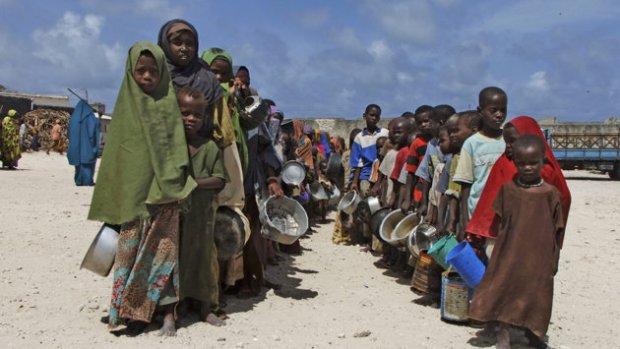


 Warsame Policy & Media Network (WAPMEN)
You must be logged in to post a comment.