
Category: Somalia
RETURNEES DIASPORA KIDS AND SOMALI CULTURE
GAROWE, MAY 23, 2019
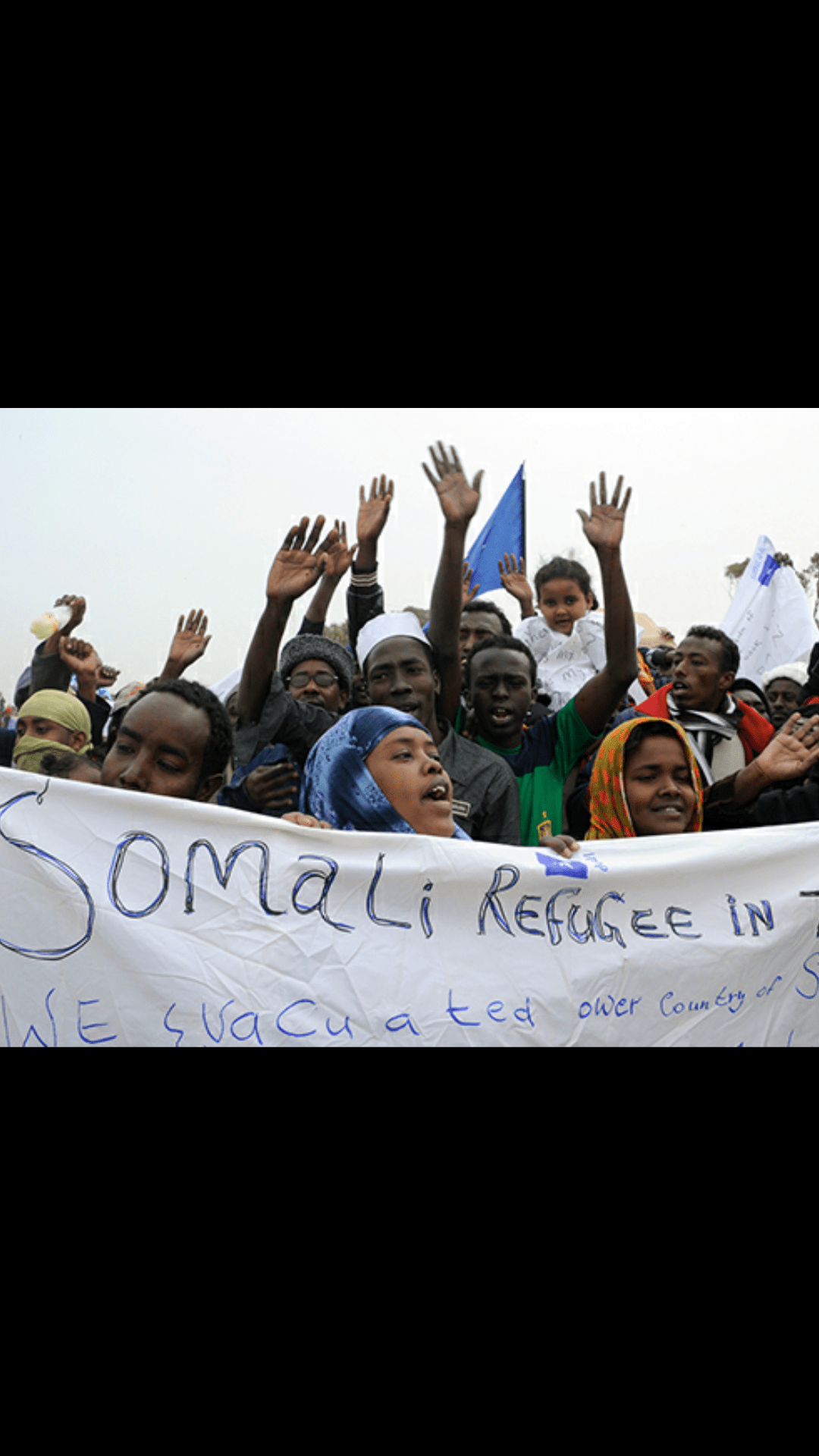
It is never easy for kids born overseas in exile with no Somali language skills, cultural experience or imagination of how operating in Somali setting look like as a result of parental failure in raising kids in a foreign environment or refuge camps in Western countries. Most diaspora parents, who themselves were not schooled before they found themselves there, and experiencing language barriers and deep cultural shock, suddenly became the students of their own kids, who pick up foreign languages quicker. Kids become interpreters and translators of the host foreign languages for their own parents. In other words, parental power, while in overseas, shifted to the kids. Parents, therefore, had lost parental influence over kids. Who is going to teach the kids about Somali culture and heritage in host countries then? Hence one often hears the Somali term “Dhaqan Celis” (cultural rehabilitation) in the country.
Diaspora parents seek help for their kids, and their only resort is to send kids back home. The problem back home is that there are no meaningful formal services to provide help in the rehabilitation of these youth to re-orient themselves into the Somali culture and ways of life.
What happens next is that, in the absence of specialized cultural help, kid are re-introduced to their extended family members to help cultivate these diaspora kids along their parents’ cultural heritage. The diaspora kids have no life connections with these people, and the names and extended families have no meaning at all to them. But, where to start to rehabilitate them? Of course, family trees (ancestry) comes first in mind, which means teaching these innocent youth about tribalism and clannism. What is making things even worse is that there are no social amenities or youth programs to get them engaged and make them busy. Double cultural shock and boredom set in in the lives of these young men and girls back home.
Once beaten, twice shy. Diaspora youth wouldn’t opt for another chance to re-visit Somalia, at least, in their early years.
Funny stories about the experience of these young returnees are abundant in Puntland. One such story tells about young female intern in one of the local NGOs, who was informed one morning that they were pleased let her know that she would receive “Mushaar” (salary). To that intern, the the local term Mushaar meant “Mooshaali” (Porridge or oatmeal). After a while, later in that morning, the young woman became impatient waiting for the porridge offerred and asked what had happened to the delivery of the food, to everybody’s laughter.
This story also vainly sheds light on the socio-economic frictions between the “Qorax Joog” (locals) and “Qurba Joog” (diaspora returnees). The locals believe that, with their super job skills, experience and education, the Qurba Joog have better job, political and business opportunities in the country than the Qorax Joog. Hence, a cold war is now slowly brewing, but still at its early stages of debating the issue in the social media and in public/private meetings. If the concerns are not carefully managed in advance, I am affraid of open public confrontations in the foreseeable future as it had happened between Liberian indigenous and diaspora returnees from USA in mid 19th Century.
RECOMMENDATION
ismailwarsame.blog proposes to Puntland/Somalia for setting up formal local NGO services in partnership with international organizations, under State supervision, to provide badly needed help to the Somali Diaspora youth returnees for “dhaqan celis” purposes. Those young men and girls mostly return from Norh America, Western Europe and Arab countries, who may extend help to any sound projects for such kids.
ismailwarsame.blog
(image credit: pewresearch.org)
SOMALIA RESPONDS TO KENYA

“DE-NAIROBIFICATION” BY ABUKAR ARMAN

EDITORIAL: SOMALI-KENYAN RELATIONSHIPS

Garowe, May 21, 2019
Diplomatic relations between states are reciprocal. Those relationships could be passive and cold. They could be warm and cordial. They could be friendly and brotherly. They could be strained, contraversial and frictious as they are happening now between Somalia and Kenya.
These relationships are based on mutual interests for the good of respective citizens. Sometimes, the leaders of one party may happen to be short-sighted and take unilateral hostile actions as Kenyans are doing now on the basis of emotions, leaders’ echo and wrong perceptions on the work and motives of other party. The other is compelled to retaliate promptly and make things even worse.
We would therefore advise the leaders of the Federal Government of Somalia to exercise restraints and weigh reciprocal retaliation in the interests of Somali people, refugees in Kenya, large Somali expatriates and business community in Kenya, Kenya’s AMISOM participation, employees of Kenyan origin in Somalia.
In our opinion, breaking diplomatic relations with Kenya is not advisable at this stage yet. There would be reciprocal retaliation, though, equal to the actions Kenyan Authorities have taken against Somalia’s interests, “nothing more and nothing less”
In the meantime, the Somali Government, Somali international partners and diplomatic community accredited to Somalia must plan alternative business and diplomatic hubs now. Uganda, Ethiopia and Djibouti are possible venues to do business with the IC, whenever it is necessary to do so out of Somalia, but preferably conduct nation’s business inside Somalia.
ismailwarsame.blog
GU’GA RAINS LEFT LAKE-LIKE PONDS ON GAROWE STREETS

GAROWE, May 21, 2019
Perhaps other urban centres of Puntland are suffering from the same conditions in the absence of town drainage and sewage system.
GAROWE, the Capital City of the State of Puntland, which boasts of being the best city in town planning in entire Somalia, is now a keeper of ponds or semi-lakes along the streets, making difficult for the pedestrians to move or walk around, following heavy GU rainfall in the past several weeks.
Now that the Governments of Puntland and City of GAROWE are witnesses to what is happening in the streets, and annoying splashes of muddy street water on people trying to dodge the inconsiderate speeding habits of some drivers, it is high time to do some work to handle the situation. Garowe streets are unwalkable during rainy seasons.
Unacceptable proposition is that some of the best hotels in town are flooded too when it rains because of poor construction of lobby pavements. Civil engineers should take note of this professional fault
ismailwarsame.blog
GU RAINS IN SOMALIA

Garowe, May 20, 2019 – These days it is increasingly becoming rainy in Garowe, and all over the country in general. It is keeping me indoors, though I drive.
It could be bless in disguise. No wonder men of Mudugh Region say, “Be either with a woman or have abundance of good meat to stay warm” under such circumstances.
I confess I am not doing either of the two options these days, but agree that the saying of Mudugh men makes a lot of sense.
Thanks to Almighty, GU rains has come belatedly when everybody was in fear of a severe drought coming up. It was not to be.
Stay indoors and ignore the Mudugh Proverb.
ismailwarsame.blog
(Photo: Courtesy to Ms. Sun)
PRESIDENT DENI AND PEOPLE OF MUDUGH TODAY

Galkayo, May 20, 2019
Mudugh & Security Council. Take a listen.
THE DERWISH WARRIORS OF SOMALIA.

(Photo: Courtesy to Isse M. Isse)
SHOW-CASING GARA’AD PORT: DENI vs GAAS

https://m.facebook.com/story.php?story_fbid=2123799034413942&id=100003515972236
It was 1997 when a delegation of now defunct National Salvation Council (NSC), the Sodare Group, led by then Co-Chairmen Abdullahi Yusuf and Ali Mahdi Mohamed, went to Mogadishu to meet with an Italian envoy sent to mediate conflicting Mogadishu Warlords of Hussein Aideed, Ali Mahdi and Late Osman Ali Ato. I was one of that 13-member strong delegation. The intention of the Italian Envoy, Senator Serri, a deputy minister of the Italian Foreign Ministry, was to re-introduce Italy’s influence to the re-emerging Somalia from the Civil War. The idea was for Italy to be ahead of everyone else in the game of influencing Somalia as a former colonial power and power broker as the country re-instates itself from the total collapse as a failed state. The Italians believed that the obstacle to Somalia’s recovery was the warring factions of Banadir Region at the time. They had money incentives to bribe the warlords into accepting an Italian-brokered deal. Ali Mahdi wanted a piece of the cake. Abdullahi Yusuf planned to foil the Italian efforts as he thought the Italian policy was wrong-headed as he believed that Somalia couldn’t be reconstructed from the Centre, but rather from “Building-Blocks” as federated states. There was a deep mistrust between Aideed and Ato since the killing of Aideed Sr. The Italian Envoy’s mission to Mogadishu ended in spectacular fiasco to the pleasure of Abdullahi Yusuf.
Back in Nairobi enroute to Italy, and commenting on the unexpected Yusuf’s presence in Mogadishu, Senator Serri called a hasty press briefing during which he declared; “We were struck by an eagle in town”.
After two weeks in Mogadishu, we returned to Addis Ababa, the Headquarters of the NSC, to prepare for a national congress to be held in Bosaso, the North-eastern Regions of Somalia. Egypt, with the help of the traditional Ethiopian foreign policy naïveté on Somalia’s internal dynamics, had successfully undermined both the NSC and IGAD efforts to hold that National Reconciliation Congress in Bosaso. One would recall the failed Somali Peace Conference in Cairo in 1997, resulting in the demise of both the Sodare Group and “Salbalaar Government” of Hussein Farah Aideed.
While in Mogadishu, we held non-stop private and public discussions with many groups, representing all walks of life. These people had two nagging questions for us to answer:
- “How do we participate in the planned National Reconciliation Congress in Bosaso”?
- “Why don’t you construct a Gara’ad Port? Bosaso Port is too far from us”.
At the time, Mogadishu Port was un-operational and closed to business. Still residents of Central Somalia thought a Gara’ad port would be very convenient for them even if Mogadishu Port were functional. At that time they were using land transport to and from Bosaso Port.
In Addis Ababa, residents from Eastern Ethiopia are land-locked as it is in the rest of the country. They were very much interested in the construction of a nearby seaport as Gara’ad.
The commercial potential of the Gara’ad Port for Somalia and Ethiopia is huge. The economic and security importance of the port in the entire region is, without doubt, very high. I strongly believe that a Gara’ad seaport would be the most convenient outlet to the Indian Ocean for the peoples of Central Somalia and Eastern Ethiopia for quick movement of goods and services along stable and secure corridor.
Ismailwarsame@gmail.com
THE FAILED CITY OF GALKAYO

Garowe, May 19, 2019
Italian Colonial Administration then called Galkayo “Rocca Littorio” or the fortress of Littorio, after the name of Italian battle ship, Littorio, in honor of city history for producing brave fighters and being the avant-garde of resistance for liberation and independence, a bedrock of SYL Great Somalia and SSDF, the first Somalia’s opposition (1978-1991) to the dictatorship of the Military Junta led by General Siyad Barre. It had known liberal values that raised and gave equal opportunities to those historically considered in Somalia as the untouchables like the families of Samaters, Salhaans, Bootaans, Ayah Dhowres and others, and where a woman thrives as the head and master of the household – a unique characteristics of the City that made it stand out in entire Somalia.
The City of Galkayo, and Mudugh Region in general, is home and origin of almost all prominent politicians, top military brass, generals and historical figures of Somalia.
To avoid some readers raising their eyebrows, I leave that for you to count the names in the list of prominent Somali political and military figures from Mudugh. Take it as homework, but don’t forget to share the list with me later.
Galkayo was home of reknown first class neurosurgeons, gynecologists and orthopedics, receiving patients from the sub-region as whole. It was the forefront in telecommunications even before the foundation of Puntland. One would recall Radio Galkayo, Radio Daljir, Galcom and first Internet service in Northeastern Regions. Galkayo used to be the Centre of Education for the entire former Northeastern Regions of Somalia for high school students. Galkayo ranked first in export of huge livestock and fresh meat to the Gulf States.
Galkayo used to get its notoriety in ideas, adventure and anocdodal excentricity. Yet, the City has been abysmally failing lately and had its residents in disarray and divided. It is no longer the historical City of Rocca Littorio.
Galkayo is now a town looking at Garowe, Mogadishu and Hargeisa for role model. It is a city where her best had left town or contemplating to do so. It is now a town that had lost its sense of community and collective purpose; a city where its prominent residents were and are now targets for murder and assassination without any consequences for justice served; a city that had failed to send its best political representatives to the ruling bodies of Puntland and Somalia. It is now a city where its traditional leadership doesn’t take cue and wisdom from its predecessors.
Galkayo is now a town where Somali leaders occasionally visit when there is a sensless community problem, no longer go for ideas, business or leisure because of the incurable divisions, bickering and severe sub-clan rivalry.
Even Puntland leaders shy away from visiting Galkayo due to senseless commotions, inherent lack of purpose, social cohesion and community leadership. Who wants losers and individual brokers looking for personal interests only?
By the way, the current self-introductory visit by Puntland President, Said Abdullahi Deni, to Mudugh Region, is a small opening for Galkayo residents to show-case unity and collaborative spirit on the ashes of decades of decay and political decadence.
Galkayo is now the infamous town of “Little Asha Elyas” gang-rape and murder.
Galkayo is the not la Rocca Littorio any more
GALMUDUGH CATCHING UP BELATEDLY
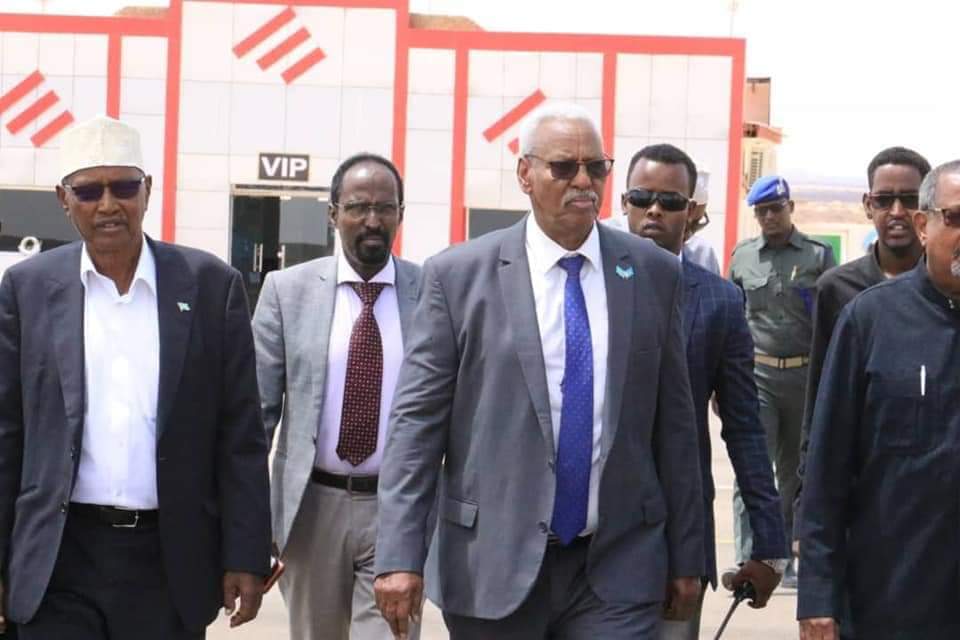
GAROWE, May 18, 2019 – People of Central Somalia origin, Galmudugh in particular, are impatient and seem to be in hurry to catch up with the rest of the country in completing and re-inforceing the constitutional process of building power decentralization (federalism). Better late than never, the English saying goes to reflect on the belated general feeling of sisters and brothers in Galmudugh, finally and rightly recognizing that history will not judge them favorably by resisting this already defacto system of Somali governance. Federalism in the country is not imposed, but made defacto following earth-scorch clan and communal violence in the name of civil war having its roots in dictatorship and abuse of power.
Galmudugh problem, however, is improvisation of state building. Doing it right first was not in their priorities from the start, violating the wisdom of a Somali saying, “From the beginning learn your ABCs of things correctly”
For more information and understanding of the issue on doing it right from the start, let me share with you an article I authored and posted in WardheerNews around the time when Galmudug was being refurbished and rushed on in the town of Cadaado with a forceful involvement of former President of the Somali Federal Government, Hassan Sheikh Mohamud:
OPINION
THE CREATION OF A REGIONAL STATE IN SOMALIA’S CONTEXT MADE SIMPLE
March 21, 2013
By Ismail. H. Warsame
There are a few simple steps along the way to establish a regional state in Somali context. These are critical steps to follow for a successful conclusion of the creation of a federal state:
1. Respectful of the Federal Constitution, two or more regions must have common political, security and economic interests and must have potential to operate as a cohesive political block as well as a viable and sustainable economic unit.
2. Regions must have overwhelming grass-root support for the idea of creating their own state. These include all levels of their masses, and traditional elders at forefront.
3. A fully representative people’s congress must be held initially as Consultative Conference to resolve and agree upon:
a) Endorsement of the very idea and need for the creation of the state
b) Selection of Constitutional Committee for drafting the state’s constitution
c) Selection of Preparatory Committee for the final Constitutional Congress
d) Selection of Chairing Committee of the Constitutional Congress
e) Selection of Fund-raising and Finance Committee
f) Selection of Security Committee
g) Selection of logistics and Accommodation Committee
h) Selection of the venue of the Constitutional Congress
i) Allocation of delegates to each participating region to the Constitutional Congress for the subsequent division among clans in each region along the traditional sub-clan proportionality.
j) Creation of an atmosphere of voluntarism and regional political activism to spark off enthusiasm for urgent people’s action and personal contributions.
k) Avoidance of confrontation with central authorities in the attempt to create the state.
4. Convention of Constitutional Congress to pass the draft Constitution.
5. Setting up an independent electoral or supervisory Committee with the formulation of criteria for their mandate.
6. Election of the Chief Executive Officers (e.g. President, Vice President) if they are to be elected by the Congress.
7. Selection of members of the Legislative Council (local parliament) by the participating regions either directly by the residents or in an indirect democratic fashion by their constituencies through traditional customs to be double-checked by the Electoral Committee; Election of the Speaker and his Assistants, and immediately the Chief Executive Officers by the newly constituted Assembly if they are to be elected that way.
8. Start of regional power-sharing negotiations to form the Cabinet.
Critical mistakes to avoid:
1. When forming a regional state, never start from power-sharing approach. This is a non-starter and a recipe for failure.
2. Avoid prematurely announcing candidates for leadership and never allow anyone to put their candidacy forward until the final execution of points 1-5 above. This is the main source of division within the participants and sure factor to fail the whole idea of successfully concluding the efforts.
3. Denounce anyone seeking special clan, regional privileges or status.
3. Suppress any hints of intimidation against Congress participants. Free will of people and expression must reign supreme. Everyone must feel comfortable and feel secure and safe in the Congressional environment. Everyone must feel ownership of the state to be created.
All successful Somali regional conferences including those of Puntland, Somaliland and TFG conform to the above simple steps. All those failed violated them by starting first with power-sharing and leadership competitions.
Ismail Haji Warsame
WardheerNews Contributor
E-mail: ismailwarsame@gmail.com
Twitter: @ismailwarsame
A NATION IN TURBULENT TRANSITION

Garowe May 17, 2019
You may not be aware of the fact the name, Somalia, didn’t exist in the sense of a united central entity as a country, but as ethnic group among East African peoples before 18-19th century European colonial powers of Italy, Great Britain, France, Portugal, and Turkish Ottoman Empire from Egypt. Most historically known self-governing entities in Southern and Northeastern parts of what is presently known as “Somalia” didn’t have the notion of Somalia as a country. Colonial Italy led the way in the creation of the concept of Somalia as a country for its own colonial objectives and administrative-political expediency for a united colony.
These powerful nomads in the Northeastern, Northwestern and Central parts of “Somalia” had had no sense of a country beyond their grazing localities and water wells. The Southernmost agriculturalists of Bantu extraction had had no specific identities other than they were remnants of perished local slave-owning sultanates and chieftains with occasional visits, rule or influence from Arabs looking for slaves and fortune in East Africa, usually coming from the sea and Zanzibar.
The concept of Greater Somalia didn’t exist before Somali Youth League (SYL) political campaigns for independence from as recently as the year of 1943. Even the notion and the term of “Greater Somalia” (Somaliweyn) was conceived and coined by former British Foreign Secretary, Bevin, before Britain abandoned the initiative and had decided to transfer the Somali territory known as the ” Haud and Reserve Area” to Ethiopia in 1954. At the time, Ethiopia was demanding from Britain to agreeing swallowing Hargeisa and Zeila as part of Haud and Reserve Area as well.
The struggle waged by the Head of the Darwish Movement of Sayyid Mohamed Abdulle Hassan against British Colonial Administration and Emperial Ethiopia was a mixture of Islamic extremism, nationalisn and bad approach to self-government blind-sighted by fight for local control over grazing Somali nomads. The British wanted cheap meat for its military garrison in Aden, South Yemen. The Sayyid wanted loyal clans for supply of fighting men for religio-nationalistic wars. He also wanted to model after Sheikh Ahmed Gurey in his attempt to conquer Abbysinia. Darwish Movement was in-transition to statehood. It never had a chance to succeed. Bad approach to self-government was the root cause of its failure.
Enter the era of independence in 1960 from colonial administrations of Italy and Britain. The colonial masters had left a country in-transition to statehood. They left behind a Somali political elite of their design with very limited preparation, education and skills to run a modern government and poor state with no infrastructure or institutions to talk about. Despite all these, Somalis did well in the first few years after securing the national independence with fledgling democratic culture and successful presidential, parliament and municipal elections that was the envy of black Africa at time. The native political and business elite, who had little training by colonial powers, were in-transition themselves to learn the art of government and statecraft. Yesterday’s nomads poured into over-crowded urban cities, specially Mogadishu and Hargeisa, with no social and labor skills. They too were in-transition to become, as least, normal citizens of a new country called the Somali Republic. The new Somali Government was now in-transition to become as viable as any government on earth.
The Government of the Somali Republic didn’t survive long as it had suffered from military coup of 1969 led by General Mohamed Siyad Barre. That Military Government lasted in office for twenty-one years long in-transition to multi-party democratic elections and people’s self-rule. It never fulfilled the promise to transition to democracy.
The Ogaden war of 1977 -78, rebellion against the dictatorship, people’s uprising and vicious Civil War that followed had cut short the long military reign of the General and his Client-Military Administration.
The world came to learn the phrase “Failed State” of Somalia, total collapse of public institutions and breakdown of law and order. Upheaval, uprooting of people, mass displacement of residents from cities and towns followed in-transition to peace and normalcy.
National Reconciliation Conferences had finally produced “Transitional Governments” from the year of 2000. These Somalia’s transitional governments are, however, still in-transition to multi-party democratic self-government – back to square one in-transition.
The Federal Regional State governments are too in-transition to full-fledged federal states, some of them are still needed to satisfy the basic requirements of the Transitional Federal Constitution for their legal formation and very existence. The entire country and its state institutions are in-transition, some of the goals and objectives of which will not happen in my life. But, as long as things are in-transition, there are always opportunities to move Somalia forward. Be hopeful.
UNKIND STORIES ON RAPE IN SOMALIA

“A justice delayed is a justice denied”
Garowe, May 17, 2019 – Strange, ugly and inhumane stories on rape, and recently, gang rape, by young men are in abundance in the country nowadays. This includes stories of miscarriage of justice involving rape cases in provable, and in fact, undeniable incidents. Bringing perpetrators of rape to justice is increasingly becoming difficult for the following main reasons:
1. Traditional clan conflict resolution ironically stands in the way both in prevention and execution of justice for victims of rape.
2. The administration of justice is unacceptably poor with no institutional capacity to perform a modicum of administration of judiciary responsibilities. It was sad and uncomfortable to listen to a man recently, who told me that the judge on his case in the City of Garowe couldn’t come to his court session on time because he had ran out of gas in his service vehicle. The lawyer of that man had to pay for the fuel of the judge’s car to enable him attend that particular court session.
One sadly hilarious story about the disregard of rendering justice for a young raped woman by the adjudication of clan elders involves a famous incident in which the victim was asked to retell what had actually happened to her during her alleged rape. When she was uncomfortably done narrating her suffering, the lead elder told her that it wasn’t good on her part in failing to satisfy her perpetrator.
Gang rape and mudering the target of sexual abuse like the tragic murder case of little Asha last month in the city of Galkayo and several other reported rape crimes elsewhere in Puntland and in other parts in Somalia is unheard of historically in the country until quite recently. It is new crime wave as a result of substance abuse by young, unemployed and hopeless men, who had been transformed into “human hyenas” to quote someone deeply dismayed by the situation. It is a new societal problem that requires holistic approach of prevention, rehabilitation, better administration of judiciary and training of special task force to tackle with the problem. It requires also to remove the resistance of clan elders who are preventing justice to be served and take its course.
Finally, it is an understament to call for public action and pressure to bring about the end of this women and human rights abuse. Men and women of Somalia should rise up against this indignation.
ismailwarsame.blog
PUNTLAND: ROLE MODEL FOR OTHERS

TOWARDS SAFE EXECUTION OF PL CENTRALIZED SCHOOL EXAMINATIONS

HUSSEN ON CANADA’S AUDITOR GENERAL REPORT

Hussen says auditor general report only looked at period of time before they started addressing issues https://globalnews.ca/video/5250088/hussen-says-auditor-general-report-only-looked-at-period-of-time-before-they-started-addressing-issues
HISTORICAL LESSONS LEARNED FROM PUNTLAND ELECTIONS


Former minister hopes Somalia/Somaliland will come together soon-video
Car bomb “kills many” at Somali military training base
Kat (aka Qat, Chat, Khat) is Grave National Security Threat to Somalia
The NEW INTERNATIONAL ROADMAP FOR SOMALIA
Hopes in President Hassan Sh. Mohamud of Somalia Dashed
The Struggle For Federalism In Somalia
THE LOVE- HATE RELATIONSHIP BETWEEN MENGISTU HAILE-MARIAM AND ABDULLAHI YUSUF: DECLASSIFIED – WardheerNews
HATE-LOVE RELATIONSHIPS BETWEEN MENGISTU HAILE-MARIAM AND ABDULLAHI YUSUF: DECLASSIFIED
Central bank chief battles
Condolences on the passing of Prof Said Sh. Samatar
HARDENING OF ATTITUDE
HARDENING OF ATTITUDE
I read about “the hardening of attitude” somewhere (don’t ask me about the book, the author, when and in what context, for I can’t recall or recollect either of that). I simply acknowledge that the expression has been sticking in my mind for many years. I think the issue is worth discussing and debating. Similarly, I do recall a story that once upon a time a guru in sales trained a number of salesmen, and after a while, one of them came back to the sales expert to report that he could not do his job as he hates constant rejections by customers. The guru asked the newly recruited salesman how he knew that the customers hated his sales pitch. The salesman answered that he could feel this hatred in both customers’ responses and attitude. The guru told the junior salesman that he would be one of the best salesmen of his time. Surprised, the salesman asked his trainer how he could be that when all he received were terrifying rejections. The trainer told him that understanding what people like to hear (their needs addressed) is one of the critical skills in sales. That is an excellent sign that he was experiencing this feeling of his customers’ rejections. Not understanding that one’s sales pitch does not sell is a tremendous liability in human interactions. “Hardening of Attitude” is the assumption that there is only one way of doing things. It means “my way or the highway”. It means no room for debate and improvement. It means never re-inventing the wheel. It means the other person’s opinion does not count. It means take it or leave it approach. It means no room for compromise. It means breakdown of communication between family members leading to failure of marriages and family bond between parents and their offspring. Anyone who lived through the unlucky experience of having eccentric partner in marriage or business knows what I am talking about. It means communication barriers between bosses, their staff or employees. As an example, at one time in my working life I have had a boss, who had no idea of how a computer worked, never typed a letter and only knew that there were computers in existence and saw me using one. Suddenly, my boss decided to become computer literate and asked me if I could train him on the machine. When I began the first lesson, he started lecturing me about computers. That was an extreme display of personal echo and hardened attitude towards reluctance to change. It means no learning, renovation, modernization or invention. It means no growth or development in any particular field of human endeavor. Life becomes mundane, routine and boring. We call bosses or persons with hardened attitude as “egocentric” We see people, who describe the world through their favorite word “I” everyday. We often meet with person or group of persons, who continually use the words “we” and “they” to “otherise” other people outside their circles, culture, or even their social or professional class with no room for change of attitudes or any possibilities to re-think about their deeply held and entrenched positions on personal relationships, political and social issues of the day. We say these people are extremely “sociocentric”. Still, there are many of them; there are even entire nations, who think that their ways of acting, their cultures are better, considering others’ as either “eccentric” or below “standard”. Some of these nations consider themselves as highly advanced and “civilized”. Such hardened attitudes had been even major sources of world conflicts, wars and break-down of diplomatic relations. My reading is that such attitudes rank 2nd to pursuit of national interests. Call it a “prejudiced national echo”. How do the Somalis stack up in this “hardening of attitudes”? People described as uniquely “poetic” by well-known historians, anthropologists, explorers and writers ( Richard Burton, I. M. Lewis, , Lidwien Kapteijns, Bogumil W. Andrzejewski, Enrico Cerulli, Said Sheikh Samatar, Abdi-Sheikh Abdi, Ahmed Ismail Samatar, Nuruddin Farah, just to name a few), must have, certainly, a fair share of prejudices and attitudes among themselves and towards others. Some of these writers depict these people as extremely “proud people” for the Somali nomad recognizes no authority other than his own Creator. Such hardened attitude or belief in his human superiority is, perhaps, the main cause of his eventual downfall and collapse of his social and political organizations – and first and foremost, the Somali State. There was no measured and balanced view of his reality. With the appearance of a dictatorial regime in the realm of a “born free” nomad, the world went upside down for the proud men and women of Somalia. Citizens were reduced to robots conforming to the prevailing regimentation that could be only designed, devised and operated by an unheard of police state. I know some would argue that I ignore the role of the leaders who instigated and spearheaded the community violence in the most vicious civil war following the fall of the repressive Military Junta. The critics, however, dismiss the fact that this was the result and historical legacy of the Barre Regime. As thousands were victimized and hundreds of thousands fled the country, they instantly became refugees in foreign lands unprepared for such sub-human treatment they could never have dreamt of. As the most vulnerable members of the society like women, seniors and children were exposed to all the dangers and suffering caused by lack of protection in an abysmal environment of statelessness, the famous Somali “pride” and dignity were irreversibly damaged. Time-tested traditional values and human self-worth are becoming the stories of the past, and those, who are old enough to remember, a nostalgia and déjà vu. As a result, people today suffer in mass from post-civil war trauma with little awareness of the epidemic due to the lack of interest or adequate studies on the immigrant population, and limited access to qualified medical services in refugee camps. One could only sit with Somali Diaspora communities across the world to listen to the non-ceasing debates along political/clannish lines in coffee-shops to gauge into the sad state of these endangered human species in display, where no one speaks of the needs of the local communities and the future of children and next generations. In these shouting sessions, one would immediately notice that there are no meaningful discourses as no one would attentively listen to any one in a normal debate. By listening to them to try to make sense of what they are saying or what the issues are, one would feel that these sessions are the best examples of the fallacy of “red herring”. Another would say that participants are kids suffering from the condition of ADS (attention deficient syndrome). I leave this issue alone to the much qualified experts to explore. In general terms though, it is high time for Somali communities to learn from this bitter experience, and rise up again from this self-inflicted comma to restore their dignified existence by revising and reviewing their attitudes for change. And please listen to the concerns of each other and stop pitching on the wrong messages in order to have productive, constructive and interesting debates on issue of vital importance. By Ismail H. Warsame e-mail: ismailwarsame@gmail.com Twitter: @ismailwarsame
PS: Some sections of Somali society hold extreme hatred towards their fellow countrymen, simply because they had developed hardened attitudes of self-denial of their situation and blame their misfortunes on others. I guess one psychologically sick patient needs an appropriate doctor for care, but how do you address the issue when it affects whole portions of the population? Many of these people have been endoctrinated by a few sadistic individuals on fallacies to develop hatred for non-members or other clan members. Western civilization is rooted in Socrates, whose philosophy states that “an unexamined life is not worth living”.
SOMALIA: OF RECONCILIATION!
DOES PRESIDENT GAS’ POLITICAL SHOW BUZZ AND IVORY TOWER ATTITUDE HURT PUNTLAND?
IS PRESIDENT GAS’ POLITICAL SHOWBIZ AND IVORY TOWER ATTITUDE HURTING PUNTLAND?
Despite the President’s continuous travels and repeated tours in some parts of the country, while intentionally avoiding some, including those regions considered as his political power-base, and he is highly visible at receptions at Villa Garowe with Somalia’s International Partners, President Gas is politically isolated within a short time into his mandate as he has lost touch with reality in both Puntland and larger Somalia.
This self-imposed political isolation and complacency take place due to the following mistakes of his making:
1. The President chose to surround himself at State House with young novices as his key advisers, who neither have the political skills, education, nor the experience of working in any parts of Somalia, not to mention about having slightest field works in Puntland State of Somalia.
2. The President is incapable of gauging the mood and feeling of ordinary man and women towards his leadership performance in terms of the economy, public order and personal safety.
3. State employees, including security forces are not paid months after months, often triggering off threatening periodical mutiny of forces, ensuing dangerous security situation, and creating an atmosphere of growing popular deep discontents. The President does not treat this precarious situation as a national emergency and priority number one for the very survival and unity of Puntland.
4. The President feels that he knows what is he doing better than anybody else-a superficial Ivory Tower Attitude devoid of any real and on-the-ground political context and smart understanding of current dismal economic and geo-political situation of Puntland.
5. The President clearly enjoys hosting high-level delegations, who continually jet in and out of Puntland with no benefits to deliver to the State, even a small budgetary support for the security sector engaged daily with extremists and militants-the very forces that enabled the so-called “international Partners” to have trouble-free discussions with Puntland authorities inside the country to show-case their engagements with Somalia, and thus diffuse the concerns of their generous Donor countries. Rather than demanding reciprocity and playing ball, the President is enticed with diplomatic niceties, empty, and meaningless receptions in his Office. It is disturbing to see even junior NGOs officers being to driven to the State House rather letting them mind their own business with government departments concerned. One critical fact Abdiweli has to learn about these international organizations is that they are not accountable to anyone. As they are faceless, their promises and statements to their interlocutors mean nothing as they would never honour or deliver on their promises- a black hole Puntland fell into recently. The President often gets busy himself with departmental tasks and mandates- an award tendency to a one-man show exercises.
6. Under the fledgling leadership of President Abdiweli Hassan Ali (Gas), Puntland State has abandoned the on-going Somali National Debate on the re-institution and re-construction of the Somali Republic along the Vision the State of Puntland has been fighting for nearly two decades.
7. Worse of all, it seems that President Gas has no a vague idea of the Mission and Founding Objectives of Puntland State of Somalia. Probably, in his Ivory Tower vanity, he did not bother to browse that Historic Document even briefly. Let us Paraphrase some highlights of these Guiding Principles for his benefit:
1. After many trials and failures of the National Reconciliation Conferences, it became obvious that Somalia could not be re-instated and re-constructed from the “Top-down”. It must be re-instated from “Bottom-up” by the formation of “Building Blocks” (Federal States) producing legitimate and representative leadership to discuss the future governance of Somalia.
2. Puntland State of Somalia is founded with a vision to create an orderly, peaceful and democratic society with the marriage of traditional societal leadership with a modern and efficient administration of statecraft capable of delivering public services, working towards economic self-sufficiency and safe-guarding the security and unity of the State. Puntland State of Somalia is an integral part of Somalia, and would not entertain unilateral secession or independence as an option. Governance system and public institutions would continue to evolve and grow leading to further democratization process, population census, population disarmament, and building strong, credible and lasting public institutions.
3. Puntland State was committed to taking the leadership role required to help credible and representative community leaders from various parts of Somalia engage in constructive dialogue in building constituent regions to form regional states on free will and voluntary basis. The people of Western Galgaduud Region of Central Somalia were invited and had free option to join Puntland State whenever they were ready. In this regard, Puntland would spear-head a National Reconciliation Process leading to the resolution of the legacy of the Civil War, deepening peace and restoring public trust again in a shared government and institutions.
4. Puntland State of Somalia would promote peace and good neighbourliness among the peoples of East Africa, and with Somali neighbour states, in particular.
Based on the narrative above and serious issues raised therein, how does the “scoreboard” of Dr Gas look like? If you live in Puntland State, or closely follow its “state of the union” today, you have every reason to worry about where the country is heading to. Besides the economic calamities besetting the people of Puntland, there is strong lack of political leadership and direction. President Abdiweli Hassan Ali (Gas) is now in a political trap designed by the President Hassan Sheikh Mohamoud’s faction in Mogadishu, to politically isolate Puntland, on the one hand, and destabilize it in the Central Somalia front, while welcoming and approaching Somaliland encouragingly, on the other hand. That is on the top of the political Puntland headache on threats to its unity and Sool and Sanaag issue.
It takes leadership to acknowledge one’s mistakes, ask for advice, and listen to the concerns of one’s own constituency attentively. Would he?
Ismail H. Warsame
E-mail: ismailwarsame@gmail.com
Twitter: @ismailwarsame
A CABINET MADE IN HELL
January 12, 2015
By WardheerNews
Somalis both in the country and abroad kept longing for the appointment of the new cabinet. Rumors swirled around in Mogadishu about a deadlock between the president and the prime minister about the formation of the cabinet.
Then last night, PM Sharmarke dropped a bombshell.
Omer Cabdirashiid1“I am bringing back the old cabinet,” declared Sharmarke. What followed was a regurgitation of the list of the cabinet ministers that the last PM Abdiweli Ahmed had left behind.
President Mohamoud has finally got the right prime minister he has been looking for.
It is obvious that there was no deadlock or misunderstanding between the president and the prime minister. The whole thing was a game that Villa Somalia and PM Sharmarke had concocted. President Mohamoud was the one who in fact orchestrated the appointment of these ministers. The cabinet consists of the usual suspects: Damul Jadid ideologues, old friends of the president, and a few faces that have no distinction. For instance, a former cabinet named Abdikarim Hussein Guled (a Damul Jadid figure), failed in his old job as a minister in charge of Interior. Under his watch, there was an unprecedented spike of violence by Al-Shabaab, where civilians and various Parliament members have lost their precious lives. Subsequently, Guled was forced out of his job. Today, thanks to PM Sharmarke, Guled was gifted to his old job. This travesty only happens in Somalia under the leadership of President Mohamoud.
The new cabinet has 26 ministers and only two are women. In other words, the 60 officials PM Sharmarke appointed, only 4 are women, and hence less than 1 percent (0.06% to be exact).
Omar A. Sharmarke comes from a family steeped in Somali politics and history, and he himself was a former prime minister. He had spent most of his life abroad and worked for the United Nations. Only a few weeks ago, Sharmarke was the Somali Ambassador to the U.S, and was suddenly thrown into the PM position when the president needed someone who could bring to live his life’s vision of nepotism and corruption. If Mr. Sharmarke was chosen for his unique and stellar background, it did not help him select a fair, competent, inclusive, and gender-sensitive cabinet.
The predictions are clear, he will relent his duties to the President who had been infighting with two former Prime Ministers, because they refused to allow his willy-nilly, overextending, and manipulative ways.
The new cabinet is an embarrassment to the nation and to PM Sharmarke who has shown the world that he is nothing but a lackey to a president who never learns from his past colossal blunders. It is ironic that this sham cabinet will preside upon a government that is supposed to prepare the country for the 2016 elections.
Prime Minister Sharmarke has lost an opportunity to be visionary, creative, and an agent of change. He failed the mothers and children who are caught in the abyss, those whose lives haven’t seen a break in the interim of president Mohamoud’s tenure. He is one notch lower than the previous two prime ministers who—at least—had a modicum of independent mind.
Omar Abdirashid “Sharmarke”, reduced himself to a man who has accepted, from day one, a mere figurehead status.
The list of Sharmarke’s new cabinet :
Ministers from Dir clan
Maxamed Cumar Carte (Qaalib), Ra’isulwasaare Xigeen, Habar Awal, Sacad Muuse, Isaaq
Cabdiraxmaan Ducaale Beyle, Wasiirka Arrimaha Dibadda & Dhiirigalinta Maalgashiga, Gadabuursi, Dir
Cabdalla Bos Axmed, Wasiirka Boostada iyo Isgaarsiinta, Habaryoonis, Isaaq
Maxamed Cabdi Xayir Maareeye, Wasiirka Korontada iyo Biyaha, Habarjeclo, Isaaq
Cabdulqaadir Sheekh Cali Baqdaadi, Wasiirka Diinta iyo Awqaafta, Reer Aw Saciid , Dir
Cabdullaahi Sheekh Ismaaciil, Wasiirka Gaadiidka Cirka iyo Dhulka, Biyomaal, Dir
Ministers from Hawiye:
Cabdikariin Xuseen Guuleed, Wasiirka Arrimaha Gudaha iyo Federaalka , Habargidir, Hawiye,
Cabdullaahi Maxamed Cali (Sanbaloolshe), Wasiirka Amniga, Xawaadle, Hawiye,
Maxamed Mukhtaar, Wasiirka Kaluumeysiga iyo Kheyraadka Badda, Gaaljecel. Hawiye
Nadiifo Maxamed Cismaan, Wasiirka Hawlaha Guud iyo Dib u Dhiska,Gugundhabe , Hawiye
Mustaf Sh. Cali Dhuxulow, Wasiirka Warfaafinta, Hiddaha iyo Dalxiiska Murusade, Hawiye
Faarax Cabdulqadir, Wasiirka Cadaaladda ,Reer Aw Xasan, Hawiye
Xasan Maxamed Jimcaale, Wasiiru Dawlaha Dastuurka, Duduble, Hawiye
Ministers from Daarood clan:
Xuseen Cabdi Xalane, Wasiirka Maaliyadda ,Ogaadeen, Daarood
Daa’uud Maxamed Cumar, Wasiirka Macdanta iyo Batroolka, Dhulbahante, Daarood
Cabduqadir Gaabane, Wasiirka Dastuurka, Leelkase Daarood
Maxamud Cali Magan, Wasiirka Qorsheynta iyo Iskaashiga Caalamiga, Mareexaan, Daarood
Cabdullahi Axmed Jaamac ” Ilka Jiir”, Wasiirka Waxbarashada iyo Barbaarinta, Warsengeli, Daarood
Faysal Xuseen Ciid, Wasiirka Caafimaadka, Carab Saalax,Daarood,
Maxamud Xayir Ibrahim, Wasiiru Dawlaha Madaxtooyadda, Majeerteen, Daarood.
Ministers from Digil & Mirifle:
Maxamed Sheekh Cismaan, Wasiirka Gaashaandhiga, Raxanweyn
Yusuf Macalin Amiin,Wasiirka Dekaddaha, Leesaan, Raxanweyn.
Xuseen Maxamed Sheekh Badni, Wasiirka Beeraha, Raxanweyn
Abukar Cabdi Cusmaan (Mardaadi), Wasiirka Xanaanada Xoolaha Dhirta iyo Daaqa, Garre, Digil
Axmadeey Sheekh Mukhtaar, Wasiirka Diinta iyo Aawqaafta, Raxanweyn
Ministers from various clans ( Beesha Shanaad):
Khadijo Mohamed Diiriye ,Wasiirka Haweenka iyo qoyska, Madhibaan
Maxamed Cumar Caymooy, Wasaaradda Shaqada iyo Arrimaha Bulshada, Jareerweyne
Burci Maxamed Xamza Wasiiru dawlaha Xafiiska Ra’isul Wasaaraha, Reer Baraawe
WardheerNews
Email:admind@wardheernews.com
SOMALIA: THE NEW LEBANON OF THE SECRET INTELLIGENCE COMMUNITY_PART II
The stateless situation of Somalia, rise of extremist religious extremism of Wahabi Sect, sea-piracy, enormous porous borders, historical territorial disputes and conflicts, greedy Somali traders willing to sell anything and everything Somalia has to the highest bidder, destruction of Somali fauna, strategic oil/mineral interests in the country, among other things, made Somalia uniquely attractive to intelligence community. Ethiopia, Djibouti, and Kenya became permanent centres for operation of these foreign spies on Somalia. These countries provide convenient centres of interdiction for apprehended terrorist suspects from Somalia. Many Somalis and non-Somalis were targeted for elimination when convenient. Former Somali military officers and Professionals in other fields were eliminated in mysterious circumstances. No national institutions existed to investigate the murders and horrendous crimes against the stateless people of Somalia. It was like hunting them for sports or game in eliminating any body important for the future rise of Somalia as a state.
While these heinous crimes were being perpetrated against them , the Somalis were busy in under-cutting each other in what everybody commonly call “clan-rivalry” and warlordism, dismissing these daily crimes as the work of their respective rivals, and embracing for new wave for revenge in a vicious circle that pushes Somalia into further abyss and mayhem.
Sometime after 9/11, and following the establishment of the Islamic Courts Union (ICU) in Mogadishu. The USA government renewed its security interests in Somalia. USA security agents were keen in finding the connection between Al-Qaeda and these Courts. USA resources, however, were limited in Mogadishu. At the time, the only available intelligence infrastructure they could rely on was their global surveillance programs of monitoring internet and telephone communications. They found out connection existed between elements of the ICU and foreign extremist organizations, including Al-Qaeda. But, they needed human intelligence on the ground in Mogadishu. They had to seek help from Djibouti, Kenyan and Ethiopian governments, and Somalis in their Diaspora communities, to establish monitoring and operational network in Somalia.
In the process of setting up espionage centres and other intelligence gathering channels throughout Somalia, they sent a delegation to Puntland State to discuss ways of cooperation against the real and perceived common enemy of Al-Qaeda. In one of a series of meetings with Puntland officials, the US side asked for Puntland help in linking them with those Mogadishu warlords Puntland thought they could be effective against the Islamic Courts Union. State officials inquired those US officials about which warlords they were working with so far. They told Puntland officials that they were not happy with the effectiveness of the likes of Osman Ali Caato and Mohamed Qanyare Afrax. “What about Muuse Suudi Yalaxow?”, asked one official of the Puntland side? “Oh! No! This guy doesn’t pick up his home phone for three months in a row. American cannot work with such a man!? “What about Mohamed Dheere?”, asked another official? “The guy in Jowhar?; yes, we could try that one?”, concluded, the US Intelligence Officer. Mohamed Dheere soon found himself airlifted from Jowhar to Wilson Airport in Nairobi, Kenya.
A few weeks after these meetings in Bosaso, Puntland State of Somalia, Mogadishu Warlords announced the creation of The Alliance for the Restoration of Peace and Counter-Terrorism. US dollars, in suit-cases, exchanged hands in Dayniille Air-strip in Mogadishu, under the command of Mohamed Qanyare Afrax. The hunt for Al-Qaeda and foreign persons starts in earnest in Mogadishu. Warlords competed in the new game of hunting people for unaccountable US dollars. Any light-skinned person of seemingly Arab origin was vulnerable and a possible target for warlord’s grab. Residents of Mogadishu broke down into ICU and Warlords camps-a polarisation that transcended beyond the traditional clan rivalry into an ideological rift of national and religious connotations. Ethiopia stepped up its war of proxy, this time acting for Americans as well, with the provision and offer of access facilities for US counter-terrorism forces in Godey and elsewhere in its country. Djibouti became centre for US covert operations, including interdiction of foreign elements captured in Somalia, and drone attacks against targets in Somalia. Kenya established itself as the coordination centre for covert operations in Somalia, business and financial hub, and modern resort of get-away for Western intelligence and counter-terrorism agents.
A huge spy network of Ethiopia and Western countries took deep roots in Somalia. They now use highly trained personnel of Somali origin from the Diaspora, on the top of well-placed locals. Don’t get surprised if you find spies posing as camel herders in Somalia’s countryside today.
Ismail Warsame
E-mail: ismailwarsame@gmail.com
Twitter: @ismailwarsame
FAQASH, LOOMA-OOYAAN AND LAHAYSTAYAAL
FAQASH, LOOMA-OOYAAN AND LAHAYSTAYAAL
It was in April 2000 when I changed planes at Egal International Airport in Hargeisa on my way to Bosaso, Puntland. It was just on the eve of Arta Conference (May 2, 2000). I came from London, UK, via Djibouti, on a visit to my family. As I was the Chief of Staff of Puntland Presidency at the time and relations between Somaliland and Puntland were not that great, I was not at ease in the Transit Hall of the Hargeisa Airport and quite relieved when they finally called for boarding of the propeller plane to Bosaso, after having spent two hours in the Hall. Earlier, on deciding to transit through Hargeisa, I correctly assumed that no one would recognize me in Hargeisa. I also calculated that if someone would know me there, he or she would be from the Somali National Movement (SNM), who would respect the historical comaraderie that existed between the Somali Salvation Democratic Front (SSDF) and SNM. While waiting for my flight in the Transit Hall, I received a large bundle of Somaliland currency in exchange for US dollars to buy a few things. Seeing me exchange money, a number of seemingly Airport Staff individually approached me for a Shaxaad (free money). When I tried to share my newly acquired Somaliland Shillings with them, each one said that this was not real money. They wanted dollars instead, saying “war ninyahow dhabcaalsanidaa ma Majeertayn baa tahay”? (Are you Majeertayn, how come you are that mean?)
On-board I happened to be in the same two-seat row with a well-to-do businessman from Hargeisa on his way to Dubai via Bosaso. I call him Dahir (not his real name) for privacy and security reasons. Dahir was a joyful and talkative guy. After a brief mutual introduction in which I volunteered neither the title nor the description of my real job, he suddenly asks me: “War nimankii Dhulbahante iiga warran”? (Tell me about the Dhulbahante folks in Puntland?).
“Ii jilci su’aasha”? (I didn’t quite understand the question), I responded. “War ninyohow nimankii saanu u raaligelineynay ayey naga wada carareen. Meelaha bulshadu isugu timaado, mid anaga ah oo is-ilaawey uun baa oranaya “War Faqashtii”, durbana markuu hareerihiissa eego raggii iyo dumarkii “Faqashka ayaa jooga. Markaa ayaa ninwalba raaligelintooda ku waashaa: War ina-adheerow idinka idiin majeedin! (Translation: People hailing from Dhulbahante find themselves uncomfortable to live among us (Issaks) as they are often called Faqash or belong to Faqash. That is one of the reasons they left us).
The word “Faqash” is one of the key code names for massive human rights violations in the Northwest Regions of Somalia (now Somaliland). The Code has been used by the Somali National Movement in identification for Darood clan cleansing in these regions following the collapse of the Somali Central Government. Originally, the word is used by Northerners to indicate the Somali Soldiers conscripted from Inter-riverine communities (Bantu farmers) of Somalia. Literarily it describes the way and sound of walk these soldiers make as they march through the streets of Northern cities and countryside.
Other code names for gross human rights violations including massacres, rape, expulsion, destructions of properties, dispossessions, clan cleansing are: Mujaahidiin, Looma-ooyaan, Lahaystayaal, Kacaan-diid, Haraadi, Dib-u-socod, Daba-dhilif.
In the repressive Regime of Siyad Barre, Kacaan-diid (Anti-revolutionary), Dib-u-socod (Reactionary), Daba-dhilif
(Foreign agent) and Haraadi (Remnants of Civilian Governments before Siyad Barre’s Coup) applies solely to Majeertayn sub-clan of Darood. It was huge project of the Military Regime to purge from prominent positions of Government and marginalize them from Somali body politic, accompanied by huge propaganda to unite the rest of the Somali clan system against the Majeertayn. Once someone is labelled with one of these code names, they lose all rights of citizenship and are subject to any kind of harassment and abuses by anyone and could lose everything including wife. Many Somalis, including educated class of different clans bought and embraced Siyad Barre’s brain-wash. Today any individual political ambition of Majeertayn has to face and fight this legacy of Siyad Barre’s propaganda machine.
What was the main Siyad Barre’s objective for initiating and implementing such huge political enterprise against a single Somali sub-sub-clan?
Siyad Barre, from the onset of his Military Coup, understood quite well that the Majeertayns have the numbers, territory, economic and manpower resources, history of self-government and great traditional governance and mechanisms for societal conflict resolution and potential for quality political leadership and therefore constitute a threat to his absolute rule. He had to start his war against them from Day One of his Regime.
Mujaadidiin (fighter, struggler in Arabic) were used by SNM and USC (United Somali Congress) for their respective militia. It was more popularly used by General Wing of USC. As the Central Government fell and Siyad Barre expelled from Mogadishu in January 26, 1991, law and order broke down, anarchy, looting, killing of Daroods reigned, the Mujaahidiin turned into Mooryaan, then further into Al-Shabab during the short reign of United Islamic Courts in Mogadishu and now they split between Government soldiers and Al-Shabab militia. Today when they talk of Mujaahidiin they mean the Mooryaan that rampaged, pillaged, robbed and killed massively in Mogadishu, Gaalkacayo, Kismayo, Brava, Merka, Baydhada and other towns in South and South-Central. To them the Mooryaans (bandits) are pioneers of victory over Darood. Many of these Mooryaans suffer from post-war trauma and require long-term rehabilitation and therefore not fit to be soldiers anymore. In Mooryaan speak, their military ranks starts from how many people each had killed so far: tobanle (ten persons killer), labaatanle (twenty persons killer, kontonle (fifty persons killer) and so on. They are sick and serial killers. The whole central, south-central are infested with these mad and sick beasts, specially in Mogadishu.
Looma-ooyaan (No one sheds tears for them) is a code name for unprotected non-Hawie person, who for whatever miracle transpired still remained alive in Mogadishu. Whatever happens to such individuals, there is no one to claim them and nobody would shed tears over the fate and misfortune of such human beings. Forget about retaliation and clan revenge resulting from abuse of these unlucky beings. I guess the cold-blooded murder of Hon. Singer and Superstar Saado Ali Warsame and Hon. General Xayd becomes increasingly difficult to handle under the codename of Looma-ooyaan.
Lahaystayaal (hostages) is another key code name for minorities considered outside the Somali clan system such as the Reer Hamar, Bravani etc, who had been possessed and abused by the Mooryaans. They can get freedom through extortion and high ransom payment with their daughters and wives already taken away.
I am sure there are many other codenames for targeting people for barbaric abuses, condoned by political personalities, who until today refuses to acknowledge the horrendous abuses of lives during the past twenty odd years. And until that happens, all other efforts are exercises in futility. Consequently, this denial of heinous crimes committed in the name of clan against other clans in the Somali Civil War, would threaten the survival of Somalia as a country. That would be the biggest tragedy of all in waiting. Let us pray!
Blessing Eid to all.
Ismail H. Warsame
E-mail: ismailwarsame@gmail.com
Twitter: @ismailwarsame
COSTLY PROTOCOL IRREGULARITIES OF PUNTLAND ADMINISTRATIONS
COSTLY PROTOCOL IRREGULARITIES OF PUNTLAND ADMINISTRATIONS
 It has become an intoxication fashion for Puntland successive administration leaders to indulge in prohibitively expensive state receptions and send-off of the head of the Government when-ever he steps out of the Capital or returns to it. Even a short working visit from a region requires mobilization of the entire residents of Garowe for a Welcome Party either to receive the President or to send him off. This entails huge security operations every time there is such an event. All Government and economic activities of the City come to a standstill for a whole working day. Public Schools are closed for the day for students to take part in the huge party at airport. People are required to line up in tightly cramped setting along the narrow sidelines that has no even sidewalks of the only highway passing through Garowe. The single transport road linking up the country from West to East is blocked to movement of goods, services and people for many hours each time the President leaves or come to town. Enormous traffic jumps pile up. Serious auto-accidents often occur. Economic and labour productivities are lost for the entire day. The meagre public funds of Puntland are squandered and wasted. Somali Diaspora websites compete for presence and best angles for media coverage of these frequent “State Parties” and splash on their pages the smiling reception figures with colorful bouquet of flower rings hanging down on their necks. As a result of this thoughtless and never-ending officially sanctioned exercises, Puntland State not only suffers economically, but the misplaced and fashionable enterprise implicitly turns the people of Puntland into serving the President instead of him serving the people. This continuous “State Parties” have to stop immediately. It is unsophisticated, thoughtless and a total waste of public resources and time. It serves only the echo of an insensitive and self-serving leader and the pleasure of sycophants and flatterers in Government circles. When I was there, my team had never entertained the idea of such not only wasteful, but extremely monotonous continuity and tasteless display of governance, or mis-governance, if you would. A minimum number of Government officials, some of the Presidential Staff and security detail, and where and when possible, some foreign delegations to the country, are sufficiently and economically enough to receive or send off the President during some of his many travels. Historically, this abuse of public resources in self-serving public display of Presidential receptions was initiated and widely expanded by Former President Abdirahman Mohamud Faroole. Instead of discontinuing this harmful imposition on the people and cultivation of personality cult, President Abdiweli Ali Gas is now exceeding even the expectation of Faroole. Separation of power into the executive, legislative and judiciary branches are extremely problematic in Somalia. One feels uncomfortable and uneasy when one sees the Speaker of Parliament welcoming or seeing off the President at airports like his Junior Minister. This is an unacceptable and deeply embarrassing to the people of Somalia, to Puntland in particular. Under this circumstance, accountability of Government to the people through the Parliament is irretrievably lost, Parliaments becomes rubber stamp. Checks and balance of power disappear. Corruption and abuses of power become rampant and unchecked. Puntland Parliament should immediately avoid melting and diffusing itself to the Executive Branch. This is a very grave issue (Please see the article “Somalis have to blame only themselves for creating their own dictators”, WDN, Feb. 25, 2013) we all have to watch out and get ready to speak out and do something about it) The above Presidential malpractices lead us to worry about the fate and the future of the democratization and multi-party process in Puntland, in particular, and Somalia’s general elections 2016, in general. I see no sense of urgency within the leadership to re-start the process and correct it where it was bent and failed in the previous administration of President Faroole. The New Administration of President Abdiweli was required, and it pledged to commit itself to it in Day One of taking Office. What one wonders what was happening with regards to the issue of future governance of Puntland? Will it be again on the brink of total collapse or disintegration on the eve of the next Presidential and Parliament Elections as the old founding clan selection process finally stopped to function, satisfy and resolve the tremendous challenges of clan contradictions and stringent demands for modern governance, regionalism and globalization? Puntland State is expected to do better than that. People of Puntland deserve better than that. Finally, the school of thought on Federalism in Somalia’s future governance has been conclusively won now. Proponents and promoters of Federalism have been vindicated after a long and hard-fought political struggle. It seems to me that the Administration of President Abdiweli Ali Gas is not paying the serious attention required by Puntland State to see that a fair and adequately balanced constitutional framework come out of the National Constitutional Review Process by failing to appoint and attach a team of Puntland Constitutional experts to that process. It is not too late yet to do just that. In conclusion, and now in my capacity as a keen observer of Puntland news, I have noted that the New Vice President of the State was not sure of his role in Government and constitutional mandate as the most Senior Advisor of President and that he had no independent opinion apart from that of his own President. The Office of the President is one, not two, and everything the Vice does or says publicly must have the sanction of his Boss and within the mandate of the Constitution. There can be room for confusion in running Government affairs. I guess learning statecraft and adhering to the letter and spirit of the law is hard to swallow in a traditionally nomadic culture. Public statements involving Puntland unity and its policies towards the rest of Somalia, including Somaliland, must be officially formulated and standardized to avoid uncoördinated signals and policy mis-statements at various levels and officials. Ramadan Karim to all! Ismail H. Warsame E-mail: ismailwarsame@gmail.com Twitter: @ismailwarsame
“They Got it Wrong”
Read here what is the root problem of Somalia and how to fix it:
Somalia: They Got It Wrong

By Ismail H. Warsame
“Ultimately it is the Somalis who can solve their own problems” is the desperate and repeated expression often used by the external diplomatic and political actors of Somalia when something didn’t work out as planned, or planned intentionally to fail, after all. This is another way to concede defeat and shift the blame of failure onto the Somalis themselves. It is also a successful ploy by these foreign actors to justify the continuation of their respective tax-payers’ money contributions to find the elusive solution to the dangerous Somali stateless chaos, rightly acknowledging that Somalia is not only a security threat to itself, but also to the outside world. Their bottom-line strategy on Somalia is to contain, at least, this security menace within Somalia. Such an approach to Somalia’s long-running predicament have been creating a thriving industry that continuously produces good paying jobs and resort-like living luxury existence in Nairobi, Addis Ababa, Djibouti and Uganda for expatriates on Somalia’s supposedly dangerous job assignments.
As a man who worked in the field, a witness to most recent events in Somalia, I found quite astonishing that nobody is getting or reading rightly the Somalia’s current root causes of the problem, apart from the legacy of the Military Dictatorship that led to the failure of the National Government. Everybody, including researchers and experts on Somalia is busy with in looking at symptoms of the problem: warlords, the Union of Islamic Courts, Al-Shabab, corruption, piracy …etc. Nobody had ever thought that the instruments and institutions that helped sustain livelihood of the Somali masses in a uniquely failed and stateless situation for such a long time are the same ones that perpetuate the status quo and prevent, at any cost, the creation of a viable institution of governance, especially in Mogadishu.
It is important to note here that one would not see any scholarly references attached to this short article as I was there, in person, to re-tell my own take of developments and events that made the most recent history of Somalia.
It was towards the end of 1996 when I met, for first time, with Mohamed Abdi Habeeb (Mohamed Dheere), the Late Former warlord and former Mayor of Mogadishu of the Transitional Federal Government of Somalia, in Ghion Hotel in Addis Ababa, Ethiopia. At the time, he was not a warlord, but a future one for Middle Shabelle Region (Jowhar). He was a member of then the National Salvation Council (SNC), an impressive organization of Somali Warlords sponsored by Ethiopia under the initiative of Late Somali President Abdullahi Yusuf Ahmed in a congress held in the city of Sodere, about 120 Kms to the Southeast of Addis Ababa and within the Oromo Regional state. I was a member of Somali Diaspora in Canada, having spent at that time one and half years in England and mostly in Dubai after I left Canada in 1995. While in Dubai, I was invited by the SNC Co-Chairmen to help in the documentation and office work of the Council in Ethiopia. As the warlord organization was seriously planning and set to hold a congress in Bosaso, the commercial city of Northern eastern Regions in 1997, to announce the election of a new Somali Central Government, one perhaps to be led by Ali Mahdi Mohamed as President and Abdullahi Yusuf as Prime Minister, I was eager to learn more about the political, security and economic events in Southern Somalia and Mogadishu, in particular.
In my conversation with him, Mohamed Dheere was a surprise to me. Although he had no academic credentials to speak of, I found him shrewd, highly intelligent and amazingly knowledgeable about the nature of Mogadishu conflicts at the time. He exposed and gave me his take and analysis of what he termed: “The Mog Forces”. Basically, he informed me that the real and invincible force in Mogadishu are not the warlords in the name of Aidid, Ali Mahdi and others, but a handful of business tycoons in Northern and Southern Mogadishu. The warlords are used and bankrolled by these business titans to prevent any local, regional or national governance in Mogadishu or Somalia. These business giants of ill-gotten riches following the collapse of the Somali State run huge enterprises of telecommunications, money transfer (Hawaala), makeshift seaports, huge warehouses of foreign aid (think of WFP) and its distribution outlets, public transport chains, hotels, import and export businesses, security and protection escorts… etc, all tax-free. They created their own huge army of militia. They constituted the real power that no other institutions can challenge them, foreign or local. Add to this, the proliferation of the so-called civil societies under the watchful eyes of these business predators as their clever and invisible channel of communication with the external diplomatic, political and humanitarian organizations, primarily working as double agents within the misery of Somalia at cost of Somalia’s national sovereignty. Warlord alliances like USC/SNA and USC/SSA, SNF, SPM and others continued to operate to add to the Southern chaos for divide and rule purposes along sub-clan allegiance. That was the gist of Mohamed Dheere’s assessment of Mogadishu situation nearly twenty years ago.
Having understood and fully aware of what was happening in Mogadishu and Southern Somalia, in general, the establishment of Puntland took first steps to contain and isolate such business and NGO forces becoming too powerful. Militia organizations of SSDF, USP and SNDU were outlawed and banned for good. Traditional leadership was allowed to drive the governance process and a government based on the consent of its stakeholders was instituted. While the Somaliland Administration of the Late President Mohamed Haji Ibrahim Egal had an ideological difference with the Somali National Movement (SNM) to politically marginalize it, SNM former members were active and still are behind the scene in Somaliland body politic. They are known as the “Calan Cas” (Red Flag) Group because of their leftist political orientation. In the case of Puntland, former militia organizations are things of the past, and while Puntland lacks behind Somaliland in terms of democratization and multi-party system because of latter’s concerted attempt to attract international recognition and more international aid rather than a result of inherent good governance, there are areas in which Puntland is a way ahead of Somaliland like fair distribution of resources, standard of living of residents, gap between the rich and poor, and even residents’ self-confidence in better future, welcoming and creation of safe heavens and income opportunities for Somali IDPs, regional cooperation and good neighbourliness despite Somaliland unwarranted provocations in Sool and Ayn Regions, and struggle for the re-institution of Somalia’s Central State for the benefit of all, including Somaliland, and in the best interests of all peoples of East Africa and world peace and security, in general.
Recommendations:
It may sound very sad indeed to suggest and recommend now that, given a genuine commitment to fix Somalia, the international community needs to completely re-think Somalia by targeting those forces that prevent Somalia to stand on its feet again and rise up as a less dangerous member of world community. Unfortunately, the only way feasible at moment is to restart resolving Somalia’s problem afresh by identifying the culprits for the failure at local and international levels. Trial and errors approaches on the failed state for the past two decades had become the Sarah Palin ‘ s “bridge to nowhere” in Alaska.
In conclusion, the international community is either ignorant or reluctant to learn one important lesson from former colonial powers of Somalia. When dealing with law and order and governance issues in a given city or region in Somalia, you cannot have a Governor in the same city he/she hails from. Because of the local sub-clan rivalry and conflict, a local governor will be a part of the problem, not its solution. Such a Governor will not have the benefit for playing fair arbitration as he/she is perceived locally to belong to and serve the interests of one of the clan antagonists. A Somali President from Southern Somalia suffers the same perception and fate in Mogadishu. Hence, you also have an additional clan and family conflicts in Mogadishu, on the top of the powerful “Mog Forces”.
 Warsame Policy & Media Network (WAPMEN)
You must be logged in to post a comment.