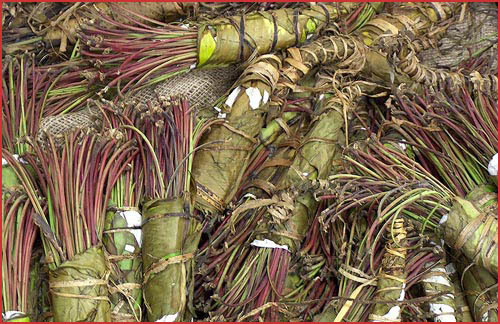
Kat (aka Qat, Chat, Khat) is Grave National Security Threat to Somalia

image001Courtsey of Wikipedia

 If Somalia is to survive as a nation-state and having at least a normal functioning government with even average bureaucratic operations, it must urgently find effective solutions to the epidemic of Kat addiction among its population as a national priority. The problem is more than socio-economic issue. It is a grave national security threat as well.

 In the summer of 1997, I was a member of a delegation of the now defunct National Salvation Council (the NSC, aka Sodare Group) from Addis Ababa, Ethiopia, to Mogadishu, Somalia. The delegation members included NSC Co-chairmen, Ali Mahdi Mohamed and Abdullahi Yusuf Ahmed as well as Council members that included Mohamud Mohamed Guled (Gacmadheere), Duuliye Sare Abdi Osman Farah among others. We numbered about 13 men and one female. We were on our way to meet with an Italian delegation led by then Deputy Foreign Minister for Africa, Senator Serri, who was about to visit Mogadishu for the sole purpose of mediating between disputing Mogadishu warlords despite many other problems of Somalia. The vision of the Italian delegation on solving Somalia’s predicament was not beyond the Banadir Region at that particular time.

Abdullahi Yusuf’s intention in the mission was to disrupt the Italian visit (which he did successfully) while Ali Mahdi’s was to win over the Italian favor against Hussein Aidiid and Osman Ali Atto.

We made a two-day stop-over in Djibouti. The Prime Minister of Djibouti then, Barkat Gourad Hamadou, honored us with a lavish luncheon with tender baby-goat’s meat and other delicacies of Djibouti at his residence. After the lunch, we were taken to a large and well furnished room with an Arabic seating with soft cushions specifically designed for long-time session in comfort for Kat indulgence, gossiping experience, news and secrets debriefing under the “high” influence of the stuff. In front of every person a bazooka-like wrapping was placed and a  large silver tray full of the tools of the trade: A big and tall golden tea thermos, crystal glasses, shining and engraved tea-mugs, various branded cold soft drinks in plastic Coca Cola –type bottles and commercially distilled water in gravines with swimming crystal clear ice-rocks, all to be consumed in the breezing air-condition of the room- an artificial weather hide-out from the environment of burning heat of the City of Djibouti.

After a few chit-chats, Prime Minister Hamadou noticed that none of the members of our delegation was using the stuff as they were all non-chewers, at least, at that period of time. The Prime Minister was a bit annoyed and asked: “Why are you in civil war then, if there is nothing to fight for?” I guess we spoiled the daily indulgence session for our generous, high-level Djibouti host. Luckily, the conversation didn’t break up as we a had had a lot to discuss on Somalia, Somalia-Djibouti past and future relationships and the Horn of Africa, in general.

During those few years, I discovered, in separate sessions, that Ismail Omar Gheleh, the current President of Djibouti, was pondering about his desire to join his tiny country with Ethiopia as he was desperately convinced that Djibouti would not survive on its own. There was  rampant corruption in the seaport operations, the main revenue generating enterprise besides the high spending men of the French legionnaires at Djibouti night clubs. The City of Djbouti was on the verge of being taken over by the influx of Ethiopians, who needed no immigration papers to come in. It was only Puntland help in 1999 to commit him to Somalia’s National Reconciliation process, encouraging him to take it over from Ethiopia, an AU and IGAD Mandated Country for Somali National Reconciliation Process. President Abdullahi Yusuf convinced President Daniel arab Moi of Kenya to support President Ismail Omar Ghueleh to play the role. It was undoubtedly a diplomatic success that pushed Ethiopia aside from the Somali issues.  One may guess already why Ethiopia was not happy with President Yusuf lately. The second help came to Djibouti from post-9/11 World Order. Besides God’s wish, it was only these two factors that saved Djibouti from voluntary union with Ethiopia. Unfortunately, he betrayed Puntland State during the initial phases of the Arta Conference, a rift that eventually undermined the TNG of Abdulkassim Salad Hassan to pave the way for holding Embagati (Kenya) all inclusive and broad-based Somali National Conference and finally, the establishment of the Transitional Federal Government of the Somali Republic (TFG) in 2004, transforming it into the Somali Federal Republic in 2012.

Suddenly, the Prime Minister shared with us the socio-economic devastation Kat consumption has been causing on Djibouti at the time. He informed us that Djibouti was paying Ethiopia a hundred thousand US dollars daily, and that was only the portion of the payments that goes though from bank to bank. Think about residents who buy the stimulant on their own from individual Chat traders on the top of train and air passengers who also bring sacks of the green leaves to their families, relatives and friends in Djibouti cities.

On a number of occasions, I stopped over in Djibouti for a short stay. On multiple times, arriving at Djibouti International Airport, I used to see popular demonstration-like commotion at the gates of the airport-population rushing to the airport when Kat cargo delivery from Ethiopia is delayed for only a few hours. One would see custom and passport control officers whose mouths are asymmetrically filled with Qat and chewing it on the job. Think about the officers’ mental judgment and decision-making capability under the influence of the hyper-leaves at country’s highly sensitive and main border entry point.

The situation is even worse in Somalia with a few millions of US dollars spent every day on the habit. With no credible fiscal statics available, the country may be fast sinking into public and personal bankruptcy. A failed state desperately trying to recover from decades of civil war and total collapse of public services and institutions, has also population wholly consumed by the epidemic of daily Chat use, effectively destroying the socio-economic fabric of its society, abysmally curtailing manpower productive hours and bringing havoc to family livelihoods and relationships while it is also at same sometime constitutes an instigator and main source of corruption and loose social morals. A country with the geographical size larger several times than Italy or UK with porous long borders with Ethiopia and Kenya requires alert and non-Chat chewing security personnel and efficient bureaucracy.

The irony is that Somalis nowadays like to talk about safeguarding their sovereignty and territorial integrity, while at sometime allowing their neighbor states to dump poisonous addictive Kat to their citizens, drain their economy, disable their manpower and threaten their vital national security interests. Think about the real double-talk and double standard with a proverbial ostrich attitude!

Somalia has to come up with a solution to the menace of the Qat. While fully it is understandable that it is tough to try to ban the habit outright, at least a committee of experts should be immediately setup to study the problem and submit recommendations to competent bodies for, at minimum, regulating it and eventually outlawing it. Massive public education and media programs relating to its dangerous hazards to personal and public health should be initiated and launched immediately to stop the spread of the habit to young generation. Somalia cannot afford to continue to ignore its greatest, silent killer of its productive members of the society and the gravest national calamity posed by Kat trade. Please wake up!

Federalism, a Guarantor of Peace among Somali Clans

Nowadays and for while during the past two decades, Somali thinkers, writers and politicians were keenly debating on best way forward for Somalia’s governance and political arrangements Post-Civil War. This debate is extremely crucial for the survival of Somalia as a country as well as a strong cohesive nation-state.

While many among debaters were and are still sincerely looking for best possible governance system (s) and pros and cons of each of the “Menu of options”, a few of them continue to ignore the status quo (current Somalia’s political situation) dismissing it as side track and unimportant clannish nuisance or refuse to acknowledge the extent of public mistrust following the vicious civil war involving heinous crimes of ethnic cleansing, mass murder, forceful and illegal landing-grabbing, plunder of both public and private wealth and barbaric destruction of national heritage and state archives in Mogadishu and elsewhere.
In my humble opinion, any politician of conscience at any level of government (President, Cabinet and parliament members) whose political power base had committed such grave and gross human rights abuses, national robbery, national betrayal and treason should apologize to the nation and resign immediately. If that is not forthcoming, it would be mean that the civil war is still technically on, and there is no guarantee that history would not repeat itself. Such politicians have no moral legitimacy to govern until they come clear and publicly accept their personal and power-base responsibilities for what happened in Somaliaduring the Barre regime and following the final collapse of Somalia’s central state in 1991. Somalis, please be warned. One should never entertain with the idea to translate the recent US recognition of the current Somali Government as a victory of one faction over others in the Civil War, and again attempt to misuse state resources to try to subjugate others. That would be a futile exercise and would unfortunately hasten the disintegration of Somaliaas we know it. It is the expectation of all Somalis from the world community to watch out any signs for the repetition of that sad saga.
During the past ten years we witness multiple self-proclamations of regional federal mini-states such as MakhirState,KhatumoState,AwdalState,GalgamudState, Hibin and HeebState,AsaniaState,RasAsayrStateamong many others. With keen observation, one would realize that those self-proclamations were characteristically peaceful and surprisingly did not spark off any clan fighting with the unique exception of Khatumo, rightly resisting aggressive occupation of its territory by “Somaliland”militia. Why? This could be a case-study; of all clan wars in the country, the self-proclaimed federal mini-states brought relative peace to their respective constituencies.  In my opinion, one of the main reasons for such peaceful environment within for all sub-clan systems is the fact that their constituencies see themselves as equal stake-holders in that mini-entity (state), which acts as the accepted and shared mechanism for conflicts resolution and constitutes common interest for all. Logically and practically, one would therefore take note of this new development to expand the concept to a national level in Somalia’s long journey to restore lost trust among its people and regions.
For historical prospective, a few months after we had established the Puntland State of Somalia in August 1998, a sub-sub-subclan among the inhabitants of coastal Indian Ocean Mudugh town of Gara’ad and surrounding areas including the District City of Jeriiban unilaterally announced the creation of Coastal State, declaring its independence from Puntland State, following sub-clan grievances regarding their expected share in the newly constituted Puntland Parliament. That grievance was actually proved to be the mistake or intentional concession of their allocated Parliament seat to another sub-clan in Mudugh Region by their local traditional elder. The subclan members opposed the move by the elder. To address the issue and resolve it, a delegation led by the Late State President, Abdullahi Yusuf Ahmed and me included, went to the District and met with all stake-holders. One of the first questions we asked our interlocutors was: “How many sub-subclans belong to or created the CoastalState, and how many regions are there in the proclaimed entity?” The audience looked at each other, and surprisingly, the answer was obvious. The District belonged to the larger Mudugh Region and even most of the inhabitants of the Jeriiban District alone via their representatives did not belong to and were not party to the “CoastalState”. That was the end of the story. I believe, CoastalStatewas the first unviable mini-state created in Somalia.
The lesson we learned from that experience was that a state whether it is a national or regional must enjoy the trust of all its constituencies to survive, safeguard its unity, develop and prosper in peace and harmony. Anyone aspiring to see the Somalia he or she wants or imagines must take this lesson seriously into account.
Those Somali writers debating on federalism lately almost all of them ignore the fundamental reason for the debate itself on the issue and failed to find the answers to two critical questions:
  1. What     is the main reason that has brought us here to debate on Somalia’s     governance options?
  2. How     would you restore trust of the people nation-wide in a central authority     when people of Somalia     have not yet officially and technically ended the Civil War in the absence     of comprehensive national reconciliation given what happened?
President Hassan, in a thoughtful, prepared and defiant speech to the Somali Diaspora in his recent visits to US and Belgium says openly, “ if you look back on what happened yesterday, you lose the opportunities of today”, thus dismissing outright any possibility for accountability for crimes of mass murder, crude human rights abuses, robbery and plunder of personal and public properties. With such a vision for Somalia, forget about reconciliation and peaceful conflict resolutions!
Finally, I am aware that many Somalis would like to give the current government in Mogadishuthe benefit of the doubt and wish her to succeed in the best interest of the entire nation. To those I say the taste of pudding is in the eating. Anyone who helps Somaliarecover from its present predicament will be highly appreciated and undoubtedly recognized.

Deficit of Public Trust in Somalia

Public Trust Deficit in
Somalia
By Ismail Haji Warsame
Oct. 02, 2012

The Presidency of the Republic does not give the expected trappings of power, the magic of the highest leadership position in the land or the glory of the Office amid distrust and absence of loyalty within the population and regions of the country. That institutional empowerment must be earned nation-wide in the hard way, and in the case of Somalia, require hard work over many years to come for the future generations of Somalia to enjoy it. If successful, the new leaders can only pave the way for restoring that missing public trust. To accept any Somali President, Prime Minister or the Speaker of the House as a leader of all the people is a long shot, given the depth of distrust developed within the communities for the past 30 odd years towards government officials, or rather any institutions of governance unfortunately. In Somalia’s today the Presidency or any position of leadership is unenviable role for a decent person to play for it requires heavy personal sacrifices few are willing to commit to.

The very idea of bottom-up approach in rebuilding Somalia is primarily based on the restoration of that missing trust before the country has central institutions. Quite a number of Somali intellectual circles and many politicians inside and outside the country, particularly in Mogadishu, do not still appreciate how important the “Building-Blocks’ concept is, as we coined the term more than a decade ago in Puntland State of Somalia, as the shortest way to heal the deep wounds caused by the civil war and abuses of the Military Government, in addition to nepotism and rigging of elections by previous civilian governments. Creation of Federal Institutions starting with the TFG Charter and current Provisional Constitution is a hard fought negotiated outcome towards rebuilding that public trust. Anybody who believes that we can have a highly centralized system of government again in Mogadishu or elsewhere in the country is either of out of touch with reality in today’s Somalia or must have his/her sanity re-examined as this dream cannot be realized in the present political conditions of Somalia. The sooner we all embrace whatever type of federalism we accept as result of a negotiated settlement, the better off we are to re-construct our country. I may add, under the current political atmosphere, having a Federal President and Prime Minister hailing from South-Central Somalia is a recipe for failure and does not meet the necessary power-sharing legitimacy to move the country forward. If proven true (I hope not), the rumors flying around these days in Mogadishu and beyond on the selection of a Prime Minister do not give me sense of optimism for Somalia to be on the mend.

 Practical intellectual thinking and bold political leadership are required to brainstorm on why Somaliland and Puntland were created in the first place. While the First went to the extreme of outright unilateral declaration of seccession, the Second did not lose hope that Somalia can be rebuilt from the ashes of the Civil War and the deficit of public trust. For the benefit of those who were not closely following major political developments in the country during the past 15 years or so, or limited/exposed to only superficial sideline debates on Somalia, Puntland State spent considerable resources including brain power to see Somalia re-instituted. This is a major political capital investment that cannot be written off without paying a heavy national price.

A simple political instinct is lacking among the intellectuals and politicians in Southern Somalia, i.e. they could not figure out that if Mogadishu is to remain the Capital City and enhance its status as attractive to the residents of Northwest and Northeast Somalia among other parts of the country, it should be subject to power-sharing. Someone cannot be expected to have both ways or as they say, “have their cake and eat it”, given what happened in that City during the vicious Civil War. Mogadishu leaders instead, for the sake of national unity, would have been smart enough to encourage others get elected to the presidency. That did not happen unfortunately despite the great expectation from the new President to deliver, and a lot of people are worried about the direction and the future of the country.

While it is not so popular to be an early pessimistic person, they say, a pessimist is a well informed optimist. Nevertheless, I have strong conviction that the best days of Somalia are still to come.


A New Year message from one of the key founders of Puntland State of Somalia

Image

The idea behind the creation of Puntland State of Somalia was of two-fold:

 To bring stability, peace, harmony, organisation and good governance to the inhabitants of Northeastern Somalia, restoring, creating and delivering vital public services to the entire communities in multiple regions of the new state.

 To act and lead the way to the reinstatement and re-construction of Somalia as one of its top priorities.

 It was a creation fully supported by grass-root movement that evolved many years during the Civil War and finally boiled down to the establishment of the state as a series of Somalia’s peace and reconciliation conferences abysmally failed to restore Somalia’s central government, and emphatically couldn’t be realised it from top down,thus Puntland’s coining of the “building block” concept.

 It was based on unique approach to governance: the foundation of state based on traditional values, its historical zonal self-government experience, married with modern system of administration, and most importantly, discontinuation of  colonial legacy with regards to governance as the support of the traditional leadership took centre stage as a critical mechanism for conflict resolution and sound consultation.

 As a starting framework for its leadership legitimacy, an indirect democratic selection of legislative members was mandated by its constituency membership through deliberate and exhaustive criteria enshrined in a well prepared charter by any reputable international standards.

 here were a number of political and constitutional crisis in the short history of Puntland existence as a state. Each time Puntland State survived mainly because of its strong founding principles and historically binding evolution of people’s aspirations and wishes against the whims of its leadership of the day.

However, Puntland State has been always lacking behind in its further democratisation process, unable after more than a decade, to move forward in implementing the general election of “one man, one vote”. That is why one sees leadership crisis towards the end of each leader’s term in office.

 In exactly the same fashion, one witnesses now self-made political tension that may lead to instability and threaten to law and order. It is the same story playing out again. It is therefore self-evident that there is something seriously wrong in Puntland State governance. That has to be fixed quickly and wisely in the best interest of the people and for public good. Put aside leadership ambitions and personal interests because such inclination will serve no one in the end and endanger Puntland State peace, stability and unity. Don’t play with fire to score political points. Always keep in mind that Puntland state is the outcome of many sacrifices and irreplaceable human and economic resources.

 For the opposition, the disputed one year extension of the President’s term in office should not be the focus because the stakes are much higher here. Instead, they should be concentrating the democratisation process, while the current leadership provides an atmosphere conducive to dialogue between all stake-holders and parties, and embark upon consensus building. I may remind all of the fact that civil strife takes place when parties fail to talk to each other- in other words, in the absence of dialogue. As long as there is a debate on all issues of mutual concern,there is unlikely that conflagration could occur.

 Finally, Puntland State history showed that when there is a political crisis, there are always external actors ready to step in to further destabilise the state. We should be very careful here not to give devils and dark forces in-waiting any chance.

 In conclusion, I wish you all a Happy 2013.

 Ismail H. Warsame

Formerly Chief of Staff, Puntland State Presidency.