Despite the President’s continuous travels and repeated tours in some parts of the country, while intentionally avoiding some, including those regions considered as his political power-base, and he is highly visible at receptions at Villa Garowe with Somalia’s International Partners, President Gas is politically isolated within a short time into his mandate as he has lost touch with reality in both Puntland and larger Somalia.
This self-imposed political isolation and complacency take place due to the following mistakes of his making:
1. The President chose to surround himself at State House with young novices as his key advisers, who neither have the political skills, education, nor the experience of working in any parts of Somalia, not to mention about having slightest field works in Puntland State of Somalia.
2. The President is incapable of gauging the mood and feeling of ordinary man and women towards his leadership performance in terms of the economy, public order and personal safety.
3. State employees, including security forces are not paid months after months, often triggering off threatening periodical mutiny of forces, ensuing dangerous security situation, and creating an atmosphere of growing popular deep discontents. The President does not treat this precarious situation as a national emergency and priority number one for the very survival and unity of Puntland.
4. The President feels that he knows what is he doing better than anybody else-a superficial Ivory Tower Attitude devoid of any real and on-the-ground political context and smart understanding of current dismal economic and geo-political situation of Puntland.
5. The President clearly enjoys hosting high-level delegations, who continually jet in and out of Puntland with no benefits to deliver to the State, even a small budgetary support for the security sector engaged daily with extremists and militants-the very forces that enabled the so-called “international Partners” to have trouble-free discussions with Puntland authorities inside the country to show-case their engagements with Somalia, and thus diffuse the concerns of their generous Donor countries. Rather than demanding reciprocity and playing ball, the President is enticed with diplomatic niceties, empty, and meaningless receptions in his Office. It is disturbing to see even junior NGOs officers being to driven to the State House rather letting them mind their own business with government departments concerned. One critical fact Abdiweli has to learn about these international organizations is that they are not accountable to anyone. As they are faceless, their promises and statements to their interlocutors mean nothing as they would never honour or deliver on their promises- a black hole Puntland fell into recently. The President often gets busy himself with departmental tasks and mandates- an award tendency to a one-man show exercises.
6. Under the fledgling leadership of President Abdiweli Hassan Ali (Gas), Puntland State has abandoned the on-going Somali National Debate on the re-institution and re-construction of the Somali Republic along the Vision the State of Puntland has been fighting for nearly two decades.
7. Worse of all, it seems that President Gas has no a vague idea of the Mission and Founding Objectives of Puntland State of Somalia. Probably, in his Ivory Tower vanity, he did not bother to browse that Historic Document even briefly. Let us Paraphrase some highlights of these Guiding Principles for his benefit:
1. After many trials and failures of the National Reconciliation Conferences, it became obvious that Somalia could not be re-instated and re-constructed from the “Top-down”. It must be re-instated from “Bottom-up” by the formation of “Building Blocks” (Federal States) producing legitimate and representative leadership to discuss the future governance of Somalia.
2. Puntland State of Somalia is founded with a vision to create an orderly, peaceful and democratic society with the marriage of traditional societal leadership with a modern and efficient administration of statecraft capable of delivering public services, working towards economic self-sufficiency and safe-guarding the security and unity of the State. Puntland State of Somalia is an integral part of Somalia, and would not entertain unilateral secession or independence as an option. Governance system and public institutions would continue to evolve and grow leading to further democratization process, population census, population disarmament, and building strong, credible and lasting public institutions.
3. Puntland State was committed to taking the leadership role required to help credible and representative community leaders from various parts of Somalia engage in constructive dialogue in building constituent regions to form regional states on free will and voluntary basis. The people of Western Galgaduud Region of Central Somalia were invited and had free option to join Puntland State whenever they were ready. In this regard, Puntland would spear-head a National Reconciliation Process leading to the resolution of the legacy of the Civil War, deepening peace and restoring public trust again in a shared government and institutions.
4. Puntland State of Somalia would promote peace and good neighbourliness among the peoples of East Africa, and with Somali neighbour states, in particular.
Based on the narrative above and serious issues raised therein, how does the “scoreboard” of Dr Gas look like? If you live in Puntland State, or closely follow its “state of the union” today, you have every reason to worry about where the country is heading to. Besides the economic calamities besetting the people of Puntland, there is strong lack of political leadership and direction. President Abdiweli Hassan Ali (Gas) is now in a political trap designed by the President Hassan Sheikh Mohamoud’s faction in Mogadishu, to politically isolate Puntland, on the one hand, and destabilize it in the Central Somalia front, while welcoming and approaching Somaliland encouragingly, on the other hand. That is on the top of the political Puntland headache on threats to its unity and Sool and Sanaag issue.
It takes leadership to acknowledge one’s mistakes, ask for advice, and listen to the concerns of one’s own constituency attentively. Would he?
The stateless situation of Somalia, rise of extremist religious extremism of Wahabi Sect, sea-piracy, enormous porous borders, historical territorial disputes and conflicts, greedy Somali traders willing to sell anything and everything Somalia has to the highest bidder, destruction of Somali fauna, strategic oil/mineral interests in the country, among other things, made Somalia uniquely attractive to intelligence community. Ethiopia, Djibouti, and Kenya became permanent centres for operation of these foreign spies on Somalia. These countries provide convenient centres of interdiction for apprehended terrorist suspects from Somalia. Many Somalis and non-Somalis were targeted for elimination when convenient. Former Somali military officers and Professionals in other fields were eliminated in mysterious circumstances. No national institutions existed to investigate the murders and horrendous crimes against the stateless people of Somalia. It was like hunting them for sports or game in eliminating any body important for the future rise of Somalia as a state.
While these heinous crimes were being perpetrated against them , the Somalis were busy in under-cutting each other in what everybody commonly call “clan-rivalry” and warlordism, dismissing these daily crimes as the work of their respective rivals, and embracing for new wave for revenge in a vicious circle that pushes Somalia into further abyss and mayhem.
Sometime after 9/11, and following the establishment of the Islamic Courts Union (ICU) in Mogadishu. The USA government renewed its security interests in Somalia. USA security agents were keen in finding the connection between Al-Qaeda and these Courts. USA resources, however, were limited in Mogadishu. At the time, the only available intelligence infrastructure they could rely on was their global surveillance programs of monitoring internet and telephone communications. They found out connection existed between elements of the ICU and foreign extremist organizations, including Al-Qaeda. But, they needed human intelligence on the ground in Mogadishu. They had to seek help from Djibouti, Kenyan and Ethiopian governments, and Somalis in their Diaspora communities, to establish monitoring and operational network in Somalia.
In the process of setting up espionage centres and other intelligence gathering channels throughout Somalia, they sent a delegation to Puntland State to discuss ways of cooperation against the real and perceived common enemy of Al-Qaeda. In one of a series of meetings with Puntland officials, the US side asked for Puntland help in linking them with those Mogadishu warlords Puntland thought they could be effective against the Islamic Courts Union. State officials inquired those US officials about which warlords they were working with so far. They told Puntland officials that they were not happy with the effectiveness of the likes of Osman Ali Caato and Mohamed Qanyare Afrax. “What about Muuse Suudi Yalaxow?”, asked one official of the Puntland side? “Oh! No! This guy doesn’t pick up his home phone for three months in a row. American cannot work with such a man!? “What about Mohamed Dheere?”, asked another official? “The guy in Jowhar?; yes, we could try that one?”, concluded, the US Intelligence Officer. Mohamed Dheere soon found himself airlifted from Jowhar to Wilson Airport in Nairobi, Kenya.
A few weeks after these meetings in Bosaso, Puntland State of Somalia, Mogadishu Warlords announced the creation of The Alliance for the Restoration of Peace and Counter-Terrorism. US dollars, in suit-cases, exchanged hands in Dayniille Air-strip in Mogadishu, under the command of Mohamed Qanyare Afrax. The hunt for Al-Qaeda and foreign persons starts in earnest in Mogadishu. Warlords competed in the new game of hunting people for unaccountable US dollars. Any light-skinned person of seemingly Arab origin was vulnerable and a possible target for warlord’s grab. Residents of Mogadishu broke down into ICU and Warlords camps-a polarisation that transcended beyond the traditional clan rivalry into an ideological rift of national and religious connotations. Ethiopia stepped up its war of proxy, this time acting for Americans as well, with the provision and offer of access facilities for US counter-terrorism forces in Godey and elsewhere in its country. Djibouti became centre for US covert operations, including interdiction of foreign elements captured in Somalia, and drone attacks against targets in Somalia. Kenya established itself as the coordination centre for covert operations in Somalia, business and financial hub, and modern resort of get-away for Western intelligence and counter-terrorism agents.
A huge spy network of Ethiopia and Western countries took deep roots in Somalia. They now use highly trained personnel of Somali origin from the Diaspora, on the top of well-placed locals. Don’t get surprised if you find spies posing as camel herders in Somalia’s countryside today.
It has become an intoxication fashion for Puntland successive administration leaders to indulge in prohibitively expensive state receptions and send-off of the head of the Government when-ever he steps out of the Capital or returns to it. Even a short working visit from a region requires mobilization of the entire residents of Garowe for a Welcome Party either to receive the President or to send him off. This entails huge security operations every time there is such an event. All Government and economic activities of the City come to a standstill for a whole working day. Public Schools are closed for the day for students to take part in the huge party at airport. People are required to line up in tightly cramped setting along the narrow sidelines that has no even sidewalks of the only highway passing through Garowe. The single transport road linking up the country from West to East is blocked to movement of goods, services and people for many hours each time the President leaves or come to town. Enormous traffic jumps pile up. Serious auto-accidents often occur. Economic and labour productivities are lost for the entire day. The meagre public funds of Puntland are squandered and wasted. Somali Diaspora websites compete for presence and best angles for media coverage of these frequent “State Parties” and splash on their pages the smiling reception figures with colorful bouquet of flower rings hanging down on their necks. As a result of this thoughtless and never-ending officially sanctioned exercises, Puntland State not only suffers economically, but the misplaced and fashionable enterprise implicitly turns the people of Puntland into serving the President instead of him serving the people. This continuous “State Parties” have to stop immediately. It is unsophisticated, thoughtless and a total waste of public resources and time. It serves only the echo of an insensitive and self-serving leader and the pleasure of sycophants and flatterers in Government circles. When I was there, my team had never entertained the idea of such not only wasteful, but extremely monotonous continuity and tasteless display of governance, or mis-governance, if you would. A minimum number of Government officials, some of the Presidential Staff and security detail, and where and when possible, some foreign delegations to the country, are sufficiently and economically enough to receive or send off the President during some of his many travels. Historically, this abuse of public resources in self-serving public display of Presidential receptions was initiated and widely expanded by Former President Abdirahman Mohamud Faroole. Instead of discontinuing this harmful imposition on the people and cultivation of personality cult, President Abdiweli Ali Gas is now exceeding even the expectation of Faroole. Separation of power into the executive, legislative and judiciary branches are extremely problematic in Somalia. One feels uncomfortable and uneasy when one sees the Speaker of Parliament welcoming or seeing off the President at airports like his Junior Minister. This is an unacceptable and deeply embarrassing to the people of Somalia, to Puntland in particular. Under this circumstance, accountability of Government to the people through the Parliament is irretrievably lost, Parliaments becomes rubber stamp. Checks and balance of power disappear. Corruption and abuses of power become rampant and unchecked. Puntland Parliament should immediately avoid melting and diffusing itself to the Executive Branch. This is a very grave issue(Please see the article “Somalis have to blame only themselves for creating their own dictators”, WDN, Feb. 25, 2013) we all have to watch out and get ready to speak out and do something about it) The above Presidential malpractices lead us to worry about the fate and the future of the democratization and multi-party process in Puntland, in particular, and Somalia’s general elections 2016, in general. I see no sense of urgency within the leadership to re-start the process and correct it where it was bent and failed in the previous administration of President Faroole. The New Administration of President Abdiweli was required, and it pledged to commit itself to it in Day One of taking Office. What one wonders what was happening with regards to the issue of future governance of Puntland? Will it be again on the brink of total collapse or disintegration on the eve of the next Presidential and Parliament Elections as the old founding clan selection process finally stopped to function, satisfy and resolve the tremendous challenges of clan contradictions and stringent demands for modern governance, regionalism and globalization? Puntland State is expected to do better than that. People of Puntland deserve better than that. Finally, the school of thought on Federalism in Somalia’s future governance has been conclusively won now. Proponents and promoters of Federalism have been vindicated after a long and hard-fought political struggle. It seems to me that the Administration of President Abdiweli Ali Gas is not paying the serious attention required by Puntland State to see that a fair and adequately balanced constitutional framework come out of the National Constitutional Review Process by failing to appoint and attach a team of Puntland Constitutional experts to that process. It is not too late yet to do just that. In conclusion, and now in my capacity as a keen observer of Puntland news, I have noted that the New Vice President of the State was not sure of his role in Government and constitutional mandate as the most Senior Advisor of President and that he had no independent opinion apart from that of his own President. The Office of the President is one, not two, and everything the Vice does or says publicly must have the sanction of his Boss and within the mandate of the Constitution. There can be room for confusion in running Government affairs. I guess learning statecraft and adhering to the letter and spirit of the law is hard to swallow in a traditionally nomadic culture. Public statements involving Puntland unity and its policies towards the rest of Somalia, including Somaliland, must be officially formulated and standardized to avoid uncoördinated signals and policy mis-statements at various levels and officials. Ramadan Karim to all! Ismail H. Warsame E-mail: ismailwarsame@gmail.com Twitter: @ismailwarsame
Location of Puntland State of Somalia (Photo credit: Wikipedia)
Puntland State of Somalia is one of the few achievements I happen to be proud of. Other Puntlanders, stakeholders and supporters in Somalia and beyond, within the Diaspora and external players today can pause for moment to imagine their social, political status and relationships with Somalia without the existence of Puntland State. While people always give the visible leader the credit for it, I had the chance to know full well that there were a few of us that made the difference in initiating its creation and playing the critical role in making it a functioning reality that changed the political landscape of Somalia for ever. This is my moral authority and basis on which I pen this short article.
Once again, Puntland State is at cross-roads and it was unfortunate that the democratization process failed abysmally. That was a great setback for the people of Puntland. Nevertheless, the State is relatively safe and has high hopes for a better future. But, to survive and progress, Puntland requires an urgent political change that the current administration cannot deliver. Faroole is a spent force and is running out of ideas, on the top of his poor domestic policies. He becomes a divisive figure and liability for Puntland despite his foreign contacts drama and superficial Diaspora perception that he is the man who can challenge the ill-advised and naïve Damul Jadid Clique in Mogadishu. To refresh up the memory of the readers of this article, Faroole was against the foundation of PuntlandState from the onset to consist of Sool, Sanaag Bari (now Haylaan), Nuguaal, Bari, Mudugh and the District of Buuhoodle (now Cayn). He was among the proponents of creating only Northeastern Regional Administration ( not even a regional state) composed of only Mudugh, Nugaal and Bari ( Karkar Region was part of Bari then). He fled to Australia in early July 1998 before the creation of Puntland State and in the last days of the Puntland Constitutional Conference to found the State when he and his colleagues failed resoundingly in their attempt to exclude Sool, Sanaag and Buuhoodle in the process. He came back later to Somalia in early 2000s to oppose Puntland State every step of the way. For a long time he was frequenting anti-Puntland conferences and lobbies in Djbouti, Mogadishu and elsewhere. As he left the Conference, I vividly recall his departing words, on the mike, to the Late Islaan Mohamed Islaan Muse, then the Chairperson of the Constitutional congress and I quote, “Shirku waa afduubanyahay”, unquote ( The Congress is being held hostage). Following Puntland State constitutional crisis involving Supreme Court President, Yusuf Haji Nur, Jama Ali Jama and Late Abdullahi Yusuf, and as gesture for Puntland internal reconciliation, I personally persuaded the later to include Faroole in the New Puntland Cabinet as a counter-weight to the defection of Hassan Abshir Farah, then the Puntland Interior Minister, to Arta’s produced TNG of President AbdulQasim Salad Hassan. Despite his background, he was appointed Puntland Finance Minister. He became President of Puntland State due to the unpopularity of then the incumbent Puntland President, General Mohamud Hersi Muse (Boqor), bribery, intimidation of non-Majertaine MPs in Garowe and absence of capable Presidential candidates on the scene at the time. This can happen again if Puntland communities do not do their due diligence in searching and finding better alternative candidates.
The People of Puntland State are now ready for change. To effectively take part in that on-going political need and imperative for change, Traditional Elders, business community, intellectuals and any person at grass-root level has to help in selecting truly representative and worthy members of Puntland State Parliament. People who hail from Khatumo areas have the moral obligations and legitimacy too as founders of Puntland State to help in the current efforts for political change. All Puntlanders have every right and owe to their country to select and promote capable and honest patriots as presidential candidates on merit: personal integrity, character, leadership talent, experience and vision. They have to do their due diligence to get it right this time around, and peacefully. We must insure that if such a candidate wins the election, he/she must not use Puntland State as stepping stone or leverage for a national position in the Federal Government of Somalia, but willing instead to concentrate and focus on the unity, peace and socio-economic development of Puntland as his/her priority No. 1.
I know a good number of Presidential candidates have put their names forward. My assessment is that while many of the declared candidates have something to contribute, they don’t pass the test of leadership requirements needed in Puntland at this crucial moment. Puntland State deeply suffers from political stagnation, has serious governance and security problems. The country is politically polarized and unity is at stake. Economy has collapsed because of lack of sound fiscal management and absence of competition in a free market, leaders’ destructive interference in the market, nepotism and cronyism of the administration. No one among the known Presidential candidates can meet the challenges now Puntland faces.
Current political perception within Puntland Diaspora and supporters of Puntland is that there are two front runners among these candidates: They claim to be Abdiweli Hassan Ali (Gas) and incumbent President, Abdirahman Mohamed Mohamud (Faroole). I take an exception to this artificial and cosmetic assessment of reality in Puntland. My take on them is based on my Puntland experience and reading of the prevailing political situation at home now.
Let me call a spade a spade. Dr Abdiweli’s chance in that race is extremely limited. I also suspect that Dr. Abdiweli (Gas) has other personal national goals and ambitions and Puntland is not his priority. Based on his short political life as Prime Minister of Somalia, he did little or nothing for Puntland interests, although I acknowledge that he had had a bad working relationship with Faroole that made doing business with Puntland difficult. In fact, tampering of the Provisional Federal Constitution was done under Abdiweli’s watch. He and his team ( including his right-hand Constitutional Minister, Abdi Hosh) failed to deposit the constitutional version agreed upon in Garowe I and Garowe II to Congress delegates that provisionally approved the Federal Constitution. Instead, a print-out of completely another version was distributed to the 800 Congress Delegates, including the Traditional leaders that gathered and finally approved it in Mogadishu. That was a long time before President Hassan Sh. Mohamud got elected. To sum it up, the Road Map Dr Abdiweli seems to be proud of today is faulty and had done considerable damage to Somalia’s future governance as it was detrimental to Puntland vital national interest: Federalism as safeguard against Central Dictatorship and return to a One-City Republic Status. In terms of team work and selection of aides and political advisors, he is considered the worst Prime Minister that the successive Somali Transitional Governments had ever had.
The Roadmap received help and new boost from the most unexpected source: Jubaland, a non-existent entity during the Roadmap process. The appearance of JubalandState (which, of course, PuntlandState has been working tirelessly for throughout its existence) saved the day to re-enforce the Puntland State Vision on future governance system for Somalia. This de facto establishment of Jubaland Administration, in turn, led to the overwhelming acceptance of federalism by the international community as the only viable option for Somalia’s governance. Abdiweli also did nothing to contribute to the noble cause of creating JubalandState. He was not even visible during those tough political and military fights for Jubaland. One may recall that he was a tourist and traveling guest among the Puntland Diaspora in every corner of the world on a mission without an objective beyond his personal interests. Therefore, Puntland does need a man with that profile. It is too risky to take a chance!
I strongly believe that Puntland State communities have yet to produce the right Presidential Candidates to choose and elect from, and that is a heavy responsibility for all concerned. Let us debate on it and get this done. Take a note that time is of the essence in this regard.
Map of Jubaland State of Somalia (Photo credit: Wikipedia)
The obvious contradictions in the rushed agreement between Jubbaland and Federal Government of Somalia show that the talks have actually collapsed, and heads of the international community there and Ethiopian Leaders could not face the failure for their own sake. The stakes were even higher for them than the negotiating parties. They had to bring a lot of pressure to bear on the parties to save face by producing a signed paper and a photo opportunity for the occasion.The result is a confusing document which creates more problems and itself a source of future conflicts and everlasting tension in the region for all concerned. One thing is sure. Jubaland constitution and the conference that produced it were not acknowledged, consistent with FGS earlier position, but they had to swallow the fact that they won’t have their way unless they face the reality on the ground in Jubba and negotiate with Ahmed Madobe as the de facto Head of the three regions. That is the only plausible outcome of Addis Talks. It is one step forward and two steps back, in my opinion.http://allafrica.com/stories/201308290096.html
allAfrica.com: Somalia: Jubaland Gains Recognition After Intense Bilateral Talks in Ethiopia
allafrica.com
allAfrica.com: Somalia: Jubaland Gains Recognition After Intense Bilateral Talks in Ethiopia
allafrica.com
allAfrica: African news and information for a global audience
English: Coat of arms of the state of Puntland in Somalia (Photo credit: Wikipedia)
Puntland State of Somalia suspends its planned and ill-prepared multi-party elections, following local political violence where scores of people lost their lives and many others got hurt. The ruling political elite, who initially half-heartedly embraced the idea of pluralism on “My way or the highway” approach by using the instruments of political coercion, intimidation of public servants and use of public resources in a desperate attempt to stay in power or extend their term in power, has to fall back on the State’s political founding formula of sub-clan power-sharing through traditional selection process of members of Parliament along sub-clan lines, a scenario appropriate then at height of the Somalia’s Civil War, but no longer valid after nearly two decades of local self-government, a political stagnation and paralysis of vicious circle that Puntland State is unable to grow out of it.
The multi-party experiment, or they call it, Democratization Process, was meant to fail as it was hastily ill-prepared for an already pre-determined election outcome in favor of the ruling group, thus creating the seeds of political confrontations and violent reactions to the government political maneuvering. Fragile, poorly-prepared and ill-equipped new political parties and the masses rightly noticed that there could be no fair play in the process as they also saw and predicted the danger of destabilization and threats to peace in Puntland.
The local Parliament, another institution always bent on self-preservation rather than deliberating on and legislating genuine bills to move the country forward, has to quickly endorse political clannism in an Annex to the constitution. For the Puntland Parliament, it is business as usual as its members see the institution as permanent job for retirement without ever worrying about the obligations of public accountability, a dangerous source of political corruption and bad governance leading to facilitation of poor executive leadership in the State.
Some elements among the so-called opposition are yesterday’s men whose capabilities, ideas and visions are even far below than that now in power in the State. They have been already tested when they had had their once in a life-time accidental opportunity and a shot at positions of leadership. One would wonder if those are still able to marshal at least animal instincts to search for a new generation of leadership and talents to take over next and lead the country. They are better advised to go quietly and retire for the good of their people, family and country.
The time-tested traditional leadership of the various regions of Puntland now seems in disarray as the old generation gets aged and senile or passed away. The new generation of the traditional leaders are either inexperienced, pushed aside by or accommodated by the regime for its own agenda. The loss of Las Anod in Sool Region, the passing away of Islaan Mohamed Islaan Muse, Boqor Mohamud, Beldaaje Haji Farah, Garad Abdiqani Garad Jama and Ugaas Yassin is the greatest loss of PuntlandState since its foundation in August 1998 and the main causes of poor and unaccountable governance in the country. PuntlandState of Somalia was originally founded on the principle of over-whelming grass-root support led by the traditional leadership with the skills and art of modern statecraft equipped with all the three branches of government independent of each other with all checks and balance of power in place. Puntland State had had in its history incidents where a sitting President was removed by the Supreme Court, a Vice President impeached by Parliament and Ministers brought before Parliament for accountability and on Question Period on a Vote of Confidence. Unfortunately, that is no longer applicable to Puntland State of today. They got a serious governance problem. There is a lack of able, mature, wise men and women of vision, integrity and selfless commitment to efficient management of public affairs.
The Role of International and Donor Community
The International Donor Community acts in a wishy-washy fashion in Puntland Governance and Democratization Process. They tend to persuade their client leaders in the State for their poor Ad Hoc assessed positions on the agenda without a plan (B) to fall upon amid changing fluid situations. They have to re-assert the fact that there is no true democracy without the principle of one man (woman) one vote. There will be resistance to that principle by people who endured lawlessness for so long and there will be price to be paid by implementing it. By nature, people resist and ridicule anything new. If they are genuine in helping Puntland, in particular, and Somalia, in general, they have to be bold enough to push the Democratization Process forward and support the State contain the political violence that surely would occur. This should not be a trial and error exercise on their part. They must deliver for the sake of contributing to world peace and security at least.
The Way Forward
For Puntland State of Somalia, staying permanently in a vicious circle and political stagnation is not an option. Keeping multi-party democracy hostage to sub-clan patronage system for ever is not the solution to the current Puntland governance problems. Using public institutions and resources by the ruling elite for their own interests and advantage is to go alla Somalia Style of Siyad Barre. That would definitely lead to a total ruin of Puntland again.
What is required now in Puntland is a genuine debate about not only to avoid political destabilization, but ways and means of how to lift Puntland out of its chronic political paralysis and bring it out of the woods on the road to good governance based on:
The wishes and aspirations of its people demonstrated through fairly prepared elections.
The equitable distribution and fair management of public resources
Political pluralism in a plane field to compete without violence and political intimidation, a fair game to produce quality result and sound popular leaders and talented statesmen.
To achieve the above, Puntland state of Somalia has to renew itself by addressing its fatal problem of intellectual bankruptcy. There is no shortage of learned Puntlanders. They are all over the world and inside Puntland. There is a total brain-freeze though among these talented intellectuals. Their problem: they only see the bigger picture of Somalia, ignoring Puntland altogether. By the way, this is the problem of successive Puntland leaders as well-never concentrating on Puntland development as the first historic and founding pillar of Federal Somalia, for someone’s perspective, one of the first Mandates of the creation of Puntland State.
The way forward for Puntland State of Somalia is not easy, but is worth doing it for the sake of present and future generations. Doing it is a great honor to those who sacrificed a lot in the foundation of State, in the first place, in order to re-instate and achieve a united, strong and prosperous Federal Republic of Somalia owned by free people of Somalia.
Puntland State suspends scheduled local elections. It is a serious setback for all concerned and bad news for democratization process. I hope it is a tactical retreat and not shutting the doors to democracy. The so-called opposition leaders want to maintain the status quo for years to come. They don’t know anything better. That explains their resistance to multi-party political competitions.
The Government too approaches and conducts multi-party system under suspicious manners, acting and running like a one-party fashion, compelling all officials under its influence to adhere and be loyal to the Ruling Party. This plays counter to democratic principles and freedom of choice. The Government handling of the process is full of conflicts of interest. This is one of the main reasons as to why the process hit a dead-end and loss of lives. They were not listening to those, who have enough experience on the political reality on the ground in Puntland State of Somalia. Absence of dialogue is never conducive to democratic space. This is core of the problem. My way or the highway position will not fly in Puntland. One should share ideas, solicit for ideas and consult with sincere patriots and time-tested traditional leadership.
Now it is time for the Government to start restoring trust among key players and have ample time for dialogue to build consensus, moving the political process forward. Massive media information, education on the importance of democracy, citizens’ rights and obligations, freedom of individual choice and community awareness are required. To make the right individual election choices, citizens must be informed beyond the sub-clan interests.
At moment, both sides of the debate are trying, in their own excuses and pretext, to stifle democracy. They may succeed for a short period of time, but cannot arrest the political trend in the country and expectation of world community, if Puntland was to survive as a federate State of a Federal Somalia.
A confrontation over the form of federalism that a future Somali state would adopt is looming, as confidential sources report that the provisional Somali Federal Government (S.F.G.) is in the process of making a concerted push to control the formation of local, regional, and presumptive regional-state administrations in south-central Somalia.
The S.F.G., say the sources, is attempting to resist the early formation of a Jubbaland state in the south that would base itself on a decentralized-federal model, as Puntland has done; head off a similar process to the one in the south in the southwestern Bay and Bakool regions by placing an administration allied to it in charge there; counter the Galmudug authority in the east-central area by backing ex-warlord Abdi Qeybdid against the sitting government; and influence the leadership that will succeed the recently-deceased chair of the Ahlu Sunna wal-Jamaa (A.S.W.J.) movement, Sh. Mohamed Yusuf Hefow, that controls most of the central and east-central regions of Galgadud and Hiiraan. On each of those political fronts, the S.F.G. faces opposition, both locally and nationally by the autonomous state of Puntland, which resists the S.F.G.’s bids for control.
The S.F.G.’s Strategy of Political Conflict
By adopting a strategy of political conflict in south-central Somalia’s regions, the S.F.G.’s president, Hassan Sh. Mohamud, is attempting to solve his most pressing political problem, which is to establish the S.F.G.’s authority – dominance and control – over those regions. In the process of trying to do so, Mohamud is forcing the issue of what the state-form of Somalia will be. The options have narrowed down to two, a centralized federalism favored by the S.F.G. and its allies, and a decentralized federalism advocated by Puntland and its allies. The core political conflict in Somalia is between the S.F.G. and Puntland over state-form; the south-central regions are the arenas in which that conflict is being played out. Both the S.F.G. and Puntland are aware of the high stakes involved in their confrontation; if the S.F.G. prevails in the south-central regions, Puntland will be politically isolated and subject to pressure to abandon its autonomy, which gives it generous control over its natural resources and security policy; if Puntland is able to block the S.F.G., the latter will have had to cede significant authority over nascent regional states. The S.F.G.’s pursuit of a strategy of political conflict has turned a constitutional issue into a political power struggle.
Whether or not the S.F.G.’s strategy succeeds – and its success is highly problematic – that strategy is intelligible and follows from the power position of the S.F.G. The new federal government was to all intents and purposes imposed by the Western “donor”-powers/U.N. under veiled and explicit threats to withdraw financial support. The “donor”-powers wanted a “permanent” government established in Somalia so that they could decrease their commitment to the country and at the same time make agreements favorable to them with it. In pursuing those aims, they ended up settling for a provisional/interim entity operating under an incomplete constitution that left the fundamental question of state-form open; absent from the constitution was a determination of centralized or decentralized federalism, and there were not yet regional states set up in south-central Somalia.
As a result of the “donor”-powers’ actions, the S.F.G. was left with the challenge of establishing its authority in the south-central regions without a constitutional basis, scant resources to buy allies in the regions, and military forces that did not extend beyond the capital Mogadishu. Under those constraints, the S.F.G. had few options; it could renounce the attempt to control the south-central regions and allow those regions substantial autonomy, which would weaken whatever (potential) power it might have; or it could do what it has chosen to do, which is to contest the forces for decentralized federalism region by region by allying with factions in each region that felt marginalized by nascent autonomous administrations with power bases independent of the S.F.G. The new federal government opted for the latter, which set up the conditions for political conflict. A source reports that the strategy of political conflict was urged upon Hassan by his inner circle of advisers from his Damul Jadid movement.
The consequences of the conflict strategy carry severe risks to stability. The divide between the forces of centralized and decentralized federalism has become confused with sub-clan rivalries within the regions, exacerbating animosities that already existed. Those rivalries have also given the revolutionary Islamist movement, Harakat al-Shabaab Mujahideen (H.S.M.), which had been pushed out of control over its most lucrative territories, an opportunity to recruit from disaffected sub-clans, and it has drawn Puntland into the fray.
The conflict strategy shows the power deficit of the S.F.G. and its efforts to rectify it. None of what the S.F.G. feels that it has had to do would have been necessary had an effective process of state-building been instituted, which would have involved a process of social-political reconciliation among Somali factions leading to a constitutional agreement to which the major factions would have signed on. That possibility was eliminated by the “donor”-powers’ actions, and that constitutes their most egregious political failure.
As a result of the “donor”-powers’ actions, the domestic Somali actors have been left to pick up the pieces. Absent political reconciliation and the trust that comes with it, the Somali domestic actors are constrained to pursue their perceived interests and attempt to make them prevail. There is no reconciliation process in place; the stage is set for sub-clan-impelled constitutional confrontation abetted by ex-warlords and revolutionary Islamists. Interpreted through the dramaturgical model in political science, a tragedy is unfolding in which the protagonists-antagonists can see nothing to do but play a zero-sum game.
The Status of the Conflict
It is too early in the conflict over the state-form that Somalia will/might take to make a grounded prediction about its outcomes. The S.F.G. has only attempted to implement its strategy of political conflict in earnest since the return of Hassan to Mogadishu in mid-February from his round of visits to the external actors with interests in Somalia. Having touched base and gotten promises of support, Hassan had to try to “deliver” on his end of the bargain, showing that he led a (potentially) effective government.
Hassan’s most important political front, which demands his immediate attention, is the south, where a convention is slated to be held on February 23 to form a Jubbaland state comprising the Lower and Middle Jubba regions and the Gedo region. Approximately 500 delegates, including elders from the three regions are expected to attend, with the S.F.G. and regional states (Ethiopia and Kenya) as observers. Up until the present, it has appeared that the Jubbaland process would issue in a regional state modeled on Puntland. The S.F.G. will try to reverse that outcome.
According to one source, Hassan’s strategy has found willing supporters among sub-clans in the south that feel disadvantaged by the dominance of Ahmed Madobe, the interim governor in Kismayo, and his Ras Kamboni militia, which is allied with Kenyan forces in the south and is mainly composed of members of the Mohamed Suber sub-clan of the Ogaden-Darod. That leaves other Ogaden sub-clans, the Majertein-Darod (with ties to Puntland), and the Marehan-Darod more or less disposed to thwart any attempt by Madobe to dominate the Jubbaland state.
Another source confirms open-source reports that ex-warlord and Marehan leader, Barre Hirale, has met with Hassan and is “on good terms with the S.F.G.” The source says that the Marehan will “listen to Hirale if he is empowered.” Meanwhile, on February 13, Garoweonline reported that a delegation whose members are involved in forming a Jubbaland state met with Puntland’s president, Abdirahman Mohamed Farole, to discuss how “Puntland’s efforts to establish [the] Jubbalnad state could be improved.” On February 15, Garoweonline reported that Hassan and the S.F.G.’s prime minister, Abdi Farah Shirdon, who is Marehan, had split on the Jubbaland issue, with Shirdon supporting the ongoing process and Hassan attempting to undermine it.
The reports from closed and open sources present a picture in which fations in the south have not (yet) fully aligned, crystallized, and polarized around the issue of state-form, and around the S.F.G. and Puntland, with the S.F.G. itself split. The S.F.G.’s presence at the slated convention represents a concession by Hassan by virtue of his acknowledging the Jubbaland process, but it also is an opportunity for him to influence its outcome. Puntland will not be present at the convention, but it will attempt to work through its allies. How the local factions will align, insofar as they do, and how big a role the regional external actors decide to play, and on which of the sides, will determine the outcome, in addition to the efforts of Hassan and Farole.
The second front opened by Hassan in implementing his strategy of political conflict is the southwestern Bay region, dominated by the Rahanweyne clan, where an attempt to form a regional state composed of the Bay and Bakool regions was underway but had not advanced as far as it has in the southern regions. In the south, Hassan has been constrained to try to turn an ongoing process that was going against him to his favor or to subvert it, whereas in the southwest he has attempted to head off such a process before it began to function independently of the S.F.G.
Hassan moved by issuing an S.F.G. decree replacing the longtime Bay political leader and sitting governor, Abdifatah Gesey, who had been backed by Ethiopia and had forces in the region, with Abdi Hasow. Gesey resisted the S.F.G.’s action, declaring that he remained governor. According to a closed source, Ethiopia turned against Gesey and used its forces to oust him. On February 15, Garoweonline reported that Gesey had mobilized his militia and was still in the Bay region’s capital, Baidoa, whereas Hasow was out of public view. According to Garoweonline’s sources, the confrontation between Gesey and Hasow had caused the Bay administration to grind to a halt. Efforts to mediate the dispute were initiated and a delegation was sent to the region by the S.F.G.
On February 21, Garoweonline reported that Gesey was taken by S.F.G. security forces to Mogadishu after mediation efforts had failed. Sources in Mogadishu told Garoweonline that Gesey was “promised another title” in the regional government.
An indication of why Ethiopia switched sides and altered the distribution of power in favor of the S.F.G. is given in an Ethiopian government statement on February 16 concerning talks between the Somali Federal Parliament’s speaker, Mohamed Osman Jawari, and Ethiopia’s foreign minister, Tedros Adhomam, in which Jawari is reported to have urged the formulation of a “common position” between the S.F.G. and Ethiopia on the London conference on Somalia that will be held later in 2013. In return, Ethiopia promised to “work with Somalia on pushing donors to keep their promises.” Jawari then traveled to the ethnic Somali Ogaden region (Somali Regional State) of Ethiopia, where he met with regional officials and visited schools. Reports did not mention any hint that Jawari had taken up alleged human rights violations committed by Ethiopia and Ethiopian-backed militias in the Ogaden.
Just as in the south, the outcome of the face-off in Bay cannot be predicted. The S.F.G. has gained a foothold and has leverage, but it has yet to achieve the traction to push back its adversaries decisively.
A similar stand-off characterizes the situation in the Galmudug authority in east-central Somalia, where two governments dominated respectively by different sub-clans of the Hawiye claim claim the right to rule. According to a source, the S.F.G. has recognized one of the contenders – the faction led by ex-warlord Abdi Qeybdid – as the “legitimate” authority. During the past month there have been outbreaks of politically-inspired sub-clan violence in Galmudug with open sources claiming that Qeybdid’s militia is responsible for initiating the clashes. Again, as in the south and southwest, the S.F.G.’s strategy of political conflict is being implemented in Galmudug, and its outcome is uncertain.
In the central region of Galgadud and part of the Hiiraan region, the dominant A.S.W.J. movement is in the process of naming a leader to replace Sh. Mohamed Yusuf Hefow, who died in mid-February. Hefow had been in discussions with the S.F.G. to merge A.S.W.J. with it. A.S.W.J., which has several factions that support or oppose collaboration with the S.F.G. in various degrees, has now become subject, according to a source, to pressure from the S.F.G. to integrate with it on the S.F.G.’s terms. Again, the outcome is uncertain, but the S.F.G.’s push is underway. The source reports that a delegation from the federal parliament is in Galgadud, claiming that they are “consulting with local communities on extending government rule” to the region. The source says that the presence of the delegation has led to a dispute between some of the A.S.W.J.’s leadership and the S.F.G.
Assessment
One of the sources contributing to this analysis has put the S.F.G.’s/Hassan’s strategy of political conflict succinctly and precisely: Hassan is attempting to isolate some leaders and factions in each region and to empower others favorable to him. In doing so, Hassan is splitting each region politically, intervening in local conflicts and exacerbating them, and working with whoever will ally with him for whatever reason, whether it be ex-warlords, dissident clans, or factions within a movement. That is the familiar strategy of divide-and-rule, which is used by actors who cannot (Hassan) or do not want to expend the military and/or financial resources required to control the outcome of a conflict.
Hassan is playing the divide-and-rule game to extend the authority of the S.F.G. into the south-central regions, but in doing so he is carrying with him the program of centralized federalism. Puntland has yet to play its hand overtly, but it can be expected to do so if it appears that the centralized-federalist project is gaining traction and momentum. Since Hassan’s strategy necessitates opposition to its implementation by the forces that he is attempting to isolate, as it has done in each case, the path is open not only to confrontation at the local level and the re-activation of H.S.M., but to counter-moves by Puntland.
It is too early to predict whether or not Hassan will be successful, but it can be said that a political battle is looming that will overshadow all other political issues in the territories of post-independence Somalia.
Hassan’s strategy is obviously high risk and high stakes. In his best-case scenario, Hassan prevails in each south-central region and Puntland is faced with the option of compromising its autonomy or separating from south-central Somalia. Short of the best case for Hassan, “Somalia” becomes irretrievably fragmented and balkanized, or its territories become a mixture of uncoordinated regional and local forms of administration.
It is unclear whether or not the “donor”-powers understand what is happening in Somali domestic politics and, if they do, whether they are prepared to intervene and in what way. That the “donor”-powers will act decisively to try to prevent political breakdown is unlikely. The United States, for example, was prepared to support the S.F.G.’s request to have the United Nations arms embargo on it lifted, but then backtracked after European opposition and stated that it would wait for the completion of a U.N. “review” of the desirability of taking such action. The U.S. backtrack was a blow to the S.F.G., which had expected more robust support when the U.S. recognized it.
As it stands, no actor, external or domestic, is working to avoid the impending confrontation. There is no formal process of reconciliation underway. The discourse of Somali political actors and intellectuals is not addressing the issue directly or, in some cases, at all. The external actors are silent about it. At the point at which the conflict intensifies to the degree that it is impossible for actors to ignore it, it is likely that it will be too late to resolve; this analysis is simply an early warning.
Report Drafted By: Dr. Michael A. Weinstein, Professor of Political Science, Purdue University in Chicago weinstem@purdue.edu
English: Coat of arms of the state of Puntland in Somalia (Photo credit: Wikipedia)
May 25, 2013
PRESS RELEASE
Puntland Government Position on Natural Resources in Somalia
It has come to the attention of the Puntland Petroleum and Minerals Agency (PPMA) that over the past few months the international media has been covering matters concerning hydrocarbon issues in Somalia.
Many of these reports have contained misleading information about the nature of the Somali Federal Constitution and the constitutional rights of Federated States. This press release seeks to correct and clarify the legal issues and rights and responsibilities surrounding hydrocarbon issues in Somalia.
Puntland State of Somalia is a Federated State within the Federal Republic of Somalia, with an adopted State Constitution. The people of Puntland are proud to have contributed significantly to rebuilding Somalia through their efforts to ensure peace, security, governance, and economic development, and will continue to do so.
On August 1, 2012, the Somali National Constituent Assembly – of which Puntland had delegates – adopted the Provisional Federal Constitution (PFC) in Mogadishu, under which the country’s current Lower House of Federal Parliament and new President were established.
Provisional Federal Constitution
Under Article 55 of the PFC, the Somali Federal Government (SFG) has the following four delegated powers: (a) Foreign Affairs; (b) National Defense; (c) Citizenship and Immigration; and (d) Monetary Policy. These powers, as the Constitution states, are the only “powers and responsibilities of the Federal Government” until all the Federated States of Somalia are completely established and reach a comprehensive negotiated settlement with the Federal Government, concerning the final constitutional allocation of power and resources between the Federal Government and the Federated States. The powers endowed to the SFG in Article 55 are also are subject to other constitutional provisions that guarantee the States’ rights of consultation with the SFG over federal matters and national security arrangements.
In addition, all matters specifically concerning natural resources are dealt with in Article 45 of the PFC. This Article states that the “the allocation of the natural resources of the Federal Republic of Somalia shall be negotiated by, and agreed upon, by the Federal Government and the FederatedStates in accordance with this Constitution”. The SFG and the Federated States, once completely established, shall agree upon in a negotiated settlement a system of management and revenue sharing from natural resources, to be incorporated into the finalized Federal Constitution.2 of 2 Article 45 operates parallel to Article 208 of the PFC, which stipulates: “(1) Until such time that all the Federated States of Somalia are established and the Federated State Constitutions are harmonized with the Somali Federal Constitution, the Federated States existing prior to this Provisional Constitution shall retain and exercise powers endowed by their own State Constitution. (2) Existing Federated States must be consulted in the decision-making process regarding the federal system and national security arrangements”.
PuntlandState Constitution
Following on from these Articles in the PFC, Article 54 of the PuntlandState Constitution stipulates that PuntlandState owns, administers and receives all the revenues from natural resources in Puntland. Under the provisions of the current PFC, Puntland shall retain its constitutional rights – enshrined in the Puntland State Constitution and in harmony with the PFC.
Puntland Petroleum and Minerals Agency
The Puntland Petroleum and Minerals Agency (PPMA) is the competent authority charged with the management, oversight and regulation of Puntland Government’s hydrocarbon and minerals policies and operations.
Any entity, either from the Somali Federal Government, or any individual(s) purporting to be a consultant to, or having a role in advising the Somali Federal Government or Puntland Government, whether they are foreign or Somali nationals, are not responsible for, nor have the authority to discuss, negotiate or represent Puntland Government in hydrocarbon and/or minerals operations in any part of Puntland territory, onshore or offshore, to any Somali or foreign company.
Confirmation of Support for Current PSAs in Puntland
Petroleum and Minerals Agency PPMA reaffirms that the people and Government of Puntland shall honor, respect, and uphold the current PSAs with our partners. These contracts were signed in 2007 and are legally valid agreements.
Further inquires, please contact:
Mr. Issa M. Farah, the Director General of Puntland Petroleum and Agency at
The World Bank’s working definition of the Non-Governmental Organisations “The NGOs” is, “ private organizations that pursue activities to relieve suffering, promote the interests of the poor, protect the environment, provide basic social services or undertake community development.” But many people now ask whether the NGOs that work in Africa are progressively engaged in activities that are developmentally sustainable. And by the way, how democratic and accountable are the NGOs?
East Africa
Here in Kenya, it looks as though most Kenyan middle class individuals, and their regional counterparts who live in Nairobi, have their own Non-Governmental Organizations or are partners in NGOs with others. Interestingly, Kenya’s capital, Nairobi, is the base for this huge, unregulated and unaccountable industry which, when looked at the surface, seems to have a supporting role for the local economy, human rights advocacy and governance programmes. Nairobi is the NGO’s capital in Africa.
I came to the conclusion, however, that the overwhelming majority of the NGOs do more harm than good to livelihoods and sustainable developments in Africa. Here is my charge sheet: NGOs artificially sustain a false economy whereby they push huge amounts of cash into the pockets of corrupted local African partners while taking most of the cash back to their private bank accounts in Europe and elsewhere. Yes, they do pay the salaries of a few people here and there who support their families. But that’s not my point. The NGOs actually work against home-grown developmental strategies in Africa. The NGO operatives don’t want the recycling of aid operations – which creates chronic dependency and corruption within the receiving societies – to end. For example, NGOs are not prepared to cede some power or train local people to take over in the future, and they don’t give the confidence necessary to carry out the work to local government personnel of the countries that they operate in. Africans have the experience and the expertise to own the operations of the NGOs, but actually the foreign bosses of the NGOs want to retain power in order to continue the dependency culture that they have created.
In Kenya, the number of the NGOs in Nairobi had surpassed the capacity of the Kenya government departments. If you stop at a traffic junction in downtown Nairobi for a moment, you’d have spotted every few seconds that passes an especially number-plated NGO’s 4X4, clearly marked on the side with the logo of the NGO that owns it or a partnership logo with a government department. This is true. And you may find out more if you ask anyone who lives in Nairobi. When a European colleague and I recently took the steps of a 1st floor coffee shop at Yaya centre in Nairobi, he whispered to my air and said, ‘this is where they cook Somalia.” He was referring to the mixture of Europeans and Africans in most of the tables we passed.
Leaving that Mall later that evening, we waited for our taxi for nearly an hour, because the car parking lot was full and the road leading to the centre was choking with traffic. I confirmed my colleague’s statement when I later met a couple of NGO reps at Yaya centre. It’s the same story in every other Western-style shopping centre throughout Nairobi. Perhaps, they do cook Somalia at Yaya and Congo at the Junction Mall! I have lived in Nairobi since October of last year, and I have seen more than my fair share of NGO’s actual activities in this region.
Sexual freedom, women’s rights, child soldiers, judicial reform, and what they call “good” or “better governance” are the areas they concentrate on most of their efforts, and these kinds of NGOs are plentiful here in Nairobi. However, you wonder how can they empower women or protect the rights of the child in Africa if they keep corrupting the very institutions that are meant to carry out the necessary support systems? Christian and Muslim NGOs are here too. But unlike conventional NGOs, the religious charities also compete relentlessly among themselves for the hearts and minds of Africa’s poor. Read the bible or the Koran and we will dig water wells for your community is their main policy objective. Religious-based NGOs, however, are far more active in helping alleviate the short and medium term needs of their target populations, building a match-box-sized school there or bringing few mattresses to a hospital in that village.
Much of the operations of WilsonAirport, Nairobi’s second airport, are NGO-related. Tens of light aircrafts take off from this airport for destinations across East and Central Africa every day. Daily flights depart for Kinshasa, Kisangani, Juba (South Sudan), Mogadishu, Kigali and Hargeisa, most of the time carrying a few NGO executives who fly twice a week from Wilson to sign yet other non-existent projects with local leaders of their destinations.
And it’s not only the local African populations that receive the brunt of NGO’s onslaught; ethical journalism is victim too. Upon arrival in the continent, NGOs reps and journalists link up much quicker than other professional expats because they depend on each other in the rough terrain of Africa. It makes business sense too, more corrupting business that is. NGOs are the first to find an African tragedy. Then, they call their journalist colleagues in on their phones, and upon arrival they provide with them handy 4X4s, complete with experienced driver and armed bodyguards. To return the favour, journalists beam to the Western prime time televisions with harrowing stories of death and destruction.
In fact, the journalists are encouraged to travel on the NGO’s chartered planes for free, and in return for the hospitality, the NGO executives ask the journalists to bring graphic pictures and exaggerated stories of the local situation back with them, ready for consumption in Western capitals for more donations.
The NGOs have unlimited powers here in Africa and they are unaccountable to any other authority. In Kenya, South Sudan and Uganda, for example, NGOs act as something more or less similar to coalition governments. But in Somalia and the Congo, they effectively run the whole country. African ministers are powerless against the NGOs and are scared of them for fear of being deprived of future funds. Or they may have already been corrupted by them so the NGOs have the upper hand all the time. I heard a firsthand account of a Somali minister begging an NGO executive from his hotel room for extra subsistence allowance while the plane taking him back to Mogadishu was being repaired.
NGO operatives often resist the calls for relocations closer to epic centres of their operations, like setting up shops in various towns across Somalia and the Congo. Earlier this year, the UN agencies have issued directives to partner organisations to relocate their staff to Somalia by May 2013. To my knowledge so far, none of them had done so. Almost all of the NGOs that have activities in Somalia, South Sudan and the Congo are based in Nairobi and do not wish, apart from periodical visits, to base themselves in the country of their operations. Simply, it’s not comfortable enough for them to live there. You’d have thought that the safety of their personnel is their main priority, but the stories I am discovering are doubtful and suggest otherwise.
Early last month while I was returning from Djibouti, I met a Norwegian aid worker at Addis AbabaAirport. We were both transiting at Addis on our way to Nairobi. I asked where he was coming from. ‘Hargeisa,” was his reply. The British government had earlier that week issued a warning of a credible terrorism-related activity in Somaliland. Without my prompting, he added, “Bloody UK Foreign Office, many people were leaving Hargeisa.” He told me that he and his family live in Nairobi, and that his children attend private schools there. I asked about the operations of his organisation in Somaliland. “On my part, nothing much really,” and he went on, “I just visit Hargeisa once in every three months, and Garoowe, twice a year, simply to check the boys and girls there.” There is no way to verify this story as people often misrepresent themselves in a volatile and dangerous region like the Horn of Africa.
If the NGOs are in Africa for anything other than transitional services, they should not be allowed to operate in this continent any longer. The NGO culture must come to an end in Africa and throughout the developing world. Where NGOs have become a substitute for governments for so long, it’s almost impossible to lay the foundations of a functioning state. Moreover, places like Somalia, the Congo and Afghanistan where NGOs have operated for decades now, they should set the example for any change in policy from donor states. How can we expect a Somali or an Afghan minister who begs for his subsistence allowance from an NGO to take on the Shabaab or the Taliban? Simply, it doesn’t make sense. Real power should be removed from the NGOs and transferred to the indigenous populations.
I suggest that a pilot programme somewhere in Africa – perhaps Somalia or Congo – should be put into action sooner rather than later.
In fact it’s time to overhaul the cartel-style aid industry in Africa and the developing world. It makes all the sense in the world to hand over the cash to the institutions it meant to be supporting and embed couple of auditors in them. It’s cheaper, highly effective and it will be in line with the local socio-economy in a sustainable manner. Donor states should seriously reconsider whether to funnel their tax payer’s money and other resources through unaccountable third parties.
Garowe, Puntland-Following the disagreements between the Puntland Government and the Transitional Electoral Commissions on one side and political associations on the other, on holding planned local elections in Puntland in a fair and transparent manner, or if you would, setting up a consensus platform for the rules of the road, resulting in the announcement of election boycott by UDAD, Midnimo and PDP parties, the Donor Community providing funds and technical expertise on Puntland elections, gets worried and started re-engaging parties to move the democratization process forward, according to reliable local and international sources. This is good news for Puntland and its voters to participate actively in a rare democratic process that will see inhabitants deciding the destiny of their country and an opportunity to install the government of their own making and accountable only to them. It is extremely the most important political development in the short history of Puntland and must be hailed as such.
If elections are held as planned in June of this year, based on the provisions of the Puntland Democratization Roadmap, Puntland State is set to come out of the woods and political stagnation it has been stuck throughout its existence. The Donor Community is doing a remarkable job to prevent political chaos and misuse of Donor funds, state power and resources to influence the elections’ outcome.
It is extremely important for all parties, including Puntland authorities and political associations to work with the Donor Community in this regard, for if this process fails, it will have a dramatic impact on the viability of Puntland as a Federated State in a now Federal Somalia. Fair and transparent elections are critically required to preserve the unity, peace and continuation of Puntland as the first pillar and champion of federalism in Somalia. Failure to set the example right will definitely have crucial negative influence at national level, raising renewed questions on suitability of Somalia for Federal system of governance. All Puntland stakeholders of the planned elections must be warned, advised and be very careful in moving the Democratization fairly and honestly forward.
The current differences on the democratization process between Puntland authorities and opposition parties could escalate into destabilization of Puntland and gave opportunities to militants and extremists including Al-shabab now in hiding. Puntland Traditional Leadership and donor community should immediately intervene before it becomes too late to bridge the gap and mistrust between Puntland leadership and opposition political associations.
Democratization was never meant to jeopardize peace and stability in the State, but enhance people’s confidence in the process and add harmony and understanding among inhabitants. Ignored and unaddressed, this simmering political confrontation now could serve as time bomb that can explode anytime as popular protest against real or perceived Government manipulations of electoral process grow louder in the coming weeks and months. It is now about the time to intervene and mediate sides.
Already, some members of the opposition like UDAD (PPP), Midnimo, PDP and others have declared that they will be boycotting the upcoming local elections. This is a bad omen for Puntland stability and must be avoided at any cost.
These new political parties sent out letters to all local and international bodies, party to the electoral process recently and issued press releases, complaining about Government sponsorship and support for amendments, omissions by local Parliament of critical articles in the multiparty electoral laws .
A compromise arrangement has to be made to bring parties together for an agreement acceptable to all. It is in the best interests of all parties concerned to prevent hostilities and political violence.
English: The Kismayo Airport in Kismayo, Somalia. (Photo credit: Wikipedia)
By: Dr. Michael A. Weinstein
Among all the business that was left undone when the Western “donor”-powers/U.N. rammed through the “transition” to the Somali Federal Government (S.F.G.) in the late summer of 2012 was that of the form that a permanent Somali state would take.
In particular, although it specified that Somalia would be a federal state, the interim constitution did not decide the issue of whether the form of federalism would be centralized or decentralized, paving the way for a political struggle that is now underway between interests favoring an arrangement in which the central government would dominate regional states and those favoring one in which the regional states would have substantial autonomy in relation to the central government. The two focal points of the conflict over decentralized and centralized federalism are, respectively, Puntland, the only established regional state in Somalia, and the S.F.G., the recognized central government. The territories in which the conflict is playing out are the regions of south-central Somalia, in which regional states have not yet been formed. The S.F.G. has been attempting to set up regional administrations in south-central Somalia that are loyal to it, whereas Puntland is encouraging the formation of regional states that are independently organized. With forces in favor of both arrangements in each of the south-central regions, the conflict has become a test of power region by region.
Of all the regions in south-central Somalia, those in the deep south – Lower Jubba, Middle Jubba, and Gedo – have become the test case for whether Somalia will adopt centralized or decentralized federalism. Even before the inception of the S.F.G., a process had begun to unite the deep-southern regions in a regional state that was undertaken by local politicians and clan leaders independently of any central authority. By early November, 2012, that process to create a “Jubbaland” state modeled on Puntland had matured to the point that negotiations among the participants moved from Kenya to the capital of Lower Jubba, Kismayo, and preparations for a convention to inaugurate Jubbaland were underway. Faced with the imminent prospect of a regional state in south-central Somalia that was formed without the S.F.G.’s guidance, the S.F.G.’s president, Hassan Sh. Mohamud, asserted that any regional state in the deep south should be formed under the direction of the central government. In response, the technical committee overseeing the preparations for the Jubbaland convention dispatched a delegation to Somalia’s capital Mogadishu to attempt to persuade Hassan to back the Jubbaland process. Hassan countered that the administrations of the deep-southern regions should be appointed by the S.F.G. The initial face-off had ended in a deadlock.
From mid-November, 2012 through late February, 2013, the conflict remained frozen as both sides attempted to mobilize support, and preparations for the Jubbaland convention proceeded. The struggle reignited in late February, on the eve of the convention’s opening and has gone on since then.
The Show-Down Begins
Slated to start on February 23, the Jubbaland convention was delayed when armed clashes broke out between Ogaden-Darod and Marehan-Darod militias in Kismayo, and some of the delegates to the convention from Gedo had not yet arrived in the city.
On February 24, as reported by Hiiraan Online, the S.F.G. attempted to pre-empt the convention, with S.F.G. interior minister, Abdikarim Hass Guled announcing that the S.F.G. had not been involved in the preparations for the Jubbaland convention and would hold a “more inclusive” convention of its own for the deep-southern regions. “We are inviting all parties to attend this conference including the interim local rulers [who are key figures in the Jubbaland process] and all the local stakeholders,” said Guled.
The counter-convention turned out to be a bargaining chip for Guled when he arrived in Kismayo on February 25 with an S.F.G. ministerial delegation and met with local officials involved in the Jubbaland convention. As reported by Garowe Online, Guled suggested that the convention be held in Mogadishu, whereas his interlocutors insisted that its venue remain in Kismayo. According to Moallim Mohamed Ibrahim, speaking for the convention’s organizing committee, the Jubbaland leadership had repeated to Guled the invitation that they had “always extended” to the S.F.G. to participate in the convention, to which, he said, the S.F.G. had not replied. Having had their counter-offer of a Mogadishu convention rejected, the S.F.G. delegation returned to Mogadishu, saying that they would consult with Hassan on the possibility that the S.F.G. would participate in the Jubbaland convention.
On February 27, more convention delegates from Gedo arrived in Kismayo. It came to light that the absence of the Gedo delegates had been due to some Gedo politicians’ opposition to the convention. Sh. Mohamud Daud Odweyne, spokesman for the Ahlu Sunna Wal-Jamaa (A.S.W.J.) movement, a Sufi-associated militia that is prominent in Gedo, and a member of the Jubbaland technical committee, told Garowe Online that he had met with the opposition politicians in Gedo’s capital Garbaharay and had convinced them that they should attend the convention. On the same day, Guled sent a tweet warning that “no clan or armed group” could create an administration in Kismayo. Guled was making a veiled reference to the Ogaden-Darod and the leader of the Raskamboni movement, which is dominated by that sub-clan, Sh. Ahmed Mohamed Islam (Madobe), who chairs Kismayo’s interim administration. The opposition Gedo politicians were Marehan-Darod.
The Jubbaland convention opened on February 28 with a speech by Madobe in which he urged the S.F.G. to attend. The delegates, who numbered more than 400, then began discussions on a schedule for mapping out a Jubbaland regional state. The S.F.G. had failed in its first attempt to derail or redirect the Jubbaland process.
The S.F.G. made its next move on March 2, when the office of S.F.G. prime minister, Abdi Farah Shirdon, issued a statement declaring the Jubbaland convention to be “unconstitutional:” “The government’s constitutional mandate is to establish a federal state as the end goal.” In fulfilling its mandate, said Shirdon, “the government will only be a facilitator.” The statement ended by warning that in its unilateral action, “the Kismayo convention will jeopardize the efforts of reconciliation, peace building and state-building, create tribal divisions and also undermines the fight against extremism in the region.”
In a statement issued on February 26, the Puntland government had already accused the S.F.G. of “violating the country’s [Somalia’s] Provisional Federal Constitution “ by “actively interfering with the formation of emerging Federated States, such as Jubbaland in southern Somalia.
Constitutional Contretemps
Rekeying a political conflict as a legal dispute is a syndrome that became chronic during the tenure of Somalia’s Transitional Federal Government, which preceded the S.F.G. Such a move can undoubtedly produce peaceful and orderly dispute resolution when there is an established body of law, legitimate institutions of adjudication, and acceptance of the decisions of those institutions by disputants. In the absence of the fulfillment of those requisites, however, as is the case in Somalia today, legal argumentation tends to replicate political conflict and to distort it by diverting attention from substantive issues. That pattern of distorted replication becomes particularly acute when the document in which the argument is rekeyed is incomplete and poorly drafter, which is the case with the interim Somali constitution. Whether the lacunae and ambiguities are the result of the constitution’s having been rushed, including unresolved compromises, or being incompetently drafter (one wonders about the role of the Western experts who were hired to prevent such problems), the provisional constitution is an invitation to endless legal contretemps.
In the present case, the arguments turn on Article 49, which addresses “The Number and Boundaries of the FederalMemberStates and Districts.” The S.F.G. and its supporters base their case on the first section of Article 49, which says: “The number and boundaries of the Federal Member States shall be determined by the House of the People of the Federal Parliament.” From the S.F.G.’s viewpoint, no regional state can be formed independently of parliamentary decision, from which the S.F.G. draws the conclusion that it has been tasked with forming interim administrations where there are no existing regional states, pending parliamentary decision. In contrast, Puntland and the supporters of the Jubbaland process cite the sixth section of Article 49, which says: ”Based on a voluntary decision, two or more regions may merge to form a FederalMemberState.”
The ambiguity is further muddied by the second and third sections of Article 49, which require parliament to nominate a national commission to “study the issue” and report to the lower house of parliament, and that parliament enact a law defining the commission’s responsibilities and powers, the “parameters and conditions it shall use for the establishment of the Federal Member States,” and the number of commissioners and their requirements. The commission, of course, has not yet been established and the lower house has not yet defined “the parameters and conditions” for a regional state, which could be based either on a process overseen by the central government or one initiated locally and ratified by parliament.
[The fourth and fifth sections of Article 49 address the number and boundaries of districts within regional states and are not at issue here, since they assume that regional states have already been established.]
It is clear that neither the S.F.G. nor the supporters of the Jubbaland process has a knock-down constitutional case, since the requirements for a regional state have not yet been defined. The opponents have been throwing sections one and six of Article 49 against each other, while ignoring section 3(b), which shows how the issue is supposed to be resolved constitutionally, when and if parliament gets down to defining the “parameters and conditions” of and for a regional state. Meanwhile their dispute is doomed to revolve in a constitutional void. The lower house of parliament has begun the process of revising the constitution; it might also start fulfilling its requirements under it.
The Story Resumes
With the drafters of the provisional federal constitution having dumped the question of how to define a regional state into the lap of parliament, which shows no sign of resolving it, the political show-down over Jubbaland continued.
The conflict took on a military aspect on March 6, when S.F.G. forces based in Gedo crossed into Lower Jubba and set up camp at Berhani, about twenty-five miles from Kismayo. As reported by Garowe Online, the provisional administration in Lower Jubba headed by Madobe prepared to send his forces to Berhani to push back the S.F.G. contingent, but was prevented from doing so by Kenyan forces in the African Union peacekeeping mission in Somalia (AMISOM), which attempted without success to persuade the S.F.G. to pull back. The provisional governor of Gedo, Mohamed Abdi Kalil, who opposes the Jubbaland process, said that the S.F.G. forces were in Berhani to “safeguard peace.”
Alarmed by the prospect of armed conflict between the S.F.G. and supporters of the Jubbaland convention, Kenya and the sub-regional Horn of Africa organization, the Inter-Governmental Authority on Development (I.G.A.D.), which has backed the Jubbaland process, called Madobe and S.F.G. military officials to Nairobi to resolve the dispute. The Jubbaland convention was suspended in Madobe’s absence. On March 23, Madobe returned to Kismayo and announced that both sides had reached agreement on “all the issues” and that the Jubbaland convention would continue without disturbance.
As more delegates to the convention arrived in Kismayo from Gedo, and the convention’s technical committee announced progress on drafting a three-year interim constitution for the Jubbaland state, S.F.G. Prime Minister Shirdon announced on March 24 that he would visit Kismayo as part of his “listening tour” of Somalia’s regions.
Shirdon arrived in Kismayo on March 26 and immediately met with leaders of the Jubbaland convention. Garowe Online reported that Shirdon repeated the S.F.G.’s position that it should appoint regional administrations for Lower Jubba, Middle Jubba, and Gedo. According to the Mareeg website, leaders of the Raskamboni movement countered Shirdon by saying that the S.F.G. would not be allowed to participate in the Jubbaland convention and could only attend as “visitors.”
Talks continued on March 27 and a joint committee was appointed by the two sides to hammer out a “cooperation agreement,” but the committee deadlocked over the S.F.G.’s demands that Kismayo’s airport and seaport by handed over to its control, that S.F.G. forces from Mogadishu be stationed in Kismayo, that the S.F.G. appoint an administration for Lower Jubba, and that the Jubbaland convention be disbanded. Madobe refused to accept any of those demands, and, on March 29, as reported by Hiiraan Online, S.F.G. Interior Minister Guled announced that the talks had “collapsed” on account of the Jubbanland leaders’ “unconstitutional demands.”
Having failed twice to thwart the Jubbaland convention by sending high-level delegations to Kismayo, including the prime minister the second time, the S.F.G. officials returned to Mogadishu. In commenting to the press on his visit, Shirdon appeared at the outset to hold out an olive branch to his Jubbaland rivals, saying that he was “content with the current administration” in Kismayo and praising the communities in the deep south for organizing the Jubbaland convention. Then, however, he reversed field, noting that the Jubbaland process did not conform to the way the S.F.G. expected “state administrations in Somalia to be established.” In particular, Shirdon claimed that the Jubbaland process was flawed because in its inception it did not include the S.F.G. in a leadership role, which would have insured that “all communities” in the deep-southern regions were represented in the process. As reported on the Mareeg website, Shirdon noted that “the people of the Jubba region were divided on the convention and that the S.F.G. was needed to “reconcile the Jubba clans.” Appealing to the fourth section of Article 49, Shirdon claimed that no regional states could be formed before a national commission on regional states had released a report. The prime minister omitted mentioning that the constitution does not mandate the central government to prohibit local processes to initiate regional states in the absence of parliament’s fulfillment of the fourth section of Article 49. Both sides continued to act in a constitutional void.
With both sides claiming constitutional sanction and neither of them clearly having it, the conflict moved back to a political power struggle. In the S.F.G.’s next move, Shirdon resumed his listening tour, visiting Gedo, where he appointed the S.F.G.’ ally Kalil as interim governor and made an agreement with A.S.W.J. to merge its forces with the Somali National Army. Meanwhile the Jubbaland convention unanimously ratified a transitional constitution for the new regional state on April 2, with more than 870 members voting, as reported by the Sabahi website.
On April 3, a split surfaced in the federal parliament when forty-four M.P.’s, most of them from the Jubba regions, traveled to Kismayo to show their support for the Jubbaland convention. As reported by RBC Radio, the M.P.’s visit “came a day after tense debate” in the federal parliament, in which the “bulk of the house’s members” opposed it.
Countering the S.F.G.’s moves to undermine the Jubbaland process, Puntland sent a ministerial delegation to the convention to show its support and to make it clear that Puntland would not acquiesce in the S.F.G.’s interpretation of its role. Puntland’s minister of public works, Dahir Haji Khalif, said that the delegation was “ready to contribute our advice in the establishment of Jubbaland state administration.” Former T.F.G. prime minister, Abdirashid Ali Sharmarke, also arrived at the convention as an observer, urging the S.F.G. to “fully respect the interest and legal rights of people in Jubbaland.”
The face-off in November, 2012 had become a full-fledged show-down.
Assessment of the Show-Down
There is little interpretation that an analyst can add to a narrative of the first phases of the show-down over Jubbaland between the interests in favor of centralized federalism and those advocating decentralized federalism. As the conflict proceeds, it increasingly takes on a clan character centered on the Marehan-Darod, who are divided among those who support the Jubbaland process and those who
believe that their-sub-clan is under-represented in it. The S.F.G. has moved to gain a foothold by bolstering the disaffected Marehan (what else could it do but play the divide-and-rule game?); whereas Puntland has responded by showing overt support for the Jubbaland process (would one expect it to acquiesce in the S.F.G.’s moves?). That should be obvious from the narrative.
It would be easy for this analyst to describe the clan politics at work in the deep-southern regions and beyond, but to do so would be poisonous and fruitless. He can only say that at its root the breakdown and degeneration can be traced to the vicious naivete, malign neglect, narrow self-interest, and incredible hypocrisy of the “donor”-powers/U.N., but it is too late to do anything about that. The provisional constitution is a “$60 million ‘panacea’” as Abukar Arman puts it perfectly, with bitter irony, in an analysis posted on April 5.
Only Somalis will be able to pull themselves out of the pit into which they are falling. It is obvious that nobody else will help them, at least politically, and nobody ever did since the fall of Siad Barre.
Report Drafted By: Dr. Michael A. Weinstein, Professor of Political Science, Purdue University in Chicago weinstem@purdue.edu
I wonder why some Somalis are upset by the formation of Jubaland State. Is Jubland State for the unity of Somalia? yes! Do they recognize the Somali Federal Government? Yes! Are they against Al-Shabab? Yes! Are they inclusive and want every stakeholder to be part of the process? Yes! Are they more than one region to meet the constitutional requirements of Somalia to form a regional federal state? Yes! Are they seeking the support of Somalia’s federal leadership? Yes! Are members of the Federal Parliament from Gedo, Middle and Lower Jubaland support the formation of Jubaland State? Yes, mostly! Do they want to restore law and order there? Yes! Are they committed to protecting the rights of minorities in the state? Yes! Are they economically viable and sustainable entity? Yes? Are inhabitants of the area sick and tired of the violence, warlordism, extremism and environmental predators? Yes! Then what and why is the fuss? why, we Somalis, don’t appreciate God‘s blessings and pray for more?
The latest political announcements (press statements) by Puntland political parties and their petition to Puntland State President, the Electoral Commission and to some members of the international community under the heading: Resolving Local Municipality Elections Stalemate, issued in Garowe, March 21, 25, 2013, indicate either the non-existence of mutual dialogue or break-down of political discourse within the State on the best way forward for holding local government elections. A number of political parties including UDAD, Midnimo, PDP and Wadajir seem to have forged an association to challenge the Government on its latest reform proposals and planned changes in Voter IDs registration. Among other things, these new political parties demand the immediate delay of Municipal Elections in Puntland until adequate preparations are done to insure fair public participation and a new independent Electoral commission installed.
As a neutral person on the current disagreements, “stalemate” as they put it, I think it is not appropriate for me to comment on these specific documents and respective political statements surrounding these issues, despite repeated requests by members of the Puntland public to do so.
Discussing democratization process in Puntland State, however, gives me a great deal of pleasure. But, it is long overdue. It is unfortunate that Puntland State has not come out of age yet and still in the woods. In other words, Puntland has been heavily suffering far too long from political stagnation since its foundation in August 1998. Democratization in the State has never been in the good books of its successive leaders as it was never contemplated as political imperative or priority for the continued survival and sustainability of the regional administration against all imaginable upheavals of Somali clan politics and rocky relationships with the rest of Somalia.
It is extremely important to note here that rushing things of such importance and magnitude is not wise for it creates more problems and serious fatal errors in hasty fashion to feel and look good in the eyes of foreign donor community. The fate of the State hangs on it and nobody has the right to gamble at the expense of nation’s existence, public safety and regional political stability. It requires tremendous efforts, resources, thorough preparatory work and ample time to build political consensus and legal framework for the final implementation of the electoral process in fair and transparent manners.
They said commonly, “A thousand-step journey starts with first one”. Leaders of Puntland State (authority and opposition) task and obligation to their people is to make sure that ‘One First Step” towards democratization must be moved straight forward towards the right direction. The alternative spells danger and political suicide for all concerned.
There are a few simple steps along the way to establish a regional state in Somali context. These are critical steps to follow for a successful conclusion of the creation of a federal state:
1. Respectful of the Federal Constitution, two or more regions must have common political, security and economic interests and must have potential to operate as a cohesive political block as well as a viable and sustainable economic unit.
2. Regions must have overwhelming grass-root support for the idea of creating their own state. These include all levels of their masses, and traditional elders at forefront.
3. A fully representative people’s congress must be held initially as Consultative Conference to resolve and agree upon:
a) Endorsement of the very idea and need for the creation of the state
b) Selection of Constitutional Committee for drafting the state’s constitution
c) Selection of Preparatory Committee for the final Constitutional Congress
d) Selection of Chairing Committee of the Constitutional Congress
e) Selection of Fund-raising and Finance Committee
f) Selection of Security Committee
g) Selection of logistics and Accommodation Committee
h) Selection of the venue of the Constitutional Congress
i) Allocation of delegates to each participating region to the Constitutional Congress for the subsequent division among clans in each region along the traditional sub-clan proportionality.
j) Creation of an atmosphere of voluntarism and regional political activism to spark off enthusiasm for urgent people’s action and personal contributions.
k) Avoidance of confrontation with central authorities in the attempt to create the state.
4. Convention of Constitutional Congress to pass the draft Constitution.
5. Setting up an independent electoral or supervisory Committee with the formulation of criteria for their mandate.
6. Election of the Chief Executive Officers (e.g. President, Vice President) if they are to be elected by the Congress. 7. Selection of members of the Legislative Council (local parliament) by the participating regions either directly by the residents or in an indirect democratic fashion by their constituencies through traditional customs to be double-checked by the Electoral Committee; Election of the Speaker and his Assistants, and immediately the Chief Executive Officers by the newly constituted Assembly if they are to be elected that way.
8. Start of regional power-sharing negotiations to form the Cabinet.
Critical mistakes to avoid:
1. When forming a regional state, never start from power-sharing approach. This is a non-starter and a recipe for failure. 2. Avoid prematurely announcing candidates for leadership and never allow anyone to put their candidacy forward until the final execution of points 1-5 above. This is the main source of division within the participants and sure factor to fail the whole idea of successfully concluding the efforts.
3. Denounce anyone seeking special clan, regional privileges or status.
3. Suppress any hints of intimidation against Congress participants. Free will of people and expression must reign supreme. Everyone must feel comfortable and feel secure and safe in the Congressional environment. Everyone must feel ownership of the state to be created.
All successful Somali regional conferences including those of Puntland, Somaliland and TFG conform to the above simple steps. All those that failed violated them by starting first with power-sharing and leadership competitions.
Said Faadi’s recent open letter to Somalia’s incumbent President, H.E. Hassan Sh Mohamud, in WardheerNews was quite articulate, relatively fair and consistent with current political developments in Somalia and its nascent, renewed foreign relations. I, however, take some critical exceptions to the credit Mr. Faadi has accorded to the President regarding the latter’s recent foreign trips and high profile symbolic receptions he received in Washington, Brussels and London. One would also argue that a dignitary, who could not pull himself, organize and adhere to the basics of protocol requirements in his meetings with his foreign counterparts, and thus suddenly finding himself alone knocking the doors of 10 Dawning Street, has the diplomatic skills, leadership, efficient political machinery and think-tank in place to claim this credit within a few months after his election.
Am I being mean to the President? Not at all. Am I happy and pleased with the President’s successful foreign missions? Absolutely, yes! Then, one would ask logically, what was my problem for not giving the President the credit he might have deserved in securing meetings with President Barack Obama and Prime Minister David Cameron.
Well, here is my problem. Leaders of Western countries judge leaders of developing countries in black and white approach: Either they have created and own these leaders or they don’t regardless of the leadership qualities and vital national interests of developing countries (a euphemism for third grade and poor nations). To demonstrate this point in Somalia’s context, a few years ago I was Nairobi, Kenya, as the New Somali National Authorizing Officer (NAO) Designate with the European Union. At the time, the Transitional Federal Government of Somalia (TFG) was trying to re-claim that position as a member of ACP (African-Caribbean-Pacific) countries through the Lome, Cotonou treaties with the EU. The NAO position was taken over by the European Commission as the Somalia’s Central Government collapsed in 1991. But, in the absence of a government in Somalia, there was no European Commission Delegation to Somalia. Strangely enough, the EU had created a “Somali Operating Unit” within the European Commission Delegation to Kenya, and acting arrogantly and disrespectfully of Somalis as the Official National Authorizing Officer for Somalia, representing the interests of the country within the world community, while at same time solely managing or mismanaging hundreds of millions of US dollars contributed and collected in the name of Somalia for relief and humanitarian assistance. Nairobi European Resident Officers working for the infamous “Somali Operating Unit” seemed to be trained in hatred and demeaning attitude towards the Somali person and especially, to any Somalia’s authorities, always bent to undermine Somalia’s credibility and abilities to function as sovereign.
While still in Nairobi, trying desperately to re-establish the Office of the National Authorizing Officer for Somalia to reconnect the TFG with the ACP establishment and world community, in general, I received a phone call from the Head of the “Operating Unit” during that period of time, informing me of planned visit to Nairobi by the European Commissioner for Development and humanitarian Assistance, Luis Michelle, to discuss on Somalia’s issues. The Unit Officer told me in that phone conversation that the Commissioner would not would like to meet with the Somalia’s TFG Prime Minister, Ali Mohamed Ghedi. I thought this was not only disrespectful, but also absurd and irrational. Prime Minister Ghedi, who was in town at the time, did meet with the Commissioner against the best wishes of that Officer.
To further demonstrate Western leaders hypocrisy in their dealings with and standards for poor and weak nations, when the Former President of the Transitional Federal Government, Abdullahi Yusuf Ahmed, was making his first trip to New York a few months after the establishment of the TFG 2004, to attend the UN Annual General Assembly Meeting, the same United States Government of the day issued him a restricted diplomatic visa that he wouldn’t be allowed to travel beyond the perimeters of the City of New York. This was the Leader, who is genuinely the father of the 2nd Republic of Somalia; a man who laid the solid foundations for Somalia’s recovery, operating from his offices in villa Somalia, Mogadishu, after a long vacancy, and made possible for Mr. Hassan Sheikh Mohamud to get elected President of the Somalia. The AMISOM, the National Security and Stabilization Plan and IGAD commitments to get involved in Somalia’s recovery are the selfless efforts, achievements and the historic works of the man. Would Somalis recognize and remember him? A government with zero revenue couldn’t function indefinitely. Western leaders through their surrogate organizations in Nairobi sabotaged the TFG, and finally when they feared that the Somali militants were fast becoming a threat to their own national security interests, they had to pick up the pieces again. However, they needed a new face since they messed up and lost credibility with Yusuf’s Government. They found that in former President Sheikh Sharif for only temporary use.
The question is: Why was TFG President Yusuf treated that way by Western leaders, Ethiopia? It is simple and pure; he was a nationalist and his own man. He was willing to pay any price in the best interests of his own country.
Finally, Prime Minister Shirdoon’s most recent statement in the media outlets on the formation of Jubaland Administration sounds like the proverbial boy whose mother was praying for God’s help to enable him speak , and when the son spoke up finally with obscene words addressed to his own parent, prayed again for his silence for good.
The Armo (Carmo) National Police Academy is a Somali Federal institution invested heavily by Somalia with the help of international organizations for the purpose of training police officers at national level. A good number of police officers have graduating the school over the years. Former cadets of the academy are already active police officers in Mogadishu and Puntland State of Somalia.
The current Somali Federal Government looks neglecting that important institution despite its declared policy statements on national security as priority number one. If this were not intended as double talk, Carmo Police Academy should be fully utilyzed as important infrastructure in the country. They should not be sending cadets all the way to Uganda when they can do the same here at home.
When the Military Junta led by General Siyad Barre overthrew the civilian government of Somalia in October 1969, the General was so timid that he could not inform the nation of the coup d’état that had just taken place, according to the late prominent elder and businessman Ali Barre ( Cidi Libaax). One day in the 1980s Ali Barre told me that in the early days after the Military takeover, he patted on the shoulders of Siyad Barre and encouraged him, “to speak to the people bravely like a man”. History is full of similar stories from Stalin to Mussolini to all petty and big dictators in history. Dictators, therefore, are not born, but created by their own people.
In the case of Somalia, there is a popular cliché in the native language, “wax la salaaxo, madaxxaa ugu sareeya” (meaning literarily the human head is the highest point someone can reach out and fondle”). In Somali setting, it means nobody is to be satisfied with the decisions and rulings of pertinent officials, bodies, departments and institutions until someone has the opportunity to go all the way to the Chief Executive Officer of the government, in most cases, the President. Based on my personal experience, everyone in the country, every Somali visitor from other parts of world, including the members of the large Somali Diaspora, seek to see the guy at top for whatever personal or mundane reasons they may have in mind. Some even bring foreign interested persons along with them to quickly secure their access to the President or Prime Minister. Failure to secure that opportunity is extremely disappointing to them. There is only 24 hours in a day and it is humanly impossible for everyone to meet with the President. Think about the enormous, unnecessary and extra burden on a Somali political leader, his offices and staff. Think about the acrimony and hatred that surround these offices, the inherent and chronic personal complains, false and unjust accusations against the staff and security personnel, influence peddling, the bribery and corruption practices the enterprise creates in the process. Unfortunately, in Somalia the positions of the President, Prime Minister, and Chief of Staff, Protocol or Public Relations Officers are the worst jobs in the world for any decent person has to seek and accept.
I could recall bitter experiences during my tenure as the Chief of Staff and I have the scars to show. Although I paid high prices at personal level, there is no doubt and nobody can deny that I had the greatest impact and made enormous difference in confronting this dilapidating Somali political culture in Puntland State of Somalia as the constituency finally accepted my approach to government operations and decision-making process.
Under these crushing, cruel and painful working conditions, one cannot expect like other normal countries to produce a good Head of State or Government. That way Somalis turn their leaders into authoritarian devils overnight by bestowing them the powers of the final say on everything. That way they disable the functions of other public institutions of government while at the same they whine about bad governance and dictatorship. They must learn the hard reality that they cannot have both ways. The powers of the any public servant including the President, Prime Minister and other officers must be respected, not worshipped. Instead, they must be constantly challenged. Leaders must be compelled to fight for popular support, not the other way round. Only that way people of Somalia can help themselves prevent dictatorship and have the opportunity to choose better leaders and maintain good governance. Do not create unaccountable, monstrous authoritarian leaders, please! That is one of the best ways you can really and positively contribute to a better Somalia.
In another related story, once upon a time people elected a man to be their leader for a fixed term in office. At the end of the term, the man wanted re-election to another term. People told him that he had not done well to deserve re-election. He told them, “how come!? I have been doing successfully what you had elected me for-meeting with you all my time”.


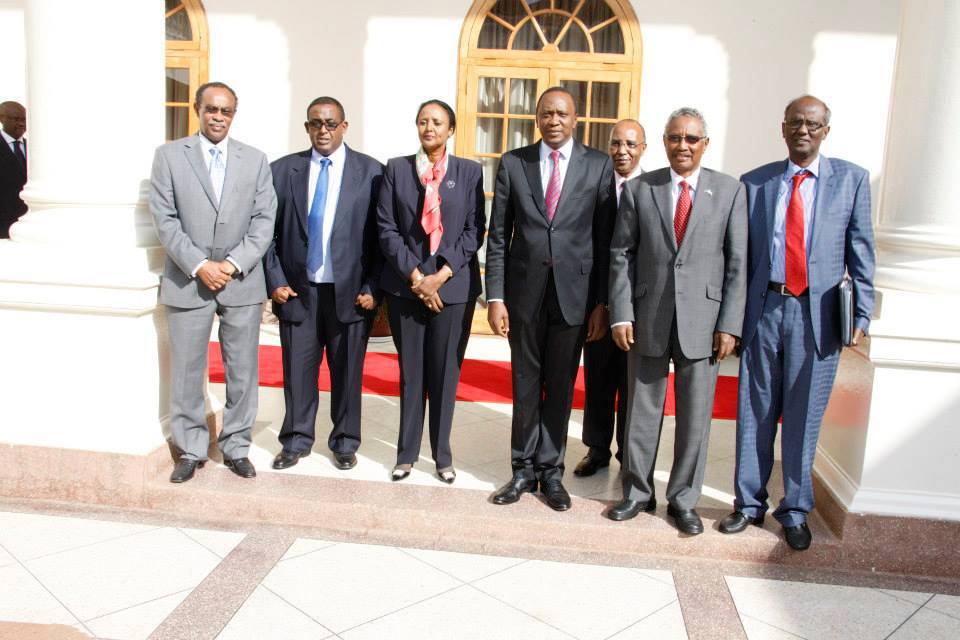
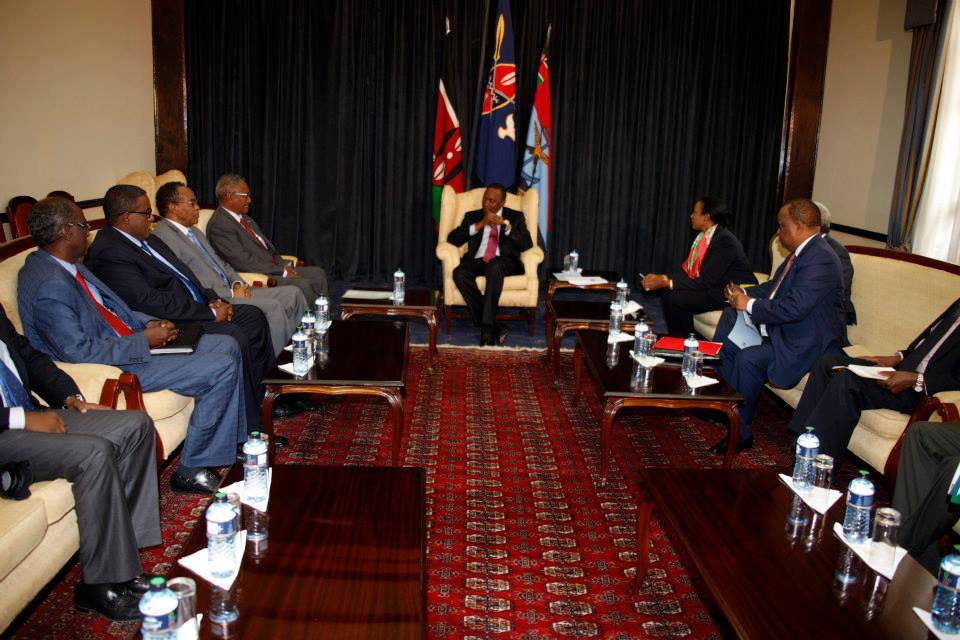

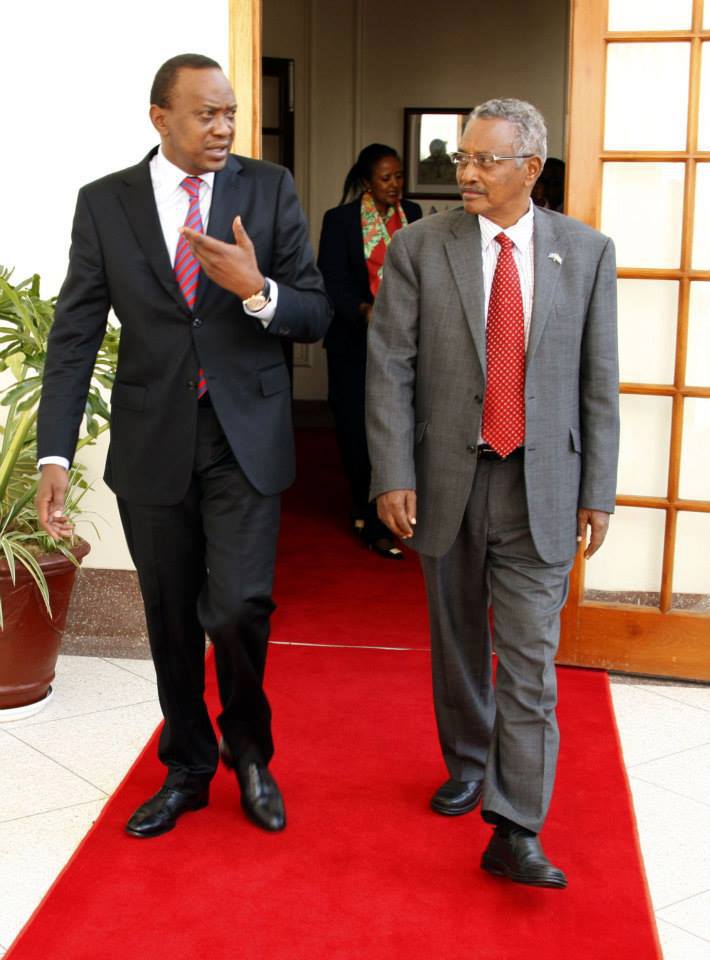

 Warsame Policy & Media Network (WAPMEN)
You must be logged in to post a comment.