Is Carmo (Armo) National Somalia Police Academy being neglected by the Somali Federal Government?

The Armo (Carmo) National Police Academy is a Somali Federal institution invested heavily by Somalia with the help of international organizations for the purpose of training police officers at national level. A good number of police officers have graduating the school over the years. Former cadets of the academy are already active police officers in Mogadishu and Puntland State of Somalia.

The current Somali Federal Government looks neglecting that important institution despite its declared policy statements on national security as priority number one. If this were not intended as double talk, Carmo Police Academy should be fully utilyzed as important infrastructure in the country. They should not be sending cadets all the way to Uganda when they can do the same here at home.

Somalis have to blame only themselves for creating their own dictators

When the Military Junta led by General Siyad Barre overthrew the civilian government of Somalia in October 1969, the General was so timid that he could not inform the nation of the coup d’état that had just taken place, according to the late prominent elder and businessman Ali Barre ( Cidi Libaax). One day in the 1980s Ali Barre told me that in the early days after the Military takeover, he patted on the shoulders of Siyad Barre and encouraged him, “to speak to the people bravely like a man”. History is full of similar stories from Stalin to Mussolini to all petty and big dictators in history. Dictators, therefore, are not born, but created by their own people.

In the case of Somalia, there is a popular cliché in the native language, “wax la salaaxo, madaxxaa ugu sareeya” (meaning literarily the human head is the highest point someone can reach out and fondle”). In Somali setting, it means nobody is to be satisfied with the decisions and rulings of pertinent officials, bodies, departments and institutions until someone has the opportunity to go all the way to the Chief Executive Officer of the government, in most cases, the President. Based on my personal experience, everyone in the country, every Somali visitor from other parts of world, including the members of the large Somali Diaspora, seek to see the guy at top for whatever personal or mundane reasons they may have in mind. Some even bring foreign interested persons along with them to quickly secure their access to the President or Prime Minister. Failure to secure that opportunity is extremely disappointing to them. There is only 24 hours in a day and it is humanly impossible for everyone to meet with the President. Think about the enormous, unnecessary and extra burden on a Somali political leader, his offices and staff. Think about the acrimony and hatred that surround these offices, the inherent and chronic personal complains, false and unjust accusations against the staff and security personnel, influence peddling, the bribery and corruption practices the enterprise creates in the process. Unfortunately, in Somalia the positions of the President, Prime Minister, and Chief of Staff, Protocol or Public Relations Officers are the worst jobs in the world for any decent person has to seek and accept.

I could recall bitter experiences during my tenure as the Chief of Staff and I have the scars to show. Although I paid high prices at personal level, there is no doubt and nobody can deny that I had the greatest impact and made enormous difference in confronting this dilapidating Somali political culture in Puntland State of Somalia as the constituency finally accepted my approach to government operations and decision-making process.

Under these crushing, cruel and painful working conditions, one cannot expect like other normal countries to produce a good Head of State or Government. That way Somalis turn their leaders into authoritarian devils overnight by bestowing them the powers of the final say on everything. That way they disable the functions of other public institutions of government while at the same they whine about bad governance and dictatorship. They must learn the hard reality that they cannot have both ways. The powers of the any public servant including the President, Prime Minister and other officers must be respected, not worshipped. Instead, they must be constantly challenged. Leaders must be compelled to fight for popular support, not the other way round. Only that way people of Somalia can help themselves prevent dictatorship and have the opportunity to choose better leaders and maintain good governance. Do not create unaccountable, monstrous authoritarian leaders, please! That is one of the best ways you can really and positively contribute to a better Somalia.

In another related story, once upon a time people elected a man to be their leader for a fixed term in office. At the end of the term, the man wanted re-election to another term. People told him that he had not done well to deserve re-election. He told them, “how come!? I have been doing successfully what you had elected me for-meeting with you all my time”.


Other related articles:

The Way Forward for Somalia

Public Trust Deficit in Somalia

Federalism, a Guarantor of Peace among Somali Clans

Hope and Lessons in Somalia

Outside View: Building a Secure Somalia

TFG Top Priorities as Expressed by the President

Somalia, Foreign and International Conspiracy


Correspondence Corner

Dear Fernandez,

To answer your questions, inquiries on personal background are relevant because in the Somalia of today, and as a result of the most vicious civil war in its history, objectivity in political analysis becomes an issue. Emotions usually play out into Somali authors’ essays and descriptions of events in the country. Although Somalis are patriarchal in their lineages, my mother is Northerner while father is from Central Somalia regions. I was born in Northern Somalia and raised in Mudugh Region ( Galkayo) of Central Somalia and Banadir Region (Mogadishu) of Southern Somalia. I finished formal education (High School) in Mogadishu. I went overseas for higher learning and trained as Mechanical Engineer with Masters Degree in thermal power engineering. Since then, I have been acquiring other skills as well, including public administration and political science.

Since I was raised mostly in Mogadishu, I am deeply connected to Southern Somalia too. My political constituency is PuntlandState of Somalia in the North Eastern Somalia though. I therefore consider myself as someone having broad multi-clan background. I am not sure whether that makes sense to you.

I travel a lot in Europe, North America and East Africa and therefore I cannot say I am stationed in one place. My e-mail address, ismailwarsame@gmail.com, however, is permanent if someone wants to reach out to me. Right now, I am in Garowe, Puntland, Somalia.

With regards to your question on whether Somalia can become a Federal state, I attach my relevant views on the subject expressed in these articles found both in; http://Wardheernews.com and http://imailwarsame.com

The Way Forward for Somalia

Kismayo Solution: The South-West State of Somalia

The Current Status, Goals and Vision of the Transitional Federal Government

Public Trust Deficit in Somalia

Federalism, a Guarantor of Peace among Somali Clans

Self-Governance Options for Somaliland

Hope and Lessons in Somalia

Outside View: Building a Secure Somalia

TFG Top Priorities as Expressed by the President

Somalia, Foreign and International Conspiracy

AYA Response to Riyale’s Provocations

AYA Memo on Escalating Conflict in Somalia’s Northern Regions

Letter to Prime Minister Berlusconi

Other articles of interests are

NATTCO Mandate

EU and Africa Guiding principles for Cooperation

ICG London Meeting

UN 2006 Security and Humanitarian Report on Somalia

Ambassador’s Report Back

UN Arms Embargo Monitoring Group Report

TFG and ICU

Presidential Briefing at ICG Meeting

Diplomatic Briefing

European Union Policies on Multilateral issues

SACB Secretariat

Somalia Aid Coordinating Body (SACB) Guiding Principles

Basis for European Union-Somalia Relationship

SACB Addis Declaration on Somalia

Declassified briefing to the European Union member states by the Author

Safarkii Dheeraa ee Wiilka Reer Miyiga

The Long Journey of the Nomadic Boy

Don’t get high on Khat (aka Kat, Qat, Chat); It is not worth it

In addition, there is a Provisional Federal Constitution to be adhered to by Somalia’s leadership as well as the basis for governance for new Somalia. Respecting that Constitution by all is the basis for restoring trust among people of Somalia.

I am not so sure if I understood well your question regarding the role of religion in Somalia. However, I must say that there are two permanent factors in the country.

1. Clan

2. Islam (in the form of Somali traditional Sunni sect).

Islamic religion in Somalia is now experiencing deep crisis as the new adherents of Saudi Wahabism make their presence felt and forcefully imposed upon the population, hence extremism and radicalism resulted in the creation of Al-Shabab, Al-Itihad, Al-Takfir, Al-Islah, among others of fundamentalist Islam. Wahabism now is a political and religious force to be reckoned with. You may be aware that Saudi Arabia has been extending religious scholarships to a huge number of Somali youths for decades. When these graduates came back to Somalia, the resulting effect is devastating for the stability of the country and religious harmony. That is the main source of the current religious intolerance never recorded in the history of religion in Somalia.

I hope this will give you a brief introduction to the “state of the union” in Somalia.

Regards,

Ismail

Dear Ismail

It is a pleasure to contact you and I appreciate your qick answer.

I found your blog through a Somali news site, named Wardheer News. An article signed by you and look up in the web who you are, and I found your blog. That`s all. It has been my first contact with the blog but it will not be, for sure, the last one.

I guess you are living in America (US or Canada), Aren’t you? Sorry for asking some personal questions. Are you a national Somali?, if so where are you or your family coming from in Somalia?, and, finally, which is your family clan?

My tow first (non personal) questions is basics and difficult. It is about the future of Somalia.

– Will Somalia be a real Federal state?

– Is Islam more than the nationalistic idea what is going to unify Somalia?

I have watched out about this three aspects of (name of the city omitted for privacy reasons). I am leaving the country before Summer what is a wise decission I took…

Thnaks in advance. Best regards.

Fernandez (name of the sender modified for privacy protection)

Updated

Correspondence Corner

Correspondence Corner.

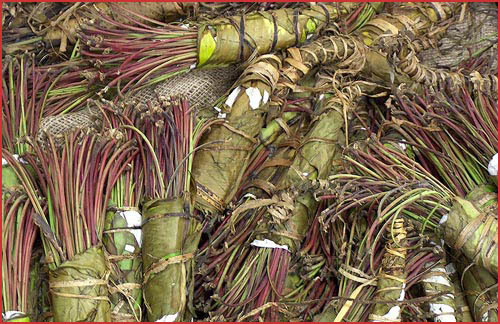
Kat (aka Qat, Chat, Khat) is Grave National Security Threat to Somalia

image001Courtsey of Wikipedia

 If Somalia is to survive as a nation-state and having at least a normal functioning government with even average bureaucratic operations, it must urgently find effective solutions to the epidemic of Kat addiction among its population as a national priority. The problem is more than socio-economic issue. It is a grave national security threat as well.

 In the summer of 1997, I was a member of a delegation of the now defunct National Salvation Council (the NSC, aka Sodare Group) from Addis Ababa, Ethiopia, to Mogadishu, Somalia. The delegation members included NSC Co-chairmen, Ali Mahdi Mohamed and Abdullahi Yusuf Ahmed as well as Council members that included Mohamud Mohamed Guled (Gacmadheere), Duuliye Sare Abdi Osman Farah among others. We numbered about 13 men and one female. We were on our way to meet with an Italian delegation led by then Deputy Foreign Minister for Africa, Senator Serri, who was about to visit Mogadishu for the sole purpose of mediating between disputing Mogadishu warlords despite many other problems of Somalia. The vision of the Italian delegation on solving Somalia’s predicament was not beyond the Banadir Region at that particular time.

Abdullahi Yusuf’s intention in the mission was to disrupt the Italian visit (which he did successfully) while Ali Mahdi’s was to win over the Italian favor against Hussein Aidiid and Osman Ali Atto.

We made a two-day stop-over in Djibouti. The Prime Minister of Djibouti then, Barkat Gourad Hamadou, honored us with a lavish luncheon with tender baby-goat’s meat and other delicacies of Djibouti at his residence. After the lunch, we were taken to a large and well furnished room with an Arabic seating with soft cushions specifically designed for long-time session in comfort for Kat indulgence, gossiping experience, news and secrets debriefing under the “high” influence of the stuff. In front of every person a bazooka-like wrapping was placed and a  large silver tray full of the tools of the trade: A big and tall golden tea thermos, crystal glasses, shining and engraved tea-mugs, various branded cold soft drinks in plastic Coca Cola –type bottles and commercially distilled water in gravines with swimming crystal clear ice-rocks, all to be consumed in the breezing air-condition of the room- an artificial weather hide-out from the environment of burning heat of the City of Djibouti.

After a few chit-chats, Prime Minister Hamadou noticed that none of the members of our delegation was using the stuff as they were all non-chewers, at least, at that period of time. The Prime Minister was a bit annoyed and asked: “Why are you in civil war then, if there is nothing to fight for?” I guess we spoiled the daily indulgence session for our generous, high-level Djibouti host. Luckily, the conversation didn’t break up as we a had had a lot to discuss on Somalia, Somalia-Djibouti past and future relationships and the Horn of Africa, in general.

During those few years, I discovered, in separate sessions, that Ismail Omar Gheleh, the current President of Djibouti, was pondering about his desire to join his tiny country with Ethiopia as he was desperately convinced that Djibouti would not survive on its own. There was  rampant corruption in the seaport operations, the main revenue generating enterprise besides the high spending men of the French legionnaires at Djibouti night clubs. The City of Djbouti was on the verge of being taken over by the influx of Ethiopians, who needed no immigration papers to come in. It was only Puntland help in 1999 to commit him to Somalia’s National Reconciliation process, encouraging him to take it over from Ethiopia, an AU and IGAD Mandated Country for Somali National Reconciliation Process. President Abdullahi Yusuf convinced President Daniel arab Moi of Kenya to support President Ismail Omar Ghueleh to play the role. It was undoubtedly a diplomatic success that pushed Ethiopia aside from the Somali issues.  One may guess already why Ethiopia was not happy with President Yusuf lately. The second help came to Djibouti from post-9/11 World Order. Besides God’s wish, it was only these two factors that saved Djibouti from voluntary union with Ethiopia. Unfortunately, he betrayed Puntland State during the initial phases of the Arta Conference, a rift that eventually undermined the TNG of Abdulkassim Salad Hassan to pave the way for holding Embagati (Kenya) all inclusive and broad-based Somali National Conference and finally, the establishment of the Transitional Federal Government of the Somali Republic (TFG) in 2004, transforming it into the Somali Federal Republic in 2012.

Suddenly, the Prime Minister shared with us the socio-economic devastation Kat consumption has been causing on Djibouti at the time. He informed us that Djibouti was paying Ethiopia a hundred thousand US dollars daily, and that was only the portion of the payments that goes though from bank to bank. Think about residents who buy the stimulant on their own from individual Chat traders on the top of train and air passengers who also bring sacks of the green leaves to their families, relatives and friends in Djibouti cities.

On a number of occasions, I stopped over in Djibouti for a short stay. On multiple times, arriving at Djibouti International Airport, I used to see popular demonstration-like commotion at the gates of the airport-population rushing to the airport when Kat cargo delivery from Ethiopia is delayed for only a few hours. One would see custom and passport control officers whose mouths are asymmetrically filled with Qat and chewing it on the job. Think about the officers’ mental judgment and decision-making capability under the influence of the hyper-leaves at country’s highly sensitive and main border entry point.

The situation is even worse in Somalia with a few millions of US dollars spent every day on the habit. With no credible fiscal statics available, the country may be fast sinking into public and personal bankruptcy. A failed state desperately trying to recover from decades of civil war and total collapse of public services and institutions, has also population wholly consumed by the epidemic of daily Chat use, effectively destroying the socio-economic fabric of its society, abysmally curtailing manpower productive hours and bringing havoc to family livelihoods and relationships while it is also at same sometime constitutes an instigator and main source of corruption and loose social morals. A country with the geographical size larger several times than Italy or UK with porous long borders with Ethiopia and Kenya requires alert and non-Chat chewing security personnel and efficient bureaucracy.

The irony is that Somalis nowadays like to talk about safeguarding their sovereignty and territorial integrity, while at sometime allowing their neighbor states to dump poisonous addictive Kat to their citizens, drain their economy, disable their manpower and threaten their vital national security interests. Think about the real double-talk and double standard with a proverbial ostrich attitude!

Somalia has to come up with a solution to the menace of the Qat. While fully it is understandable that it is tough to try to ban the habit outright, at least a committee of experts should be immediately setup to study the problem and submit recommendations to competent bodies for, at minimum, regulating it and eventually outlawing it. Massive public education and media programs relating to its dangerous hazards to personal and public health should be initiated and launched immediately to stop the spread of the habit to young generation. Somalia cannot afford to continue to ignore its greatest, silent killer of its productive members of the society and the gravest national calamity posed by Kat trade. Please wake up!

Federalism, a Guarantor of Peace among Somali Clans

Nowadays and for while during the past two decades, Somali thinkers, writers and politicians were keenly debating on best way forward for Somalia’s governance and political arrangements Post-Civil War. This debate is extremely crucial for the survival of Somalia as a country as well as a strong cohesive nation-state.

While many among debaters were and are still sincerely looking for best possible governance system (s) and pros and cons of each of the “Menu of options”, a few of them continue to ignore the status quo (current Somalia’s political situation) dismissing it as side track and unimportant clannish nuisance or refuse to acknowledge the extent of public mistrust following the vicious civil war involving heinous crimes of ethnic cleansing, mass murder, forceful and illegal landing-grabbing, plunder of both public and private wealth and barbaric destruction of national heritage and state archives in Mogadishu and elsewhere.
In my humble opinion, any politician of conscience at any level of government (President, Cabinet and parliament members) whose political power base had committed such grave and gross human rights abuses, national robbery, national betrayal and treason should apologize to the nation and resign immediately. If that is not forthcoming, it would be mean that the civil war is still technically on, and there is no guarantee that history would not repeat itself. Such politicians have no moral legitimacy to govern until they come clear and publicly accept their personal and power-base responsibilities for what happened in Somaliaduring the Barre regime and following the final collapse of Somalia’s central state in 1991. Somalis, please be warned. One should never entertain with the idea to translate the recent US recognition of the current Somali Government as a victory of one faction over others in the Civil War, and again attempt to misuse state resources to try to subjugate others. That would be a futile exercise and would unfortunately hasten the disintegration of Somaliaas we know it. It is the expectation of all Somalis from the world community to watch out any signs for the repetition of that sad saga.
During the past ten years we witness multiple self-proclamations of regional federal mini-states such as MakhirState,KhatumoState,AwdalState,GalgamudState, Hibin and HeebState,AsaniaState,RasAsayrStateamong many others. With keen observation, one would realize that those self-proclamations were characteristically peaceful and surprisingly did not spark off any clan fighting with the unique exception of Khatumo, rightly resisting aggressive occupation of its territory by “Somaliland”militia. Why? This could be a case-study; of all clan wars in the country, the self-proclaimed federal mini-states brought relative peace to their respective constituencies.  In my opinion, one of the main reasons for such peaceful environment within for all sub-clan systems is the fact that their constituencies see themselves as equal stake-holders in that mini-entity (state), which acts as the accepted and shared mechanism for conflicts resolution and constitutes common interest for all. Logically and practically, one would therefore take note of this new development to expand the concept to a national level in Somalia’s long journey to restore lost trust among its people and regions.
For historical prospective, a few months after we had established the Puntland State of Somalia in August 1998, a sub-sub-subclan among the inhabitants of coastal Indian Ocean Mudugh town of Gara’ad and surrounding areas including the District City of Jeriiban unilaterally announced the creation of Coastal State, declaring its independence from Puntland State, following sub-clan grievances regarding their expected share in the newly constituted Puntland Parliament. That grievance was actually proved to be the mistake or intentional concession of their allocated Parliament seat to another sub-clan in Mudugh Region by their local traditional elder. The subclan members opposed the move by the elder. To address the issue and resolve it, a delegation led by the Late State President, Abdullahi Yusuf Ahmed and me included, went to the District and met with all stake-holders. One of the first questions we asked our interlocutors was: “How many sub-subclans belong to or created the CoastalState, and how many regions are there in the proclaimed entity?” The audience looked at each other, and surprisingly, the answer was obvious. The District belonged to the larger Mudugh Region and even most of the inhabitants of the Jeriiban District alone via their representatives did not belong to and were not party to the “CoastalState”. That was the end of the story. I believe, CoastalStatewas the first unviable mini-state created in Somalia.
The lesson we learned from that experience was that a state whether it is a national or regional must enjoy the trust of all its constituencies to survive, safeguard its unity, develop and prosper in peace and harmony. Anyone aspiring to see the Somalia he or she wants or imagines must take this lesson seriously into account.
Those Somali writers debating on federalism lately almost all of them ignore the fundamental reason for the debate itself on the issue and failed to find the answers to two critical questions:
  1. What     is the main reason that has brought us here to debate on Somalia’s     governance options?
  2. How     would you restore trust of the people nation-wide in a central authority     when people of Somalia     have not yet officially and technically ended the Civil War in the absence     of comprehensive national reconciliation given what happened?
President Hassan, in a thoughtful, prepared and defiant speech to the Somali Diaspora in his recent visits to US and Belgium says openly, “ if you look back on what happened yesterday, you lose the opportunities of today”, thus dismissing outright any possibility for accountability for crimes of mass murder, crude human rights abuses, robbery and plunder of personal and public properties. With such a vision for Somalia, forget about reconciliation and peaceful conflict resolutions!
Finally, I am aware that many Somalis would like to give the current government in Mogadishuthe benefit of the doubt and wish her to succeed in the best interest of the entire nation. To those I say the taste of pudding is in the eating. Anyone who helps Somaliarecover from its present predicament will be highly appreciated and undoubtedly recognized.