SOMALI LYRICS: SELECTION OF THE MONTH

Somali lyrics.

[Courtesy].

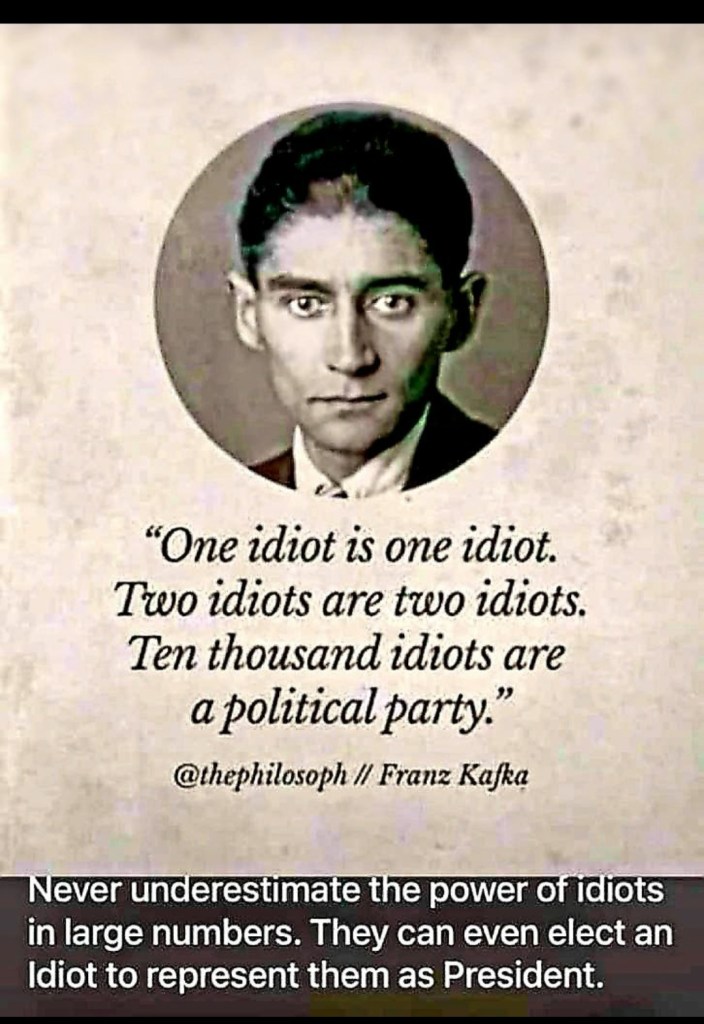
“NEVER UNDERESTIMATE THE POWER OF LARGE NUMBER OF IDIOTS”

أهمية قمة غاروي المزمعة للحكم في الصومال


منذ إنشاء الجمهورية الصومالية الثانية بعد الحرب الأهلية الطويلة، لم يكن من الممكن تحقيق الاستقرار في المؤسسات العامة.  وذلك لأن قادة الصومال في مرحلة ما بعد الحرب الأهلية لم يتمكنوا من وضع سياسات عامة متماسكة تعتمد على المصالحة الوطنية، كما لم يتمكنوا من التوصل إلى رؤية وطنية للصومال الجديد المتصور.  يعتقد الكثيرون أن البلاد لا تزال منخرطة تقنيًا في استمرار الحرب الأهلية بوسائل أخرى.  هل ستفتح قمة جاروي صفحة جديدة في التخلص من إرث ذلك التاريخ الحزين في عصر جديد من النهضة الوطنية؟  ويشتهر الزعماء السياسيون الصوماليون بصوتهم العالي في الدعوة إلى المصالحة الوطنية، دون أن يتبع ذلك سوى القليل من الإجراءات الملموسة.  إذا كان الأمر كذلك، فستكون فرصة ضائعة أخرى.
إن ما هو على المحك الآن هو بقاء الدولة الصومالية كدولة ديمقراطية فاعلة خالية من تهديدات التطرف والفساد الوبائي وسوء الإدارة.  إن ما أصبح على المحك الآن هو وحدة الصومال كدولة قادرة على البقاء تتمتع بضمانات قوية لسلامة أراضيها وسيادتها الوطنية.  ولا يمكن تحقيق ذلك والحفاظ عليه دون اللحمة الوطنية والمواطنة.  وهذا يتطلب قيادة نكران الذات وتضحيات شخصية من جانب الجميع.  هل نستطيع مواجهة تحديات عصرنا؟
ونطالب بمؤسسات عامة تستجيب لاحتياجات وهموم شعبنا.  نحن نطالب بتقديم خدمات عامة موثوقة.  نحن نطالب بتعليم جيد وفي متناول الجميع.  ونطالب باحترام حقوق الإنسان وسيادة القانون.  ونطالب بالتعبئة الجماهيرية من أجل الوعي المجتمعي والمواطنة الصالحة.  ويجب أن يكون الصومال دولة قومية قوية بين الأمم.  إننا نطالب بمحاسبة الموظفين العموميين، وفي المقام الأول، من المكلفين بإدارة الشأن العام.  ولا يستطيع الصوماليون تحقيق هذه الأهداف دون انتخاب قادتهم السياسيين في انتخابات وطنية.  إن الديمقراطية فوضوية، ولكن ليس هناك بديل.

THE SIGNIFICANCE OF PLANNED GAROWE SUMMIT FOR SOMALIA’S GOVERNANCE

WDM EDITORIAL

Since the creation of 2nd Somali Republic after the prolonged Civil War, public institutions couldn’t be stabilized. That is because the post-civil war Somalia’s leaders couldn’t devise a coherent public policies based on national reconciliation as they couldn’t come up with national vision for the New Somalia envisioned. Many believe that the country is still technically engaged in the continuation of the Civil War in other means. Would Garowe Summit open a new page in doing away the legacy of that sad history in a new epoch of national renaissance? Somali political leaders are famous for loud voice for national reconciliation with little concrete actions following. If that would be the case, it will be another lost opportunity.

What is at stake now is the existential survival of Somali state as a functioning democracy free from threats of extremism, epidemic corruption and mal-administration. What is at stake is unity of Somalia as a viable state with strong safeguards for its territorial integrity and national sovereignty. This cannot be done and maintained without national cohesion and citizenship. This would require selfless leadership and personal sacrifices on the part of everybody. Can we the meet the challenges of our time?

We demand public institutions responsive to the needs and concerns of our people. We demand reliable public services delivery. We demand quality education accessible to all. We demand respect for human rights and rule of law. We demand mass mobilization for community awareness and good citizenship. Somalia must be a strong nation-state among nations. We demand accountability from public servants, first and foremost, from those entrusted with running public affairs. Somalis cannot achieve these goals without electing their political leaders in a nationwide suffrage. Democracy is messy, but there is no alternative.

EXCHANGE ON ADDIS MOU WITH SOMALIA’S ADMINISTRATION OF THE NORTHWEST

PRESIDENT HASSAN SHEIKH MOHAMUD OF SOMALIA: SUB-CLANCRAFT OR STATECRAFT

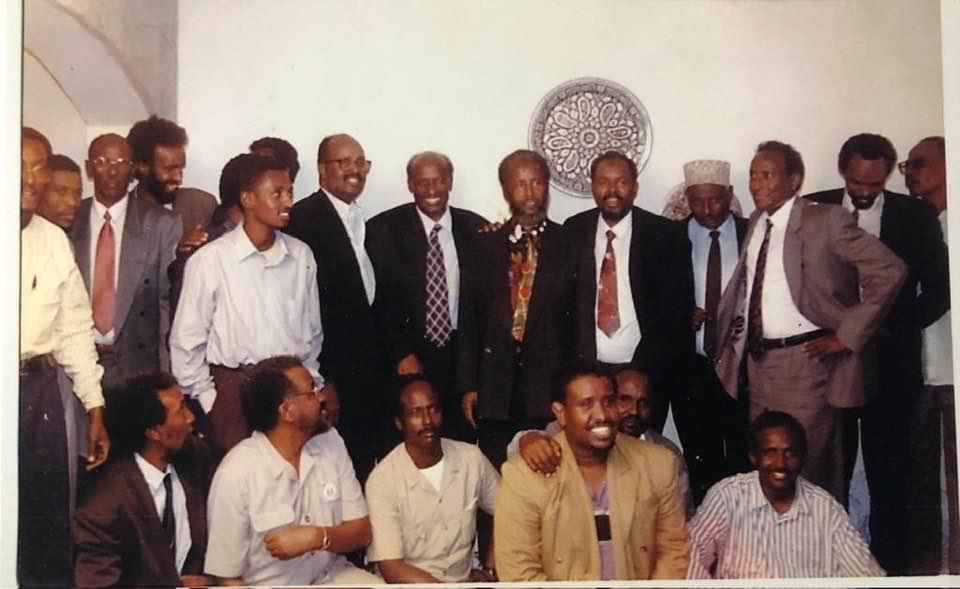
Just imagine the thinking behind the collection of these clansmen as members of an official Somalia’s state delegation to a European country. “Somalia in peace with itself and with the rest of the world”, produces sub-clancraft administration.

President Hassan Sheikh Mohamud’s official delegation to Italy-Africa Summit Conference.
Members of HSM’s entourage in Rome for Africa-Italy Summit

The current administration of President Hassan Sheikh Mohamud is certainly immune to scams, scandals and corruption.

موجز لتوقعات سكان بونتلاند بشأن الولاية الجديدة للرئيس ديني

افتتاحية إدارة الطلب على المياه
ويتوقع سكان بونتلاند من الرئيس سعيد عبد الله دني برامج عمل واضحة:

تركيب مجلس الوزراء المختص الجديد؛

الشفافية في السياسة العامة والإدارة؛

المصالحة وبناء السلام داخل بونتلاند والصومال على نطاق أوسع؛

استعادة الدور القيادي لولاية بونتلاند في الترتيبات الفيدرالية؛

الاستثمار السليم والعادل في برامج تنمية ولاية بونتلاند، مع إجراء تحسينات كبيرة في البنية التحتية وتقديم الخدمات العامة؛

الالتزام بالقضاء على جيوب التطرف في بونتلاند والصومال؛

القيادة بشأن قضية بونتلاد -SSC:

الالتزام القوي بتعزيز وعي المجتمع باتجاه سياسات ولاية بونتلاند نحو الحكم والدولة في الصومال،
ومن بين أولويات سياسة الدولة الأخرى التي لا تقل أهمية، بما في ذلك الإصلاح الكبير في قطاع التعليم من حيث الجودة والتدريب على المهارات المهنية.

الموسومة

#الشفافية العامة

#بونتلاند #الصومال #الفدرالية

BRIEF PUNTLAND RESIDENTS’ EXPECTATIONS OF PRESIDENT DENI’S NEW MANDATE

WDM issued the editorial to follow after Puntland State Puntland Said Abdullahi Deni was re-elected to a 2nd term as president of the state. Have your say on what worked or not for him.

WDM EDITORIAL

Puntlanders expect from President Said Abdullahi Deni, with clear programs of action:

  1. Installation of new competent cabinet;
  2. Transparency in public policy and administration;
  3. Reconciliation and peace-building within Puntland and wider Somalia;
  4. Restoration of Puntland State leading role in federal arrangement;
  5. Sound and fair investment in Puntland State development programs, with significant improvements in infrastructure and public services delivery;
  6. Commitment to elimination of pockets of extremism in Puntland and in Somalia;
  7. Leadership on the issue of Puntland-SSC, and
    8: Strong commitment to promotion of community awareness of the direction of Puntland State policies towards Somalia’s governance and statehood,
    among other not less important state policy priorities, including significant reform in education sector in terms of quality and vocational skills training.

FINALLY MY ADVICE IS BEING HEEDED BY PUNTLAND PRESIDENT DENI

https://vm.tiktok.com/ZMjKLuhaB/

INCOMPETENT, CORRUPT AND DECEITFUL SPEAKERS

FEDERAL ISSUES IN THE USA

Those Somalis who are prompt to criticize Federal Member States demanding accountability from Federal Government should take cues from USA federalism.

NEW: Biden’s deadline to the State of Texas has expired; Governor Abott says his state is prepared for a conflict with federalist forces, and will not back down
For those who don’t know, here’s the summary of what’s happening:

  • Millions of migrants are crossing the U.S. border from Mexico, bringing drugs and crime with them —>
  • U.S. Federal Government does nothing —>
  • Texas uses its national guard and razor wire fences to prevent illegal immigrants from invading —>
  • U.S. Supreme Court rules that razor wire is ‘inhumane’, and the federal government orders Texas to remove it —>

Texas has had enough, and ignores the federal government. Over 25 republican governors and their states pledge to support Texas in their right to defend their territory in defiance of the federal government.
NEW: Over 10 states have sent their National Guard to support Texas – Abbott
NEW: Biden freezes all new LNG (Liquid Natural Gas) export contracts, which the State of Texas is heavily dependent on.

WDM TAKEAWAYS OF PUNTLAND PRESIDENT DENI’S INAUGURATION CEREMONY IN GAROWE TODAY

1. It was well attended by who is who in Somalia’s political elite at Federal and member-state levels, including the President of the Federal Republic, Hassan Sheikh Mohamud.

2. Puntland State has showcased the outcome of its recent presidential election, despite known imperfections and initial election violence in Garowe involving One Person One Vote. It was agreed by all attending, however, that it was comparatively commendable exercise of democracy as Puntland State has set the record to be an exemplary for the rest of Somalia.

3. Speeches by attending leaders turned out mainly to be indirect and soft-spoken debates on how Somalia could move forward on issues of governance, constitution-making and unity to address its national challenges, amidst threats to its security and sovereignty by Alshabab and neighboring Ethiopia.

4. There were subtle electioneering speeches, though, by some former federal prime ministers, Hassan Ali Khayre and Hussein Rooble, in particular, and presidents of Federal Member States like AbdulAsis Laftegreen and Ahmed Abdi Kariye (Qoor Qoor). These electioneering speeches were both for national and regional consumption with some heads of Federal Member States keen to take cues from rare re-election of a sitting leader as President Said Abdullahi Deni did.

5. UN and EU chiefs/representatives present at ceremony expressed their usual Mudane, uninspiring commitment to support Puntland/Somalia.

6. Ministerial representatives from Kenya and Ethiopia present avoided the thorny issue of Ethio-Somali dispute on Red Sea access by Ethiopia through unconventional means.

7. Puntland President Said A Deni pledged to commit himself to work towards achieving Puntland State unity and cooperation with the Federal Government.

8. Noticeable was absence of Jubaland State from this important gathering of Somalia’s leaders, for whatever reasons.

9. In assessment of what has transpired here and the fact that the ceremony was well attended by most leaders of Somalia, the event showed the undeniable political weight of Puntland State in shaping up The New Somalia.

10: And on a light note, remarks by Aden Dualle, Hussein Rooble and AbdulAsis Laftegreen were full of humor and figurative language, attracting applause from the audience.

Postscript

In his remarks, former Prime Minister Ali Mohamed Gedi continued to stock his usual beat of being the First Minister installed, starting debate on transitional TFG Charter while demanding to be recognized as such in protocol, while former Prime Minister Saacid Shirdoon complained about lack of empathy for the plight of residents in Gedo affected by floods.

[This article has been updated after posting].

WDM has made to Medioq!

Exciting News! We are thrilled to be featured on Medioq, a premier platform connecting individuals with top-notch media, news, and broadcasting companies worldwide. Explore our profile to stay informed, entertained, and connected with the latest news and updates: https://www.medioq.com/CA/Toronto/1821205281277945/Ismail-Warsame”

Haaretz: Israel breathes its last while we face the most difficult Prime Time Zone [people]

12/05/2021 The Israeli newspaper “Haaretz” published an article by the famous writer (Ari Shebet), in which he bites fingers of remorse over the occupation of historic Palestine, saying (It seems that we are facing the most difficult Prime Time Zone in history, and there is no solution with them except recognition of their rights and […]

Haaretz: Israel breathes its last while we face the most difficult Prime Time Zone [people]

WHAT OPTIONS DOES SOMALIA HAVE TO COUNTER ETHIOPIAN THREAT UNDER ADDIS MOU?

WDM EDITORIAL

By issuing this infamous MOU with a regional administration of Northwest Regions of Somalia (Somaliland), Ethiopia has directly violated the sovereignty and territorial integrity of her neighbor Somalia in total disregard of historical burden between the two countries. It looks that the Ethiopian leader, Abiy Ahmed, is a poor student of history. Even his late boss, Melez Zenawi, fared better with regards to Ethio-Somali centuries-old relationships. He is also a poor reader of current affairs, political and security climate of the region and beyond. Not to talk about the security and economic calamities of his own country, he isn’t reading about the threat of extremism and religious fanatics to both nations and further. Cooperation for mutual benefits between nations isn’t, perhaps, in his books, thus making him among the most dangerous leaders in the world. Clearly, his ill-gotten Nobel Prize is a demonstration of mockery of the Norwegian Institution.

For Somalia, what options does she have to counter this grave and existential threat from Ethiopia? Is diplomatic offensive alone to expose Ethiopian aggression enough? Is rupture of all diplomatic ties with that country an option? Is offering foreign military bases to seemingly friendly countries in Somalia to counter-balance Ethiopia’s another option? Is seizing Somaliland Administration by Somali armed forces a way out to neutralize this renewed Ethiopian threat? What isn’t an option for Somalia, under any circumstance though, is negotiation with the aggressor on Somalia’s sovereignty and territorial integrity. Period.

Have your say.

The Somali Youth League, Ethiopian Somalis andthe Greater Somalia Idea, c.1946–48

Journal of Eastern African Studies

ISSN: 1753-1055 (Print) 1753-1063 (Online)Journal homepage: http://www.tandfonline.com/loi/rjea20

Dr Cedric Barnes

To cite this article: Dr Cedric Barnes (2007) The Somali Youth League, Ethiopian Somalis and
the Greater Somalia Idea, c.1946–48,Journal of Eastern African Studies, 1:2, 277-291, DOI:
10.1080/17531050701452564
To link to this article: http://dx.doi.org/10.1080/17531050701452564

Published online: 24Jul 2007.

Submit your article to this journal

Article views: 1304

View related articles

Citing articles: 4 View citing articles

Full Terms & Conditions of access and use can be found at
http://www.tandfonline.com/action/journalInformation?journalCode=rjea20

Journal of Eastern African Studies
Vol. 1, No. 2, 277- 291, July 2007

The Somali Youth League, Ethiopian Somalis and the Greater Somalia Idea, c.1946-48

CEDRIC BARNES
School of Oriental and African Studies, University of London

ABSTRACT From 1946 to 1948 the Somali Youth Club (SYC) grew from a small Mogadishu based urban self-help group into a burgeoning nationalist organisation calling for the unification of all the Somali-speaking lands into Greater Somalia, changing its name to the ‘Somali Youth League’ (SYL) in the process. The reason for this rapid expansion and radicalisation was a conjuncture of several factors, but it is most immediately attributable to the international deliberations over the future of the Italian East African Empire. In 1946 the international community began to address the future of the Italian Empire, and the British raised the possibility of creating a Greater Somalia administration (under British trusteeship) as a basis for future independence. The SYC, which had until then concentrated on a more limited and arguably more achievable political programme for the furtherance of Somali interests in ex-Italian Somalia, became mesmerised by the idea of Greater Somalia. Greater Somalia became a popular rallying call for the expanding nationalist project. However, as this article argues, although the Greater Somalia project galvanised the SYC into a mass nationalist organisation (the SYL), the expansion of its activities into the greater Somalia hinterland, such as the Ethiopian Ogaden region, brought different priorities and perspectives to project. The differing histories of clans and regions dissipated the cohesion, discipline and aims of the SYL at a crucial historical juncture. Ultimately the SYL was unable to create a Greater Somalia, nor prevent the repartition of the Somali- lands and the return of former colonial and imperial powers.

From 1946 to 1948 the Somali Youth Club (SYC) grew from a small Mogadishu based urban self-help organisation into a burgeoning nationalist organisation calling for the unification of all the Somali-speaking lands into Greater Somalia, changing its name to the ‘Somali Youth League’ (SYL) in the process. The reason for the rapid expansion and radicalisation of the SYC/L was a conjuncture of several factors, but it is most immediately attributable to the international deliberations over the future of the Italian East African Empire. In 1946 the international community began to address the future of the Italian Empire, and the British raised the possibility of creating a Greater Somalia administration (under British trusteeship) as a basis for future independence. The SYC, which hitherto had concentrated on a more limited and arguably more achievable political programme for the furtherance of Somali interests in ex-Italian Somalia, became mesmerised by the idea of Greater Somalia. Once the idea of Greater Somalia gained public currency it became a popular rallying call for the expanding nationalist project.

Correspondence Address: Dr. Cedric Barnes, Department of History, School of Oriental and African Studies, London WC1H 0XG, UK. E-mail: cb62@soas.ac.uk
ISSN 1753-1055 Print/1753-1063 Online/07/020277 – 15 # 2007 Taylor & Francis
DOI: 10.1080/17531050701452564

278 C. Barnes

However, as this article argues, although the Greater Somalia project galvanised the SYC into a mass nationalist organisation (the SYL), the expansion of its activities into the greater Somalia hinterland, such as the Ethiopian Ogaden region, brought different priorities and perspectives to the project. The differing histories of clans and regions included in the Greater Somalia project dissipated the cohesion, discipline and aims of the SYL at a crucial historical juncture. Ultimately the SYL was unable to create a Greater Somalia, nor prevent the repartition of the Somali-lands and the return of former colonial and imperial powers.

Territorial Divisions in the Somali-lands
The territorial divisions of the Somali inhabited lands of Northeast Africa had been a problem from the outset of colonial administration in the Horn of Africa. In the late nineteenth century, the growing Ethiopian Empire and the Ethiopian defeat of the Italian colonial army at Adwa in 1896 made Ethiopia a direct threat to colonial possessions and spheres of influence in the region. Faced with an armed and aggressive African state, European colonial powers in the Somali-lands were forced to curtail their territorial claims for the sake of greater imperial stratagems.1 Colonial administrators in British Somaliland saw the territorial concession to Ethiopia as a mistake and the subsequent boundary agreement as unworkable, storing up problems for the future. The boundary with Ethiopia became an obsession upon which the many woes of an economically poor and administratively volatile colony were blamed. A similar case applied to Italian Somalia.2 However to the Ethiopians, for whom their independence and sovereign territory became an article of faith, any adjustment to colonial boundaries seemed like a concession to colonial aggrandisement. Soon, however, all the Somali-lands became engulfed in the twenty-year ‘Dervish’ religious revolt led by Sayyid Maxamad Cabdille Xasan, forcing Ethiopia, Britain and Italy to cooperate, and the differences over the boundaries faded from view.
In the 1920s and 1930s, as ‘peaceful’ administration returned to the borderland areas between the colonial Somali-lands and the Ethiopian Empire, the unresolved boundary issues came back into view. Throughout the inter-war period there were continual skirmishes on the boundaries between the Somali-lands, not only between the colonial administrations and Ethiopia, but also between the colonial administrations themselves.3 However it was on the boundary with Italian Somalia at the wells of Wal Wal that the issue became altogether more serious. A clash between Italian and Ethiopian border patrols well inside the Ethiopian boundary in the Ogaden region provided the pretext for the Italian invasion of Ethiopia. Despite the international outcry that the Italian annexation of Ethiopia occasioned, the absorption of the Ethiopian Empire into the Italian empire was quickly recognised by the British whose colonial territories shared the longest boundary with Ethiopia. After the invasion of Ethiopia in 1935- 36, the Italian Empire incorporated Eritrea, Ethiopia and Italian Somalia into one regional bloc of semi- autonomous governorships and rationalised some of the old international boundaries. One of the most significant adjustments the Italian Empire made was the creation of a much larger Somali administration by excising the Ogaden region from the Ethiopian governorships and combining it with the coastal colony of Italian Somaliland, creating a ‘greater’ Italian Somalia.

The SYL, Ethiopian Somalis and the Greater Somalia Idea 279
Britain’s initial sympathy and cooperation with the enlarged Italian Empire ended abruptly with the Italian entry into the Second World War, on the ‘wrong’ side. In 1940, as France capitulated and Italy joined the Axis powers, suddenly the Italian Empire changed from a benign modern administration (the very opposite, it was thought, of the ex-Ethiopian Empire), to a belligerent power in the midst of the British Empire in Africa. After initially successful Italian offensives, including the brief invasion and occupation of the British Somaliland Protectorate, British and Commonwealth forces aided by Ethiopian exiles and internal ‘patriot’ resistance defeated the Italian forces in East Africa. The collapse of the Italian East African Empire came surprisingly quickly, and the upshot of this rapid victory was the need for a British Military Administration (BMA hereafter) over the Empire’s vast area, now designated as Occupied Enemy Territory (since the Italian conquest had been legally recognised by the British in 1938). The occupation of this territory, justified as a military necessity, then became entwined with larger and older imperial questions in northeast Africa, such as frontier rectification and rationalisation.4 However, the British maintained territorial adjustments made by the Italians for the duration of the war, and left decisions over the future of the Italian Empire until the projected post-war peace conferences.
For the first year after the Italian defeat in 1941, the former Ethiopian Empire was administered as Occupied Enemy Territory since it was viewed as part of the Italian Empire. However the designation of Ethiopia as Occupied Enemy Territory was complicated by the presence of the Emperor of Ethiopia, Haile Sellasie, who had returned with the British Army. A formal political relationship between the BMA and the Emperor needed to be established and the result was the 1942 Anglo-Ethiopian agreement,5 which handed back a certain amount of administrative control to the Emperor over much of the former Ethiopian Empire, although the Emperor’s sovereign power was severely limited. Moreover, under the 1942 agreement (reluctantly agreed to by the Emperor), the BMA retained complete control over the railway line to Addis Ababa, the eastern railway town of Dire Dawa, and the eastern borderlands with French, Italian and British Somali-lands. The north-eastern part of this territory, including the borderlands with British Somaliland, known as the Hawd, and the main market town of Jigjiga (the traditional centre for Ethiopian government of their Somali borderlands), was known as the Reserved Areas (RA hereafter) and had its own small BMA administration. The south-eastern borderlands, the vast plains known as the Ogaden, that the Italians had excised from Ethiopia added to Italian Somalia, continued to be administered from Mogadishu (the capital of Italian Somalia) under a larger separate BMA. It is important to note here that although the British did not deny Ethiopian sovereignty over the RA and the Ogaden, they did not they clearly acknowledge it either. Moreover, as long as significant parts of Ethiopian territory remained under BMA, the British had a certain amount of leverage over the restored Ethiopian government, and retained the possibility of the territorial adjustments that the surrounding British colonies might desire. Plans and arguments for Greater Somalia and territorial adjustments in Northeast Africa constantly figure in the archival record for this period, demonstrating that in the minds of the British the future of the RA and the Ogaden was implicitly bound up with the fate of the ex-Italian Somaliland, to be decided at the end of the war.6
Despite the restoration of the Emperor Haile Sellasie to his throne, from 1941 to 1948 a significant proportion of the pre-1936 Ethiopian Empire was directly ruled by Britain as part of a de facto Greater Somalia administration. The restoration Ethiopian government,

280 C. Barnes
in nationalistic mood, baulked at the continuing curtailment of its sovereignty, but given the circumstances it could dolittle. Over the next few years, as the Ethiopian government gained strength and coherence, gradually assuming more territorial sovereignty, the Emperor’s officials began to press for the return of the eastern fringes of its Empire still under the BMA. During 1946 the BMA withdrew from Dire Dawa and the railway, but continued to administer a reduced Reserved Area of the Jigjiga district and the Hawd borderlands with British Somaliland. The Ogaden area continued to be ruled under the BMA of Italian Somalia. However, within the stipulations of a further Anglo-Ethiopian agreement of 1944, the Ethiopian government could give the BMA notice to quit Ethiopian territory (i.e. the RA and the Ogaden) within three months. The Ethiopian government did not do so for another two years, but meanwhile Somali nationalist organisations had begun to grow in ex-Italian Somalia, and their influence spread into the Somali inhabited areas of the Ethiopian Empire.7

The Somali Youth Club
The first Somali clubs and professional organisations had begun before the war in British and Italian Somali-lands but these were fairly small-scale organisations.8 However the social and economic experience of the expanded Italian empire, world war and the promise of a new post-war order under BMA had an encouraging affect on Somali political activity, and the most concrete result was the first recognisably Somali ‘nationalist’ organisation, the Somali Youth Club. Founded in Mogadishu on 15 May 1943, the club originally acted as an urban self-help organisation mostly restricted to Mogadishu.9 It was established against a background of wartime uncertainties, especially high food prices in urban markets dominated by non-Somali Arabs and Indian traders, and a rapidly increased population due to large numbers of demobilised soldiery.10 Club membership was restricted to Somalis between the ages of 18 and 32, drawn from what a British report described as the newly emerged ‘middle class’ of Somali, especially private traders and young men from monthly-salaried groups such as government clerks, servants of Europeans, medical dressers, and members of the Somalia Gendarmerie. By 1947 approximately 75 percent of the Somalia Gendarmerie stationed in Mogadishu were members of the club.11
By the mid-1940s, from its base in Mogadishu, the SYC began to spread to other urban centres in former Italian Somalia. As the club expanded in range and membership, its initial social welfare role developed into a more ambitious programme for the unification and progress of the Somali people. The club wished to confront and break down the pervasive clan system of Somali society and end divisive clan disputes, and promoted education and social improvement programmes.12 Although it appears that the club was an indigenous initiative, it was quickly recognised as a useful auxiliary organisation by the young and inexperienced BMA in ex-Italian Somalia, so hastily established after the unexpectedly rapid collapse of the Italian colonial armies in 1941.13 There developed a very close relationship between the BMA and the SYC in the early years. Club members appeared to be Anglophiles, and English classes given by teachers from the government schools were an important feature of club life. The British clearly regarded the club favourably; their only concern was an oath taken which bound the members not to reveal clan affiliation,but to admit only to being Somali, a practice that went against the British ideal of indirect rule.

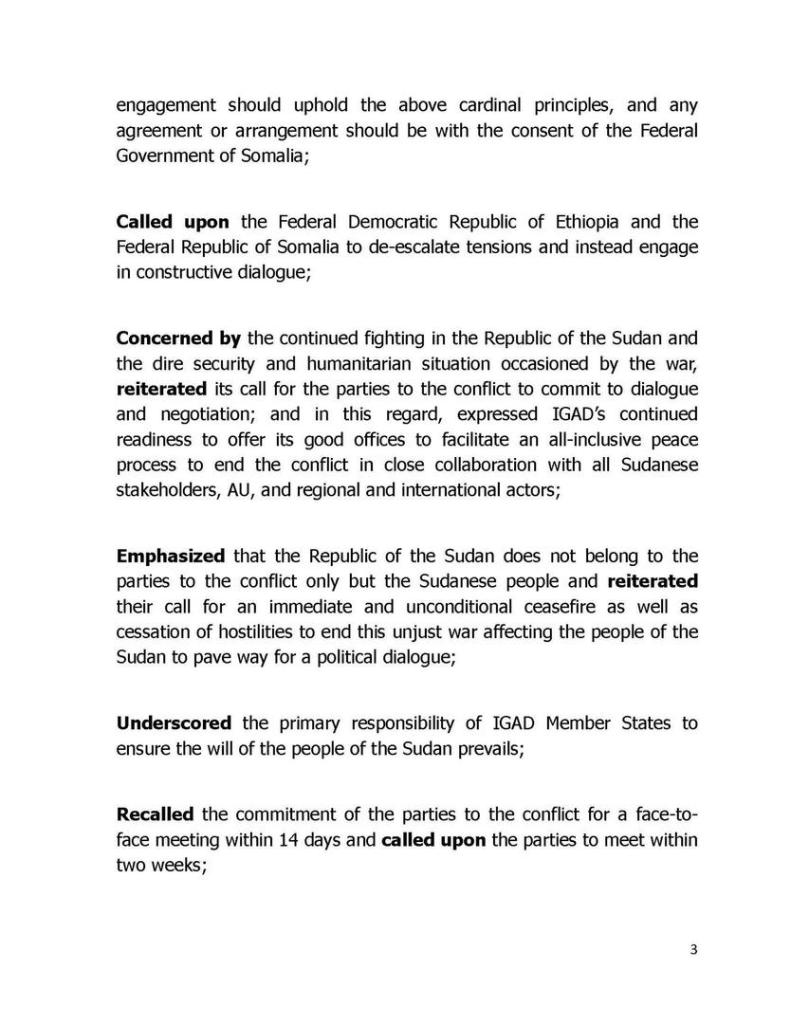
IGAD SPEAKS OUT

Heshiiska Gobolka Mudug 1994 Abdullahi Yusuf Ahmed iyo Mohamed Farah Caydid

التهديد الوجودي الإثيوبي لسيادة الصومال

افتتاحية WDM

ان طموحات إثيوبيا الإمبراطورية تجاه أراضي الصومال

وبحرها ليست جديدة.  يمكن للمرء أن يقول إن إثيوبيا لم تفكر مطلقًا بكل إخلاص في الاعتراف بالصومال كدولة ذات سيادة، ورفضتها تاريخيًا باعتبارها “مجموعة من العشائر البدوية” التي تتجول، وفقًا للإمبراطور الراحل هيلا سيلاسي.  ولذلك تعتبر إثيوبيا أرض الصومال إحدى هذه القبائل الصومالية التي يمكنها الدخول فيها في “معاهدة عشائرية” كما اعتادت القوى الاستعمارية الأوروبية أن تفعل لاحتلال الأراضي الأفريقية.  تواجه الصومال تحديات ومهام ضخمة أمامها للدفاع عن أراضيها وسيادتها بشكل لم يسبق له مثيل، وتعبئة الهيئات الدولية، وأصدقاء الصومال، والأهم من ذلك، سكانها لمواجهة هذا التهديد الوجودي الإثيوبي المتجدد بجرأة.  وهنا، يجب احترام القانون الدولي لفضح الطبيعة العدوانية والخروج على القانون لرئيس وزراء النظام الإثيوبي أبي أحمد.

#الصومال #إثيوبيا

ETHIOPIAN EXISTENTIAL THREAT TO SOMALIA’S SOVEREIGNTY

WDM EDITORIAL

Ethiopia’s imperial ambitions towards Somalia’s territory and sea isn’t new. One could say that Ethiopia never full-heartedly considered recognition of Somalia as a sovereign nation, historically dismissing her as a “bunch of nomadic clans” wandering around, according to Late Emperor Haile Selassie. Ethiopia 🇪🇹 therefore considers Somaliland as one of these Somali tribes it can enter into a “clan treaty” as European colonial powers used to do to occupy African territories. Somalia 🇸🇴 has a huge challenges and tasks cut out for her to defend its territory and sovereignty like never before, mobilizing international bodies, friends of Somalia, and most importantly, its population to confront boldly this renewed Ethiopian existential threat. Here, international law must be upheld to expose the aggressive nature and lawlessness of Prime Minister Abyi Ahmed of the Ethiopian regime.

POLITICAL VIOLENCE CANNOT BE REWARDED


In 2004 Transitional Federal Government (TFG) election, Abdullahi Yusuf, then President-elect was asked why didn’t he appoint a prime minister hailing from Habar-Gedir Hawiye subclan? His answer was astounding. He raised the question: “Who has captured and holds still non- native Somali territories by force? Shall we also reward them with leadership roles in my government?”

In assessing most recent political election in Puntland State, the outcome was not surprising to many. There was severe election violence in the heart and Seat of Puntland Government, Garowe, the Capital City. Few doubted that this would have tremendous impact on the Presidential Election this time around. Presidential candidates implicated in Garowe and Bosaso election violence during Puntland Council Elections performed poorly in this Presidential Election. They have also earned the ire of residents of other regions of the State. Hopefully, this mediocre result of this Presidential Election will serve both as a useful lesson and reminder that violence for political objectives won’t pay, and remaining local councils be allowed to proceed in Nugaal immediately. Puntland State needs peaceful development, civilized debate and discourse in managing public affairs.

However, the only silver-lining in recent Garowe political experiences is that the infamous so-called “Entitlement” for the post of Puntland Presidency is over, and that parliament selection by traditional clan system has finally hit the rocks and ran into dead-end. So be it.

While you are here, please consider supporting WDM with your Annual Subscription of $37 only. Send it to Sahal number at +252 90 703 4081.

في أعقاب الحملات الانتخابية المريرة، انقشع الغبار أخيراً في بونتلاند


والآن بعد أن انتهت انتخابات بونتلاند وتم تسويتها، دعونا نتحرك بشكل موحد لتحسين سبل عيش سكاننا وإعادة تأكيد الدور القيادي لهذه الولاية في عملية المصالحة وإعادة الإعمار في الصومال.  لقد ارتكبت ولاية بونتلاند أخطاء سياسية، ومن الضروري الآن تصحيحها.  وبينما يتعين علينا جميعا أن نهنئ الرئيس ونائب الرئيس المنتخب على فوزهما في الانتخابات، علينا أن نواصل الضغط عليهما للتحرك من أجل حكم أفضل وبناء مؤسسات سليمة وشفافية في إدارة الشؤون العامة في بونتلاند.
إن إرساء الديمقراطية ووحدة الهدف وتحسين الأداء الاقتصادي وتوفير بيئة آمنة للنمو والازدهار هي من بين أولوياتنا كدولة.
بالنسبة للرئيس سعيد عبد الله دني، فقد انتهى منحنى التعلم ولم يعد هناك أي مبرر للتأخير في إدارة برنامج عمل بفعالية وكفاءة لإحداث تغييرات إيجابية في حياة الناس العاديين.
إن سياسة الدولة المتمثلة في إعادة المشاركة وإعادة المساهمة مع بقية الصومال والمجتمع الدولي أمر ضروري.  يجب على ولاية بونتلاند إعادة احتلالها والقيام بدورها التاريخي في شؤون الصومال والمساعدة في إعادة تشكيل مستقبله

بقلم WDM

FOLLOWING BITTER ELECTION CAMPAIGNS THE DUST HAS FINALLY SETTLED IN PUNTLAND

WDM EDITORIAL

Now that Puntland election is over and settled, let us move in unison to improve the livelihoods of our residents and re-assert the leading role of this state in Somalia’s reconciliation and reconstruction process. Puntland State has made policy mistakes, and it is imperative now to rectify them. While we all have to congratulate the President and Vice-president-elect for their election victory, we have to keep the pressure on them to move for better governance, sound institution-building and transparency in running Puntland public affairs.

Democratization, unity in purpose, better economic performance and secure environment for growth and prosperity are among our priorities as a state.

For President Said Abdullahi Deni, the learning curve is done and no further excuses for delays in managing effectively and competently a program of action to bring about positive changes in the lives of ordinary people.

A state policy of re-engagement and re-contribution with the rest of Somalia and international community is imperative. Puntland state must re-occupy and play its historical role in Somalia’s affairs and help re-shape its future.

PUNTLAND DECIDES

DOORASHADA PUNTLAND

https://fb.watch/pqrE2iQalb/?mibextid=Nif5oz

HISTORIC, STRATEGIC AND POLITICAL MISCALCULATIONS OF PUNTLAND OPPOSITION

WDM EDITORIAL

People of Puntland State had spoken loud and clear when they lined up for the election of city councils in their thousands. Puntland opposition elements didn’t get this popular message, instead insisting on indirect selection of Puntland political leadership. Now, it doesn’t matter who selects the members of the House, the incumbent president or a nomadic elder, the result isn’t democratic election either way. Now those who opposed to even holding election of city councils yesterday have no case today to complain about their ugly legacy of misinterpreting popular discontent with the old clan-based system of selection that has outlived its usefulness long time ago. It isn’t still too late to learn from historic mistakes and political/strategic miscalculations of yesteryears. The way forward for Puntland State of Somalia is clear now. IPIV is the only way. Get the message!

ETHIOPIA CAN ACCESS SEA OUTLETS IN SOMALIA

WDM EDITORIAL

Let us be honest with ourselves – Ethiopia could access Somali seaports by either military intervention or by a series of mutually beneficial commercial agreements. For Somalia, the two scenarios aren’t choosing bad from worst. It is choosing a good deal from bad one. Commercial agreements to give Ethiopia access to the sea is in the best interest both countries. It is a win-win situation.

The Indian Ocean Port of Gara’ad provides as well immense opportunities for Ethiopia’s growing economy and rapidly increasing population.

WDM welcomes such commercial links and peaceful economic cooperation with Ethiopia. Ethiopia is a huge market for Somalia.

ALLOW PEACE, UNITY AND COMMON SENSE TO PREVAIL IN PUNTLAND

WDM EDITORIAL

Whether you are unhappy or mad about the institution of this House of Parliament, what counts most is the stability of Puntland State. Remember there will be tomorrow or another day to realize your individual dreams and political ambitions. If there is no peace in Puntland State, you forfeit any of these bright days ahead. Please keep the peace. Let the dust settle after bitter election campaigns. It is time to return to normalities and business of the people of Puntland State of Somalia. There are more pressing issues of nation-building.

Friday Sermon


Today I chose to tell you the story of Caterina Migliorini!
She is the 20-year-old Brazilian beauty who announced her decision to sell her virginity in an international auction!
This beautiful woman may be a prostitute in the eyes of some ignorant people, but in my opinion and in the eyes of many rational people, she is a pure and pure human being who taught many Arabs and the West the meaning of honor!

In 2011 AD, 13 children died as a result of poverty and cold in a very poor state called Sint Catarina in southern Brazil, in addition to hundreds of poor families who began to suffer from the spread of diseases and their transformation into epidemics.

For a whole year, 20-year-old physical education teacher Caterina Migliorini did not invite an international charitable organization that did not appeal to her to save her town and city from the scourge of poverty, but all her attempts failed.

In 2012 AD, this beautiful Brazilian woman announced via the Internet her decision to sell her virginity in a global auction in order to help the poor and build homes to shelter the people of her city from the heat of summer and the cold of winter. This news sparked great controversy in Brazil and a violent attack on her from the newspapers.

After just one week, the number of participants in the global auction reached 890 businessmen from all over the world!

An Arab man from the Gulf paid her $1,500,000 in order to take her virginity, which caused a great shock to Katrina, especially since it coincided with the events in Syria and the increase in Syrians displaced from their country.

The next day, Katrina canceled the auction and sent a message to the Arab businessman: “If you thought about the poor for one hour a day instead of your penis, you would eliminate poverty in your countries.”

Katrina gained wide fame around the world because of her stunning beauty and extreme humanity. She won hundreds of international awards and honors and became a global star on a reality TV show in exchange for a contract for the agency to build all residential homes and help the poor in the state of Saint Katrina.

And we keep repeating,
  Honor is in your minds, gentlemen,
  In your consciences, in your hearts, not in your genitals!!

I wish you could learn from Katrina the meaning of “honor”!

[Courtesy of Meta]

PRESIDENT HASSAN SHEIKH MOHAMUD: A WINNER IN SOMALI FOREIGN POLICY, BUT FAILURE IN DOMESTIC FRONT

WDM EDITORIAL

There is no denying that the current Somali President Hassan Sheikh Mohamud has achieved tremendous foreign policy successes despite criticism of his domestic approach. Somalia’s ascent to membership in the East African Community Block and lifting of long running arms embargo on Somalia are significant foreign policy achievements few believed could be done. And with the expected Debt Relief, Somalia is moving forward. But, a sound management of these policy successes, together with the Federal Member States, is key to a successful implemention. Congratulations to the President HSM. Despite its challenging domestic problems, Somalia is back in the world arena because of the President’s tireless and exceptional efforts. In that regard, HSM proved to be a stateman.

However, his domestic policy is nothing but total failure. What is needed now as a policy priority could be summarized as:

1. National Reconciliation to ensure a cohesive society, good governance and promotion of federal structures and institutions-building of his government.

2. Elimination of Al-Shabab menace in the country.

3. Rebuilding of the infrastructure of the Capital City of Mogadishu and clearing the mess being created everytime it rains, which turns the City into water ponds of an inhabitable environment.

Ceaseless overseas travels by the President since he came to power are now paying off, shutting down any criticism against his foreign policy adventures. He is well advised now to address the acute domestic priorities that could bring his regime down, if not tackled with immediately.

4. Somalia is a clan society that require delicate balance amidst acute clan rivalries to seek harmonious coexistence in power and resources sharing.

5. Checks and balance of power between branches of government and their separation are among the areas of serious concern in HSM’s administration.

[This editorial has been edited since posting].

PUNTLAND ELECTORAL IMPASSE


It was said that since time immemorial that those who put you in power rarely keep you in power. That is because you owe gratitude to those supporters, and that automatically translates into power over you as long as you keep these advisers and share power with them. Consequently, you either become hostage to them or try to get rid of them. In the end, some of these advisers, if not all, would turn against you as you try to develop your own independent political thoughts and initiatives. If you do the latter, that is when all hell breaks loose. This is what has been happening in Puntland State. A small lobbyist and political brokers group called “Aaraan Jaan”, in Puntland political jargon, who mostly hail from Nugaal Region of Puntland were critical in President Deni’s ascent to the State’s Presidency. Paradoxically, this tiny lobby group has practically no political influence beyond the Seat of Puntland State, Garowe. The rest of the country loathe them. As expected and by historical experience time and time again, yesterday’s supporters of the President are trying to remove him from power. President Deni is fighting them back with no plan B besides One Person One Vote project for which he has been wasting a lot of time and man-hours in implementing this “fighting back” project. Because Deni is fond of delaying tactics and indecision bordering on direlection of duty, he has already put Puntland governance in multiple political clashes and violent confrontations with his yesterday’s allies to hang on to power. That strategy is increasingly putting Puntland Stability at great risk.

There are also many other factors in play here, mainly two contradictory schools of thought- Traditional Clan Indirect democracy and direct popular suffrage with increasingly youth demand for participation. Youth constitute at least 75% of the population. In addition, there are marginalized various political figures who failed to have any public attraction. They are split between President Deni and Aaran Jaan political brokers, basically directionless and bandwagoning either of them. The general public is caught in the crossfire and deeply illusioned.

Most importantly, there are external players in the mix also that are engaged in Puntland destabilizion, mainly UAE and leaders of Somali Federal Government separately supporting one side or the other.

In a nutshell, there are two factions responsible for Puntland current Electoral Impasse: President Deni and Aaran Jaan – yesterday’s allies.

The famous traditional leadership of Puntland regions is increasingly losing traction with slowly fading moral authority they enjoyed so long.

Puntland State salvation now lies in potential rise of a “Third Party” either in alternative or mediation role, and possibly that is the only way to avoid the imminent civil and armed clashes, and Puntland destabilizion.

[This article has been updated since posting].

President Hassan Sheikh Mohamud (HSM) Accused of Undermining Somalia’s Unity Through Constitutional Conspiracy

Reports have emerged alleging that President Hassan Sheikh Mohamud (HSM) of Somalia is involved in a perilous conspiracy that threatens the unity and stability of the Federal Republic of Somalia. According to a credible and well-informed news source based in London, UK, President HSM and his Damul-Jadid team have been secretly negotiating with the Somaliland Administration to amend the Provisional Federal Constitution. The proposed changes would allegedly favor the Northwest Regions (Somaliland) by creating a new executive position of Vice President, a move that could fundamentally alter the balance of power within the Somali government.

This alleged constitutional amendment is reportedly the driving force behind President HSM’s current campaign to revise the constitution before the Federal Parliament. The involvement of Abdikarim Guleed, HSM’s Special Envoy to Somaliland and former head of the Somali delegation during Somalia-Somaliland negotiations in HSM’s first term, further underscores the long-standing nature of this alleged conspiracy. Sources suggest that this plan has been quietly developing in the shadows, with collaboration between Damul-Jadid and Somaliland’s Muse Bihi administration. Now, it appears that the project is being actively pursued during HSM’s second term.

British Government’s Alleged Involvement Raises Alarm

What makes this situation even more alarming are the new political developments in London, which suggest the involvement of the British government in what some are calling an act of national treason against the Somali people. It is alleged that the British government has been persuaded to support Damul-Jadid’s unconstitutional agenda, which seeks to dismantle the national consensus embodied by the Provisional Federal Constitution. This constitution, a symbol of Somalia’s hard-fought unity, is now at risk of being undermined by what critics describe as an illegal and self-serving amendment process.

President HSM’s recent actions have only heightened concerns. During a federal delegation visit dominated by officials from Somaliland, including Deputy Prime Minister Salah Ahmed Jama, HSM’s agenda appeared to align suspiciously with the interests of Somaliland. This was further evidenced by the synchronized visit of Abdirahman Cirro, the leader of Somaliland’s Wadani opposition party and a presumptive candidate for Somaliland’s presidency, to London. According to sources, there is now an understanding between the parties to amend key provisions of the Provisional Federal Constitution, including the creation of a Vice President position. Such changes would disregard the constitution’s role as a national charter achieved through broad consensus and would instead serve the narrow interests of a select few.

HSM’s Alleged Abuse of Power

Critics argue that President HSM has repeatedly abused the Provisional Federal Constitution, overstepping his authority by assuming powers traditionally held by the Cabinet and Prime Minister. In doing so, he has effectively transformed himself into an executive president, contrary to both the letter and spirit of the constitution. This concentration of power has occurred with little to no checks and balances, raising concerns about the erosion of democratic governance in Somalia. Those who doubt these claims need only refer to the text of the Provisional Federal Constitution for evidence.

Broader Implications: Marginalization and Division

Beyond the constitutional crisis, there are fears that this conspiracy aims to politically marginalize certain prominent clans and key stakeholders within Somalia’s body politic. Such actions could deepen existing divisions and undermine the fragile unity of the nation. Additionally, critics have accused HSM of pursuing a sinophobic agenda, further complicating Somalia’s international relations and internal cohesion.

A Call to Action

The situation has reached a critical juncture, and the responsibility now lies with the Somali Federal Parliament and the Federal Member States to address this imminent threat. The next scheduled session of Parliament in Mogadishu presents a crucial opportunity to halt this alleged constitutional overreach and safeguard the unity and integrity of Somalia. The Somali people must remain vigilant and demand accountability from their leaders to prevent further erosion of their democratic institutions.

[Feature photo: Courtesy of The EastAfrican]

TIME IS RUNNING OUT FOR PUNTLAND STATE GENERAL DEMOCRATIC ELECTIONS WITH NO SURE SIGN OF HOLDING THEM ANY TIME SOON

WDM EDITORIAL


Media speculations, rampant opposition claims on Puntland Government undeclared plans to seek term extention (call it technical or otherwise) are troubling as they also harm the confidence of supporters of democracy in the current administration. If these speculations were proved right, it would constitute historic miscalculation by the Regime, and would hurt the feelings of many Puntland patriotics, who put so much efforts to the realization of democratic rule in the State of Puntland in Somalia.

What is unacceptable to the rule of law in Puntland State is the ongoing prolonged absence of the State President from the country on what seems to be a private mission with no obvious interests for the state and its residents. The President’s absence at crucial time when he was expected to champion for democracy and leave a lasting legacy for the aspirations of the people for democratic transformation is tantamount to dereliction of duty. 400,000 registered Puntland voters seek justice in realizing their life-long struggles to see a democratic Puntland State.

It looks that undeserving and anti-democratic opposition elements within and without the State could be proved, unfortunately, right in predicting the outcome of this half-measure habit and behavior of the current administration, not seeing any policy undertaking through successfully. Is there any time left to salvage the situation? Many anticipate a disaster if administration could try to buy more time to stay in power. We are afraid that Puntland State is set to sail on troubled waters, again, not taking any cues from recent troubling history of Puntland State democratization process.

CALL FOR RE-EVALUATION OF NGOs OPERATING IN PUNTLAND STATE

WDM EDITORIAL

This imperative need for re-evaluation of Non-State Actors (NSAs) commonly called NGOs should screen these entities for acceptable organizational social behavior, job performance, mission compatability, ethical conduct, neutrality and adherence to apolitical conduct of their boards of directors, management and staff.
It is in the responsibilities of the government of Puntland State to re-assert that NGOs are not private businesses or clan organizations, but public institutions under the laws and jurisdictions of Puntland Government. Board of Directors and Executive Management of these organizations must be made to understand that they can be removed by relevant agency of the State, which can appoint respective temporary new boards of directors and management until their elections are held.
In the case of PDRC, Puntland people may not be aware of the fact that it is a government agency whose Executive Director is appointed by Puntland State President. Over the years, it has been given free hands to behave like an NGO in order to secure operating funds from peace, development and research-oriented international NGos of the Donor Community in Europe and USA. However, these well-wishing international donors must ensure that their tax-payers’ money should not be directed elsewhere under cleaverly and deceptively tailored programs to secure funds.

We are also aware of some international NGOs and UN agencies intentionally funding some non-state actors in Somalia to do more harm in creating societal dependency.

WDM BREAKING NEWS

ONE DAY IS SAID TO BE A LONG TIME IN POLITICS.

and THREE MONTHS MONTHS REMAING IN THE CONSTITUTIONAL MANDATE OF CURRENT PUNTLAND GOVERNMENT ARE LIFETIME TO HOLD AN ELECTION.

Puntland Administration can feasibly conduct the proposed State Presidential and Parliament Elections on One Person One Vote exercises, given the bulk of legislative bills and electoral laws required are already in place, and over 400,000 voters are registered with the option of registering more voters throughout the regions.

In all probability, districts opposing even holding District Council Elections could boycott the General Elections as well, instigating the rest of state residents to by-pass Nugaal Region again. Thus, Nugaal Region risks forfeiting its allocated Members in Puntland State House of Representatives. If that were to happen, Puntland Capital City of Garowe would have no representation in Puntland Parliament. From there, chain reactions would ensue that could compel relocation of Capital City elsewhere because of potential apperance of clan-based insurgency n the Middle Region of Puntland against the State, followed by attempts to suppress these destabilizing armed rebellion by Puntland forces from Bari and Mudugh Regions with the assistance of forces from SSC, the so-called “Hiil Walaal” army to deter existential security threat to Puntland State.

When the dust of such potential conflict settles, residents of Nugaal Region would be required to renegotiate for a political space and participation again in Puntland governance structures, but probably Garowe would lose its Capital Status as a result.

Let us think now before we leap into the unknown.

(This WDM breaking news has been updated since posting).

WDM BREAKING NEWS

WDM EDITORIAL

To make Puntland democratization user-friendly, let the popular Presidential Election go first before Parliament Election. That way Puntland State beats and meets the infamous January8 deadline.

GOOFKA CULTURE IS ENTRENCHED HERE

Garowe is increasingly becoming a clan fox-hole or Goofka as the term is known in Somalia. The City is far from resembling the Seat of Puntland State, especially whenever there is a political debate or tension. In times of perils, wars, and threats to Puntland peace and security, Garowe residents take sole ownership of the town and mobilize armed rebellion and violence against the government of the day. Such continual or periodical behavior isn’t conducive to an operating environment for stable public institutions, and law and order needed for peaceful Puntland.

Therefore, one may contemplate relocating portions of government offices and international organizations to more peaceful cities. I had warned earlier that Garowe wasn’t ready to host this Parliament Session. People are now realizing this fundamental assessment of Garowe precarious security situation, and generally, obvious fragility here in maintaining a concentration of public institutions.

Unfortunately, Somalis never learn from history. Garowe historically has been an extreme clan fiefdom and a source of clan tension, initially between its own residents and between inhabitants of surrounding regions, but becoming lately politically tribalistic, land grabber and greedy.

We may recall that the city of Qardho was projected to become the Capital City of the future state of Puntland, until that town’s political and traditional establishments too messed up things and lost that historic opportunity. This clearly demonstrates the underdevelopment nature of a primitive clan society like ours.

Fortunately, there are towns in Puntland where such extreme nature of clannish contradictions could be managed and mitigated successfully. Let us think of alternative venues for building-up unhindered public institutions in the State.

REPEAT THE RISE OF UNION OF ISLAMIC COURTS (UIC) IN SOMALIA

Given the dysfunction, disarray of FGS, and infiltration of Alshabab into the rank-and-file of security apparatus and all public institutions of the fledgling government of Somalia, it looks that there will be a take-over of Mogadishu by another phase of UIC. This time, it could be a bit more complicated for them as there are foreign troops in the name of ATMIS and other security industries of Blackwater type. But one thing is certain: FEDERAL GOVERNMENT OF SOMALA has been compromised and can’t be expected to operate and meet the security and governance challenges of the day.

Already, Alshabab is becoming bold enough to cut off movement of people and goods to certain regions, Bay and Bakool as recent example, attacking government and ATMIS military bases anywhere in South-Central Somalia and continue to extort and blackmail defenseless population there by establishing a parallel government with its own kangaroo courts.

One may ask as hindsight where was President Hassan Sheikh Mohamud during the rise of UIC and Alshabab in Southern Somalia then? An advisor to the leaders of UIC in Mogadishu?
Have your say.

Talo Soo Jeedin

July 12, 2023,

Mudanayaal iyo Marwooyin,  

Waxaan idnku salaamayaa salaanta islaamka – As Salaamu Caleykum Waraxmatullahi Wa barakaatuhu.

Madaxweynaha Dowladda Federaalka Soomaaliya,          

Mudane Xasan Sheekh Maxamuud iyo madaxdii hore ee qaranka iyo siyaanyiinta kale ee madashaan ku sugan.

Ujeeddo:  Talo soo jeedin ku aaddan go’aannada Golaha Wadatahsiga Qaran (GWQ) ay soo jeediyeen in wax laga beddelo hannaanka siyaaasadda dalka.   

Mudane Madaxweyne, waxaan kaaga mahad-celinaynaa soo dhowaynta iyo fursadda aad inoo siisay in aan talo ku biirinno go’aandii ka soo baxay  Golaha Wadatashiga Qaran (GWQ) ee lagu qabtay magaalada Muqdisho bisha May 27keeda, sannadka 2023.  

Waxaa ka muuqday go’aanada in aan la tixgelin muhiimadda dastuurku leeyahay iyo qaab sharciyeedka wax looga beddeli karo qodobada dastuurka oo ah in guddi heer qaran ah soo dhammays-tiro dastuurka qabyo-qoraalka ah lagana dodo wax ka beddelkiisa si looga heshiiyo.  

Waxaan aaminsannahay in GWQ uusan sharci u haysan wax ka bedelidda dastuurka. Waxaanna welwel ka qabnaa in qaab aan dastuuri ahayn` arrimahaas lagu furdaamiyo ayna dib u dhac u keento geeddisocodka dowladnimada Soomaaliyeed.  

Waxaa is xasuusin mudan in dowlad-goboleedka Puntland oo muhiim ka ah geedisocodka dib-u-dhiska dalka aan laga tixgelin arrimahaan masiiriga ah si loo ilaaliyo midnimada iyo wadajirka dalka.  

Marka waxaan hadda mid mid u dul istaagayaa qodobada dastuuriga ah ee la soo jeediyey in isbeddel lagu sameeyo:

Qodobka 1aad:  

Golaha Wadatashiga Qaran wuxuu soo jeediyay in dalku aado dooorasho qof iyo cod ah. Qodobkani waa mid Soomaali oo dhan ay wada sugaysay oo dalka u horseedaya in bulshada Soomaaliyeed ay dib u soo ceshato awooddeeda dastuuriga ah oo ay si xornimo leh ku soo doortaan madaxdooda heer qaran, hoggaankooda heer dowlad-goboleed iyo heer goleyaal deegaanba.

Talo #1. Qodobkaan waa soo dhowaynaynaa mabda’iyan maxaa yeelay qodobkani wuxuu ka mid yahay waxyaabaha ay hiigsadaan ummadda Soomaaliyeed in muddo ahna ku taamayeen. Hase ahaatee waxaa muhiim ah in laga heshiiyo arrimaha hoos ku xusan oo  gogol-xaarka u noqon kara in dalka doorasho qof iyo cod ah si xasilooni ahna ku dhacda, dadkuna ay raalli ka yihiin laga hirgeliyo.  

  1. Sugidda amniga dalka oo dhan iyo goobaha ay doorashadu ka dhacayso si aan cadwga uga faa’ideeysan.  
  2. Sharciga doorashooyinka oo u baahan in la diyaariyo ka hor inta aan doorashada dhicin si looga baaraan-dego khilaafaadka imaan kara xilliga doorashada iyo xallintooda.
  3. In la dhameeystiro sharciga qofka muwaadinka

(citizentship law) lagana heshiiyo qabyotirkiisa.

  1. In la dhammaystiro sharciga axsaabta (xisbiyada badan) si waafaqsan dastuurka dalka.
  2. In laga heshiiyo cidda wax dooran karta oo xaq u leh in ay soo xaadirto maalinta iyo goobta doorashada sida:  
    1. Shacabka Soomaliyeed ee gobollada waqooyi.
    1. Dadka barakacayaasha ku ah dalka gudahiisa iyo \ kuwa qaxootiga ku ah dalka dibaddiisa.
    1. Soomaalida dalka dibaddiisa ku nool.
    1. Soomaalida deggan xuduudaha dalka oo laba dal ka wada tirsan, iwm.

Nidaamka Doorashada

Barnaamijka doorashada laba qodob oo muhiim ah ayaan talo ka soo jeedineenaa:

  1. Guddiga doorashada heer qaran ma iskuma meteli karo doorashada heer qaran iyo midda dowlad-goboleedyada. Marka waa in dowladgoboleed walba yeelataa guddi doorasho oo u gaar ah si loo adkeeyo doorashada Dowlad-goboleedyada.
  2. Siyaadda dalka waxay ku dhisan tahay dheelitir beeleed oo ah 4.5, loomana boodi karo durba nidaam kale oo bulshadu aysan raali ka noqoneyn
    1. Doorashada meteladda isu-dheelitan (Proportianal representation) ee liiska xiran (closed list) iyo hal deeegaan doorasho waa in la waafajiyaa qaabka kuraasta beelaha ay maanta u qeybsadaan oo aan laga gudbin qeybhaas iyadoo aan shacabku ku heshiin ama aan la qaadin tirokoob dadweyne. Waxaan ogsoon nahay in jufooyinka beelaha Soomaaliyeed aysan maanta diyaar u ahayn in ay waayaan xubnaha oo ay hadda ay ku leeyihiin labada aqal ee barlamanka.
    1. Walow in laga gudbo 4.5 ay muhiim tahay, haddana waa in shacabka iyo oday dhaqameedyada Soomaaliyeed laga dhaadhiciyaa meesha loo socdo oo ay iyagoo raali ah la aado. Dhismaha dowladnimo waqti dheer buu qaataa, oo lama dedejin karo iyadoo aan ahayn wadar oggol.  
    1. Doorashada liistada xiran ma xaqiijin karto metelaad beeleed ama mid deegaan.
    1. Metelaadda murashaxiinta golaha shacabka waa in ay ku dsaleeysan yihii dad iyo deegaan.  

Qodobka 2aad:  

Golaha Wadatashiga Qaran wuxuu soo jeediyey in dalka ka guuro nidaamka Baarlamaaniga ah oo uu aado nidaam madaxweyne (Presidential System).

Waxaa xusid mudan in Soomaaliya ay ka soo kabaneeyso dagaalo sokeeye iyo dowlad-xumo baahsan oo lga dhaxlay 30kii sano ee la soo dhaafay. Dowladnimada maanta aan haysanno waxay ku timid dadaal dheeri ah iyo kulamo siyaasadeed oo dalka dibaddiisa lagu qabtay oo keenay in la galo heshiis buslhadeed maadaama bulshadu kala irdhowday muddadii dagaalada sokeeye iyo in ay dadku dib isugu soo laabtaan oo dowlad wada sameeystaan iyagoo aan weli kala shaki bixin. Waxay isla garteen in dowlad federaali ah la dhiso oo ku salaysan nidaamka Barlamaaniga ah iyagoo ka fogaanaya in nidaamkii madaxweynenimo ee dalka burburka u horseeday uusan dib u soo laaban. Waxay isla garteen annagana nala quman in nidaamka Baarlamaaniga uu yahay:

  1. Nidaam dowladeed oo dheellitiran oo leh hay’ado is kabaya.
  2. Wuxuu leeyahay awood qaybsi Soomaalidu heshiis ku tahay.
  3. Wuxuu fudueeyaa isla-xisaabtan xukuumadda iyo Baarlamaanka.
  4. Wuxuu leeyahay waajibaadyo iyo masuuliyado qeexan oo kala baxsan haddii si dhab ah loo raaco dastuurka.  

Golaha Wadatashiga Qaran wuxuu soo jeediyay in dalku qaato nidaam Madaxweyne iyo Madaxweyne ku-Xigeen. Sharciyan qodobkaaas wuxuu si toos ah uga hor imaanayaa Dastuurka dalka ee ku meel gaarka ah la ansixiyay bisha August 1deeda, 2012. Gaar ahaan:  

  1. Qodobada: 58, 59, 60, 69, 71, 74 & 77 ee Cutubka 6aad: Barlamaanka Federaalka JS.
  2. Qodobada; 89, 90, 91, 92, 93, 94, 95 & 96. ee Cutubka 7aad:

Madaxweeynaha JFS,

  • Qodobada; 97, 98, 99, 100, 101, 102, 103 & 104. ee Cutubka 8aad: laanta Fulinta,

Mudanayaal iyo marwwoyin

Talo #2: Ma qabno xaaladda uu dalku maanta ku jiro in nidaamka baarlamaaniga ah ee hadda noo shaqeeya la beddelo laguna beddelo nidaam madaxweyne qodobada hoos ku qoran awgood:

  1. In nidaamka baarlamaaniga ah la bedelo wuxuu u baahan yahay in dib loogu laabto heshiiska beelaha Soomaaliyeed oo ay dowladnimada dalku ku salaysan tahay.
    1. Isbeddel hadda la sameeyo wuxuu horseedayaa hoos u dhac ku yimaada awoodaha kala duwan ee hay’adaha dowliga iyo wada shaqeyntooda, awooduhuna isugu tagaan hal qof.
    1. Khilaafaadka Soomaalida dhexdeeda ka jira oo sii bata iyo in xasilooni darro ka dhalato meelo badan oo dalka ka mid ah.

Mudanayaal iyo Marwwoyin

Waxaan soo jeedinaynaa in aan nidaamka Baarlamaaniga ah ee aan haysano aan si dhab ah oo sharciga waafaqsan ugu dhaqanno oo aan helnaa Madxweyne iyo Ra’iisulwasaare tayo leh oo awoodahooda kala qeybsan yihiin, mid walbana loo daayo mas’uuliyadda dastuuriga ah ee loo igmaday.

Qodobka 3aad

Wax kabeddelka Nidaamka Xisbiyada   

Dastuurku wuxuu qorayaa in dalku yeesho axsaab badan oo ay ka soo dhex baxaan axsaab kooban marka dalku doorashada galo kadib, axsaabtaas  oo leh taageero baahsan oo dalka oo dhan ah oo ay markaa u tartamaan hoggaanka hay’adaha sare ee dalka.

Mudanyaal iyo Marwooyin  

Talo #3: Ma qabno soo jeedintii GWQ ee ahayd in xisbiyada dalka lagu soo koobo laba xisbi oo keli ah oo aan la garanayn qaabka iyaga laftooda lagu soo xulayo iyo in ay yeelan karaan metelaad dhab ah oo shacabka Soomaaliyeed ay raali ka noqon karaan.  Labada xisbi ee GWQ ku baaqeen wuxuu ka hor imaanayaa:  

  1. Qaab dhismeedka siyaasadeed ee Soomaalidu heshiiska ku tahay.
  2. Labada xisbi waxay u muuqan karaan kuwa dhan u janjeera oo shacabku u arkaan in aan labada xisbi Soomaali u dhamayn.
  3. Waxaa hadda ka diiwaan gashan dalka tiro ka badan 100 xisbi oo abaabulan. Waxaa kale oo jira deegaano badan oo dhistay axsaab siyaasadeed oo hadda ka badan 2 oo shacabkuna soo doorteen.

Waxaan ku talinaynaa in loo daayo sida dastuurka qabo nidaamka axsaabta badan laguna asteeyo sharciga doorashooyinka shuruudaha lagu noqon karo xisbi rasmi ah oo doorashada dalka ka qeybgeli kara.

Qodobka 4aad

Doorashooyinka iyo Muddada Xil-haynta Hay’adaha Qaranka

GWQ wuxuu ku baaqay qodobka 8aad, Faqradiisa (a) in doorashada dalka ee heer federaal iyo heer dowlad-goboleed ay noqoto doorasho qof iyo cod ah oo shantii sanaba hal mar ah.  

Muddadan waxay kasoo horjeedaa qodobada 60aad & 91aad ee Dastuurka dalka oo muddada Barlamaanka iyo Madaxweynaha ka dhigaya afar sano, sidoo kale qodobkaas muddo kordhinta wuxuu kasoo horjeedaa Qodobka 52/1 & 72/1 ee Dastuurka 1960kii, oo si cad u qeexaya in wax ka beddel muddo xileedka haddii la sameeyo aysan khuseeyn cidda xilka haysa markaas oo uu isbedelkaas bilaabanaayo mudda xileedka xiga.

Golaha Wadatashiga Qaran waxay ku dodayaan in la is waafajiyo mudada xilhaynta hay’adaha qaranka oo ay isla garteen in muddo sanad ah loo wada kordhiyo hay’adaha qaranka iyo dowlad-goboleedyada taasoo baalmarsan dastuurka dalka. Waxaa muhiim ah in dib loo fiiriyo qodobadaan:

  • Dastuurka dalka wuxuu qeexayaa muddo xileedyo ay hay’aduhu ku shaqeeynayaan oo aan dacwad hore uga imaan, mana muuqato sabab loo bedelo.   
  • Haddii isbeddel lagu sameeynaayo muddo-xilaydka hay’adaha dowladda waxaa muhiim noqon doonta in marka hore la dhameystiro dastuurka qabyada ah.

Talo #4. Ma qabno in muddo kordhin waqtigan lagu sameeyo hogaanka dowladda Federaalka iyo Dowlad-goboleedyada. Hadii laga baaqsan waayo, waa in loo maraa dariiq dastuuri ah marka dastuurka lasoo dhameystiro. kordhin lagu sameeyo muddo xileedka hay’adaha dalka waxay noola muuqataa in ay hirgeli karto oo keliya marka muddo xileedka dowlada soo jeedisay laga gudbo oo dowlad cusub la doorto. Dowlad muddo xileedkeeda ku guda jirta ma sameyn karto muddo kordhin iyada khuseeysa.

Qodobka 5aad  

Wax ka beddelka Dastuurka  

Dastuurka ku meel gaarka ah wuxuu qeexayaa nidaam loo maro in isbeddel lagu sameeyo qodobada dastuurka ku qeexan oo dhan. Sidaa darteed waxaa muhiim ah in hay’adaha dowladdu ay mar walba u hoggaansamaan dastuurka iyaga lagu soo doortay.

Gebo-gabo:

In kastoo golaha wadatahsiga qaran ay leeyihiin mudnaantooda, haddana waxaa nala quman in aan dastuurka la baalmarin oo loo daayo hay’adaha loo asteeyay si ay waajibaadkooda dastuuriga ah u gutaan.

Mahadsaniddiin  

Talosoojeedintan waxaa ku midaysan:  

1. Madaxweyne Shiikh Shariif Sh. Axmed

  • Guddoomiye Shariif Xassan Shiikh Aaden
  • R/W Cumar Cabdirashid Cali 
  • Sharmake 
  • R/W Cabdiweli Cali Gaas
  • R/W Xassan Cali Khayre
  • R/w xigeen Ridwan Hirsi
  • Wasiir Dr Cabdinuur Shiikh Maxamed
  • Xil Abdulqaadir Cosoble Cali
  • Dr.Cabdinasir Maxamed Cabdulle

WDM BREAKING NEWS

CONSTITUTIONAL AND POLITICAL DEADLOCK AT PRESIDENT MOHAMUD’S FACE-SAVING CONSULTATIVE CONFERENCE IN MOGADISHU


Based on the readout issued by the Consultative Conference concluded yesterday in Mogadishu by the leaders of FGS and former politicians, major issues raised and discussed there ended up in deadlock, while others have been avoided.

  1. Somaliland aggression against Laas Anood has been ignored or failed to get into the agenda altogether:
  2. One Person One Vote conducted recently in Puntland State of Somalia has been ignored, while the people of Somalia and the rest of the world applauded this milestone achievement;
  3. Most constitutional and political sticking points ended up in stating principles to continue deliberating in potential next sessions – these include elections, the constitutional structure of the Federal Government against the backdrop of recent presidential proposals to reform the Office of Prime Minister by reducing it to a mere ceremonial post attached to the presidency, and government proposal on term extensions;
  4. Attempt at Marginalization of the important political and Constitutional weight of Puntland State couldn’t fly at this face-saving gathering for President Hassan Sheikh Mohamud as expressed by the unanimous decision to reach out to the leaders of Puntland Government.
  5. By committing to continue similar consultations in the future, the National Consultative Council (NCC) between FGS and FMS is being phased out;
  6. Basically, this conference has failed to make any significant headways on thorny political and constitutional issues the leaders of FGS sought help, or rather a salvation for their own survival.
  7. Postscript. Former President Mohamed Abdullahi Farmajo and Prime Ministers Abdiweli Sheikh and Saacid Shirdoon boycotted this meeting. [This breaking news has been updated after posting.]