
WAPMEN
Commentary and Critical Analysis
WHAT NEXT?
The Ice Has Broken — Now the Real Fire Begins
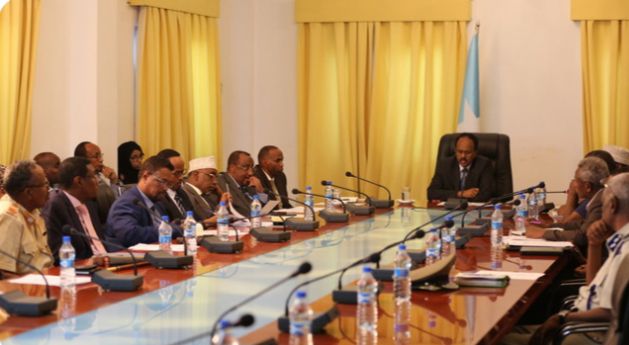
The first meeting between the opposition and the Federal Government has ended.
Predictably inconclusive.
Strategically inevitable.
Politically irreversible.
Let us be clear: this was never meant to produce a grand bargain. It was not a constitutional settlement. It was not an electoral roadmap. It was not even a negotiated compromise.
It was an expression of positions.
And that, in Somalia’s fractured political culture, is already historic.
Not the End — The Beginning
The engagement between Golaha Mustaqbalka Soomaaliya and President Hassan Sheikh Mohamud was merely the breaking of ice after months of political frost.
The real negotiations have not yet begun.
They will begin after Ramadan — and they will begin under pressure:
Expiring federal and state mandates
Rising public anxiety
Escalating international scrutiny
And the hard reality that unilateralism has reached its limit
The president may still project the image of control. But power in Somalia is never permanent. It is rented — not owned.
The illusion of decree-rule fades quickly when confronted by arithmetic, clan alignments, donor leverage, and constitutional limits.
And that reality is approaching fast.
Who Lost This Round?
Let us not romanticize the moment.
There are political losers emerging from this first encounter.
1. Hassan Sheikh Mohamud
He entered the meeting expecting to dictate tempo and narrative.
Instead, he was forced into dialogue.
The exposure has begun. The myth of effortless control has cracked.
2. Mohamed Abdullahi Mohamed (Farmaajo)
Hovering on the sidelines.
Smiling. Calculating.
Attempting to benefit without taking a readable political position.
Somalia’s political marketplace is unforgiving to ambiguity. Fence-sitters rarely lead nations.
3. The Overstaying Federal Member State Leaders
The leaders of Hirshabelle, Galmudug, and Southwest State are in a structurally weak position.
Their mandates are politically exhausted.
Their legitimacy is questioned.
Their leverage is shrinking.
They cannot shape the future constitutional architecture from a foundation of overstayed authority.
History does not negotiate kindly with leaders who lack electoral renewal.
Puntland: Tactician, Not Visionary
On the Puntland front, Said Abdullahi Deni is not a grand visionary. He is not a philosopher-king drafting long-term blueprints for Somalia’s destiny.
He is a tactician.
And tacticians survive by reading the terrain.
Deni understands something fundamental:
If he secures an agreement and structured consensus in Mogadishu with Hassan Sheikh Mohamud, several destabilizing fronts will cool simultaneously.
He knows that:
Federal overreach into Puntland affairs would be restrained.
Political engineering in Garowe would lose oxygen.
Rebel posturing in Galkayo and Bosaso would weaken.
The manipulation of peripheral tensions — including SSC-Khaatumo — would diminish.
The allegation circulating in Puntland political circles is clear: that forces and disruptions in Garowe, Galkayo, Bosaso, and SSC-Khaatumo have benefited from encouragement or political utility aligned with Villa Somalia’s leverage calculus.
Whether fully accurate or strategically amplified, the perception itself is powerful.
And in Somali politics, perception often becomes reality.
Deni calculates that a negotiated détente in Mogadishu reduces internal destabilization at home.
This is not idealism.
It is containment strategy.
Vindication and Retreat
Members of Golaha Mustaqbalka Soomaaliya leave Mogadishu for Ramadan with something they did not have months ago:
Vindication.
They have succeeded in politically exposing the president’s overreach. They have demonstrated that resistance exists. They have shown that negotiations cannot be bypassed.
This was not victory — but it was momentum.
And in Somali politics, momentum is currency.
The Deni–Farmaajo Gesture
Before departure, Said Abdullahi Deni paid a reciprocal visit to Farmaajo.
There were smiles.
But not the kind that reach the soul.
In Somali political theater, smiles often conceal strategy. Distrust does not disappear because two rivals share tea. It merely pauses.
Both men understand 2026 is approaching.
Both understand Hassan Sheikh’s vulnerabilities.
Both understand that alliances in Mogadishu are transactional.
Ramadan may bring reflection — but after Eid, calculations will resume.
The Inevitable Compromise
Here is the uncomfortable truth:
There is no alternative to compromise.
Not civil war.
Not unilateral amendments.
Not parallel mandates.
Not donor-imposed blueprints.
Somali leaders will eventually be compelled to agree — not because they suddenly discover patriotism, but because:
Mandates will expire.
International patience will thin.
Financial flows will tighten.
Public frustration will intensify.
And the arithmetic of Parliament will demand consensus.
Elections will be held.
And they will be held on negotiated consensus — not presidential decree.
The Coming Reality Check
President Hassan Sheikh Mohamud faces a narrowing corridor:
Continue unilateral maneuvering and risk isolation.
Or engage in structured compromise and preserve relevance.
The era of one-man constitutional engineering is over.
The Somali state is too fragile.
The political elite too divided.
The public too aware.
After Ramadan: The Real Battle
When negotiations resume in earnest, they will move beyond rhetoric into substance:
Constitutional status and amendments
Electoral modality
Federal–state power balance
Security sector oversight
Transitional timelines
This will not be a polite conversation.
It will be tense, transactional, and at times theatrical.
But it will happen.
Because it must.
Final Word
Somalia stands at a narrow bridge.
On one side: ego, overreach, fragmentation.
On the other: compromise, elections, fragile stabilization.
The first meeting did not solve the crisis.
But it ended the silence.
And in Somali politics, silence is more dangerous than disagreement.
After Ramadan, illusions will fade.
Realities will surface.
Compromise will be forced.
And elections — by consensus — will follow.
The ice has broken.
Now comes the fire.
 Warsame Policy & Media Network (WAPMEN)
You must be logged in to post a comment.