
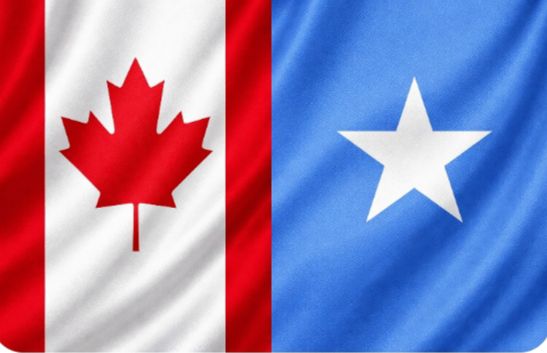
Federalism: Reality vs Rhetoric
1. Source of Authority
Canada
Federal and provincial governments derive authority directly from the Constitution
Provinces are co-sovereign in their jurisdictions
Ottawa does not grant power to provinces
Somalia
Federal Member States (FMS) are treated as delegated authorities
Mogadishu behaves as the source of all legitimacy
Power is politically lent, then withdrawn
Verdict:
Canada = constitutional federalism
Somalia = administrative decentralization disguised as federalism
2. Division of Powers
Canada
Powers are clearly enumerated
Education, health, policing, natural resources belong to provinces
Federal interference is unconstitutional
Somalia
Powers are vague, overlapping, and contested
Security, elections, resources are constantly re-centralized
“Shared powers” become federal takeovers
Verdict:
Canada = clarity
Somalia = engineered ambiguity
3. Fiscal Federalism
Canada
Provinces raise their own taxes
Natural resource revenues belong to provinces
Federal transfers are negotiated, formula-based, and predictable
Somalia
Mogadishu controls external finance and donor flows
FMS depend on federal permission to function
Revenue sharing is politicized and punitive
Verdict:
Canada = financial autonomy
Somalia = fiscal hostage system
4. Security & Policing
Canada
Provinces control policing (Ontario, Quebec)
Federal forces cannot occupy provinces politically
No “federal militias”
Somalia
Federal forces deployed inside FMS without consent
Parallel militias loyal to Mogadishu
Security used as political leverage
Verdict:
Canada = civilian security
Somalia = weaponized security
5. Elections & Mandates
Canada
Fixed terms, independent election bodies
No leader can extend mandate
Elections cannot be suspended
Somalia
Mandates routinely extended or ignored
Election rules changed mid-game
Federal executive dominates electoral process
Verdict:
Canada = rule of law
Somalia = rule of incumbency
6. Dispute Resolution
Canada
Federal-provincial disputes go to courts
Supreme Court respected by all parties
Politics ends where law begins
Somalia
Disputes resolved through:
Coercion
Donor pressure
Clan mobilization
Courts lack authority and trust
Verdict:
Canada = legal federalism
Somalia = political confrontation
7. Asymmetry & Diversity
Canada
Quebec enjoys special language, legal, and immigration powers
Asymmetry is constitutional and accepted
Somalia
Asymmetry is treated as rebellion
Federalism is interpreted as uniform obedience
Difference equals disloyalty
Verdict:
Canada = unity through diversity
Somalia = forced sameness
8. Right to Dissent & Exit
Canada
Quebec held two independence referenda
Secession debated openly and legally
Unity preserved through legitimacy
Somalia
Secession talk criminalized selectively
Dialogue replaced by delegitimization
Exit fears expose weak union
Verdict:
Canada = confident federation
Somalia = insecure state
9. Role of the Center
Canada
Federal government is a coordinator
Leads where necessary, restrained elsewhere
Somalia
Federal government behaves as:
Supreme authority
Political referee
Security overlord
Verdict:
Canada = restrained center
Somalia = hegemonic center
10. Federal Culture
Canada
Federalism is internalized
Leaders respect institutional limits
Losing power is normal
Somalia
Power viewed as existential
Institutions personalized
Losing power equals extinction
Verdict:
Canada = institutional maturity
Somalia = survival politics
FINAL JUDGMENT
Canada practices federalism as a system of limits.
Somalia practices federalism as a slogan.
Until Somalia:
Accepts co-sovereignty
Respects mandates
Ends security coercion
Separates state from regime
…federalism will remain a word without substance.
 Warsame Policy & Media Network (WAPMEN)