
Case Study 1: Food Aid vs. Agricultural Systems (South-Central Somalia)
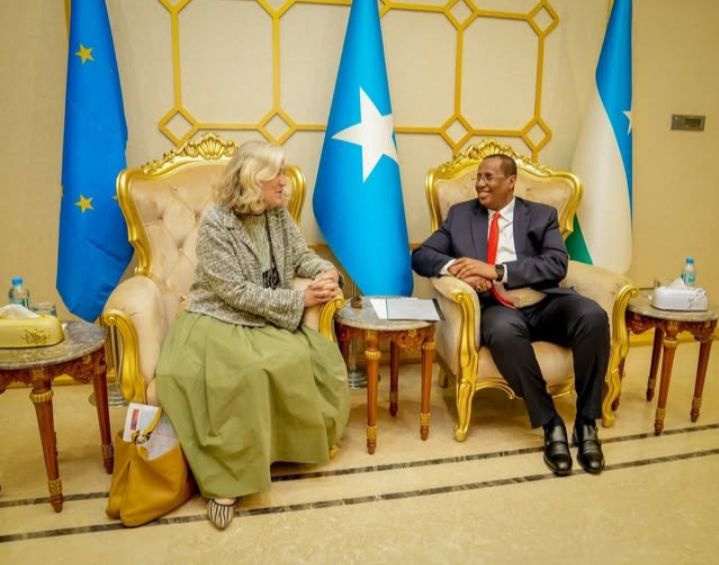
For more than three decades, Somalia has received large volumes of emergency food assistance coordinated with Western donors and multilateral agencies, often under the policy umbrellas of the European Union, the World Bank, and the International Monetary Fund.
Yet sustained investment in irrigation along the Shabelle and Juba rivers, seed banks, agricultural extension services, and rural roads has remained minimal.
Outcome:
Chronic food insecurity persists despite fertile land.
Seasonal famine cycles repeat.
Farmers remain dependent on aid distributions instead of markets.
Policy Lesson:
Humanitarian food aid has substituted for — not complemented — agricultural system-building.
Case Study 2: Fisheries Neglect in a Maritime Nation
Somalia possesses one of the longest coastlines in Africa, yet donor assistance has failed to establish:
Modern fishing ports
Cold storage facilities
Fish processing plants
Export certification systems
While “capacity-building workshops” for fisheries ministries are common, hard infrastructure is absent.
Outcome:
Artisanal fishers remain trapped in subsistence livelihoods.
Illegal foreign fishing continues largely unchecked.
Coastal youth migrate or turn to illicit economies.
Policy Lesson:
Western aid avoids capital-intensive investments that would produce independent coastal economies.
Case Study 3: Livestock — Somalia’s Economic Backbone Ignored
Livestock contributes a significant share of Somalia’s GDP and exports, yet donor programming has largely bypassed:
Veterinary laboratories
Disease surveillance systems
Feed production and rangeland management
Export logistics beyond emergency disease bans
Instead, assistance often arrives after crises rather than preventing them.
Outcome:
Recurring livestock bans devastate pastoral incomes.
Pastoral resilience declines despite generations of expertise.
Emergency relief replaces preventive investment.
Policy Lesson:
Aid treats livestock as a humanitarian concern, not a strategic economic sector.
Case Study 4: Infrastructure by Workshop, Not by Design
Somalia’s infrastructure gaps — roads, ports, energy, water systems — are routinely acknowledged in donor reports, yet funding is:
Fragmented
Short-term
Projectized
Heavily conditioned
Large-scale public works are deferred in favor of studies, pilots, and “stakeholder consultations.”
Outcome:
Markets remain disconnected.
Public services cannot scale.
State legitimacy erodes at the community level.
Policy Lesson:
Avoidance of infrastructure perpetuates fragility while preserving donor risk aversion.
Case Study 5: Education and Health — Permanent Pilots
Western assistance to education and health in Somalia often prioritizes:
NGOs and parallel systems
Short-term service delivery
Donor-branded facilities
National universities, teaching hospitals, and professional accreditation systems remain underdeveloped.
Outcome:
Brain drain accelerates.
Health and education remain externally dependent.
Citizens become service recipients, not rights-holders.
Policy Lesson:
Systems are not built because systems reduce long-term donor relevance.
Cross-Cutting Finding
In Somalia, Western assistance has consistently:
Managed poverty rather than reduced it
Stabilized elites rather than empowered communities
Funded optics rather than outcomes
This pattern is not accidental. A self-reliant Somalia — producing food, exporting fish and livestock, educating its youth, and delivering health services — would fundamentally end the aid theatre.
Somalia-Focused Policy Recommendation Addendum
Replace food aid with riverine irrigation and farmer cooperatives within fixed exit timelines.
Fund fisheries infrastructure, not seminars.
Treat livestock as a strategic export sector, not an emergency liability.
Commit to national infrastructure corridors, not scattered projects.
Invest in universities and teaching hospitals under Somali public ownership.
 Warsame Policy & Media Network (WAPMEN)
You must be logged in to post a comment.