
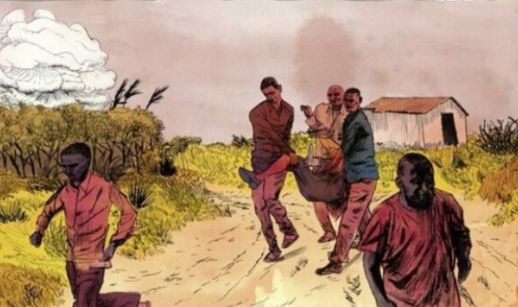
Welcome back to the 1990s—where constitutions are decorative, term limits are optional, and mandates expire quietly while leaders cling loudly.
Somalia has perfected a political magic trick: elections without exits. The calendar moves forward, mandates run out, and yet the chairs remain warm—occupied by men who insist that legality is a suggestion and power is a lifetime subscription.
At the center of this farce sits Hassan Sheikh Mohamud, presiding over a republic where constitutionalism is invoked in speeches and buried in practice. His mandate ends, the law is clear, but the instinct is older than the constitution itself: stay. Stay for “stability.” Stay for “security.” Stay because the state is “fragile.” In Somalia, fragility is the excuse that never expires.
But let us be fair—this is not a solo performance. The presidents of the Federal Member States, many of them governing on borrowed time, have turned expired mandates into renewable leases. No elections? No problem. No legal basis? Minor inconvenience. The formula is simple: declare an “exception,” invoke a “process,” appoint a “committee,” and keep moving. The people will catch up later—if at all.
Thus, federalism without federal discipline mutates into a cartel of incumbents. Everyone agrees on one thing: nobody should leave first. This is Somalia’s new national consensus.
From Federalism to Feudalism
This is not federal governance; it is neo-warlordism in tailored suits. The warlords of the civil war era carried AK-47s and checkpoints. Today’s warlords carry decrees and security details. The methods have evolved; the mentality has not.
Then, authority flowed from the barrel of a gun. Now, it flows from the manipulation of delay. Back then, power was seized by force. Today, it is squatted upon—occupied until someone dares to remove it.
The constitution? Thrown out the window.
Term limits? Framed as Western luxuries.
Mandate expiration? Rebranded as “technical gaps.”
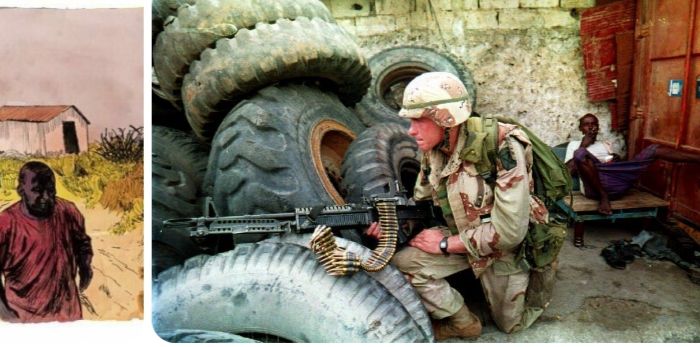
In this theater, legality is a costume worn for international donors and removed at home.
The Dangerous Lie of “Stability”
The most cynical line in this script is the claim that staying in power prevents chaos. History screams the opposite. Illegitimacy is the midwife of instability. When leaders outstay their mandates, they turn institutions into personal property and opponents into existential enemies.
This is how Somalia slides—not with a bang, but with a shrug—back toward the logic of the civil war: power belongs to whoever can hold it. Today it’s not militias; tomorrow it might be. The road is familiar.
A Republic on Expired Papers
Somalia is now governed by expired mandates arguing with each other about legality. The irony would be hilarious if the consequences were not so grave. A country that fought for decades to escape warlordism is now reinventing it—bureaucratically, politely, and with straight faces.
The warning signs are flashing in neon:
No clear succession
No respected timelines
No binding rules
When law bows to incumbency, warlordism doesn’t need guns—it just needs patience.
Somalia is not backsliding by accident. It is being walked backward deliberately, by leaders who fear the ballot more than the battlefield.
And when the next collapse comes—and it always does—these same men will look surprised, blame “spoilers,” and ask for yet another extension.
History, however, will call it by its real name:
Back to Warlordism.
 Warsame Policy & Media Network (WAPMEN)