
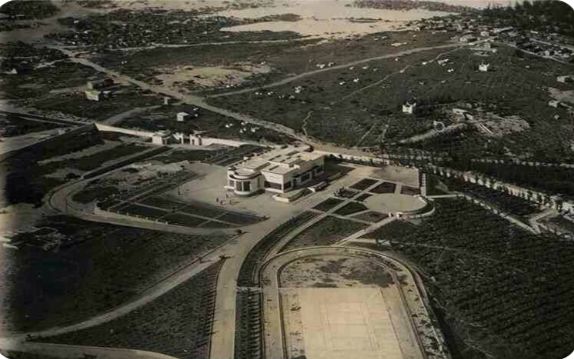
The Israeli government’s recognition of Somaliland is not merely a diplomatic shock; it is a glaring symptom of chronic dysfunction at the heart of Somalia’s federal government in Villa Somalia. States do not fragment solely because of external conspiracies. They disintegrate when the governing center loses its legitimacy, competence, and authority, yet continues to issue commands as if its power were unchallenged.
For years, Mogadishu has issued proclamations it lacks the capacity to enforce. This “paper sovereignty” is dangerously exposed when a federal center, failing to secure even the wider vicinity of the capital, attempts to rule like a unitary command post. This contradiction invites defiance, accelerates the isolation of regions, and creates a vacuum that foreign powers are all too eager to fill. That door has now been kicked open.
Decrees Without Capacity Breed Fragmentation
A government that does not fully control its capital cannot credibly dictate the political destiny of distant regions. Yet Villa Somalia persists in a paradox: employing rhetoric of maximum centralization while possessing minimum state capacity. The result is a predictable spiral: regions hedge their bets, local elites seek external guarantors, and diplomacy becomes a transactional free-for-all.
Thus, the Israeli move is not because Somaliland discovered a magic key to recognition, but because Somalia’s federal center has neglected the hard, consensus-based work of unity. Instead of fostering negotiation, constitutional restraint, and genuine power-sharing, it has pursued unilateralism. Key Federal Member States like Puntland and Jubaland have suspended cooperation with Mogadishu over disputes about the 2026 electoral process, with some opposition groups forming a parallel “Council for the Future of Somalia”.
Security Failure and Political Overreach
The government’s fragility is most stark in the security sector. Despite an initial offensive, al-Shabaab has resurged, recapturing territory in Middle Shabelle and demonstrating the ability to launch high-profile attacks in Mogadishu, including a recent attempt on the president’s convoy. Meanwhile, the fight against the Islamic State in Somalia (ISS) in Puntland is being waged primarily by regional forces with little support from the federal government.
This security crisis unfolds alongside a political power grab. The government’s unilateral push for a “one person, one vote” model for the 2026 elections—an ideal most agree is currently unfeasible—is widely seen as a maneuver to concentrate power and extend its mandate. By unilaterally changing electoral laws and packing commissions with loyalists, Villa Somalia is dismantling the fragile federal settlement, not defending it.
The Open Market of Influence
Somalia’s internal incoherence has turned the country into an open market for foreign influence, where global actors bargain directly with sub-state authorities. The list is long: Israel, Turkey, Ethiopia, Kenya, and Gulf states all play their parts. This does not happen in a vacuum. It happens when the center cannot bind the periphery to a shared national project.
The international reaction to Israel’s move is telling. While it was celebrated in parts of Somaliland, it triggered widespread protests across Somalia and near-universal diplomatic condemnation. The African Union, Arab League, Organization of Islamic Cooperation, and regional bloc IGAD all reaffirmed support for Somalia’s sovereignty and territorial integrity. This global stance highlights that the problem is not a lack of external support for Somali unity, but internal actions that erode it.
Has Villa Somalia Learned Anything?
That is the most damning question. The silence is an answer. There has been no fundamental reckoning, no admission that sovereignty cannot be enforced by press releases. Instead, we hear more orders and denunciations while the structural rot deepens. The government is now poised to assume the rotating presidency of the UN Security Council in January 2026—a symbolic victory that will only magnify its domestic contradictions on a global stage.
If Villa Somalia continues to confuse command with consent, Somalia will not merely face recognition gambits; it will face managed disintegration. The path back requires an urgent return to consensus: halting unilateral constitutional changes, agreeing on a feasible and inclusive electoral model for 2026, and rebuilding cooperative security frameworks with the Federal Member States.
WAPMEN’s bottom line:
You cannot shout unity from a palace you cannot project authority from. You cannot defend sovereignty while hollowing out federal trust. And you cannot stop foreign exploitation without first fixing the broken politics at the center. Until Villa Somalia learns this, every new “diplomatic shock” will be less a surprise and more an indictment.
 Warsame Policy & Media Network (WAPMEN)