
Why Un-negotiated Separation and Federal Over-Reach Are Two Sides of the Same Failure
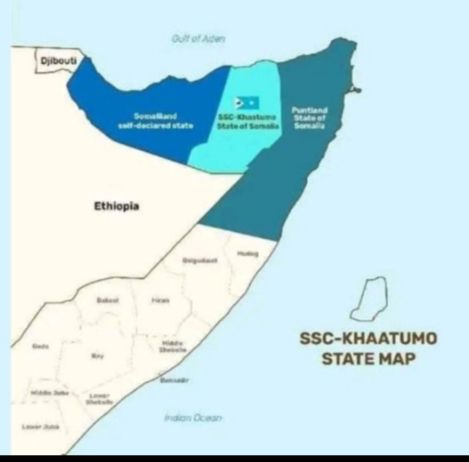
When Abdirahman Faroole stood before the delegates at the Golaha Mustaqbalka Soomaaliya in Kismayo recently, he did more than recall a grievance. He punctured a national illusion. The separation between Puntland State of Somalia and SSC-Khaatumo was never negotiated, never constitutionalized, and never settled. It was improvised—then normalized by fatigue. What Faroole called federal over-reach is not an episode; it is the predictable outcome of Somalia’s habit of substituting delay for decision.
This debate is often miscast as a territorial quarrel or a clash of personalities. That framing is convenient—and wrong. The real conflict is about legitimacy without renewal. Puntland’s authority in SSC areas did not evaporate overnight; it eroded through representation without influence, inclusion without voice, and loyalty assumed rather than renewed. When legitimacy thins, force tempts. When force appears, trust collapses. That spiral explains far more than slogans ever will.
SSC-Khaatumo’s emergence, in turn, is not an act of political vandalism. It is an audit. Communities do not abandon frameworks that protect them; they exit arrangements that ignore them. The problem is not that SSC asserted itself; it is that Somalia allowed assertion to replace negotiation. Un-negotiated separation hardens positions, militarizes misunderstandings, and leaves every party claiming legality while delivering instability.
Enter the federal center—and here the reckoning sharpens. The Federal Government of Somalia has perfected a dangerous craft: symbolic authority without operational responsibility. From Mogadishu come flags, declarations, and endorsements. What does not reliably come are enforceable guarantees—revenue sharing that works, dispute resolution that binds, security coordination that endures. This is not federal leadership; it is performative sovereignty. When the center inserts itself into unresolved regional disputes without convening binding talks, it does not arbitrate—it aggravates.
To pretend this is a clan war is to misdiagnose a constitutional disease. Puntland was founded as a multi-clan federal bulwark when Somalia was dissolving into armed particularism. That achievement is real—and so is its expiration date if not renewed. Institutions that are not refreshed invite older logics to return. When federal mechanisms weaken, clan arithmetic fills the vacuum. Blaming identity for institutional decay is how governance failures metastasize into existential feuds.
The seductive argument—that SSC should bypass Puntland and align directly with the center—offers shortcuts where only hard roads exist. Somalia’s tragedy is not a lack of symbols; it is a shortage of settlement. Direct alignment would not end ambiguity; it would relocate it. Stability is not achieved by skipping layers of federalism; it is achieved by negotiated inclusion—clear competencies, shared revenues, credible arbitration, and timelines that bind.
Calls for Puntland’s withdrawal from SSC miss the point entirely. Withdrawal without settlement produces vacuums, not peace. Authority cannot be abandoned; it must be transformed. Equally, SSC’s legitimacy cannot be wished away; it must be recognized, negotiated, and constitutionalized. Anything less is theater with consequences.
Strip away the rhetoric and the truth is stark: Somalia keeps fighting the same argument because it refuses to finish the same agreement. The Puntland–SSC rupture is a delayed constitutional reckoning over authority, representation, and consent—prolonged by a federal center that prefers applause to arbitration. History is unforgiving to systems that confuse postponement with stability.
Somalia does not suffer from too much federalism or too little unity. It suffers from unfinished bargains masquerading as settled orders. Until the separation is negotiated, the roles clarified, and the guarantees enforced, legitimacy will keep returning—loudly—where it was once neglected quietly.
———-
Support WAPMEN— the home of fearless, independent journalism that speaks truth to power across Somalia and the region.
Tel/WhatsApp: +252 90 703 4081.
 Warsame Policy & Media Network (WAPMEN)