
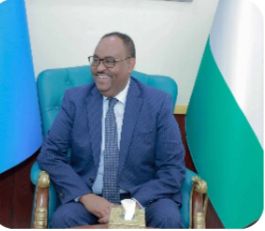
Context: What exactly happened with Sea World?
On July, 2025, Puntland’s Maritime Police Force (PMPF), under President Said Abdullahi Deni’s administration, intercepted the MV Sea World, a Comoros‑flagged vessel, off Bareeda’s coast of Puntland State.
The ship was reportedly laden with Turkish-marked armored vehicles, anti‑aircraft guns, ammunition, and MRAPs—apparently en route to Mogadishu for non-state actors.
Puntland claims the ship entered territorial waters without distress signals, violating UNCLOS and posing regional security threats.
Parts of the cargo were off‑loaded, with some weapons reportedly found in civilian hands outside Bosaso Port, prompting an internal probe.
Diverse reactions: Federal Government and external actors respond
The Federal Government of Somalia has condemned Puntland’s actions as “hijacking,” invoking the provisional constitution and UNCLOS to demand immediate release.
Somalia’s defense ministry asserts cargo was legal military equipment under bilateral agreements with Turkey.
Regional analysts have voiced concerns:
A Turkish analyst accused Deni of acting as a proxy for the UAE, claiming the PMPF was UAE-funded and that UAE backed the seizure.
Turkey has a growing defense footprint in Somalia, highlighted by delivery of helicopters and advisory missions.
Egypt too has increased arms shipments to Mogadishu under defense pacts—adding further complexity.
Will President Deni relent under pressure?
Political and Strategic Stakes at Play
1. Puntland’s Legal and Sovereign Position
The administration emphasizes strict adherence to Somalia’s constitution and maritime law sovereignty.
Releasing the ship under federal pressure may be seen as undermining Puntland’s autonomy and authority.
2. Federal Pressure via Diplomatic Channels
Mogadishu is expected to escalate through federal legal routes and international maritime norms to force a release.
Political pressure may ensue via intergovernmental forums and possible UN monitoring teams already engaged in arms embargo enforcement.
3. Regional Backing and Strategic Alliances
UAE support for PMPF and Puntland’s regional security capabilities—possibly emboldening Deni.
Turkey and Egypt may lobby via diplomatic means but face the risk of confrontation with Puntland’s stance.
4. Domestic Pressure from Puntland Citizens
The public in Puntland demands accountability on illegal weapons flows and expects their leadership to act firmly.
Any sign of backing down risks political fallout at home.
Analysis: Likely outcomes for President Deni
Scenario Likelihood Implications
1.Stand firm, keep the ship detained. Reinforces regional autonomy, asserts Puntland’s maritime sovereignty, but sharpens tensions with Mogadishu and external actors.
2. Negotiate conditional release. Release only after transparent joint federal-regional investigation, potentially preserving unity but risking domestic backlash.
3. Immediate release. Politically costly locally; may ease federal relations but embolden Mogadishu to challenge regional autonomy again.
Conclusion: What’s next?
The Sea World standoff highlights the complex tug‑of‑war between Puntland’s self-governance and Somalia’s federal authority—complicated further by Turkey’s defense involvement, Egypt’s arms deliveries, and UAE’s backing of regional security forces.
President Deni is expected to proceed cautiously, prioritizing Puntland’s constitutional rights and public sentiment. A forced release seems unlikely, but a negotiated compromise—perhaps through joint investigations or international mediation—could emerge if diplomatic costs escalate for Puntland.
What People of Puntland Are Saying
Local citizens express deep concern, saying they “need clarity and accountability—illegal arms must be stopped.”
Analysts warn: “How Deni handles this will define Puntland’s autonomy and its role in Somali federal dynamics.”
Final Thoughts
The world is watching. Whether by legal pressure, diplomatic outreach, or regional alliances, Turkey, Egypt, and Mogadishu will seek to reclaim the Sea World and its cargo. Yet Deni’s political calculus—balancing regional pride, domestic sentiment, and external actors—suggests he’s unlikely to capitulate outright. What happens next could redefine federal-state relations in Somalia and influence Horn‑region security ties.
Stay tuned as investigation results emerge, and diplomatic signals shift.
 Warsame Policy & Media Network (WAPMEN)