* Clan Primacy (Qabilka First): • Unwritten Rule: The clan’s survival and supremacy override national unity. Loyalty to the clan is non-negotiable, even at the expense of collective progress. • Manifestation: Political alliances, resource distribution, and social trust are determined by clan lines, stifling national cohesion. • Vengeance as Justice: • Unwritten Rule: Retaliation against perceived slights (historical or recent) is a moral duty, perpetuating cycles of violence. • Manifestation: Disputes escalate into inter-clan wars, as justice is equated with revenge rather than reconciliation.
• Distrust of Central Authority: • Unwritten Rule: Governments are seen as tools for rival clans to dominate others, leading to sabotage of state-building efforts. • Manifestation: Resistance to federal institutions, preferring clan-based governance or warlordism. • • Collective Guilt: • Unwritten Rule: Entire clans are held accountable for individual actions, justifying collective punishment. • Manifestation: Mass displacements or attacks on clans due to one member’s crime, as seen in retaliatory violence. • • Historical Grievance Eternalization: • Unwritten Rule: Past conflicts (e.g., colonial-era marginalization, 1991 civil war) are weaponized to legitimize present-day hostility. • Manifestation: Clan narratives fixate on victimhood, blocking forgiveness or compromise. • • Elder Worship (Oday Dhaqan): • Unwritten Rule: Clan elders’ authority is absolute, even when their decisions prioritize tribal interests over peace. • Manifestation: Elders may veto inter-clan cooperation to retain power, reinforcing divisions.
• Might Equals Right (Awood Baa Dhaanta): • Unwritten Rule: Power and resources are seized through dominance, not equitable sharing. • Manifestation: Militarized clans monopolize land/ports, excluding “weaker” groups from development. • Short-Term Gains Over Long-Term Peace (Fursad Maanta): • Unwritten Rule: Immediate clan advantage (e.g., grabbing a checkpoint) trumps sustainable nation-building. • Manifestation: Fragile, clan-negotiated truces collapse when opportunistic leaders spark violence. • Slogans Reflecting Tribal Mentality: • “Qabilkaaga ama qofkaaga” (“Your clan or your life”). • If you’re not our clan, you’re inherently wrong. • A feud is answered with a feud. • “Dowlad waa qabiil kale” (“The state is just another clan”). • The one who strikes first prevails.
Case Study: Dafle’s Death & Social Media Reactions The polarized responses to Ahmed Saleebaan Abdalla’s death exemplify these laws. Supporters (often his Darod/Marehan/Dhulbahante clans) framed him as a “heroic stabilizer,” while opponents expressed disappointment that his death saved him from facing justice in life. These reactions reflect Clan Primacy and Vengeance as Justice, reducing complex governance issues to tribal binaries. Social media’s immediacy amplifies spontaneous, clan-driven emotions, sidelining nuanced dialogue.
Pathways to Change: • Civic Identity Over Clan: Promote narratives valuing Somali citizenship (e.g., education campaigns, art). • Institutional Justice: Replace clan-based retaliation with independent courts addressing grievances. • Inter-Clan Economic Projects: Foster interdependence via shared resources (e.g., cooperative farming). • Youth & Women’s Leadership: Bypass elder-centric systems with inclusive decision-makers. “Until Somalis unlearn the laws that chain them to the past, the future will remain a hostage to the clan.”
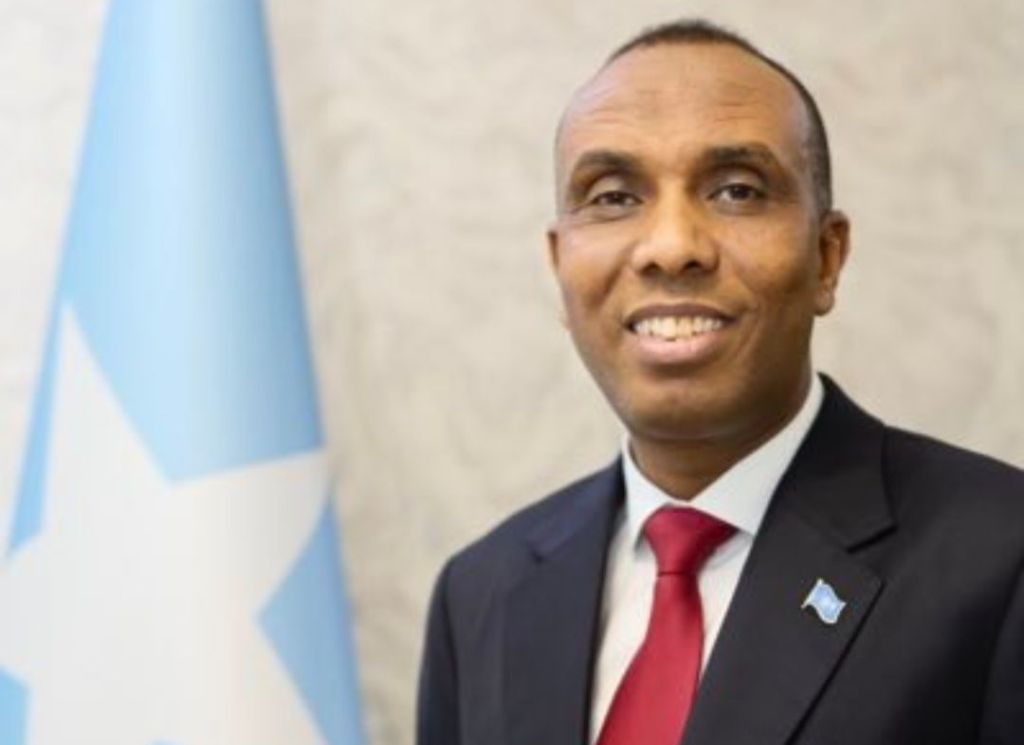
The upcoming visit of Somali Prime Minister Hamse Abdi Barre to Laascaano, a town in SSC Sool region, has ignited debate over its political ramifications. While the trip is framed by the Federal Government of Somalia (FGS) as a gesture of unity and peace, it inadvertently casts a spotlight on Somaliland—a self-declared independent republic seeking international recognition since 1991. For Hargeisa, Somaliland’s capital, this visit presents a paradoxical opportunity: rather than viewing it as a challenge to its sovereignty, Somaliland’s administration could leverage the occasion to amplify its long-standing demands for global attention and legitimization. By welcoming dialogue—or even daring the FGS leader to extend his trip to Hargeisa—Somaliland could transform the narrative, sharing the limelight with Laascaano to underscore its socio-economic aspirations and governance credentials.
1. International Attention: A Double-Edged Sword Somaliland’s struggle for recognition has long been hampered by geopolitical indifference. The FGS’s high-profile engagement in Laascaano, however, disrupts this status quo. International media and diplomatic circles will inevitably focus on the region, creating a rare window for Somaliland to showcase its relative stability, democratic governance, and developmental progress. Hargeisa could seize this moment to contrast its functional institutions with the FGS’s fragmented authority, positioning itself as a viable partner for foreign investment and humanitarian aid. By reframing the visit as a chance to highlight Somaliland’s de facto statehood, Hargeisa could turn the FGS’s symbolic act into a platform for global advocacy.
2. Legitimizing Dialogue and Countering FGS Narratives The FGS’s presence in Laascaano risks reinforcing Somalia’s territorial claims over Somaliland. Yet Hargeisa could subvert this narrative by engaging pragmatically. Inviting PM Barre to Hargeisa would signal confidence in Somaliland’s governance and openness to dialogue—a stark contrast to Mogadishu’s refusal to acknowledge Somaliland’s autonomy. Such a bold move would force the FGS to either engage on Somaliland’s terms or expose its inflexibility, both outcomes beneficial to Hargeisa’s cause. Moreover, it would demonstrate Somaliland’s maturity as a political entity capable of hosting high-level diplomatic exchanges.
3. Socio-Economic Development as a Shared Priority Laascaano, like much of Somaliland, faces challenges such as drought, poverty, and infrastructure gaps. The Prime Minister’s visit—ostensibly to address these issues—offers Hargeisa an opportunity to align its developmental goals with international agendas. By welcoming collaboration (even if symbolic), Somaliland could position itself as a proactive actor in regional stability, appealing to donors who prioritize practical outcomes over political recognition. Joint initiatives, even mediated through the FGS, might inadvertently validate Hargeisa’s administrative capacity, further eroding Mogadishu’s claims of exclusivity.
4. Humanitarian Diplomacy and Soft Power Somaliland’s humanitarian challenges, including displacement and climate crises, often go underreported. The influx of attention generated by the Laascaano visit could redirect resources and advocacy to the region. Hargeisa could capitalize on this by coordinating with NGOs and UN agencies to highlight its own needs, framing itself as a distinct—and deserving—recipient of aid. This would not only address immediate crises but also reinforce Somaliland’s institutional identity in the eyes of the international community.
5. A Challenge to Hargeisa: From Defiance to Strategic Pragmatism Somaliland’s instinct might be to reject the FGS’s encroachment. However, a smarter approach would involve embracing the visit as a catalyst for engagement. By inviting PM Barre to Hargeisa, Somaliland could shift the dynamic from confrontation to cooperation, forcing Mogadishu to either acknowledge Hargeisa’s autonomy or risk appearing obstructionist. Such a gesture would resonate with global actors weary of Somalia’s internal strife, positioning Somaliland as a pragmatic peacebuilder.
Conclusion: Turning Visibility into Legitimacy The FGS’s foray into Laascaano need not undermine Somaliland; rather, it is a test of Hargeisa’s diplomatic ingenuity. By reframing the visit as an opportunity rather than a threat, Somaliland can amplify its message, attract development partnerships, and challenge the FGS’s narrative of unity. The path to recognition is fraught with complexities, but moments like these—when the world briefly turns its gaze to the Horn of Africa—are invaluable. Hargeisa must dare to share the stage, transforming a symbolic visit into a strategic victory in its decades-long quest for legitimacy.
Addendum: Navigating the Recognition Paradox A potential visit by Prime Minister Hamse Abdi Barre to Hargeisa—should Somaliland’s administration extend an invitation—would inevitably spark contentious interpretations. Critics, particularly Somaliland’s hardline sovereigntists, might view such a gesture as tacit acceptance of Mogadishu’s authority, fearing it undermines their three-decade pursuit of formal recognition. For these factions, any engagement with the FGS risks legitimizing Somalia’s constitutional claim over Somaliland as a “federal member state,” a narrative Hargeisa has vehemently rejected since declaring independence in 1991. However, this perspective overlooks the nuanced dynamics of diplomatic signalling. International recognition is not conferred through symbolic visits but through formal state-to-state agreements and multilateral endorsements. By inviting Barre, Somaliland could instead weaponize the optics of parity. Hosting a Somali PM on its own terms—as leaders of distinct entities—would project Somaliland’s confidence in its governance and territorial control. It would force Mogadishu to grapple with the reality of Hargeisa’s autonomy, whether through awkward protocol negotiations (e.g., flags, titles) or media coverage framing the two as de facto equals. Such a scenario would subtly erode Somalia’s insistence on “unity” while amplifying Somaliland’s case for statehood. For hardliners, the fear of normalization with Mogadishu is understandable but short-sighted. Engagement need not equate to capitulation. By steering the narrative, Somaliland could use Barre’s presence to spotlight its achievements: holding successive elections, maintaining security without foreign troops, and hosting diaspora investments—all contrasts to Somalia’s instability. This would resonate with international observers who already treat Somaliland as a sui generis case. Moreover, if Mogadishu refuses the invitation, it would expose the FGS’s reluctance to acknowledge ground realities, further isolating its position. In essence, the risk of misinterpretation is outweighed by the strategic gains. Somaliland’s recognition quest hinges on relentless visibility and pragmatic statecraft, not isolation. A bold overture to share the stage with the FGS could redefine the conversation, turning a symbolic visit into a masterclass in diplomatic manoeuvring.

 Warsame Policy & Media Network (WAPMEN)
You must be logged in to post a comment.