
Introduction
The relationship between Djibouti and Somalia, two neighbors in the Horn of Africa, is deeply intertwined with geopolitics, clan dynamics, and economic interests. Since Somalia’s state collapsed in 1991, Djibouti has positioned itself as a regional mediator and a haven for Somali elites. However, allegations of undue influence, corruption, and covert control by Djibouti’s President Ismail Omar Guelleh over Somali governance have sparked controversy. This essay explores the claims of Guelleh’s mentorship of Hawiye leaders, economic manipulation, intelligence agency infiltration, and complicity in refugee deportation schemes while contextualizing these issues within Somalia’s fragile statehood.
Historical Context: Djibouti’s Role in Post-1991 Somalia
Djibouti’s strategic location and relative stability have made it a key player in Somali affairs. Following Somalia’s disintegration, Djibouti hosted multiple peace conferences, including the 2000 Arta Process, which established the Transitional National Government (TNG) led by Hawiye politician Abdiqasim Salad Hassan. Critics argue that Guelleh exploited Somalia’s chaos to expand Djibouti’s political and economic reach. By fostering ties with Somali leaders, Djibouti secured leverage in regional diplomacy and gained access to lucrative ports and trade routes, vital for its economy.
Political Mentorship and Clan Dynamics
Central to the allegations is Guelleh’s purported role as a “mentor” to Hawiye leaders, a dominant clan in Mogadishu. From warlord Ali Mahdi Mohamed (1990s) to current President Hassan Sheikh Mohamud, these figures allegedly rely on Guelleh’s backing to consolidate power. The claim that Mogadishu’s leadership is “ruled from Villa Djibouti” underscores perceptions of external control. Analysts suggest that Guelleh leverages clan networks to maintain influence, ensuring Somali policies align with Djibouti’s interests, such as countering Ethiopian dominance in the region.
Economic Entanglements: Passports, Banks, and Money Laundering
Somali elites, particularly Hawiye businessmen, reportedly use Djibouti passports for travel, circumventing Somalia’s weak diplomatic standing. This practice, while pragmatic, raises questions about loyalty and dual citizenship. More critically, Djibouti’s banking system is accused of enabling money laundering. A prominent example is Ahmed Nur Ali Jimale, founder of Hormuud Telecom and Salaam Bank, who allegedly operates from Djibouti. Critics claim his enterprises, integral to Somalia’s economy, funnel illicit funds through Djibouti, facilitated by lax financial regulations.
Intelligence Interference: The NISA Marriage Connection
A striking allegation involves Guelleh’s familial ties to Somali intelligence. Reports suggest his divorced daughter is married again to Sadiq John, Deputy Director of the National Intelligence and Security Agency (NISA). This union could signify Djibouti’s infiltration of Somalia’s security apparatus, ensuring Guelleh’s sway over counterterrorism strategies and political surveillance. Such nepotism risks compromising Somalia’s sovereignty, with NISA potentially serving dual loyalties.
The Refugee Deportation Scandal: Complicity and Corruption
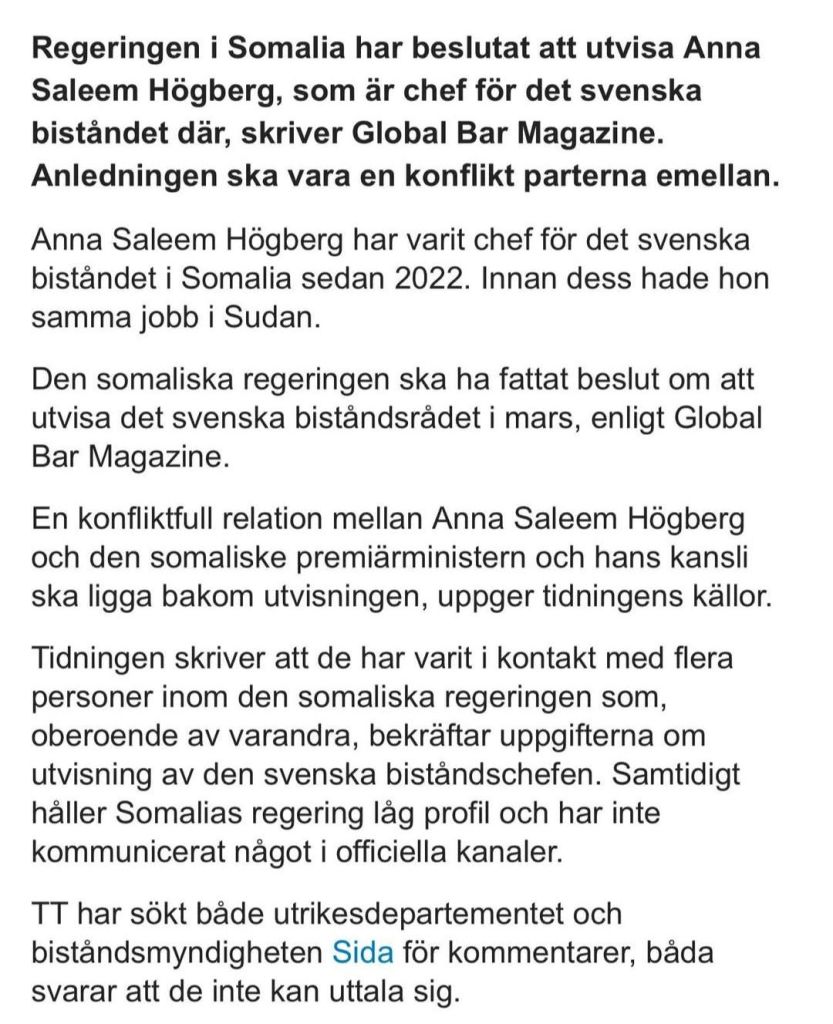
Tensions now flared between Somalia and Sweden over a US$10 million agreement to deport Somali refugees. A Swedish diplomat, Anna Saleem Hogberg, Counsellor and SIDA Representative, has expelled after she exposed the deal, revealing that US$4 million had already been transferred to Mogadishu. The diplomat’s expulsion (declared persona non grata) highlighted the government’s prioritization of revenue over refugee welfare. Critics allege that funds were diverted into private pockets rather than aiding returnees, exacerbating Mogadishu’s humanitarian crisis. This incident underscores broader accusations of corruption within Hassan Sheikh Mohamud’s administration and its collusion with Djibouti.
Implications for Somali Sovereignty and Regional Stability.
The alleged Guelleh-Mohamud nexus reflects Somalia’s vulnerability to external manipulation. Djibouti’s influence risks perpetuating dependency, undermining efforts to build robust institutions. Moreover, the use of Somali refugees as bargaining chips in deportation deals exposes ethical failures in global migration policies. For the European Union, partnering with corrupt regimes to curb migration may violate international refugee protections.
Counterarguments and Complexity
Djibouti’s role is not universally malign. Its mediation efforts have occasionally stabilized Somalia, and hosting Somali businesses aids economic recovery. Passport use may stem from necessity, not disloyalty. However, the lack of transparency in financial and political dealings fuels distrust. While some claims may be exaggerated, the pattern of clandestine dealings demands scrutiny.
Conclusion
The allegations against Ismail Omar Guelleh and Hassan Sheikh Mohamud reveal a tangled web of power, profit, and patronage. Djibouti’s influence, whether as a stabilizer or manipulator, underscores the challenges of rebuilding a state amid regional rivalries and clan politics. For Somalia to achieve true sovereignty, it must confront external interference and internal corruption. The international community, meanwhile, must balance pragmatic diplomacy with ethical accountability, ensuring that refugee policies and foreign aid do not entrench exploitation. Only through transparency and institutional reform can Somalia break free from the shadows of Villa Djibouti.
Sources and Further Reading
• UN Monitoring Group reports on Somalia
• Investigative articles from The Africa Report
• Academic analyses on Horn of Africa geopolitics (e.g., Ken Menkhaus, Stig Jarle Hansen)
NGO reports by Transparency International and Human Rights Watch.
Postscript
Somali money transfer companies (Xawaaladaha) can deposit money legally only in Djibouti, nowhere else in the world, following US strict regulations on money laundering and subsequent war on terror in the aftermath of 9/11. But, Djibouti can not keep these billions of dollars of Somali wealth in the country, so they transfer this huge equity to France and earn huge amounts on the interest. Now, what would happen to this money if something goes wrong in Djibouti? There is a huge risk of losing billions of dollars of Somali capital to French financial institutions forever.
 Warsame Policy & Media Network (WAPMEN)
You must be logged in to post a comment.