White Paper: Streamlining Governance in Puntland State—A Path to Efficiency and Sustainability

Prepared by WDM/Ismail Warsame
Date: April 2, 2025

Executive Summary

Puntland State of Somalia, established in 1998 as a regional autonomy, has evolved from a modest administration of 9 ministers into a bloated bureaucracy of nearly 100 ministers, deputy ministers, and overlapping security forces. While this expansion initially served to balance subclan interests, it now imposes unsustainable economic and administrative burdens. This white paper argues that Puntland must urgently reform its governance model by adopting a lean, merit-based administration. We propose reducing the cabinet to 12 core ministries, dissolving redundant agencies, and rationalizing security forces to align with fiscal realities and strategic priorities. Such reforms will enhance service delivery, reduce waste, and position Puntland as a stable, self-reliant regional entity.


1. Background: The Growth of Puntland’s Administration

Puntland’s founding vision prioritized pragmatism and inclusivity. Its original cabinet of 9 ministers reflected the urgency of post-conflict stabilization and resource constraints. However, over nearly three decades, political accommodations to subclan demands and short-term crisis management have inflated the government to nearly 100 ministers and deputy ministers. Concurrently, parallel security structures—often clan-aligned—have proliferated, creating confusion, inefficiency, and fiscal strain.

Key Statistics:

  • Administrative Growth: From 9 ministries (1998) to ~100 ministers/deputies (2023).
  • Economic Impact: Up to 70% of Puntland’s limited budget is consumed by salaries and operational costs of its oversized bureaucracy.
  • Security Overlap: Multiple uncoordinated forces (e.g., Darawish, PMPF, PSF, PIS, and clan militias) compete for resources and authority.

2. The Problem: Unsustainable Governance

A. Economic Burden

Puntland’s economy relies on modest domestic revenue, livestock exports, and irregular donor support. The current administrative model is fiscally untenable:

  • Salary Overload: Bloated payrolls divert funds from critical infrastructure, healthcare, and education.
  • Duplication: Redundant ministries waste resources.
  • Debt Risks: Wage bills outpace revenue growth, risking dependency on unsustainable borrowing or donor-driven aid projects.

B. Administrative Inefficiency

  • Decision-Making Paralysis: Large cabinets delay policy consensus.
  • Corruption Risks: Proliferation of offices creates opportunities for graft.
  • Poor Service Delivery: Citizens face bureaucratic hurdles to access basic services.

C. Security Fragmentation

Unregulated security forces undermine cohesion and public trust:

  • Clan Loyalties: Forces prioritize subclan interests over state mandates.
  • Resource Competition: Rival units vie for budgets, weakening counterterrorism and law enforcement.

D. Political Trade-Offs

While clan-based appointments have preserved short-term stability, they sacrifice long-term governance quality. Meritocracy is sidelined, breeding incompetence and public disillusionment.


3. Proposed Reforms: A Leaner, Smarter Puntland

To secure Puntland’s future, the government must prioritize efficiency, accountability, and strategic focus.

A. Streamline the Cabinet

  • Reduce Ministries to 12 Core Portfolios:
    1. Finance & Economic Planning
    2. Interior & Federal Affairs
    3. Security & Defense
    4. Justice & Constitutional Affairs
    5. Education & Vocational Training
    6. Health & Social Services
    7. Agriculture & Livestock
    8. Infrastructure & Energy
    9. Commerce & Industry
    10. Environment & Climate Resilience
    11. Fisheries & Marine Resources
    12. Religious Affairs & Community Reconciliation
  • Eliminate Deputy Ministers: Assign technical advisors instead of political deputies.

B. Rationalize Parastatal Agencies

  • Merge or dissolve redundant agencies (e.g., combine disaster management and climate units).
  • Establish independent oversight bodies to audit performance and spending.

C. Security Sector Reform

  • Unify all forces under a single command structure.
  • Retrain and redeploy excess personnel into civilian roles (e.g., infrastructure projects).

D. Merit-Based Appointments

  • Replace clan quotas with competitive hiring and promotion criteria.
  • Create a Civil Service Commission to enforce transparency.

E. Fiscal Discipline

  • Cap administrative spending at 40% of the budget, redirecting savings to development.
  • Digitize payrolls to eliminate “ghost workers.”

4. Benefits of Reform

  • Economic Relief: Savings from wage cuts could fund hospitals, schools, and roads.
  • Faster Growth: A competent bureaucracy will attract investment and aid.
  • Social Trust: Meritocracy reduces grievances and fosters national unity.
  • Security Cohesion: Unified forces improve counterterrorism and rule of law.

5. Challenges & Mitigation Strategies

  • Clan Resistance: Engage elders and influencers through dialogue; emphasize job creation in lieu of political posts.
  • Transition Costs: Seek donor support for retraining programs and severance packages.
  • Implementation Risks: Phase reforms over 18 months, prioritizing high-impact ministries first.

6. Conclusion

Puntland stands at a crossroads. Maintaining its bloated administration risks fiscal collapse and social unrest. By embracing a streamlined, merit-driven model, Puntland can become a beacon of governance reform in Somalia. This requires bold leadership, public engagement, and international partnership. The time to act is now.


To be endorsed by Relevant Stakeholders/Entities
Contact: WDM at iwarsame@ismailwarsame.blog/WhatsApp: +252 90 703 4081


This white paper is a call to action for Puntland’s policymakers, civil society, and international partners to prioritize sustainable governance over short-term political fixes.
Noise Coming from the Indian Ocean and the Red Sea

By Warsame Digital Media 
Uncategorized 
April 30, 2019 

Translation from WDM Somali Article:

There is an outcry coming from the waters of the Indian Ocean and the Red Sea along the Somali coastline in Garacad, Obbia, Merka, Kismayo, Berbera, Lasqoray, Bosaaso, and Alula—both cries for help and anger arising from illegal fishing practices. This distress signals a need for assistance and a call to stop illegal fishing, toxic waste dumping, environmental degradation, and the destruction of fish habitats (fish nurseries), as well as local fishermen’s boats and fishing nets.

With thousands of foreign fishermen operating off the Somali shores mentioned above, the lights from their vessels illuminate the nighttime like major cities of the 21st century.

Most of these vessels are engaged in deep-sea fishing, disrupting marine ecosystems, hindering fish spawning, destroying millions of eggs, and leaving behind wide-ranging debris. Local fishermen are despairing as they witness the destruction of their boats and the nets they rely on for their daily livelihoods. They are also concerned about the toxic fish and pollutants being dumped along the shores, along with suspicious containers washing ashore. Many residents of the coastal areas are suffering from strange diseases, skin ailments, and premature births.

Illegal fishing and toxic dumping are known to be the primary causes of piracy off the Somali coastline. This piracy has evolved into organized crime linked to global trafficking.

In recent years, various governments in Somalia and warlords have been issuing fishing licenses to foreign vessels and companies involved in a corrupt system. The Federal Government has now begun to enter the fray by signing fishing contracts with foreign entities; providing licenses that they are unable to enforce or have any expertise to prevent the use of prohibited fishing equipment.

Today, in Garowe, the capital city of Puntland, a conference featuring the ministers of fisheries from Somalia—both Federal and state—was hosted, ostensibly to discuss fishing resources, but they have never spoken about environmental protection.

This is a chaotic situation in which all economic and trade thieves in the world are competing. There is an outcry coming from the Somali sea.

By Ismail Warsame

Ismailwarsame@gmail.com

Gallant Puntland Defence Forces (PDF).

https://www.facebook.com/share/v/15vhNvPtNp/

Review of “Ethiopia’s Red Sea Politics: Corridors, Ports and Security in the Horn of Africa” by Dr. Biruk Terrefe

By Warsame Digital Media I April 2, 2025

Overview
Dr. Biruk Terrefe’s study examines Ethiopia’s strategic maritime ambitions through the lens of its 2024 Memorandum of Understanding (MoU) with Somaliland, situating this within a century-long quest for sea access and broader geopolitical dynamics. The study, part of the XCEPT program, explores how infrastructure corridors and ports in the Horn of Africa intersect with state-building, sovereignty, and security. By analyzing Ethiopia’s Red Sea doctrine under Prime Minister Abiy Ahmed, Terrefe argues that Ethiopia’s port negotiations transcend commercial interests, reflecting ambitions to become a regional superpower amid perceived encirclement by hostile states like Egypt and shifting global alliances.

Strengths

  1. Interdisciplinary Depth: Terrefe skillfully integrates political science, geography, and development studies, offering a nuanced analysis of how infrastructure shapes (and is shaped by) political orders. His focus on the “infrastructure-security complex” highlights the dual economic and strategic roles of corridors like Berbera and Djibouti.
  2. Historical Context: The study provides a compelling historical narrative, tracing Ethiopia’s maritime aspirations from imperial-era policies to contemporary agreements, demonstrating continuity and rupture in foreign policy.
  3. Multi-Scalar Analysis: By examining sub-national tensions (e.g., Somali-Ethiopian territorial disputes), regional dynamics (e.g., Gulf and Türkiye’s influence), and global geopolitics (e.g., Red Sea security), Terrefe avoids oversimplification, emphasizing the interconnectedness of local and international actors.
  4. Methodological Rigor: The use of interviews, public statements, and archival research enriches the analysis, particularly in unpacking Ethiopia’s securitization discourse and Somaliland’s quest for recognition.

Weaknesses

  1. Speculative Elements: The classified nature of the MoU necessitates reliance on secondary sources and media reports, leading to speculative conclusions about its military and commercial terms.
  2. Ethiopia-Centric Perspective: While the study acknowledges regional tensions, it predominantly centers Ethiopian narratives, potentially underrepresenting Somali and Eritrean viewpoints. For instance, Somalia’s sovereignty concerns are noted but not deeply interrogated.
  3. Timeliness vs. Long-Term Impact: The analysis of events up to 2024 offers immediacy but limits assessment of long-term consequences, such as the viability of the Ankara Agreement or Somaliland’s electoral outcomes.

Contributions
Terrefe’s work advances understanding of how infrastructure projects serve as geopolitical tools, particularly in conflict-prone borderlands. By framing Ethiopia’s corridor diplomacy as a “Red Sea doctrine,” he illuminates the entanglement of development and security agendas, challenging traditional narratives of trade liberalization. The study also underscores the Horn of Africa’s role in global maritime politics, particularly amid competing Gulf and Turkish interests.

Critique
While the study adeptly links Ethiopia’s domestic politics to regional strategies, it occasionally conflates economic and security motivations. For example, the claim that Ethiopia seeks to “escape encirclement” is persuasive but could benefit from deeper exploration of economic data (e.g., trade diversification metrics) to balance the security-focused narrative. Additionally, the role of China—a key investor in Djibouti’s ports—is underexamined compared to Gulf states and Türkiye.

Conclusion
Dr. Terrefe’s study is a significant contribution to scholarship on the Horn of Africa’s political economy, offering fresh insights into the interplay of infrastructure, sovereignty, and security. Its interdisciplinary approach and multi-scalar framework make it valuable for policymakers and scholars navigating the region’s complex geopolitics. While constrained by the opacity of recent events, the study provocatively challenges assumptions about landlocked states’ strategies and sets a foundation for future research on evolving corridor politics. By centering Ethiopia’s ambitions, Terrefe invites critical reflection on how emerging powers recalibrate regional orders in an era of infrastructural competition.

The Failure of National Consultations in Somalia: A Crisis of Legitimacy and Leadership

Warsame Digital Media | Uncategorized | April 2, 2025

The recent call for national consultations by Somalia’s federal president has been met with widespread apathy and outright rejection, exposing a deepening political crisis. The absence of willing participants underscores the president’s eroded legitimacy and the lack of a cohesive civil society capable of meaningful dialogue. Rather than a sincere effort to address Somalia’s challenges, many perceive this initiative as a desperate ploy to extend a failing mandate. With federal member states refusing to engage, the proposed consultations have only deepened the fractures in Somalia’s fragile political system.

The Collapse of Moral and Political Legitimacy

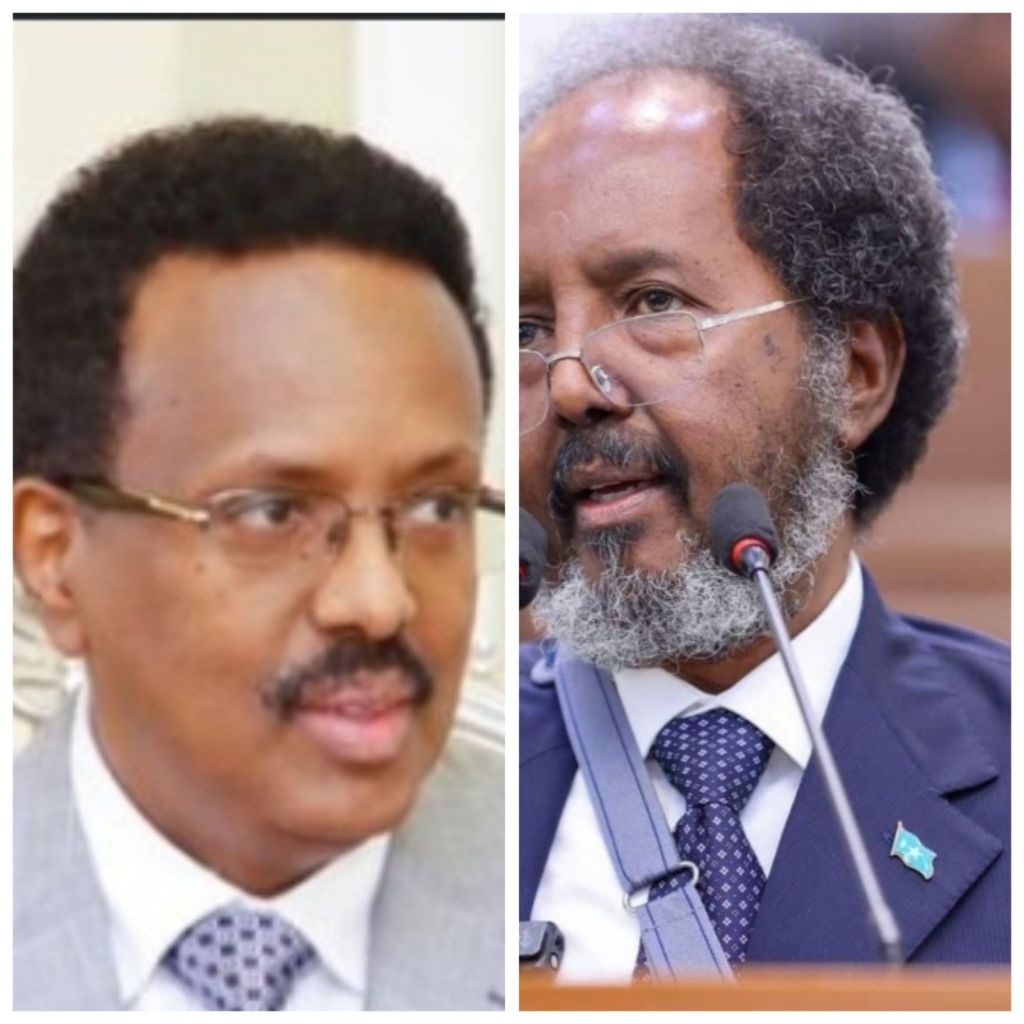
Effective leadership requires both moral authority and political legitimacy—qualities the current administration has demonstrably lost. Accusations of corruption, electoral interference, and exclusionary governance have tainted the president’s tenure. The controversial term extension of former President Farmajo in 2021 set a damaging precedent, eroding public trust in federal leadership. Today, history repeats itself under President Hassan Sheikh Mohamud, whose government faces similar skepticism.

The reluctance of federal member states—including Puntland —to participate in these consultations – speaks volumes. These states have long accused Mogadishu of undermining federalism by centralizing power, contrary to Somalia’s provisional constitution. Without their buy-in, any national dialogue is doomed to fail, as these regions represent critical constituencies that cannot be ignored.

The Vacuum of Civil Society

Decades of conflict, displacement, and institutional decay have stifled the growth of an independent civil society in Somalia. What remains is often fragmented, co-opted by political elites, or too weak to facilitate genuine discourse. In this environment, the president’s call for consultations rings hollow. Without credible grassroots movements, think tanks, or advocacy groups, any dialogue orchestrated by the federal government risks being a performative exercise—scripted to legitimize predetermined outcomes rather than reflect the will of the Somali people.

A Tactical Delay, Not a Solution

Given the overwhelming disinterest in these consultations, many Somalis see them as a stalling tactic rather than a step toward resolution. The president’s term has been marked by persistent insecurity, economic stagnation, and unresolved disputes over federalism and elections. Instead of confronting these issues, the call for dialogue appears to be a smokescreen—an attempt to manufacture the illusion of progress while evading accountability.

Federal member states have recognized this gambit and refused to lend it credibility. Their resistance sends a clear message: superficial talks cannot substitute for genuine political reform.

The Way Forward: Rebuilding Trust and Governance

For Somalia to break this cycle of dysfunction, decisive steps must be taken:

  1. Leadership Transition: The current administration must acknowledge its diminished legitimacy and prioritize a fair, transparent transition over political survival.
  2. True Federalism: Mogadishu must recommit to decentralization, treating federal states as equal partners rather than subordinates.
  3. Reviving Civil Society: International partners and local stakeholders must invest in independent institutions that can foster accountability and inclusive dialogue.
  4. Electoral Integrity: A clear roadmap for free and fair elections is essential to ensure future leaders derive authority from the people—not backroom deals.

Conclusion

The failure of the federal government’s national consultations reflects a broader crisis of leadership in Somalia. Without credibility, the cooperation of federal states, or a functioning civil society, such initiatives are destined to collapse. Rather than clinging to power, Somali leaders must embrace genuine reforms that restore trust and lay the foundation for sustainable governance. Only then can the nation hope to achieve stability and progress.