
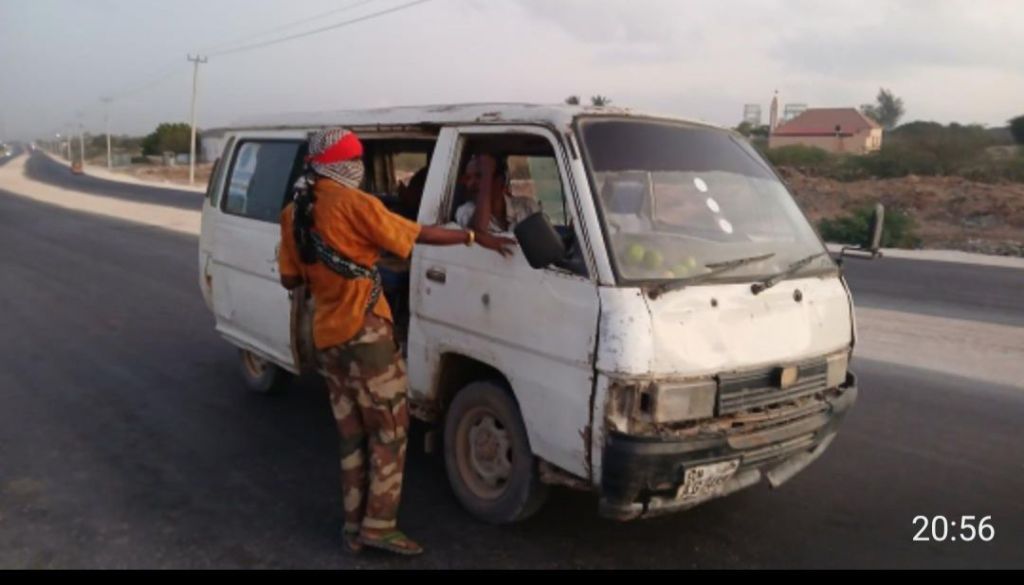


The recent seizure of security checkpoints along the Mogadishu-Afgoye Road by the militant group Al-Shabab is a stark reminder of the fragility of Somalia’s security apparatus and the inability of the Federal Government of Somalia (FGS) to maintain control over critical infrastructure. This alarming development not only underscores the growing influence of Al-Shabab but also signals the collapse of government security forces and the failure of the fledgling federal government to address the realities on the ground. The situation raises serious questions about the competence and vision of Somalia’s leaders, who appear to be out of touch with the deteriorating security environment.
The Mogadishu-Afgoye Road is a vital artery connecting the capital, Mogadishu, to the agricultural town of Afgoye and beyond. It is a lifeline for trade, transportation, and communication, making it a strategic asset for both the government and insurgent groups. For years, the Federal Government, with the support of African Union Mission in Somalia (AMISOM) forces, has struggled to secure this corridor, which has frequently been targeted by Al-Shabab. The recent takeover of security checkpoints by the militant group is a significant blow to the government’s credibility and exposes the weaknesses of its security forces. It demonstrates that Al-Shabab remains a potent force capable of challenging state authority and undermining efforts to stabilize the country.
The fall of these checkpoints is not an isolated incident but rather a symptom of a broader crisis within Somalia’s security sector. Despite years of international support and training, government forces remain poorly equipped, underpaid, and demoralized. Corruption and mismanagement within the security apparatus have further eroded their effectiveness. Al-Shabab, on the other hand, has capitalized on these weaknesses, employing guerrilla tactics, exploiting local grievances, and leveraging its organizational discipline to outmaneuver government forces. The group’s ability to seize and hold strategic positions highlights the lack of coordination and leadership within the government’s security framework.
The failure to secure the Mogadishu-Afgoye Road also reflects the broader incompetence of Somalia’s political leadership. The leaders of the Federal Government, many of whom are entrenched in Mogadishu’s political bubble, seem disconnected from the realities on the ground. Their inability to address the root causes of insecurity, such as clan divisions, poverty, and lack of governance, has allowed Al-Shabab to thrive. Instead of focusing on building inclusive institutions and fostering national unity, the government has been plagued by infighting, corruption, and a lack of strategic direction. This has created a vacuum that Al-Shabab has been all too willing to fill.
Moreover, the government’s reliance on external actors, such as AMISOM and international donors, has fostered a culture of dependency rather than self-reliance. While international support has been crucial in countering Al-Shabab, it cannot replace the need for a capable and accountable Somali security force. The recent setbacks on the Mogadishu-Afgoye Road underscore the limitations of this approach and highlight the urgent need for the government to take ownership of its security challenges.
The implications of Al-Shabab’s growing control over key infrastructure are dire. The group’s ability to disrupt trade and movement along the Mogadishu-Afgoye Road will have a devastating impact on the local economy, exacerbating poverty and displacement. It also sends a chilling message to the Somali people and the international community that the government is incapable of protecting its citizens. If left unaddressed, this could further erode public confidence in the government and strengthen support for Al-Shabab, which presents itself as a viable alternative to the perceived incompetence and corruption of the state.
In conclusion, the takeover of security checkpoints by Al-Shabab on the Mogadishu-Afgoye Road is a clear indication of the collapse of government security forces and the failure of Somalia’s political leadership. The Federal Government’s inability to address the root causes of insecurity, coupled with its reliance on external actors, has created a security vacuum that Al-Shabab has exploited. Unless the government takes decisive action to reform its security sector, address corruption, and reconnect with the realities on the ground, the situation is likely to worsen. The people of Somalia deserve a government that can protect them and provide a path toward stability and prosperity. The current leadership must rise to the occasion or risk being remembered as the architects of Somalia’s continued descent into chaos.
 Warsame Policy & Media Network (WAPMEN)