NAIROBI, Kenya (AP) — The 2011 Somali famine killed an estimated 260,000 people, half of them age 5 and under, according to a new report to be published this week that more than doubles previous death toll estimates, officials told The Associated Press.
The aid community believes that tens of thousands of people died needlessly because the international community was slow to respond to early signs of approaching hunger in East Africa in late 2010 and early 2011.
Associated Press/Farah Abdi Warsameh, File – FILE – In this Monday, Aug. 15, 2011 file photo, children from southern Somalia hold their pots as they line up to receive cooked food in Mogadishu, Somalia
The toll was also exacerbated by extremist militants from al-Shabab who banned food aid deliveries to the areas of south-central Somalia that they controlled. Those same militants have also made the task of figuring out an accurate death toll extremely difficult.
A Western official briefed on the new report — the most authoritative to date — told AP that it says 260,000 people died, and that half the victims were 5 and under. Two other international officials briefed on the report confirmed that the toll was in the quarter-million range. All three insisted they not be identified because they were not authorized to share the report’s contents before it is officially released.
The report is being made public Thursday by FEWSNET, a famine early warning system funded by the U.S. government’s aid arm USAID, and by the Food Security and Nutrition Analysis Unit – Somalia, which is funded by the U.S. and Britain.
A previous estimate by the U.K. government said between 50,000 and 100,000 people died in the famine. The new report used research conducted by specialists experienced in estimating death tolls in emergencies and disasters. Those researchers relied on food and mortality data compiled by the Food Security and Nutrition Analysis Unit.
Because of the imprecise nature of the data available, the toll remains only an estimate.
When asked about the report, Somalia Health Minister Maryan Qasim Ahmed said she didn’t want to comment until she read it because of questions she had about the accuracy of the figures.
Sikander Khan, the head of UNICEF in Somalia, also said he needed to look at the report’s methodology before commenting specifically. But he said generally that the response to the famine was problematic because it depended on political dynamics. He said the international community needs to change the way it classifies famines.
“You lose children by the time people realize it’s met the established definition of famine,” he said.
Marthe Everard, the World Health Organization’s country director for Somalia, said she has not yet seen the report but would not be surprised by such a high death toll.
“The Somalis themselves were shocked about the number of women and children dying,” she said, adding later: “It should give us lessons learned, but what do we do with it? How do we correct it for next time?”
Much of the aid response came after pictures of weak and dying children were publicized by international media outlets around the time the U.N. declared a famine in July 2011.
“By then you are too late,” Everard said.
A report last year by the aid groups Oxfam and Save the Children found that rich donor nations waited until the crisis was in full swing before donating a substantial amount of money. The report also said aid agencies were slow to respond.
Quicker action wouldn’t have prevented the deaths in areas controlled by al-Shabab. The militant group prevented many men from leaving the famine-hit region and allowed no emergency food aid in.
Thousands of Somalis walked dozens or hundreds of miles to reach camps in Kenya and Ethiopia. Countless numbers of families lost children or elderly members along routes that became known as roads of death.
English: Jubaland map, is a detailed map of Jubaland territory including the three provinces of Jubaland(Jubbada Hoose, Jubbada Dhexe & Gedo) and the many districts. the capital of the autonomous state of Jubaland is Garbohaarey, the commercial capital is Kismaayo and the most populous city is Beledxaawo. (Photo credit: Wikipedia)
Somalia: Rumours Of Al-Shabaab’s Death Are Greatly Exaggerated
By Stig Hansen
April 25, 2013
Harakat Al Shabaab is an organisation that has, for many years, been misunderstood. This is perhaps most clearly illustrated by the frequent predictions concerning its fragmentation and imagined demise. These predictions first occurred in 2008 and have been repeated ever since. They overshadow a very important and, for Somalia, comparatively unique trait – namely its success in maintaining its unity relative to other Somali factions.
The second misunderstanding is the importance of the so-called ‘global-local divide’, where one part of the organisation is predicted to split of from Shabaab because of a supposed difference in focus. By using local sources, and studying interviews with the organisation’s leadership, a more complex picture emerges. This is a picture of an organisation influenced by clannism and with differences over strategy, its degree of centralization and implementation of Sharia, but also with a local focus, whose largest contribution to international radicalism is probably its foreign fighters, and NOT a will to strike at international targets.
The confusion was in many ways a product of stereotyping, both of Al Qaeda and of Shabaab itself, coupled with a lack of access to Somalia in order to carry out local interviews. Fortunately, I had the opportunity to visit Mogadishu continuously from 2006 until the present day – this greatly aided information gathering, but also created considerable irritation (on my part) over some of the external “desk top” analyses on Al-Shabaab.
Origins: Jihad and Justice
Shabaab itself was most probably formed in 2006, initiated by a Mogadishu based ‘old boys’ network made up of veterans from Afghanistan (and their supporters), also supported by Al Qaeda veterans, which at the time had little contact with regional Al Qaeda organisations. These veterans were formed by the so called “shadow wars” of Mogadishu between Western and Ethiopian intelligence, future Shabaab leaders, Al Qaeda veterans, warlords and clan militias – supposedly part of the “War on Terror,” but in reality a multifaceted conflict with many local dimensions.
Al-Shaabab’s initial success was driven by the perception that islamist control was preferable to the reign of the warlords – with all their crimes, random acts of violence and targeting of the civilian population. Shabaab, as a part of the wider Sharia court movement, managed to contribute to a more peaceful Mogadishu in 2006. This was the first lesson to be learned from Al-Shabaab’s success – if there is little protection offered to ordinary Somalis, through for example a non-paid predatory police, Shabaab will flourish – offering the harsh alternative of Sharia, which at-least give some resemblance of order, and of safety. A gender activist told the writer in 2007 that she preferred Shabaab to the government at the time, since the latter’s police were not paid, and plundered and raped – probably a true statement in this period. Indeed, Shabaab propaganda showed pictures of pillaging police in 2007 and 2008.
In 2007, Ethiopian use of heavy artillery, sometimes falling on civilians, helped the recruitment of a new, leaner and more radical Shabaab. This Shabaab drew attention to itself by speculative but low cost fighting techniques such as suicide bombings, but nevertheless avoided the larger battles that other parts of the opposition fought against the transitional government and the Ethiopians, saving its forces for later.
Fragmenting… as usual?
The first rumors of a split inside the Shabaab occurred in 2009, when Ethiopia withdrew from Somalia; Shabaab drastically expanded and took the then interim capital of Baidoa. The split was often said to have been between the previous spokesperson of Shabaab, Afghanistan veteran Muqtar Robow, and the leader of the organization, Muktar Abdirahman “Godane”. However, when I spoke to locals in Baidoa over the telephone at the time, they stressed the continued centralised nature of the movement, believing that for this reason it would survive. The analysts that predicted the collapse of the Shabaab also failed to notice that it was another Shabaab leader, Fuad Qalaf “Shongole”, who made the public critique of Robow, not Godane. And indeed Shabaab did not collapse.
Predictions of Shabaab’s split into factions led by Godane and Robow have continually resurfaced. Despite Shongole often making statements with a very local agenda, and Robow at times making statements on a very global agenda, and despite Shabaab’s clearly local modus operandi, abstaining from attacking international targets (the only exception being the Kampala attacks in 2010), the local-global division was repeatedly stated, with little evidence to show for it. By systematically exploring the speeches of the leaders, an alternative picture merges, a picture were the “local” is very important for the so-called globalist faction, while signals of a global interest are displayed by individuals supposedly close to Robow. For example, the initial adaptation of the very un-Somali suicide bombing technique by members of a sharia court militia close to Robow in 2006.
Shabaab’s other serious cleavages came to the fore following the Ramadan offensive in 2010, when Godane applied a very unusual strategy for Al Shabaab – namely large militia attacks over open territory. Most analysts, however, failed to understand the nature of these differences over tactics, and resistance towards Godane’s centralization attempts, often voiced by Shongole. The cleavage between Godane and Shongole, largely over Sharia implementation, was also totally neglected.
The fortunes of the Shabaab declined after the loss of the Ramadan offensive. It subsequently lost control of its territories in Mogadishu (including the important Bakara marked) and changed its strategy there to a guerilla based approach. Having lost Baidoa, and the important Southern port city of Kismayo, at the time of writing it is left in control of only a few smaller cities.
These defeats were, however, primarily as a result of African interventions (and not due to an internal disintegration of the Shabaab) – the Ugandan and Burundian AMISOM forces in Mogadishu and the (re)entry into the conflict by Ethiopia and Kenya in 2011/2012 respectively. The resilience of Al-Shabaab was almost unique in a Somali setting – despite taking a lot of losses, it managed to avoid direct confrontations between leaders in the open, save the critique of Omar Hamami (Abu Mansoor Al-Amriki), a rather peripheral figure in the Shabaab leadership, but admittedly quite prominent in their propaganda. The often predicted breakdown of Al-Shabaab simply did not take place. There where problems, but problems, as the last alleged showdown between Ibrahim Afghani and Godane demonstrated, never followed the supposed global-local divide, and, perhaps more importantly, never fragmented the organization – there were defections, but seldom from the top ranks.
More curiously, sources such as the diary of Fazul Muhamed, Al Qaeda’s leader in East Africa, as well as the papers from Abbotobad after the killing of Osama Bin laden, showed an Al Qaeda more inclined to mediate in the conflicts that plagued the Shabaab, and not always inclined to support the presumed “globalists” within the movement. Al Qaeda strategists also appeared worried about too harsh an implementation of sharia in Somalia, never pressing a more global agenda on the Shabaab, even being hesitant to the latter’s union with Al Qaeda.
An interim conclusion
The Globalist/localist division inside Shabaab has often been overstated, based on hear-say and seldom clearly proven, but it was a tempting narrative. In Somalia, the influence of this narrative has been damaging, as it failed to highlight other cleavages within the Shabaab, and the organisation’s real strengths and weaknesses.
The time has come to stop predicting a collapse of the Shabaab according to a globalist/localist fissure and to acknowledge the surprising show of unity within a predominantly Somali organization. For 9 years it has managed to transcend the centrifugal forces of clannism that has led almost every other organization in Somalia, including various governments, into fragmentation.
Shabaab has not been divided into a radical group that wants international action, and another group that just wants to reform Somalia – the two groups overlap, but with a mutual agreement that the focus should be on Somalia first, and after that on the region.
Shabaab’s relative success in bringing law and order in Somalia (admittedly of the harsh kind) should not be overlooked. Neither should its relative success in spreading jihad in Africa, by exporting ideology and training to Libyan, Sudanese, Nigerian, Kenyan, Tanzanian, and probably Ethiopian jihadist sympathizers, nor should the movement’s primary tactical focus, which is set on Somalia with an increasing interest in Kenya.
Stig Jarle Hansen is an Associate Professor in International Relations at the University of Life Sciences in Norway.
Restore balance between the presidency and the cabinet under the Prime Minister by ensuring that the President plays his constitutional role of upholding the laws of the land and lets the cabinet run the day-to- day affairs of the country;
Create an environment conducive to national consensus and act as managers of the current political process and not as the sole proprietors;
Dismantle known corruption syndicates and replace them with individuals of high standing and selected purely on the basis of merit in order to increase domestic revenue and establish credibility with the donor
community;
Immediately convene a roundtable discussion on the restoration of the nation’s financial well-being and enlist the assistance of the International Monetary Fund and the World Bank;
Address the exchange rate crisis, diminished purchasing powers of the Somali people, and soaring commodity prices by convening an urgent conference that includes policymakers, the business community, economic and monetary policy experts, and international financial institutions;
Strike an interim win-win arrangement with regional stakeholders in Jubbaland with the aim of
conducting, within two years, free and fair elections where citizens elect mayors, governors and regional administrators.
The Heritage Institute for Policy Studies is an independent, non-partisan, non- profit policy research and
analysis institute based in Mogadishu, Somalia. As Somalia’s first think tank, it aims to inform and influence
public policy through empirically based, evidence-informed analytical research, and to promote a culture
of learning and research.
Source: The Heritage Institute For Policy Studies, Mogadishu, Somalia.
A major British defence company is supplying the deadly US drone programme, which has killed scores of civilians, leading critics to condemn the UK as complicit in ‘war crimes’.
The firm, Cobham plc – which specialises in defence and communications electronics, including satellites – manufactures antennas for armed Predator drones used to launch fearsome weapons on to targets.
The Mail on Sunday can reveal that the Government has approved a series of controversial export licences for the firm, showing that Ministers are officially sanctioning the controversial US drones war.
The unmanned Predator, armed with Hellfire missiles or guided bombs and with a top speed of 135mph, has been used to find and kill Al Qaeda leaders and terrorists in a series of covert missions in Afghanistan, Pakistan and Africa.
Human rights groups say that the drone attacks violate international law and kill civilians.
British companies supplying military equipment to other countries must seek approval for contracts from the Government. Last year another British company, GE Intelligent Platforms, pulled out of supplying the Predator programme following an outcry.
But according to a document seen by The Mail on Sunday, the Department of Business, Innovation and Skills (BIS) granted Cobham 31 drone export licences between 2008 and 2012. Many of the parts covered by the licences will end up being used in drones, including the Predator and Reaper.
In its literature, Cobham boasts of its work with the Predator. It says: ‘Cobham’s communications antennas, radar components and sub-systems play important roles in modern UAVs [unmanned aerial vehicles], including the General Atomics Predator family of drones.’
Last night human rights group Reprieve called on the Government to review its policy on granting the licences. Reprieve lawyer Catherine Gilfelder said: ‘US drones hover over towns in non-war zones 24 hours a day, seven days a week, terrorising communities and indiscriminately killing, in violation of international law.
‘The manufacture of components for Predators on British soil further implicates this country in these gross human rights violations.
‘The Government, by condoning the export of these components, is demonstrating a complete lack of concern for those affected by drones and for the UK’s reputation. Export controls urgently need to be tightened in order to end our complicity in this unlawful programme.’
John Hemming MP, a Liberal Democrat member of the all-party committee on drones, said: ‘The UK needs to stop facing both ways on armed drones. They may be efficient and cost effective tools for extra-judicial executions, but they don’t deliver peace.’
And Rehman Chishti, Conservative MP for Gillingham and Rainham, said: ‘It has previously been alleged that the Government has supported the American drone programme through providing locational intelligence and both of these issues raise serious questions about whether the Government has acted in accordance with international law.’
Foreign Secretary William Hague has said that the UK supports the use of armed drones only in Afghanistan where the UN has authorised military action. But the US military also operates armed drones in Pakistan, Somalia and Yemen, where innocent civilians have been killed in attacks on suspected terrorists.
The Department for Business Innovation and Skills has refused to disclose details of licences on grounds of commercial confidentiality. A spokesman said that human rights issues were properly considered in all export licence decisions.
A spokesman for Cobham, which is based in Dorset, confirmed it supplied antennas ‘to numerous unmanned systems including the US Predator, specifically via our facility in Texas.’
English: President of the European Council, Herman Van Rompuy, at the Europe edition of the World Economic Forum in Brussels, Belgium in May 2010. (Photo credit: Wikipedia)
Posted On : April 20th, 2013 | Updated On : April 20th, 2013
It is a great pleasure to welcome Prime Minister Hailemariam Dessalegn on his first official visit to Europe.
I also know this is the first official visit that he pays outside of Africa after his election, and I thank you for that. I think this is a signal of the commitment of Ethiopia to the good relationship with the European Union.
Let me also stress on behalf of the European Union our interest to further deepen our political and economic relations, and to tackle wider regional security challenges.
Today we had a very open and friendly discussion on a number of issues related to our bilateral relations.
I have congratulated Ethiopia on its continued significant and broad based economic performance as well on its impressive progress in poverty reduction and Millenium Development Goals’ achievements.
But Ethiopia still has potential do more and better. I have heard the Prime-Minister’s plans for the next stages of development of the country. I had the opportunity to recall that this ambitious agenda also requires the widest possible participation and support throughout society.
Ultimately economic growth can only be sustained if it is achieved in an open society respectful of fundamental rights and also freedom, from freedom of expression to freedom of the press.
We want to be a partner of Ethiopia in this process. And if I may quote the Prime Minister, indeed we are a partner and we are proud of our contribution to Ethiopia’s growth and development. We have been a very active partner in terms of cooperation, development and investment, with our companies there, and we want to remain a very important partner, in the interest of Ethiopia, in the interest of the region, in the interest of our overall relations with Africa and also in the interest of the European Union. Our relationship with Ethiopia is today a more mature relationship, it’s not just of course development assistance, it’s much more than that. It’s also political cooperation, it’s also what we can do together to tackle some common challenges.
We have already substantial and diversified economic and trade relations. The European Union is the most important trade partner for Ethiopia, with over 40% of Ethiopia’s exports coming to Europe. This reflects our broader openness and commercial commitment to Ethiopia and our African friends.
And we stand ready to support the Government in its long-term vision leading to growth and increased investment and, at this respect, we fully support Ethiopia’s efforts to join the World Trade Organisation.
Our development cooperation is also part of our commitment to Ethiopia’s prosperity. Good results have been achieved in our cooperation on food security and on basic service delivery throughout the country. We look forward to continuing this good cooperation throughout the next European Development Fund, the 11th European Development Fund, which will apply as of next year, with an even stronger focus on health issues. It is my pleasure to announce today that the European Union has already now agreed to an additional allocation of € 30 million for maternal health. The Prime Minister has explained to me how Ethiopia intends to reach on time all the Millenium Development Goals and this is our additional contribution for that purpose. Once again I’m congratulating Ethiopia for the achievements so far.
Finally, I also commended Prime Minister Dessalegn for Ethiopia’s important and positive role on a number of regional issues and crisis situations in the Horn of Africa and beyond. I am referring specifically to Ethiopia’s political and security efforts in Sudan, its engagement in Somalia and within regional organisations. As chair of the African Union, Ethiopia will represent Africa at the G20 summit and during the climate negotiations, key issues for the European Union where we share a strong agenda with our African partners.
So we also discussed some regional issues, and the broader priority of the African Union-European Union relationship. Next week I will be in Addis Ababa, precisely chairing, on the European side, the meeting between the African Union Commission and the European Commission. We are precisely now preparing what it can be a very successful Summit, the 2014 European Union-African Union Summit. And I’m sure that Ethiopia, under the leadership of Prime Minister Dessalegn, will give a very important contribution for that success.
Prime Minister,
You can be assured that the European Union will continue to support Ethiopia on its path towards further economic and social development, in our mutual interest.
And once again thank you for your visit to Brussels.
You know, when there are calamities that befall our country like what happened on Monday at the Boston Marathon, there seems to be a knee-jerk belief among many that the terrorists must be from abroad and that anyone fitting the description needs a beat-down. Hey, this is not to suggest that the fear is unwarranted, especially when we have precedents with 9/11 and the earlier attack on the Twin Towers in the Nineties.
But it seems to me, especially from our news media and from the consciousness-impaired that all of these attacks must emanate from people of color, namely people from the Middle East, a considered trouble zone. Not necessarily, because we also have homegrown, right-wing, light-skinned to white people who practice bomb-making and are stockpiling weapons, and have some serious “issues” with the United States as if they were about to go to war at any moment. …
The World Bank’s working definition of the Non-Governmental Organisations “The NGOs” is, “ private organizations that pursue activities to relieve suffering, promote the interests of the poor, protect the environment, provide basic social services or undertake community development.” But many people now ask whether the NGOs that work in Africa are progressively engaged in activities that are developmentally sustainable. And by the way, how democratic and accountable are the NGOs?
East Africa
Here in Kenya, it looks as though most Kenyan middle class individuals, and their regional counterparts who live in Nairobi, have their own Non-Governmental Organizations or are partners in NGOs with others. Interestingly, Kenya’s capital, Nairobi, is the base for this huge, unregulated and unaccountable industry which, when looked at the surface, seems to have a supporting role for the local economy, human rights advocacy and governance programmes. Nairobi is the NGO’s capital in Africa.
I came to the conclusion, however, that the overwhelming majority of the NGOs do more harm than good to livelihoods and sustainable developments in Africa. Here is my charge sheet: NGOs artificially sustain a false economy whereby they push huge amounts of cash into the pockets of corrupted local African partners while taking most of the cash back to their private bank accounts in Europe and elsewhere. Yes, they do pay the salaries of a few people here and there who support their families. But that’s not my point. The NGOs actually work against home-grown developmental strategies in Africa. The NGO operatives don’t want the recycling of aid operations – which creates chronic dependency and corruption within the receiving societies – to end. For example, NGOs are not prepared to cede some power or train local people to take over in the future, and they don’t give the confidence necessary to carry out the work to local government personnel of the countries that they operate in. Africans have the experience and the expertise to own the operations of the NGOs, but actually the foreign bosses of the NGOs want to retain power in order to continue the dependency culture that they have created.
In Kenya, the number of the NGOs in Nairobi had surpassed the capacity of the Kenya government departments. If you stop at a traffic junction in downtown Nairobi for a moment, you’d have spotted every few seconds that passes an especially number-plated NGO’s 4X4, clearly marked on the side with the logo of the NGO that owns it or a partnership logo with a government department. This is true. And you may find out more if you ask anyone who lives in Nairobi. When a European colleague and I recently took the steps of a 1st floor coffee shop at Yaya centre in Nairobi, he whispered to my air and said, ‘this is where they cook Somalia.” He was referring to the mixture of Europeans and Africans in most of the tables we passed.
Leaving that Mall later that evening, we waited for our taxi for nearly an hour, because the car parking lot was full and the road leading to the centre was choking with traffic. I confirmed my colleague’s statement when I later met a couple of NGO reps at Yaya centre. It’s the same story in every other Western-style shopping centre throughout Nairobi. Perhaps, they do cook Somalia at Yaya and Congo at the Junction Mall! I have lived in Nairobi since October of last year, and I have seen more than my fair share of NGO’s actual activities in this region.
Sexual freedom, women’s rights, child soldiers, judicial reform, and what they call “good” or “better governance” are the areas they concentrate on most of their efforts, and these kinds of NGOs are plentiful here in Nairobi. However, you wonder how can they empower women or protect the rights of the child in Africa if they keep corrupting the very institutions that are meant to carry out the necessary support systems? Christian and Muslim NGOs are here too. But unlike conventional NGOs, the religious charities also compete relentlessly among themselves for the hearts and minds of Africa’s poor. Read the bible or the Koran and we will dig water wells for your community is their main policy objective. Religious-based NGOs, however, are far more active in helping alleviate the short and medium term needs of their target populations, building a match-box-sized school there or bringing few mattresses to a hospital in that village.
Much of the operations of WilsonAirport, Nairobi’s second airport, are NGO-related. Tens of light aircrafts take off from this airport for destinations across East and Central Africa every day. Daily flights depart for Kinshasa, Kisangani, Juba (South Sudan), Mogadishu, Kigali and Hargeisa, most of the time carrying a few NGO executives who fly twice a week from Wilson to sign yet other non-existent projects with local leaders of their destinations.
And it’s not only the local African populations that receive the brunt of NGO’s onslaught; ethical journalism is victim too. Upon arrival in the continent, NGOs reps and journalists link up much quicker than other professional expats because they depend on each other in the rough terrain of Africa. It makes business sense too, more corrupting business that is. NGOs are the first to find an African tragedy. Then, they call their journalist colleagues in on their phones, and upon arrival they provide with them handy 4X4s, complete with experienced driver and armed bodyguards. To return the favour, journalists beam to the Western prime time televisions with harrowing stories of death and destruction.
In fact, the journalists are encouraged to travel on the NGO’s chartered planes for free, and in return for the hospitality, the NGO executives ask the journalists to bring graphic pictures and exaggerated stories of the local situation back with them, ready for consumption in Western capitals for more donations.
The NGOs have unlimited powers here in Africa and they are unaccountable to any other authority. In Kenya, South Sudan and Uganda, for example, NGOs act as something more or less similar to coalition governments. But in Somalia and the Congo, they effectively run the whole country. African ministers are powerless against the NGOs and are scared of them for fear of being deprived of future funds. Or they may have already been corrupted by them so the NGOs have the upper hand all the time. I heard a firsthand account of a Somali minister begging an NGO executive from his hotel room for extra subsistence allowance while the plane taking him back to Mogadishu was being repaired.
NGO operatives often resist the calls for relocations closer to epic centres of their operations, like setting up shops in various towns across Somalia and the Congo. Earlier this year, the UN agencies have issued directives to partner organisations to relocate their staff to Somalia by May 2013. To my knowledge so far, none of them had done so. Almost all of the NGOs that have activities in Somalia, South Sudan and the Congo are based in Nairobi and do not wish, apart from periodical visits, to base themselves in the country of their operations. Simply, it’s not comfortable enough for them to live there. You’d have thought that the safety of their personnel is their main priority, but the stories I am discovering are doubtful and suggest otherwise.
Early last month while I was returning from Djibouti, I met a Norwegian aid worker at Addis AbabaAirport. We were both transiting at Addis on our way to Nairobi. I asked where he was coming from. ‘Hargeisa,” was his reply. The British government had earlier that week issued a warning of a credible terrorism-related activity in Somaliland. Without my prompting, he added, “Bloody UK Foreign Office, many people were leaving Hargeisa.” He told me that he and his family live in Nairobi, and that his children attend private schools there. I asked about the operations of his organisation in Somaliland. “On my part, nothing much really,” and he went on, “I just visit Hargeisa once in every three months, and Garoowe, twice a year, simply to check the boys and girls there.” There is no way to verify this story as people often misrepresent themselves in a volatile and dangerous region like the Horn of Africa.
If the NGOs are in Africa for anything other than transitional services, they should not be allowed to operate in this continent any longer. The NGO culture must come to an end in Africa and throughout the developing world. Where NGOs have become a substitute for governments for so long, it’s almost impossible to lay the foundations of a functioning state. Moreover, places like Somalia, the Congo and Afghanistan where NGOs have operated for decades now, they should set the example for any change in policy from donor states. How can we expect a Somali or an Afghan minister who begs for his subsistence allowance from an NGO to take on the Shabaab or the Taliban? Simply, it doesn’t make sense. Real power should be removed from the NGOs and transferred to the indigenous populations.
I suggest that a pilot programme somewhere in Africa – perhaps Somalia or Congo – should be put into action sooner rather than later.
In fact it’s time to overhaul the cartel-style aid industry in Africa and the developing world. It makes all the sense in the world to hand over the cash to the institutions it meant to be supporting and embed couple of auditors in them. It’s cheaper, highly effective and it will be in line with the local socio-economy in a sustainable manner. Donor states should seriously reconsider whether to funnel their tax payer’s money and other resources through unaccountable third parties.
Next, CNN’s John King raised the alarm about a more elusive “dark-skinned male” who the TV reporter said was in custody on Wednesday.
The following day, the New York Post got more specific. It slapped pictures of two young men on its front page, calling them “Bag Men” and identifying them as persons of interest to federal authorities. One was Salah Barhoum, 17, a Moroccan American middle-distance runner.
And then there was news that a man in Bronx, N.Y., who was born in Bangladesh was beaten up for supposedly being “a f*cking Arab” by a group of men who wanted retribution for the marathon bombing.
A Palestinian woman near Boston also reported being the victim of a hateful assault on Wednesday, when a man hit her and yelled, “F*ck you Muslims! You are terrorists! I hate you! You are involved in the Boston explosions.”
What all of these people have in common is that they’re innocent of the bombing. They also happen not to be white.
For the most part, the response to the marathon bombing has brought out humanity’s better angels. Deserved attention has been shed on the heroic efforts of bystanders like Carlos Arredondo and the many first responders who rushed to help the injured.
But it has also served as a depressing reminder that the racial profiling that increased against men of Middle Eastern, Arab and South Asian descent after the Sept. 11, 2001, attacks continues to infect the public response to terrorism.
It may turn out that the Boston Marathon bombers are Arab. But they could also be white, black, Native American, Asian or Hispanic. While CBS News tweeted Wednesday that a “white male” was a possible suspect, most people subjected to the speculation grinder have been non-white — all before the FBI on Thursday released photos of two racially ambiguous suspects.
The consequences have been brutal for some of the innocent people caught in the frenzy.
Alharbi had “every inch” of his apartment searched by law enforcement, with authorities seen lugging away bags of items from his home. Residents in his building called it “a startling show of force.” His roommate was questioned for five hours.
“I was scared,” the roommate, Mohammed Hassan Bada, 20, of Saudi Arabia, told the Boston Herald.
Meanwhile, Alharbi was recovering from shrapnel wounds in a hospital. News outlets later reported that he was a witness, not a suspect, and “was apparently in the wrong place at the wrong time.”
CNN’s “dark-skinned male” never materialized, as it quickly became clear that its report of an arrest was wrong. PBS journalist Gwen Ifill said she found it “disturbing” that a television network was allowed to characterize a supposed bombing suspect in such a way.
Barhoum had his world turned upside-down when he saw himself on the cover of the New York Post.
“It’s the worst feeling that I can possibly feel. … I’m only 17,” he said. His mother, meanwhile, felt “sick and upset.”
Barhoum went to the police on Wednesday to clear his name, after he noticed photos of himself getting tagged on social media. He was unable to compete in the marathon, but decided to go and watch. Federal authorities told ABC News that they were passing around his picture to find more information — as they no doubt were doing with pictures of many of the people photographed on Monday.
Later Thursday, after a public outcry over its cover image, the New York Post ran a follow-up story clarifying that authorities said the two “bag men” had “neither had any information or role in Monday’s attacks at the Boston Marathon.”
The rush for indictment and revenge has also taken a toll on Abdullah Faruque, 30, the Bronx man who was beaten up for having brown skin and looking “Arab.” He was assaulted by three or four men outside an Applebee’s on Monday, just hours after the bombing.
“One of the guys asked if I was Arab. I just shook my head, said like, ‘Yeah, whatever.’ I didn’t even know that [the] Boston [bombing] happened because I had a busy day,” Faruque explained to the New York Post.
“Yeah, he’s a f*cking Arab,” responded one of the men, before the group jumped him. They dislocated his shoulder and left him semiconscious.
Heba Abolaban, who lives near Boston, was assaulted and harassed on Wednesday. Abolaban told Malden Patch that while she and her friend, who were both wearing hijabs, were walking with their children, a man came up and punched her shoulder and accused them of being involved in the Boston Marathon bombing.
“I did not say anything to him,” Abolaban said. “Not even that we aren’t terrorists. … He was so aggressive.”
“I’d like to think that our society has matured a little bit in the past decade and better understands that Muslim Americans feel the exact same way about preventing terrorism and the heinous nature of attacks against civilians,” said David Schanzer, director of the TriangleCenter on Terrorism and Homeland Security at DukeUniversity. “Unfortunately, there are always going to be small numbers of Americans who don’t get the memo. And I’m not going to draw conclusions on the direction of society based upon the actions of a couple of idiots. That’s about all you can about those types of incidents.”
Rep. Keith Ellison (D-Minn.), the first Muslim American elected to Congress, said members of the Muslim community he’s met with this week are mourning the tragedy like the rest of the country.
“I think everyone needs to take a page from what President Obama said, which is to calm down and not jump to conclusions,” Ellison said. “Certainly you’re not helping any of the Boston victims by jumping on somebody just because of their religion or what they’re wearing.”
Ellison added that he met with Muslim leaders this week for a pre-scheduled meeting. “Their position was, we’re in solidarity with our fellow Americans,” he said.
Talal Alyan, an Arab American student, launched an online campaign on Thursday demanding that the New York Post apologize for its coverage.
“We demand an apology from the New York Post for identifying a Saudi Arabian national as a suspect for the Boston Marathon bombing despite having no evidence,” read the petition, which had more than 6,600 signatures as of Thursday evening. “The New York Post based their conclusion that the wounded marathon runner was a suspect only on the fact that he was an Arab. The New York Post needs to apologize to the falsely accused and the broader Arab and Muslim community.”
Still, Barhoum was uneasy at being targeted, while others around him in the marathon crowd weren’t.
“The only thing they look at is my skin color and since I’m Moroccan, I’m kind of dark,” said Barhoum. “Last night I couldn’t sleep. Just thinking about the consequences. What are people going to say and what the result is going to be.”
Recently, two separate letters written in Arabic by Al Qaeda leaders in Mali and Somalia have surfaced. The writings paint a grim picture of the jihadist experience in both countries. The first was found in Mali, and the second is an open letter from a Somali jihadist leader to Al Qaeda supreme leader, Dr. Ayman Al-Zawahiri.The first was discovered when reporters from the Associated Press stumbled across a collection of documents that included a letter written by Abdelmailk Droukdel, the emir of Al Qaeda in the Islamic Maghreb (AQIM), after that radical group was defeated in Timbuktu, Mali, by French forces. Droukdel (also known as Abu Musab Abdel Wadoud) was appointed by the late Usama Bin Laden to oversee Al Qaeda’s operations in North Africa.
The second letter is presumed to have been written by Ibrahim Haji Jama Mee’aad (Al-Afghani), who until two years ago was the deputy emir of Somalia’s Al Qaeda affiliate, Al-Shabab. The letter has appeared on several websites sympathetic to Al-Shabab and carries Al-Afghani’s nom de guerre, “Shaikh Abu Bakr Al-Zaylici.” It is an indictment of the emir of Al-Shabab, Ahmed Abdi Godane, and his brutal, secretive, “un-Islamic” and ruinous style of leadership which has had tragic repercussions on the course of jihad in Somalia.
Droukdel’s letter is a frank assessment of Al Qaeda’s brief and brutal capture of the northern part of Mali and the draconian rule that the jihadist group imposed on the people. The militants applied what they called sharia (Islamic law) by stoning adulterers, amputating the hands of thieves, whipping petty criminals, curtailing women’s activities, banning entertainment, berating and intimidating people, and destroying tombs and certain archeological sites.
In his letter, Droukdel admonished his fighters, saying that sharia was, for all practical purposes, applied too fast and in haste: “Our previous experience showed that applying sharia this way, without taking the environment into consideration, will lead to people rejecting the religion, and engender hatred toward the mujahedeen, and will consequently lead to the failure of our experiment.” He went on to lash out at his cohorts for preventing women from going out, whipping women for not covering up, preventing children from playing, and searching people’s houses. “Your [local Al Qaeda] officials,” Droukdel commanded his followers, “need to control themselves.”
Droukdel was aware of other failed Al Qaeda experiences in Somalia and Algeria and the lessons learned from those attempts of unilaterally imposing sharia. He implored his fighters to act cautiously and gently, more like a parent guiding a child too weak to stand on its own, and to be always mindful of the need for patience. “We should be sure to win allies,” he recommended, “be flexible in dealing with the realities, and compromise on some rights to achieve greater interest.”Droukdel presciently predicted the foreign military intervention that stymied the jihadi tide in Mali in mid-2012 long before it actually occurred in January 2013. He warned his fighters that they lived on the margins of society and hence needed to form alliances with local jihadi and nationalist groups. His prescription, however, was to engage in an elaborate scheme of deception to conceal the grand design of Al Qaeda and its global jihad. Without mincing words, Droukdel asked his fighters to lower their profile. “Better for you to be silent and pretend to be a ‘domestic’ movement that has its own causes and concerns,” he stated. “There is no reason for you to show that we have an expansionary jihadi, Al Qaeda, or any other sort of project.”
A Somali leader of Al Shabab, Ibrahim Al-Afghani, in his open letter to Al Qaeda leader Al-Zawahiri, was more concerned with leadership issues in Somalia than the precise application of sharia. He wrote against the backdrop that Al Shabab had retreated and become the hunted. Al-Afghani, a man upon whose head the U.S. has placed a $5 million bounty, more or less engaged in the blame game. The logical question then is: What happened to Al Shabab which, not long ago, controlled large swaths of land in southern Somalia, including Mogadishu, the capital? For Al-Afghani, the deterioration of Al Shabab as a power to contend with was attributed to the personal conduct and dictatorial leadership of his longtime friend and colleague, Godane, the emir of Al Shabab.
Speaking on behalf of what he called “the silent majority” of Al Shabab members, Al-Afghani accused Godane of expecting blind obedience, failing to consult with other leaders of the radical group, and placing personal desires above the requisites of sharia; neglecting Islamic teachings of fairness, kindness and gentleness; issuing arbitrary decisions; sowing conflict among the leaders by lavishing his supporters with largesse, and depriving his critics of the basics of survival and starving them; mistreating foreign jihadists; marginalizing Al Shabab scholars; inciting young jihadists against scholars and leaders by issuing threats of liquidation; preventing certain scholars from publishing, teaching, or even giving sermons; not lending a hand in the jihadi campaigns in Ethiopia and Kenya; and operating secret jails not subject to the jurisdiction of the Al Shabab leadership. These detention centers are reserved, Al-Afghani contended, for jihadists who are not formally accused of any transgression or convicted of any crime.Al-Afghani lamented the fact that Al Shabab had lost the sympathies and support of the local population because of the militant leadership’s haughtiness and draconian methods. He singled out the unjustified operations that the group regularly conducts which lead to the loss of limbs and lives. He warned that Somalia’s jihadi experience and its “fruits” were in danger of being lost just as in Algeria in the 1990s. Al-Afghani issued a plea to the Al Qaeda International leaders to intervene and take corrective action against the emir of the Somali branch. He reminded Al-Zawahiri that the Somali emir failed to heed his instructions to apply shura(consultation) to the local leaders. The Somali emir, Al-Afghani said, deliberately sabotaged the decisions of a special court specifically set up to address the conflict and discord among the Al Shabab leaders. Instead of going forward, Al-Afghani declared, Al Shabab was going backward. Furthermore, he mentioned the poor treatment of a foreign jihadist from neighboring Kenya, Sheikh Abboud Rogo, who returned to his hometown of Mombasa only to be killed there.
Part of Al-Afghani’s letter
It is not clear whether Al-Afghani has a personal vendetta against Godane. Unconfirmed reports that the Al-Shabab leaders had once decided to replace Godane with Al-Afghani have circulated. However, that decision was conveniently torpedoed by none other than Godane. Moreover, Al-Afghani’s grievances represent the views of the Al Shabab leaders who favor the globalization of jihad by the Somali branch. Over the last few years, debate has simmered among Al Shabab leaders about the best way to ensure that the group survives Somalia’s ever shifting and volatile political landscape. One group favors building alliances with local groups and perhaps making temporary political accommodations that will guarantee the group’s relevance and lift its isolation. This wing sees the gradual expulsion of foreign jihadists as an absolute must in order to take these necessary and existential steps.The second group sees Al Shabab as an integral part of an Al Qaeda that is more committed to global jihad and less to the country’s local issues and concerns. No one group ironically has been able to fully exert its will on the entire movement. Bin Laden’s instruction to Al Shabab, when the latter applied to join Al Qaeda, was one of caution. According to documents found in the terrorist’s compound in Pakistan when Bin Laden was killed by American forces, he advised the emir of Al Shabab to conceal the Somali group’s ties to Al Qaeda so as not to draw unfavorable attention from the West. Bin Laden’s successor, Al-Zawahiri, however, has taken just the opposite position and does not object to the African group’s flaunting its international affiliations. The fact that Al-Afghani is taking an active stand in advocating the cause and the plight of foreign jihadists in Somalia, a segment that has been increasingly marginalized, is an indication that he sees Somalia as a staging ground for global jihad. Al-Afghani’s views also mirror those of the American jihadist in Somalia, Omar Hammami, who has gone public by issuing videos that accuse his Al Shabab colleagues of attempting to personally liquidate him and emphasize what he terms the “local focus” instead of supporting a global jihad. Al Shabab’s Twitter response to the Alabama-born fighter was terse. It reprimanded Hammami for engaging in a “narcissistic pursuit of fame.”
These two letters are precise manifestations of the view that the jihadi experience in Mali and Somalia has been a failure because of poor and harsh policies implemented by the Al Qaeda militants that just alienated local populations. The militants have adhered to a convoluted understanding of basic Islamic teachings of moderation and natural evolution, possessing unrealistic expectations and exhibiting poor planning and leadership with but a limited vision. The fact is that Al Qaeda remains a pariah in a modern world that is well aware of its dangerous ideology and destructive operations.
Mali and Somalia share a commonality as they are certified failed states and, hence, there remains a power vacuum. They are also distressingly poor countries. Al Qaeda can conveniently find fertile ground in countries like Somalia, Mali, Yemen, and Afghanistan. It is not surprising then that Al Qaeda radicals in Mali and Somalia have shot themselves in the foot as they failed to capitalize on their brief control of many parts of these two countries. Here is the salient fact about the jihadi groups: It is a lot easier to grab power than to establish a viable government.
Hassan M. Abukar
WardheerNews
Email:Abukar60@yahoo.com
_____________________
WardheerNews: Dr. Baadiyow, could you share with WardheerNews readers about your background?
Dr. Baadiyow: In the name of Allah, the Merciful and the Beneficent. Let me first thank you for posting these questions for the interest of the public. To answer your question briefly, I am a former military officer (1971-1986) and hold a PhD in Islamic studies from McGill University, Canada. I have returned to Somalia in 1992 in the capacity of regional director of Mercy-USA for Aid and Development. I am also one of the founders of Mogadishu University and its current chairman of the Board of Trustees. I am also a member of Islah Movement and a member of its Shura Council since 1995, and its vice-chairman in (1999-2008). Currently, I am responsible for the bureau of reconciliation and political activism. Finally, I was a presidential candidate in the 2012 race.
WDN: You were one of the founders of Mogadishu University. Can you tell us the challenges and successes thus far achieved by Mogadishu University?
Dr. Baadiyow: Mogadishu University is one of the major achievements of Somali initiatives during the civil war. Establishing internationally recognized university in the midst of the civil war in Mogadishu is obviously extremely challenging. The very idea was innovative, visionary and ambitious. The biggest challenge was convincing the community that a university could be established by private citizens since the field of higher education was considered to be in the domain of the state. The second challenge was to persuade students who used to get free education to pay fees without which the project cannot sustain itself. The third challenge was adopting a competitive curriculum and hiring qualified faculty members in order to gain international recognition. However, all of these challenges have been dealt with successfully. MU boasts to have given admissions to more than 10,000 Somali students in its seven undergraduate faculties and postgraduate programs. Its graduates are the backbone of the young Somali scholars and professionals today.
WDN: You ran for the office of Somalia’s president in last year’s presidential election. What have you learned from that experience?
Dr. Baadiyow: After running in the presidential election of 2012, I am relieved and believe that I have done my part in attempting to provide leadership to my people. Indeed, running for a presidential position was a great opportunity and experience. I have learned a lot about emerging trends of Somalia’s political culture and interacted with many political elites. I have observed two important trends: the weakening role of political clannism and nationalism, and the growing role of the pragmatic individualistic motives of “what’s in It for me”. Lessons learned will be considered and counted in the future political engagements. Indeed, it’s my deep conviction that Allah gives leadership to whom He wants and stripes leadership from whom He wants.
WDN: What is your current assessment of the political situation in Somalia?
Dr. Baadiyow: After initial high expectations, the current political situation in Somalia has a propensity for tumultuous scenarios and profound societal disappointment. For example, security is deteriorating, the economy is waddling and Jubaland project is biting hard. The government is not generating adequate resources and external financial support is not forthcoming. Thus, the government faces great challenges while lacking necessary human, technical and financial capacities. Moreover, the government and the parliament are already behind the schedule in implementing major tasks according to the constitutional provisions. For instance, the government should propose and the parliament should establish numerous commissions in specific timeframes. According to article 135 of the constitution, the government should establish Judicial Service and Truth and Reconciliation Commissions in 30 days, Human rights, Ombudsman, National Security and civilian oversight commissions in 45 days; and Constitutional Court in 60 days.
On the other hand, even though it is a bit too early to pass a fair judgment on the performance of the government, nevertheless, it seems that public support is dwindling, frustration and desperation are growing. Objectively, the performance of the current government should be evaluated on three major aspects: progress in the internal challenges and issues, progress in the institution building and progress in the international relations. These are three intertwined indicators that this regime will be evaluated on. Fairly, they will be evaluated on the final outcome and constitutional tasks, not the some processes and disjointed activities here and there. The general mood in the street is “let us give the regime more time to improve and reform itself.”
WDN: Many argue that the current president Mr. Hassan Sh. Mohamoud concentrated all powers in his office, thus undermining the responsibilities of the prime minister as given by the constitution, what is your opinion on this issue?
Dr. Baadiyow: Looking into the Somali political culture, Somali presidents since 2000 were operating in a false assumption as through the system of the state is presidential and prime ministers have been accepting less than their constitutional powers. Some of the prime ministers even accepted such low key roles in under the table agreements with presidents prior to their appointments. Accordingly, presidents usurp executive powers from prime ministers. Paradoxically, in the constitution making process, we advocated for a parliamentary system while practically we operate on the basis of presidential system. Interestingly, members of the parliament tolerate such political malpractice and never raise the issue seriously. Coming back to your question, the existing power relations between President Hassan and Prime Minister Saacid in is not different from that chronic political culture where Presidents usurp executive powers of Prime Ministers.
WDN: How do you see the issue of lifting arms embargo in Somalia, while many believe that it could re-ignite Somalia’s clan conflicts?
Dr. Baadiyow: There is no doubt that all Somalis are in total agreement to have effective national army capable of protecting our national territory, guaranteeing the security of the citizens and protecting our sovereignty. We also agree that building such security institutions require military hardware which necessitates lifting the arms embargo. The major concern of many Somalis, however, is based on the fear and mistrust to the possible use of this military hardware to ignite clan conflict. Their reason is based on the low capacity of the security apparatus and its lack of inclusiveness. The government must reasonably address these concerns. I believe that Somalia needs lifting the arms embargo while concerns of its proliferation must be adequately addressed.
WDN: Could you provide some background on Al-Islah Islamic organization and what does it stand for?
Dr. Baadiyow: Islah Movement is a Somali organization established in 1978 with the purpose of spreading and promoting Islamic moderation in the Somali society in line with the methodology of the Muslim Brotherhood which is based on gradualism and long term societal transformation. The name of Islah means “reform” and its name is a true expression of its nature. It is non-violent, tolerant and promotes comprehensiveness of Islam in all aspects of life. Accordingly, Islam is not only creed and rituals, but must be applied in the social, political and economic spheres. Moreover, Islah inculcates this ideology through peaceful means and through building civil society institutions. It is a matured institution with established legal foundation and exercises internal democracy through electing its consultative council (central committee) and its national and regional leaders every five years. Members of Islah are very active in the society and in the Somali Diaspora, and participate in the social and political activism through available opportunities which does not contradict Islamic principles and values. In the very near future, however, Islah is planning to mandate its willing members to form political parties (regional and national) with other Somali politicians and approach politics from pragmatic point of view of national unity and inclusiveness which are major principles of Islam.
WDN: Many people lump the Islamic group “Dammul-Jadid” (New Blood), which some of the top leaders of the Somali government belong to, and Al-Islah. What is the difference of the two groups?
Dr. Baadiyow: The Islamic group aka “Dammul-Jadid” is a splinter group form Islah. It happened in 2004 and since then the group has been on its own. The whole story began with early grievances of some members during the reformation period of the organization in the 1990s. In those years, Islah was transforming itself from an underground organization to a public institution. It had drastically reformed its internal regulations and bolstered its democratic practices through periodical elections. However, some individuals who lost elections showed dissatisfaction and began to distance themselves from the organization’s activities and later began to spread rumors violating the regulations of the organization. As is the normal procedure of all organizations, disciplinary committee dealt with the issue and expelled some of them from the organization while others voluntarily joined them. They later became part of the wide coalition of the Union of Islamic Courts (UIC) in 2006, which led to an armed uprising in Mogadishu against warlords. As a result, they became part of the government under President Sheikh Sharif. Later, they initiated their own political initiative and formed PDP party with Hassan Sh. Mohamoud, now the current president, as its chairman. On the other hand, Islah denied to be part of all armed groups in the pretext that it is bounded to its non-violent doctrine and persistently pursued that guiding principle in turbulent and chaotic environment.
WDN: Was your presidential candidacy a calculated political move by Al-Islah, the movement, or a personal undertaking?
Dr. Baadiyow: Initially, my candidacy was a personal undertaking which I have decided after 12-years of pushing other individuals to the position of national leadership and, consequently, their repetitive failure. I convinced myself that seeking the presidency is an Islamic duty as well as a national responsibility. Many members of Islah supported my program in the beginning while others were not happy with it for various reasons. The Islah by-laws, however, were in my favor since they allow that every member has the right to participate in the political process in his/her individual capacity. Finally, towards the end of the campaign, the Islah Movement officially supported my candidacy.
WDN: Recently a conflict surfaced between Sheikh Mohamed Nur “Garyare,” a co-founder and former head of Al-Islah, and the current leadership. What was the nature of the conflict?
Dr. Baadiyow: Sheikh Mohamed Ahmed Nur “Garyare” joined the Muslim Brotherhood in 1963 and has a long and shining history with Islah. He was one of the five founders of Islah in 1978 and became its first chairman. He migrated to Canada in 1989 and his role was confined to be permanent member of the consultative Council. However, he tried to exercise an extraordinary role within the organization beyond his legal prerogative. After many years of attempts to dissuade him, he unitarily announced that he took over the leadership of the organization, claimed that he expelled from the Islah Movement its legitimate chairman, Dr. Ali Basha Omar, co-founder and former chairman Dr. Ali Sheikh Ahmed and Dr. Mustafa Abdullahi, a member of the executive bureau. However, Islah Movement, being a matured institution, dealt with the incident in accordance with its legal framework and expelled Sheikh Garyare and his associates from the organization. Currently, a process of reconciliation is underway. My hope is that this conflict will be resolved once for all and unity and brotherhood will return to Islah.
WDN: The issue of Federalism is being hotly debated in Somalia and in the diaspora between its proponents and critics. What are your thoughts on this matter?
Dr. Baadiyow: Discussions of federalism are very hot all over Somalia. Both the proponents and the opponents base their perspectives on what they consider the best interest of Somalia. Proponents look the matter from clan mistrust and post-civil-war syndrome which they think federalism will cure it. Opponents argue from national unity perspective fearing federalism may create an environment of divided Somalia. The clan sensitivity and perceived parochial interest is not absent from both sides. However, my perspective does not examine the merits and disadvantages of federalism as a system of governance and its applicability in Somalia. My thesis is based on the notion that the responsibility of our generation is mainly to bring back united Somalia under one flag irrelevant of the system of the governance. My assumption is founded that any adopted system of governance could be effective or nominal. For instance, in case federalism fails, it will be reformed or altered in the future under the unitygovernment of Somalia. Let us make our priority at this stage to restore trust, reconcile communities and bring Somalis together under one functioning state. This means respecting and considering emotions, fears and mistrust of various clans from any form of clan hegemony in the name of the state. On that rationale, I accept federalism and want to give it the benefit of doubt until it is proven that it does not work for Somalia.
WDN: Why is the issue of Jubaland becoming polarizing and divisive in your opinion?
Dr. Baadiyow: The issue of Juba-land is very controversial and knotty issue which had revived clan sentiment. It is unfortunate that such sentiment is instigated as political tool after 23 year of the civil war and formation of recognized government of Somalia in 2012. The true nature of the issue is hijacked by singular clan interpretation perspective. However, it is a well-established reality that Juba-land is a home for all Somali clans irrelevant of who the majority there is and who is the minority. It is so rich that it can accommodate the entire Somali population and more. Certainly, there are multiple factors for and against building Juba-land regional state. These include neighboring regional states with economic and security interests, perceived clan hegemony and marginalization of some clans, lack of prudent policy from the federal government, deep mistrust between national leaders and local leaders, the notion that national leaders are against federalism and represent the interest of a specific clan and so on. Instead of instigating unnecessary conflict, the best interest of Somalia lies in the genuine negotiation between the Federal State and Juba-land aspirants and accepting a win-win deal through dialogue that does not contravene constitutional provisions.
WDN: What are the main challenges faced by the current government? Can the current military pursuit of AMISOM win the war with Al Shabab or is there a need for a dialogue to win the hearts and minds of Somalis?
Dr. Baadiyow: The major challenges and tasks of the government in the next three and half years include creating reasonable security and justice system; generating adequate financial resources; acceptable capacity building of the national institutions; completing and adopting federal constitution though referendum; restoring national unity (negotiation with Somaliland); establishing federal states; legislating political parties; and conducting census and carrying out free and fair election. The most important of all these tasks is security which could not be restored through military means alone. The major security threat emanates from Al-Shabab which requires, besides the use of force, a comprehensive strategy of winning the hearts and minds. Various strategic and tactical options should be applied to win the war including negotiation and persuasion. After all, except small number of foreigners, most of Al-Shabab forces are Somalis with specific grievances and agendas that may require sagacious Somali solution.
WDN: How do you see the way out of the current malaise of the regime?
Dr. Baadiyow: This regime, as it stands today, is incompetent to achieve national goals and to deal with the growing enormous challenges. The availing internal and external opportunities are unprecedented; however, the capacity of the regime to make use of these for the benefit of rebuilding Somalia is very limited. My personal take is that three major conditions must be fulfilled to improve the performance of the current regime and to restore its credibility.
The president should be advised, and, perhaps also pressured, to be accountable to abide by the constitution and to stop overtaking government affairs as if the system of governance is presidential. The president’s unconstitutional power grabbing have marginalized the Prime Minister and Ministers; ruined institution building processes and created unbalanced power sharing among various clans, which has instigated clan sentiment and created divided communities.
Forming national unity government capable of discharging bequeathed responsibilities. The new government must include qualified and experienced individuals of hig standing within the society. Also, it should be wide enough to accommodate various clans to quench their desire for power and prestige without compromising quality and capacity.
The government should encourage, instead of blocking, various regions and communities to hold their conferences in order to establish federated regional states avoiding any imposition of leadership from the top. The role of the federal government should be limited on coaching, facilitating, mediating and making sure that these regions are complying with the national provisional onstitution. Moreover, the Boundary and Federation Commission, responsible in dealing with the issue of federalism, constitutionally required to be established within 60 days after forming the cabinet, must be immediately formed as well other commissions (see article 135 of the constitution).
WDN: How do you foresee the future of Somalia?
Dr. Baadiyow: I am very optimistic of the bright future of Somalia. I have witnessed a changing Somalia to the better since the civil war eruption in 1980s. Somalis are better educated, acquired more wealth and gained great experiences and entrepreneurship qualities in the Diaspora. Somalis became a trans-national community capable of transferring technologies from all over the world. The new educated generation of Somalis is more nationalist, principled and conscious about Islamic values and societal heritage. Moreover, the world interest of Somalia, in terms of investment due to its strategic location, is growing. Somalis are getting integrated in the Horn of African states and their businesses are thriving in the whole region. The exploration of oil, gas and minerals is under way and its discovery is highly probable. Therefore, there are great opportunities in Somalia, and the main aspect that we are still lagging far behind is the governance sector which requires extensive capacity building and coaching.
WDN: Thank you so much Dr. Baadiyow for your time. Dr. Baadiyow: Thank you Abdelkarim for the opportunity to share my thoughts with the Somali people through WardheerNews media.
Garowe, Puntland-Following the disagreements between the Puntland Government and the Transitional Electoral Commissions on one side and political associations on the other, on holding planned local elections in Puntland in a fair and transparent manner, or if you would, setting up a consensus platform for the rules of the road, resulting in the announcement of election boycott by UDAD, Midnimo and PDP parties, the Donor Community providing funds and technical expertise on Puntland elections, gets worried and started re-engaging parties to move the democratization process forward, according to reliable local and international sources. This is good news for Puntland and its voters to participate actively in a rare democratic process that will see inhabitants deciding the destiny of their country and an opportunity to install the government of their own making and accountable only to them. It is extremely the most important political development in the short history of Puntland and must be hailed as such.
If elections are held as planned in June of this year, based on the provisions of the Puntland Democratization Roadmap, Puntland State is set to come out of the woods and political stagnation it has been stuck throughout its existence. The Donor Community is doing a remarkable job to prevent political chaos and misuse of Donor funds, state power and resources to influence the elections’ outcome.
It is extremely important for all parties, including Puntland authorities and political associations to work with the Donor Community in this regard, for if this process fails, it will have a dramatic impact on the viability of Puntland as a Federated State in a now Federal Somalia. Fair and transparent elections are critically required to preserve the unity, peace and continuation of Puntland as the first pillar and champion of federalism in Somalia. Failure to set the example right will definitely have crucial negative influence at national level, raising renewed questions on suitability of Somalia for Federal system of governance. All Puntland stakeholders of the planned elections must be warned, advised and be very careful in moving the Democratization fairly and honestly forward.
Prime Minister welcomes G8 recognition of progress in Somalia
13 Apr – Source: Prime Minister’s Media Office
His Excellency Prime Minister Abdi Farah Shirdon today welcomed the G8 statement in London praising recent progress in Somalia and emphasizing the international community’s continued support for the country.
“The Somali government has worked hard to entrench the recent progress on the political, security, economic and humanitarian fronts that we have made with the support of our international partners and I am immensely heartened to see the G8’s vote of confidence. We know we have a long way to go and we cannot make it alone but there is no turning back.”
In a statement issued in London today, “G8 Foreign Ministers welcomed the significant progress made in Somalia over the past 18 months on security, political transition and humanitarian conditions… G8 Ministers underlined the need for continued early international support to the new Somali Government.”
The G8 also pledged its political support as Somalia is set to re-engage with international financial institutions of the World Bank, International Monetary Fund and the African Development Bank.
“I am encouraged by the lead taken by the UK to support efforts to re-engage with the IFIs and the longer term process that may lead to arrears clearance. Without this we will not be able to receive sustained support from these organisations. And we understand the reciprocal obligations on us of strengthening the accountability and transparency of our public financial management systems. We look forward to making progress on this and many other critical issues at the London Conference on 7 May.”
PM hails IMF recognition of Somali government as milestone towards economic recovery
13 Apr – Source: Prime Minister’s Media Office
His Excellency Prime Minister Abdi Farah Shirdon said the International Monetary Fund’s decision to recognise the Somali government after a break of 22 years is “a major milestone in the country’s long road to economic recovery”.
On Friday the IMF recognised the federal government of Somalia, paving the way for the resumption of technical assistance, policy advice and ultimately – subject to arrears clearance – borrowing rights. The Prime Minister welcomed the news as the latest in a series of developments supporting the government’s policy of strengthening relations with its international partners.
“The President is in Turkey today for talks with Somaliland, while I am returning from a visit to Djibouti, Uganda and Burundi. In less than a month we will be attending the Somalia Conference in London. The truth is that we are rejoining the community of nations and we must continue to demonstrate, both to Somalis and the world, that we justify this newfound confidence. There is much hard work ahead.”
The IMF said its decision was “consistent with broad international support and recognition of the Federal Government,” since His Excellency President Hassan Sheikh Mohamud took office last September. “The new administration has since enjoyed considerable support, including from the United Nations, the African Union, the European Union, the Organization of Islamic Cooperation, and many IMF member countries,” the Fund added.
Before Somalia can borrow from the Fund it must first clear outstanding arrears of approximately $352m. This issue will be at the heart of discussions at the forthcoming Somalia Conference in London on 7 May.
MOGADISHU (Reuters) – At least 16 people were killed as two car bombs exploded outside the law courts in Somalia’s capital Mogadishu and gunmen stormed the building on Sunday, before a gun battle erupted with security forces besieging the compound, witnesses said.
A large blast hit an area near Mogadishu airport hours later, residents said.
It was not immediately clear who carried out the attacks, but al Shabaab militants linked to al Qaeda have claimed responsibility for a number of suicide bombings in Mogadishu this year.
“About seven well-armed men in government uniform entered the court today as soon as a car bomb exploded at the gate. We thought they were government soldiers,” said Aden Sabdow, who works at the mayor’s office adjacent to the court.
“There are many government officials inside the court which has been busy these days,” he said.
“Armed men entered the court and then we heard a blast. Then they started opening fire. We do not know the number of casualties,” said Hussein Ali, who works at the courts.
Somali forces arrived and besieged the court compound and there was a second blast while shots continued to ring out.
Reuters reporters counted 16 bodies, some of them in uniform, some not, around the compound, but it was not clear how many of them were government soldiers, attackers, or civilians.
Later, a car bomb exploded at a building housing Somali intelligence along the road to the airport as Turkish and African Union (AU) vehicles were passing, police and witnesses said. Government forces then opened fire and blocked the road.
“The car bomb exploded near the gate of a building housing the Somali security. AU and Turkish cars were also passing there. We are still investigating the target and casualties,” Qadar Ali, a police officer told Reuters.
Britain warned on April 5 it believed “terrorists are in the final stages of planning attacks in Mogadishu”.
In control of much of the capital Mogadishu between 2009 and 2011, al Shabaab has been forced out of most major cities in central and southern Somalia by African Union peacekeepers.
But the hard-line Islamist group has hit back with a series of bomb attacks. In early April, a bomb went off outside the headquarters of Somalia’s biggest bank, Dahabshiil’s, wounding at least two people hours after al Shabaab ordered the company to cease operations in areas under its control.
Last month, al Shabaab claimed responsibility for suicide car bomb targeting a senior Somali security official which killed at least 10 people in central Mogadishu. The security official survived the attack, the city’s deadliest this year.
Britain’s announcement in December 2011 of its intention to secure ‘British interests’ in the oil-rich and strategically important Horn of Africa, intensified the scramble by the imperialists and local powers to secure their own regional interests. Now another conference is to be held in London on 7 May 2013.
Ugandan, Burundian, Kenyan, Ethiopian, US, British and latterly French troops have entered Somalia. Britain, Japan and Turkey have given ‘aid’. Britain’s High Commissioner to Kenya admitted in February 2013 that Britain was part of Operation Linda Nchi, the Kenyan incursion into Somalia in October 2011. This operation was launched after the kidnapping of two female Spanish Médecins Sans Frontières aid-workers from Dadaab refugee camp, allegedly by Al Shabaab. However, WikiLeaks, The Guardian and SomaliaReport.com (14 November 2011) have revealed that Linda Nchi was planned in January 2010 (21 months earlier) at the African Union summit in Addis Ababa, as a plot…
The current differences on the democratization process between Puntland authorities and opposition parties could escalate into destabilization of Puntland and gave opportunities to militants and extremists including Al-shabab now in hiding. Puntland Traditional Leadership and donor community should immediately intervene before it becomes too late to bridge the gap and mistrust between Puntland leadership and opposition political associations.
Democratization was never meant to jeopardize peace and stability in the State, but enhance people’s confidence in the process and add harmony and understanding among inhabitants. Ignored and unaddressed, this simmering political confrontation now could serve as time bomb that can explode anytime as popular protest against real or perceived Government manipulations of electoral process grow louder in the coming weeks and months. It is now about the time to intervene and mediate sides.
Already, some members of the opposition like UDAD (PPP), Midnimo, PDP and others have declared that they will be boycotting the upcoming local elections. This is a bad omen for Puntland stability and must be avoided at any cost.
These new political parties sent out letters to all local and international bodies, party to the electoral process recently and issued press releases, complaining about Government sponsorship and support for amendments, omissions by local Parliament of critical articles in the multiparty electoral laws .
A compromise arrangement has to be made to bring parties together for an agreement acceptable to all. It is in the best interests of all parties concerned to prevent hostilities and political violence.
We, Somalis, all belong to a particular clan. But, the secret is to use that for reconciliation, good neighborhood, conflict resolution, cross-cultural/clan friendship and for knowing each other as societal membership identification. This, in turn, can be used to a national advantage for unity and togetherness as all stakeholders. That is the best use, in my opinion, based my experience on the ground over many years. Once used for division and hatred, everyone loses. In the Somali culture, one is at easy and comfortable once he or she knows whom one is meeting with for the first time. It does not matter which clan one belongs to.
Britain is one oldest of the oldest nations on earth-they have it and society knows who is an Irish, Scot or English. They have macro-clans in the form of ethnic nationalities. It is the same thing, if our situation is not even much better because of our unique affinity. That does not pull themselves or their country apart. Other nations have similar ethnic nationalities. i don’t buy the notion that clans are responsible for Somalia‘s misery. It is bad and poor government leadership, corruption and mismanagement of public resources and absence of sound public institutions as a result that is at core of Somalia’s predicament.
Any Somali would-be Leader must acknowledge, as a first step, the gross violations of human rights and heinous done against innocent Somalis in order to have any credibility and moral authority to govern. He or she must commit themselves publicly to address these issues and start now ways and means to address the outstanding popular grievances.
Those who held positions of authority in Somalia‘s Military Government of Siyad Barre must apologize too to the Somali people and acknowledge their responsibilities for the grave violations of human rights and abuse of power. They cannot be silent in conscience to justify the barbaric abuses done to fellow human beings during the Post Siyad Barre era. Every while I come across former prisoners of Labaantan Jirow and Laan Buur maximum security prisons as if they are graduates of the “institution of unlawful imprisonment and political detention“. Former authorities cannot be allowed to be a cheap excuse for the criminals of the Somalia’s Civil War.
TEL AVIV, Israel — Israeli researchers warned Sunday of a sudden upsurge in anti-Semitic attacks, topped by a deadly school shooting in France, noting a link to the rise of extremist parties in Europe.
The warnings emerge from an annual report on anti-Semitism in the world, released on the eve of Israel’s memorial day for the 6 million Jews killed by German Nazis and their collaborators in World War II.
The report noted a 30 percent jump in anti-Semitic violence and vandalism last year, after a two-year decline. It was issued at TelAvivUniversity, in cooperation with the European Jewish Congress, an umbrella group representing Jewish communities across Europe.
The report recorded 686 attacks in 34 countries, ranging from physical violence to vandalism of synagogues and cemeteries, compared to 526 in 2011. It said 273 of the attacks last year, or 40 percent, involved violence against people.
The report linked the March, 2012 shooting at a Jewish school in Toulouse, where an extremist Muslim gunman killed four people, to a series of attacks that followed – particularly in France, where physical assaults on Jews almost doubled.
The report by the university’s Center for the Study of Contemporary European Jewry found little correlation between the increase of anti-Semitic attacks and Israel’s military operation in Gaza in November. While there was a spike in incidents at the time, it was much smaller in number and intensity than the one that followed the Toulouse school attack, said Roni Stauber, the chief researcher on the project.
“This shows that the desire to harm Jews is deeply rooted among extremist Muslims and right-wingers, regardless of events in the Middle East,” he said. An Israeli offensive in Gaza four years earlier led to a significant spike in attacks against Jews in Europe.
This year, researchers pointed to a correlation between the strengthening of extreme right-wing parties in some European countries and high levels of anti-Semitic incidents, as well as attacks on other minorities and immigrants.
They said Europe’s economic crisis was fueling the rise of extremist parties like Jobbik in Hungary, Golden Dawn in Greece and Svoboda in Ukraine.
This shows that the desire to harm Jews is deeply rooted among extremist Muslims and right-wingers, regardless of events in the Middle East
Moshe Kantor, president of the European Jewish Congress, called for strong action by the European Union, charging that governments – particularly in Hungary – were not doing enough to curb these parties’ activities and protect minorities.
“Neo-Nazis have been once again legalized in Europe. They are openly sitting in parliaments,” Kantor complained.
Kantor, a Russian-Swiss businessman, said the EU should even consider expelling Hungary and Greece. “If they do not protect their own population against neo-Nazism, with all the lessons Europe had already, maybe there is no place for them in the European Union,” he told The Associated Press after the presentation of the report.
First, he said, his group has asked the European Parliament to hold a special hearing on Hungary. The parliament is planning the hearings, said parliament spokesman Jaume Duch.
The president of the parliament, Martin Schulz, has been openly critical of anti-Semitism in Europe.
There was no immediate reaction from European officials, but the chances of punishing any country for the results of a democratic election are slim. The EU has never suspended a member state, much less tried to expel one.
Golden Dawn swept into Greece’s parliament for the first time in June on an anti-immigrant platform. The party rejects the neo-Nazi label but is fond of Nazi literature and references. In Hungary, a Jobbik lawmaker has called for Jews to be screened as potential security risks. The leader of Ukraine’s Svoboda denies his party is anti-Semitic but has repeatedly used derogatory terms to refer to Jews.
English: The Kismayo Airport in Kismayo, Somalia. (Photo credit: Wikipedia)
By: Dr. Michael A. Weinstein
Among all the business that was left undone when the Western “donor”-powers/U.N. rammed through the “transition” to the Somali Federal Government (S.F.G.) in the late summer of 2012 was that of the form that a permanent Somali state would take.
In particular, although it specified that Somalia would be a federal state, the interim constitution did not decide the issue of whether the form of federalism would be centralized or decentralized, paving the way for a political struggle that is now underway between interests favoring an arrangement in which the central government would dominate regional states and those favoring one in which the regional states would have substantial autonomy in relation to the central government. The two focal points of the conflict over decentralized and centralized federalism are, respectively, Puntland, the only established regional state in Somalia, and the S.F.G., the recognized central government. The territories in which the conflict is playing out are the regions of south-central Somalia, in which regional states have not yet been formed. The S.F.G. has been attempting to set up regional administrations in south-central Somalia that are loyal to it, whereas Puntland is encouraging the formation of regional states that are independently organized. With forces in favor of both arrangements in each of the south-central regions, the conflict has become a test of power region by region.
Of all the regions in south-central Somalia, those in the deep south – Lower Jubba, Middle Jubba, and Gedo – have become the test case for whether Somalia will adopt centralized or decentralized federalism. Even before the inception of the S.F.G., a process had begun to unite the deep-southern regions in a regional state that was undertaken by local politicians and clan leaders independently of any central authority. By early November, 2012, that process to create a “Jubbaland” state modeled on Puntland had matured to the point that negotiations among the participants moved from Kenya to the capital of Lower Jubba, Kismayo, and preparations for a convention to inaugurate Jubbaland were underway. Faced with the imminent prospect of a regional state in south-central Somalia that was formed without the S.F.G.’s guidance, the S.F.G.’s president, Hassan Sh. Mohamud, asserted that any regional state in the deep south should be formed under the direction of the central government. In response, the technical committee overseeing the preparations for the Jubbaland convention dispatched a delegation to Somalia’s capital Mogadishu to attempt to persuade Hassan to back the Jubbaland process. Hassan countered that the administrations of the deep-southern regions should be appointed by the S.F.G. The initial face-off had ended in a deadlock.
From mid-November, 2012 through late February, 2013, the conflict remained frozen as both sides attempted to mobilize support, and preparations for the Jubbaland convention proceeded. The struggle reignited in late February, on the eve of the convention’s opening and has gone on since then.
The Show-Down Begins
Slated to start on February 23, the Jubbaland convention was delayed when armed clashes broke out between Ogaden-Darod and Marehan-Darod militias in Kismayo, and some of the delegates to the convention from Gedo had not yet arrived in the city.
On February 24, as reported by Hiiraan Online, the S.F.G. attempted to pre-empt the convention, with S.F.G. interior minister, Abdikarim Hass Guled announcing that the S.F.G. had not been involved in the preparations for the Jubbaland convention and would hold a “more inclusive” convention of its own for the deep-southern regions. “We are inviting all parties to attend this conference including the interim local rulers [who are key figures in the Jubbaland process] and all the local stakeholders,” said Guled.
The counter-convention turned out to be a bargaining chip for Guled when he arrived in Kismayo on February 25 with an S.F.G. ministerial delegation and met with local officials involved in the Jubbaland convention. As reported by Garowe Online, Guled suggested that the convention be held in Mogadishu, whereas his interlocutors insisted that its venue remain in Kismayo. According to Moallim Mohamed Ibrahim, speaking for the convention’s organizing committee, the Jubbaland leadership had repeated to Guled the invitation that they had “always extended” to the S.F.G. to participate in the convention, to which, he said, the S.F.G. had not replied. Having had their counter-offer of a Mogadishu convention rejected, the S.F.G. delegation returned to Mogadishu, saying that they would consult with Hassan on the possibility that the S.F.G. would participate in the Jubbaland convention.
On February 27, more convention delegates from Gedo arrived in Kismayo. It came to light that the absence of the Gedo delegates had been due to some Gedo politicians’ opposition to the convention. Sh. Mohamud Daud Odweyne, spokesman for the Ahlu Sunna Wal-Jamaa (A.S.W.J.) movement, a Sufi-associated militia that is prominent in Gedo, and a member of the Jubbaland technical committee, told Garowe Online that he had met with the opposition politicians in Gedo’s capital Garbaharay and had convinced them that they should attend the convention. On the same day, Guled sent a tweet warning that “no clan or armed group” could create an administration in Kismayo. Guled was making a veiled reference to the Ogaden-Darod and the leader of the Raskamboni movement, which is dominated by that sub-clan, Sh. Ahmed Mohamed Islam (Madobe), who chairs Kismayo’s interim administration. The opposition Gedo politicians were Marehan-Darod.
The Jubbaland convention opened on February 28 with a speech by Madobe in which he urged the S.F.G. to attend. The delegates, who numbered more than 400, then began discussions on a schedule for mapping out a Jubbaland regional state. The S.F.G. had failed in its first attempt to derail or redirect the Jubbaland process.
The S.F.G. made its next move on March 2, when the office of S.F.G. prime minister, Abdi Farah Shirdon, issued a statement declaring the Jubbaland convention to be “unconstitutional:” “The government’s constitutional mandate is to establish a federal state as the end goal.” In fulfilling its mandate, said Shirdon, “the government will only be a facilitator.” The statement ended by warning that in its unilateral action, “the Kismayo convention will jeopardize the efforts of reconciliation, peace building and state-building, create tribal divisions and also undermines the fight against extremism in the region.”
In a statement issued on February 26, the Puntland government had already accused the S.F.G. of “violating the country’s [Somalia’s] Provisional Federal Constitution “ by “actively interfering with the formation of emerging Federated States, such as Jubbaland in southern Somalia.
Constitutional Contretemps
Rekeying a political conflict as a legal dispute is a syndrome that became chronic during the tenure of Somalia’s Transitional Federal Government, which preceded the S.F.G. Such a move can undoubtedly produce peaceful and orderly dispute resolution when there is an established body of law, legitimate institutions of adjudication, and acceptance of the decisions of those institutions by disputants. In the absence of the fulfillment of those requisites, however, as is the case in Somalia today, legal argumentation tends to replicate political conflict and to distort it by diverting attention from substantive issues. That pattern of distorted replication becomes particularly acute when the document in which the argument is rekeyed is incomplete and poorly drafter, which is the case with the interim Somali constitution. Whether the lacunae and ambiguities are the result of the constitution’s having been rushed, including unresolved compromises, or being incompetently drafter (one wonders about the role of the Western experts who were hired to prevent such problems), the provisional constitution is an invitation to endless legal contretemps.
In the present case, the arguments turn on Article 49, which addresses “The Number and Boundaries of the FederalMemberStates and Districts.” The S.F.G. and its supporters base their case on the first section of Article 49, which says: “The number and boundaries of the Federal Member States shall be determined by the House of the People of the Federal Parliament.” From the S.F.G.’s viewpoint, no regional state can be formed independently of parliamentary decision, from which the S.F.G. draws the conclusion that it has been tasked with forming interim administrations where there are no existing regional states, pending parliamentary decision. In contrast, Puntland and the supporters of the Jubbaland process cite the sixth section of Article 49, which says: ”Based on a voluntary decision, two or more regions may merge to form a FederalMemberState.”
The ambiguity is further muddied by the second and third sections of Article 49, which require parliament to nominate a national commission to “study the issue” and report to the lower house of parliament, and that parliament enact a law defining the commission’s responsibilities and powers, the “parameters and conditions it shall use for the establishment of the Federal Member States,” and the number of commissioners and their requirements. The commission, of course, has not yet been established and the lower house has not yet defined “the parameters and conditions” for a regional state, which could be based either on a process overseen by the central government or one initiated locally and ratified by parliament.
[The fourth and fifth sections of Article 49 address the number and boundaries of districts within regional states and are not at issue here, since they assume that regional states have already been established.]
It is clear that neither the S.F.G. nor the supporters of the Jubbaland process has a knock-down constitutional case, since the requirements for a regional state have not yet been defined. The opponents have been throwing sections one and six of Article 49 against each other, while ignoring section 3(b), which shows how the issue is supposed to be resolved constitutionally, when and if parliament gets down to defining the “parameters and conditions” of and for a regional state. Meanwhile their dispute is doomed to revolve in a constitutional void. The lower house of parliament has begun the process of revising the constitution; it might also start fulfilling its requirements under it.
The Story Resumes
With the drafters of the provisional federal constitution having dumped the question of how to define a regional state into the lap of parliament, which shows no sign of resolving it, the political show-down over Jubbaland continued.
The conflict took on a military aspect on March 6, when S.F.G. forces based in Gedo crossed into Lower Jubba and set up camp at Berhani, about twenty-five miles from Kismayo. As reported by Garowe Online, the provisional administration in Lower Jubba headed by Madobe prepared to send his forces to Berhani to push back the S.F.G. contingent, but was prevented from doing so by Kenyan forces in the African Union peacekeeping mission in Somalia (AMISOM), which attempted without success to persuade the S.F.G. to pull back. The provisional governor of Gedo, Mohamed Abdi Kalil, who opposes the Jubbaland process, said that the S.F.G. forces were in Berhani to “safeguard peace.”
Alarmed by the prospect of armed conflict between the S.F.G. and supporters of the Jubbaland convention, Kenya and the sub-regional Horn of Africa organization, the Inter-Governmental Authority on Development (I.G.A.D.), which has backed the Jubbaland process, called Madobe and S.F.G. military officials to Nairobi to resolve the dispute. The Jubbaland convention was suspended in Madobe’s absence. On March 23, Madobe returned to Kismayo and announced that both sides had reached agreement on “all the issues” and that the Jubbaland convention would continue without disturbance.
As more delegates to the convention arrived in Kismayo from Gedo, and the convention’s technical committee announced progress on drafting a three-year interim constitution for the Jubbaland state, S.F.G. Prime Minister Shirdon announced on March 24 that he would visit Kismayo as part of his “listening tour” of Somalia’s regions.
Shirdon arrived in Kismayo on March 26 and immediately met with leaders of the Jubbaland convention. Garowe Online reported that Shirdon repeated the S.F.G.’s position that it should appoint regional administrations for Lower Jubba, Middle Jubba, and Gedo. According to the Mareeg website, leaders of the Raskamboni movement countered Shirdon by saying that the S.F.G. would not be allowed to participate in the Jubbaland convention and could only attend as “visitors.”
Talks continued on March 27 and a joint committee was appointed by the two sides to hammer out a “cooperation agreement,” but the committee deadlocked over the S.F.G.’s demands that Kismayo’s airport and seaport by handed over to its control, that S.F.G. forces from Mogadishu be stationed in Kismayo, that the S.F.G. appoint an administration for Lower Jubba, and that the Jubbaland convention be disbanded. Madobe refused to accept any of those demands, and, on March 29, as reported by Hiiraan Online, S.F.G. Interior Minister Guled announced that the talks had “collapsed” on account of the Jubbanland leaders’ “unconstitutional demands.”
Having failed twice to thwart the Jubbaland convention by sending high-level delegations to Kismayo, including the prime minister the second time, the S.F.G. officials returned to Mogadishu. In commenting to the press on his visit, Shirdon appeared at the outset to hold out an olive branch to his Jubbaland rivals, saying that he was “content with the current administration” in Kismayo and praising the communities in the deep south for organizing the Jubbaland convention. Then, however, he reversed field, noting that the Jubbaland process did not conform to the way the S.F.G. expected “state administrations in Somalia to be established.” In particular, Shirdon claimed that the Jubbaland process was flawed because in its inception it did not include the S.F.G. in a leadership role, which would have insured that “all communities” in the deep-southern regions were represented in the process. As reported on the Mareeg website, Shirdon noted that “the people of the Jubba region were divided on the convention and that the S.F.G. was needed to “reconcile the Jubba clans.” Appealing to the fourth section of Article 49, Shirdon claimed that no regional states could be formed before a national commission on regional states had released a report. The prime minister omitted mentioning that the constitution does not mandate the central government to prohibit local processes to initiate regional states in the absence of parliament’s fulfillment of the fourth section of Article 49. Both sides continued to act in a constitutional void.
With both sides claiming constitutional sanction and neither of them clearly having it, the conflict moved back to a political power struggle. In the S.F.G.’s next move, Shirdon resumed his listening tour, visiting Gedo, where he appointed the S.F.G.’ ally Kalil as interim governor and made an agreement with A.S.W.J. to merge its forces with the Somali National Army. Meanwhile the Jubbaland convention unanimously ratified a transitional constitution for the new regional state on April 2, with more than 870 members voting, as reported by the Sabahi website.
On April 3, a split surfaced in the federal parliament when forty-four M.P.’s, most of them from the Jubba regions, traveled to Kismayo to show their support for the Jubbaland convention. As reported by RBC Radio, the M.P.’s visit “came a day after tense debate” in the federal parliament, in which the “bulk of the house’s members” opposed it.
Countering the S.F.G.’s moves to undermine the Jubbaland process, Puntland sent a ministerial delegation to the convention to show its support and to make it clear that Puntland would not acquiesce in the S.F.G.’s interpretation of its role. Puntland’s minister of public works, Dahir Haji Khalif, said that the delegation was “ready to contribute our advice in the establishment of Jubbaland state administration.” Former T.F.G. prime minister, Abdirashid Ali Sharmarke, also arrived at the convention as an observer, urging the S.F.G. to “fully respect the interest and legal rights of people in Jubbaland.”
The face-off in November, 2012 had become a full-fledged show-down.
Assessment of the Show-Down
There is little interpretation that an analyst can add to a narrative of the first phases of the show-down over Jubbaland between the interests in favor of centralized federalism and those advocating decentralized federalism. As the conflict proceeds, it increasingly takes on a clan character centered on the Marehan-Darod, who are divided among those who support the Jubbaland process and those who
believe that their-sub-clan is under-represented in it. The S.F.G. has moved to gain a foothold by bolstering the disaffected Marehan (what else could it do but play the divide-and-rule game?); whereas Puntland has responded by showing overt support for the Jubbaland process (would one expect it to acquiesce in the S.F.G.’s moves?). That should be obvious from the narrative.
It would be easy for this analyst to describe the clan politics at work in the deep-southern regions and beyond, but to do so would be poisonous and fruitless. He can only say that at its root the breakdown and degeneration can be traced to the vicious naivete, malign neglect, narrow self-interest, and incredible hypocrisy of the “donor”-powers/U.N., but it is too late to do anything about that. The provisional constitution is a “$60 million ‘panacea’” as Abukar Arman puts it perfectly, with bitter irony, in an analysis posted on April 5.
Only Somalis will be able to pull themselves out of the pit into which they are falling. It is obvious that nobody else will help them, at least politically, and nobody ever did since the fall of Siad Barre.
Report Drafted By: Dr. Michael A. Weinstein, Professor of Political Science, Purdue University in Chicago weinstem@purdue.edu
Financial Columnist and Managing Director, Formula Capital
Posted: 04/05/2013
This was going to end badly. I would play chess all day in my office with the door locked. My boss would knock on the door and I would put my headphones on and ignore him. People would complain that the software I wrote didn’t work. My boss would say, “where were you yesterday” and I would say, “it was a Jewish holiday” even though there was none and he would say, “well…tell us next time if you leave.” It was bad behavior. I was a slave trying to escape but I didn’t know how. I wanted to start a business but I didn’t know what. I wanted to create something but I would play games all day, burning up the fuel in my brain.
You can’t make money without selling something real. You can’t make something real without first imagination manifesting itself in your head. You can’t have imagination without surrendering yourself to an idea that you want to create something of value to other human beings.
And now it’s too late. Now the course of history has finally written it’s next chapter. There’s no more bullshit. I’m going to tell you why you have to quit your job. Why you need to get the ideas moving. Why you need to build a foundation for your life or soon you will have no roof.
1) The middle class is dead.A few weeks ago I visited a friend of mine who manages a trillion dollars. No joke. A trillion. If I told you the name of the family he worked for you would say, “they have a trillion? Really?” But that’s what happens when ten million dollars compounds at 2% over 200 years.
He said, “look out the windows”. We looked out at all the office buildings around us. “What do you see?” he said. “I don’t know.” “They’re empty! All the cubicles are empty. The middle class is being hollowed out.” And I took a closer look. Entire floors were dark. Or there were floors with one or two cubicles but the rest empty. “It’s all outsourced or technology has taken over for the paper shufflers,” he said.
“Not all the news is bad,” he said. “More people entered the upper class than ever last year.” But, he said, more people are temp staffers than ever.
And that’s the new paradigm. The middle class has died. The American Dream never really existed. It was a marketing scam.
And it was. The biggest provider of mortgages for the past 50 years, Fannie Mae, had as their slogan, “We make the American Dream come true.” It was just a marketing slogan all along. How many times have I cried because of a marketing slogan. And then they ruined it.
2) You’ve been replaced.Technology, outsourcing, a growing temp staffing industry, productivity efficiencies, have all replaced the middle class. The working class. Most jobs that existed 20 years ago aren’t needed now. Maybe they never were needed. The entire first decade of this century was spent with CEOs in their Park Avenue clubs crying through their cigars, “how are we going to fire all this dead weight?”. 2008 finally gave them the chance. “It was the economy!” they said. The country has been out of a recession since 2009. Four years now. But the jobs have not come back. I asked many of these CEOS: did you just use that as an excuse to fire people, and they would wink and say, “let’s just leave it at that.”
I’m on the board of directors of a temp staffing company with $600 million in revenues. I can see it happening across every sector of the economy. Everyone is getting fired. Everyone is toilet paper now.
Flush.
3) Corporations don’t like you. The executive editor of a major news publication took me out to lunch to get advice on how to expand their website traffic. But before I could talk he started complaining to me: “our top writers keep putting their twitter names in their posts and then when they get more followers they start asking for raises.”
“What’s the problem?” I said. “Don’t you want writers that are popular and well-respected?”
When I say a “major news publication” I am talking MAJOR.
He said, “no, we want to be about the news. We don’t want anyone to be an individual star.”
In other words, his main job was to destroy the career aspirations of his most talented people, the people who swore their loyalty to him, the people who worked 90 hours a week for him. If they only worked 30 hours a week and were slightly more mediocre he would’ve been happy. But he doesn’t like you. He wants to you stay in the hole and he will throw you a meal every once in awhile in exchange for your excrement. If anyone is a reporter out there and wants to message me privately I will tell you who it was. But basically, it’s all of your bosses. Every single one of them.
4) Money is not happiness.A common question during my Twitter Q&A, asked at least once a week, is “should I take the job I like or should I take the job that pays more money”.
Leaving aside the question of “should I take a job at all”, let’s talk about money for a second. First, the science: studies show that an increase in salary only offers marginal to zero increase in “happiness” above a certain level. Why is this? Because the basic fact: people spend what they make. If your salary increases $5,000 you spend an extra $2000 on features for your car, you have an affair, you buy a new computer, a better couch, a bigger TV, and then you ask, “where did all the money go?” Even though you needed none of the above now you need one more thing: another increase in your salary, so back to the corporate casino for one more try at the salary roulette wheel. I have never once seen anyone save the increase in their salary.
In other words, don’t stay at the job for safe salary increases over time. That will never get you where you want – freedom from financial worry. Only free time, imagination, creativity, and an ability to disappear will help you deliver value that nobody ever delivered before in the history of mankind.
5) Count right now how many people can make a major decision that can ruin your life.I don’t like it when one person can make or break me. A boss. A publisher. A TV producer. A buyer of my company. At any one point I’ve had to kiss ass to all of the above. I hate it. I will never do it again.
The way to avoid this is to diversify the things you are working on so no one person or customer or boss or client can make a decision that could make you rich or destroy you or fulfill your life’s dreams or crush them. I understand it can’t happen in a day. Start planning now how to create your own destiny instead of allowing people who don’t like you to control your destiny. When you do this count, make sure the number comes to over 20. Then when you spin the wheel the odds are on your side that a winning number comes up.
6) Is your job satisfying your needs?I will define “needs” the way I always do, via the four legs of what I call “the daily practice”. Are your physical needs, your emotional needs, your mental needs, and your spiritual needs being satisfied?
The only time I’ve had a job that did was when I had to do little work so that I had time on the side to either write, or start a business, or have fun, or spend time with friends. The times when I haven’t is when I was working too hard, dealing with people I didn’t like, getting my creativity crushed over and over, and so on. When you are in those situations you need to plot out your exit strategy.
Your hands are not made to type out memos. Or put paper through fax machines. Or hold a phone up while you talk to people you dislike. 100 years from now your hands will rot like dust in your grave. You have to make wonderful use of those hands now. Kiss your hands so they can make magic.
One can argue, “not everyone is entitled to have all of those needs satisfied at a job.” That’s true. But since we already know that the salary of a job won’t make you happy, you can easily modify lifestyle and work to at least satisfy more of your needs. And the more these needs are satisfied the more you will create the conditions for true abundance to come into your life.
Your life is a house. Abundance is the roof. But the foundation and the plumbing need to be in there first or the roof will fall down, the house will be unlivable. You create the foundation by following the Daily Practice. I say this not because I am selling anything but because it worked for me every time my roof caved in. My house has been bombed, my home has been cold and blistering winds gave me frost bite, but I managed to rebuild. This is how I did it.
7) Your Retirement Plan is For Shit. I don’t care how much you set aside for your 401k. It’s over. The whole myth of savings is gone. Inflation will carve out the bulk of your 401k. And in order to cash in on that retirement plan you have to live for a really long time doing stuff you don’t like to do. And then suddenly you’re 80 and you’re living a reduced lifestyle in a cave and can barely keep warm at night.
The only retirement plan is to Choose Yourself. To start a business or a platform or a lifestyle where you can put big chunks of money away. Some people can say, “well, I’m just not an entrepreneur .”
This is not true. Everyone is an entrepreneur. The only skills you need to be an entrepreneur: an ability to fail, an ability to have ideas, to sell those ideas, to execute on those ideas, and to be persistent so even as you fail you learn and move onto the next adventure. Or be an entrepreneur at work. An “entre-ployee”. Take control of who you report to, what you do, what you create. Or start a business on the side. Deliver some value, any value, to any body, to somebody, and watch that value compound into a carer.
What is your other choice? To stay at a job where the boss is trying to keep you down, will eventually replace you, will pay you only enough for you to survive, will rotate between compliments and insults so you stay like a fish caught on the bait as he reels you in. Is that your best other choice? You and I have the same 24 hours each day. Is that how you will spend yours? 8) Excuses.“I’m too old”. “I’m not creative.” “I need the insurance.” “I have to raise my kids”. I was at a party once. A stunningly beautiful woman came up to me and said, “James, how are you!?”
WHAT? Who are you?
I said, “hey! I’m doing well.” But I had no idea who I was talking to. Why would this woman be talking to me? I was too ugly. It took me a few minutes of fake conversation to figure out who she was.
It turns out she was the frumpish-looking woman who had been fired six months earlier from the job we were at. She had cried as she packed up her cubicle when she was fired. She was out of shape, she looked about 30 years older than she was, and now her life was going to go from better to worse. Until…she realized that she was out of the zoo. In the George Lucas movie, THX-1138 (the name of the main character was “THX-1138″) everyone’s choices are removed and they all live underground because above ground is “radioactive”. Finally THX decides better to die above ground than suffer forever underground where he wasn’t allowed to love. He wasn’t free.
He makes his way above ground, evading all the guards and police. And when he gets there, it’s sunny, everyone above ground is beautiful, and they are waiting for him with open arms and kisses. The excuse “but it’s radioactive out there!” was just there to keep him down.
“This is easy for you to say,” people say to me. “Some of us HAVE to do this!” The now-beautiful woman had to do it also. “What are you doing now?” I asked her. “Oh, you know,” she said. “Consulting.” But some people say, “I can’t just go out there and consult. What does that even mean?”
And to that I answer, “Ok, I agree with you.” Who am I to argue? If someone insists they need to be in prison even though the door is unlocked then I am not going to argue. They are free to stay in prison.
9) Its ok to take baby steps. “I can’t just QUIT!” people say. “I have bills to pay”. I get it. Nobody is saying quit today. Before a human being runs a marathon they learn to crawl, then take baby steps, then walk, then run. Then exercise every day and stay healthy. Then run a marathon. Heck, what am I even talking about? I can’t run more than two miles without collapsing in agony. I am a wimp.
Make the list right now. Every dream. I want to be a bestselling author. I want to reduce my material needs. I want to have freedom from many of the worries that I have succumbed to all my life. I want to be healthy. I want to help all of the people around me or the people who come into my life. I want everything I do to be a source of help to people. I want to only be around people I love, people who love me. I want to have time for myself.
THESE ARE NOT GOALS. These are themes. Every day, what do I need to do to practice those themes? It starts the moment I wake up: “who can I help today?” I ask the darkness when I open my eyes. “Who would you have me help today?” I’m a secret agent and I’m waiting for my mission. Ready to receive. This is how you take baby steps. This is how eventually you run towards freedom.
10) Abundance will never come from your job.Only stepping out of the prison imposed on you from your factory will allow you to achieve abundance. You can’t see it now. It’s hard to see the gardens when you are locked in jail. Abundance only comes when you are moving along your themes. When you are truly enhancing the lives of the people around you.
When every day you wake up with that motive of enhancement. Enhance your family, your friends, your colleagues, your clients, potential customers, readers, people who you don’t even know yet but you would like to know. Become a beacon of enhancement and then when the night is gray, all of the boats will move towards you, bringing their bountiful riches.
Don’t believe me. Stay with a boss that hates you. A job that is keeping you locked on a chain around your neck, tantalizing you with incremental increases in pay and job title. Stay in a culture that is quietly replacing the entire middle class. This is not anyone’s fault. This is the tectonic plates of economics destroying an entire suburban culture that has lasted for almost 100 years.
Until you choose yourself for success, and all that choice entails, you will be locked into the prison. You will stare into your lover’s eyes looking for a sign that he or she loves you back. But slowly the lights will fade, the warmth of another body will grow cold, and you will go to sleep dreamless in the dark once again.
I wonder why some Somalis are upset by the formation of Jubaland State. Is Jubland State for the unity of Somalia? yes! Do they recognize the Somali Federal Government? Yes! Are they against Al-Shabab? Yes! Are they inclusive and want every stakeholder to be part of the process? Yes! Are they more than one region to meet the constitutional requirements of Somalia to form a regional federal state? Yes! Are they seeking the support of Somalia’s federal leadership? Yes! Are members of the Federal Parliament from Gedo, Middle and Lower Jubaland support the formation of Jubaland State? Yes, mostly! Do they want to restore law and order there? Yes! Are they committed to protecting the rights of minorities in the state? Yes! Are they economically viable and sustainable entity? Yes? Are inhabitants of the area sick and tired of the violence, warlordism, extremism and environmental predators? Yes! Then what and why is the fuss? why, we Somalis, don’t appreciate God‘s blessings and pray for more?
2013 might just be Somalia’s year. A confluence of events – the successful end of the political transition, the formation of a promising new government headed by a new guard of civil society leaders, and the rollback and significant weakening of the militant terrorist group al Shabaab – offers the best hope for a peace that Somalia has had in decades. But the challenges remain immense, and recent achievements can be easily reversed. Without an effective central government since 1991, parts of the country have been torn apart by decades of conflict, chronic poverty, inequality, food insecurity, and public health challenges. State institutions, where they exist, are a patchwork of colonial legacies that were never fit for the purpose of governing a sovereign state and delivering services to its people.
Any analysis that attempts to identify the underlying and precipitating causes of conflict in Somalia wades into turbulent waters. There are numerous competing narratives and differing interpretations of a complex and contentious twenty-year conflict. What is clear, however, is that the best chance of sustaining the peace in Somalia will be through ensuring the legitimacy of leadership and by addressing some underlying causal dynamics.
Understanding the drivers of conflict in Somalia
The root causes of the Somalia crisis can be traced to three phenomena: colonialism, Cold War politics, and the Barre dictatorship, perpetuated by a combination of both greed and grievance. The interaction of these forces in the post-colonial state ushered in the clan conflict of the 1980s and the two decades of perpetual violent anarchy that followed.
Two other actors that have been drivers in the conflict in Somalia are the criminal elements in the country and radical ideologies. Somalia’s extended coastline, – the longest in Africa – its strategic location as the gateway to the Gulf States, and the poor government controls have made the country very vulnerable to trafficking, smuggling and organised crime. The United Nations Office on Drugs and Crime (UNODC)[1] observed that established trafficking routes in the Horn of Africa expand elastically to smuggle or traffic all manner of illicit goods from people to weapons to illicit drugs. Somalia further serves as a quasi-free-trade zone with its neighbours, most notably Kenya, on a wide range of licit and contraband goods that, despite being smuggled, are still cheaper than buying domestically. Local criminal networks are quick to facilitate these kinds of illicit activities for any product for which a buyer can be found, and have used funds to infiltrate key trade and political sectors, using violence and intimidation to safeguard criminal activities. For these groups, which in some cases include powerful provincial leaders, armed militia groups, and business elites, there has been a vested interest in perpetuating conditions of lawlessness and disorder.
Al Shabaab, the extremist ideology that splintered off of the Ethiopian-funded Union for Islamic Courts movement at the beginning of the Millennium, has become the largest and most powerful Somali militia force in the country, controlling much of the South and, up until 2011, Mogadishu. Up until this time, Somalia’s civil war had been largely free from radical ideologies, but al Shabaab’s on-going insurgency against the African Union Mission in Somalia (AMISOM) has been the main source of armed conflict in the last five years[2]. However, the goals and actual grievances of al Shabaab are unclear, and have become more so since the self-proclaimed terrorist group has increased its international linkages to al Qaeda and other foreign extremist groups[3]. While on paper the group subscribes to the same long-term goals as international al Qaeda (namely global jihad), in reality al Shabaab leaders have focused on Somali priorities, evicting AMISOM and deposing the former Transitional Federal Government (TFG), and the agendas of international figures remains opaque[4]. This seems to suggest that while ideological extremism has been suggested to be a primary driver in the conflict in Somalia, in fact it is less ideology than control over strategic locations which may be at play here.
What hope for peace?
The perceived legitimacy of the state and its ability to provide security and deliver services to its people are absolutely critical to building a peaceful society. Furthermore, having robust legitimacy in place will decrease the likelihood that insurgent, terrorist or militant groups will attract mass support[5]. It is for this reason that the recent election of the new government may prove to be the key to breaking the protracted conflict, moving Somalia down the path to peace, security and development.
The selection of the three most pivotal positions in government – the President, Vice President and the Speaker of the Parliament – was, in part, the result of a civic mobilization by a coalition of “constructive elites” associated with the establishment of universities, schools, hospitals, charities, and businesses in Mogadishu over the past twenty years. Analysts consider it a positive indication that the 2012 Government of Somalia is being built around prominent civil society figures who have stayed in the region and who are part of network of civic and private sector actors with a real interest in promoting peace and governance,[6] as opposed to members of the old TFG guard. As emphasised at the high-level London Conference on Somaliain February 2012, ensuring peace dividends for the population, and introducing basic services into areas liberated from Al-Shabaab will be an important tool to reinforcing the new government’s position.
The protracted conflict in Somalia should also be understood as part of an inter-related web of conflicts that blight the Horn of Africa. Over the past two decades, external actors have frequently and increasingly been central protagonists in Somalia’s armed violence. This has taken numerous forms – international peace enforcement, protection forces, occupying armies, proxy wars, covert operations, smuggling of both commodities and illicit goods across borders, and as the source of policies or development resources that have inadvertently fuelled local conflicts.[7] There is little doubt that the actions of these external actors, whether positively or negatively intentioned, will continue to have considerable impact on the future of Somalia and the success of its state-building transition.
In particular, the on-going competing interests of neighbouring powers Ethiopia and Kenya continue to play out within Somalia’s borders, with financial interests coming quickly to the fore. A recent article in The Economist highlighted the growing unrest in the recently liberated port of Kismayo in South-Central Somalia. Formerly a bastion and primary resource generator for Al-Shabaab, the port was liberated by AMISOM in September 2012 and “is now run by a chaotic security committee on which Kenyans, Ethiopians and several competing Somali factions joust. A presidential delegation from Mogadishu, Somalia’s capital … was turned away when it tried to visit.” Kenyans are jockeying with local militia for control of the port (which generated an estimated $50 million in taxes under Al-Shabaab), as well as for the stockpile of illicit charcoal (estimated in the region of $40 million), in what threatens to become another episode in the Somali conflict.
As a potentially more positive example, the role of the diaspora as they engage with post-conflict Somalia is a variable in the country’s stability. Somalia has a very large, dynamic, and dedicated diaspora community. $1.3-2 billion are remitted into the country annually,[8] equivalent to approximately one third of the country’s GDP. Analysts who have examined the role of diaspora in conflict have broadly concluded that, historically, countries with large diaspora show a greater propensity towards armed conflict.[9] Indeed, the Somali diaspora has played a role in both fuelling armed conflict and supporting the peace in the past,[10] and is likely to continue to do so as the diaspora dominates large swathes of Somalia’s political and civic life, including the central government, provincial governments, Al-Shabaab, business communities and civil society groups.[11]
Similarly, while the international community seeks to support Somalia’s transition and to provide humanitarian relief and development dividends to its people, lessons must be learned from the past. Since Barre, the delivery, distribution of aid in Somalia has been a flashpoint for conflict. One of the most notorious cases was Operation Provide Relief, an airlift of 48,000 tonnes of food aid by the United States in 1992, which attracted armed militia from across the region and resulted in 80 per cent being looted and more than 200,000 famine related deaths.[12] Every effort should be made by the international community to ensure that the injection of external resources does not provoke conflict and exacerbate instability, and the growing presence of emerging donors such as Turkey and China will need to be monitored.
To avoid the new government being overwhelmed and marginalizedby international aid, funding should be channelled through legitimate state institutions in such a way that it builds local and national capacity to deliver services and maintain the rule of law.[13] Given the incredibly weak capacity of Somali institutions, some innovative solutions may be required. For example, a new trust fund established jointly by the British and the Danish, the “Somaliland Development Fund”, takes a shared governance and fund management model that will support the provincial government to meet its developmental priorities, improve service delivery capacity and support public financial management reforms, whilst at the same time ensuring transparency, accountability and limited international oversight.[14] The OECD International Network on Conflict and Fragility (INCAF) is piloting an approach by which national and international partners enter into “transition compacts” as a modality to better align international financial support to country-specific priorities and strengthen mutual accountability.
The quiet success of the provincial governments of Somaliland and Puntland in managing conflict and shifting into relative stability has offered insights into what a more universal model of state-building might look like. Somali communities in these provinces have developed an impressive array of informal systems to manage and mitigate conflict, and to provide citizens with modest levels of security and stability.[15] These have been most effective and resilient when built around hybrid coalitions of clan elders, women’s groups, professionals, clerics and business people. To offer one noteworthy example, community pressure has served to eject pirates from some coastal towns in Puntland. This coalition-based approach has also proven its utility in overcoming clan politics. The analogy of the “wagon train” was used by a senior EU official in an interview with the author in Hargeisa in May 2012, describing significant infrastructure investments that have been made even in contested areas, with all clans and factions paying a share, so that no single group would “shoot down the wagon train”. The potential for this kind of collaborative, mutually advantageous coalition turns clan politics from a zero-sum game into a positive sum game, and thus can and should be harnessed at the national level to create a compact towards a more stable future.
The most ubiquitous source of conflict management in Somalia is customary law, or xeer, which is applied and negotiated by traditional clan elders and dedicated peacemakers and, much like the examples given above, relies on a principle of collective responsibility.[16] In an effort to build state institutions and accelerate Somalia’s road to development, the international community needs to use caution in imposing modern civil law. Traditional community structures have legitimacy that derives from people’s shared beliefs and traditions, rather than from Western state models. Therefore, reinforcing support to such community structures and processes can help to safeguard against peace spoilers, and also prevent the growth of weak transitional state structures with the potential for greater corruption and exploitation by criminal actors and vested interests.
Conclusion
This analysis of conflict drivers and potential for peace-building concludes that while there is good reason to have hope for a brighter future for Somalia, this transition period will be characterised by enormous ambiguity, uncertainty and potential for a reversion to conflict. The willingness of both local and external actors to act in good faith and with a common purpose will be crucial to building a culture of trust and transparency.
The cornerstone of the debate rests with the new government, and whether they can break the greed-grievance cycle perpetuated by the governments that have gone before. If they can remain committed, and are empowered, to build a genuinely open, accountable and citizen-centric set of state institutions, then this might indeed be Somalia’s year.
— Scott Ross was lead editor of this article.
*Tuesday Reitano is an Assistant Director at STATT, a boutique consulting firm that specialises in fragile states and transnational threats. She is a senior research associate at the Institute of Security Studies, and has ten years of experience as a policy expert within the United Nations. She is currently focused on research on the impact of organised crime on democratic governance and statehood across Africa, as well as globally.

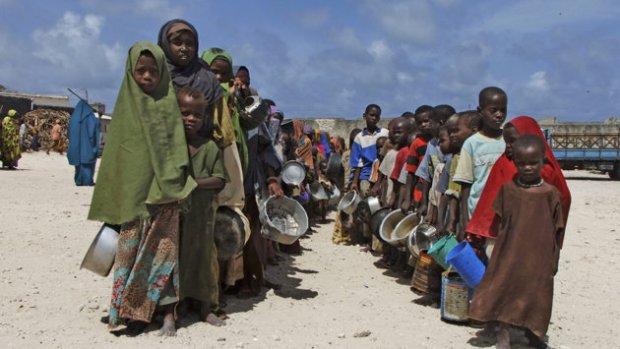


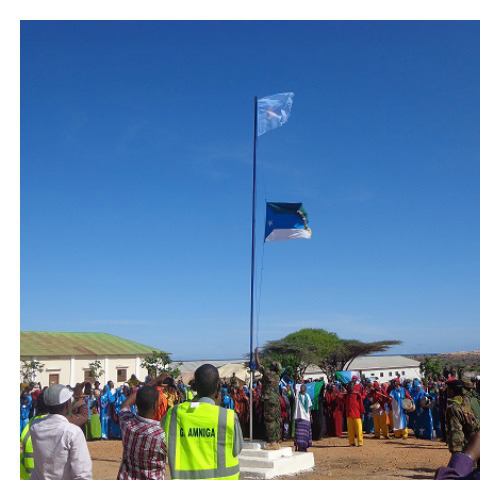
 Warsame Policy & Media Network (WAPMEN)
You must be logged in to post a comment.